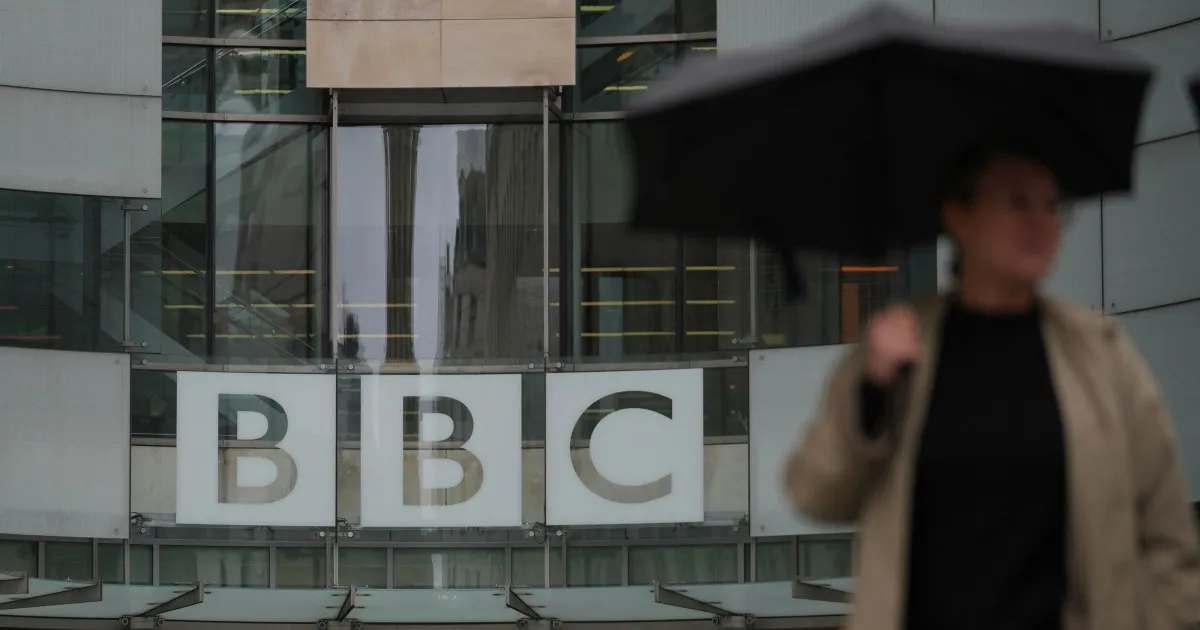
The US president signals legal war even as the British network apologises for an ‘error of judgement’ in editing his January 6 speech.
Published On 15 Nov 202515 Nov 2025
Share
United States President Donald Trump says he would likely sue the British Broadcasting Corporation (BBC) next week for as much as $5bn after the British broadcaster admitted it wrongly edited a video of a speech he gave, but insisted there was no legal basis for his claim.
“We will sue them for anywhere between a billion and five billion dollars, probably sometime next week. I think I have to do it. They have even admitted that they cheated,” Trump told reporters on board Air Force One late on Friday.
Recommended Stories
list of 4 itemsend of list
Trump’s lawyers had sent the BBC a letter on Monday, accusing it of defaming the US president with the video of the speech before the 2021 US Capitol riot and giving it until Friday to apologise and pay compensation for what they described as “overwhelming reputational and financial harm”.
The controversy centres on the BBC’s edit of Trump’s remarks from January 6, 2021, the day his supporters stormed the US Capitol. The dispute has pushed the network into its most severe crisis in decades, triggering the resignations of two senior leaders and prompting a wave of political scrutiny.
“The people of the UK are very angry about what happened, as you can imagine, because it shows the BBC is fake news,” Trump said.
He added that he planned to raise the BBC issue with British Prime Minister Keir Starmer, who has backed the broadcaster’s independence while avoiding taking sides against Trump.
“I’m going to call him over the weekend. He actually put a call into me. He’s very embarrassed,” Trump said.
‘Beyond fake, this is corrupt’
The documentary, aired on the BBC’s flagship Panorama programme, stitched together three separate clips of Trump’s January 6 speech. His lawyers say the sequence created the false impression he was inciting the riot, calling the edit “false and defamatory”.
In an interview with GB News, Trump accused the BBC of misconduct. He said the edit was “impossible to believe” and likened it to election interference.
“I made a beautiful statement, and they made it into a not beautiful statement,” he said. “Fake news was a great term, except it’s not strong enough. This is beyond fake, this is corrupt.”
He dismissed the BBC’s apology as insufficient, arguing that the broadcaster had spliced together remarks that were nearly an hour apart. “It’s incredible to depict the idea that I had given this aggressive speech which led to riots,” he said.
BBC chair Samir Shah issued a personal apology to the White House and told British lawmakers that the edit was “an error of judgement”. Culture Minister Lisa Nandy said on Friday the apology was “right and necessary”.
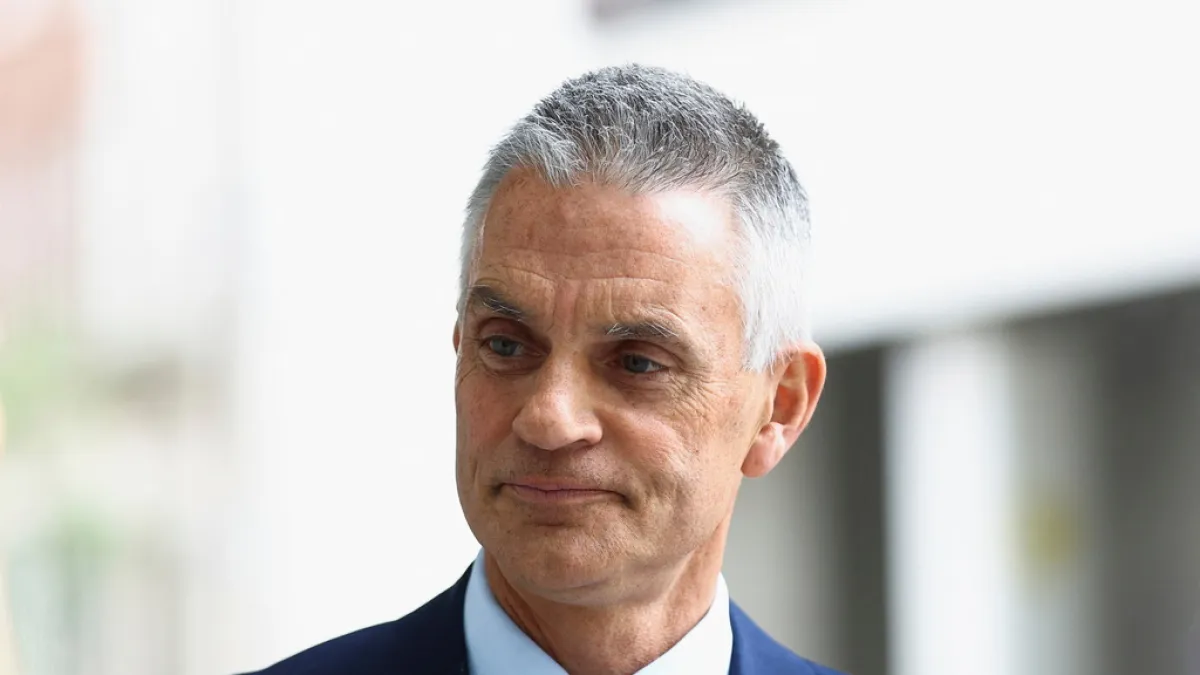
The crisis has already cost the BBC its director general, Tim Davie, and its head of news, Deborah Turness, both of whom resigned this week as accusations of bias and editing failures mounted.
Officials said the suspension related to broadcasts about an ongoing blockade that has caused major fuel shortages.
Published On 15 Nov 202515 Nov 2025
Share
Mali’s media regulator has suspended French broadcasters LCI and TF1 over allegedly broadcasting false information on a fuel blockade imposed by an al-Qaeda linked armed group.
TF1 is a French commercial television station that broadcasts in several countries, and LCI, La Chaine Info, is a French free-to-air news channel that is also part of the TF1 group.
Recommended Stories
list of 4 itemsend of list
Mali’s High Authority for Communication (HAC) said in a letter to image distributors in Mali, dated November 13 and made public on Friday, that it had suspended TF1 and LCI, claiming the two private TV channels had made “unverified claims and falsehoods” in a broadcast on November 9.
“LCI and TF1 television services have been removed from your packages until further notice,” the document read.
The letter said the authority disputed three passages in broadcasts by the two channels, specifically that “the junta has banned the sale of fuel,” “[the regions of] Kayes and Nioro are completely under blockade,” and “the terrorists are now close to bringing down the capital [Bamako].”
The channels have not been accessible in Mali since Thursday evening, a journalist for the AFP news agency reported.
Since September, the Jama’at Nusrat al-Islam wal-Muslimin (JNIM) group, linked to al-Qaeda and primarily operating in Mali, has imposed a blockade on fuel entering the landlocked country, by sealing off major highways used by tankers to transport fuel from neighbouring Senegal and the Ivory Coast.
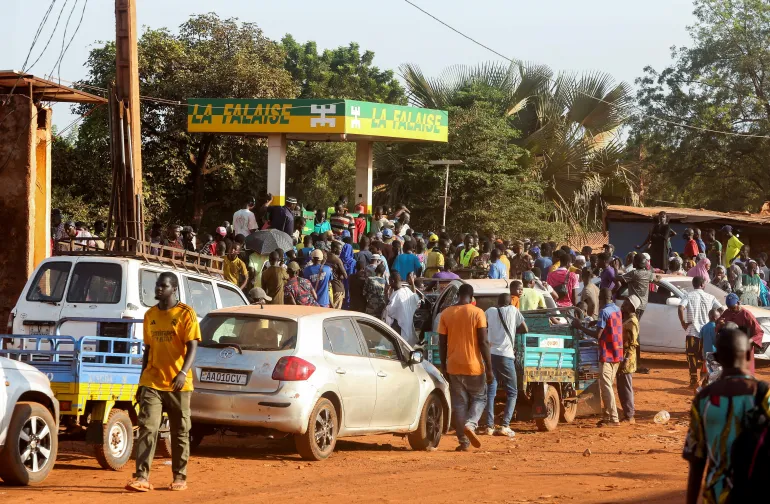
In recent weeks, fuel shortages caused by the blockade have created long lines at gas stations and further deteriorated the security situation in the country.
People gather at a petrol station in Bamako, Mali, on November 1, 2025, amid ongoing fuel shortages caused by a blockade imposed by armed fighters in early September [Reuters]
Several Western embassies, notably those of the United States and France, have asked their citizens to leave Mali.
Mali, alongside its neighbours Niger and Burkina Faso, is governed by military leaders who took power by force in recent years, pledging to provide more security to citizens.
But the security situation in the Sahel has worsened since the militaries took power, analysts say, with a record number of attacks and civilians killed both by armed groups and government forces.
All three countries have withdrawn from regional and international organisations in recent months, while forming their own bloc known as the Alliance of Sahel States.
The three West African countries have also wound back defence cooperation with Western powers, most notably their former colonial ruler, France, in favour of closer ties with Russia, including Niger nationalising a uranium mine previously operated by French nuclear firm Orano.
Within the three countries, the military governments are fighting armed groups that control swaths of territory and have staged attacks on army posts.
Human Rights Watch and other advocacy groups have accused the fighters, the military and partner forces of Burkina Faso and Mali of possible atrocities.
A newly released batch of correspondence involving disgraced sex offender Jeffrey Epstein has prompted new speculation about ties between the deceased financier and United States President Donald Trump, but experts say its significance stretches beyond the White House.
The never-before-seen emails have added to pressure on the Trump administration to release files about Epstein in the US government’s possession, with a vote in Congress now expected as early as next week. Trump has rejected suggestions that he has anything to hide, and insists that while he knew Epstein, they broke ties in the early 2000s.
Recommended Stories
list of 3 itemsend of list
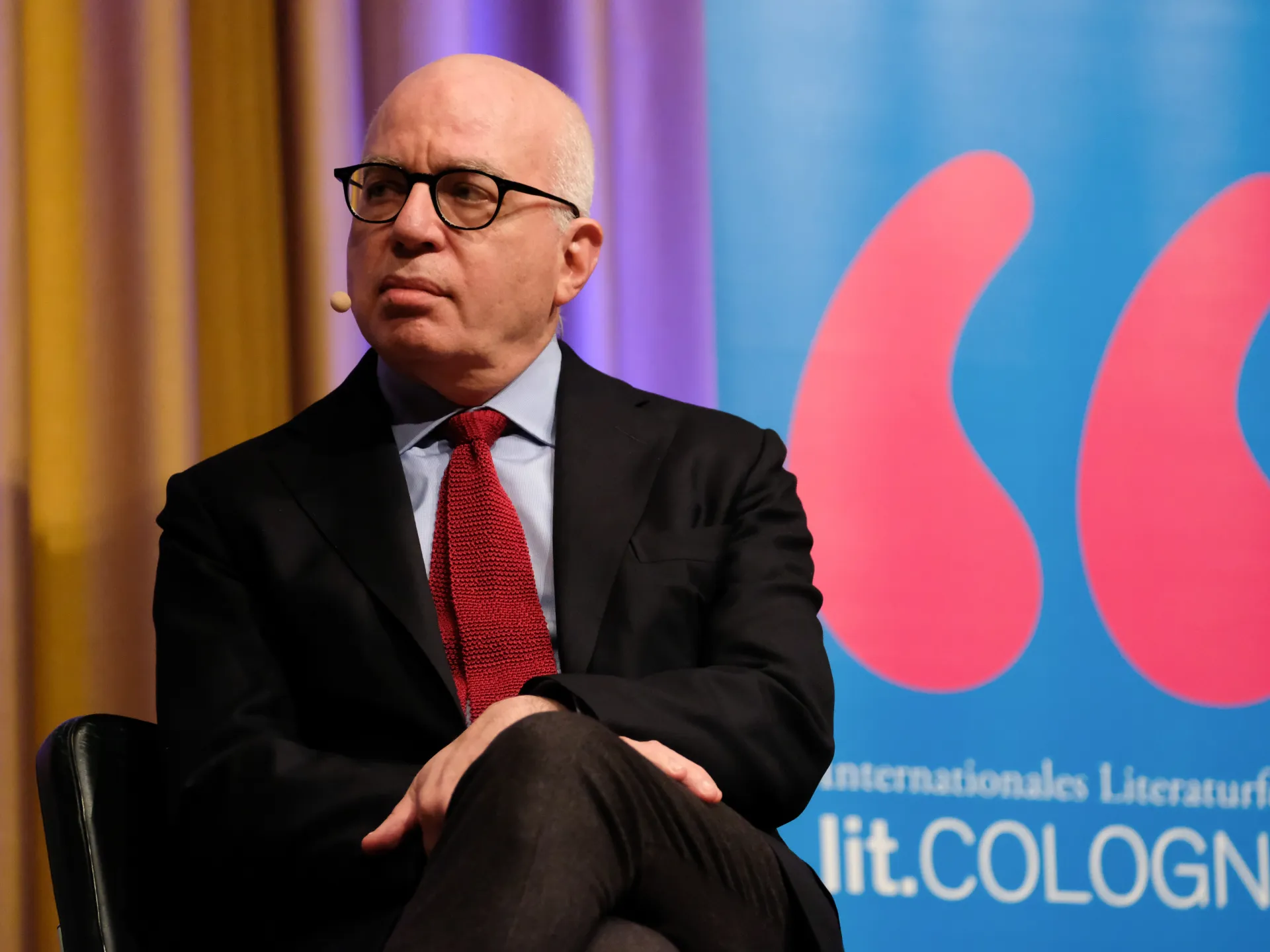
But the newly released emails also raise ethical questions about the role played by acclaimed author Michael Wolff as he appeared to provide advice to Epstein on how to handle his dealings with Trump.
In the exchanges published by the Democrats on the House Oversight Committee, Wolff – best known for his bestselling books on the first Trump presidency – appeared to share confidential information before a presidential debate on CNN in December 2015 with Epstein, advising him on how to exploit his connection with Trump.
“I hear CNN planning to ask Trump tonight about his relationship with you – either on air or in scrum afterwards,” Wolff wrote.
“If we were to craft an answer for him, what do you think it should be?” Epstein replied.
“I think you should let him hang himself. If he says he hasn’t been on the plane or to the house, then that gives you a valuable PR and political currency,” Wolff told Epstein.
“You can hang him in a way that potentially generates a positive benefit for you, or, if it really looks like he could win, you could save him, generating a debt. Of course, it is possible that, when asked, he’ll say Jeffrey is a great guy and has gotten a raw deal and is a victim of political correctness, which is to be outlawed in a Trump regime,” Wolff added, in his response to Epstein.
Al Jazeera reached out to Wolff for comment, but has not received a response.
In a conversation on a podcast with the news outlet The Daily Beast, Wolff said he was seeking to build a relationship with Epstein at the time to better understand Trump, but acknowledged that in “hindsight”, his comments could be seen as “embarrassing”.
Wolff, 72, is best known for his four books exposing the inner workings of the first Trump presidency, including Fire and Fury: Inside the Trump White House.
Jane Kirtley, professor of media ethics and law at the University of Minnesota, said any judgement on whether behaviour like Wolff’s with Epstein was appropriate would depend on how the writer’s role is understood.
“Some people are reporters, some are commentators, and some are book authors, and there are some differences in the way that those different people operate,” Kirtley told Al Jazeera.
“If you want to be a public relations person, or if you want to be an agent, those are perfectly valid career choices. But I think that they are unfortunately incompatible with journalism because the public has a right to assume and to believe that you are acting independently,” she continued.
“You can’t serve two masters, as the saying goes, and your interest has to either be the public interest or serving some other interests.”
Insider reporting
Experts note that reporters often face ethical and professional dilemmas while cultivating relationships with sources, especially in areas where insider information is highly sought after, such as Wolff’s research on relations between various figures in the first Trump administration.
But the prerogative to build rapport with sources, especially those with influence, can also raise difficult questions about a reporter’s proximity to the very centres of power they are supposed to be scrutinising.
Edward Wasserman, a professor of journalism at the University of California, Berkeley, said such relationships have to maintain certain boundaries and be balanced with the usefulness of the information being brought to the public’s attention.
“I think that the public has the right to be sceptical of this kind of cosy relationship with sources,” Wasserman told Al Jazeera. “But the answer the journalist has is that this is in the interest of the public, that there’s a redemptive dimension to this. It enables the kind of relationships that will allow people to confide in a reporter, who can then share that information with the public.”
Still, such relationships can also have a troubling inversion, where a journalist might be tempted to offer a source preferential treatment if they believe they might be rewarded with information.
Another journalist who corresponded with Epstein in emails released on Wednesday, a former New York Times finance reporter named Landon Thomas Jr, also appeared to have a close relationship with the convicted sex offender, whom he informed about a writer named John Connelly who was researching him.
“Keep getting calls from that guy doing a book on you – John Connolly. He seems very interested in your relationship with the news media. I told him you were a hell of a guy :)” Thomas Jr said in an email dated June 1, 2016.
“He is digging around again,” Thomas Jr said in another email to Epstein on September 27, 2017. “I think he is doing some Trump-related digging too. Anyway, for what it’s worth…” he added.
The public broadcaster NPR reported that Thomas Jr was no longer working for the Times by January 2019, and it had come to light that the reporter had asked Epstein for a $30,000 donation to a cultural centre in New York City. The New York Times has previously stated that the behaviour was a clear violation of its ethics policies and that it took action as soon as it learned of the incident.
In the case of Wolff, Wasserman also noted that his direct participation in matters relating to Trump, Epstein, and the media raised doubts about the writer’s ability to credibly report on those issues. Those questions may be especially poignant in a scandal that, for many people in the US, has become a symbol of close relationships among figures at the highest levels of power.
“The problem is that Wolff was offering advice on how to engineer, how to play this situation, in a way that’s advantageous to Epstein. And the problem that I have with that is that he then would presumably preserve the right to report on the consequences,” he said.
It also remains unclear whether Wolff’s relationship with Epstein resulted in the kind of public revelations that journalists typically point to when justifying close ties with sources.
“It occurs to me as important that in this exchange, Wolff doesn’t do anything to illuminate the core mystery, which is whether Trump was a sexual participant in what was going on with Epstein and these young women,” said Wasserman.
“And there’s nothing in this where I’m seeing Wolff even asking that,” he added.
US president demands ‘full and fair’ retraction of BBC documentary that prompted resignation of two top executives.
Published On 11 Nov 202511 Nov 2025
Share
US President Donald Trump has threatened to sue the BBC for $1bn over an edited clip that has plunged the broadcaster into a public relations crisis and prompted the resignations of two top executives.
In a letter sent to the BBC, Trump’s legal team has demanded the retraction of “false, defamatory, disparaging, misleading, and inflammatory statements” contained in a Panorama documentary aired a week before the 2024 US presidential election.
Recommended Stories
list of 4 itemsend of list
The letter, written by Trump lawyer Alejandro Brito, gives the BBC until Friday to provide a “full and fair” retraction of the documentary and “appropriately compensate President Trump for the harm caused”, or face legal action in the US state of Florida.
“The BBC is on notice. PLEASE GOVERN YOURSELF ACCORDINGLY,” says the letter, which was widely circulated on social media.
The BBC did not immediately respond to Al Jazeera’s request for comment.
The documentary, titled Trump: A Second Chance?, has been mired in controversy since the leak of an internal memo that criticised producers for editing Trump’s remarks to make it appear that he had directly encouraged the January 6, 2021, riot at the US Capitol.
In the documentary, Trump is shown saying, “We fight like hell”, directly after telling supporters, “We’re going to walk down to the Capitol”.
Trump had actually followed his comments about going to the Capitol with a remark about cheering on “our brave senators and congressmen and women”, and made his “fight like hell” comment nearly an hour later.
The memo, written by Michael Prescott, a former adviser to the BBC’s standards committee, also accused the broadcaster of suppressing critical coverage of transgender issues and displaying anti-Israel bias within the BBC Arabic service.
The BBC’s director-general, Tim Davie, and its head of news, Deborah Turness, stepped down on Sunday amid the fallout of the controversy.
Trump welcomed the resignations in a post on Truth Social, accusing the BBC executives of being “corrupt” and “very dishonest people”.
BBC chair Samir Shah on Monday acknowledged that the clip was misleading and apologised for the “error of judgement”, but rejected claims that the broadcaster is institutionally biased.
Shah also said that the memo did not present “a full picture of the discussions, decisions and actions that were taken” by the standards board in response to concerns raised internally before the leak.
Trump’s legal threat is the latest in a flurry of actions he has taken to punish critical media.
Those moves include defamation claims against outlets including The New York Times, the Wall Street Journal and ABC News, funding cuts at NPR and PBS, and the removal of Associated Press journalists from the White House press pool.
Davie’s exit caps a week of attacks on Britain’s public broadcaster, with Trump’s press secretary describing BBC as ‘100 percent fake news’.
The director-general of the British Broadcasting Corporation (BBC) has resigned after a row over the editing of a speech made by US President Donald Trump on the day of the 2021 attack on the United States Capitol.
Sunday’s joint resignations of Tim Davie and head of news Deborah Turness capped a turbulent week of accusations that the broadcaster edited a speech Trump made on January 6, 2021, to make it appear as if he encouraged the riots that followed his defeat in the 2020 presidential election.
Recommended Stories
list of 3 itemsend of list
Davie said he took “ultimate responsibility” for mistakes made, saying that quitting his role at the helm of the public broadcaster after five years was “entirely my decision”.
“I have been reflecting on the very intense personal and professional demands of managing this role over many years in these febrile times, combined with the fact that I want to give a successor time to help shape the charter plans they will be delivering,” he said.
A documentary by flagship programme Panorama aired a week before last year’s US election, splicing together clips of Trump’s speech uttered at different points.
The edit made it seem as if Trump said: “We’re going to walk down to the Capitol and I’ll be there with you, and we fight. We fight like hell.”
Critics said it was misleading as it cut out a section where Trump said he wanted supporters to demonstrate peacefully.
‘Buck stops with me’
Turness said the controversy about the Trump documentary “has reached a stage where it is causing damage to the BBC – an institution that I love”.
“As the CEO of BBC News and Current Affairs, the buck stops with me,” she added.
Earlier on Sunday, UK Culture, Media and Sport Minister Lisa Nandy called the allegations “incredibly serious”, saying there is a “systemic bias in the way that difficult issues are reported at the BBC”.
Reporting from London, Al Jazeera’s Rory Challands noted that the BBC has always been in a difficult position.
“It is pilloried by the right, who perceive it to be a hotbed of liberal bias. It’s pilloried by the left, who think that it kowtows to the establishment and pumps out government lines when it comes to things like Gaza, particularly, not holding the powerful to account as it should do as a broadcaster.”
Accusations of anti-Israel bias
The controversy, whipped up by UK right-wing media, reached the other side of the Atlantic with Trump’s press secretary Karoline Leavitt describing the BBC as “100 percent fake news” and a “propaganda machine” on Friday.
The story broke on Tuesday when The Daily Telegraph cited a memo complied by Michael Prescott, a former member of the BBC’s editorial standards committee, which raised concerns over the Trump edit, as well as criticising perceived anti-Israel bias in the BBC’s Arabic service.
On Saturday, the newspaper reported right-wing lawmaker Priti Patel, of the Conservative Party, demanded the UK Foreign Office review its funding of BBC Arabic through its grant for the BBC World Service, alleging “pro-Hamas and anti-Israel bias”.
The broadcaster has also been accused of giving Israel favourable coverage in its reporting of the war on Gaza, coming under criticism from its own staff.
Davie’s resignation was celebrated by Nigel Farage, leader of the populist hard-right Reform UK party, which is soaring in opinion polls.
“This is the BBC’s last chance. If they don’t get this right there will be vast numbers of people refusing to pay the licence fee,” Farage said on X.
NICOLA Peltz has snubbed her father-in-law David Beckham’s knighthood as the family feud rumbles on.
The actress returned to social media on Tuesday to share a picture of a bunch of flowers from her sister but failed to make mention of David’s honour.
Sign up for the Showbiz newsletter
Thank you!
Brooklyn Beckham’s wife Nicola Peltz has failed to mention her father-in-law’s knighthoodCredit: GettyThe actress returned to social media to thank her sister for sending her flowersCredit: InstagramDavid received his knighthood at Windsor Castle on TuesdayCredit: AP
Alongside the picture, she gushed: “Omg @brittanyleahpeltz thank you so so so much these are breathtaking.”
David received his knighthood from King Charles at Windsor Castle for services to sport and charity and were joined by his family for the special occasion.
His wife Victoria Beckham and parents Ted and Sandra watched on as the King bestowed the honour on him with a gentle touch of a sword on either shoulder.
His children Romeo, Cruz and Harper were also involved in celebrating the big day with their beloved dad.
However, eldest son Brooklyn and his wife Nicola were noticeably absent from the big day and much like his other half, Brooklyn has failed to make any mention of it on social media.
Romeo and Cruz both took to Instagram to share sweet tributes to their dad but their big brother has stayed silent.
Romeo shared an adorable picture with his parents and siblings as he penned: “No one deserves this more than you, love you so much xxx. Congrats Sir dad @davidbeckham.”
While Cruz shared the moment David received his knighthood on his stories as well as sharing David’s post.
Brooklyn and Nicola’s snub comes after he is believed to have “quit” the famous family this year following rising tension.
The Beckham family feud is understood to have actually started four years ago, when Nicola refused to wear a wedding dress designed by Victoria.
Tensions then became public when Brooklyn did not publicly acknowledge fashion designer Victoria on Mother’s Day.
He then failed to show up at any of David’s 50th birthday celebrations earlier this year.
The couple reside in their mansion in Los Angeles and appear to be very close to Nicola’s side of the family.
They tied the knot in 2022 and renewed their wedding vows earlier this year, with the ceremony being officiated by her father Nelson.
Only her family were present for the big day, with the Beckhams not being involved.
Despite the ongoing tensions, David put his best foot forward to receive the biggest honour of his career and become Sir David Beckham.
It marks the end of an agonising wait for the charity ambassador, who was first put forward for a knighthood in 2011.
He took to Instagram to pen his feelings as he wrote: “I can’t even begin to describe what a special day it is for me today, a boy born in East London, to receive a Knighthood from His Majesty The King.
“I am truly humbled and so grateful for this honour.
“All I have ever wanted to do is to make my family proud.” the star gushed.
Becks then added a sweet message to his four kids as he wrote: “To my beautiful children who I am so proud of and I know this is a proud and inspiring day for them as well, they are our greatest joy in life and my inspiration every single day. I love you all so much…”
Brooklyn and Nicola have distanced themselves from the Beckham familyCredit: GettyThe pair were notably absent from Victoria Beckham’s recent Netflix documentary launchCredit: Reuters
Australia’s upcoming social media ban for children under 16 years old will include the online forum Reddit and livestreaming platform Kick in addition to seven other well-known sites, according to the country’s online safety commissioner.
The social media ban will go into effect on December 10 and will also restrict access to Facebook, Instagram, Snapchat, Threads, TikTok, X and YouTube, Communications Minister Anika Wells said on Wednesday.
Recommended Stories
list of 4 itemsend of list
“Online platforms use technology to target children with chilling control. We are merely asking that they use that same technology to keep children safe online,” Wells said.
“We have met with several of the social media platforms in the past month so that they understand there is no excuse for failure to implement this law,” Wells told reporters in Canberra.
“We want children to have a childhood, and we want parents to have peace of mind,” she said.
Social media platforms have had 12 months to prepare for the ban since Australia passed its landmark online safety legislation in November last year.
Initial discussions focused primarily around Facebook, Instagram, Snapchat, TikTok, X and YouTube, but the list was later expanded, and Wells said the list could continue to change.
While more than 140 Australian and international academics signed an open letter to Prime Minister Anthony Albanese last year opposing the age limit ban as a “blunt” instrument, Canberra’s move is being closely watched by countries that share concerns about the impacts of online platforms on children.
“Delaying children’s access to social media accounts gives them valuable time to learn and grow, free of the powerful, unseen forces of harmful and deceptive design features such as opaque algorithms and endless scroll,” eSafety Commissioner Julie Inman Grant said.
Inman Grant said she would work with academics to evaluate the impact of the ban, including whether children sleep or interact more or become more physically active as a result of the restrictions on using social media.
“We’ll also look for unintended consequences, and we’ll be gathering evidence” so others can learn from Australia’s ban, Inman Grant said.
Critics have questioned how the restrictions will be enforced because users cannot be “compelled” to submit government IDs for an age check, according to a government fact sheet.
Discussions are under way with platforms about how to comply with the new rules, the commissioner said, while failure to comply could lead to civil fines of up to 49.5 million Australian dollars (US$32.1m).
TikTok investigated over youth suicide
News that Australia would add more names to the list of banned platforms came as French authorities said they had opened an investigation into the social media platform TikTok and the risks of its algorithms pushing young people into suicide.
Paris prosecutor Laure Beccuau said the probe was in response to a parliamentary committee’s request to open a criminal inquiry into TikTok’s possible responsibility for endangering the lives of its young users.
Beccuau said a report by the committee had noted “insufficient moderation of TikTok, its ease of access by minors and its sophisticated algorithm, which could push vulnerable individuals towards suicide by quickly trapping them in a loop of dedicated content”.
TikTok did not immediately respond to a request for comment.
The Paris police cybercrime unit will look into the offence of providing a platform for “propaganda in favour of products, objects, or methods recommended as means of committing suicide”, which is punishable by three years in prison.
The unit will also look into the offence of enabling “illegal transactions by an organised gang”, punishable by 10 years in prison and a fine of 1 million euros ($1.2m).
With more than 1.5 billion users worldwide, TikTok, owned by China-based ByteDance, has come under fire from governments in Europe and the United States in recent years.
Concerns raised over the platform have included content encouraging suicide, self-harm or an unhealthy body image as well as its potential use for foreign political interference.
A TikTok spokesman told the French news agency AFP in September that the company “categorically rejects the deceptive presentation” by French MPs, saying it was being made a “scapegoat” for broader societal issues.
US President Donald Trump has appeared on the CBS News programme 60 Minutes just months after he won a $16m settlement from the broadcaster for alleged “deceptive editing”.
In the interview with CBS host Norah O’Donnell, which was filmed last Friday at his Mar-a-Lago residence and aired on Sunday, Trump touched on several topics, including the ongoing government shutdown, his administration’s unprecedented crackdowns on undocumented migrants, the US’s decision to restart nuclear testing, and the trade war with China.
Recommended Stories
list of 4 itemsend of list
Trump, who regularly appears on Fox News, a right-wing media outlet, has an uneasy relationship with CBS, which is considered centrist.
In October 2020, the president walked out of a 60 Minutes interview in the lead-up to the 2020 election he lost, claiming that the host, Lesley Stahl, was “biased”.
Here are some key takeaways from the interview:
The interview took place one year to the day after Trump sued CBS
The president’s lawyers sued CBS owner Paramount in October 2024 for “mental anguish” over a pre-election interview with rival candidate Kamala Harris that Trump claimed had been deceptively edited to favour Democrats and thus affected his campaign.
CBS had aired two different versions of an answer Harris gave to a question on Israel’s war on Gaza, posed by host Bill Whitaker. One version aired on 60 Minutes while the other appeared on the programme Face the Nation.
Asked whether Israel’s prime minister, Benjamin Netanyahu, listened to US advice, Harris answered: “We are not going to stop pursuing what is necessary for the United States – to be clear about where we stand on the need for this war to end.”
In an alternative edit, featured in earlier pre-broadcast promotions, Harris had given a longer, more rambling response that did not sound as concise.
The network argued the answer was edited differently for the two shows due to time restrictions, but Trump’s team claimed CBS “distorted” its broadcasts and “helped” Harris, thereby affecting his campaign. Trump asked for an initial $10bn in damages before upping it to $20bn in February 2025.
Paramount, in July 2025, chose to settle with Trump’s team to the tune of $16m in the form of a donation to a planned Trump presidential library. That move angered journalist unions and rights groups, which argued it set a bad precedent for press freedom.
Paramount executives said the company would not apologise for the editing of its programmes, but had decided to settle to put the matter to rest.
The company was at the time trying to secure federal approval from Trump’s government for a proposed merger with Skydance, owned by Trump ally Larry Ellison. The Federal Communications Commission has since approved the merger that gives Ellison’s Skydance controlling rights.
On October 19, Trump’s son-in-law, Jared Kushner, and Steve Witkoff, US special envoy to the Middle East, were interviewed on 60 Minutes regarding the Israel-Gaza war.
President Donald Trump, left, and Chinese President Xi Jinping, right, shake hands before their meeting at Gimhae International Airport in Busan, South Korea, October 30, 2025 [Mark Schiefelbein/AP]
He solved rare-earth metals issue with China
After meeting with Chinese President Xi Jinping in South Korea last Thursday, Trump praised his counterpart as a “strong man, a very powerful leader” and said their relationship was on an even keel despite the trade war. However, he blamed China for “ripping off” the US through its dominance of crucial rare earth materials.
Trump told 60 Minutes he had cut a favourable trade agreement with China and that “we got – no rare-earth threat. That’s gone, completely gone”, referring to Chinese export restrictions on critical rare-earth metals needed to manufacture a wide range of items including defence equipment, smartphones and electric vehicles.
However, Beijing actually only said it would delay introducing export controls for five rare-earth metals it announced in October, and did not mention restrictions on a further seven it announced in April this year. Those restrictions remain in place.
Xi ‘knows what will happen’ if China attacks Taiwan
Trump said President Xi did not say anything about whether Beijing planned to attack autonomous Taiwan.
However, he referred to past assurances from Xi, saying: “He [Xi] has openly said, and his people have openly said at meetings, ‘We would never do anything while President Trump is president’, because they know the consequences.”
Asked whether he would order US forces to action if China moved militarily on Taiwan, Trump demurred, saying: “You’ll find out if it happens, and he understands the answer to that … I can’t give away my secrets. The other side knows.”
There are mounting fears in the US that China could attack Taiwan. Washington’s stance of “strategic ambiguity” has always kept observers speculating about whether the US would defend Taiwan against Beijing. Ahead of the last elections, Trump said Taiwan should “pay” for protection.
He doesn’t know who the crypto boss he pardoned is
When asked why he pardoned cryptocurrency multibillionaire and Binance founder Changpeng Zhao last month, Trump said: “I don’t know who he is.”
The president said he had never met Zhao, but had been told he was the victim of a “witch hunt” by the administration of former US President Joe Biden.
Zhao pleaded guilty to enabling money laundering in connection with child sex abuse and “terrorism” on his crypto platform in 2023. He served four months in prison until September 2024, and stepped down as chief executive of Binance.
Binance has been linked to the Trump family’s cryptocurrency company World Liberty Financial, and many have questioned if the case is a conflict of interest.
In March 2025, World Liberty Financial launched its own dollar-pegged cryptocoin, USD1, on Binance’s blockchain and the company promoted it to its 275 million users. The coin was also supported by an investment fund in the United Arab Emirates, MGX Fund Management Limited, which used $2bn worth of the World Liberty stablecoin to buy a stake in Binance.
This part of the interview appeared in a full transcript of the 90-minute interview, but does not appear in either the 28-minute televised version or the 73-minute extended online video version. CBS said in a note on the YouTube version that it was “condensed for clarity”.
Other countries ‘are testing nuclear weapons’
Trump justified last week’s decision by his government to resume nuclear testing for the first time in 33 years, saying that other countries – besides North Korea – are already doing it.
“Russia’s testing, and China’s testing, but they don’t talk about it,” Trump said, also mentioning Pakistan. “You know, we’re an open society. We’re different. We talk about it. We have to talk about it, because otherwise you people are gonna report – they don’t have reporters that gonna be writing about it. We do.”
Russia, China, and Pakistan have not openly conducted tests in recent years. Analyst Georgia Cole of UK think tank Chatham House told Al Jazeera that “there is no indication” the three countries have resumed testing.
He’s not worried about Hamas disarming
The president claimed the US-negotiated ceasefire and peace plan between Israel and Hamas was “very solid” despite Israeli strikes killing 236 Gazans since the ceasefire went into effect. It is also unclear whether or when the Palestinian armed group, Hamas, has agreed it will disarm.
However, Trump said he was not worried about Hamas disarming as the US would force the armed group to do so. “Hamas could be taken out immediately if they don’t behave,” he said.
Venezuela’s Maduro’s ‘days are numbered’
Trump denied the US was going to war with Venezuela despite a US military build-up off the country’s coast and deadly air strikes targeting alleged drug-trafficking ships in the country’s waters. The United Nations has said the strikes are a violation of international law.
Responding to a question about whether the strikes were really about unseating Venezuela’s President Nicolas Maduro, Trump said they weren’t. However, when asked if Maduro’s days in office were numbered, the president answered: “I would say, yeah.”
A closed sign is displayed outside the National Gallery of Art nearly a week into a partial government shutdown in Washington, DC, the US, October 7, 2025 [Annabelle Gordon/Reuters]
US government shutdown is all the Democrats’ fault
Trump, a member of the Republican Party, blamed Democrats for what is now close to the longest government shutdown in US history, which has been ongoing since October 1.
Senators from the Democratic Party have refused to approve a new budget unless it extends expiring tax credits that make health insurance cheaper for millions of Americans and unless Trump reverses healthcare cuts made in his tax-and-spending bill, passed earlier this year.
The US president made it clear that he would not negotiate with Democrats, and did not give clear plans for ending the shutdown affecting 1.4 million governent employees.
US will become ‘third-world nation’ if tariffs disallowed
Referring to a US Supreme Court hearing brought by businesses arguing that the Trump government’s tariff war on other countries is illegal and has caused domestic inflation, Trump said the US “would go to hell” and be a “third world nation” if the court ordered tariffs to be removed.
He said the tariffs are necessary for “national security” and that they have increased respect from other countries for the US.
ICE raids ‘don’t go far enough’
Trump defended his government’s unprecedented Immigration and Customs Enforcement (ICE) raids and surveillance on people perceived to be undocumented migrants.
When asked if the raids had gone too far, he responded: “No. I think they haven’t gone far enough because we’ve been held back by the judges, by the liberal judges that were put in by [former US Presidents Joe] Biden and [Barack] Obama.”
Zohran Mamdani is a ‘communist’
Regarding the New York City mayoral race scheduled for November 4, Trump said he would not back democratic socialist Zohran Mamdani, and called him a “communist”. He said if Mamdani wins, it will be hard for him to “give a lot of money to New York”.