Why did Ceuta migrant mayhem chill already frosty Israel-Spain relations? | Migration News
Spain says the crisis in its North African enclave Ceuta is back under control, with most of the more than 50,000 migrants who stormed across its borders over recent days choosing to voluntarily go back to Morocco.
Tens of thousands of people crossed into Ceuta on Thursday and continued arriving overnight into Friday.
Recommended Stories
list of 4 itemsend of list
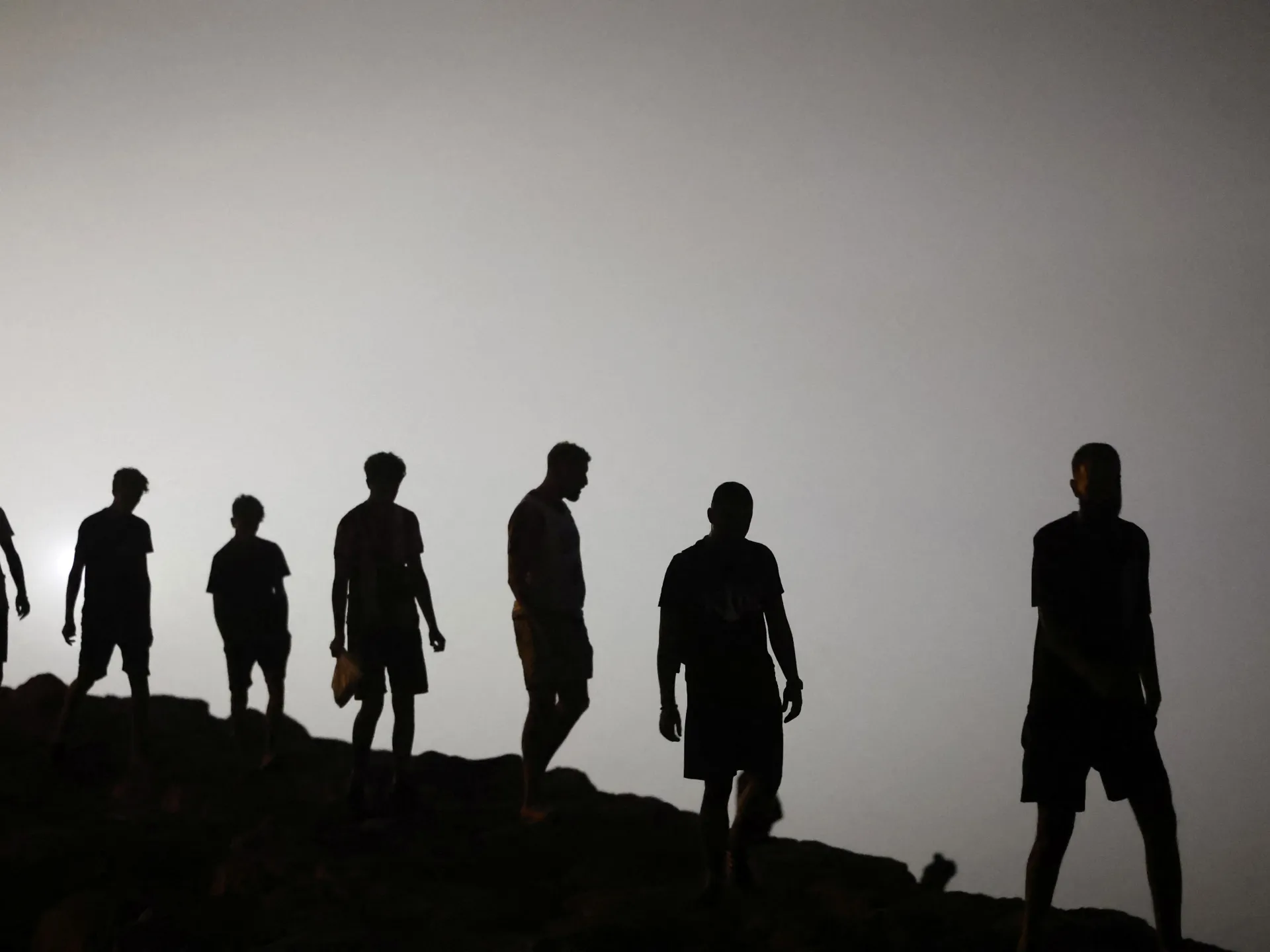
Most came by sea, swimming or in small boats, to get around the border fence. Some rushed border crossing points in such numbers that the guards were overwhelmed. Others tried to climb the breakwater that holds the border fence. At least 67 people died trying to reach Ceuta.
Many questions remain about what caused such a huge number of people to abruptly seek to illegally enter Spanish territory. It was clearly not a coincidence they all chose the same day to do so. Was it coordinated and planned in advance, and if so, by whom and for what purpose?
Here’s what we know:
Where is Ceuta and why is it significant?
Ceuta is an autonomous Spanish city on the northern coast of Africa bordering Morocco. Along with Melilla, it is one of the only two land borders between the European Union and Africa.
It first came under Portuguese rule in 1415 before becoming part of Spain in 1580. It remained under Spanish sovereignty after Portugal regained independence in 1640. After the decolonisation of Africa, Ceuta and Melilla are the only remaining European-held territories on the African mainland.
Its location has made it one of the main entry points for migrants and asylum seekers trying to reach Europe. The enclave is protected by high border fences, surveillance systems, and a permanent deployment of Spain’s Civil Guard and National Police.
What caused the sudden massive influx?
Authorities in Ceuta linked the surge in attempted crossings to a Spanish Supreme Court ruling published in July that barred authorities from immediately returning migrants who arrive by sea. The ruling does not apply to migrants who enter Spain by land, including by climbing over the border fence.
But several experts have questioned this theory, saying few migrants would have been aware of the court ruling.
Ignacio Cembrero, a Spanish journalist specialised in migration in North Africa, told the news agency AFP that “without a doubt, the July 8 ruling has played a role… but that doesn’t explain the level of mobilisation.”
Spanish Prime Minister Pedro Sanchez blamed the sudden influx on human trafficking mafias who exaggerated the significance of the court ruling to convince vast numbers of migrants to take part in a mass coordinated surge into Ceuta.
Some believe that Morocco may have had a role in organising and facilitating the sudden mass breach of the border.
Morocco does not recognise Madrid’s sovereignty over the centuries-old Spanish enclaves Ceuta and Melilla, regarding them as occupied territory.
Morocco also stridently asserts its own sovereignty over Western Sahara, a former Spanish colony it annexed in 1975 where the Indigenous inhabitants, represented by the Polisario Front, oppose rule from Rabat and want independence.
In April 2021, Madrid allowed Polisario Front leader Brahim Ghali to be treated in a Spanish hospital for COVID-19, infuriating Morocco, which regards him as a criminal in charge of an outlawed separatist rebellion.
Morocco recalled its ambassador from Madrid, and appeared to loosen its border controls in May, allowing about 10,000 migrants to enter Ceuta as a threat to Spain.
In 2022, Spain restored full diplomatic relations with Morocco after reversing its four-decade policy of supporting self-determination for the Indigenous people of Western Sahara and instead backing Moroccan sovereignty. It was widely assumed that Rabat achieved this goal by leveraging the vulnerability of the Spanish enclaves.
Last month, relations between Madrid and Rabat soured again because Sanchez made an official visit to Algeria – a country Morocco regards as a bitter enemy because of its unwavering support for the Polisario Front.
Some are speculating that the latest events in Ceuta show Morocco once again sending a warning to Spain.
What does this have to do with Israel?
Some observers believe that if Morocco did orchestrate the mayhem, it may have been encouraged by others, pointing at two leaders with a particular grudge against Sanchez – US President Donald Trump and Israeli Prime Minister Benjamin Netanyahu.
Sanchez is one of Europe’s most consistently pro-Palestinian voices. He has explicitly said Israel’s war on Gaza is genocide, has been highly critical of the US-Israel war on Iran, and refused to allow jointly operated US-Spanish military facilities to be used to facilitate that war.
Trump has been scathing about Spain because of its refusal to spend a greater share of gross domestic product to match the NATO target.
Morocco has been far friendlier than Spain to Israel. In 2024, Spain refused to allow a US-flagged cargo ship carrying weapons for Israel to dock at Algeciras, so the vessel redirected to Morocco instead. The same year, Moroccan authorities allowed an Israeli warship to dock at Tangier to refuel and resupply en route from the US to Israel, after Spain had refused the vessel port access.
Many Israelis consider Madrid’s support for Palestine hypocritical when Spain also occupies Arab territory.
In 2019, Netanyahu’s son Yair tweeted a map of Ceuta and Melilla, saying, “Dear Arabs and Muslims. Want to free occupied Arab Islamic lands? Here’s a good start!”
In March this year, an article written by American Enterprise Institute fellow Michael Rubin for the staunchly pro-Israel Middle East Forum urged: “Moroccans should gather, send bulldozers to the border, and then enter Ceuta and Melilla unarmed to raise the flag.”
In April, pro-Israel Moroccan analyst Amine Ayoub wrote an article for Israeli website Ynet News arguing: “US-Spain tensions over NATO, Iran create opening for Morocco to press claims on Ceuta and Melilla, with Israel positioned to back Rabat diplomatically within US-led alliance that increasingly favours cooperative partners over European holdouts.”
On Friday, with Ceuta invaded by tens of thousands of migrants, Israel’s ambassador to the United Nations, Danny Danon, posted a provocative comment on X.
“Spain, which never misses an opportunity to lecture Israel, has declared a state of emergency in Ceuta following the crisis over its immigration policy,” Danon wrote. “Maybe before it continues lecturing us, it’s time it explained to the world why it still maintains colonial enclaves in Africa.”
“Well, it’s all starting to become quite clear,” commented Spain’s transport minister, Oscar Puente, apparently suggesting he thought Israel was involved in what happened in Ceuta.
Pro-Israel sentiment has been steadily on the rise in Morocco, particularly as the country’s diplomatic relationship with both Israel and the United States has been deepening.
Days ago, it was announced that Morocco named a 1,055km (655.5-mile) highway over Western Sahara after Trump.
Experts said the gesture was far from surprising, as Morocco was one of the signatories to the Trump-brokered Abraham Accords, which saw the country normalise relations with Israel in 2020. In return, the Trump administration has provided crucial support to Morocco at the United Nations and through bilateral channels, bringing Rabat closer to securing greater control over Western Sahara.
There is no evidence that Morocco orchestrated events in Ceuta partly on behalf of Israel, just a lot of interesting coincidences.
But whether or not there was any conspiracy, one consequence of the episode is clear – the already frosty relations between the left-wing Spanish government of Sanchez and the far-right Israeli government of Netanyahu are now even chillier.