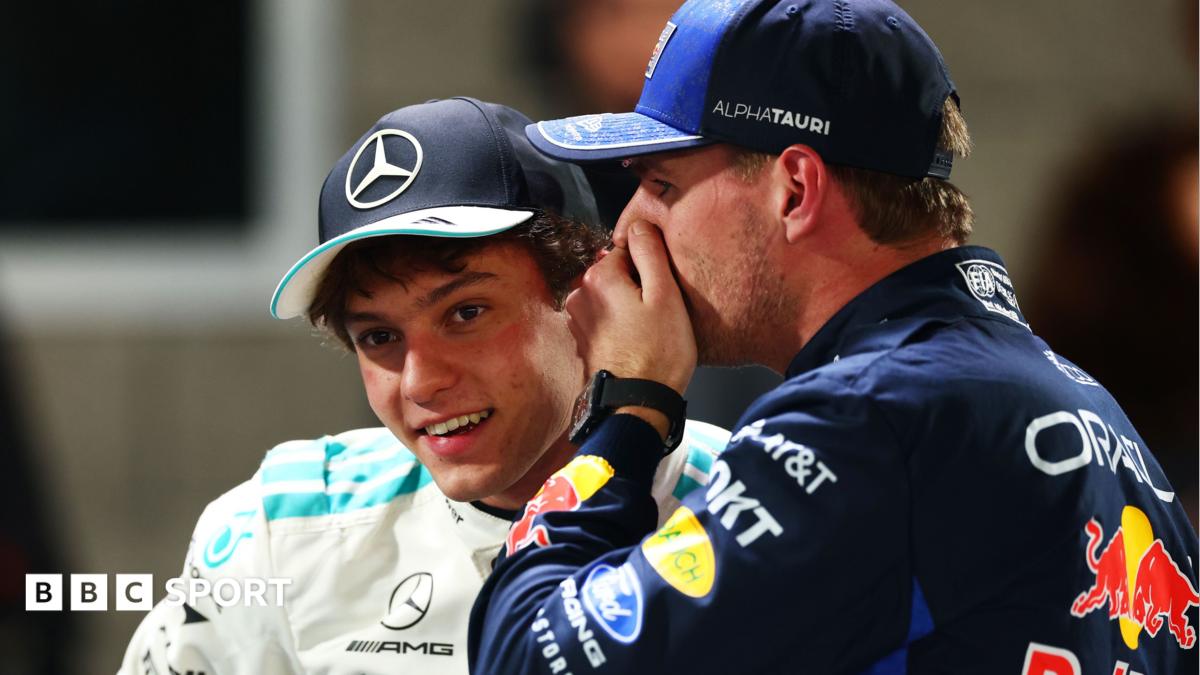
Antonelli’s final run did not start auspiciously as he and Russell became tangled up with the Alpines and Racing Bulls as they sought the best track position to optimise the slipstream effect.
Antonelli ended up the last driver to run and made it to the line with only one second to spare before the chequered flag, one second behind Lindblad.
Normally, being so close to the car in front would be a compromise but in Las Vegas it magnified the tow effect and Antonelli leapt to the front. “That was all the tow,” he said over the radio after being told he was on pole.
“Starting the lap, I was only one second behind the car in front and I thought I was screwed,” he said. “But the tow is so powerful here.”
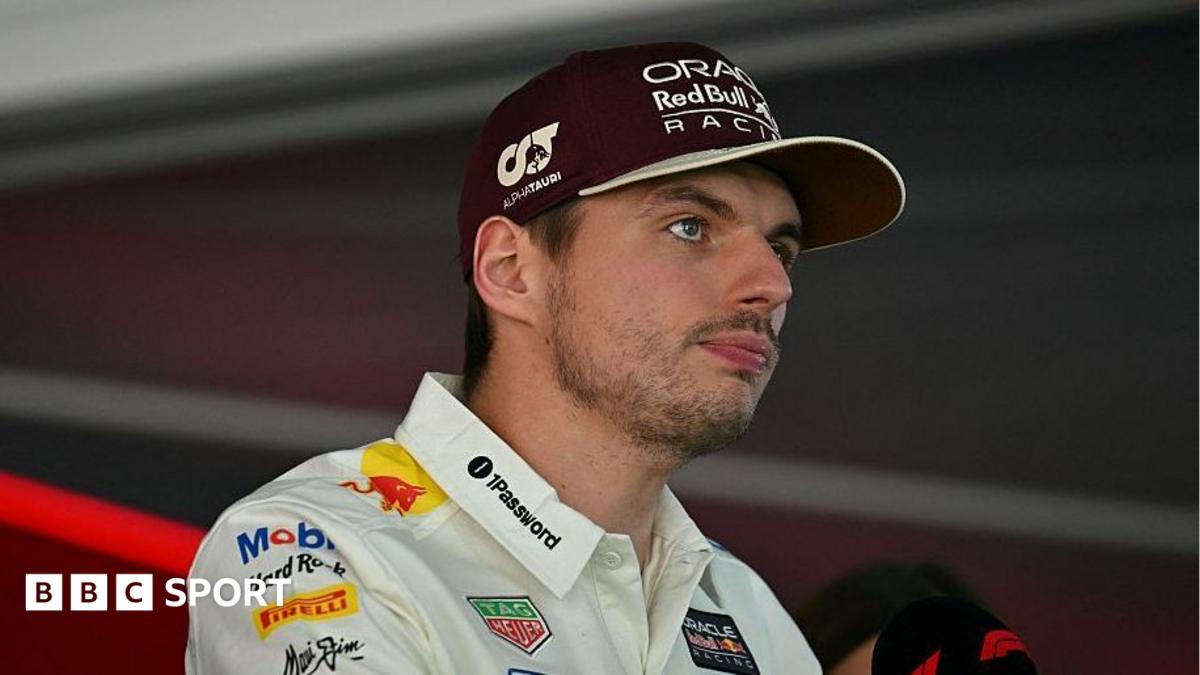
Verstappen, who has won two of the three Las Vegas Grands Prix, said: “I have been struggling with some weird issues that were also in the car in Brazil and just trying to get my head around how to deal with that.
“In qualifying we managed to make it work. Had a solid qualifying. My first lap in qualifying was pretty much as good as it could be with the tow, so to be on the front row is good for us.
“It was solid in the corners, and you have a bit of dirty air, but it is insane how much you gain on the straights.”
Russell had looked in the running for the pole, but was happy with his session despite missing out.
“Overall it’s been a very solid session and a solid day,” he said.
“I wanted to be on pole but I am probably more pleased with the performance than in Mexico when I was on the front row.
“Kimi did a great job and he probably thought it wasn’t going to work out so well being so close but with the tow it worked out.”
Arrest warrants for three Los Angeles residents were issued by Pittsburgh police Tuesday regarding a burglary at the home of Steelers’ first-round draft pick Max Iheanachor.
The U.S. Marshals Service is assisting the Pittsburgh Police Department in locating and arresting Winter Brantley, 25, Andre Castle Jr., 23, and Lamar Stewart, 45. All three face charges of burglary, criminal trespassing, theft by unlawful taking, receiving stolen property and conspiracy, according to a Pittsburgh Police Department release.
Iheanachor, an offensive tackle who attended L.A. King Drew High and East L.A. College, had his home in the Mount Washington neighborhood of Pittsburgh burglarized Aug. 26, a day before the Steelers’ final preseason game in Buffalo. Iheanachor, 23, reported that approximately $200,000 worth of jewelry and designer bags were stolen.
Iheanachor’s roommate, Ashley Brantley, is the brother of Winter Brantley, according to the criminal complaint. Ashley Brantley told investigators he and his sister had been quarreling. Neighborhood security cameras helped identify an Audi SUV at Iheanachor’s home the day of the burglary and credit card receipts established that the suspects rented the vehicle, police said.
On the day of the burglary, two occupants of the home had locked the doors and closed the garage, they said, before leaving for about three hours, according to police. When they returned, a window had been broken and the garage was open.
Iheanachor moved to L.A. at age 13 from Nigeria and played basketball at King Drew High. He did not play organized football until he attended East L.A. College in 2021, appearing in one game at tight end. He moved to tackle in 2022 and a year later transferred to Arizona State, where played three years before the Steelers took him with the 21st overall pick in the 2026 NFL draft. The 6-foot-6, 321-pound right tackle has been the starter since the third week of the season.
With Fin Smith rested, Ford is preferred to Marcus Smith at fly-half, with the latter again being deployed as a utility option off the bench.
For Ford, the debate around the England number 10s is nothing new.
“It’s been like this all my England career. A lot has been spoken about fly-half in particular and who starts. And 12 years ago now when I first came in, it was the same,” he said.
“Genuinely the three of us, our relationship, the respect we have for each other but how competitive we are as well, is probably the best I’ve experienced within the England team.
“We understand selection is very subjective and Steve will pick a 23 that he thinks is the best formula to win the game.
“For the team to succeed, for the team to win, for the team to go and win the Nations Championship or to go and win a World Cup in 12 months’ time, it’s going to need three high-quality, brilliant 10s who are great people as well.
“Fin has been amazing, the way he’s played for Northampton, the way he’s played for England, he’s took it to a new level in his game.
“Marcus has started the season like a house on fire when he came back from his injury at Quins and you know what versatility he’s got and how he can influence the game.
“And hopefully I can add when I am playing, when I’m not playing, maybe in a different kind of way.
“So what I’m saying is you get the one who’s starting at the weekend, you probably get another one of us who’s on the bench, but it’s like a three-man job to get the team ready for every week. Of course we want to play, but we are very respectful of the situation.”
NASA Administrator Jared Isaacman says a new X-plane will be announced at the Max Power exhibition at the Kennedy Space Center in Florida this coming weekend. He insisted, however, that this is unrelated to an SR-71 Blackbird that mysteriously disappeared from public display earlier this year. Isaacman also deflected a direct question about that SR-71 and the possibility that it could fly again, quipping that “we’re just cleaning it, man.”
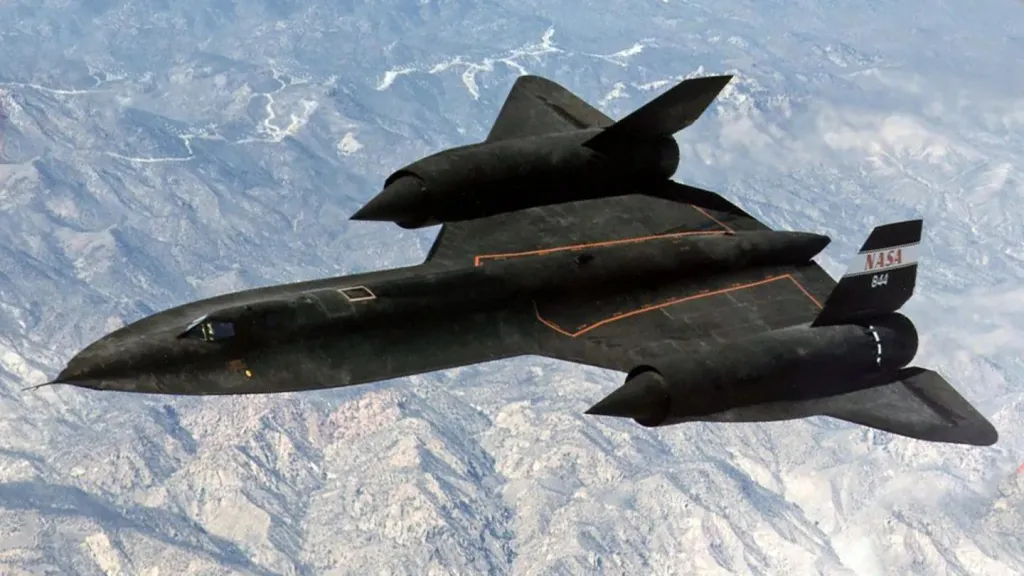
Isaacman made his new remarks about the SR-71 that had been on display, commonly referred to by the tail number 844, and NASA’s broader X-plane plans on a new edition of NASASpaceflight’s The Flame Trench podcast, which was posted online last Friday. 844 had been on display at NASA’s Armstrong Flight Research Center, which is co-located at Edwards Air Force Base in California, following its retirement in 1999. This particular SR-71 had been the last flying Blackbird.
SR-71 tail number 844 seen in NASA service in the 1990s. NASA
“I gotta ask, has 844 been powered on yet?” Eric Johnson, a science, technology, engineering, and mathematics educator and streamer, who was also on the podcast, asked Isaacman.
“So, we’re just cleaning it, man,” Isaacman said in response, with a smile and a small laugh. “It was so dusty out there in the desert, and it just felt like it needed a cleaning.”
“We’re just cleaning it man”
Amid speculation that it could be returning to flight, NASA Administrator Jared Isaacman teases to NSF that NASA is “just cleaning” their SR-71 Blackbird… pic.twitter.com/t8uBwaK4s1
NASA Administrator Jared Isaacman showed this image during a presentation last week while talking about plans for new X-planes. NASA
“Since I didn’t answer your question that you asked before, I will give you some insight that we will announce a new X-plane at it [Max Power], and it is not the one you’re thinking about,” the NASA director said in an ensuing discussion on the podcast about that event, which is set to kick off on Saturday. “I am gonna deliver on the promise there will be more X-planes.”
Isaacman has openly pledged to revitalize NASA’s X-plane portfolio on several occasions, including during a town hall with NASA staff on just his second day on the job in December 2025.
MAX POWER at NASA’s Kennedy Space Center | Nov. 7-8, 2026
While on The Flame Trench podcast, Isaacman also noted that he had just been out to Armstrong recently, primarily to mark the naming of Troy Asher as the facility’s new director.
“They know to speed up when we go past the outdoor museum. They definitely don’t want me out –” the head of NASA said of that recent trip, before Johnson interjected with a tongue-in-cheek remark that they didn’t want him “cleaning more planes, right?”
“I was like, is there anything else?” Isaacman added immediately afterward. “You know the F-16 VISTA, pretty cool plane. Got some cool jets.”
The “F-16 VISTA” mentioned here is the Variable Stability In-flight Simulator Test Aircraft, a heavily modified two-seat F-16D Viper fighter that is now designated as an X-plane, the X-62A. The X-62A is in active U.S. Air Force service as a testbed based at Edwards. NASA’s museum at Armstrong does have several other retired jet-powered X-planes on display, including a delta-winged F-16XL and an X-29 with its distinctive reverse-swept wings.
The X-62A VISTA test jet. USAF A stock picture of the X-62A VISTA test jet. USAFA satellite image taken in 2018 showing SR-71, tail number 844, as well as other retired X-planes, on display outside of the Armstrong Flight Research Center in California. Google Earth
As noted, Isaacman is an outspoken advocate for new X-planes, including types that could be capable of supersonic or even hypersonic flight. This has been reflected in NASA budget proposals and the prior announcement of a new Aeronautics Flight Accelerator (AFA) initiative.
At the aforementioned conference in September, Isaacman had also pushed back on the idea that the silhouette he had shown in his presentation was of an SR-71, despite it having a host of features in line with the Blackbird’s iconic shape. He declined to elaborate further at that time, but did say that “NASA is getting back in the business of flying high and fast again.”
“NASA has a long history of building and flying experimental aircraft that push the boundaries of what is possible,” NASA told TWZ at that time when asked for more information. “As Administrator Isaacman has said, we want to see more X-planes flying in the years ahead, developing the technologies that will allow us to fly higher, farther, and faster than we have in decades. We look forward to sharing more as those efforts progress.”
“NASA has a long history of pushing the boundaries of experimental aviation, and we continue to explore opportunities to build on that legacy,” the agency told us again following the initial story on the disappearance of 844 from Aviation Week. “As Administrator Isaacman has said, we want to see NASA flying higher, farther, and faster than we have in decades. We recognize the interest in the SR-71 and its remarkable history at NASA but have no additional information to share regarding the aircraft at this time.”
TWZ has reached back out to NASA today in light of Isaacman’s latest comments.
SR-71 tail number 844 during its service with NASA. This picture was taken on October 31, 1997, during a flight in support of the NASA/Rocketdyne/Lockheed Martin Linear Aerospike SR-71 Experiment (LASRE). NASA
“One of the reasons why there’s interest in this speed regime, it was neglected for a number of years. The focus was on hypersonics. If you proposed anything going back, say, 15 years in the Mach 3.5 speed regime, it was ignored,” Tim Conners, an engineer who worked on the SR-71 program at NASA, told us in an exclusive interview published last month. “The glitz and glamour was on hypersonics. Hypersonics is great tactically for certain scenarios, but the weaknesses of hypersonics are now becoming apparent.”
“And as far as countermeasures, hypersonics still has a place. Don’t get me wrong, but every system cannot be hypersonic from an affordability standpoint. So, now you’ve seen it over the last, say, five years. A lot of systems are coming back on the scene that operate in the Mach 2 to Mach 4 regime, and there’s a reason they’re all fitting in there, right?” Conners, who is now technical director for advanced weapons systems at Tiberius Aerospace, continued. “You stay below the speed limit that requires more exotic metallics. You stay in the titanium regime. You can fly, of course, up to [Mach] 3.5 with brief excursions up to about [Mach] 4, so that is tactically relevant against a lot of military targets and defensive systems. So here it is. You know we now have a potential flying test bed that can carry engines in the J58 size class.”
SR-71 LASRE in Flight over California’s Mojave Desert
“They probably are not going to do this for — or trying to do this — for aerodynamic reasons. You can do CFD [computational fluid dynamics]-based modeling in this speed regime all day long and very accurately in this day and age. It does not take a lot of time or money to do that,” he also added. “What you cannot do is an accurate representation of a new type of engine integrated into a high-speed airframe. You can do the conceptual modeling of it. Of course, it’s difficult to get the final installed answer, especially if it involves an engine that operates at long duration. That is where I think they’re going with this. I believe that they’re developing basically a high-speed engine test bed. That would make the most sense to me.”
TWZhas also laid out in detail how the process itself of making an SR-71 flyable could be immensely valuable, including for informing follow-on developments. As we have noted in the past, it is possible that what NASA is doing with 844 now could be intended as a stepping stone to a new X-plane. There is also a potential for the aircraft to re-emerge in a substantially reworked form, potentially configured for pilot-optional or even completely uncrewed operation. However, any such conversion effort would be a different kind of major undertaking.
An SR-71 undergoing maintenance. NASA
How any of this may or may not relate to the plans for the new X-plane that Isaacman mentioned remains to be seen. Even within the context of high-speed flight, NASA is publicly pursuing advanced technology developments in various different directions.
The main face of the agency’s X-plane work currently is the X-59 Quiet SuperSonic Technology (QueSST) jet, which has now flown 41 test flights since taking to the skies for the first time in October 2025. The X-59, which will also be present at Max Power, has been able to reach a top speed of Mach 1.53 and get up to an altitude of 56,000 feet in the course of that testing. The central goal of the QueSST program is to prove out technologies that could eventually enable commercial supersonic flight over land with a substantially reduced sonic boom. With this in mind, the X-59 has been in no way designed for the kind of extreme speeds the SR-71 is capable of reaching.
Max Power is “turning into a big exposition. I think you’re going to have a lot of stuff on display there, from space to VTOLs [vertical takeoff and landing designs], [and] drones. And for sure an air show will be a component to it,” NASA’s Isaacman said on The Flame Trench podcast. “From here forward, we might be trying to make a run at putting some real infrastructure on that next to that runway [at the Kennedy Space Center], and trying to create our own kind of Paris/Farnborough type, Dubai type, event here.”
In the meantime, what we do know now for sure is that we are set to get details about at least one new NASA X-plane this coming weekend at Max Power. There may also be new hints about what the future holds for SR-71 tail number 844.
The surprising loss to Fleetwood, a team 84 places below Arsenal in the football pyramid, was made even worse by the fact that the Gunners’ under-21 team had beaten AFC Wimbledon, a side in a division higher than the hosts, on the same night in the EFL trophy.
The first incident of the match came with under two minutes on the clock when the game was stopped for more than eight minutes when a drown was flown above the pitch.
Perhaps Arsenal should have taken that as a warning.
Arteta named an experimental side and gave a debut to 18-year-old Ceadach O’Neill, started 17-year-old Marli Salmon at centre back, 16-year-old Dowman on the wing while goalkeepr Illan Meslier was making his first start for the club too.
But the Gunners boss surrounded that inexperience with seasoned internationals such as Jurrien Timber, Piero Hincapie, World Cup winner Martin Zubimendi, Champions League winner Kai Havertz and Viktor Gyokeres.
All of those players played a huge part in the Gunners winning the Premier League title last season.
However, even after introducing captain Martin Odegaard and £75m signing Bruno Guimaraes from the bench, Arsenal produced a poor performance.
“First of all, congratulations to Fleetwood for going through the next round. The manner that they have done it, and for us a very sad day.” Arteta said of the result.
“There is nothing to criticise the players for their attitude, their application. The determination – you could see that was there from the start.
“Even with 10 men, we conceded a really poor goal to start with that gave them some momentum.”
The loss in this competition is not the Gunners’ first, but it does mean they have not won the League Cup for 33 years.
In 2012, Arsenal lost to League Two side Bradford City on penalties and they were also beaten by Championship side Sheffield Wednesday in 2015 at the same stage too.
With Dowman now suspended, Saka out for around six weeks, Tzolis working to return and Arteta revealing after the match that Madueke was unavailable with an injury, their options in the wide areas for the match with Liverpool on Sunday are looking slim.
The track is built on former marshland and that has made it difficult for organisers to keep it in good condition, but the four-time champion rejected that as a reason not to try to solve the issue.
“You can use the excuse that the soil is the problem but then you should have known that and you need to make sure that you reinforce it more,” Verstappen said.
“Last year, for example, you pull around 5-6G in a corner, but I had some impacts, vertical load, which was over 9G on my spine, which I can tell you is really not fun, and especially the older you get, you think about that more and more.”
Verstappen said the problem was likely to be exacerbated this year because although the cars from 2022-25 had lower ride-heights overall, the way the cars are run under the latest regulations means they are running lower in corners than last season.
That’s because of the switch between having the front and rear wings open in drag-reduction mode on the straights and closing in corners means the cars drop down towards the ground when they brake.
“You bottom out way harder, because when the wings close and the ride-height comes down, under braking is actually a very stressful moment, and I know around here in some places, it’s very bumpy under braking,” he said.
“Especially when it’s like these kind of awkward bumps, not just bumps from the track getting older, but the surface underneath the soil just moving up and down, sometimes (it’s) very hard to expect, or if you’re like a tiny bit offline, you don’t know what is there, because no-one really drives here sometimes.
“I can tell you from the checks that I’ve done from my spine, the bottom end doesn’t look that great.
“I know that’s part of racing. I know that can be part of sport, but it’s also further damage from the cars that we had the last few years.
“And now if we continue with finding this acceptable to drive on, then you are going to suffer with that much more.”