Mauritanias

Mauritania’s female Islamic guides: Leading the fight against ‘extremism’ | News

Nouakchott, Mauritania – Across a vast stretch of the Sahel and West Africa, armed groups are expanding their reach, military governments are replacing fragile democracies, and “counterterrorism” efforts continue to contend with armed violence, often rooted in poverty and challenging living conditions.

While the Sahel has become synonymous with instability, tucked between the region and the Atlantic coast sits Mauritania, a country that has somehow managed to douse the flame. The explanation for this resilience often begins with a woman in a headscarf sitting across from a young man or a woman in a prison cell, talking about God.

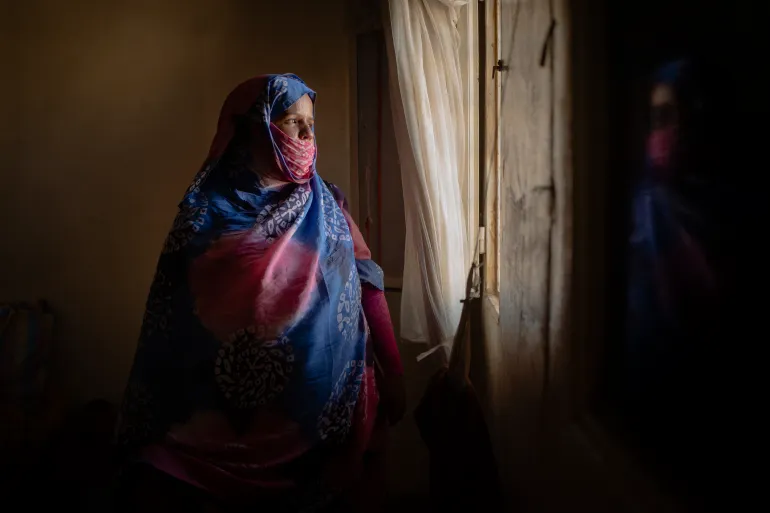
Mauritania’s mourchidates are female Islamic spiritual guides, trained, certified, and deployed by the state under the Ministry of Islamic Affairs since 2021. They are not a new phenomenon, as the programme has its roots in Morocco.

Morocco’s mourchidates were introduced after the 2003 Casablanca bombings, a series of coordinated attacks in the Moroccan city that killed dozens and injured hundreds, as part of a broader religious reform.

Youssra Biare, a Moroccan researcher, states: “Morocco’s mourchidates offer one of the most established examples of women’s religious leadership as a tool for peace-building and preventing violent ‘extremism’.”

Since the programme’s launch in 2006, Morocco’s mourchidates have received formal theological and social training, which enables them to provide religious guidance and family counselling.

“Beyond their role in countering extremist narratives, they address the social and emotional factors that can make young people vulnerable to radicalisation,” Biare told Al Jazeera.

“For countries such as Mauritania, the Moroccan model demonstrates how investing in well-trained female religious leaders can strengthen community trust, promote moderate religious discourse, and create culturally grounded approaches to youth de-radicalisation and social cohesion.”

The mourchidates operate across schools, youth centres, mosques, hospitals, and, critically, prisons. They provide religious counsel grounded in mainstream Islamic scholarship, challenge the theological justifications that armed groups use, and offer a credible alternative to their narratives.

What makes the programme distinctive is the involvement of women with dedicated religious scholarship. More than social workers with a passing familiarity with Islamic texts, the mourchidates are trained in Quranic interpretation, Islamic jurisprudence, and the history of theological thought.

When they sit with detainees convinced that violence is a religious obligation, they can engage on their own terms and dismantle those arguments point by point.

Prison as a battleground for ideas

Prisons have long been recognised globally as sites of radicalisation, where recruitment networks operate. Mauritania, however, has pursued a different approach. Inside its prisons, mourchidates engage detainees linked to armed groups operating in the Sahel region, including those convicted of planning or participating in attacks across Mauritania, as well as those joining radicalised groups in neighbouring countries.

Their work goes beyond pastoral care to critically engage prison populations on an ideological level. They sit with these people over extended periods, building trust and addressing the theological arguments that justified violence, such as the belief that attacks on civilians could be sanctioned in the name of religion.

By patiently challenging these interpretations and offering alternative readings of Islamic texts, the mourchidates gradually open space for detainees to reconsider their choices.

De-radicalisation, when it works, tends to be built on relationships. The mourchidates, through their close ties to communities, are often well-placed to build these relationships in ways that male guards, military officials, or even male religious scholars are not always able to.

Mauritanian Mourshidat (female guides)
Mauritania stands out as a rare island of stability in West Africa’s fight against radicalism due to its use of female Islamic guides [Michelle Cattani/AFP]

A significant portion of what mourchidates do is preventive, operating in community spaces to reach young people before they become vulnerable to recruitment. Armed groups exploit unemployment, marginalisation, and legitimate grievances to draw young men and women to their cause, often using the language of faith.

Countering this radicalisation requires a coherent narrative more than a militaristic approach, and that is precisely what the mourchidates provide.

“One of the strengths of the Mauritanian model is that it understood early on that violent extremism cannot be addressed through security responses alone,” Aminata Dia, a Mauritanian founding member of Elles Du Sahel Network and the executive director of the nonprofit Malaama, told Al Jazeera.

“The country invested in prevention, religious dialogue and community trust-building, particularly through the mourchidates programme,” she said.

Yahia Elhoussein, a scholar who runs a maourchidate school in Nouakchott, told Al Jazeera that this approach works due to its credibility.

“The mourchidates were deployed by the Ministry of Islamic Affairs to different parts of the country, where they educated young people on the true teachings of Islam, such as tolerance, charity, and accountability, playing an important role in de-radicalisation without any use of force,” Elhoussein said.

Why Mauritania stands apart

The results, while difficult to quantify, are reflected in Mauritania’s regional trajectory. The country has not been immune to threats from armed groups, enduring attacks in the mid-to-late 2000s that pushed it to reassess its approach.

What followed was a comprehensive strategy combining intelligence, community engagement, religious reform, and programmes like the mourchidates. Since then, Mauritania has largely avoided the scale of attacks that have devastated its neighbours, such as Mali and Burkina Faso.

Security analysts point to Mauritania as a case study for a preventive model, investing in conditions that make radicalisation less likely rather than responding solely to violence. The mourchidates are central to that model.

Mauritanian Mourshidat (female guides)
Trained women volunteers travel throughout the country to homes, markets, mosques, prisons, and schools to raise awareness among the most vulnerable [Michelle Cattani/AFP]

None of this suggests that Mauritania has solved the problem, or that its approach is without limitations. The country faces governance challenges, while the broader Sahel region continues to experience expanding armed violence, poverty, displacement, and weak state presence, pressures that no single programme can fully address.

Critics note that the reach of the mourchidates, while meaningful, remains constrained by resources and scale.

There are also questions about how replicable this model is elsewhere. Morocco’s version has been partially adapted in other Muslim-majority countries, but conditions in Mauritania, a deeply religious society, such as respected female scholarship, credible state authority, and political will, make it unique.

In Burkina Faso, Mali, and Niger, replicating this model would require rebuilding trust between the state and the community, which appears to have eroded.

At a time when international counterterrorism policy in the Sahel is dominated by military presence, drone strikes, and external interventions, Mauritania’s experience offers a different lesson. Some of the most effective tools for preventing violent activism are not found in special forces and military operations but in trained women, armed with knowledge and patience.

“Mauritania’s mourchidates prove that community-based approaches can be more effective than any other approach,” said Elhoussein.

Source link

‘I have to protect them’: The man guarding Mauritania’s rare Islamic books | Arts and Culture

Chinguetti, Mauritania – Bookkeeper Muhammad Gholam el-Habot gently pulled a pair of white gloves onto his slender hands and set about his routine in his high-ceilinged, cool library lined with steel bookshelves.

He opened a thick manuscript printed in Arabic. After leafing through its brown and frail pages, looking for damage, el-Habot closed the book with a satisfied thud, rubbed his fingers over the wrinkled leather cover, and carefully placed it in a white cardboard box.

Recommended Stories

list of 3 itemsend of list

“These books are very important to my family and me,” the librarian said, as the midday sunlight spilled in through open wooden doors. He spoke in Hassaniya Arabic, the dialect spoken in Mauritania, his voice low, his sentences halting and poetic. Fat flies buzzed around his long oval face as he worked.

“My relationship with them is like that of a father and his son,” he continued. “We must protect them until God takes the land and all the people who are on the land.”

The el-Habot family library is only one of a handful of its kind still operating in Chinguetti, a medieval fortress town or ksar in Mauritania’s northern Adrar region. Once a centre of commerce and Islamic learning between the 13th and 17th centuries, it is now largely abandoned as, over the decades, locals have sought opportunities in bigger cities.

Chinguetti old town
A view of the old town of Chinguetti, which follows typical Moorish structures with a mosque at the centre [Shola Lawal/Al Jazeera]

Chinguetti is also at the mercy of a changing climate.

Mauritania, in northwest Africa, is 90 percent Sahara desert and has faced desertification for centuries. Now, human-induced climate change is an accelerant. Sand and flash storms occur more frequently, while extreme hot or cold seasons last longer than usual.

Those pressures are a “big deal” for precious books, said Andrew Bishop, a researcher at the University of Wyoming studying climate impacts on Saharan cultures.

“Extreme heat and less predictable rainfall patterns means that texts are increasingly damaged by water or heat, making many manuscripts beyond repair. More than that, the mud libraries themselves are not built for sudden rain and longer summer of over 40 degrees (Celsius, or 104 degrees Fahrenheit),” he told Al Jazeera.

Many of Chinguetti’s 4,500 residents now live in cement buildings outside the original confines of the abandoned ksar, built out of dry stone and red mudbrick. There are fears that the entire area, which is about 500 square kilometres (200 square miles) – about the size of Prague – is at risk of being buried by surrounding sand dunes in the long run, although there is not a clear timeline yet.

Rare manuscripts
Rare manuscripts shown in one of Chinguetti’s last libraries [Logan Stayton/University of Wyoming]

Islam’s ‘seventh holiest city’

El-Habot did not always want to be a bookkeeper.

But when his father grew sick in 2002, he took over the approximately 1,400 manuscripts out of obligation. It was an honour in his culture to be selected, he said.

It would be out of the question now, the 50-year-old librarian said. He imagines that his two sons would reject the duty, as many of their peers have left to explore economic opportunities in the capital city, Nouakchott, or elsewhere.

“This is something that we have to do; it is a family obligation,” el-Habot said, with a bewildered expression. “This is not even a question to be asked.”

The family manuscripts are sacred because they are rare. The bookkeeper’s ancestor, Sidi Mohamed Ould Habot, was one of about two dozen Chinguetti scholars who travelled around the Muslim world between the 18th and 19th centuries, from Egypt to Andalusia, in search of knowledge.

Between them, the scholars amassed a vast fortune of about 6,000 scripts. They covered almost every topic: Islamic jurisprudence, the hadith or teachings of the Prophet Muhammad, mathematics, medicine, and poetry. Some of the works came from the scholars themselves, including the older el-Habot, who wrote about the science of poems.

The books were stored in about 30 libraries in Chinguetti, open to people from all over the world.

At the time, the town was famous because of its location at the crossroads of trans-Saharan trade routes linking the Sahel and the Maghreb. Camel caravans guided by nomadic Berber traders transporting goods – mostly salt and gold – between northern Africa and the southern empires used the city as a way station, transforming it into a commercial hub.

Muslim pilgrims on their way to Mecca on foot or camel would gather in Chinguetti and prepare themselves spiritually and mentally for their long, difficult journey before heading on to Cairo. Islamic and scientific texts were exchanged, bought and sold in the town.

In West African lore, Chinguetti was referred to as Islam’s seventh holiest city. Others nicknamed it the “Sorbonne of the Sahara”, according to UNESCO.

Rare manuscripts
Some of the old texts stored in the el-Habot family library. The family has a total of about 1,400 books in its care [Logan Stayton/University of Wyoming]

Generation after generation managed the libraries. Over time, as the caravan trade declined due to new European sea routes, the old town emptied and several libraries closed.

“Chinguetti was the mother of all people,” el-Habot said, referring to the town’s old status as the main capital of the region. Indeed, the area now known as Mauritania was called “Bilad Shinqit” or Land of Chinguetti. In the local Soninke language, it translates to “spring of horses”.

“People had to go because they wanted to feed themselves, get education for their kids, and get better opportunities for themselves too,” el-Habot said, adding that there were no universities close by, and only a handful of primary and middle schools.

Some within his family have moved on, as well, the bookkeeper said. Those, like him, who stayed back, wanted to respect their ancestor’s three wishes.

“His wishes were that the library stay in Chinguetti, that it should be open to all seekers of knowledge, and that a male descendant of his who is religious and morally upright be the bookkeeper,” el-Habot explained. Not following those instructions, he said, could invite God’s anger.

Chinguetti’s decline is largely due to the lack of support for its traditional lifestyle, Bishop said. Annual rainfall in Mauritania has decreased by 35 percent since 1970, making it harder for herders to graze or for date palms to produce fruit.

In 1996, UNESCO granted Chinguetti and three other Mauritanian ksour World Heritage Status, cementing their rich legacy. The few people still living in the old town are allowed to renovate but only minimally, to keep its original stone architecture and the typical Moorish structuring where houses are lined up along narrow alleys that lead to a mosque with a square minaret.

Just outside Chinguetti are the excavated ruins of Abweir, a town of 25,000 believed to have been founded in 777 AD, and believed to be the “original” Chinguetti. Its residents moved from the settlement, locals believe, in 1264 – likely after a conflict. Over time, the area was completely swallowed by sand.

El Habot stands inside the library
Bookkeeper el-Habot stands inside the family library on a recent weekday [Shola Lawal]

Saving the manuscripts

El-Habot’s job, while enjoyable much of the time, is also taxing, he admitted.

Preserving old books by reprinting or digitising the most worn-out manuscripts before they become unreadable is a costly process. He often needs chemicals to keep away book-eating insects and has to fund more suitable storage.

Then, there is the weather, which is out of his control. Mauritania swelters in the dry season between April and December, and is bitingly cold in the winter months that follow. Old pages are sensitive to both extremes and can become brittle, el-Habot said. Sometimes, when it is really hot, he places buckets of water around the library hall to spur humidity.

Flash floods, meanwhile, threaten water damage.

Escavated mosque of Abweir
An excavated mosque of Abweir, just outside Chinguetti, stands next to a sand dune. The settlement was believed to be the ‘original’ Chinguetti before residents moved for unclear reasons [Shola Lawal/Al Jazeera]

Visitors to the library usually pay a small fee, but tourist numbers dropped drastically across Mauritania in the mid-2000s, when armed groups attacked foreigners. The COVID-19 pandemic also reduced the flow of travellers.

Mauritania has since clamped down on violence. Tourists are slowly coming back, el-Habot said, and some of the locals who left have also returned.

In 2024, a $100,000 UNESCO restoration project provided air-conditioning units, computers and printers, as well as shelving units and storage boxes to 13 family libraries to stimulate the sector. But most libraries remain closed, their texts scattered among members. The lack of capacity of young people who are not as interested in preserving Chinguetti’s culture will continue to pose a challenge, Bishop said.

Chinguetti
A section of old Chinguetti shows the stone masonry used at the time [Shola Lawal/Al Jazeera]

Back in the library, el-Habot continued working, his thin frame bent over his manuscripts. He opened one book and pointed excitedly at its pages: They depicted the moon in its luteal phases, and an eclipse. A third page showed the holy cities of Mecca and Madina.

“I have to protect this heritage,” el-Habot said in his low voice. “As mine, and also for all of humanity.”

Source link