Contributor: MLB’s biggest rivalry this season will be players vs. owners
The Major League Baseball Players Assn. is arguably the strongest union in the United States whose members include some of the most conservative athletes in professional sports. The owners of Major League Baseball’s 30 teams, who made their wealth through the workings of free enterprise capitalism, want to limit what players can be paid. This apparent political and philosophical irony will most likely lead to a shutdown of baseball at the end of this season.
Wednesday is opening day for the 162-game major league season. The 2025 season ended Nov. 1 with an 11-inning Dodgers victory over the Toronto Blue Jays in what was one of the most mesmerizing World Series ever. Last season, the Dodgers attracted more than 4 million fans for the first time. The Dodgers weren’t alone. More than 71 million fans attended major league games — the third straight season of growth. Over the last decade, league revenue has increased 33%.
And yet, despite all this good news about the health of baseball’s finances, team owners have threatened to lock the players out — essentially an ownership strike — at the end of this season over terms of a new collective bargaining agreement soon to be negotiated with the players union.
Major League Baseball, unlike the NFL, the NBA and the NHL, does not have a hard salary cap that limits what teams can spend on players. This is the key issue for the 30 team owners and Commissioner Rob Manfred, who argues that the system is “broken.” Small-market teams can’t effectively compete, Manfred insists, with economic behemoths like the Dodgers and Yankees. But over the past 10 seasons, 14 teams have made it to the World Series, so the league is not dominated by only a few big spenders.
Major leaguers and fans have weathered five player strikes and four owner lockouts since 1972. The 1994-95 strike lasted 232 days, canceling more than 900 games, including the World Series. Unlike in the NFL, where top players like San Francisco 49ers quarterback Joe Montana crossed a picket line during the 1987 NFL Players Assn. strike, unionized baseball players have remained united. So far, no star players have been strikebreakers in baseball. Both Paul Skenes of the Pittsburgh Pirates and Tarik Skubal of the Detroit Tigers — the 2025 Cy Young Award winners for their respective leagues — also serve in players union leadership roles.
A recent report analyzing major league ballplayers’ political affiliation found that among those who live in states that allow public access to voter registration records, nearly 54% of the players were Republicans compared with 8% Democrats. Why does a rightward-leaning membership retain such strong union loyalties?
For Miami Marlins pitcher Pete Fairbanks, who is also a member of the players union leadership, it comes down to recognizing that they stand on the shoulders of players who challenged the baseball establishment.
“If you look at the history of the union, we’ve had a foundation set for us,” Fairbanks said. “They fought for players’ rights and for the general betterment of the whole and it’s the job of the veteran players to pass that history on to the younger players.”
Marvin Miller, a former Steelworkers Union leader, revolutionized the players’ union and baseball when he led the association from 1966 to 1982. He told the New York Times in 1999 that he was “irked” that many players did not know that it was the union that made their enormous salaries and benefits, arbitration and free agency possible. “When you don’t know your history, you tend to relive it,” Miller said.
Miller, who died in 2012, was a labor history buff who realized that highly skilled workers often developed elaborate ethical codes that promoted solidarity with other employees.
Bruce Meyer, the current executive director of the players association, puts the union’s fractious history with the owners at the center of his communications with players. He spent weeks talking with union members during spring training in Florida and Arizona, emphasizing the importance of unity in the ranks. “The bottom line is that our players have always been of the view that they are fighting not just for themselves but for their teammates and for the players that come after them,” Meyer said.
Manfred’s strategy as commissioner of Major League Baseball has been to talk directly with the players himself, especially the lower-earning younger players who he claims are being shortchanged. He argues that “10% of our players make 72% of the money,” numbers that Meyer disputes.
The commissioner is essentially telling players that their union has engaged in malpractice, losing touch with its own members while the economics of baseball changed around them. Meyer regards Manfred’s attempt to divide players as “standard management-labor tactics.”
Top agent Scott Boras said that, unlike in the NFL, baseball’s open salary system works for players because “your talent allows you to earn what you can earn without taking money from anybody else’s pocket.”
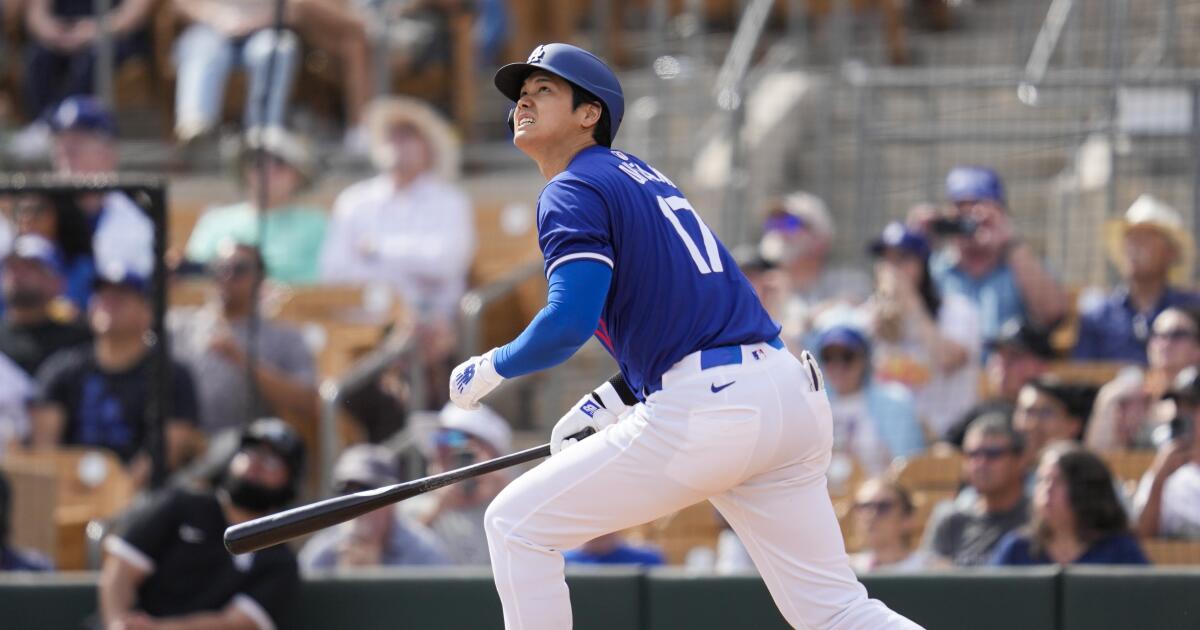
Paradoxically, the union has embraced the principles of Adam Smith: Let the free market work. No one forced the Dodgers to pay Shohei Ohtani $700 million. Good for Ohtani, great for Dodger fans. And this year, the Japanese clothing retailer Uniqlo will be a field sponsor at Dodger Stadium. The owners, who embrace team revenue sharing and luxury taxes and demand restrictions on salary competition, sound like socialists.
When labor-management disputes interrupt baseball, many fans undoubtedly feel like they are victims of a squabble between “millionaires and billionaires.” Ryan Long, a 26-year-old minor league pitcher in the Baltimore Orioles system and a union leader, thinks the players association should try to understand how regular working people feel about a potential lockout. “Whether it’s people selling hot dogs at stadiums or cleaning rooms at local hotels, the union should help in whatever way it can for other workers who may be hurt if baseball shuts down,” he said.
In late February at the Yankees spring training field in Tampa, I spoke with season ticket holder Richard Barnitt, who wore a shirt designed like a baseball, looking like he could be scuffed up and pitched. “There has to be some kind of cap because the Dodgers and the New York Mets had unlimited money,” he said. Another fan, Carlos Rodriquez, an airplane mechanic living in Tampa, disagreed. “I don’t think a salary cap would be fair to the players,” he said. “The players association does magical work for those guys.”
If locked out, the players are going to want support from fans, to whom a salary cap might sound reasonable. Owners will do what owners do: maximize profits and franchise values. The players union should find ways to show the fans they are not forgotten.
During a previous owners lockout, the association created a million-dollar fund to help pay the bills of stadium concession workers who were thrown out of work. They can do the same again, letting fans know that they understand that most Americans struggle paycheck to paycheck. And maybe Ohtani can chip in a couple hundred bucks — like former Dodger Mike Piazza did decades ago — for each home run.
Kelly Candaele produced the documentary “A League of Their Own,” about his mother’s years playing in the All-American Girls Professional Baseball League.