lucas

LUCAS Kamikaze Drones Lauded As “Indispensable” By U.S. Admiral In Charge Of Iran War

Responding to a question from The War Zone at a press conference at CENTCOM headquarters in Tampa, Florida, the admiral leading the war against Iran praised the Low-Cost Uncrewed Combat Attack System (LUCAS) kamikaze drone. Based on the Iranian Shahed-136, these weapons were used in combat for the first time just six days ago. They were fired against unspecified Iranian targets in the opening salvos of the Operation Epic Fury joint U.S.-Israeli attack on Iran and repeatedly since.

The War Zone has advocated for the procurement of this exact class of drone by the American military and today, Adm. Brad Cooper backed up that assessment.

War Secretary Pete Hegseth examines a Shahed-clone kamikaze drone at the Pentagon, (US Army)

“LUCAS, indispensable,” Cooper told us when we asked how effective they have been and how much they’ve helped preserve magazine depth, given their comparative low cost and faster and easier production.

America’s stockpile of offensive and defense munitions remains a concern as Epic Fury drags on, even though War Secretary Pete Hegseth, who also spoke at the press conference, downplayed it. More on that later in this story.

A Tomahawk cruise missile cost roughly between $2 million to $2.5 million a piece. Air launched cruise missiles currently in service cost over a million a piece, although work is being done to reduce that number considerably. There is still a tradeoff in warhead size, response time, and survivability, but cheaper weapons in greater quantities that can deliver a payload over hundreds of miles are badly needed as part of a arsenal mix that includes more advanced types.

US, UK and allies strike Houthi rebels in Yemen.
File photo of TLAM launch. USN

“Costing approximately $35,000 per platform, LUCAS is a low-cost, scalable system that provides cutting-edge capabilities at a fraction of the cost of traditional long-range U.S. systems that can deliver similar effects,” Navy Capt. Tim Hawkins, a CENTCOM spokesperson, told TWZ back in December. “The drone system has an extensive range and the ability to operate beyond line of sight, providing significant capability across CENTCOM’s vast operating area.”

U.S. CENTRAL COMMAND AREA OF RESPONSIBILITY (Nov. 23, 2025) Low-cost Unmanned Combat Attack System (LUCAS) drones are positioned on the tarmac at a base in the U.S. Central Command (CENTCOM) operating area, Nov. 23. The LUCAS platforms are part of a one-way attack drone squadron CENTCOM recently deployed to the Middle East to strengthen regional security and deterrence. (Courtesy Photo)
Low-cost Unmanned Combat Attack System (LUCAS) drones are positioned on the tarmac at a base in the U.S. Central Command (CENTCOM) operating area. (Courtesy Photo)

Moreover, the LUCAS design includes features that allow for “autonomous coordination, making them suitable for swarm tactics and network-centric strikes,” a U.S. official told us in December. As we have explained in detail in the past, the swarming capabilities combined with some of the drones being equipped with Starlink terminals, means extremely advanced cooperative tactics and dynamic targeting are possible, all while keeping humans in the loop.

The video below is said to show a LUCAS drone, recovered largely intact in Iraq. Its beyond-line-of-sight satellite datalink can be seen detached and hanging by a cable.

Locals in Iraq appear to have recovered a crashed and almost entirely intact Low-Cost Unmanned Combat Attack System (LUCAS), an American copy of the Iranian Shahed-136 Attack Drone, which is confirmed to have been used recently by Task Force Scorpion Strike during U.S. attacks on… pic.twitter.com/SEqO6627en

— OSINTdefender (@sentdefender) March 2, 2026

Cooper highlighted how the U.S. has reworked the Iranian Shahed, which have been wreaking havoc during this conflict, killing six U.S. troops and causing destruction across the Middle East.

“We captured it, pulled the guts out, sent it back to America, put a little ‘Made in America on it,’ brought it back here and we’re shooting it at the Iranians.”

The U.S. Navy personnel in the Middle East have test-launched a Low-Cost Uncrewed Combat Attack System (LUCAS) long-range kamikaze drone from the Independence class Littoral Combat Ship (LCS) USS Santa Barbara.
LUCAS kamikaze drone. (Courtesy photo) NAVCENT/C5F/U.S. Army Spc. Kayla Mc Guire

In a video message earlier this week, Cooper said that the U.S. has fired “countless one-way attack drones” to great effect.

Thursday, we asked him what kinds of targets LUCAS drones have been used against and he offered a short response.

“Good ones,” he said.

We asked Cooper to respond to stories that have emerged saying the Pentagon and at least one Gulf ally are talking to Ukraine about procuring their low-cost Shahed interceptors. He deferred to Cooper.

“I’m not familiar with the particular offer, but the interceptors in general, we’ve had a number of new capabilities being fielded,” the CENTCOM commander explained. “Obviously, I’m not going to talk about it from the operational perspective of what those are, but I think you have seen over a period of time us kind of get on the other side of this cost curve on drones in general.”

“If I just walk back a couple of years, remember what you used to always hear, we’re shooting down a $50,000 drone with a $2 million missile,” he added. “These days, we’re spending a lot of time shooting down $100,000 drones with $10,000” weapons.

Before Cooper answered our questions, Hegseth repeated the Pentagon’s assertion that it has the weapons it needs to outlast Iranian missile and drone barrages.

“We’ve got no shortage of munitions,” Hegseth proclaimed. “Our stockpiles of defensive and offensive weapons allow us to sustain this campaign as long as we need to again, our munition status only increases as our advantage increases our capabilities.”

As we recently pointed out, Iran’s ability to launch missiles and drones at U.S., Israeli, and other allied targets in the Middle East has been severely degraded, curbing concerns, even if to just a small degree, about America’s magazine depth.

However, as we have often noted, one of the big concerns about Epic Fury is whether Iranian missile and drone barrages would outlast the ability of the U.S. and allies to defend against them. Despite six days of intensive attacks, Tehran still possesses thousands of missiles and drones, though a significant number of these weapons and their launchers — specifically the longer range ballistic missile types —have been destroyed or prevented from being accessed by crews.

The effort to eliminate the Iranian regime’s mobile missile launch capabilities continues. We are finding and destroying these threats with lethal precision. pic.twitter.com/AkGRYOjnOz

— U.S. Central Command (@CENTCOM) March 5, 2026

Though Iran has been severely pummeled by both the U.S. and Israel, it is unknown how much longer the conflict will grind on. President Donald Trump had stated that it could last four or five weeks. Now the time table is very murky, with the administration indicating it could last much longer. Regardless, the more it drags out, the more munitions the U.S. will expend, but at least it knows it can quickly build more LUCAS drones, if need be.

Contact the author: howard@thewarzone.com

Howard is a Senior Staff Writer for The War Zone, and a former Senior Managing Editor for Military Times. Prior to this, he covered military affairs for the Tampa Bay Times as a Senior Writer. Howard’s work has appeared in various publications including Yahoo News, RealClearDefense, and Air Force Times.


Source link

João Klauss and Lucas Sanabria lead Galaxy to win over Charlotte

João Klauss scored two goals two minutes apart in the first 13 minutes — after a score by Lucas Sanabria — and the Galaxy cruised to a 3-0 victory over Charlotte FC on Saturday night.

Sanabria gave the Galaxy (1-0-1) the lead in the eighth minute with an unassisted goal. Sanabria had two goals in 21 appearances as a rookie last season.

Klauss took a pass from Gabriel Pec and scored in the 11th minute, then scored unassisted two minutes later for a three-goal lead. Pec’s first assist this season gives him 24 through his first 64 matches.

Klauss scored the lone goal in a 1-1 season-opening draw with visiting New York City FC. He came over in a cash-for-player trade with St. Louis City in the hopes he’d help ease the loss of superstar Riqui Puig for a second straight season after complications from a torn anterior cruciate ligament. So far, so good for the 29-year-old forward with 28 goals in 81 career appearances.

Novak Micovic needed to make just one save to notch his fourth clean sheet in his 26th career start for the Galaxy.

Kristijan Kahlina made eight saves for Charlotte (0-1-1), which was coming off a 1-1 draw at St. Louis City on a goal by Pep Biel — one of 11 players in the league with double-digit goals and assists last season.

Up next for the Galaxy: at Colorado Rapids on Saturday.

Source link

From ‘Bonnie and Clyde’ to ‘Star Wars’: The real history of New Hollywood

Book Review

If you buy books linked on our site, The Times may earn a commission from Bookshop.org, whose fees support independent bookstores.

“That’s my pot dealer!” exclaimed Michelle Phillips in a crowded movie theater in 1977. Months earlier, the Mamas & the Papas singer had only known Harrison Ford as a stoner-carpenter with a few bit parts to his credit. Now he was Han Solo in “Star Wars,” directed by a young upstart, George Lucas. Clearly the world was changing.

How much, though? Conventional wisdom about the Hollywood renaissance of the ‘60s and ‘70s suggests that starting with “Bonnie and Clyde” and “Easy Rider,” a batch of emerging auteurs shook the studios out of a rut and transformed American film. There’s plenty of truth to that: Francis Ford Coppola’s shift in 10 years from a director-for-hire on an old-hat musical, “Finian’s Rainbow,” to the auteur behind “Apocalypse Now” is just one of the era’s most remarkable achievements.

A pair of new books, though, suggest that the overall shift was only so modest, ultimately shoring up not just the old-school studio system but the social norms the interlopers were supposed to be upending.

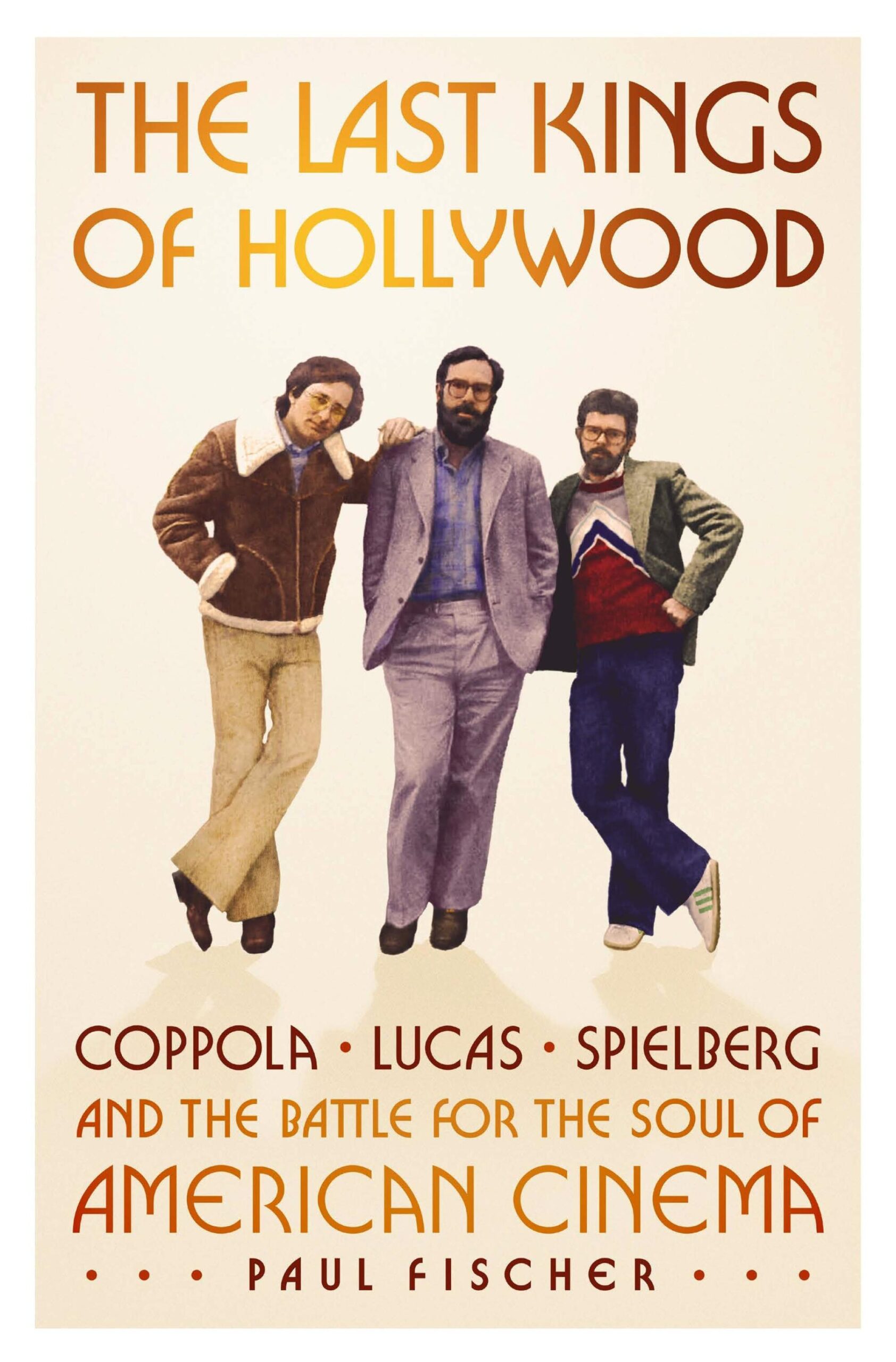
"The Last Kings of Hollywood: Coppola, Lucas, Spielberg and the Battle for the Soul of American Cinema" book cover

Paul Fischer’s lively history of the new wave of California directors, “The Last Kings of Hollywood,” concentrates on Lucas, Coppola and Steven Spielberg. (New York contemporaries like Martin Scorsese and Brian De Palma are present but relatively off-screen.) Fischer has a gift for highlighting the ways that moments that we now accept as inevitable were often the product of dumb luck, pyrrhic victories and tough decisions. Coppola made “The Godfather” out of financial desperation, averse to adapting a mob novel; Spielberg’s “Jaws” was beset with mishaps, from a foolhardy attempt to train a real shark to its malfunctioning mechanical one; only when Lucas learned that the rights to Flash Gordon were unavailable did he pursue a space-opera concept all his own.

Their brashness and can-do spirit were worth cheering for: As the trio delivered films that broke box office records — ”The Godfather,” “American Graffiti,” “Jaws” and more — there were reasons to believe that big-budget films could operate outside the studio system. Lucas in particular was driven as much by resentment of the old as passion for the new. He never forgot how Warner Bros. manhandled his debut feature, “THX 1138” and was driven to muscle “Graffiti” into existence to spite the suits who said he couldn’t. In 1969, Coppola and Lucas launched their own studio, American Zoetrope, in San Francisco, with a passel of scripts in progress (including “Apocalypse Now” and “The Conversation”) and a $300,000 investment from Warner Bros. But Coppola wasn’t much of a businessman, and he had an easier time putting the office’s fancy espresso machine to work than the suite of state-of-the-art editing bays: “He ran his business like he ran a film set — on vibes,” Fischer writes.

A decade later, both Coppola and Zoetrope would declare bankruptcy, and he would split with Lucas, who’d used the success of “Star Wars” to cut his own path as a Hollywood kingmaker via his own production company, Lucasfilm. It allowed him to indulge his love of classic cliffhanger serials, and he tapped Spielberg to direct “Raiders of the Lost Ark.” But Fischer frames Lucas’ career arc as a disappointment, despite all those dollar figures — Lucas wanted to return to artsier “THX”-style fare, but needed cash flow. “If George was ever going to be independent from Hollywood, he thought he wouldn’t get there by making abstract mood poems,” Fischer writes. By the ‘80s, with two “Star Wars” sequels done, Lucas was out of the mood-poem business entirely.

"They Kill People: Bonnie and Clyde, a Hollywood Revolution, and America's Obsession with Guns and Outlaws" book cover

While “Last Kings” focuses exclusively on directors’ relationship to movie economics, Kirk Ellis’ “They Kill People” considers “Bonnie and Clyde” and the New Hollywood from a variety of angles — filmmaking, the social turmoil of the ‘60s, America’s complex relationship with outlaws in general and guns in particular. It’s a meaty yet accessible book that captures the lightning-in-a-bottle nature of the generation’s ur-text, capturing the unlikely nature of its creation and the somewhat dodgy nature of its legacy.

“Bonnie” was such a provocation — nakedly, almost giddily violent — that its studio, Warner Bros, all but willed it not to exist. It was given a shoestring budget, was mocked by studio chief Jack Warner (who sarcastically referred to director Arthur Penn and producer-star Warren Beatty as “the geniuses”), and initially released largely in Southern drive-ins. “They figured the redneck kids would like the guns,” Penn said.

Everybody liked the guns. A few scolding critics lamented the film’s violence, especially its then-shocking bloody finale, but Beatty and co-star Faye Dunaway were deeply seductive onscreen. (Ellis notes that the two are always the best-dressed characters in the film.) And its outlaw sensibility resonated with young audiences in the late‘60s. Moreover, writes Ellis (a historical-drama screenwriter best known for “John Adams”), it represented the culmination of decades of American culture that equated American gun culture with freedom — a notion that would’ve baffled the founding fathers, who dwelled little on gun-rights matters in the Federalist Papers and other constitutional drafting documents, but gained traction thanks to gun manufacturers. “In the printed legend of American history, guns and freedom have become synonymous,” Ellis writes, but it was a new legend — stoked in part by “Bonnie and Clyde” — not America’s origin story.

It’d be a mistake to reduce the New Hollywood to the filmmakers highlighted by these two books — though, focused as they are on white men, they echo the way women and people of color were largely shut out of the system, or relegated to more marginal blaxploitation work. Artists looking to operate outside the system have plenty of inspiration to draw from in the ‘70s. Yet the books also expose how commerce does what it always does — take provocations and sand the edges off of them, then look for ways to make them profitable. In the early ‘80s, a decade after Coppola and company stormed the barricades, Paramount chief Michael Eisner shared a fresh and contradictory vision, such as it was: “We have no obligation to make history. We have no obligation to make art. We have no obligation to make a statement. To make money is our only objective.”

It would take another decade — and auteurs on the East Coast — to launch another attack on that sensibility, via films like “Do the Right Thing” and “sex, lies, and videotape.” They would help usher in the Miramax era — but that’s another story, with its own problematic twists.

Athitakis is a writer in Phoenix and author of “The New Midwest.”

Source link

‘The Last Kings of Hollywood’: How Coppola, Lucas and Spielberg changed cinema

On the Shelf

The Last Kings of Hollywood: Coppola, Lucas, Spielberg—and the Battle for the Soul of American Cinema

By Paul Fischer
Celadon Books: 480 pages, $32

If you buy books linked on our site, The Times may earn a commission from Bookshop.org, whose fees support independent bookstores.

Paul Fischer showed “Jaws” to his daughter when she was 10. She wasn’t scared. In fact, she loved it so much that she dressed as Richard Dreyfuss’ Hooper for Halloween. To Fischer, who watched “Raiders of the Lost Ark” at age 4 (“I remember the melting heads but I don’t think I was traumatized”), it shows the staying power of some of the ’70s blockbusters.

“It’s the flip side of how these franchises became so massive and had such a long tail,” he said in a recent video call with The Times, discussing how each generation still finds “Star Wars,” “Raiders,” “E.T.,” “Jaws” and “The Godfather.” “They’ve created films that endured and that overshadow others.”

That is part of the impetus behind his new book, “The Last Kings of Hollywood: Coppola, Lucas, Spielberg—and the Battle for the Soul of American Cinema.” The book, Fischer’s third about film history, starts before the trio were “big mythical names” and instead were just a bunch of guys setting out to fulfill their dreams.

The narrative then follows their journeys from the late ’60s through the early ’80s, filling in the “ecosystem” the trio came up in and how they wanted to change the system to gain creative autonomy. Spielberg worked within the system, Coppola spent lavishly and even ostentatiously to build his own studio and Lucas found his independence through a quieter, more conservative and technology-driven route.

(Martin Scorsese, who was friends with the three and “the most interesting human being of that generation of filmmakers,” gets plenty of ink but was not a titular character, Fischer said, because he remained an outsider who just wanted to make movies, not change the system.)

“I’m not going to pretend I can tell you what was going on in their heads but I tried to make people feel like they were there when it happened,” Fischer said.

While none of the three men would be interviewed, Fischer had decades of quotes and conducted his own interviews with hundreds of people in the filmmakers’ orbits to get a fuller and more honest story. (He added that their representatives were uniformly helpful with fact-checking and providing photos. “There was never a door closed on me,” he said in an accidental reference to the final scene of “The Godfather.”)

Coppola, “who changed quite a bit, was the hardest one for me to pin down,” Fischer said. “There are layers of complexity to him and his willingness to treat the creative life as if it’s an experiment.” Blending that with his self-indulgent philandering and spending of money, he added, “you can change your mind about that guy every five minutes.”

During that era at least, Fischer said Lucas and Coppola seemed ”completely devoid of any self-awareness.” He chronicles how Coppola pressured Lucas to accept changes to his first feature, “THX 1138,” so the studio would release it while Lucas viewed that as Coppola pushing him to sell out. Meanwhile, Lucas was pushing Coppola to do a studio film for hire to keep his fledgling Zoetrope Studio afloat, making Coppola feel pressured to sell out. (That movie was “The Godfather,” so it worked out OK for Coppola.)

“They keep giving each other advice about how to do things and then betray that same advice when it applies themselves,” he said, although he added that he doesn’t “whip them for 300 pages for having giant egos,” and said it’s part of the recipe to be a visionary filmmaker, especially in the Hollywood studio system.

Ultimately, the book depicts Lucas as more of a sellout, acting like the studio suits he once detested as he pressures “The Empire Strikes Back” director Irvin Kershner to make changes, often based on budget and then focusing more on profitability as he conjured up characters like the Ewoks for “Return of the Jedi.” Fischer doesn’t believe Lucas would recognize that version of himself in the book. “He’s someone who lost his BS detector and has drunk his own Kool-Aid.”

In Fischer’s telling, the creative and business sides are interwoven and inseparable from each other and from the personal relationships — their friendships and rivalries with each other but also their relationships with those who worked for them or loved them.

“They were all able to do what they did because of wives or partners or friends or college classmates, who did a lot of the work without being household names,” he said. To fully tell the story, he devotes plenty of narrative space to Coppola’s wife Eleanor, and his most prominent mistress, Melissa Mathison, who later wrote “E.T.,” producer Kathleen Kennedy, who co-founded Amblin Entertainment with Spielberg, and Lucas’ wife, Marcia, who edited the first “Star Wars” trilogy (and Scorsese’s “Taxi Driver”).

“How did these guys break through? Well, they were middle-class white dudes and these women looked after some of this stuff they couldn’t,” Fischer said. “Those aren’t the only reasons these guys became who they did but without that, they probably [wouldn’t have].”

Fischer celebrates the three men’s vision and talents — he calls “The Godfather” “a perfect film” and says Spielberg “speaks the language of a camera better than anybody else”— but the book makes clear how often they got lucky or were saved from themselves.

If Coppola had spent his money more judiciously, he might not have done “The Godfather;” Lucas resisted hiring Harrison Ford to play Han Solo as well as Ford’s creative contributions; and if someone had bankrolled the first feature film Spielberg pitched before latching onto “Jaws” — “a sex comedy San Francisco Chinese laundry riff on Snow White” — it could have sunk his career.

Additionally, Lucas and Coppola’s friendship frayed when the latter snatched back the directing gig for a film he had long ago promised to his buddy. “But imagine George Lucas making some weird low-budget, ‘Battle of Algiers’ version of ‘Apocalypse Now’ in the back streets of Sacramento,” Fischer said. “That sounds pretty crappy. And we would have lost one of the great, novelistic experiential movies that we have.”

Lucas, meanwhile, dangled his idea for “Raiders of the Lost Ark” before Spielberg’s eyes, then told him that Philip Kaufman had dibs. “He’s a fine director but we would have lost something there too,” Fischer said. “There are these crossroads there but still there has got to be something special about these three or they couldn’t have had repeated successes like they did.”

Writing about their failures, foibles and frustrations did not lessen the hold that these three men and their movie magic have on Fischer. He recounts a story of his own connection to one film with undisguised delight and enthusiasm. After graduating film school at USC, he was producing a documentary (“Radioman”) in New York when he learned that “Indiana Jones and the Kingdom of the Crystal Skull” was doing some filming in Connecticut. “Obsessed,” he finagled his way onto the set and into a job. “All I did was turn off the air conditioning,” he said. “‘Roll camera,’ I flip it off. ‘Cut,’ I turn it on. I did that for four days. But when Harrison Ford walked by wearing that jacket, I was 5-years-old again. That was cool.”

Miller is a freelance writer in Brooklyn who frequently writes about movies.

Source link