THERE were plenty of skeptics when former Love Islander Zara McDermott struck up an unlikely romance with One Direction heartthrob Louis Tomlinson early last year.
But as Zara gives The Sun a rare insight into life with superstar Louis, it appears the couple have proved the naysayers wrong.
Zara McDermott has shared a rare insight into her relationship with Louis TomlinsonCredit: AlamyThe couple have been together since early 2025Credit: Instagram
“We’re going to have a big family Christmas this year, it’s rare that you get everyone in the same room, so it’ll be nice,” the duo tell me.
After confirming she’s looking forward to spending it with her other half and his clan, Zara admits: “I’ve had to try to figure out how to split my time between my family and Louis’ this year, it’s so difficult!”
Zara walked the Pride Of Britain red carpet alongside Louis’ younger sister DaisyCredit: Shutterstock EditorialShe explained how the plan is to have a ‘big family Christmas’ with Louis’ clan this yearCredit: Instagram
As the pair discuss shopping for Louis – which Daisy assures is an easy task – Zara says in a rare gush: “He’s just a very happy person, he’s always happy. And he’s just always grateful.”
Despite being often seen at Louis’ California home, Zara – who noted how Louis’ siblings are her ‘sisters’ now – says the pair’s main residence is his North London home.
“It’s mostly London! I travel all over, but mostly London because that’s where all of my family and friends are.”
Zara and Louis keep their union famously private, with the pair only ever sharing a few snaps together online and rarely discussing one another.
“He is genuinely the most amazing person I’ve ever met in my life, he’s an inspiration to me in so many ways.
Zara split from boyfriend of five years Sam Thompson in late December 2024Credit: GettyShe has now described Louis’ siblings, Daisy, Phoebe and Lottie Tomlinson, as her ‘sisters’Credit: InstagramZara rose to fame on Love Island in 2018Credit: RexShe and Louis keep their relationship fairly private and rarely post about one anotherCredit: Instagram/Zara_Mcdermott
“He is the most empathetic, considerate, kind person. He will always think about every single other person before himself, and I think that is such a rare quality to find in someone.”
There are even rumours that the loved-up pair could soon announce they are engaged, but the presenter remains stubbornly tight-lipped about wedding bells.
That doesn’t mean the relationship has been without its challenges, with Zara widely trolled by Louis’ fans who, at the beginning of their relationship, accused her of “following” the popstar around.
When Zara posted snaps of herself in Italy, where Louis was performing at a sold-out concert in Milan, earlier this year – she was subjected to vile backlash.
At the time, a source told The Sun: “Zara can’t win with the trolls.
“She’s either accused of ‘following’ Louis around the world or is slated for not being a supportive enough girlfriend.
“It’s like she’s damned if you do, damned if you don’t.”
But keeping a dignified silence appears to have done the trick for Zara, who is proving to his fans that she certainly doesn’t seem to be going anywhere – and the whole Tomlinson clan are behind her.
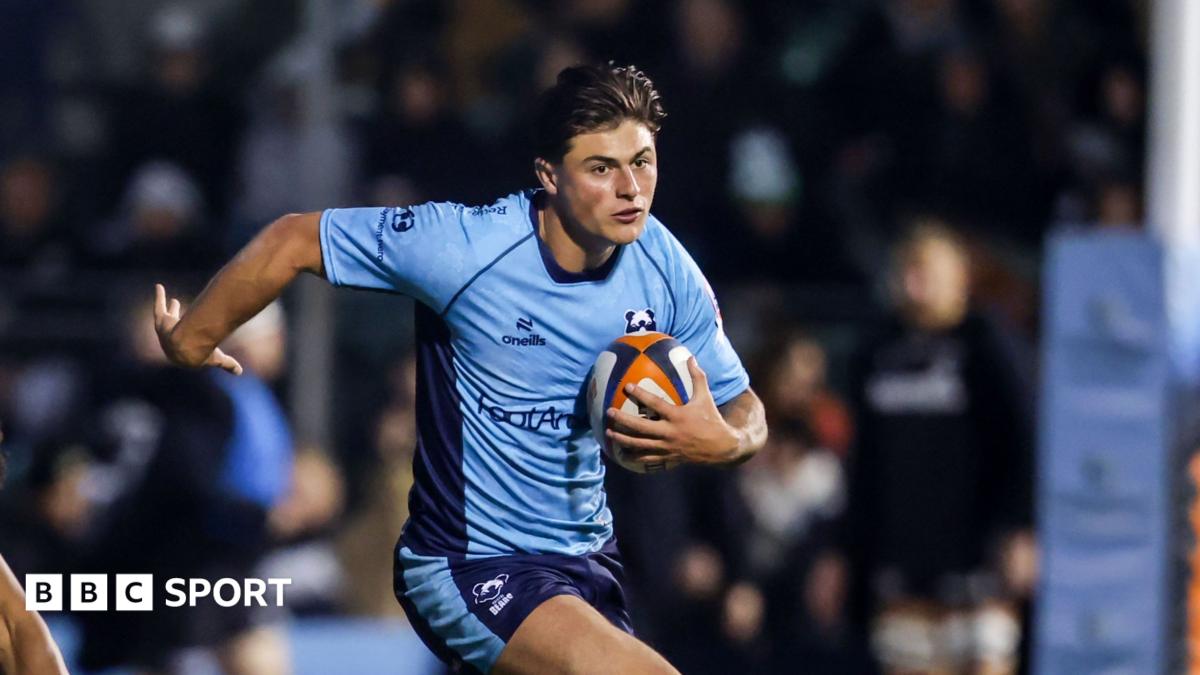
Meanwhile, it emerged over the weekend that Bristol director of rugby Pat Lam did not select three of his key players because of the state of the StoneX Stadium pitch.
Pedro Rubiolo, AJ MacGinty and Steven Luatua were rested for the trip to north London.
“They came off big injuries last season so it wasn’t worth putting them on that pitch,” Lam explained.
“If we were playing the game at home or if it was a semi-final, they would have played.”
Saracens have been contacted for comment.
Lam has previously voiced his opposition to artificial pitches being used in the Prem.
Following the Bears’ league win at Newcastle in April, Lam blamed the pitch for causing a number of injuries to his team.
“These pitches are hard – I’m not a big fan of them,” Lam said at the time.
“We always take injuries on them and we’ve taken a few more.”
Newcastle installed a new pitch at Kingston Park this summer before the 2026-27 season and have kept it fully artificial.
Carlo Holse scored three goals in the first 21 minutes and had the second hat trick in club history to help St. Louis City beat the Galaxy 6-2 on Sunday night to extend their unbeaten streak across all competitions to 20 games and tie the MLS record.
St. Louis, which is 13-0-5 in its past 18 regular-season games, tied the mark set when the New York Red Bulls went unbeaten in an MLS-record 20 consecutive games across all competitions in 2016.
Rafael Navarro converted from the penalty spot in the 45th minute, scored again in the 53rd and added two assists for St. Louis (14-6-8). Lukas MacNaughton scored on a diving header in the seventh minute of first-half stoppage time and Roman Burki had five saves.
Holse opened the scoring in the second minute, added a goal in the seventh and skipped a shot inside the right post from the center of the area to make it 3-0 in the 21st minute to record the second-fastest hat trick in MLS history. Hany Mukhtar scored three goals for Nashville in the first 16 minutes of 5-1 win over Chicago on July 17, 2021.
The Galaxy’s Kyogo Furuhashi went off because of an apparent hamstring injury and was replaced in the 10th minute by João Klauss, whose goal in the 71st minute capped the scoring. Klauss, a 29-year-old midfielder in his first season with the Galaxy, had St. Louis City’s first hat trick in a 3-3 tie with the Galaxy on June 14, 2025.
Robert Taylor scored in the 31st minute for the Galaxy (9-11-9).
St. Louis beat the Galaxy 3-1 on July 22 at Dignity Health Sports Park.
LOUIS TOMLINSON has opened up about juggling being a globetrotting singer and a proud dad.
The former One Direction star said: “Being a dad is incredibly rewarding, but it’s also challenging.
Louis Tomlinson has opened up about juggling being a singer and a dadCredit: GettyLouis shared this pic online when son Freddie was bornCredit: PA:Press Association
“On my recent American run of shows, my son Freddie came to two shows.
“I normally do a really good job of splitting myself down the middle – me as dad, and me at work as a singer.
Sign up for the Showbiz newsletter
Thank you!
“When those two worlds meet, I find it incredibly stressful because all I want to do is give all of my time to Freddie, but the mental game to stand up on stage is also quite consuming.
“Me and my son almost pretend that I don’t do this job – we live our lives as normally as we possibly can.
“When home and work collide, it’s a bit uncomfortable as, truthfully, all I want to do is spend my time with him.”
Louis made the candid comments to The Snuts’ Jack Chochrane for the Finding Joy In Short Moments podcast with Calm.
Despite completing two as-good-as-sold-out world tours, Louis says he still doubts himself at times now he’s without his bandmates.
He added: “It can be tough for me. Sometimes I might not think I am good enough to be on the stage.
“But I never leave the stage with that feeling.”
Coming from a band is always hard – let alone one that contained superstar Harry Styles – but I think Louis is killing it.
LOLA STARS IN STRIPES
Lola Young in a bold, multicoloured co-ord as she performs at the 2026 Austin City Limits Music FestivalCredit: Getty
LOLA YOUNG is stripe on trend as she takes to the stage in Texas.
The Messy singer wore this bold, multicoloured co-ord as she performed at the 2026 Austin City Limits Music Festival at the weekend.
Lola’s set went down a treat with festivalgoers, but just days ago the star revealed she sometimes struggles to breathe due to her love of vapes.
Taking to TikTok, Lola explained: “Somebody once said to me, ‘Lola, there will be a day when you wake up, you’ll be 25 or 26, from a deep sleep, and you’ll start to feel the effects of vaping’.
“You know what I said? I said ‘nah’ and rolled my eyes.
“But let me tell you something, the day has come.
“My lungs feel like they’re battery-powered, like they’re just one big battery.
“Breathing feels like a chore, it feels like hard work, it feels like I should be paid for breathing. It feels like there will be no tomorrow.”
MARRIED JOY APPEALS TO TROYE
Aussie star Troye Sivan with Charli XCXCredit: Getty
AUSSIE star Troye Sivan says attending Dua Lipa and Charli XCX’s glitzy weddings gave him a kick up the bum to find a husband.
The Rush singer, who is 31, explained: “All of my friends in Australia, they all got married when we were young, early 20s vibe.
“I felt nothing because I was like, ‘I’m on such a different track of life from them. I’m living in the US, I’m gay and I’m surrounded by people who are not married’.
“Then I started to feel the pressure for the first time when I started to go to music peers’ weddings.”
Troye split from model Jacob Bixenman in 2020. He told the Therapuss podcast: “Seeing Charli and Dua get married, I’m like, ‘Oh, f**k, my excuse of I’m really busy . . . I’m nowhere near as busy as them and they managed to make it work’.
“So I’m like, ‘OK, yeah, I should try and lock this down somehow’.”
KAI’S SCARY TRIP IS STRICTLY BUSINESS
Kai Widdrington and Chloe Wells attend the VIP night of Shocktober Fest at Tulleys FarmCredit: Getty
IT seems Kai Widdrington has been getting in the mood for Strictly’s Halloween special later this month.
The pro dancer took time out from his gruelling training sessions with celeb partner Delta Goodrem for a date night at the weekend.
The buff star and his girlfriend Chloe Wells headed to the VIP launch of Tulleys Shocktober Fest – the largest scream park in Europe.
Luckily, the scare mazes were the only fright Kai got this weekend as last night he and Delta sailed through to the next week of Strictly.
I honestly think they could go all the way.
GLASTO’S A 42-MIN SELL OUT
Harry Styles is set to headline Glastonbury 2027Credit: Getty Images
CONGRATULATIONS to all who secured tickets to Glastonbury 2027.
Yesterday hundreds of thousands of hopefuls battled to get tickets to the greatest festival on earth.
Headliners are set to be announced soon – with Harry Styles a dead cert for one of the slots. I previously told how Lily Allen has also been officially asked to perform at Worthy Farm.
The last time she was on the bill was in 2014, so I’m sure her set next year will be a moment.
The Bizarre team will be there to bring you all the gossip.
BUSTED’s Matt Willis revealed neither he nor wife Emma thought she would manage to land the Strictly hosting job, but he couldn’t be more proud of her.
He said: “Strictly was a curveball. Taking the biggest job on TV was not on our bingo card for 2026, but I’m so proud of her.
“And if anyone can do it, it’s Emma. I’m stoked for her, she’s perfect for it, and loves the show so much.”
TAKE THAT £73M TO THE BANK
Gary Barlow, Mark Owen and Howard Donald earned £73million from their Circus Live stadium tourCredit: Mike Marsland/WireImage
In a report from Pollstar – the leading music analytics firm – the trio earned £4,299,605.67 every night of their two-hour celebration.
The bank-balance-busting fees break down to £195,436.62 a song, £35,830 a minute, or £597.17 a second.
I was invited to hang out with the lads for their first night in Sheffield, and honestly, it was one of the best nights of my life.
FEARNE IS IN A REAL HAPPY PLACE NOW
Fearne Cotton’s wellness brand Happy Place banked £2million last yearCredit: Getty
FEARNE COTTON’s wellness brand Happy Place has put her in just that, as it banked £2million last year.
The former Top Of The Pops host set up the company after mental health struggles left her too scared to continue as a live TV or radio host – and her venture has certainly paid dividends.
As well as Happy Place being a podcast, she now holds the Happy Place Festival, has written books, and has built a market place where she gets a cut if people make purchases.
Latest accounts filed at Companies House show the star’s firm paid £500,000 in tax last year. After paying bills, the company has £1.4m in equity, including close to £1.2m cash in the bank – a rise from £900,000 the year before.
Fearne has been in the spotlight since the age of 15, when she won a nationwide talent search to present TV’s The Disney Club.
While her career has had a few twists and turns over the years, this is sure to have helped put a smile back on her face.
THE WEEK IN BIZNESS
MONDAY: Vicky Pattison takes on her most ambitious challenge yet with Tyne To Thames – a five-day, 250-mile journey from Newcastle to London by kayak, bike and on foot for Global’s Make Some Noise charity.
WEDNESDAY: Danny Beard will host the Attitude Awards at London’s Roundhouse where a host of stars will receive awards ahead of performances from Sugababes and Orville Peck.
FRIDAY: The Social Reckoning, a sequel to The Social Network, starring Mikey Madison and Jeremy Allen White hits cinemas, as Oasis’ film Don’t Look Back In Anger airs on Disney+.
SUNDAY: Andrew Garfield will be in town for the London Film Festival gala screening of his new movie Artificial with Monica Barbaro and Chris O’Dowd, about the firing and reinstatement of OpenAI CEO, Sam Altman.