Venezuela: Qatari Fund to Unblock Access to IDB Loans
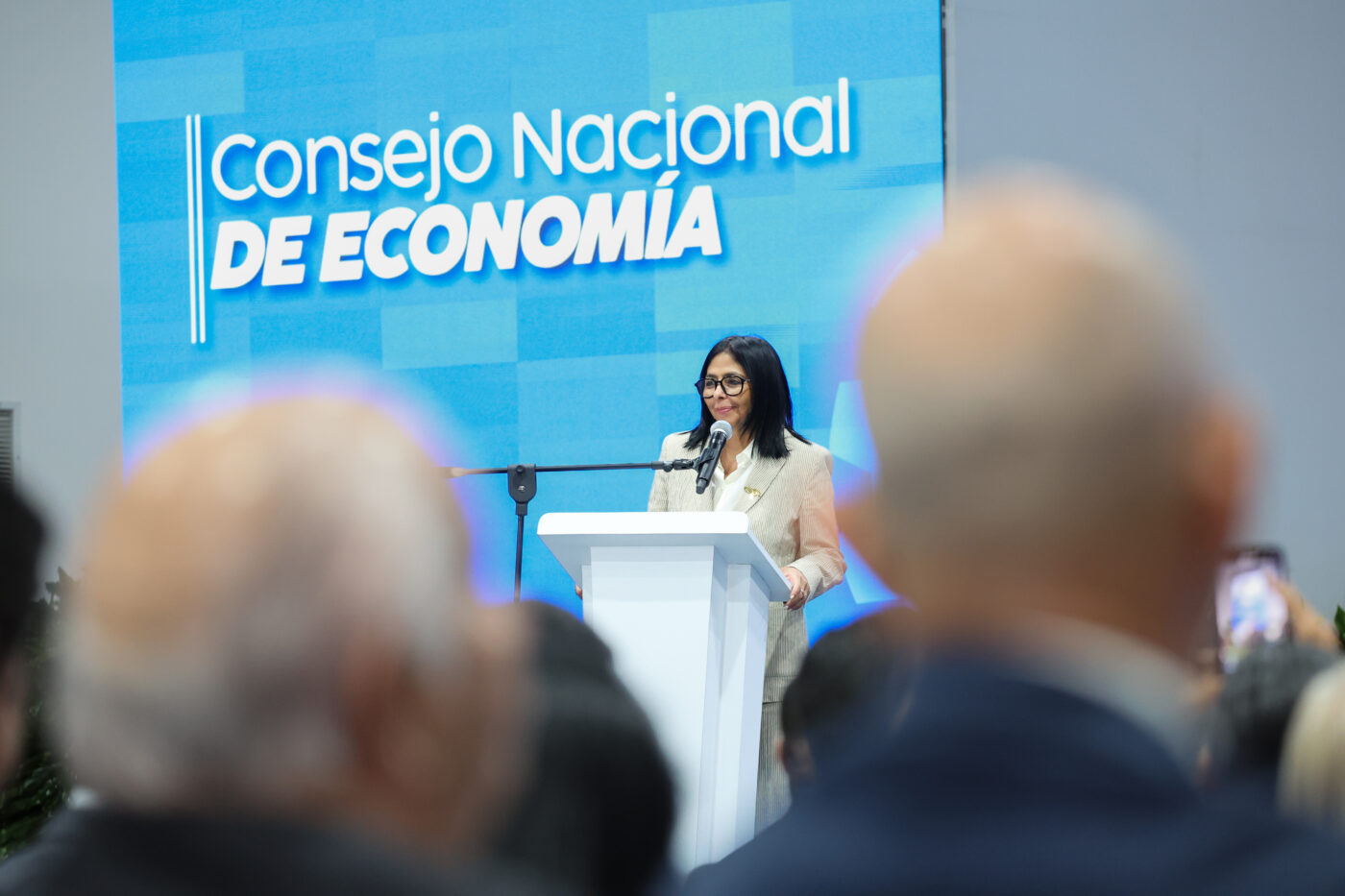
Acting President Rodríguez has prioritized the reengagement with Western multilateral institutions. (Presidential Press)
Mérida, October 6, 2026 (venezuelanalysis.com) – The Venezuelan acting government is resorting to a Qatar-led financing agreement in order to regain access to multilateral loans from the Inter-American Development Bank (IDB).
According to specialized outlet Bitácora Económica, Qatar is preparing to establish a specialized rescue fund to settle Venezuela’s estimated US $2.5 billion debt with the IDB.
Under the proposed mechanism, the Qatari fund would immediately clear Venezuela’s overdue principal and interest payments, while issuing a new, long-term loan with favorable interest rates for the South American nation.
Venezuelan economist José Guerra claimed that Qatar will be joined by the United Arab Emirates and that the Gulf countries will back the financing initiative with their sovereign wealth funds.
The Qatari-backed initiative would reportedly allow Venezuela to address short-term liquidity constraints and access a new IDB credit line worth as much as $8 billion. The financing would be used for public infrastructure projects, including the national road network, water distribution systems, and stabilizing the national electric grid, as well as providing additional funding for state budgets.
The proposed Gulf-backed debt arrangement comes amid a broader, deliberate push by Caracas to re-establish formal relations with major US-led multilateral financial institutions.
Over recent months, high-level Venezuelan delegations have held technical and institutional meetings with representatives from the International Monetary Fund (IMF), the World Bank, and the Development Bank of Latin America and the Caribbean (CAF).
In September, Acting President Delcy Rodríguez met in New York with IMF Director Kristalina Georgieva, as well as senior World Bank and IDB officials.
Caracas’ rapprochement with Western multilateral institutions has coincided with a geopolitical shift in its foreign policy since the January 3 US military strikes and kidnapping of Venezuelan President Nicolás Maduro. The Venezuelan government, headed by Acting President Delcy Rodríguez, reestablished ties with Washington while also strengthening relations with US allies such as Qatar and the UAE.
Doha initially provided intermediation for US control over Venezuelan oil export revenues, with funds deposited in Qatari bank accounts. The scheme was later transferred directly to the US Treasury Department. Energy firms from Qatar and the UAE were recently announced as stakeholders in a Venezuelan offshore natural gas project as well.
Venezuela’s reengagement with Washington-based financial institutions saw the IDB officially reopen its country office in Caracas on October 2, seven years after halting operations in the Caribbean nation.
The IDB had suspended all active credit lines and disbursements to Venezuela in May 2018 following payment arrears. The relaunched local office follows the formal reinstatement of Venezuela’s voting rights in June, when the IDB Board accepted Calixto Ortega as the country’s governor at the IDB.
During an expanded session of the National Economic Council in Caracas on October 2 with IDB officials, Acting President Rodríguez emphasized the importance of access to international multilateral credit for both the public and private sectors.
“This agenda that we have been developing with the multilateral financial system is for development, for investment and financing in infrastructure and services,” she stated during the televised session. “In Venezuela, there is a very important installed industrial capacity to develop, and a boost in financing will bring us to full capacity.”
Rodríguez added that the renewed engagement aims to ensure that private companies, communal production units, and small businesses can access international loan programs to expand local production.
While direct sovereign lending to the Venezuelan government remains contingent on fully clearing arrears, the multilateral’s private-sector arm, IDB Invest, has already initiated direct financial assistance to key Venezuelan corporations and commercial banks.
Under recently approved financing structures, IDB Invest is reportedly delivering commercial-rate loans and capital support to food processing conglomerate Empresas Polar, as well as private commercial banks Banco Mercantil and Banesco.
The allocations for Banco Mercantil and Banesco are designed to strengthen liquidity and capitalization within the national banking system, while also boosting local credit lines for businesses.
Meanwhile, the funds directed to Empresas Polar are earmarked for agricultural development projects and supply-chain expansion, particularly targeting grain production in Portuguesa state, according to reports.
Unlike traditional development loans, the IDB Invest credits are extended at market interest rates, focusing directly on private-sector growth and sustainability.
The Venezuelan government’s current strategy marks a departure from the former President Hugo Chávez’s stance toward multilateral lending institutions.
In November 2008, at a Bolivarian Alliance for the Peoples of Our America (ALBA) summit, Chávez criticized the IDB, labeling it an “instrument of political pressure” used by Washington to impose orthodox economic policies on sovereign nations.
At the time, Chávez called on Latin American governments to withdraw from both the IDB and the IMF, which he labeled as a “weapon of US imperialism,” advocating instead for regional alternatives such as the Bank of the South to replace traditional multilateral lenders.