linebacker

Troubled former NFL linebacker Daniel Adongo deported to Kenya by ICE

The Indianapolis Colts took a flyer on an impressive athlete from Kenya 13 years ago, but a story that began with an inspirational backdrop has taken an increasingly familiar turn: Daniel Adongo was deported from the United States last month, U.S. Immigration and Customs Enforcement confirmed.

According to ICE, Adongo, 37, overstayed his visa after his brief NFL career ended in 2015 and he remained in Indiana. The former linebacker and African rugby star was arrested several times over the past nine years for crimes including felony intimidation, battery and disorderly conduct. He also showed signs of mental illness, according to court records.

“This dangerous individual was clearly a threat to the community, which is now safer since he’s been removed,” ICE Chicago Assistant Field Office Director Douglas Thompson said in a statement. “Those who violate immigration law are held equally accountable, including former professional athletes.”

Adongo was released by the Colts after playing in two games in 2013 and three in 2015, mostly on special teams. The team cut ties with him after police were called to a home in Fishers, Ind., to check on a woman who lived with Adongo.

According to a police report, the woman’s friend contacted law enforcement. Adongo was not at the residence at the time, and the woman declined medical assistance. The Hamilton County prosecutor’s office reviewed the case and did not charge Adongo.

However, the 6-foot-5, 260-pound Adongo began exhibiting increasingly erratic behavior. In 2017, an Indiana judge found him mentally incompetent to stand trial in a criminal case in which he was charged with intimidation and criminal mischief and ordered him committed to a state psychiatric hospital for evaluation and observation, according to the Indianapolis Star.

The only crime Adongo has been convicted of is a criminal mischief misdemeanor in 2020 for which he was sentenced to 364 days in jail, according to ICE. Other charges for intimidation, battery and disorderly conduct were dismissed.

Judges twice found Adongo incompetent to stand trial, according to court filings, including one case in which an expert witness testified that Adongo was acutely psychotic and possibly suffered from chronic traumatic encephalopathy — brain trauma — from playing football and rugby.

Members of Adongo’s family described in court filings a dramatic personality change in him after his playing career ended and expressed concern that he struggled to access mental health treatment.

ICE held Adongo without bond for several months under the Laken Riley Act, a federal law signed Jan. 29, 2025, that requires the Department of Homeland Security (DHS) to detain undocumented immigrants without bond when arrested for specific crimes. He was deported one month ago.

Adongo was the first of two Kenyans to play in the NFL. The second was guard Rees Odhiambo, who played in 16 games from 2016 to 2018 for the Seattle Seahawks and Arizona Cardinals.

Source link

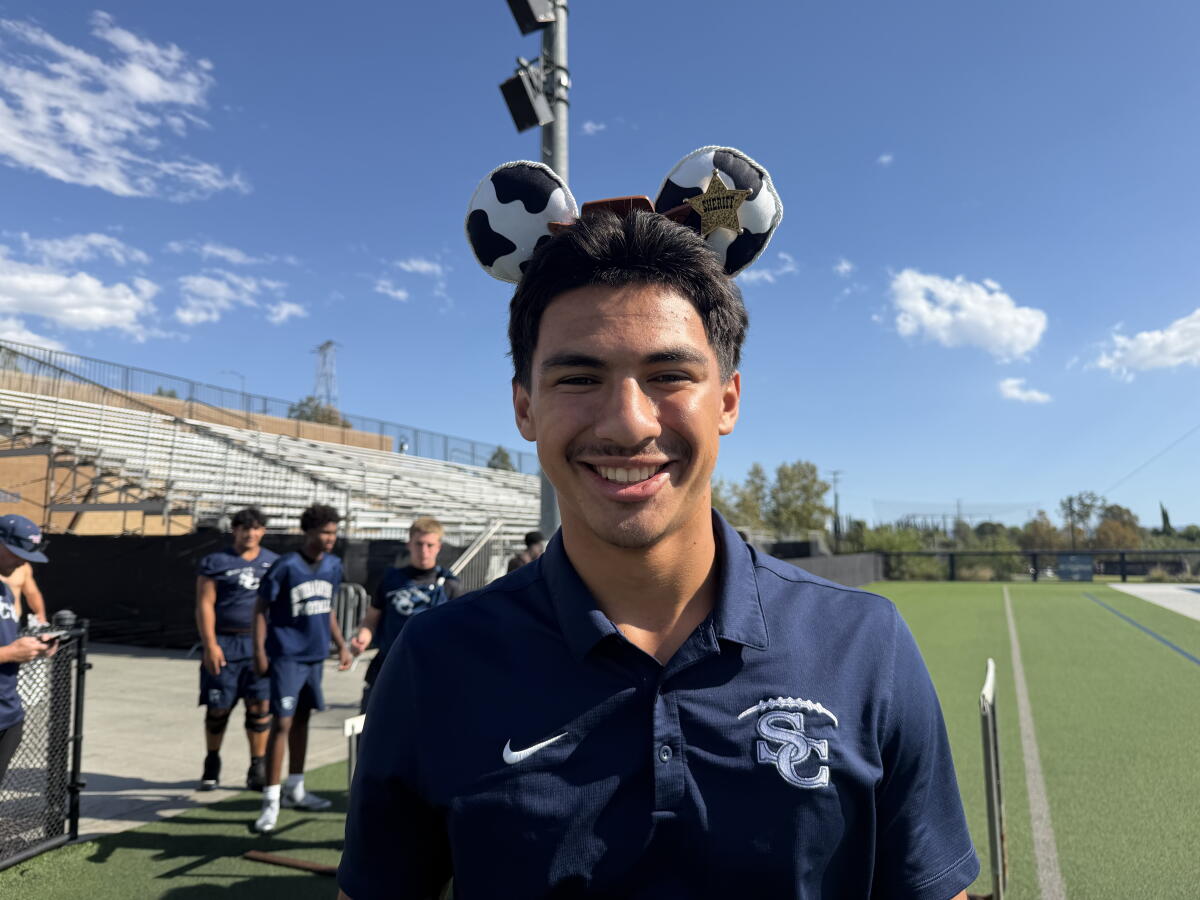
USC freshman linebacker Talanoa Ili joins lawsuit seeking to upend new NIL system

The first serious legal challenge to the House settlement will come courtesy of a USC freshman linebacker.

Talanoa Ili, a top-100 recruit in the Trojans’ vaunted 2026 class, joins Stanford quarterback Charlie Mirer as one of two lead plaintiffs in a class-action lawsuit that takes aim at the system implemented since the settlement ushered in a new era of direct payment from universities to athletes. The suit, which was filed Tuesday, accuses the NCAA, the Power Four conferences and the enforcement arm they created — the College Sports Commission — of participating in a “conspiracy” by creating a system of policies that have “direct anti-competitive effects, including the suppression of [name, image and likeness] compensation below competitive levels.”

Those policies, their attorneys argue, violate state laws in California that prohibit restrictions on NIL rights, as well as federal antitrust statutes. They’re seeking monetary damages, as well as an injunction that would upend the enforcement structure created to determine whether individual NIL deals over $2,500 meet criteria, including whether they have “a valid business purpose” or fall within a reasonable range of market value.

The clearinghouse, NIL Go, was created with the hope of eliminating an influx of booster-funded NIL deals that were basically direct payments from donors to the program. But since its inception, the system has been more restrictive and worked less efficiently than some schools and athletes might have hoped. As of last month, according to Yahoo Sports, more than $125 million worth of NIL compensation that had been promised to athletes had been rejected by the clearinghouse or was still under review.

In Ili’s case, the complaint states that he received a “substantial multi-year offer” from USC’s House of Victory collective in 2024 that led him to commit to the Trojans, only to have the offer disappear after approval of the House settlement.

“Absent the NIL Restrictions on Direct Pay NIL Compensation, Ili would have received more for his NIL rights than he now receives,” the complaint states. “The Agreement has thus injured Ili.”

Mirer, meanwhile, claims that he has received no NIL compensation from Stanford’s collective or revenue-sharing money from the university since 2024 as a result of the settlement.

Stanford quarterback Charlie Mirer during a game last season.

Stanford quarterback Charlie Mirer during a game last season.

(Godofredo A. Vásquez / Associated Press)

“The [CSC agreement] has suppressed, deterred, and effectively terminated the economic relationships that had produced his prior NIL compensation,” the lawsuit says.

Even the plaintiffs in the House settlement, which created the CSC, are in the process of challenging the current system. On Wednesday, plaintiff attorney Jeffrey Kessler will argue in a hearing that school-affiliated businesses such as multimedia rights holders or corporate sponsors, should not be subject to the CSC’s rigorous criteria for NIL deals. That decision could also open the floodgates, with schools using those entities to circumvent the cap.

Two U.S. senators are hoping to pass legislation they believe would bring more stability to college athletics and thwart legal challenges. Ted Cruz (R-Texas) and Maria Cantwell (D-Texas) spoke with presidents and chancellors from the Big Ten Conference on Tuesday about a bipartisan bill, the Protect College Sports Act, which would codify some of the CSC’s policies into federal law.

Source link