RABBLE-ROUSING rogue and hopeless romantic, Shane MacGowan was a man of contradictions.
A genius songwriter, The Pogues frontman could switch emotions at the drop of a hat, often within the same song.
Shane pictured on U2’s cover of The Pogues’ 1989 hit Yeah, Yeah, Yeah, Yeah, YeahSource: suppliedShane with wife Victoria Mary ClarkeSource: supplied
A prime example is his best-loved effort, Fairytale Of New York, which is sprinkled with tenderness: “I love you, baby. I can see a better time. When all our dreams come true.”
And unbridled fury: “You’re a bum, you’re a punk, you’re an old s*** on junk.”
Sign up for the Showbiz newsletter
Thank you!
Shane’s widow — and love of his life — Victoria Mary Clarke says he tapped into “those feelings of longing and heartbreak but also of frustration, anger and betrayal”.
With refreshing candour, she reveals a classic example of her man’s unpredictable nature: “I know Shane was very proud of Fairytale — but he got sick of it and he got sick of people talking about it!”
She talks of the “fierce fighting spirit” in his songs and of how, as someone who spent a lot of time in England, he viewed Ireland as “a magical landscape filled with heroes and heroines”.
She credits him with “taking Irish traditional music and modernising it, showing that you could write about junkies, hookers and rent boys — and anything else — in that same style”.
She notes that the staunch believer in a united Ireland “would rather have been executed” than accept an honorary knighthood like fellow countrymen Bob Geldof and Bono.
And she describes Shane as “someone who loved religion and was the most spiritual person I’ve ever met — and that includes all the priests”.
Victoria and Shane with actor Johnny DeppSource: SuppliedThe legendary frontman of the pogues, died from pneumonia aged 65 three years ago, after a lifetime of hard living involving drugs, booze and cigarettesSource: supplied
On a personal level, Victoria says Shane wrote “beautiful” The Song With No Name in the Nineties about “me dumping him because of heroin and him trying to get me back”.
“He rose to the challenge of heartbreak — and of all human emotion.
“I was aware from the beginning that his love language was writing a song or a poem.
“He would also leave notes and buy flowers. He wouldn’t wash the dishes or do the shopping — but he would be romantic.”
By Shane’s side for nearly 40 of those years was Victoria, who he first met in 1982, just as The Pogues were taking off, but who didn’t strike up a relationship with him until four years later.
As a labour of love, she has assembled a fabulous tribute album called 20th Century Paddy: The Songs Of Shane MacGowan.
The 36 tracks represent an overwhelming outpouring of admiration and affection for Shane from, says Victoria, “the best to the least known artists of different ages and from different countries”, many of whom were his friends.
The couple were together for more than 35 yearsSource: Andrew CatlinFame added to Shane’s anxietiesSource: supplied
So we hear Bruce Springsteen, U2, Tom Waits, The Libertines, Primal Scream and Bob Geldof jostling with unsung Irish folk singers and even a Japanese punk band.
Johnny Depp pops up, accompanied by Imelda May, as does Depp’s one-time girlfriend, Kate Moss — not just a supermodel but an accomplished singer.
Chiming with the season, a sublime Fairytale Of New York is out as a single, with Hozier and Oscar-winning actress Jessie Buckley assuming the roles of MacGowan and Kirsty MacColl.
Proceeds from the album are going to a homelessnesscharity dear to Shane’s heart, the Dublin Simon Community.
“I’m doing something for Shane,” affirms Victoria. “It has given me a reason to get out of bed, get dressed, put on make-up, meet people, talk to people, answer emails.”
I’m meeting her at a pub in Primrose Hill, the posh part of one of Shane’s old stomping grounds, the London Borough Of Camden.
Before we take a deeper dive into the album and the myriad artists involved, the engaging Victoria talks openly about life with a complex yet endearing character.
She says: “It could be infuriating because Shane’s approach to everyday practical things got the same big romantic treatment as his songs.
Victoria says: ‘Shane loved Kirsty (MacColl). He felt she was a million per cent on his side. I think she got him, almost like a sister’Source: GettyA genius songwriter, The Pogues frontman could switch emotions at the drop of a hat, often within the same songSource: supplied
“Can you imagine trying to get him to pay a gas bill or fill in a passport application?
“Even the very idea of owning a home seemed like complete anathema to him.
“He lived in his own world — a world of his imagination and creation — and surprisingly, he managed to get most people to fit in with it.”
Victoria well remembers her first fateful encounter with Shane in (where else?) a pub.
“I was 16 and had come to London looking for excitement. In my mind, it was just an extension of Ireland — but I knew important music and fashion was being created there.”
One night, she went to her local in Temple Fortune to discover Shane, Spider Stacy and the rest of The Pogues were in situ for a celebration.
“Shane came over to me and said, ‘It’s Spider’s birthday, get him a drink’. My initial reaction was, ‘F*** off’.
“But it didn’t take me long to figure out that there was some connection through a friend. A few days later, I saw The Pogues play and I was very impressed.”
Victoria was mesmerised by the band’s “ability to take Irish music and give it a different energy, vibe, look and attitude, which was very London”.
To her, their raw, fiddle-fuelled music was the “antithesis” of the synth pop which dominated the charts in the Eighties. But she says there was one area of common ground: “The Pogues were always very much into their look.
“Shane would take hours getting ready. His hair would be done, his shoes would be polished — the suits and shirts were no accident.”
Victoria says his image, like the music, had “a rockabilly vibe”, with inspiration coming from his Uncle Sean, who he regarded as a “style icon” in his crisp white shirts with his Elvis quiff.
She explains that when she and Shane became an item, they moved to Kentish Town “so every Saturday, we spent hours shopping in nearby Camden Market” — in those days, the destination for the hip, fashion-conscious crowd.
Though he regarded Tipperary, where his family hailed from, as his spiritual home, Shane liked nothing more than to explore the seedy underbelly of Britain’s capital city.
“He loved London,” says Victoria. “He almost ate and drank it. He walked everywhere, exploring it all, having experiences in places like King’s Cross, Soho and Camden that he never could in Ireland.
“He spent a lot of time in bars, clubs, betting shops and late night Greek restaurants. He’d chat to people of all types, including those on the street.”
Some of Shane’s most celebrated songs are set in London — including A Rainy Night In Soho, so elegantly and poignantly performed by Springsteen on the tribute album.
But now consider this line from another, The Old Main Drag, sung with poise and passion by David Gray, “And now I am lying here, I’ve had too much booze.”
Victoria tells me that in the early days, “Shane wasn’t drinking much at all and was quite sober”.
She says: “I drank maybe five times as much as he did. He was on white wine spritzers while I was on whiskies!”
In 1986, the year they got together, Victoria recalls proposing “straight away”.
“He turned me down immediately and said he wasn’t interested in getting married,” she continues.
“But that conversation went back and forth and at times, he would change his mind and say, ‘I do want to marry you’, and then I’d be like, ‘F**k off!’
“Around 2007, we finally got engaged but didn’t want the fuss of a big wedding with thousands of people.
“Eventually, we hit on the idea of doing it in a country where we didn’t know anyone, which was Denmark. So (in 2018), that’s what we did.”
I ask Victoria if it was hard dealing with Shane’s increasing alcohol dependency. “Oh, absolutely,” she replies. “There were spectacular ups and downs.
“Shane was a big personality with big emotions, so it was difficult at times.
“I didn’t really know how to deal with it and would get frustrated. I’d get angry — and shout and nag and cajole and blackmail, you name it.
“I tied him to a radiator once so he couldn’t touch the bottle. I’d smash bottles, hide them, throw stuff down the sink, everything you could think of.
“I managed to get him to rehab maybe five times but it didn’t make a difference when he got out.”
By way of explaining Shane’s wayward behaviour, she says: “He had an extremely addictive personality for everything, even Marmite.
“He would go through phases of eating nothing but Marmite with caviar.
“Also, he wasn’t equipped to handle pressure when Fairytale became successful. It was too much.
“He didn’t want to go on the road all the time but wanted to sing for fun.
“He was like a pub singer. He enjoyed having the audience join in and partying with them afterwards.
“He didn’t like interviews, he didn’t like having his picture taken, he didn’t like aeroplanes and he didn’t like being on time for anything. So, he got more and more anxious.”
Maybe it’s that vulnerability which shines through Shane’s songwriting, helping him find universal connections.
If you listen to 20th Century Paddy, you’ll sense the passion each act feels.
Near the end of his life, in 2023, Shane was visited by one of his admirers, Bruce Springsteen, who was in Ireland on tour.
When it came to getting The Boss to perform A Rainy Night In Soho, Victoria says she was pushing at an open door.
“When I text him, he always answers. If he says he’ll do something, he will.
“It was fantastic when he came to see us. We didn’t know Shane was going to die, so we didn’t have a sense of doom about it.
“As Bruce was leaving, he said, ‘I’ll see you next year’.”
Victoria adds that Shane had been a Springsteen fan since his early teens and that stripped back Nebraska “was his favourite Bruce album”.
The appearance of Johnny Depp is hardly a surprise, either.
Victoria says: “Early in Nineties, around the time Shane was sacked (from The Pogues), Johnny invited him to open the Viper Room club — a real morale boost.
“It made Shane aware that a lot of people in the US, including Johnny’s mates in the movie business, were enthusiastic about him and wanted him around.”
It was through Depp that they got to know his girlfriend at the time, Kate Moss. “Shane adored Kate, one of his favourite people,” says Victoria.
“We became close and when she and Johnny broke up, we kept on good terms with both of them.”
So, was Kate receptive to singing on the tribute album? I venture.
“Well yes,” answers Victoria. “I’ve heard her sing many, many times and she’s very good. She has a beautiful, unique voice with a sensitive quality to it. I thought she might be too shy to do it, but she wasn’t.”
Depp is also responsible for a rare appearance by Tom Waits, who growls his way through one of Shane’s own favourites, Summer In Siam, as only he knows how.
Victoria praises Primal Scream’s version of A Pair Of Brown Eyes with singer Bobby Gillespie’s “so different” delivery, and she says Lisa O’Neill on Dark Streets Of London sounds “like Shane’s mum”.
She’s thrilled with Bob Geldof’s gruff spoken-word masterclass on St John Of Gods and the original takes adopted by a younger generation of Irish sonic adventurers — The Murder Capital (The Song With No Name) and Madra Salach (Turkish Song Of The Damned).
Then there’s U2’s spirited version of Yeah, Yeah, Yeah, Yeah, Yeah.
“They just said yes,” says Victoria. “Didn’t ask for any details.”
She remembers The Pogues supporting U2 at Wembley Stadium (in 1987) “and that Shane always liked hanging out with Bono — someone to wind up and have really interesting conversations with”.
Finally, let’s spare a thought for absent friends — Fairytale foil Kirsty MacColl and a fellow Irish rebel, Sinead O’Connor.
Victoria says: “Shane loved Kirsty. He felt she was a million per cent on his side. I think she got him, almost like a sister.
“He would be enticed to go out and do things, just because she would be there.”
As for Sinead, Victoria says: “They were very close and used to have proper, vicious fights.
“But she would have done anything for him and vice versa. Their Nineties duet is one of the best things he ever did.”
It’s certain that had she lived, Sinead would have been first on the list to celebrate the riotous life of a 20th Century Paddy.
20th Century Paddy The Songs Of Shane MacGowan is out nowSource: supplied
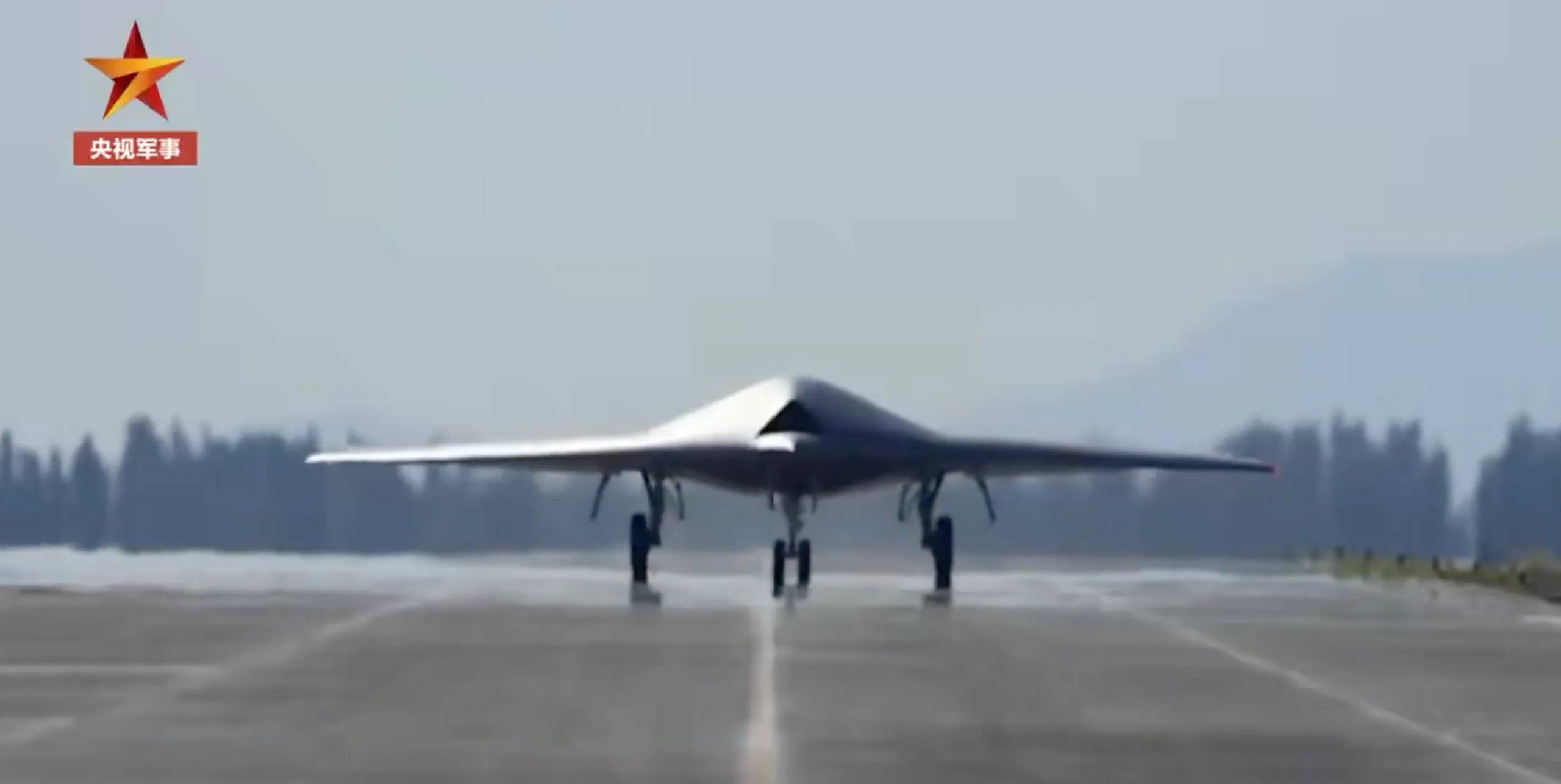
China has provided us with the clearest look yet at its GJ-11 stealth uncrewed combat aerial vehicle (UCAV), with new official footage revealing previously unseen details of the flying-wing drone, including its internal weapons bays, landing gear, nose-mounted sensor installation, and distinctive exhaust arrangement.
The release also comes alongside a claim from the People’s Liberation Army Air Force (PLAAF) that the GJ-11 has completed its first live-fire strike mission, scoring a hit. This is somewhat puzzling, since the UCAV has racked up test sorties for years already, including at forward operating locations, and it seems almost inconceivable that a live weapons delivery would not have been conducted before now. Perhaps this is a case of something being lost in translation, such as the use of a new internal sensor or a new type of weapon delivery.
Head-on view of a GJ-11 on the runway. PLA screencap
The footage, broadcast by Chinese state television’s CCTV yesterday, comes two days ahead of the 77th anniversary of the founding of the PLAAF. Accompanying reporting provides additional details about the aircraft’s intended mission set, including airstrikes and suppression of enemy air defenses (SEAD), as well as its integration into manned-unmanned teaming (MUM-T) operations with crewed fighters.
The new disclosures offer the most comprehensive public look yet at the GJ-11’s configuration and provide further insight into how China intends to employ the stealthy flying-wing aircraft, which is named Xuanlong — Chinese for Mystery Dragon.
A GJ-11 takes off. PLA screencap
A closer look at the GJ-11
One of the most revealing views shows the underside of the GJ-11, clearly exposing its two internal weapons bays. Located within the aircraft’s blended wing-body, the ventral bays have separate sets of doors with distinctive serrated edges — a common feature on low-observable aircraft. The internal arrangement and dimensions of the bays remain unclear, as does the precise range of weapons the aircraft can accommodate. However, it would appear likely that each bay can accommodate at least a 1,000-pound-class and likely a 2,000-pound-class weapon.
#GTMilitaryWatch CCTV News military channel released new footage on Monday offering a close-up, multi-angle look at the Chinese People’s Liberation Army (PLA) Air Force’s GJ-11 stealth drone. It also revealed that two of the Air Force’s first batch of self-trained female drone… pic.twitter.com/PPVmws9DJJ
According to CCTV, the two bays can carry a variety of air-to-ground/surface munitions. The weapons bay configuration had previously been revealed in a model of the GJ-11 displayed by the Aviation Industry Corporation of China (AVIC) at Airshow China in 2021, but the new footage provides a much better look at the actual aircraft.
Head-on view of a GJ-11 in the hangar, with the weapons bay doors partially open. PLA screencap
Internal weapons carriage is central to the GJ-11’s low-observable design, allowing it to carry munitions without the radar signature (and aerodynamic) penalties associated with external pylons and stores.
Previous footage released in November 2025 showed the GJ-11 in flight with its landing gear remaining extended. However, one of the new sequences shows the aircraft taking off, with subsequent side and rear views capturing its landing gear retracting after liftoff. The landing gear itself is notably robust, including a heavy-duty twin-wheel nose unit. With that in mind, it may be the same landing gear as used in the GJ-21, a naval variant capable of operating from aircraft carriers and big-deck assault ships.
A GJ-11 retracts its landing gear on takeoff. PLA screencap
The new imagery also offers a closer look at a trapezoidal glazed fairing beneath the nose. This appears consistent with an electro-optical/infrared (EO/IR) sensor installation. Its precise configuration and capabilities have not been disclosed, but it’s worth noting that similar-looking installations also appear on the crewed J-20 and J-35 fighters, with these systems apparently being analogous to the electro-optical targeting system, or EOTS, found on the F-35. If the sensor on the GJ-11 works like an EOTS, it would provide the drone with precision targeting and identification, lasing, as well as a secondary infrared search-and-track emulation function.
A view of a GJ-11 showing the undernose EO/IR sensor installation. PLA screencap
Perhaps the most distinctive external feature remains the GJ-11’s exhaust arrangement, for what is reported to be a WS-13 turbofan engine. A close-up of the rear of the aircraft shows the flattened exhaust outlet, shielded and integrated into the upper rear portion of the flying-wing airframe. Combined with the dorsal air intake and the absence of conventional exposed engine nozzles, this configuration is intended to reduce the aircraft’s radar and infrared signatures, especially from the most critical view aspects. The GJ-11’s tailless, blended-wing configuration is by now a defining feature of low-observable UCAV designs.
Close-up of the tail section of a GJ-11. PLA screencap
At least some of the GJ-11s shown have an air data boom on the nose. While normally associated with early flight testing, the GJ-11 is now far beyond that. The booms could still be fitted for some envelope expansion and other flight test work, although it may also simply involve earlier footage.
Airstrikes and suppression of enemy air defenses
Beyond the new imagery, one of the more interesting aspects of the CCTV coverage is its description of the GJ-11’s intended operational role.
The broadcaster identified airstrikes and SEAD among the aircraft’s mission sets. The latter is particularly significant, as penetrating or operating within heavily defended airspace to locate and suppress or destroy enemy air defense systems is the most dangerous mission for a crewed combat aircraft.
A stealthy uncrewed aircraft could contribute to these operations by carrying precision-guided weapons into more contested areas, providing additional sensing and targeting capacity, or forcing an adversary to expend valuable air defense resources.
The two internal weapons bays provide the means to carry air-to-surface munitions while retaining the aircraft’s low-observable configuration. However, we don’t know which specific weapons have been integrated, their quantities, or whether the GJ-11 can employ dedicated anti-radiation weapons for SEAD missions. Alternative SEAD/DEAD loads could include multiple Small Diameter Bomb (SDB) equivalents, including those that are networked, as we have seen in previous concept videos. Many other types of standoff weapons could also be carried, with the platform itself using onboard sensors for fixing the target or acquiring targeting information from other sources via a tactical data network.
Overhead view of a GJ-11 outside the hangar. PLA screencap
First live-fire strike claim
According to CCTV, the GJ-11 has completed its first live-fire strike mission, with two members of the PLAAF’s initial batch of female drone operators participating in the operation.
One of the operators, Shi Xiaoran, described encountering cloud cover that initially obscured the target. After circling once more, she located it and released the weapon, scoring a hit.
A drone controller flies a GJ-11 from a command-and-control trailer. PLA screencap
One aspect that remains unclear is the extent to which the aircraft can independently identify and engage targets. A successful strike would demonstrate weapons employment, but not necessarily autonomous targeting or engagement.
A view of a GJ-11 showing its triangular engine intake and undernose sensor installation. PLA screencap
Manned-unmanned teaming with J-16 and J-20 fighters
Perhaps the most strategically important aspect of the new coverage is its emphasis on manned-unmanned teaming.
The CCTV footage showed mission planning involving a GJ-11 operating alongside J-16 Flanker multirole fighters and, in a separate sequence, J-20 fifth-generation stealth fighters.
This provides a more explicit indication of the role China envisions for the GJ-11 within its broader combat aviation ecosystem.
The J-16 provides a powerful multirole platform for strike and electronic warfare-related missions, while the J-20 offers a stealthy crewed counterpart for operations in highly contested airspace. An uncrewed aircraft operating alongside either type could extend the formation’s sensor coverage, carry additional weapons, conduct reconnaissance, or undertake particularly hazardous missions.
A J-16D electronic warfare aircraft. via Chinese internet
As a loyal wingman, the GJ-11’s role would extend beyond simply carrying weapons, with the UCAV able to act as an additional airborne sensor and strike platform, allowing crewed aircraft to distribute tasks across a larger formation.
At the same time, the footage does not establish how the UCAVs communicate with their crewed counterparts, how targeting information is shared, or the level of autonomy available to the GJ-11. The new footage shows the drone being flown under man-in-the-loop (MITL) direct control, but it likely features, or will feature, semi-autonomous control modes, especially for teaming applications, which will require a high degree of onboard autonomy.
We do know that China expects the UCAV to be controlled by crewed aircraft, as part of its basic concept. The PLAAF has at least trialed crewed aircraft as drone controllers, and this is one mission set that has frequently been ascribed to the two-seat J-20S.
A stock photo of the two-seat J-20S. via X
From prototype to operational platform
After years of development involving the experimental Sharp Sword design, the much more evolved GJ-11 platform was publicly unveiled during China’s National Day military parade in Beijing in October 2019. Its development is associated with Hongdu Aviation Industry Group, part of the broader AVIC aviation-industrial structure.
Two views of an early Sharp Sword UCAV demonstrator. via X
A model displayed by AVIC at Airshow China in 2021 provided an early indication of the aircraft’s internal weapons-carrying arrangement.
In November 2025, as we reported at the time, the PLAAF released footage of the GJ-11 flying alongside a J-20 and a J-16D electronic warfare aircraft, suggesting that it may have entered service or was at least being integrated into the service’s broader air combat architecture.
A screencap from an earlier video showing a GJ-11 flying alongside a J-16D and a J-20. PLA screencap
Development and testing of the GJ-11 have been underway for years, with notable activity at China’s secretive Malan test facility in Xinjiang. Satellite imagery reviewed by TWZ has documented repeated, and at times near-daily, GJ-11 activity there, including multiple aircraft operating together. The deployment of three GJ-11s to Shigatse in Tibet between August and September 2025 provided an additional indication that the program was moving beyond test work toward operational evaluation.
Another image circulating on Chinese social media shows three additional GJ-11s parked alongside another example of the same type.
Three GJ-11s in a hangar. PLA screencapAnother hangar view with likely a fourth GJ-11 just visible on the right. PLA screencap
According to Andreas Rupprecht, an expert on Chinese aviation and contributor to TWZ, numbers that can be seen on the drones themselves likely point to these aircraft being low-rate initial production (LRIP) examples.
And what’s even more interesting is that, for the first time, numbers are clearly visible which – and I’m going to go out on a limb here – I believe are not serial numbers but rather design numbers. The numbers 0003, 0011 and 0012 are visible, so these are probably LRIP aircraft. pic.twitter.com/zH2D2Narr9
The new releases come less than a month after China announced that the GJ-21 naval derivative, October 2026, had completed its first launch and recovery aboard the new Type 076 amphibious assault ship Sichuan, which is equipped with an electromagnetic catapult and arresting gear. The milestone would pave the way for the PLA Navy to field a shipborne stealth UCAV for strike and reconnaissance missions. However, China has yet to release actual footage of the claimed operation, leaving it independently unverified.
The Type 076 amphibious assault ship Sichuan seen leaving Hudong-Zhonghua Shipyard for its first sea trials. Government of the People’s Republic of China
The broader significance of the GJ-11 lies in the fact that it’s a genuine UCAV, not simply a loyal wingman designed to accompany a crewed fighter. Free of the endurance limitations imposed by a human crew, a platform of this class could likely offer at least twice the combat radius of a comparable crewed fighter. More importantly, it is intended to have the autonomy to conduct tactical missions independently, as well as operate alongside crewed aircraft. That opens up the possibility of extending China’s strike and reconnaissance reach considerably beyond what its existing low-observable crewed combat aircraft can achieve.
The GJ-11’s flying-wing configuration, internal weapons bays, and emphasis on signature reduction suggest a platform approaching the very-low-observable (VLO) category. At the same time, China is now openly fielding a capability that the United States has conspicuously failed to bring into public operational service.
In the late 2000s and early 2010s, the United States appeared to be leading the way in stealth UCAV development, with programs such as the Boeing Phantom Ray, X-45, and X-47B demonstrating the potential of autonomous, long-range penetrating aircraft. Yet those ambitions effectively disappeared from the publicly acknowledged force-development agenda. The Pentagon has instead concentrated on lower-end and less capable Collaborative Combat Aircraft (CCA), generally designed to operate in conjunction with crewed fighters.
Northrop Grumman’s X-47B UCAV demonstrator. U.S. Navy Northrop Grumman’s much larger X-47B that also featured a ‘cranked kite’ planform. USN
As we argued in our earlier examinations of the American UCAV gap, the absence of a publicly acknowledged, sizeable force of independent, long-range stealth combat drones remains a significant weakness in U.S. airpower planning. Classified programs may exist, and the U.S. military certainly operates highly sophisticated stealthy uncrewed reconnaissance platforms, but even a small clandestine combat capability would be unlikely to make a decisive difference in a major, sustained conflict. China, meanwhile, is moving towards making this class of aircraft a central part of its military inventory.
Important questions about the GJ-11 remain, particularly regarding its actual weapons load, various specifications, its degree of autonomy, and its ability to operate in coordination with crewed fighters. However, the latest official coverage provides the clearest indication yet of how China intends to employ its stealth UCAV in a future conflict, and sheds a little more light on the Mystery Dragon.
Iran’s Islamic Revolutionary Guard Corps (IRGC) says it has lifted its self-imposed 2,000km (1,250-mile) limit on the range of its ballistic missiles, raising questions over whether Tehran now considers hitting targets beyond the Middle East.
“This limitation has been lifted for us,” IRGC spokesman Brigadier-General Hossein Mohebbi announced at a news conference in Tehran on Saturday.
Recommended Stories
list of 3 itemsend of list
Mohebbi did not say whether Iran already had missiles that exceed the cap, but added that Iran would show its capabilities through action rather than statements, as Tehran has hardened its position and shifted towards an “offensive” military doctrine.
The announcement came days after Supreme Leader Mojtaba Khamenei warned that “any kind and level of threat” from the United States or Israel would be met with a response unlimited by geography. Mojtaba has said Iran needs to end the “no war, no peace” situation amid the volatile status of the Strait of Hormuz and the US naval blockade on the Iranian ports.
It also comes as the diplomatic push to end the US-Israel war on Iran has intensified, with Trump on Monday saying there is “positive momentum” towards ending the military hostilities after talks with Qatari Prime Minister Sheikh Mohammed bin Abdulrahman bin Jassim Al Thani in Washington, DC.
So what does lifting the limit actually change, and why is Iran doing it now?
Where could Iran’s missiles reach?
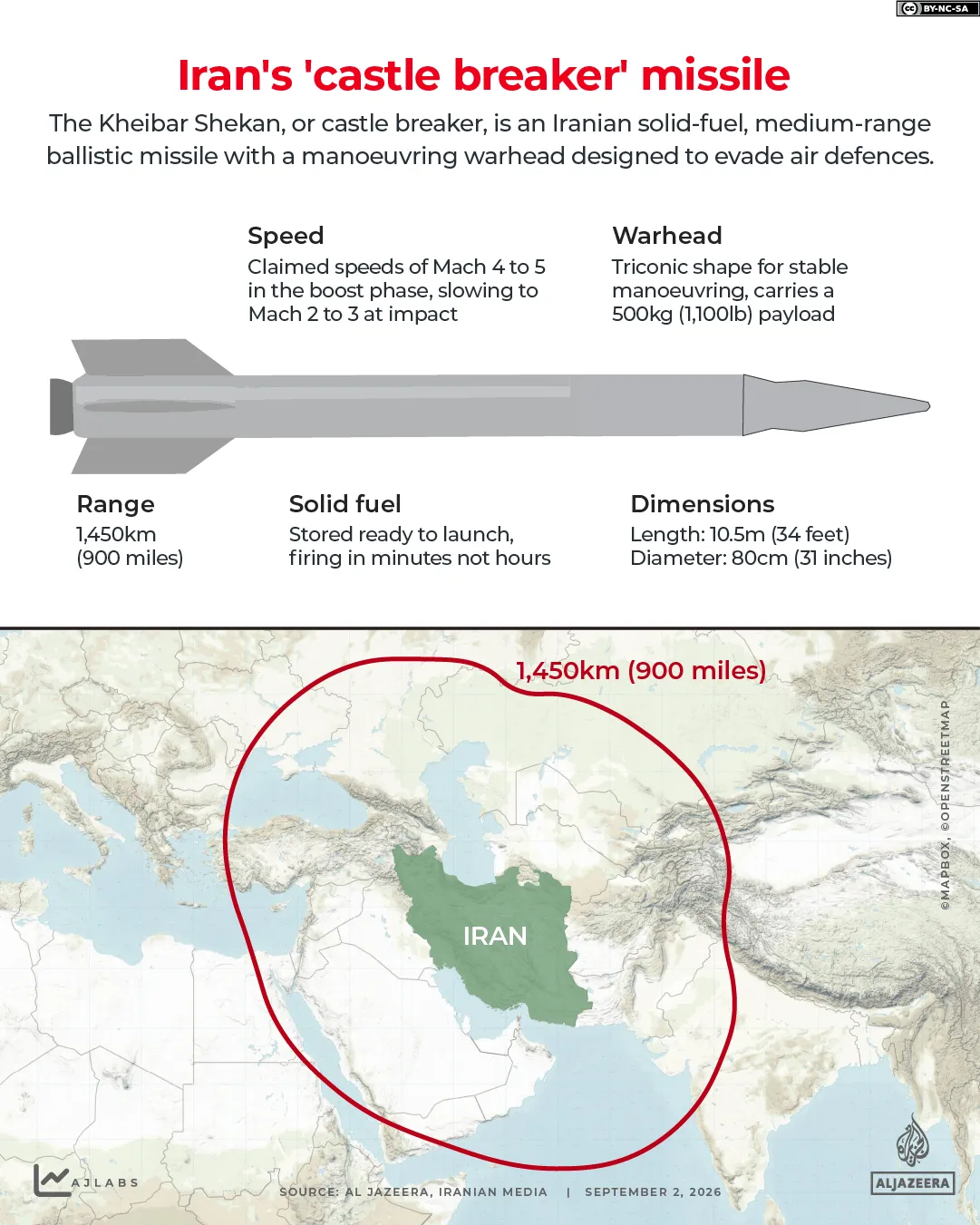
Iran already has operational capabilities to launch missiles beyond 2,000km, but it has kept a cap on them amid focus on regional deterrence. Iranian missiles can reach the entire Arabian Peninsula, the Levant and most of Egypt, as well as parts of Southeastern Europe, including Greece, Bulgaria, Romania, Albania, North Macedonia and Serbia.
For Gulf states, the announcement changes little. They already sit well within Iran’s 2,000km range and have come under repeated Iranian missile fire since the US and Israel launched the war on February 28.
The change can help Iran to position some of its rocket launchers in the country’s east, from where it would require a bigger range to reach Israel. The US and its European allies fear Iran can target US bases in the Indian Ocean and Europe.
In March, the United Kingdom accused Iran of firing missiles towards the joint US-UK base at Diego Garcia, some 4,000km (about 2,500 miles) from Iran. Tehran denied targeting the base located in the Indian Ocean, saying it was “an Israeli false flag” operation.
In 2019, the UK, France and Germany said their modelling put a lighter-warhead version of Iran’s Khorramshahr missile at a range of approximately 3,000km (about 1,900 miles). US officials have also said technology from Iran’s space programme could be repurposed to build intercontinental ballistic missiles, The Associated Press news agency reported. Iran currently does not have intercontinental ballistic missiles in its arsenal.
Muhanad Seloom, assistant professor of international politics and security at the Doha Institute for Graduate Studies, told Al Jazeera that the Diego Garcia launch had already made Iran’s point. “Iran denied doing that, but they wanted to signal that they have the capacity. So yes, they do have the capacity,” he said.
Seloom, who is also an honorary research fellow at the University of Exeter, pointed to Iran’s space launches over the past decade, saying the same rockets could in theory reach anywhere in the world. “How effective, that’s a totally different story,” he said, adding that Iran could probably field missiles with a range of about 5,000km (3,100 miles).
Iranian security analyst Mohamed Taheri made a similar case on Iran’s state-run Channel 3, saying range had stopped being a technical obstacle for Iran by the mid-2010s. “Even now we have no technical limitation in reaching ranges above 2,000km,” he said.
“If we were to increase that range to 4,000km, we would certainly have most of Europe within our missile range, and roughly most of North Africa as well,” Taheri said.
How has Europe responded to Iran’s missile threat?
The IRGC announcement about ending its self-imposed limit seems to be a shift from Tehran’s assurances to Europe on missile range. Europe’s relations with Iran have deteriorated over its nuclear programme and regional geopolitical ambitions. The European Union’s designation of the IRGC as a “terrorist” group and its allowing the US to use bases on the continent have attracted Iran’s ire.
Iran warned Bulgaria repeatedly this year over US aircraft on its soil. In April, Tehran sent a diplomatic note cautioning Bulgaria against letting US military aircraft use its airports for operations against Iran.
When Bulgaria’s parliament approved hosting up to eight US KC-135 refuelling tankers at Bezmer airbase in July, Iran’s Ministry of Foreign Affairs spokesperson Esmaeil Baghaei said Bulgarian decision-makers “must bear responsibility” for the move. It was Tehran’s third warning to Sofia.
In August, two Iranian insiders told the Financial Times that the US bases in countries such as Bulgaria had been assessed as possible targets, describing the threat to Europe as real but confined to the continent’s south and southeast. Two US tankers left Bezmer on August 21.
Last month, the UK spy chief said Iran is stepping up targeting of military bases in Europe. It came after UK Prime Minister Andy Burnham said the IRGC was “almost certainly” behind a suspected plot against Royal Air Force (RAF) Fairford, an airbase used by US bombers to carry out strikes on Iran. The incident prompted the US to withdraw its military jets from the facility over security concerns earlier this month. Tehran has denied involvement, saying it was a “false flag” operation.
On Monday, the US military evacuated aircraft from a second British base, RAF Mildenhall, “in the wake of a threat from Iran”, according to The Wall Street Journal. The refuelling tankers were moved to Germany and elsewhere, and US officials were still discussing the precise nature of the threat.
The UK Ministry of Defence did not confirm the reason. “Aircraft and other assets move regularly according to operational requirements,” a spokesperson said.
Bases in the UK, Germany and Romania are among other European locations the US has used during the conflict.
“It’s possible that in this war we may set aside the geographic restraint we’ve observed stemming from our diplomatic relations with certain countries and even be able to strike the bases that exist in Europe,” Iran’s Taheri said.
For European governments, the announcement is “worrying … but not alarming”, Doha Institute’s Seloom said. Missiles would have to travel far to reach mainland Europe or the UK, he explained, giving NATO members with assets in the region early warning and time to intercept them.
He said threatening Europe would not serve Iran’s interests, since European governments did not back Trump’s war and have pushed for a diplomatic solution despite paying a heavy price in energy costs. That could change if Iran comes to be framed as a threat to international security, he warned, pointing to Iraq, where successive UN Security Council resolutions preceded European support for the 2003 invasion.
“No one could defend Iranian policies when it comes to threatening Europe or the UK,” Seloom said. Lifting the limit, he added, suggests Tehran “is reading this conflict as existential now”.
That, he argued, is what should concern the whole region. “When you give them the idea that you have only one option, is to die … they can do anything. There would be no red lines,” he said.
Why is Iran doing this now?
Because the cap was self-imposed, Iran could have dropped it at any time. For years, the IRGC said the limit was meant to reassure European countries that they would not be targeted.
Mohebbi, the IRGC spokesman, went further, saying that if Iran decided to change its nuclear doctrine and build a bomb, the necessary preparations would be made.
One reading is deterrence: a warning to Washington, and to European governments hosting US aircraft, that renewed strikes could bring a wider response. Iran’s earlier threats to Bulgaria were seen in similar terms, as an attempt to discourage European governments from supporting US operations.
Tehran is also eyeing diplomatic leverage amid efforts to end the conflict. It can offer the cap as a concession, suggesting that any restraint on range now has a price at the negotiating table.
“It’s both,” Seloom said. He argued that Tehran sees a narrow window before the new US Congress convenes in January, in which Trump will want a deal he can present as a success.
The decision to lift the limit, he said, “is basically to push the Trump administration to go for a deal, not to launch another campaign of military action”. With Trump threatening to hit bridges and the power grid, Iran is “signalling that they can go even crazier”.
What has the West historically said about Iran’s missiles?
Western concern over Iran’s missiles has run alongside the nuclear file for more than a decade.
The 2015 nuclear deal signed under US President Barack Obama put a limit on Iran’s nuclear programme in exchange for sanctions relief. UN Security Council Resolution 2231, which endorsed the nuclear deal, officially known as the Joint Comprehensive Plan of Action (JCPOA), put a curb on Iran’s ballistic missile programme.
Those curbs expired in October 2023, following which Western countries expressed concerns about Tehran’s missile activities. In September 2025, France, Germany and the UK reimposed sanctions on Iran over its nuclear enrichment. But Tehran defended the enrichment boost after blaming Trump for withdrawing from the 2015 deal.
Trump put the destruction of Iran’s missile and nuclear programme as the main goals of the war launched in February. “We are going to destroy their missiles and raze their missile industry to the ground,” he had said.
US Defense Secretary Pete Hegseth said days later the goal was to destroy Iranian offensive missiles and missile production. Experts and US intelligence assessments, however, indicated Iran’s missile programme was years away from threatening the US homeland.
Before the war, Iran held the largest ballistic missile stockpile in the Middle East, estimated at between 2,500 and 6,000 missiles.