Case fatality rate climbs to nearly 48 percent in the DRC, meaning almost one in two people infected with Ebola are dying.
The Ebola outbreak in the Democratic Republic of the Congo (DRC) has reached 5,515 confirmed cases of infection and killed 2,642 people, with 51 new cases detected in Ituri and North Kivu provinces, according to the latest government figures.
The update on Sunday came as Pope Leo called for international action to help contain the epidemic, which is now the deadliest Ebola outbreak in the DRC’s history.
Recommended Stories
list of 3 itemsend of list
Declared in mid-May, it is the DRC’s 17th Ebola epidemic and was designated a Public Health Emergency of International Concern by the World Health Organization (WHO), its highest alert level, also covering neighbouring Uganda.
The outbreak is now on track to surpass the deadliest Ebola epidemic on record, which was the 2014–2016 outbreak in West Africa that killed more than 11,000 people.
According to government figures, the case fatality rate in the DRC has climbed from about 20 percent in early June to nearly 48 percent now, meaning almost one in two people infected are dying.
Contact tracing, however, has improved sharply, from 30 percent in June to more than 85 percent.
The disease has also proved deadly for those fighting it. About 160 health workers have been infected, and about 45 have died, according to the WHO.
Efforts to contain the outbreak, however, have been hampered by armed conflict in the affected provinces, displacement, attacks on medical personnel and facilities, a mobile working population and a lack of critical infrastructure.
Vaccines arrive in DRC
There is no approved vaccine or treatment for this particular strain of Ebola, known as Bundibugyo, which is rarer than the virus type behind most past outbreaks.
The WHO has pledged 70,000 doses of the Ervebo vaccine, which is licensed for Ebola and has been effective in past outbreaks. According to the global body, early data from animal trials suggest it may offer some protection against Bundibugyo.
Some 16,250 doses of the vaccine arrived in the DRC on Friday.
WHO Director-General Tedros Adhanom Ghebreyesus and other officials said the response in the DRC needs to be scaled up two to threefold to contain the outbreak and reach every affected area.
They also called for more support and protection for front-line health workers, including protective equipment, timely payment, and access to rapid diagnosis and high-quality supportive care if they fall ill.
Abdulsalami Nasidi, a public health consultant who helped establish the Africa Centres for Disease Control and Prevention, told Al Jazeera that the outbreak was “getting out of hand”.
He blamed weak infection control measures and a lack of trust between authorities and affected communities for the continued transmission.
“This is no longer just a national or regional issue; it is a global issue. If it spreads to neighbouring places with lower immunity, it will be a disaster,” Nasidi added.
The WHO currently rates the risk to the global public as low, but warns that the danger inside the DRC remains very high.
Despite the surging cases, Uganda and several health zones in DRC’s Ituri and South Kivu have interrupted transmission, which the WHO said is evidence that rapid detection, decisive leadership, and community cooperation can break the chain of transmission.
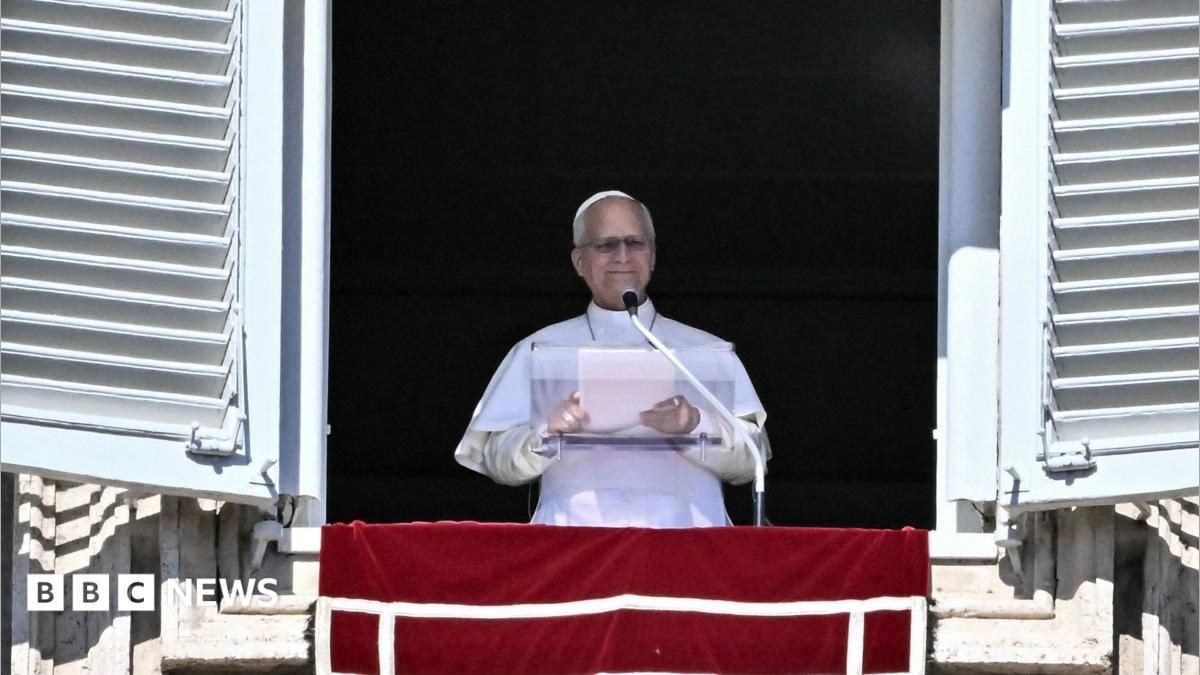
At the Vatican on Sunday, Pope Leo offered prayers for the DRC, “in light of the spread of the Ebola epidemic, which is sadly claiming many lives”.
The pontiff also called for global action to help save lives.
“I urge the international community to respond in a way that also involves local communities in prevention efforts to save as many lives as possible,” he said.
Pope Leo XIV is appealing to authorities around the world to support the people of Gaza who are ‘still suffering greatly’ and to help begin reconstruction efforts.
Though I don’t regularly attend Mass, I fondly remember the two years in high school when I prepared for the sacrament of Communion.
In the basement of St. Boniface Church in Anaheim on weekday afternoons and weekend mornings in the mid-1990s, my sister, about 20 other teenagers and I learned about the tenets of our faith.
We were inculcated with the importance of charity, love toward all, good works and humility, and urged to carry those virtues into adulthood. I didn’t agree with everything our lay teachers espoused — why abortion should be outlawed, why necking was bad, why only men could become priests — but I learned enough important moral lessons that I still proudly call myself Catholic.
Confirmation is meant to bring recipients closer to God and “imprints on the soul an indelible spiritual mark,” according to the Vatican’s official guide to its doctrine. What especially stayed with my classmates and me was, well, us.
We were white, Filipino, Vietnamese and Latino, children of working-class parents and equals in the eyes of God. Church fairs were as likely to serve pancit and spring rolls as hamburgers and tacos. When we finally received confirmation at a special Mass at St. Boniface attended by then-Bishop Norman McFarland, we exemplified not just the future of the church but also the promise of a better tomorrow for the United States.
Our parish lived and practiced American Catholicism’s long tradition of welcoming the stranger, the outcast, the refugee — following the example and words of the Gospel we read every Sunday. But even as we committed ourselves to the path of Christ, politicians in California waged a war against illegal immigrants and anything that suggested diversity — a xenophobia that would culminate decades later with President Trump’s election.
Trump is a walking manifestation of the seven deadly sins, to the point that he has depicted himself as Jesus anda pope on social media. Nevertheless, a majority of Catholics — thankfully no one in my immediate family — voted for him in each of his three presidential elections, with support topping out at 55% in 2024, per the Pew Research Center.
Catholics were a key constituency in every sector Trump needed for his historic victory against Kamala Harris. Swing states with old-line communities like Wisconsin and Pennsylvania. Boom states like Nevada and Florida. And especially Latinos, who voted for Trump in numbers never before seen for a Republican presidential candidate. Latino Catholics went even harder for Trump: The Public Religion Research Institute found their support for him increased by 17 percentage points from 2016 to 2024, even as his white Catholic support dropped from 64% to 59%.
Issues from abortion to the economy to transgender rights spurred Catholics to side with Trump, but his hard-line stance against immigration was especially popular. As immigrant Catholics were being demonized, echoing previous eras of American history, too many Catholics sided with the demonizers.
Maria Marin and her husband, Martin Marin, pose with a cardboard cutout of Pope Leo XIV during the Archdiocese of Chicago’s celebration of Leo at Rate Field on June 14, 2025.
(Pat Nabong/Chicago Sun-Times via Associated Press)
A June 2024 survey by Georgetown’s Center for Applied Research in the Apostolate, which tracks American Catholic life, showed that 43% of respondents supported lower levels of immigration. A month into Trump’s second term, 41% of American Catholics thought that increased immigration in recent years had changed the U.S. “for the worse,” compared with 33% who felt it made life better, according to a Pew Research Center poll.
In the lead-up to the 2024 election, I argued about the dignity of Venezuelan and Salvadoran migrants with people from my parents’ native ranchos in Mexico, who came to this country without papers and are regular churchgoers. I sighed in disappointment as former confirmation classmates whose refugee parents fled tyrannical rulers, just like the Holy Family, posted approvingly on social media about Trump’s vow to build a bigger, nastier border wall.
Catholics have frequently exemplified the best and worst tendencies of American society. We’ve been brutal conquistadors and the huddled masses yearning to be free, trailblazing politicians and the millions who stood silently during our church’s sex abuse scandals. Trump’s support among Catholics represented a new low. But by some miracle of God, more and more of those supporters are finally seeing him for who he is.
On Aug. 12 — the feast day of Jane Frances de Chantal, the patron saint of forgotten people — the Public Religion Research Institute released a survey showing that 62% of Catholics think unfavorably of Trump, while 57% oppose his handling of immigration, both legal and illegal. If this repentance transforms into votes against MAGA in the midterms, the rest of Trump’s presidency is doomed.
The poll offers no insight into why Catholic support for Trump has cratered. The easy explanation would be the president’s enmity toward Pope Leo XIV, who has preached a gospel of kindness toward the undocumented and spoken out against the quagmire in Iran. When the Trump administration invited the native-born Chicagoan to visit the U.S. for America’s 250th anniversary, Leo instead decided to spend his Fourth of July on Lampedusa, the Ellis Island of the Mediterranean.
But the poll noted that Leo’s predecessor, Pope Francis, had higher favorability ratings among American Catholics during the same time in their respective reigns — 90% to Leo’s 75%.
Trump’s popularity is also collapsing among Americans as a whole. Only about a third support him, according to an a recent Reuters/Ipsos poll — the poorest showing of his second term, matching the lowest numbers of his first term. But for Catholics, it’s not just high prices, the Iran War and Trump’s drift toward despotism that makes him so onerous.
The Catholics in his government, from Supreme Court justices to Cabinet members to Vice President JD Vance, are acting as a rubber stamp for an imperious ruler, instead of imitations of Christ. Trump’s immigration sweeps are hitting American Catholicism so hard that bishops have allowed the faithful to stay home instead of attending Mass.
What reason is there left for good Catholics to support Trump? If ever a group needed to break away from him, it’s us.
What’s been especially galling about Trump’s second term, from a Catholic perspective, is his gleeful cruelty.
Proverbs 21:13 states, “Whoever closes his ear to the cry of the poor will himself call out and not be answered.” Conservatives who have criticized Pope Leo for taking on Trump over his nastiness toward the meek don’t get that his motive isn’t political — this has been standard Vatican doctrine going back to his namesake, Leo XIII. In an influential 1891 encyclical urging the world to stand by the working class, Leo XIII pointed out that sacrificing oneself “for the benefit of others, is man’s surest antidote against the insolence of the world and immoderate love of self.”
Is there any statement more contrary to MAGA than that?
Cardinals Robert McElroy, Christophe Pierre and Joseph Tobin and Archbishop Bernard Hebda speak to reporters after a Mass in solidarity with migrants at the Chapel of St. Thomas Aquinas on Feb. 27, 2026, in St. Paul, Minn.
(Mark Vancleave/Associated Press)
The Catholics who supported Trump may have forgotten Leo XIII’s words as they repeatedly voted for him. But that’s the beauty of our faith. We can admit our errors and seek to right them through another sacrament — confession.
“Through such an admission man looks squarely at the sins he is guilty of,” reads the catechism of the Catholic Church. That way, people can “take responsibility” for their faults and reconcile with God “in order to make a new future possible.” And the way to do that is by “doing something more to make amends for the sin.”
Catholics are supposed to confess our sins privately. But we must repent of Trump publicly and loudly at the ballot box this November and urge others to follow.
We helped usher in Trump. We must now lead in exorcising him from American society once and for all.
The pontiff’s first Latin America trip will take him back to Peru, where he spent decades as a missionary and bishop.
Published On 5 Aug 20265 Aug 2026
Pope Leo XIV will return to the region that shaped much of his ministry, making his first trip to Latin America as head of the Catholic Church in November.
The Vatican announced on Wednesday that Leo will travel to the three South American countries — Uruguay, Argentina and Peru — from November 6 to 17.
Recommended Stories
list of 4 itemsend of list
Pope Leo’s stop in Peru is especially significant. He spent decades, on and off, in the Andean country, first as a missionary and later as a bishop for the Diocese of Chiclayo in northern Peru.
The trip will also mark the first papal visit to Argentina and Uruguay in nearly 40 years.
The itinerary includes stops in the cities of Montevideo, Paysandu and Florida in Uruguay from November 6 to 8; Buenos Aires, Cordoba and Lujan in Argentina from November 8 to 11; and Lima, Chiclayo, Cusco and Pucallpa in Peru from November 11 to 17. More details about the pope’s itinerary will be released closer to the trip.
Pope Leo’s return to Chiclayo is likely to be one of the most emotional moments of the tour.
Although born in Chicago, Pope Leo first arrived in Peru in 1985 at age 30. Over the next three decades, he moved between the United States and Peru as a missionary.
In 2014, Pope Francis appointed him to the Diocese of Chiclayo. He became a Peruvian citizen the following year and led the diocese until 2023.
Upon his election as pope in 2025, he thanked the diocese in his inaugural address — and the city embraced him as the first “papa chiclayano”, the first pope from Chiclayo. Thousands of people gathered in Chiclayo’s main square to celebrate the results of the papal conclave.
The Argentina leg of the visit is also heavily symbolic. Leo’s predecessor, Pope Francis, was born in Argentina but never returned to his home country during his 12-year papacy, despite repeated invitations from multiple presidents.
Pope Francis made his final trip to South America in 2018, when he visited Peru and Chile. Pope Leo will become the first pope to visit Argentina since John Paul II travelled there in 1987.
Latin America and the Caribbean are considered the regions with the largest Catholic populations.
In a survey of religious distribution in 2013, the Pew Research Center indicated that 39 percent of the world’s Catholics were located in Latin America and the Caribbean, compared to 24 percent in Europe, the next largest region.
But the Catholic Church is grappling with declining influence across Latin America. Polling by the public opinion firm Latinobarometro found the share of people in the region who identify as Catholic fell from about 80 percent in 1995 to 54 percent in 2024. Evangelical Christianity, meanwhile, has seen its influence grow in the region.
Since assuming the papacy, Pope Leo has ramped up his international travel schedule.
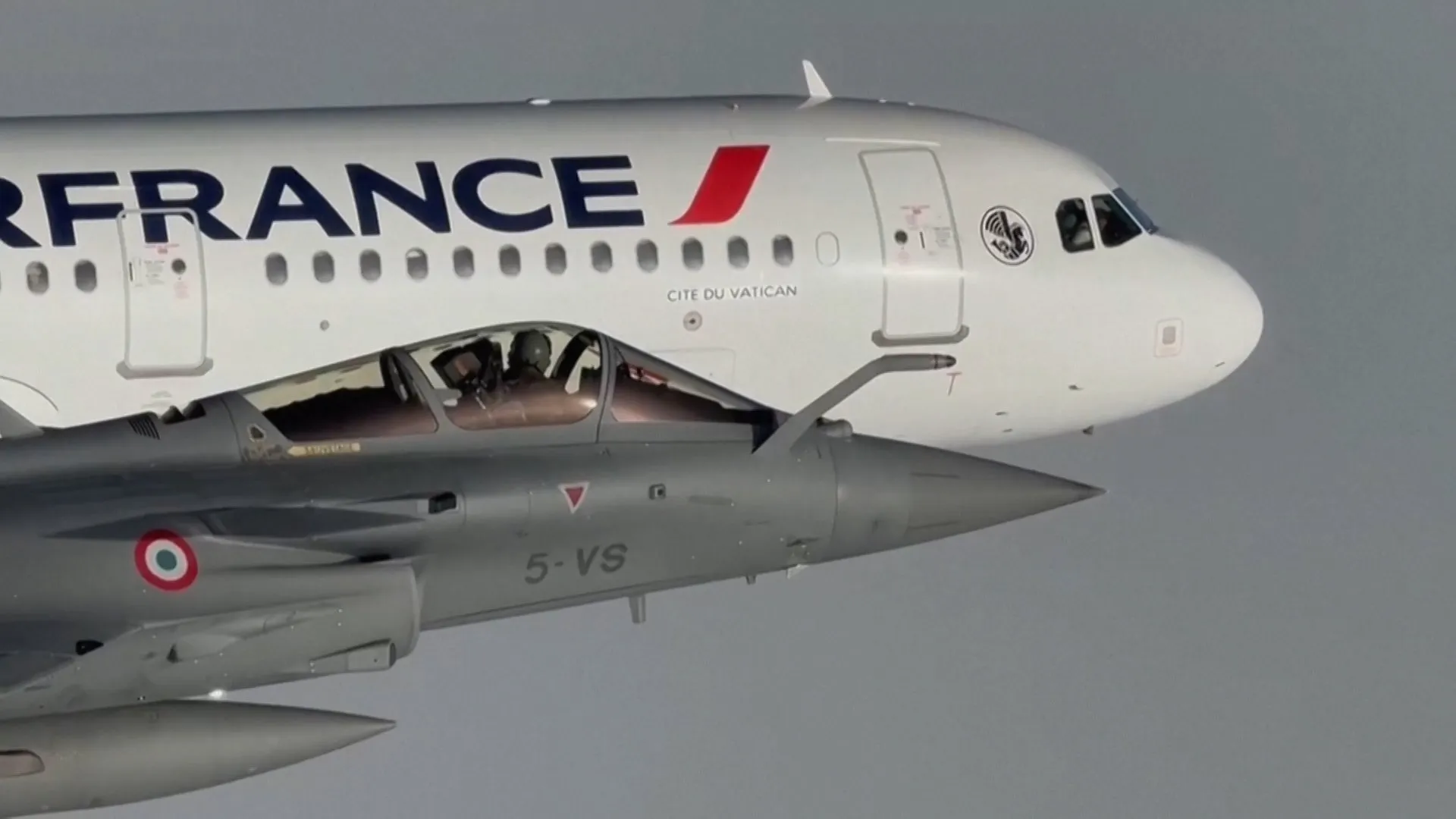
Before heading to South America, he is due to visit France from September 25 to 28, his first trip to the country as pope, and he visited four African countries, as well as Spain, earlier this year.
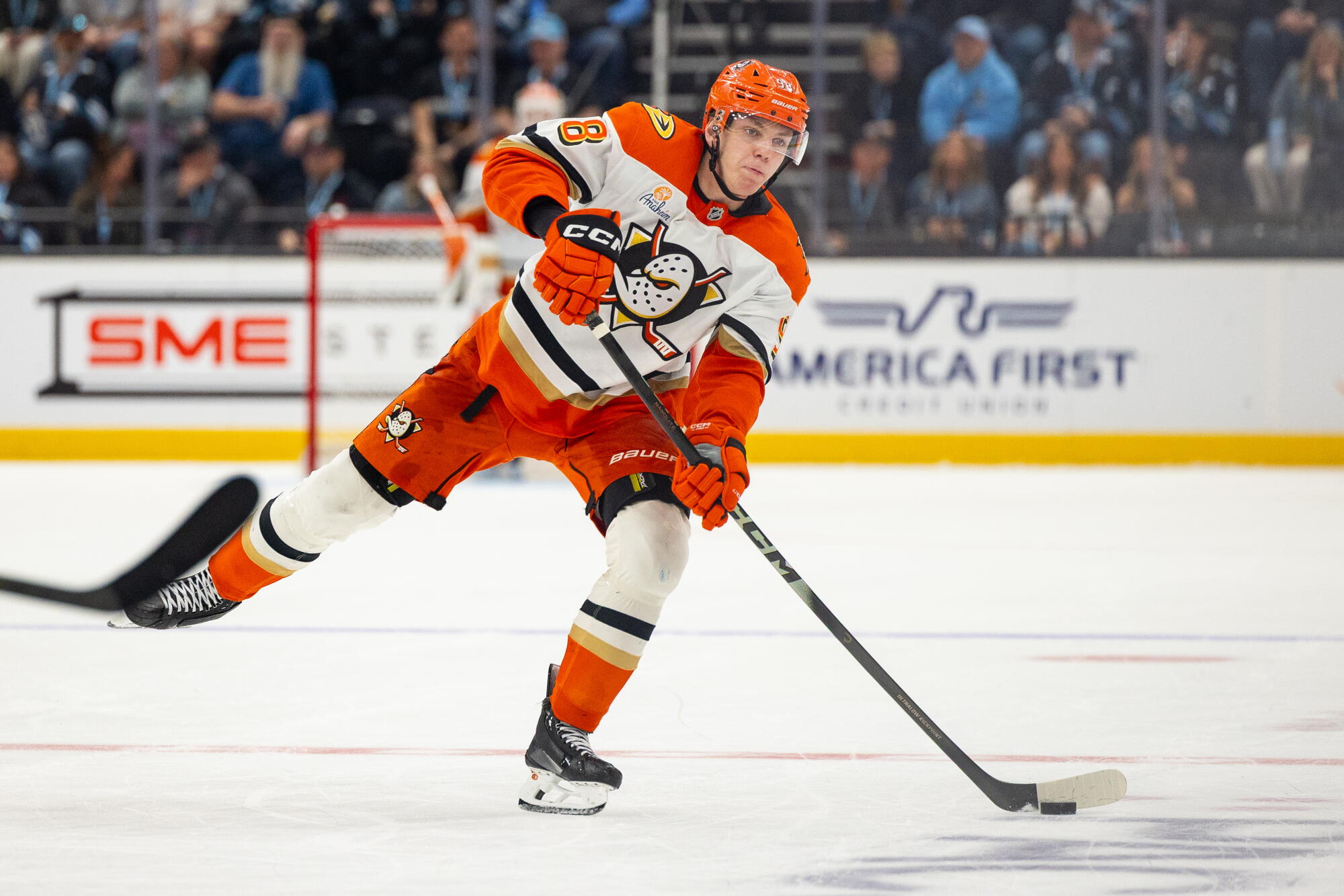
The Ducks have matched the Philadelphia Flyers’ offer sheet for center Leo Carlsson, keeping their rising young star at an extraordinary cost.
The Ducks announced their decision Thursday on the 21-year-old Carlsson, who is now the NHL’s highest-paid player under the five-year, $90-million deal extended by the Flyers one week ago.
Carlsson signed the Flyers’ offer sheet as a restricted free agent after a year of fruitless negotiations with Anaheim general manager Pat Verbeek, whose typical hardline approach in contract talks with his restricted free agents backfired tremendously this time.
Carlsson’s new contract is worth much more than the league expected he would get as a restricted free agent, and the $18 million average annual value is significantly more than he had already indicated he would accept. The deal surpasses the salary of Minnesota’s Kirill Kaprizov, who would have been the NHL’s highest-paid player at $17 million.
The Flyers failed to land their long-sought No. 1 center in unusual fashion by swiping Carlsson, but the attempt showed general manager Danny Briere’s determination to improve his roster at all costs. The Ducks would have received four first-round draft picks from Philadelphia if they hadn’t matched the offer sheet.
Future negotiations will reveal whether Briere significantly skewed the NHL’s valuations of young talent by offering more than nearly all observers thought Carlsson could get. The structure of Philadelphia’s offer sheet also front-loaded Carlsson’s contract with costly signing bonuses in another departure from many NHL contracts.
Although the Ducks retained their most important young player, Verbeek’s inability to get a deal done before he was forced into it by Philadelphia will compromise Anaheim’s roster-building efforts this season and for years to come. The embattled general manager has had a rough summer immediately after the Ducks ended their seven-season playoff drought with a second-round run that had stamped them as a future contender in the Western Conference.
After keeping the Ducks’ payroll well under the salary cap during his tenure, Verbeek will be spending owner Henry Samueli’s money at the limit of the cap next season after making anachronistic decisions and signaling vulnerability to the league while he managed his crop of young talent.
The league’s salary cap is currently at $104 million and is expected to rise in the coming years.
Verbeek still hasn’t signed 41-goal scorer Cutter Gauthier, a restricted free agent who is not eligible to receive an offer sheet. He signed defenseman Pavel Mintyukov to a five-year, $36 million deal last week, again going well over the expected market rate for a restricted free agent who isn’t on Carlsson’s level of talent, but was widely rumored to be on the verge of signing an offer sheet.
Verbeek also parted ways with four key defensemen from last season’s team — Jacob Trouba, captain Radko Gudas, Olen Zellweger and late-season rental John Carlson — and hasn’t replaced them with any significant signings beyond journeyman Nick Jensen. The Ducks also traded Mason McTavish, a key component of their team for several seasons, to St. Louis for draft picks after the center regressed last season.
With this pricey deal for Carlsson, the Ducks’ history of antagonistic negotiations with their free agents has become the defining feature of Verbeek’s front office.
Trevor Zegras, Jamie Drysdale and McTavish all held out of training camp in recent years when they couldn’t get a deal done with Verbeek, who eventually signed all three — and later traded them all away. Verbeek did two of those deals with the Flyers, gaining praise for sending Drysdale in a package for Gauthier, but getting criticism from Ducks fans for giving up on the high-scoring Zegras last summer.
Carlsson was the No. 2 choice in the 2023 draft behind Connor Bedard, and he has emerged as one of the NHL’s top young playmakers.
Although he didn’t produce points at a rate commensurate with his new salary during his first three seasons, almost everyone believes Carlsson can become one of the best centers in hockey, so his deal might eventually look downright affordable.
He scored 67 points in 70 games last season despite being limited for a lengthy stretch by a leg injury, and he added 11 points in 12 games during his first postseason experience.
Carlsson is expected to be an unrestricted free agent when this contract ends in 2031, putting him in line for another massive payday at just 26 years old.
Pope Leo XIV greets migrants at the Favaloro Pier to bless a plaque dedicating the pier to late Pope Francis during his pastoral visit to the island of Lampedusa, Italy, Saturday. Photo by Ciro Fusco/EPA
July 4 (UPI) — Pope Leo XIV, the first American pope, spent his second Fourth of July as the pontiff at Lampedusa, Italy, an island at the forefront of the European migrant crisis, and appealed to Americans to treat immigrants with “compassion and generosity.”
Leo visited Lampedusa, an Italian island in the Mediterranean Sea between Tunisia and Malta, instead of celebrating the day in the United States.
Soon after his arrival, he released a letter to Americans about the 250th Anniversary of the country’s birth, reflecting on the principles that have shaped the United States for two and a half centuries, particularly religious freedom and human dignity.
In the letter Leo said that, “among the principles that have guided the development of this country is the God-given dignity of every human life, each person being endowed with an inherent worth that calls for reverence, protection and care … and of building a society in which the vulnerable, the suffering and the forgotten are always met with compassion, solidarity and love.
“Defending human life also includes welcoming, protecting and assisting immigrants, whose hopes, sacrifices and contribution have formed part of the history of this country from its very beginning. In every generation, those who have arrived seeking freedom, opportunity and a place to belong have helped to shape the nation’s character. To receive them with compassion and generosity is not only an act of charity, but also a recognition of the dignity that belongs to every human person,” Leo said.
He said he hopes Americans “honor the courage and vision of those who came before them by strengthening their communities, respecting their differences and working together toward a more perfect union.”
Upon landing at Lampedusa, the pope visited the “Door to Europe,” a piece of art that is a memorial to thousands of migrants who died or disappeared trying to cross the sea.
He also visited the Cemetery of the Nameless in Cala Pisana to pray over the graves of migrants who died at sea. The graves are marked with crosses made from the wood of boats that sank off the island’s coast, Euro News reported.
Leo then visited Molo Favaloro, a site where migrant boats are brought to shore. He unveiled and blessed a plaque dedicated to Pope Francis there. The quay there will now be named Molo Francisco. Francis visited the island in 2013.
The pope met and shook hands with 15 migrants brought from a migrant housing center run by the Red Cross. It now houses 138 people, including 51 unaccompanied minors. On Friday night, the Italian coast guard rescued 17 people aboard a small boat, Euro News said.
“By deciding to name Molo Favaloro after Pope Francis you are giving a sign of the bond my predecessor forged with your community and with migrant brothers and sisters: the Pope has stood by you in these very demanding times. And today I am here to tell you that the Pope continues to walk alongside you, to support you and encourage you,” Leo wrote in a letter to the mayor of Lampedusa.
On Friday, Leo gave a virtual speech to Philadelphia when he was awarded the Liberty Medal. The medal has been awarded since 1989 and was managed by the Philadelphia Foundation until 2006, when it became part of the National Constitution Center in Philadelphia.
PHILADELPHIA — The Philadelphia Flyers are prepared to pay Ducks center Leo Carlsson the highest annual salary at $18 million since the salary cap era began in 2005, now giving the Ducks seven days to match the offer.
The Flyers tendered the five-year, $90-million offer sheet to Carlsson on Friday, which would require four of the Flyers’ first-round draft picks in each of the next four seasons as compensation.
The Ducks have seven days to exercise their right of first refusal on the player, per the NHL collective bargaining agreement.
The offer sheet comes 14 years after the Flyers, under previous management, offer-sheeting Nashville defenseman Shea Weber for $110 million over 14 years, which the Predators matched.
The 21-year-old Carlsson had 29 goals, 38 assists for 67 points in 70 games last season with the Ducks. He added 11 points in 12 playoff games to help lead the Ducks to the second round.
A native of Karlstad, Sweden, Carlsson has 141 points (61 goals, 80 assists) in 201 regular-season games with the Ducks. The 6-foot-3, 208-pound center was selected by the Ducks second overall in the 2023 draft.
The Minnesota Wild in September signed Kirill Kaprizov to an eight-year, $136 million extension, giving him the richest contract in NHL history.
Kaprizov will count $17 million against the salary cap beginning next season, through 2034. That’s the highest annual average salary of any player since the league’s cap era began in 2005, surpassing Edmonton’s Leon Draisaitl at $112 million over eight years, a $14 million annual average. Alex Ovechkin’s 13-year, $124-million contract signed with Washington in 2008 was previously the highest total value.
A rebel group of Roman Catholics has ordained its own bishops in direct defiance of Pope Leo XIV and the Vatican order. The Society of Saint Pius crisis has caused fears the Church could rupture. Soraya Lennie breaks it down.
Pope Leo has traveled to the Canary Islands as the final stop of his week long visit to Spain, placing migration and human dignity at the center of his international message. The Canary Islands have become one of Europe’s most important migration gateways, with thousands of people risking dangerous Atlantic crossings from Africa in search of safety, opportunity, or asylum.
The visit comes amid growing global debate over migration policies, border security, and humanitarian responsibilities. During his Spain tour, Leo has repeatedly argued that the treatment of migrants represents a moral test for governments and societies.
His stop in the Canary Islands includes meetings with migrants, humanitarian organizations, and local groups assisting new arrivals, as well as a memorial tribute to those who lost their lives attempting the journey.
Why the Canary Islands Have Become a Migration Flashpoint
Located off the northwest coast of Africa, the Canary Islands have emerged as a major entry point for migrants seeking access to Europe.
As Mediterranean routes have become increasingly difficult or heavily monitored, many migrants have turned to the Atlantic route despite its extreme dangers. The journey often involves overcrowded boats, harsh weather conditions, and long periods at sea.
The rising number of arrivals has transformed the islands into a focal point of European migration debates, exposing tensions between humanitarian obligations and border management concerns.
Pope Leo’s Broader Message on Migration
The pope’s visit is consistent with his broader emphasis on human rights, social justice, and international responsibility.
Throughout his papacy, Leo has framed migration not merely as a political issue but as a question of human dignity. His criticism of the international community’s response reflects concerns that many governments are prioritizing deterrence and border enforcement over humanitarian protection.
By meeting migrants directly, Leo is attempting to shift attention from statistics and policy disputes toward the personal experiences of those undertaking dangerous journeys.
Spain’s Different Approach
Spain has largely adopted a more welcoming position toward migrants compared with several European countries that have tightened immigration policies.
The government’s efforts to regularize the status of hundreds of thousands of undocumented migrants reflect a belief that legal integration can strengthen social cohesion and economic participation.
However, implementation challenges remain significant. Many migrants continue to face lengthy bureaucratic processes, uncertainty regarding legal status, and difficulties accessing employment and social services.
At the same time, migration has become an increasingly contentious political issue, with critics arguing that more permissive policies could encourage additional arrivals.
The Growing European Debate
Migration remains one of the most divisive issues across Europe.
Governments face competing pressures to maintain border security, address labor shortages, uphold humanitarian commitments, and respond to domestic political concerns. Rising support for nationalist and far right parties in several countries has further intensified the debate.
Against this backdrop, Pope Leo’s intervention highlights the widening gap between humanitarian advocates and political leaders who favor stricter migration controls.
His visit also underscores the role religious institutions continue to play in shaping discussions about ethics, responsibility, and international solidarity.
Analysis
The significance of Pope Leo’s Canary Islands visit extends beyond Spain’s migration challenges.
The trip represents an effort to place human rights concerns at the center of a debate increasingly dominated by security, border control, and political polarization. By choosing one of Europe’s most visible migration entry points, Leo is drawing attention to the human consequences of global inequality, conflict, and displacement.
The visit also reflects a growing tension between moral leadership and political realities. While many governments acknowledge humanitarian responsibilities, they face domestic pressures that often push policy in the opposite direction.
Leo’s message is therefore unlikely to change migration policy overnight. However, it may strengthen the position of humanitarian organizations and advocates who argue that migration should be addressed through a combination of legal pathways, international cooperation, and human rights protections rather than deterrence alone.
Future Outlook
Migration pressures on Europe are unlikely to diminish in the near future.
Conflict, economic instability, climate related challenges, and demographic trends will continue to drive movement across borders. As a result, countries will face increasing pressure to develop sustainable migration frameworks that balance security concerns with humanitarian obligations.
Pope Leo is expected to remain one of the most prominent global voices advocating for migrants and refugees. His Canary Islands visit may become a defining symbol of his broader effort to place human dignity at the center of international policymaking.
The larger challenge for Europe will be determining whether political leaders can translate humanitarian principles into workable migration policies amid growing public and political divisions.
Pope Leo delivered a landmark address to Spain’s parliament, warning that the world is facing a profound spiritual, cultural, and political crisis marked by escalating conflicts, deepening polarization, and growing disregard for human rights.
The speech, the first by a pope before the Spanish legislature, formed a central part of his week long visit to Spain. Coming amid renewed hostilities between Israel and Iran and ongoing debates over migration and European security, the address reflected the Vatican’s increasing engagement with major geopolitical and humanitarian issues.
Leo used the occasion to reiterate long standing Catholic concerns regarding war, social fragmentation, migration, and the ethical implications of technological development. He also addressed the relationship between religion and public life, defending religious freedom and the confidentiality of confession.
Key Themes
Peace Over Militarisation
A central theme of the pope’s address was opposition to the growing militarisation of international politics. He argued that military force may suppress conflict temporarily but cannot create lasting peace.
His remarks came as European governments continue increasing defence expenditures in response to heightened security concerns following Russia’s invasion of Ukraine and broader geopolitical instability. The pope warned that excessive reliance on military solutions risks deepening rather than resolving global tensions.
Migration and Human Dignity
Leo devoted significant attention to migration, describing inadequate responses to displaced populations as a challenge to the ethical foundations of the international order.
He urged governments to move beyond border management policies and address the underlying drivers of migration, including conflict, poverty, and climate change. His comments coincided with plans to meet migrants in Spain’s Canary Islands, a major entry point for migrants attempting to reach Europe from Africa.
The pontiff framed migration as both a humanitarian and moral issue, arguing that the treatment of vulnerable populations serves as a measure of a nation’s moral character.
Artificial Intelligence and Ethics
The pope also expanded on concerns he has raised previously regarding artificial intelligence. He called for stronger ethical oversight of emerging technologies, particularly their application in military contexts.
As governments and defence industries increasingly integrate AI into weapons systems and military planning, Leo argued that technological progress must remain subject to moral and humanitarian considerations.
Religion in Public Life
Another notable aspect of the speech was the pope’s defence of religious participation in public affairs. He argued that faith should not be excluded from public discourse and stressed the importance of protecting religious freedoms.
Leo also defended the confidentiality of confession, a topic that has generated debate in several countries considering legal requirements for clergy to report abuse disclosed during confessions.
Why It Matters
The speech signals a more assertive Vatican engagement with global political debates at a time of mounting international instability.
Unlike purely theological addresses, Leo’s remarks directly addressed issues shaping contemporary international relations, including war, migration, technological governance, and democratic cohesion. His intervention places the Catholic Church within broader discussions regarding the future direction of global governance and international cooperation.
The address also highlights the Vatican’s growing concern that rising geopolitical competition, nationalism, and social polarization are weakening international institutions and undermining collective approaches to global challenges.
Stakeholders
The Vatican
Seeking to shape global debates on peace, migration, ethics, and human rights.
European Governments
Balancing security concerns with humanitarian responsibilities and social cohesion.
Migrants and Refugees
Directly affected by immigration policies and international responses to displacement.
Technology Sector
Facing increasing scrutiny over the ethical implications of artificial intelligence.
Religious Communities
Monitoring debates surrounding religious freedom and the role of faith in public life.
Human Rights Organisations
Engaged in discussions regarding migration, conflict resolution, and protections for vulnerable populations.
Strategic Implications
The address reflects the Vatican’s effort to position itself as a moral counterweight to rising geopolitical competition and militarisation. By linking war, migration, technology, and social division within a single framework, the pope presented these issues as interconnected symptoms of a broader crisis affecting the international order.
His criticism of increased military spending places the Vatican at odds with many Western governments currently prioritising defence expansion. At the same time, his focus on migration challenges increasingly restrictive immigration policies adopted across Europe.
The pope’s intervention on artificial intelligence also signals that ethical governance of emerging technologies may become a more prominent area of Vatican diplomacy in the coming years.
Analysis
Pope Leo’s address represents one of the clearest articulations yet of his vision for the Church’s role in contemporary global affairs. Rather than limiting his remarks to spiritual concerns, he framed international conflict, migration pressures, technological change, and democratic fragmentation as interconnected challenges requiring moral as well as political responses.
The speech suggests a papacy willing to engage directly with policy debates at a time when many governments are prioritising security, strategic competition, and economic interests. While the Vatican lacks conventional political power, its ability to shape public discourse and influence ethical debates remains significant.
By positioning peace, human dignity, and ethical governance at the centre of his message, Leo is seeking to reassert the relevance of moral leadership in an increasingly fragmented international environment. Whether governments embrace those arguments remains uncertain, but the address signals that the Vatican intends to remain an active participant in debates over the future of the global order.
Pope Leo XIV greets the people from the popemobile after presiding over the meeting “Weaving networks with the world of Culture, Education, Business and Sport,” at the Movistar Arena in Madrid on Sunday. Photo by Fernando Villar/EPA
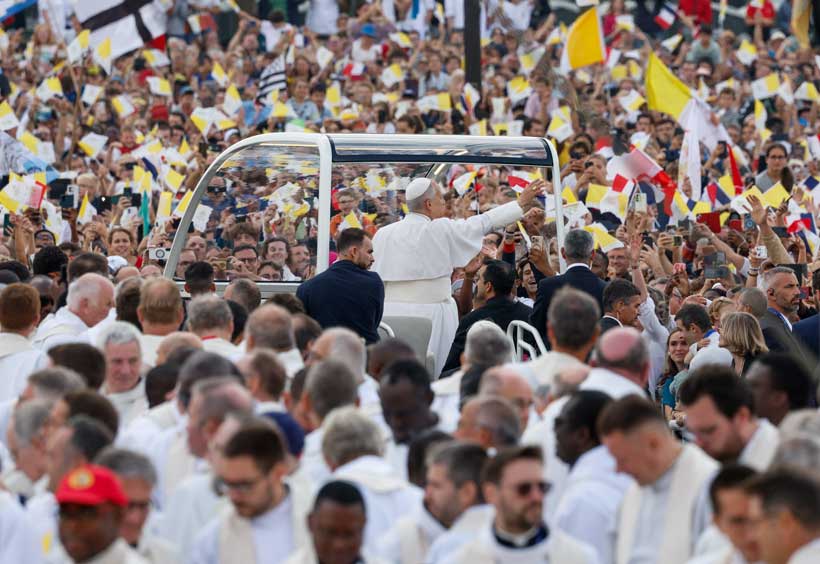
June 7 (UPI) — Pope Leo drew more than 1 million people to an open-air mass in Madrid on Sunday morning to start his week-long visit to Spain.
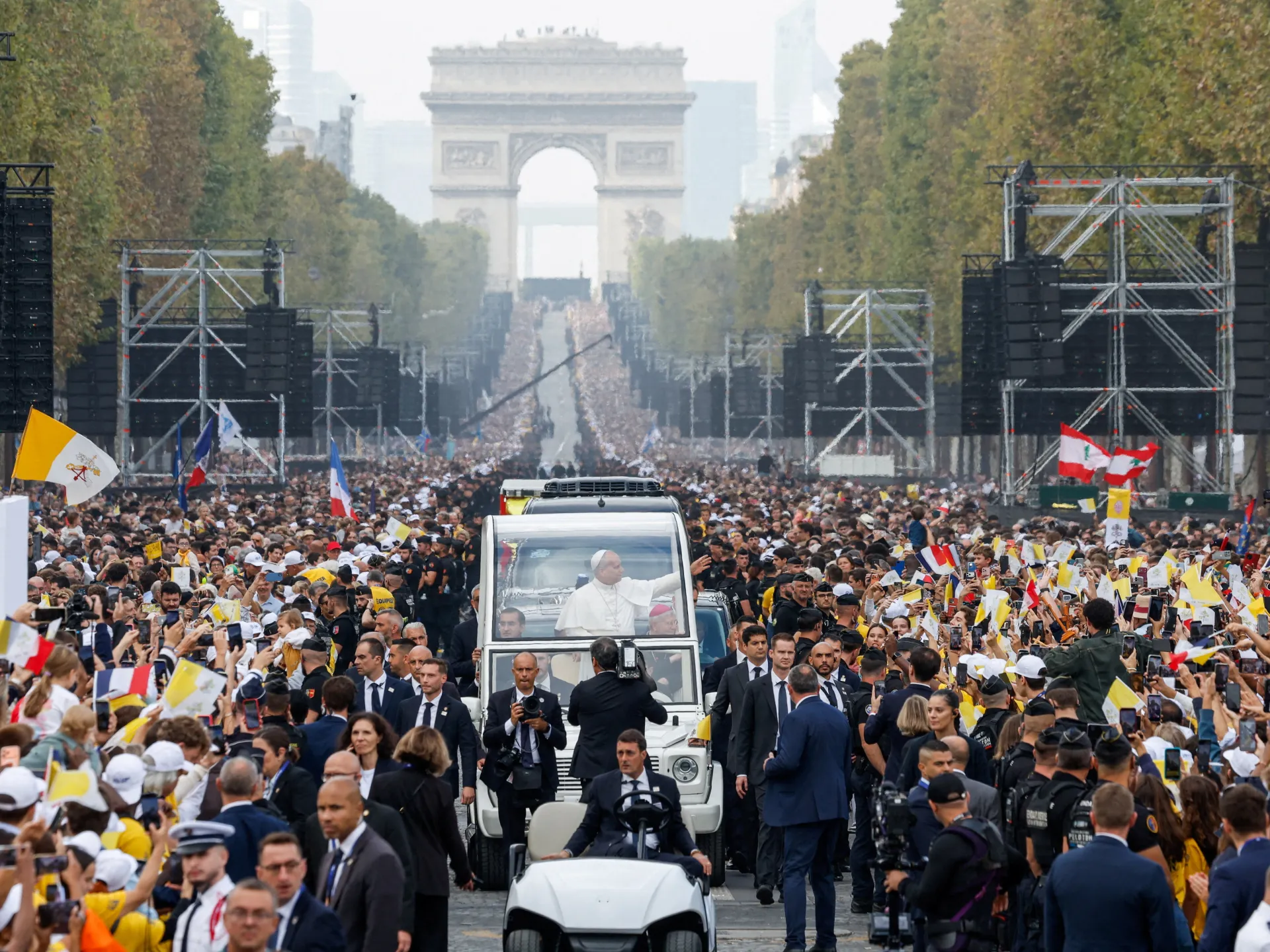
The mass, to celebrate the feast of Corpus Christi, was held in the Plaza de Cibeles and saw the Pontiff ride through the 1.2 million strong crowd that overflowed into nearby streets to the stage where he performed mass, The Guardian and The BBC reported.
Pope Leo arrived in Madrid on Saturday to start the visit, the first time in 15 years that a Pope has spent time in Spain, and was greeted with fanfare and Spanish King Felipe VI and Queen Letizia.
Along with the mass, Pope Leo had plans on Sunday to meet with the members of the Order of St. Augustine and attend a gathering of Spanish representatives of the country’s culture, arts, business and sports.
Among remarks in Pope Leo’s sermon, he told those in attendance that, like God, they should work to help “the poor, the downtrodden, those who are alone and forsaken,” adding that religion remains “a school of faith from which” they can draw in their daily lives.
The large crowd on Sunday morning followed the Pope addressing between 500,000 and 600,000 people on Saturday night at a prayer vigil — and saw him address younger people in the crowd with the “6-7” hand gesture that has gone viral online.
Monday, the Pope is expected to address the gridlocked Spanish parliament, where his comments likely will address the type of political polarization in Spain and many other nations right now.
On Thursday, Pope Leo has plans to visit the Canary Islands, a landing spot for people looking to migrate to Spain.
President Donald Trump discusses renovations to the Lincoln Reflecting Pool and makes an announcement on coal in the Oval Office at the White House on Thursday. Photo by Samuel Corum/UPI | License Photo
The pontiff praises Madrid as a beacon of inclusion as about 1.2 million people gather for Sunday mass.
Published On 7 Jun 20267 Jun 2026
An oceanic crowd has filled the streets of the Spanish capital Madrid with chants, cheers and applause to greet Pope Leo XIV on the second day of a weeklong apostolic journey to mainland Spain and the Canary Islands.
The Vatican and local organisers said about 1.2 million people braved the heat to be present in the landmark Cibeles Square on Sunday in what is expected to be the largest event during his visit to the country.
Recommended Stories
list of 3 itemsend of list
Throngs of people pressed along barriers near the square – best known as the rallying point for Real Madrid football fans celebrating the club’s titles – waving flags and shouting “Long live the pope”, as Leo arrived in his white popemobile for the event. Some tossed flower petals marking his arrival.
“May Madrid continue to be a welcoming and inclusive city, where social life is inspired by true human values,” the pontiff wrote in the guestbook as he was handed the key to the city by its mayor.
Faithful attend a mass held by Pope Leo XIV at Plaza de Cibeles, during his apostolic journey in Madrid, Spain [Mohammed Salem/Reuters]
Leo began his trip on Saturday, meeting migrants and the homeless and attending a vigil with about 600,000 young people in Madrid. His June 6-12 visit also includes stops in Barcelona and the Canary Islands, where he will meet migrants and refugees who risked their lives crossing there from West Africa.
He said he hoped the visit, his first to a European Union country outside Italy, would set an example to the world about respecting “every human being” and urged leaders to stop dividing electorates.
“I am delighted that he is praying for us migrants and for our safety,” said Andrea Margarita, a 72-year-old Peruvian who arrived in Spain six months ago, as she waited in the crowd in a wheelchair with her daughter.
After mass, Leo was scheduled to hold a private meeting with fellow members of his Augustinian religious order in the afternoon before meeting figures from the world of entertainment, sport and culture at a concert venue in central Madrid.
Pope Leo XIV leads the mass in the Plaza de Cibeles in Madrid [AFP]
1 of 2 | Pope Leo XIV blesses infants on his visit to the Caritas Charity Centrer in the Lucero neighborhood of Madrid Saturday. The pontiff is visiting Spain from from June 6 through June 12, with stops in Madrid, Barcelona and the Canary Islands. Photo by Ciro Fusco/EPA
June 6 (UPI) — Pope Leo XIV landed in Madrid Saturday to begin his one-week papal visit to the country, the first in 15 years.
Leo was greeted at the airport by King Felipe VI and his wife Queen Letizia, then addressed them at the Royal Palace along with politicians and diplomats.
He acknowledged political polarization and called for an end to it in Spain and elsewhere in the West.
“I come among you to affirm, encourage and instill a renewed fidelity to the Gospel among believers, as well as a deeper reconciliation and collaboration among the various elements of this nation,” the first American pope said.
“In reality, the message of peace, which at present unfortunately strikes some as naive and others as confrontational, is welcomed by those who do not shut themselves off in preconceived ideologies, but are rather open to the truth,” Leo said.
Spanish Deputy Prime Minister Yolanda Díaz told the Washington Post that the left in Spain embraces the pope.
“The [left’s] alignment with Pope Francis was immediate: He defended Spain’s labor reform and the Episcopal Conference also supported it, something that would have seemed unthinkable 20 years ago,” she said. “With Leo XIV, that alignment deepens.”
The Spanish far-right are battling the Church, which they believed an ally. They are particularly upset over the church’s advocacy for migrants, The Washington Post reported. The left once saw the Church as complicit in the Franco dictatorship.
“The far right in Spain wants to copy the far right in the United States,” Bishop José Mazuelos Pérez, who heads a Canary Islands diocese providing shelter, food, blankets and medical care for arriving migrants, told The Post. “To go to war with the bishops over the issue of migration.”
On Monday, Leo will address the Spanish parliament, which is gridlocked. He’s expected to discuss that type of polarization, and his other visits around the country highlight differing segments of the Church.
He will have a prayer vigil with young people Saturday, then march Sunday in a traditional Spanish street procession.
On Thursday, Leo plans to visit the Canary Islands, a landing for Latin American migrants and for those arriving by sea from the African coast. He is planning to visit Lampedusa on July 4, an Italian island where migrants from Africa and beyond land.
On his flight to Spain, Leo acknowledged that he would be competing popular with Puerto Rican singer Bad Bunny, who played the Super Bowl halftime show this year, for Spanish attention. Bad Bunny is scheduled to perform in Madrid Saturday night.
Leo said that more young people are turning to the Church, looking for something more.
“If they are confronted with the question: do they want to see Bad Bunny or do they want to see the pope, I think many will see Bad Bunny,” Leo said. “But I think there will also be a few here to see the pope. And that says something.”
On Sunday, the pope will celebrate mass on the feast of Corpus Christi in the Plaza de Cibeles. There will be a Corpus Christi procession, the Vatican said. He will also meet privately with members of the Order of St. Augustine to which he belongs.
Later, he will go to a gathering of representatives of culture, arts, business and sports at Madrid’s Movistar Arena.
The Vatican spokesperson Matteo Bruni said, “Leo XIV’s trip to Spain is a sign that, despite the secularization of society, the pope still has something to say in many areas, in Spain and in Europe, where he can play a constructive role in public debate,” Euro News reported.
Russian Mirra Andreeva plays against Ukrainian Marta Kostyuk in their semi-final match during the 2026 French Open in Paris on June 4, 2026. Andreeva won 6-1, 6-3. Photo by Maya Vidon-White/UPI | License Photo