Law and Crime

Minnesota judge orders head of ICE to appear in federal court

Jan. 27 (UPI) — Minnesota’s chief federal judge has summoned the acting director of U.S. Immigration and Customs Enforcement to appear in a Minneapolis court on Friday or be held in contempt.

U.S. District Judge Patrick Schiltz said in an order on Monday that the court has run out of patience with ICE head Todd Lyons after ICE has defied the court’s orders for weeks.

“The Court acknowledges that ordering the head of a federal agency to personally appear is an extraordinary step but the extent of ICE’s violation of court orders is likewise extraordinary and lesser measures have been tried and failed,” Schiltz wrote.

Schiltz’s order is in response to the case of a man who challenged his detention by ICE in Minnesota earlier this month. The federal court ordered that the man be given a bond hearing on Jan. 14 or be released within a week of that date.

As of Jan. 23, the man had not received his hearing and was still in detention. Schiltz said in his order that this is one of dozens of orders that ICE has defied.

“The practical consequence of respondents’ failure to comply has almost always been significant hardship to aliens (many of whom have lawfully lived and worked in the United States for years and done absolutely nothing wrong),” Schiltz wrote.

“The Court has been extremely patient with respondents, even though respondents decided to send thousands of agents to Minnesota to detain aliens without making any provision for dealing with the hundreds of habeas petitions and other lawsuits that were sure to result.”

Schiltz was appointed to the bench by President George W. Bush. U.S. District Judge Michael Davis, an appointee of President Bill Clinton, has also accused the Trump administration of defying court orders, “or at least to stretch the legal process to the breaking point in an attempt to deny noncitizens their due process rights.”

Last week, the Trump administration pushed for Schiltz to assist in the arrest of former CNN anchor-turned independent journalist Don Lemon. This was after Lemon visited a Minneapolis-area church to cover a demonstration by anti-ICE protesters.

Schiltz refused the Trump administration’s bid to arrest Lemon.

Source link

Social media companies face trials for alleged addictive design

Jan. 27 (UPI) — Meta, Snap, TikTok and YouTube will face accusers in a series of lawsuits alleging that they intentionally design their platforms to be addictive.

The trials begin in Los Angeles Superior Court Tuesday, filed by a group of parents, teens and school districts. Once teens are addicted to the platforms, plaintiffs allege, they suffer from depression, self-harm, eating disorders and more. There are about 1,600 plaintiffs involving 350 families and 250 school districts.

“The fact that a social media company is going to have to stand trial before a jury … is unprecedented,” Matthew Bergman, founder of the Social Media Victims Law Center and an attorney in the cases, said in a press conference.

The first case involves a 19-year-old identified as KGM and her mother, Karen Glenn. They are suing TikTok, Meta and YouTube because they say the companies created addictive features that damaged her mental health and led to self-harm and suicidal ideation. Snap was also a defendant in the case, but it settled the case last week.

Her case’s outcome could help determine the outcomes of more than 1,000 injury cases against the companies. The case is expected to last several weeks.

The thousands of cases against these tech giants have been lumped together in a judicial council coordination proceeding, which allows California cases to collaborate and streamline pre-trial hearings.

The plaintiffs want financial damages as well as injunctions that would force the companies to change the design of their platforms and create industry-wide safety standards.

Top company executives are expected to testify, including Meta founder Mark Zuckerberg, Snap CEO Evan Spiegel, Instagram’s Adam Mosseri and more. Experts in online harm are also expected to testify.

“For parents whose children have been exploited, groomed, or died because of big tech platforms, the next six weeks are the first step toward accountability after years of being ignored by these companies,” Sarah Gardner, CEO of the Heat Initiative, which advocates for child safety online, told CNN. “These are the tobacco trials of our generation, and for the first time, families across the country will hear directly from big tech CEOs about how they intentionally designed their products to addict our kids.”

KGM alleges in court documents that on Instagram she was bullied and sextorted, which is when someone threatens to share explicit images of the victim unless they send money or more photos.

For two weeks, KGM’s friends and family had to ask other Instagram users to report the people targeting her before Meta would do something about it, court documents said.

“Defendants’ knowing and deliberate product design, marketing, distribution, programming and operational decision and conduct caused serious emotional and mental harms to K.G.M. and her family,” the suit said. “Those harms include, but are not limited to, dangerous dependency on their products, anxiety, depression, self-harm, and body dysmorphia.”

Tech companies and their CEOs reject the allegation that social media harms teens’ mental health. They argue that it offers a connection with friends and entertainment. They also lean on Section 230, a federal law that protects them from liability over content posted by users.

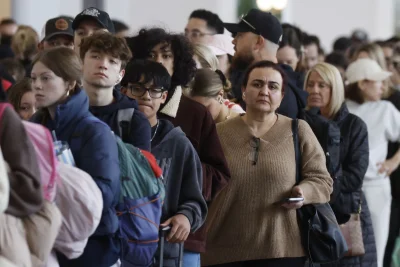
Picketers hold signs outside at the entrance to Mount Sinai Hospital on Monday in New York City. Nearly 15,000 nurses across New York City are now on strike after no agreement was reached ahead of the deadline for contract negotiations. It is the largest nurses’ strike in NYC’s history. The hospital locations impacted by the strike include Mount Sinai Hospital, Mount Sinai Morningside, Mount Sinai West, Montefiore Hospital and New York Presbyterian Hospital. Photo by John Angelillo/UPI | License Photo

Source link

French lawmakers advance ban on social media for children under 15

Jan. 27 (UPI) — Legislators in France took the first step toward becoming the first European country to block children from social media with a ban that would take effect at the beginning of the new school year in September.

National Assembly members voted 116-23 for the ban for children younger than 15, which was introduced by a lawmaker representing France’s Champagne region in President Emmanuel Macron‘s Renaissance party, late Monday.

The MPs amended the bill to empower the country’s media regulator to decide which social media services will be included in the ban and not limited to just those most popular with teens such as TikTok, Snapchat and Instagram.

The law would use an as-yet-undecided method of age-verification to block children from accessing those sites the regulator determines are most harmful to children’s mental and emotional health.

An existing smartphone ban for children in junior and middle schools would also be extended to high schools, under the legislation.

Children younger than 15 would be permitted to continue to use platforms on a second list deemed to pose less risk to them, but only if their parents give their consent.

Hailing the vote as a “major step,” Macron urged the Senate, the upper house, where it must also pass to become law, to follow suit and vowed to make sure it was implemented in time for the start of the fall semester.

“To ensure that this ban is effective from the start of the next academic year, I have asked the government to activate the accelerated procedure,” he posted on X.

“Because our children’s brains are not for sale. Not to American platforms, nor to Chinese networks. Because their dreams cannot be dictated by algorithms. Because we do not want an anxious generation,” Macron added.

Fastracking the law will enable it to leapfrog over a logjam in the assembly which has been unable to pass a budget for this year.

National Assembly Deputy Laure Miller, sponsor of the bill, complained afterward that opponents attempted to run the debate, which went on for almost seven hours, off the clock, knowing they would lose when it came to a vote.

“We explained everything to you, but you didn’t want to listen. Obstruction, off-topic remarks, conspiracy-laden speeches… above all, you tried everything to avoid having to vote on this text. Pathetic,” she wrote online.

Miller headed a committee probe into the psychological impact of social media on children that issued its report earlier this month.

MP Louis Boyard from the populist France Insoumise party said the bill had been rushed through.

By granting blanket verification powers to the government and the European Union to check the ages of all social media users, regardless of age, Macronist deputies were sleepwalking France into a surveillance state,” he said on X.

“The Macronists refused to respond or speak in order to have it voted on as quickly as possible. Under the pretext of banning social networks for those under 15, the Macronists seem to be preparing to have everyone monitored.”

He urged the Senate to send it back to the assembly to allow a “more enlightened” public debate to take place.

“The subject is too important to be rushed,” added Boyard, who represents a different district of the same region as Miller.

The development in France comes amid similar efforts being weighed across Europe, including in Greece, Spain, Denmark, Ireland, and Britain, where the House of Lords voted through a ban for children under 16 on Wednesday.

Lawmakers in the upper chamber of parliament passed the amendment to the Children’s Wellbeing and Schools Bill by 261 votes to 150, however, the government signaled it intended to overturn the effort in the House of Commons, the lower house.

The move came two days after the government launched a consultation on a potential ban for under-16s in the wake of the lead taken by Australia, which last month became the first Western country to implement such a ban.

Picketers hold signs outside at the entrance to Mount Sinai Hospital on Monday in New York City. Nearly 15,000 nurses across New York City are now on strike after no agreement was reached ahead of the deadline for contract negotiations. It is the largest nurses’ strike in NYC’s history. The hospital locations impacted by the strike include Mount Sinai Hospital, Mount Sinai Morningside, Mount Sinai West, Montefiore Hospital and New York Presbyterian Hospital. Photo by John Angelillo/UPI | License Photo

Source link

Jeju police bust international drug smuggling ring, arresting 12

Police on South Korea’s Jeju Island announce the arrest of 12 people accused of being part of a drug smuggling ring. Photo by Yonhap News Service/UPI

JEJU ISLAND, South Korea, Jan. 27 (UPI) — Authorities on Jeju Island have busted a drug smuggling ring, arresting 12 people accused of trying to import methamphetamine into South Korea through the popular tourist resort island.

The Jeju Provincial Police Agency’s Narcotics Crime Investigation Unit said in a statement Monday that the arrests come after a months-long investigation that began in late October after a non-Korean smuggled about 1.2 kilograms, or 2.5 pounds, of methamphetamine into Jeju in his suitcase.

Police said the alleged courier was a Chinese national in his 30s who departed an airport in Thailand on Oct. 23 for Jeju via Singapore, according to local media.

A police report from late October states that after arriving on Jeju on Oct. 24, the suspect posted an advertisement on social media for a Korean to deliver the package to the mainland.

Jeju Island is visa-free for nationals from all but 23 countries, but those entering visa-free cannot then travel to mainland Korea without proper authorization.

According to police, a Korean man in his 20s replied to the advertisement and received the bag from the suspect on Oct. 27.

Suspecting the bag to contain a bomb, the unidentified Korean citizen contacted the police, resulting in authorities seizing the bag of drugs and the arrest of the suspect at a hotel in Jeju’s northeastern coastal village of Hamdeok.

Through the investigation, Jeju police identified what they described as a “tightly structured distribution network” of drug smuggling, distribution, sale and use.

“Over a three-month period, investigators persistently tracked suspects through stakeouts and investigative trips to Seoul and other regions,” the Jeju Provincial Police Agency said Monday in a statement.

Jeju police said Monday that they have requested an Interpol Red Notice for the operation’s ringleader and smuggling coordinator.

Of the 12 people arrested, seven remain in pretrial detention, according to authorities, who identified two of the arrested as distributors of the alleged drug smuggling organization and five buyers who had received and used methamphetamine.

“Although investigators faced significant difficulties in tracking the organization’s cell-based structure — where accomplices repeatedly recruited couriers through part-time employment under the direction of overseas ringleaders — police ultimately dismantled the domestic-foreign national network through long-term surveillance and extended investigative operations,” Jeju police said.

The development comes as packages of drugs, often ketamine, have repeatedly been discovered washed ashore on Jeju since September.

On Jan. 9, the Jeju Regional Maritime Police Agency announced that the drugs that have washed ashore stem from “a large-scale drug loss incident” in waters off western Taiwan in July. Taiwanese authorities discovered about 140 kilograms, or 308 pounds, of ketamine disguised in green and silver tea bag-style packaging in its waters.

Authorities continue to investigate the criminal group responsible.

A total of 34 kilograms, or 74 pounds, of drugs have washed ashore in Jeju since September, with the last discovery of narcotics in the province occurring Dec. 9 on Udo, a small islet off eastern Jeju.

Source link

ICC: Rodrigo Duterte fit for pre-trial hearings

Relatives of victims of alleged extra-judicial killings during the war on drugs campaign of former Philippine President Rodrigo Duterte hold signs after watching a broadcast of an International Criminal Court Appeals Chamber hearing, in Quezon City, Manila, Philippines, in November. The ICC ruled Monday that Duterte is fit for pre-trial hearings. File Photo by Rolex Dela Pena/EPA

Jan. 26 (UPI) — The International Criminal Court ruled Monday that former Philippine President Rodrigo Roa Duterte is fit to take part in pre-trial court proceedings and scheduled a hearing for Feb. 23.

Duterte’s defense team asked for an indefinite adjournment of the case because of his health, alleging that he wouldn’t be able to participate in his defense. The court had a panel of three medical experts to examine him. The panel sent a report on Dec. 5 with its observations, and the court said it was satisfied that Duterte was fit for pre-trial proceedings.

The Feb. 23 hearings will decide if there is enough evidence to charge Duterte. If the court decides the charges are valid, it will transfer the case to the trial phase.

Duterte, 80, is facing charges of crimes against humanity for alleged extra-judicial killings of suspected drug dealers and users in the Philippines.

In March 2025, Duterte was arrested in Manila on the ICC’s warrant after the ICC began a formal investigation in September 2021. In October, the court denied his release because he was deemed a flight risk and said he must remain jailed in the Netherlands. The national police in the Philippines say Duterte killed about 6,000 people in his war on drugs, but human rights groups say he killed 30,000.

Source link

France weighs banning children under 15 from social media

Jan. 26 (UPI) — French President Emmanuel Macron wants children under the age of 15 off of social media by the start of the next school year and lawmakers are ready to consider it on Monday.

Parliament member Laure Miller will bring a bill to the table on Monday that would bar children under 15 from using social media. The bill would also ban smartphones from all high schools.

Miller headed the parliamentary committee that investigated the psychological effects of social media on children last year. The committee determined that exposure to social media can have an affect on mental health.

Macron has asked lawmakers to move quickly on the bill, hoping to see it in effect by the start of the next school year.

“Our children and teens’ brains are not for sale,” Macron said in a video statement. “Our children and teens’ emotions are not for sale or to be manipulated. Not by American platforms or Chinese algorithms.”

If the law passes, France would join Australia in restricting children’s access to social media. Australia enacted a social media ban for children under 16 years old in December.

Similar measures are being discussed throughout Europe.

Under France’s proposed law, its media regulators would draft a list of social media platforms to be banned outright for children under the age of 15. These would be the platforms that regulators consider the most harmful to the mental and emotional health of children.

Regulators would draft a second list of platforms that they consider less harmful. These sites would be accessible with the permission of a parent.

The bill’s first test is in parliament, which must approve the text. If the text passes, it will move to the Senate chamber in February.

France mulled a similar social media ban in 2023 but the courts ruled it did not comply with the laws of the European Union, specifically the Digital Services Act.

The guidelines of the Digital Services Act were loosened last year, giving governments more leeway to set age limits for social media use.

Picketers hold signs outside at the entrance to Mount Sinai Hospital on Monday in New York City. Nearly 15,000 nurses across New York City are now on strike after no agreement was reached ahead of the deadline for contract negotiations. It is the largest nurses’ strike in NYC’s history. The hospital locations impacted by the strike include Mount Sinai Hospital, Mount Sinai Morningside, Mount Sinai West, Montefiore Hospital and New York Presbyterian Hospital. Photo by John Angelillo/UPI | License Photo

Source link