Gina Gershon on ‘Showgirls,’ living in the Valley, standing up to men
On the Shelf
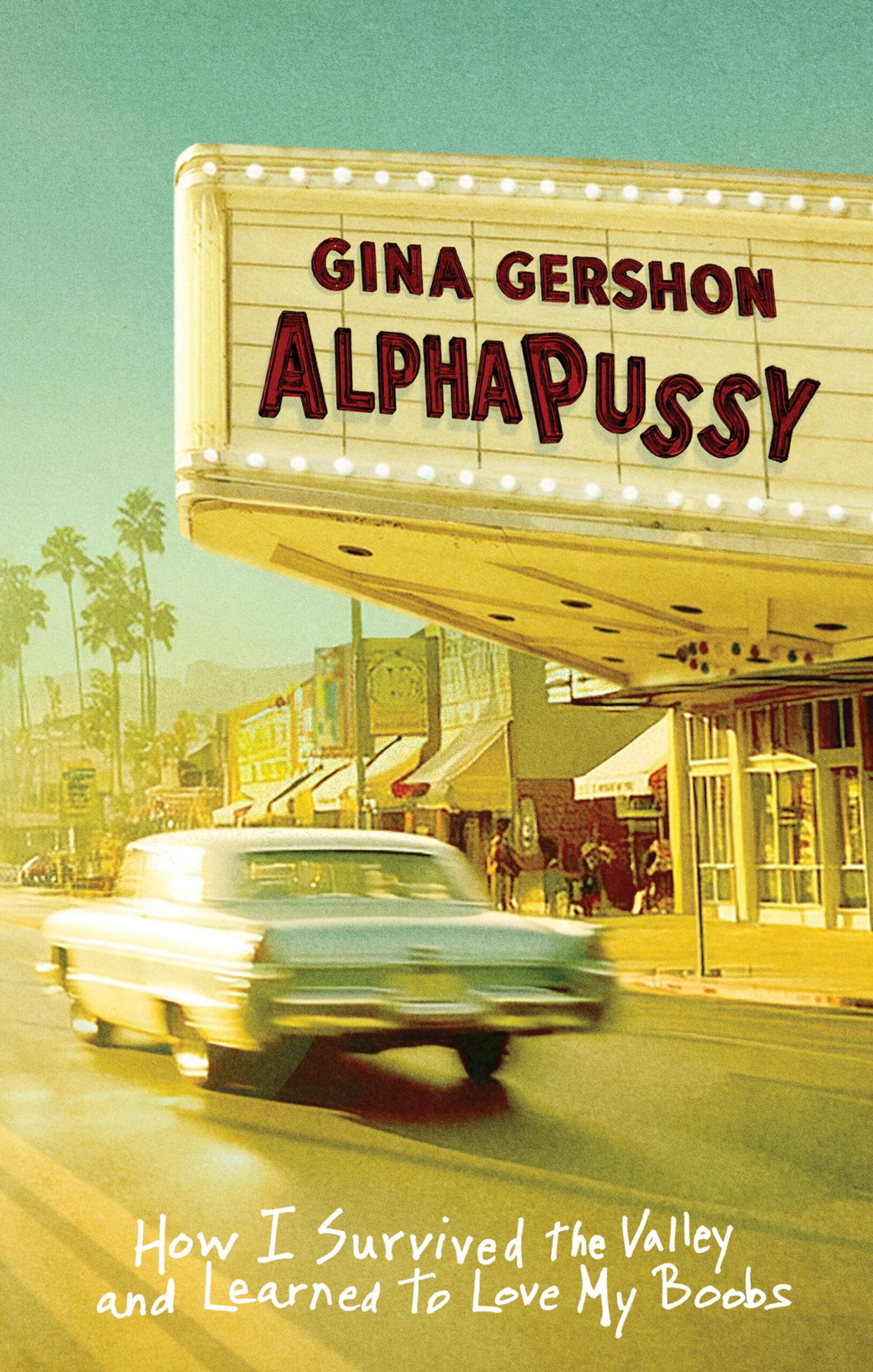
Alphapussy
By Gina Gershon
Akashic: 288 pages, $27
If you buy books linked on our site, The Times may earn a commission from Bookshop.org, whose fees support independent bookstores.
Gina Gershon considers herself a storyteller, first and foremost. When we connect via video call, Gershon admits this is the first interview she’s done since submitting the manuscript for her latest book, “AlphaPussy: How I Survived the Valley and Learned to Love My Boobs.”
“I don’t have my spiel yet!” she warns, inquiring for the first of a few times what I thought of it and whether I enjoyed it. Despite the many decades Gershon has been treading the boards, starring in indie films and Hollywood star vehicles, and stalking the stage as a singer-guitarist, she still really cares about what you think, even if it won’t change her own mind. Perhaps that’s the key to her professional longevity.
“AlphaPussy” is neither a memoir nor a guide to self-betterment, but elements of both feed into Gershon’s stories. Each wittily titled chapter plunges readers into Gershon’s freewheeling 1970s childhood, defiant adolescence, burgeoning performance career and collaborations with some of the biggest names in film (including Sharon Stone, Paul Verhoeven and Tom Cruise). Most of the stories take place in the San Fernando Valley, where young Gershon was discovering weed, mushrooms and rock ‘n’ roll. This is not a titillating tell-all, and all the better for it.

“AlphaPussy” by Gina Gershon
(Akashic Books)
“This book realistically started during COVID,” Gershon explains from her New York home. “I’d told my book agent, a friend, some stories one day when we were drunk, and he kept prodding me to write a book. I was hesitant, though. I’m not a tell-all gal, that’s not my MO.”
She adds, “It was during lockdowns, and I think his mother was sick and he was having a hard time, so when he said, ‘Just write me stories to keep me cheered up,’ I started to write stories in no particular order, whatever bubbled up, because otherwise I figured I’d forget them one day.”
At the same time, Gershon had observed that young women weren’t feeling empowered to advocate for themselves in their personal relationships and workplaces.
“I noticed that especially with younger women friends of mine, they’d tell me about things they were going through on set or with their bosses, and I don’t know if it’s a millennial thing, but I said, ‘Why don’t you just look him in the eye and tell him to stop?’ and there was this sense [for me] of ‘Why can’t you do that? Because if you don’t, you’ll always be prey to these guys.’ ”
She clarifies that she means “annoying” men rather than abusive men.
“I’m not that tough,” admits Gershon. “But I’d learned how to maneuver a lot just from growing up in the Valley, and it was a crazy time to be living there. So I thought about the stories that led me to be able to steer myself through toxicity.”

In her new book, Gina Gershon recalls the industry vitriol toward her 1995 erotic film “Showgirls.”
(Evelyn Freja / For The Times)
And also to steer herself through well-intended advice, both personal and professional, to follow her instincts.
“Listen, it’s not like I’ve had the most normal career. I’ve done most of my projects despite warnings from other people and from my agents saying, ‘You can’t do this, you’ll ruin your career.’ I’m like, ‘Why? I like this project!’ ”
One of those projects, most infamously, was “Showgirls,” which gets plenty of mentions in the book.
As Gershon recalled, it was 1994, and an astrologer had predicted her major breakout role would arrive in October that year, testing the young actor and her ability to cope with notoriety. Great, thought Gershon, bring it on.
Months later, Gershon was hanging from the ceiling, dressed in bondage gear, reflecting upon her early acting goals to perform Chekhov, portray Medea and stun audiences into silence.
She was on the set of “Showgirls” (or “Survival of the Titties,” as she nicknames it), dressed in one of the many glittering, spangled, flimsy outfits that her character Cristal Connors parades about wearing as a veteran of Vegas striptease. That role, and the vitriol from within the industry toward the movie (a flop turned cult favorite), still stings.
“I was super excited going into ‘Showgirls.’ As I talk about in one of the chapters, it was just very different when I got there. It was a completely different show than I thought I was going to be doing. … I thought it was gonna be one of [director Paul Verhoeven’s] dark Dutch films.”
Realizing that it was something else, to say the least, Gershon pivoted.
“I learned how to deal with an insane environment while keeping focused on what it is that I was trying to achieve with the part, without getting swallowed up by the insanity, which is a valuable lesson, you know? I mean, it’s a good lesson to learn no matter what you’re doing.”
Last year, Gershon watched the movie for the first time in decades.
“I hadn’t seen it in a zillion years, and when I saw it, I understood it a little bit more. It made me feel tense, but I also thought, ‘Oh, interesting.’ Some scenes that I thought shouldn’t have been there and others that absolutely have to be there. I saw it with a different lens.”
She says, “Weirdly, I feel like I’m not supposed to be talking about ‘Showgirls,’ although I think I have five chapters about ‘Showgirls’ [in the book]. I did the ones that I thought were kind of funny and fun and had some sort of growth in it for me.”
Having recently wrapped filming on “an independent film, a trans love story” in Palm Springs, penned a script and midway through writing another, Gershon doesn’t intend on writing another book anytime soon. Still, “there’s so many stories I left out,” she concedes.
“I could write three more books with things, but I really wanted to stay on point with the themes of manipulation, survival, and moving around and being able to stand on your own two feet and know who you are and to have agency over your life, especially as a woman, especially as an actress, especially in this world.”

“I’m not that tough,” says Gina Gershon. “But I’d learned how to maneuver a lot just from growing up in the Valley, and it was a crazy time to be living there. So I thought about the stories that led me to be able to steer myself through toxicity.”
(Evelyn Freja / For The Times)