It was already going to be a short week, but Sean McVay navigated unexpected business that affected the start of preparation for Sunday’s game against the Arizona Cardinals.
“He says, ‘How’s that tube?’” McVay recalled. “I said, ‘What do you mean?’
“He said, ‘That tube of [s—] that never stops coming down over your head when you’re a head coach.’
“But honestly, it’s part of it.”
The Rams hope that Grupe can clean up the kicking game and relieve criticism of the Rams’ struggling special teams. McVay said this week that he has “a lot of confidence” in special teams coordinator Bubba Ventrone, and that “no changes” are going to be made to that staff position.
“You’re continuing to figure out some of our identity,” McVay said Thursday, adding, “I have seen the intentionality from the group that I’m looking for.”
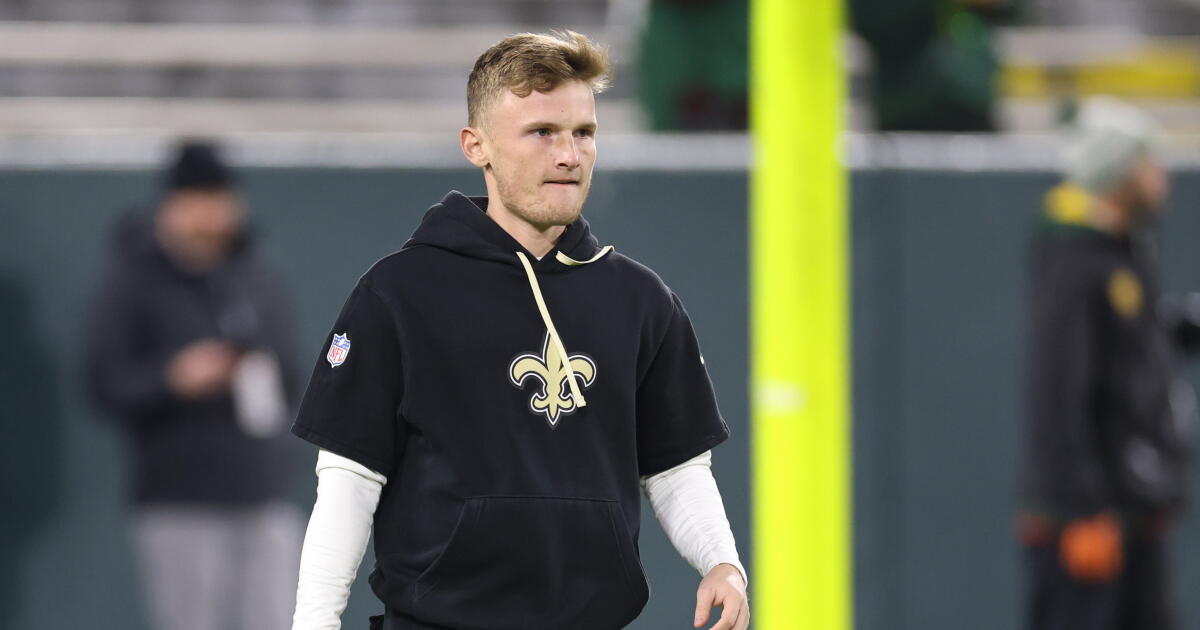
Grupe was signed off the New York Jets practice squad. Last season, he was released by the New Orleans Saints in late November after he made only 18 of 26 field-goal attempts. The Indianapolis Colts signed Grupe and he made all 11 of his attempts.
“For these last five weeks, I’ve been staying ready, been doing what I need to do to take advantage of an opportunity,” Grupe said.
Quessenberry, 36, is a ninth-year pro. But he has not started a game since 2023, when he played for the Minnesota Vikings.
Quessenberry played only 18 snaps on offense last season, none this season.
But McVay said Quessenberry was a “consummate pro” who has played “a lot of meaningful snaps” in his career and worked with the Rams’ first-team offense when Jackson has been held out while managing blood-clot issues.
“This is kind of why I’m here, when things like this happen,” Quessenberry said. “So I’m ready to go. This is what I’ve worked for. I’ve played this position my whole life. Go out there on Sunday and play ball. I’m fired up.”
This will be the first game without Jackson since last season’s late December game against the Atlanta Falcons. With D.J. Humphries starting at left tackle, the Falcons swarmed Matthew Stafford. Humphries was called for two crucial penalties, the Falcons sacked Stafford three times and intercepted three passes.
“He’s proven himself in this league,” Stafford said, adding, “ton of trust in what he’s capable of.”
Rookie lineman Keagen Trost practiced Thursday for the first time since he was placed on injured reserve before the season because of a hamstring injury suffered in the preseason opener against the Kansas City Chiefs.
Trost, a third-round draft pick out of Missouri, could be activated to the roster.
“It’s been a little bit of time since he’s played football,” McVay said. “But if he’s feeling good, expect him to be up for the game.
“But not at the expense of putting him in a situation that, if he did have to play, wasn’t good for him.”
Offensive lineman Justin Dedich, who has been on injured reserve because of a hand injury, also is eligible to return. But interior linemen such as guards Kevin Dotson and Steve Avila have remained physically sound.
“We’ll pray that we stay healthy,” McVay said, “but at some point we’ll start his clock and get him in there.”
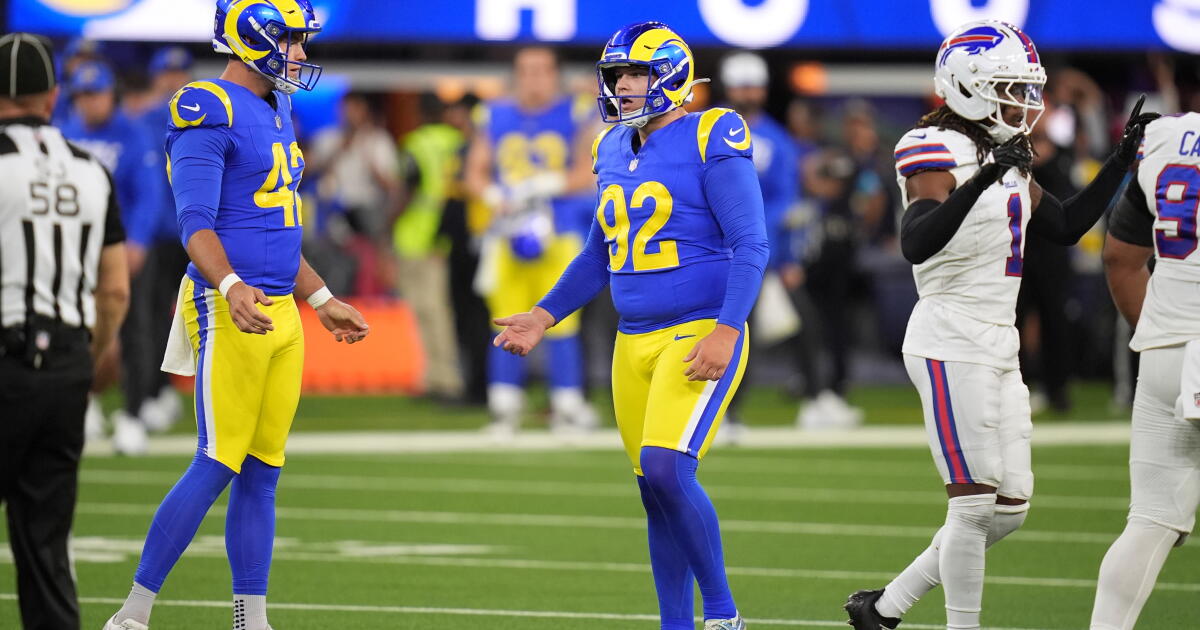
Less than 24 hours after kicking-game issues led to the Buffalo Bills defeating the Rams in overtime, the team released kicker Harrison Mevis, a team official said Tuesday.
Mevis missed a 50-yard field-goal attempt in the first half, and a had potential 48-yard game-winning field-goal attempt blocked in overtime. The Bills went on to win 37-34 in overtime, dropping the Rams’ record to 2-3.
“Not even close to good enough,” coach Sean McVay said of the field-goal and extra-point units after the defeat. “It cost us the game tonight.”
The Rams are signing kicker Blake Grupe from the New York Jets practice squad, according to ESPN.
Mevis’ release is the latest move in a Rams’ special teams saga that dates to last season.
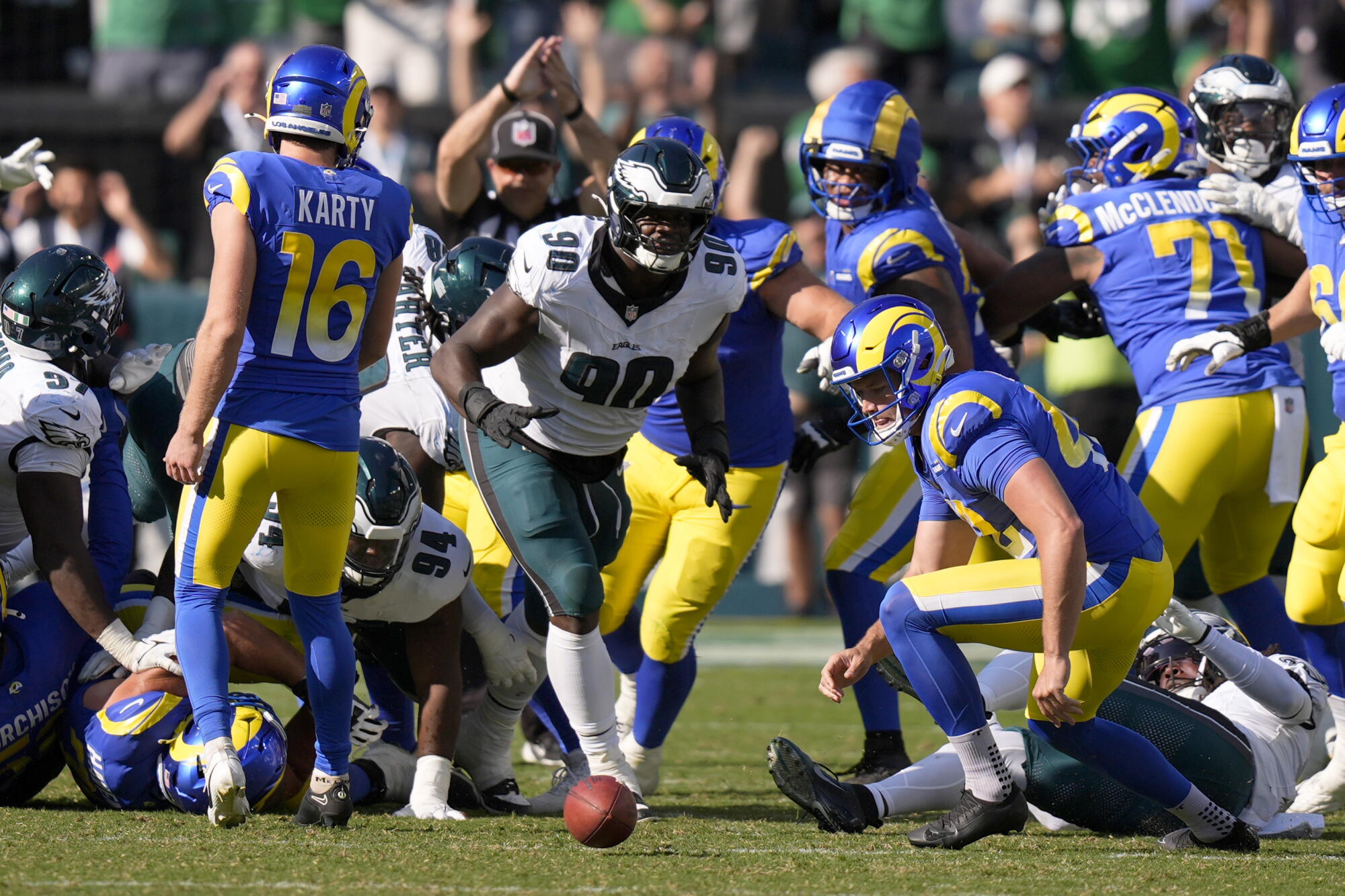
In 2025, the Rams lost to the Philadelphia Eagles after two kicks by Joshua Karty were blocked, including one on the final play of the game that resulted in an Eagles touchdown. After Karty continued to struggle, the Rams released him and signed Mevis, who made 18 of 19 field-goal attempts in nine regular-season games and the playoffs.
McVay fired special teams coordinator Chase Blackburn with a few games left in the season, and hired Bubba Ventrone during the offseason.
But this season, Mevis made only five of nine attempts.
In 2025, Grupe made 18 of 26 field-goal attempts for the New Orleans Saints and all 11 of his attempts for the Indianapolis Colts.
Tanner Scott stuck upside-down beers in Friedman’s shirt. Alex Freeland dumped beer into his mouth and all over his face. Eric Lauer coordinated a sneak attack, announcing that he was heading to the showers before reappearing from a side entrance.
Friedman never stopped grinning. But it almost looked like he had an extra glint in his eye when asked whether he’d rather take on the Milwaukee Brewers or San Diego Padres in the NLCS.
“I just want chaos,” Friedman said.
Later that night, the Brewers advanced, locking in an NLCS rematch that could certainly deliver chaos.
The Dodgers and Brewers are meeting in the playoffs for the fourth time in nine years. Last season, the Dodgers swept Milwaukee in the NLCS.
Usually before playing a big-market team like the Dodgers, Brewers manager Pat Murphy leans into the underdog narrative by saying he suspects the opponent can’t name many of the Brewers players. But by becoming perennial playoff contenders, and posting the best record in the majors over the past two seasons, the Brewers have given up whatever anonymity they may have had when they promoted Murphy a few years ago.
The cast of characters on both sides has remained relatively consistent since last October. But even after trading away top pitcher Freddy Peralta, Milwaukee is a more complete team than last season.
But losing talented players hasn’t stopped the Brewers from winning the last four NL Central titles. They keep saying goodbye to top players — including Cy Young winner Corbin Burnes, closer Devin Williams and shortstop Willy Adames — then raise their win total.
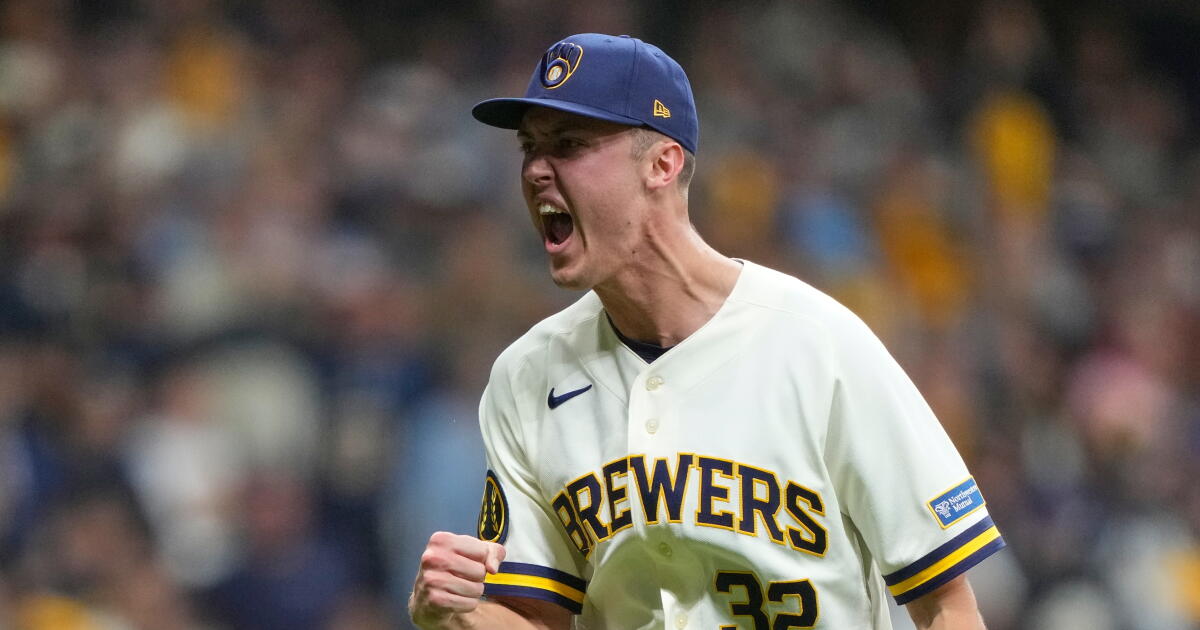
The biggest difference-maker has been Jacob Misiorowski, who had the lowest ERA (1.80) in the majors this season and is the NL Cy Young favorite. As a rookie last year, the flame-thrower was relegated to the postseason bullpen until the NLCS. This year, he was the Brewers’ Game 1 starter in the NLDS against the Padres.
The Brewers have long hung their hat on playing sound baseball, from pitching and defense to baserunning. But the knock on them has been the lack of thump in their lineup.
First baseman Jake Bauers had a career season, leading the team in home runs (26), on-base percentage (.389) and on-base-plus-slugging percentage (.873). Jackson Chourio, who was hobbled by a hamstring injury in the last NLCS, hit a career-high 25 home runs and led the team in slugging percentage (.487). And though the Brewers likely won’t out-slug the Dodgers — they hit 50 fewer home runs during the season — they have a pesky roster that stole 90 more bases.
The Brewers also had a better regular-season record (103-59) than the Dodgers (100-62), so the series will begin in Milwaukee on Sunday.
Signs point to a more competitive series than last year. The Brewers even entered the postseason with the better World Series odds (18.5%) than the Dodgers (16.7%), according to Baseball Prospectus’ PECOTA standings.
“The mistake that the outside perspective kind of gets sometimes is to underestimate certain teams,” said Kiké Hernández as the Dodgers celebrated their NLDS victory. “And we knew we had a tough task ahead of us. [The Braves are] a team that was playing really good baseball, had a lot of momentum, and they were throwing the ball really well. They had a really good bullpen, a lot of different kinds of arms, and, fortunately for us, they were a little bit short on starting pitching, so they had to tax their bullpen to a point where it paid off for us.”
The Dodgers ended the series before it returned to Los Angeles for an if-necessary Game 5. So they got to turn their attention to the Brewers a couple days early.
“I think the strength of our team is our rotation,” Friedman said. “And so even if we weren’t able to reset it, we still feel like it would be a strength of ours. But to be able to line it up the way we want to, certainly advantageous. To be able to have a few days off our feet and rest up for Sunday, also really helpful.”
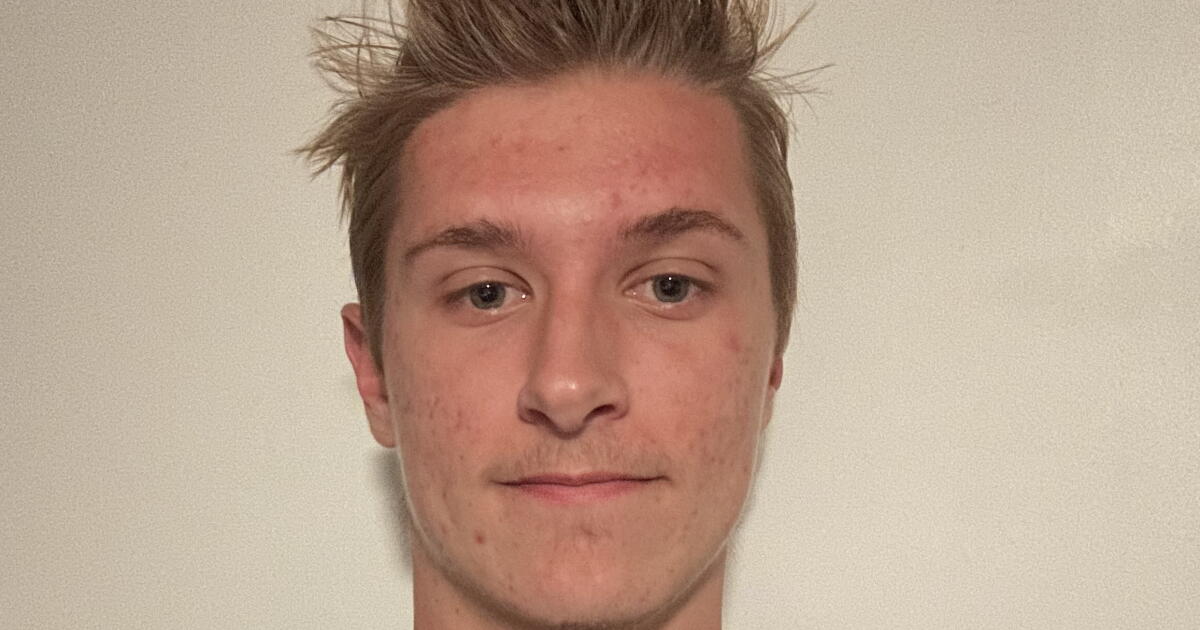
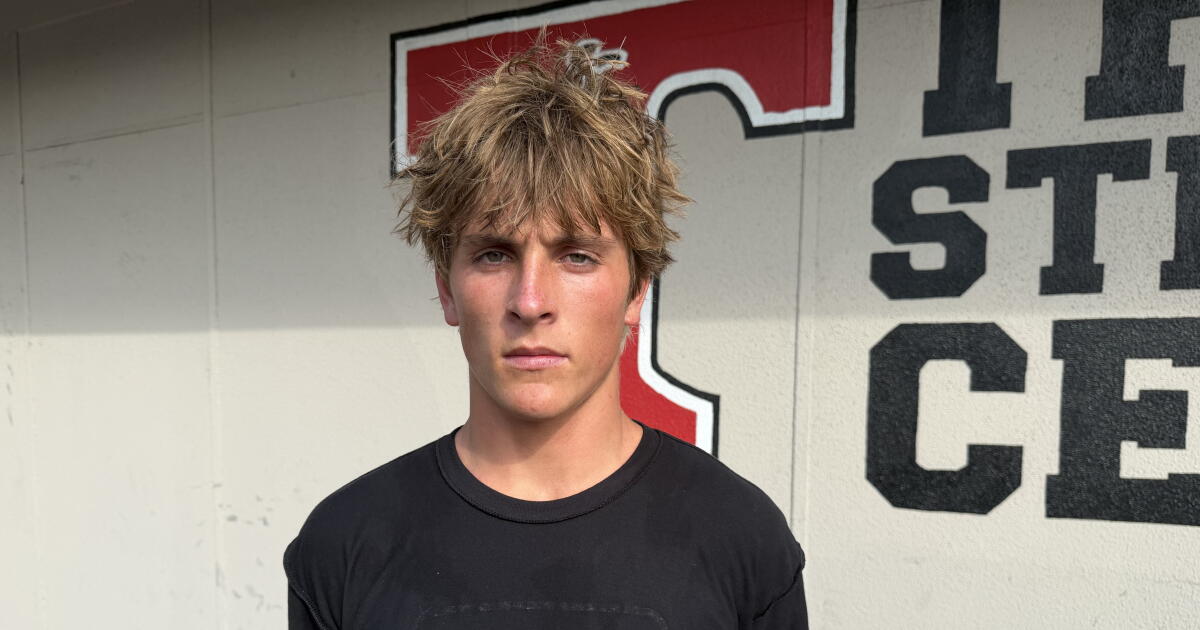
With Temecula Valley off to a 6-0 start in high school football, the Golden Bears can thank senior kicker and punter Colin Elia for making major contributions.
He’s 13 for 13 on PATs and six for seven on field goals, including a long of 49 yards, and averaging more than 36 yards on punts.
He didn’t play football until his sophomore year when friends asked him to join the team. He finally convinced his parents to let him play. Let’s say it was a compromise. He wanted to play receiver. He got permission to be the kicker.
The rest is history.
“I’m joking with my mom she’s happy to let me play now,” Elia said.
He made a game-winning field goal as a sophomore on varsity when the other kickers were unavailable. Last season as a junior, he made 10 of 11 field-goal attempts. He continues to improve as he uses his soccer background.
One thing is certain: Pressure moments don’t bother him. In fact, he looks forward to them.
He also credits his long snapper and holder for helping him succeed.
This is a daily look at the positive happenings in high school sports. To submit any news, please email eric.sondheimer@latimes.com.
And you probably figured Freddie Freeman would get it going. You had faith in playoff risers Max Muncy, Kiké Hernández and Teoscar Hernández — and in the Dodgers’ playoff-proven offense overall.
You were not, however, so bullish on the bullpen.
That was the proverbial, annual question mark entering the best-of-five National League Division Series against the Atlanta Braves, whom the Dodgers vanquished with a 4-1 victory Wednesday at Truist Park to set up an NL Championship Series rematch with the Milwaukee Brewers.
Edwin Díaz, the Dodgers’ purported closer, had a disastrous, injury-marred first season with the team — or he was having one.
That left Tanner Scott — last season’s purported closer — handling the bulk of the ninth-inning duties this season, and he finished with a career-high 25 saves. But you were going to have to see him sustain that in the postseason to believe in Scott, whose first season with the Dodgers also was so disastrous that he wasn’t even included on the playoff roster.
The Dodgers are paying Díaz $69 million and Scott $72 million. A steep price and a sign of how badly the team wants to avoid having to turn to starting pitchers to finish off important postseason games, as they have in the past with Julio Urías, Walker Buehler and, last season, Yamamoto.
But until now, the Dodgers haven’t had much but frustration to show for their investment in Scott or Díaz — who were two names among four, including Roki Sasaki and Evan Phillips, that manager Dave Roberts suggested could close games in the playoffs.
It was a tangled trust tree that needed lots of water.
Or how about champagne? Maybe ice-cold beer?
Because after Alex Vesia, Edgardo Henriquez, Scott and Díaz combined to get the final 13 outs of Game 4 without giving up a run, they helped lead the charge in the clubhouse afterward, dousing one another to celebrate.
In the series, the Braves went one for 23 (.043) with runners in scoring position. That, according to OptaStats, is the second-lowest such batting average in a postseason series in history — and it doesn’t happen without a bullpen being locked in; the Braves went 0 for 13 with runners in scoring position against the Dodgers’ relief pitchers.
In the deciding Game 4, Vesia took the baton from Glasnow with two outs and two runners on in the fifth, got the inning’s final out on one pitch and came back out in the sixth. He gave up a double but got Drake Baldwin to line out before handing the ball to the hard-throwing Henriquez, who hit 100 mph or higher on 11 of his 15 pitches, retired five of six batters and earned his first postseason win.
Then Scott had the inning of his Dodgers career in the eighth — sitting down the Braves’ 3-4-5 hitters with a nasty array of sliders and fastballs. He punctuated his performance with a fastball on the corner that ended the inning and wound up costing Atlanta its final ABS challenge.
And, finally, in closing, Díaz.
Share via
He earned his second consecutive save with an efficient, eight-pitch, 1-2-3 inning. He isn’t the closer, not officially. But, darn, is he important: “For us to win the World Series,” Roberts said, “he’s got to be a relevant part of this equation … I’ve got to trust him.”
The way Díaz is dealing, why wouldn’t he? Díaz has given up just one hit in three postseason innings. And he’s feeling good.
“The last two nights it’s been amazing,” Díaz said. “That’s why I came here, to win games and close games like this one. So I’m really happy.”
Andrew Friedman, the Dodgers’ president of baseball operations, raved about Díaz’s resilience, referencing the roller coaster of a season that included an 8.68 earned-run average, neck and elbow injuries, a stint on the injured list and in triple A.
“He would say, ‘Hey, I’m ready to come back,’” Friedman said. “And it was like, ‘Hey, we need to see more, we need to see this really lock in.’ And at every turn, he said, ‘Whatever you guys need … anytime you want me to pitch, I’ll be ready.’
“It was never a question of the heartbeat and his ability to handle these moments. It was about just getting him right mechanically and getting back to the stuff that we’ve all seen over the years.”
Vesia is similarly impressed with his friend Scott’s resurgence.
“Going back to last year with ups and downs and adversity and all that stuff, we definitely leaned on each other,” said Vesia, who missed the World Series after the October death of his newborn daughter, Sterling Sol.
“And, you know, for this year to watch [Scott] really take off and have a great year, it’s been awesome, you know? It’s really awesome. With the closing role being undefined and all that stuff, he stepped up. Every year, there’s always guys that step up.
“Now, we got eight more.”
Eight more wins to three-peat, and no weak links anywhere.
PHILADELPHIA — Safety Kam Curl did not see it happen initially because he was on the Rams sideline teasing the Philadelphia Eagles about what he thought was his team’s certain victory.
Punter and holder Ethan Evans had a close-up view of the first part, but could not stop the second.
Quarterback Matthew Stafford, an 18th-year pro, said he had never witnessed a game-ending play like it.
Those were just a few of the memories from Rams players when asked about last season’s game against the Philadelphia Eagles at Lincoln Financial Field.
Minutes after the Eagles blocked a late field-goal attempt, the Rams lined up for another one on the final play. Jordan Davis of the Eagles leaped and blocked the kick, scooped the ball and returned it 61 yards for a touchdown that sent the Rams to a 33-26 defeat.
“All I heard was ‘boom, boom,’” Curl said of the kick and subsequent block, “and then I looked and it was all bad from there.”
Philadelphia Eagles defensive tackle Jordan Davis prepares to pick up a loose ball after blocked field-goal attempt against the Rams on Sept. 21, 2025.
And they arrive with several special teams units that remain a concern for a star-studded team that opened the season as the overwhelming favorite to win Super Bowl LXI at SoFi Stadium.
Not that the Rams have looked the part.
They lost their opener against the San Francisco 49ers in Australia, rebounded with a victory over the New York Giants, and last Sunday blew a 16-0 halftime lead in a 30-26 loss to the Denver Broncos in Denver.
Now they play an Eagles team coming off a 27-7 defeat by the Chicago Bears.
Late last season, coach Sean McVay fired special teams coordinator Chase Blackburn, and Ben Kotwica served as interim coordinator for the final two games. During the offseason, McVay hired Bubba Ventrone, who had coordinated special teams for the Indianapolis Colts and Cleveland Browns.
They also signed veteran long-snapper Joe Cardona and linebacker Grant Stuard, a special teams veteran.
The Rams’ field-goal unit is seemingly in a better place than it was last season.
Kicker Harrison Mevis replaced Joshua Karty several games after the debacle against the Eagles. He made 18 of 19 field-goal attempts in nine regular-season games and the playoffs, and has made four of five attempts this season, including two against the Broncos.
The Rams have improved in “that particular phase,” McVay said, “but you have to do it again” against a formidable Eagles field-goal block unit.
“That certainly is not anything we’re taking for granted,” McVay said.
On the same day the Rams lost to the Eagles last season, Ventrone was coaching for the Browns, who blocked a field-goal attempt by the Green Bay Packers with less than 30 seconds left, and then won the game with a field goal.
“It comes down to execution and playing with good fundamentals in those areas,” Ventrone said. “If we can do that, then we’ll be in a better spot.”
While the field-goal unit has mostly thrived, Evans has struggled with consistency, specifically directional placement of his kicks. On Friday, the Rams waived punt returner Xavier Smith, who fumbled in last season’s NFC championship game and made several decision-making errors against the Broncos. Alex Bachman will return punts against the Eagles, McVay said.
The kickoff coverage unit gave up a long return against the 49ers but appears to have improved.
The Rams will need solid performances from the offense, defense and special teams if they hope to defeat the Eagles for only the second time in eight games under McVay.
The Rams would be going for the second consecutive victory over the Eagles had they not blown a 19-point third-quarter lead and had two kicks blocked last season.
The Rams trailed 27-26 when they lined up for a 44-yard attempt with three seconds left.
“You knew it was going to be the last play no matter what,” Rams defensive coordinator Chris Shula said. “You weren’t going to [overtime]. I think I put my headset down.
“You put everything away and you’re like, ‘All right, here we go. This kick is going to decide my mood for this next week.’”
Evans recalled that after Davis blocked Karty’s kick, the ball went over Evans’ head. He attempted to dive on the ball, but he was hit in the back.
“By the time I got up and looked,” Evans said, “[Davis] was already in the end zone.”
The Rams aim to avoid a repeat.
Curl said the formula for success was simple. And it applied for offense, defense and special teams.
Calabasas baseball coach Thomas Cassidy might be feeling a little pressure over the next two seasons considering he has one junior pitcher, Jayden Singer, committed to USC, and another junior pitcher, Cash Wiltgen, committed to Stanford.
That’s an impressive duo to build a team around. Now all Cassidy has to do is find fielders to catch the ball and hitters to drive in runs.
In truth, Cassidy is excited about both pitchers. Singer has been a standout since his freshman season at Calabasas. Wiltgen arrived from Sierra Canyon, had to sit out the first part of last season and battled back from an injury. He only pitched one inning but had a good summer.
“I’m happy for those guys,” Cassidy said. “It’s awesome to have those guys. It’s a great position to put themselves in.”
This is a daily look at the positive happenings in high school sports. To submit any news, please email eric.sondheimer@latimes.com.
Star receiver Puka Nacua will play against the Philadelphia Eagles on Sunday in Philadelphia, but star defensive lineman Aaron Donald is out because of a back issue, Rams coach Sean McVay said Friday.
Donald, a three-time defensive player of the year, has not practiced this week following the Rams’ loss to the Denver Broncos on Sunday in Denver. McVay said Donald, 35, was experiencing back soreness.
“He’s as tough as it gets. Just not feeling good enough,” McVay said, adding, “He would do it and he could probably go be productive but part of our job is to protect these tough dudes like him from themselves.”
Donald has played in two games since ending a two-year retirement in late August. He did not make the trip to Australia for the season opener against the San Francisco 49ers, but made three tackles in the Rams’ 28-6 victory over the New York Giants at SoFi Stadium.
Donald had one tackle and one quarterback hit in the 30-26 loss to the Broncos.
“He’s working as hard as he can to get himself feeling as good as possible and we’re hopeful and optimistic that good days are ahead,” McVay said.
Nacua sat out the last two games because of a hip injury that caused hip, groin and abdominal soreness.
McVay said Nacua has been “strong, looks sturdy, looks explosive,” during practice this week.
“I think it will really just be a feel for the overall conditioning,” McVay said, adding that he hopes “the magic of the [game] jersey” will help Nacua have a productive game against the Eagles.
Tight end Terrance Ferguson (ankle) and cornerback Jaylen Watson (shoulder) will not play on Sunday, McVay said. Tight end Colby Parkinson (shoulder, knee) and edge rusher Josaiah Stewart (groin) are questionable.
Rams place Terrance Ferguson on injured reserve
Rams tight end Terrance Ferguson jogs back to the locker room against the Giants on Sept. 21.
(Kyusung Gong / Associated Press)
The Rams opened the season with five tight ends on the roster, which some might have regarded as a surplus.
But the Rams need the depth.
On Friday, the team put Terrance Ferguson on injured reserve because of an ankle injury.
Ferguson, a 2025 second-round draft pick, was injured Sept. 21 against the Giants, but he played through it against the Broncos.
Ferguson has seven catches for 63 yards and a touchdown.
Ferguson must sit out at least the next four games against the Eagles, Buffalo Bills, Arizona Cardinals and Las Vegas Raiders. He is eligible to return for the Nov. 1 game against the Chargers.
The Rams began the season with five tight ends on the roster. Tyler Higbee and Davis Allen are at full strength. Max Klare, a second-round draft pick from Michigan, could get his first action on offense against the Eagles.
Rams release punt returner Xavier Smith
Rams wide receiver Xavier Smith runs the ball against the Kansas City Chiefs during a preseason game in August.
(Charlie Riedel / Associated Press)
What a difference a day makes.
Less than 24 hours after Rams special teams coordinator Bubba Ventrone said the team was not going to replace punt returner Xavier Smith, the team released him.
“We just need better production out of that position,” McVay said, adding that some of the “decisions” that Smith made in last Sunday’s loss to the Denver Broncos proved costly.
“We’ve got to make better decisions,” McVay said. “We’ve got to be able to field it.”
Receiver Alex Bachman is expected to be promoted from the practice squad to handle punt returns. McVay said he was “optimistic that I think we’re going to see some good stuff from Alex on Sunday.”
Smith, 29, is a third-year pro who signed with the Rams as an undrafted free agent and worked his way into a role as a kick returner and rotational receiver.
Smith appeared to be on his way to overcoming a major error in last season’s NFC championship game, when he lost a fumble in the 31-27 defeat by the Seattle Seahawks.
But through three games, Ventrone on Thursday described Smith’s performance as “inconsistent.”
“We need to do a better job of tracking the ball, judging the ball, fielding the ball when necessary, not fielding it in other situations,” Ventrone told reporters. “He knows that and hopefully we’ll get the improvements that we need in that area.”
Ventrone was asked if there was any thought about replacing Smith as the punt returner.
“No, we have a lot of trust in ‘X’, I really do,” Ventrone said. “He’s put in a lot of time and effort in training camp and obviously moving into the season. I think that he’ll do the necessary things to be able to sustain at that position for us.”
But on Friday morning, the Rams announced they had waived Smith.
McVay said the Rams “weren’t thinking” about making a change when Ventrone spoke to reporters Thursday.
“As you get a chance to kind of take a step back, evaluate the totality of our group, what’s the best way to try to be able to put together all three phases, did feel like that was in the best interest of the group,” McVay said, adding, “and that decision was made kind of later [Thursday night].”
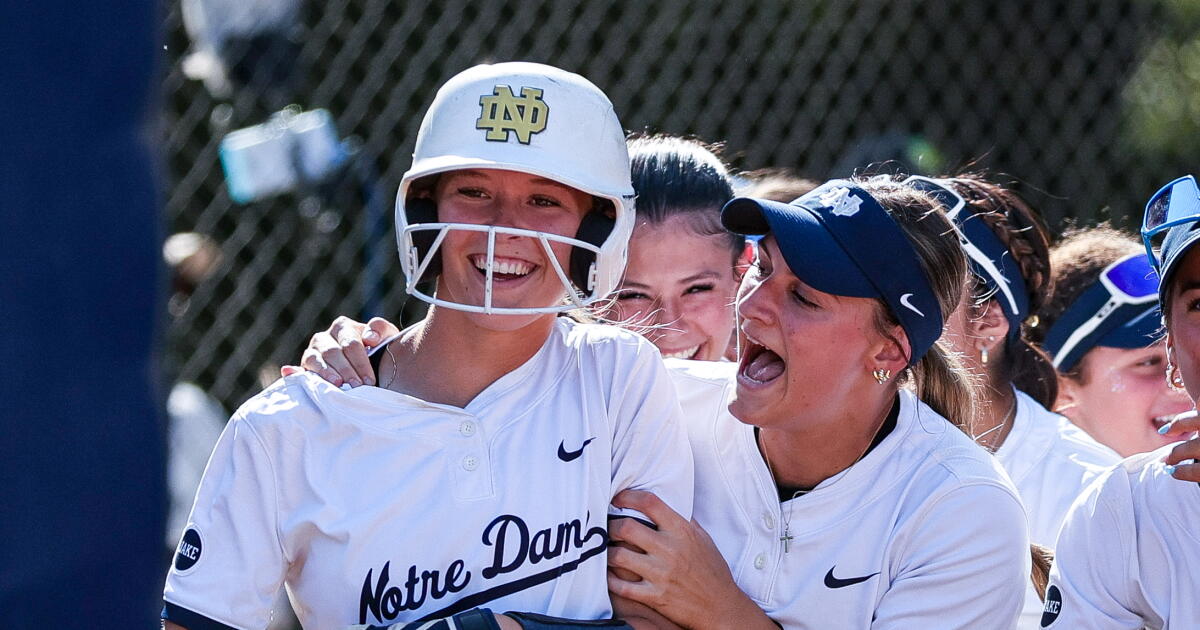
When twins Keira and Kelsey Luderer of Sherman Oaks Notre Dame announced they had committed to Florida State to play college softball, their father, Brian, the new head coach for Notre Dame, was ready to cry.
“Special moment,” he said of his junior daughters.
Kelsey, an infielder who was Mission League player of they year, and Keira, a standout catcher, have been working hard for years for this moment and learned plenty from Brian, who played baseball in high school and college.
Michigan, California and Loyola Marymount were also finalists for the twins who were coached last season by Justin Siegel, a new assistant coach at Loyola Marymount.
Now dad and mom, who have been transporting them around for years in club softball, will have to begin looking for the cheapest flights to Tallahassee.
This is a daily look at the positive happenings in high school sports. To submit any news, please email eric.sondheimer@latimes.com.
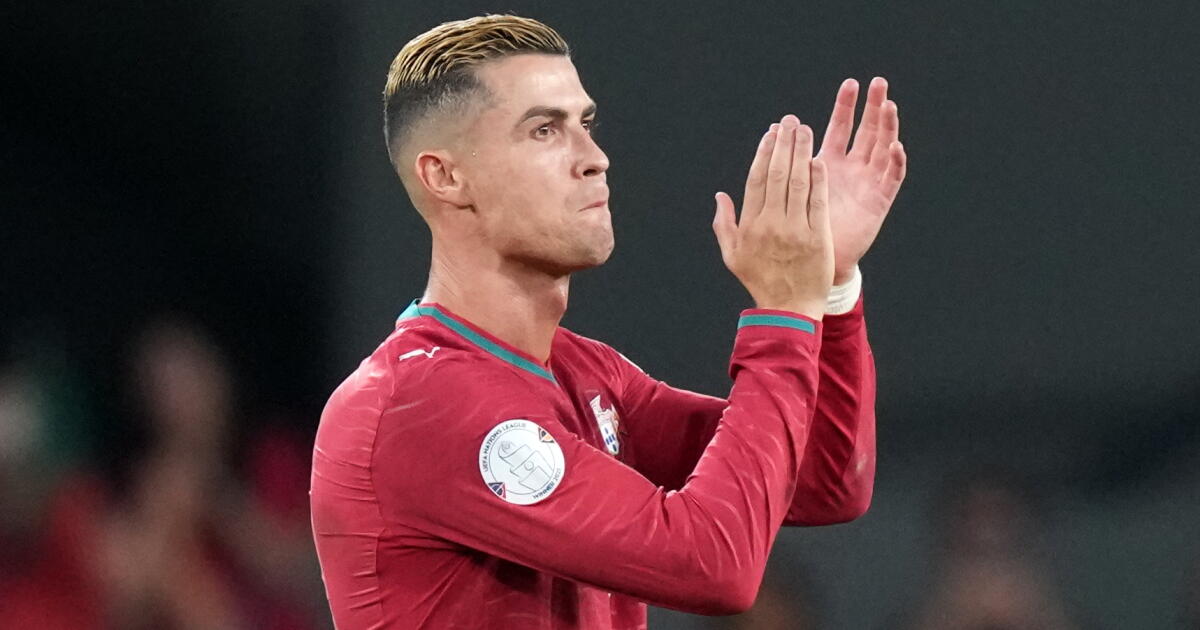
In the same news conference, Jesus said he did not expect to start Ronaldo against Denmark.
“I don’t know what’s going to happen in the game,” Jesus said. “If we need him to play, he’ll play. If not, he won’t.”
This time, the player did make the decision for the coach.
“Following the national team coach’s news conference, and after a conversation with the president of the Portuguese football federation, I decided to leave the national team’s training camp,” Ronaldo posted on social media hours after Jesus spoke.
“In due time, I will tell all the Portuguese about the reasons that motivated my departure from the national team, which I always dedicated myself to. Now it’s time to wish good luck to Portugal and all my teammates, without exception.”
Hot mics have embarrassed many a media professional.
Cincinnati Reds longtime broadcaster Thom Brennaman was suspended indefinitely in 2020 after his microphone accidentally picked up him using a three-letter anti-gay slur.
Charles Barkley dropped an uncensored F-bomb during an Inside the NBA on TNT broadcast in 2025 while venting about NBA award voters.
And just two months ago, San Francisco Giants executive Buster Posey trolled radio station KNBR on-air after a behind-the-scenes employee was caught on a hot mic talking trash about him.
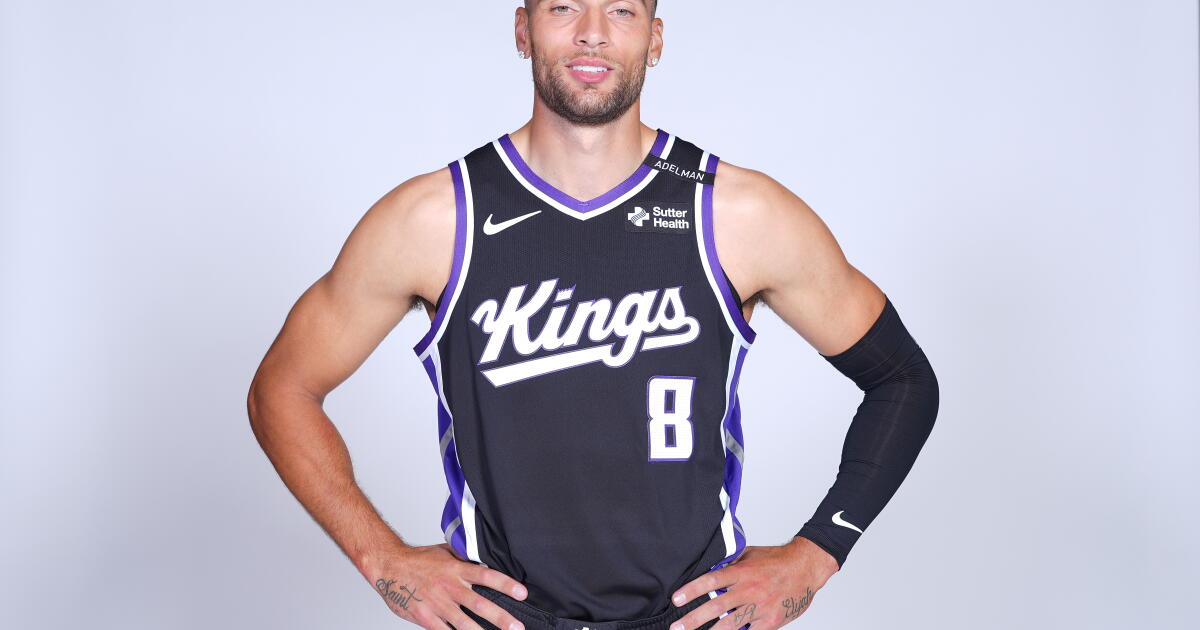
Add reporters covering Sacramento Kings media day Monday to the list. At least three were heard in an unvarnished conversation about Kings players Ben Simmons and Zach LaVine that took a personal turn.
A handful of local outlets livestreamed media day interviews. But the mics also picked up reporters chatting, and embarrassing comments went beyond their frequent use of the hyper-localized and outdated NorCal modifier “hella.”
Comments begin about Simmons, a guard on a one-year, non-guaranteed contract after missing last season with injuries. A female says “That’s what comes with being Ben Simmons. He is cringe, cringe,” and another jumps in to say he is “lucky he’s so fine.”
The first media member agrees, saying “He’s a good-looking dude. His skin is, like, so smooth, I was like, damn, no tattoos?”
A male voice joins the conversation, asking, “I thought Jordan Poole was your type.”
A female voice replies, “Allegedly, I like light-skinned, I guess.”
The male voice continues: “What about Zach LaVine, then?”
“Hella fine,” the female voice replies.
“I think his personality annoys the [expletive] out of me, so that’s what makes him less fine,” the first person says. “Zach’s cute but his personality [expletive] annoys me. He just seems like hella like a prick. But he is beautiful.”
“He’s a [expletive] UCLA guy,” replies the third person. “Just all of them are.”
Another voice jumps in, offering that LaVine is “hella fine, too.”
Someone asks how the others would rank Kings players by hotness. One voice votes for Simmons because of “his skincare routine.”
Apparently referring to the team’s woeful 22-60 record last season, the male voice responds by cracking, “Well, Ben wasn’t a King for the last year and a half either,” to which a female voice concedes, “That’s true.”
The reporters involved have not been publicly identified, and none of the players have responded. LaVine’s wife, Hunter, did offer a low-key comment to the Kings Muse recording, writing on X, “a great start to the season!”
The episode called to mind the hot mic that marred the Toronto Raptors’ postseason news conference last April. Two unidentified media members were heard making disparaging comments about players Scottie Barnes and Jonathan Mogbo.
“It’s not just his enunciation, which, like, was super bad, especially last year,” one person said about Barnes. “But even the attitude. Just the attitude — like he’s having fun up there. First year or even before, he just kept getting worse and worse every year.”
Rookie forward Mogbo was the next target. “When I first interviewed Mogbo when he was drafted, I was shocked ’cause he was so dumb,” the person said.
Raptors fans were appalled by the comments, but Barnes responded with humor on social media. It remains to be seen how Simmons and LaVine react.
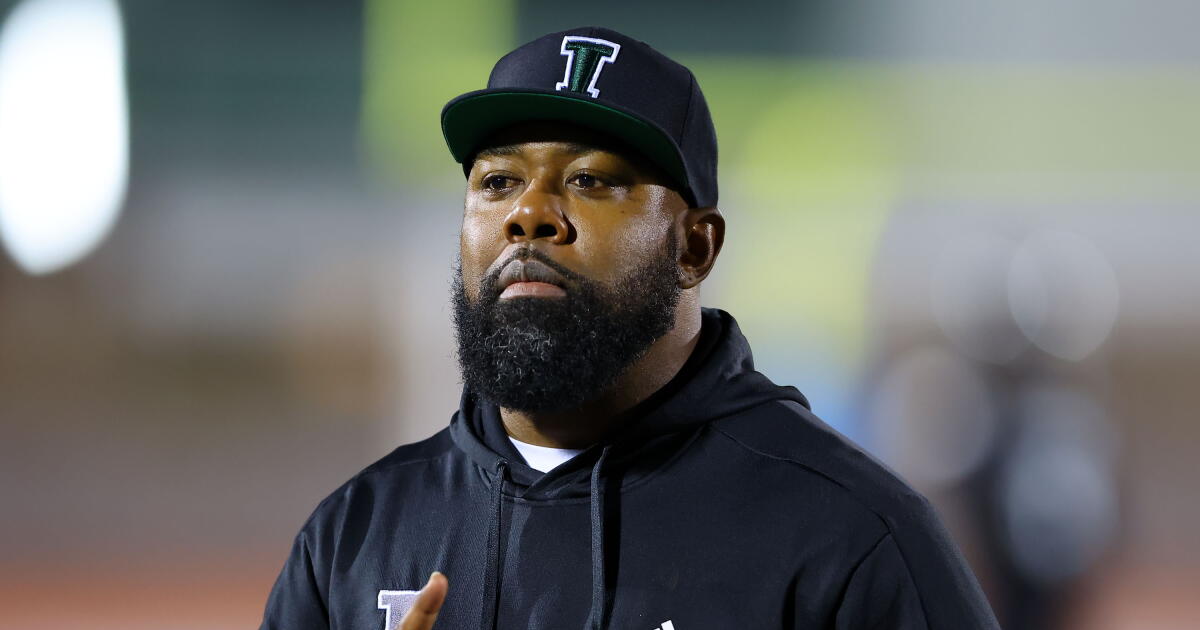
According to documents obtained by The Times via the California Public Records Act, Inglewood High School confirmed to the Southern Section that its football coach, Mil’Von James, played three ineligible players during a game in Austin, Texas, last month.
The reason, according to the letter sent to the Southern Section office, was, “The coach stated that he was not aware CIF eligibility rules applied to a game in Texas.”
That raises the question how many more times Inglewood has used ineligible players for out-of-state football games under James, the head coach since 2019. Last season on Sept. 25, 2025, the team played in Midland, Texas, three days before sit-out transfer players became eligible. Inglewood won 43-42. One of the players on the team who had not been cleared to play was Masyn Harvey, a quarterback transfer and holder on PATs.
Harvey, now playing for a prep school team, declined to return a request for comment if he had played.
If Harvey did play, Inglewood should have forfeited its win last season to Midland. Because Inglewood lost to Westlake of Austin on Aug. 28, a forfeit was moot for this season. Inglewood informed the Southern Section that it imposed a two-game suspension as punishment to James, who returned to coach last week in a win over Downey. The school said it would extend the sit-out period by another week to those players who participated while not cleared.
As for corrective action, the school stated, “Going forward, all ineligible players, across all sports, will be in street clothes on the sideline and must check in with the game administrator prior to the start of each game. We will send all coaches, across all sports, a weekly email listing ineligible players and the reasons for their ineligibility.
“At the start of each season, we will re-train all coaches on eligibility criteria and the clearance process and require them to sign an acknowledgment confirming they understand.”
James has a history of using ineligible players. He was dismissed at Hawkins High in 2016. The Los Angeles Unified School District did not share why James was fired, calling it a confidential personnel matter. LAUSD dismissed James soon after the discovery of ineligible players, resulting in Hawkins forfeiting all of its games to finish 0-13. Since then, the City Section established a rule that teams must exchange rosters before games to verify that players are eligible.
The Southern Section declined comment, but according to a letter response from an assistant commissioner, “Based on your self-report, preventative measures and the corrective actions taken, we will consider this matter closed.”
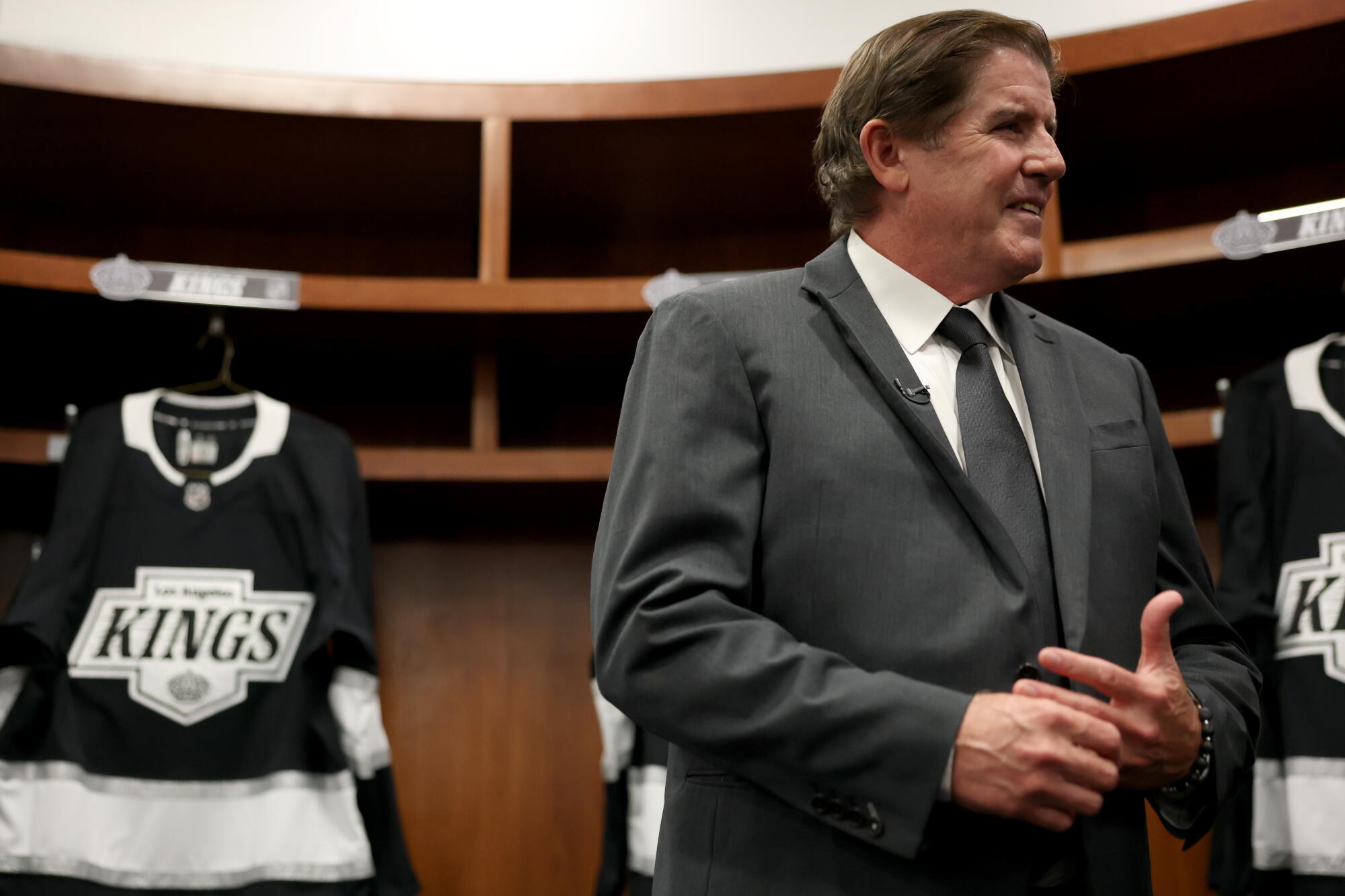
And that won’t be the only difference from last season because Laviolette, the winningest American-born coach in NHL history, has inherited an aging team in transition, one he and his new staff have immediately tried to put their stamp on.
“The coaching changes brought a lot of excitement,” goaltender Darcy Kuemper said. “It’s new drills, new systems, so it kind of makes everyone turn on their brain and challenge themselves, which is fun for guys at this level.”
Not all of the changes are positive, however.
Kings coach Peter Laviolette stands in the team’s locker room at their practice facility in El Segundo in June.
(Eric Thayer / Los Angeles Times)
For the first time in 20 years, the Kings are starting a season without Anze Kopitar, the franchise leader in games, assists and points and a two-time Stanley Cup champion. That has left a big hole on the ice and in the locker room, where Kopitar’s leadership was invaluable.
Also gone are wingers Andrei Kuzmenko and Jeff Malott, who left as free agents, and center Trevor Lewis, who retired. High-scoring winger Kevin Fiala, meanwhile, will miss the first couple of months, at least, after experiencing a setback in his return from a gruesome leg injury sustained at the Milan-Cortina Olympics.
That could hurt Laviolette’s effort to transform the Kings from the defense-first system they’ve been for years into a quicker, more aggressive offensive-style team. The Kings, whose scoring has declined in each of the last four seasons, had just 225 goals in 2025-26, fourth-fewest in the NHL, while the power play converted fewer than 18% of its chances, fifth-lowest in the league.
Two of the key pieces in turning that around will be forwards Adrian Kempe, who led the team in scoring the last three seasons, and Artemi Panarin, who had his best offensive season under Laviolette with the New York Rangers, scoring 49 goals and 120 points in 2023-24. The Kings are also counting on young forwards Quinton Byfield and Alex Laferriere, both 24, to take the next step in their development.
For Laferriere, change has been the main constant in his time in Los Angeles.
Kings right wing Alex Laferriere shoots in front of Philadelphia right wing Travis Konecny on March 19.
(Jessie Alcheh / Associated Press)
“This is going to be my fourth year with my fourth different coach,” said Laferriere, who had career highs in goals (21), points (44) and average TOI (18:18) last season. “It kind of reminds me a little bit of my rookie year. It kind of gives me that fresh slate, just trying to prove myself and try to gain the coach’s belief.”
In the dressing room, the Kings have given Kopitar’s crown to defenseman Drew Doughty, who will take over as captain in his 19th NHL season. At 36, he’s the third-oldest player on one of the NHL’s oldest teams and the last holdover from the 2014 Stanley Cup team.
“I’m not changing anything about myself when it comes to leadership,” he said. “I’ve been a leader on this team for a long, long time and been the loudest voice in the locker room and the guy that people come up to.
“One thing I will change: I always had Kopi as kind of the even-keel guy, where my emotions kind of go up and down. I’m going to be more aware of that and try to keep more of an even-keel.”
Whether a new coach, a new system and a new leader will be enough to get the Kings to the playoffs for a sixth straight season remains to be seen.
Laviolette, a Stanley Cup winner with Carolina two decades ago, has missed the postseason just three times when he’s been behind the bench the whole season. But the makeover he faces with the Kings is shaping up as one of the most challenging of his career, and most of the preseason prognostications have the Kings failing to make the cut.
If Fiala comes back early and healthy and if the team adapts quickly to the change in style, those predictions may prove overly dire. If not, the transition to the Laviolette Era could be more difficult than expected.
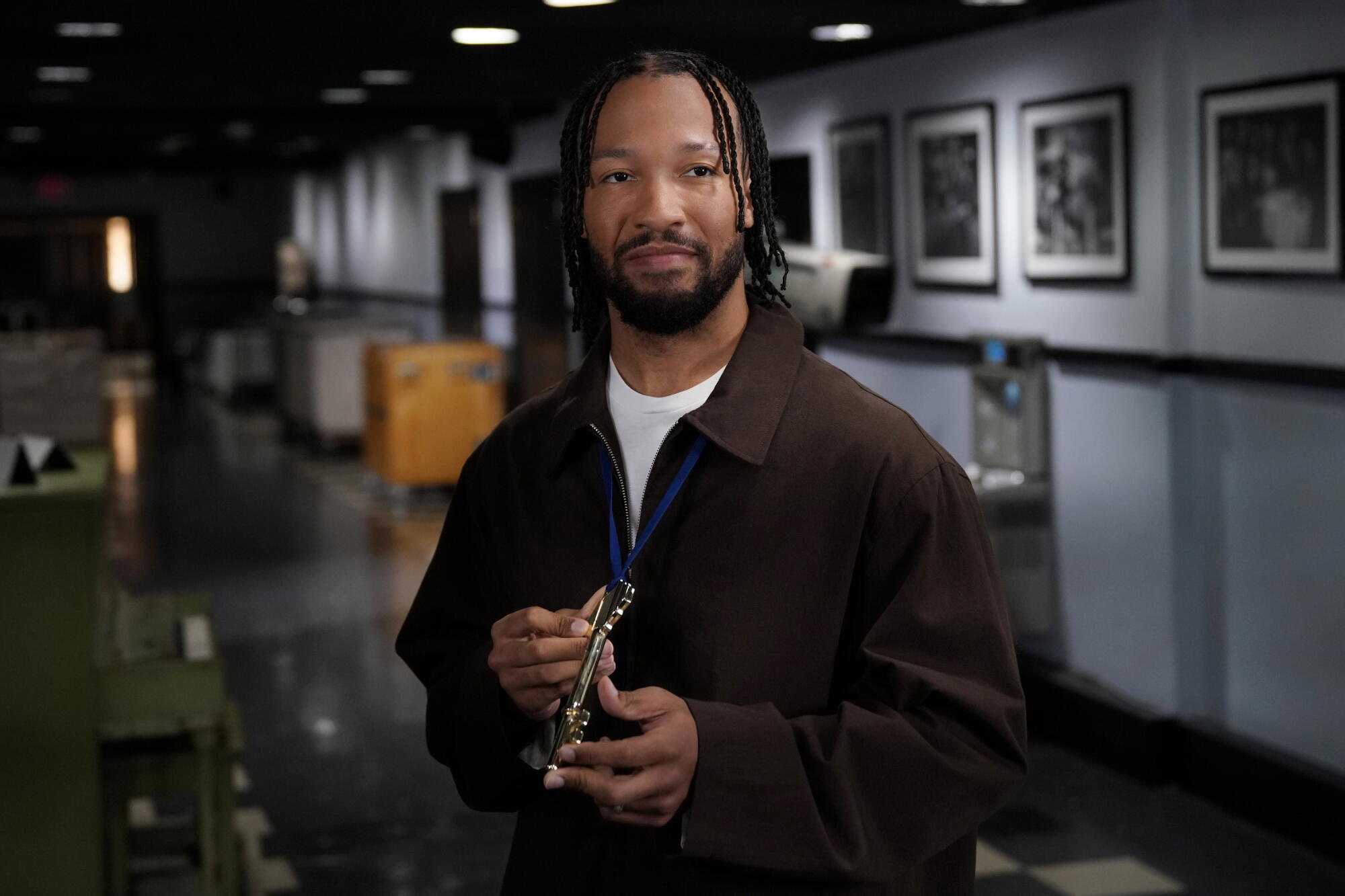
When the 52nd season premieres on Saturday at the usual time, usual place, “Saturday Night Live,” with host Jalen Brunson (of the champion Knicks) and musical guests Katseye, will again make history as the longest-running sketch comedy and variety show on television.
But week to week — multiplatform 50th-anniversary celebrations aside — the entertainment institution that is “SNL” does not dwell much on its history, focusing instead on trying to earn laughs sketch by sketch, moment by moment. Even when alumni like Tina Fey or Will Ferrell show up, it’s usually in the service of something topical, like a political cold open for a very recent event or happening. “SNL” lives in the now, and that can be a blessing and a curse, like when you feel like you’ve seen the same cold open lampooning President Trump 15 times already. James Austin Johnson is a brilliant impressionist, but read the room, guys.
“SNL” is the rare show for which quality is beside the point. As creator Lorne Michaels has said to cast members like Tina Fey, “The show doesn’t go on because it’s ready; it goes on because it’s 11:30.”
That focus on effort over polish has, surprisingly, helped it survive. For every online hater who tediously comments that “SNL” hasn’t been good since the Dana Carvey era or earlier, there are enough of us stalwarts who will every week obsess about the future of “Weekend Update,” rate the monologue (sometimes harshly) and wait breathlessly at the start of every new sketch, hoping we’re about to watch an all-timer.
For those in that camp — who never give up hope that a great sketch is just a commercial break away — here’s what you can expect from the new season.
The first four episodes
Season 52 will kick off with Knicks point guard Jalen Brunson as the first guest host.
(Rosalind O’Connor / NBC)
New “SNL” episodes usually arrive in batches of three and then the show takes a break for a few weeks. For Season 52, not only was the first trio of hosts and musical guests announced but also the lineup for a Halloween episode.
In addition to Brunson, who might bring along famous friends like Mariska Hargitay or Taylor Swift, actor Dakota Johnson will host, with rock group Turnstile as the musical guest on Oct. 3. On Oct. 10, “SNL” will roll the dice a third time with comedian Shane Gillis, who did not fare too well the last twotimes he hosted. He’ll be joined by musical guest Rosalía.
The Halloween episode will be hosted by newly minted horror queen Inde Navarrette from the hit film “Obsession,” joined by musical guest Gracie Abrams.
Cast changes and new faces
Over the summer, cast member Chloe Fineman — who had a knack for impressions of celebrities like Timothée Chalamet and Melania Trump — departed the show after seven seasons. It won’t be long before we see her onscreen again: She’s been cast in Netflix’s upcoming Harlan Coben adaptation, “Myron Bolitar.” Also departing was writer Martin Herlihy, the second member of the Please Don’t Destroy video trio to exit, leaving only Ben Marshall, who’s listed as a featured player. Last season, Herlihy did a few self-hosted video segments that tended to run late in the show.
Bowen Yang departed midway through Season 51, while Chloe Fineman announced her departure in July.(Jason Armond / Los Angeles Times)(Michael Loccisano / Getty Images)
Bowen Yang extended his run on “SNL” as his star was quickly rising in projects like “Wicked” and the “Las Culturistas Culture Awards,” but left midway through Season 51. Unlike previous transitions between seasons, no one was cut from the show, and those who left stepped away on their own.
Saidah Belo-Osagie, left, and Grace Reiter are the newest “Saturday Night Live” cast members.(Mike Klubeck)(Jill Petracek)
Reiter has already had a supporting role in Tim Robinson’s “The Chair Company” on HBO, and she stars in “Minimum Wage,” which started as a web series and is coming to Netflix in October for a 28–episode run. She was also the star of the very funny “The Hunger Games (But Better),” a low-budget re-creation of the series made over four days by a group of friends.
“SNL” tends to thrive in the run-up to national elections, and with the midterms upon us, the show has its pick of hot-button topics on the campaign trail, from the Iran war to gas prices to the backlash against data centers and AI billionaires.
Johnson’s impression of Trump is likely to be at the center of a lot of these sketches, but the show does well when he serves as a ringleader for characters like Defense Secretary Pete Hegseth (Colin Jost), Vice President JD Vance (Jeremy Culhane) and FBI Director Kash Patel (celebrity guest Aziz Ansari).
Jeremy Culhane as JD Vance, left, and James Austin Johnson as President Trump in a cold-open sketch.
(Lloyd Bishop / NBC)
Last season, Ashley Padilla emerged as a breakout star, carrying a heavy load of women’s roles after the departures of Ego Nwodim and Heidi Gardner. Even when she was giggling with Ryan Gosling because of a writers’ prank, Padilla was hilarious. She’s finally been upgraded to a repertory player and is likely to continue to play the lead in sketches featuring her grounded, emotionally shaky characters, some of whom have terrible haircuts.
Of the new featured players added last season, the two most likely to keep scoring are Culhane — who already has two great “Weekend Update” characters: Mr. On Blast and a masterful Tucker Carlson impression — and Veronika Slowikowska, who proved versatile whether she was portraying a “Guy’s girl” or a dryer with Sabrina Carpenter. Expect them both to be in more sketches this season.
Tommy Brennan, left, Jane Wickline and Ashley Padilla during the “Mom Confession” sketch featured in Season 51.
(Will Heath / NBC)
Marshall, the Please Don’t Destroy writer who joined the cast, has been fine as a utility player and straight man in sketches, but it’s hard to remember anything he was in last season apart from his role as Ron in “Heated Wizardry.”
Tommy Brennan and Kam Patterson both seem like they need to make their mark in sketches and do more than just perform as themselves in “Weekend Update” segments. Unless one or both of them is being groomed as a future “Update” co-host, time’s running out.
As for cast member Jane Wickline, who’s been described as “polarizing” but was also upgraded to repertory, we’re rooting for her. She brings musical talent, which the show needs plenty of, and her awkward vibes frequently add a different and unexpected dimension. An out-on-a-limb prediction: She’s going to have a great season.
What about Lorne?
Every discussion about the state of “SNL” must include a mention of how much longer the show’s steward, who is 81, will remain at the helm. This ongoing Lorne Watch, with predictions of his retirement and potential successors, began around Season 40 and continues. Many thought he’d exit at the end of Season 50, neatly capping an epic TV run.
That did not happen.
Creator Lorne Michaels has been at the helm of “Saturday Night Live” for much of its run.
(Jason Armond / Los Angeles Times)
So now the talk has shifted to what happens if Michaels’ run is interrupted because, you know, something happens to him?
The names suggested (and bet on) as potential replacements, should anything happen, continue to include producers like Steve Higgins; former cast members like Fey and Seth Meyers, who’ve stayed close to Michaels’ orbit; as well as Conan O’Brien and John Mulaney, all of whom seem like good comedic shepherds who could lead the show into its next era. Michaels himself has said publicly that Fey could “easily” do it. But, they all have their own careers and may not want the all-consuming grind that running “SNL” entails. It may take multiple people.
One outlier pick would be Kenan Thompson, the longest-running “SNL” cast member, starting his 24th season on the show this week. For sheer longevity, having been around for nearly half of “SNL’s” run, and because he’s probably not leaving anytime soon, Thompson might be the pick that makes the most sense.
Be careful what you wish for when you’re wishing for a new offensive coordinator.
Chargers fans were so over Greg Roman. Anything would be better than his run-heavy scheme stunting quarterback Justin Herbert’s anticipated ascension. Anyone would be preferable to the man holding the reins while the Chargers scored just three points in last season’s wild-card loss to the New England Patriots, after which Roman was fired.
Somehow, after just two games, the Chargers’ offense under McDaniel has Bolts fans wishing anyone else was running the show. Roman included.
Because Roman wouldn’t have overcomplicated a third-and-inches play-call. He wouldn’t have had the 6-foot-6, 240-pound Herbert line up in shotgun and call for motion.
Share via
The Chargers lost to the Las Vegas Raiders 26-14 on Sunday, and the schedule doesn’t get any easier for them moving forward.
And the subsequent snap wouldn’t have hit receiver Tre’ Harris before it got to Herbert. And instead of losing five yards and having Herbert, in a rare show of emotion, slapping the turf in frustration, the Chargers probably would have gotten a fresh set of downs.
So far, McDaniel’s brief Chargers’ tenure hasn’t just been a disappointment. It has, through two games, been a disaster. Because the Chargers really needed these first two wins against opponents who both won only three games last season.
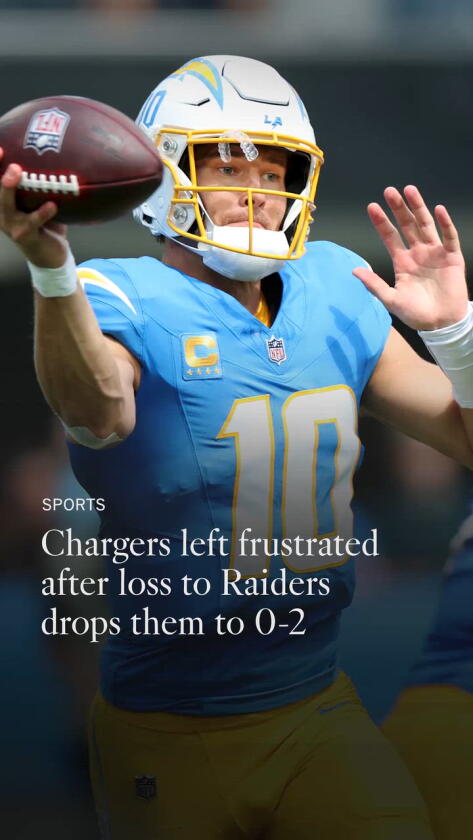
Instead, the Chargers’ offense looked as disjointed and discombobulated in Sunday’s 26-14 loss to the Las Vegas Raiders as it did the previous week in their 26-14 loss to the Arizona Cardinals.
It was an unwanted second helping of “humble pie,” as McDaniel described the Chargers’ Week 1 defeat. And it was nasty.
Now the Chargers’ schedule is about to come at them fast, with their next games against the Buffalo Bills, the Super Bowl champion Seattle Seahawks, Denver Broncos, Kansas City Chiefs and then the Rams, the preseason Super Bowl favorites.
After consecutive 11-win seasons under Jim Harbaugh — who’d never lost to the Raiders and never previously lost two consecutive games to start a season — the Chargers might blink and find themselves 0-7.
What’s worse than frustratingly quick postseason exits? Not making the playoffs at all.
And the Chargers are going to need to engineer a quick turnaround if they’re going to be among the 15% of teams that start a season 0-2 and still reach postseason play.
Chargers offensive coordinator Mike McDaniel walks on the sideline before a preseason game against the San Francisco 49ers at SoFi Stadium on Aug. 20.
(Robert Gauthier / Los Angeles Times)
To do that, they’ll need to score more points. They’ll need to stop shooting themselves in the proverbial feet and take some better shots downfield. Stop dropping the ball — figuratively, literally. They fumbled six times Sunday!
And stop thinking so much. Sundays are for reacting, and any amount of thinking is overthinking.
Maybe it’s personnel? The fact that, outside of Ladd McConkey, the Chargers are short on receivers who can reliably create separation.
Maybe it’s just a matter of time that the Chargers don’t have much of, cramming to learn McDaniel’s methods, to dial in the timing and coordination.
Or maybe, for McDaniel, it’s as simple as simplifying what he’s trying to do with this Chargers offense.
When he was hired in January, the prevailing thought was that the cerebral partnership between McDaniel and Herbert would prove a perfect match.
Even though McDaniel was dismissed after the Dolphins missed the playoffs two consecutive seasons, the coach — who’d developed a reputation as a talented offensive mind under Kyle Shanahan with the San Francisco 49ers — was a hot commodity on the coaching market.
McDaniel reportedly drew interest from the Baltimore Ravens, Cleveland Browns, Tampa Bay Buccaneers, Bills and Raiders. But he opted to come to L.A. to work with Herbert as the All-Pro QB’s fifth offensive coordinator in seven seasons (following three offensive coordinators in his four years at Oregon).
Starting over again, in these two games with McDaniel, Herbert has thrown for a modest 401 yards, just two touchdowns and three interceptions — though one of them bounced off David Njoku’s hands Sunday.
Chargers quarterback Justin Herbert watches a pass attempt fall incomplete after he is hit by Raiders defensive end Malcolm Koonce during the fourth quarter Sunday.
(Allen J. Schaben / Los Angeles Times)
There have also been protection problems, fumbles, a missed field goal, and lots of penalties — including four on star left tackle Joe Alt, who was called for a hold that resulted in a safety on an anything-that-can-go-wrong-will-go-wrong Sunday.
“I’m not looking in any one direction,” Harbaugh said Sunday. “I’m looking at it all.”
On TV, Herbert appeared to be looking off into space on the sideline as McDaniel sat chattering beside him, the game mercifully winding down.
Asked what McDaniel’s message was to the offense, Herbert said: “I haven’t been able to speak with him after.”
There’s a lot to talk about, but be careful what you ask.