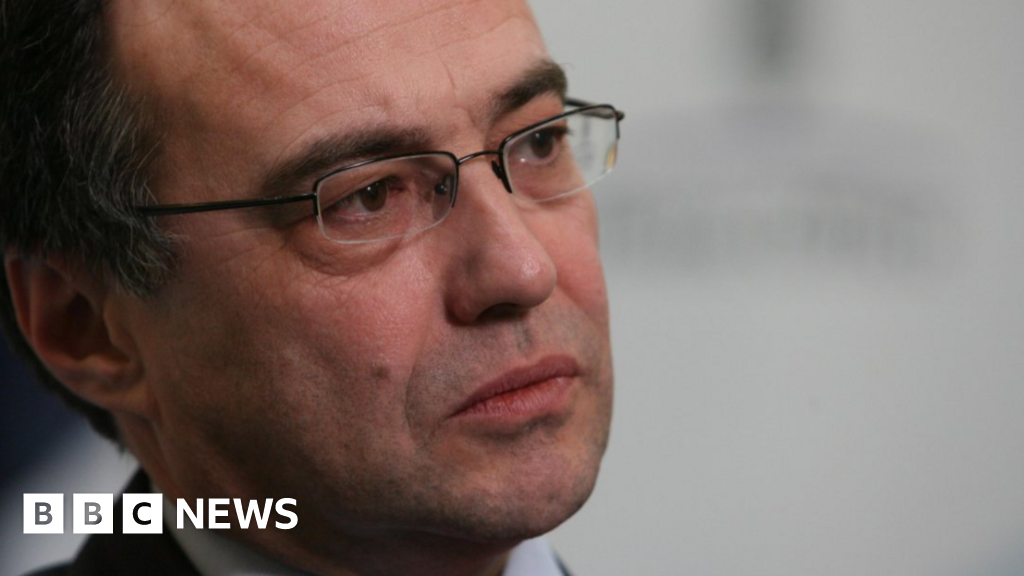
His family and close friends said in a statement: “For more than a year he battled the brain cancer, glioblastoma. He leaves his wife Tracey, his sons Josh and Jed and a new grandson, and many friends and former colleagues who will all miss him greatly.”
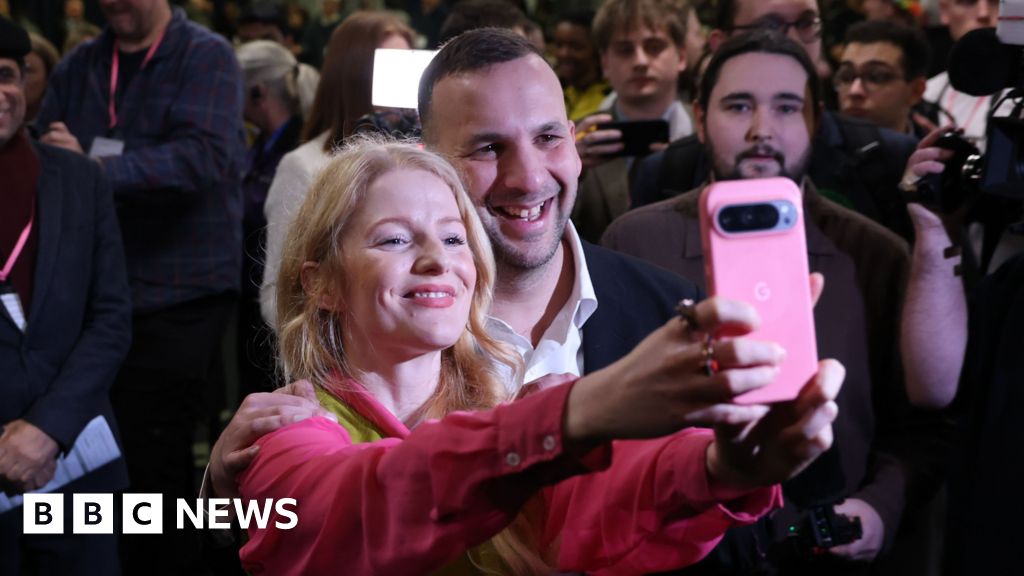
Green Party candidate Hannah Spencer give a victory speech to supporters in Manchester early Friday after being declared the winner of the Gorton and Denton byelection to choose a new Member of Parliament. Photo by Adam Vaughan/EPA
Feb. 27 (UPI) — Britain’s Green Party won the Gorton and Denton byelection in southeast Manchester with a more than 4,000-seat majority, beating the ruling Labour Party into third place, and 12 points clear of Reform UK.
The Greens’ new Member of Parliament, Hannah Spencer, a plumber from a neighboring suburb of Manchester, produced a convincing win in Thursday’s poll, overturning the 13,000-seat majority won in the 2024 general election by the previous Labour holder of the seat who is standing down due to ill-health.
Spencer won 14,980 seats, or 40.7% of the vote, Reform’s Matt Goodwin, 10,578 and Labour’s Angeliki Stogia trailing in third place with 9,364. The Conservative Party’s candidate came in a distant fourth with just 706 votes. Turnout was 47.6%.
The win, a first for the Green Party in a byelection, takes the party’s contingent in the House of Commons to five.
Speaking in the early hours of Friday after the results were announced, 34-year-old Spencer vowed to “fight” for the people of Gorton and Denton “who feel left behind and isolated.”
“There is an appetite here for change, and there are people across this constituency and much further beyond who are rejecting the old political parties and who are coming together to fight for something better, but who are doing it positively and in a really hopeful way.”
Spencer said her victory proved there was “no longer any such thing as a safe seat” and that there was “no part of the country where the Green Party cannot win.”
Asked if the Greens’ intention was to “eviscerate” Labour, Party leader Zack Polanski said that taking a seat Labour had held for more than 100 years showed it was “beginning already.”
“If we see a swing like this at the next general election, there will be a tidal wave of new Green MPs. This is an existential crisis for the Labour Party,” he said.
Labour’s second-straight loss of a byelection with Prime Minister Keir Starmer at the helm, and with local elections just around the corner in May, could prove highly consequential for his future.
Speaking to reporters Friday, a defiant Starmer rejected any suggestion he might be considering his position, saying he would never quit.
“I came into politics late in life to fight for change for those people who need it. I will keep on fighting for those people for as long as I’ve got breath in my body,” he said.
Starmer played down the loss saying that while it was “very disappointing,” voters often took out frustrations on sitting administrations in mid way through their terms.
However, Strathclyde University Politics Professor John Curtice said the Green Party was now challenging Labour’s stranglehold on the left of British politics in a way that would cause the parliamentary wing of the party to seriously question whether Starmer was still the right person to lead the country.
Reform UK chairman David Bull, telling the BBC he was “absolutely thrilled” with his party’s performance,” echoed that analysis.
“Keir Starmer is in big trouble now — it is not a matter of if he leaves office, it’s when he leaves.”
Party leader, MP Nigel Farage, warned the Greens’ win would embolden the radical left and said opposition Conservative Party leader Kemi Badenoch should apologize for leading the party to the worst result in its history.
“Roll on the elections on May 7. It will be goodbye Starmer and goodbye to the Tory [Conservative] party,” he wrote on X.
Badenoch, who is Black, called on Starmer to quit immediately.
“Our country is not broken, but this byelection showed that Labour, Reform and the Greens are trying very hard to break it. Labour trying to buy people off with more and more benefits spending, Reform telling people you can’t be British if you’re not white. The Greens running a nasty, sectarian campaign while simultaneously wanting to legalize crack-cocaine,” she wrote in a statement.
“The result shows Keir Starmer’s premiership is finished. He lost authority a long time ago, a mere hostage at the mercy of a divided Labour Party that cannot decide who to replace him with. He has lost the support of his MPs and the country. He is in office but not in power. If had any integrity he would go,” said Badenoch.
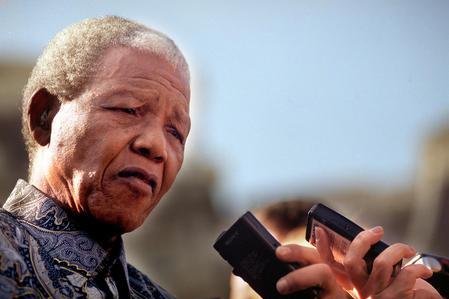
Former South African president Nelson Mandela speaks to reporters outside of the White House in Washington on October 21, 1999. Mandela was famously released from prison in South Africa on February 11, 1990. Photo by Joel Rennich/UPI | License Photo
Reform UK’s Matt Goodwin came second with 10,578, while Labour’s Angeliki Stogia was third with 9,364. The Conservative’s Charlotte Cadden came fourth with 706 votes – the party’s worst ever by-election result – and the Liberal Democrats’ Jackie Pearcey had 653. No other parties got more than 200 votes.
CARAVAN park owners have a message for Labour: park the holiday tax now.
One of those making the call is Claire Flower, who runs a site in Paignton, Devon, which has welcomed guests for more than 60 years.
Sign up for the Travel newsletter
Thank you!
Claire Flower, who runs a long-standing Paignton caravan park, is urging Labour to scrap the proposed holiday tax as park owners warn it will hit families and businessesCredit: Not known, clear with picture deskThe park was founded by Claire’s grandad, Stan Jeavons, back left, in 1965Credit: SuppliedAlfie Best of Wyldecrest holiday park has warned the proposed holiday tax could drive Brits abroad, force park closures and cost jobsCredit: Arthur Edwards / The Sun
Beverley Holiday Park was started by her grandfather and now 12,000 tourists a year spend their breaks there.
“Plenty of parents these days work two or three jobs and there can be shift work in families, too. Holidays are often the only place whole families get to sit and eat together.
Clare is a member of the Holiday and Residential Parks Association (Harpa), which wants the Government to abandon plans for local mayors to tax anyone staying overnight on a break in their area.
She believes the tourist tax will affect the whole English Riviera in the South West, which depends heavily on holidaymakers.
Claire says: “The economy of the entire bay will be hit. We employ 180 staff in the summer and 80 all year round.
“We pay our VAT, our business rates, all our taxes and we help the local economy in a really big way with all the visitors we can accommodate who go on and spend in local businesses.
“If our numbers start to dwindle, it’s impossible to say where the impact will hit hardest.”
The park has free indoor and outdoor swimming pools but its utility bills have gone through the roof.
Claire says: “It’s becoming harder and harder to operate but we have such loyal and lovely visitors, so we work hard to keep prices affordable.
“We’ve even got a 30 per cent off Easter holiday offer at the moment to encourage people in.”
The park was founded by Claire’s grandad Stan Jeavons in 1965, and her nephew Adam Furneaux, 22, is the fourth generation to work there.
Claire says: “Grandad would be devastated at the prospect of the tax. English holiday parks like ours contribute £9.2billion in visitor spend into the economy.
“For a lot of people, even if they could afford to go abroad, there may be a health reason they can’t or there might be another reason they choose to holiday in the UK rather than overseas.”
Lee Jenkins, from Abertillery in Gwent, has been visiting Beverley Holiday Park since 1971, when he was three years old.
The Sun’s Hands off Our Hols CampaignCredit: Supplied
He spent his honeymoon at the park with wife Julie in the 1990s and visits several times a year.
Taxi driver Lee, 58, says: “We’re supposed to support the UK economy, aren’t we?
“This country needs people holidaying here, not abroad, so we can support local businesses and spend what we earn here rather than overseas.
“It seems so short-sighted to tax people out of UK holidays, and it will impact the whole country’s economy.”
Association Harpa represents 3,000 holiday parks across the UK, from small campsites to major companies.
It believes a holiday tax on British families will place extra financial strain when many are already struggling with the cost of living.
The organisation’s director general, Debbie Walker, says: “Holiday parks and campsites offer some of the most affordable holidays in the UK and this tax risks pricing people out of breaks at a time when money is so tight.
“While we fully recognise the financial pressures facing local authorities, a holiday tax adding around £100 to a typical two-week family break is not the right solution.
“If we want people to choose UK holidays, taxing them for doing so sends exactly the wrong message.”
Park Holidays UK, which operates more than 50 sites in the UK, says that a tourism tax would be “totally self-defeating” as well as punishing hard-working families who choose to take a holiday in Britain.
Chief marketing officer Brad May says: “The Government imagines a holiday levy would help raise revenues for cash-strapped local councils.
“But it’s far more likely that visitor numbers to these areas would drop as families turn to other destinations which are not slamming a tax on their fun.
“When our guests take a well-earned break, many enjoy visiting nearby attractions, going out for a meal and spending money in local shops.
“So, it’s these businesses which will also suffer as an unintended consequence of this move.”
All of them are backing The Sun’s Hands Off Our Hols campaign.
It is a sentiment echoed by Alfie Best, who owns Wyldecrest holiday parks.
He says: “When you think of a budget holiday in this country you automatically have a picture of a caravan park in your mind. They have been the backbone of holidays for a generation.
“This tax will surely drive holidaymakers abroad in search of better value getaways.
“If it comes into force, the tax will ultimately lead to the closure of many parks and lots of job losses.”
Lee Jenkins, a lifelong Beverley Holiday Park visitor from Gwent, says taxing UK breaks is short-sighted and will hurt local businesses and the wider economyCredit: Not known, clear with picture deskOffering free indoor and outdoor pools, Claire says soaring utility bills are making it harder to run the park — but she is determined to keep prices affordable for loyal guestsChancellor Rachel Reeves revealed details of the tax on staycations in her Autumn StatementCredit: Alamy