Justice Department indicts Southern Poverty Law Center on financial fraud charges

April 22 (UPI) — Federal prosecutors Tuesday evening announced an 11-count indictment against the Southern Poverty Law Center, accusing the non-profit of defrauding donors by using their money to pay informants within hate groups they were monitoring.
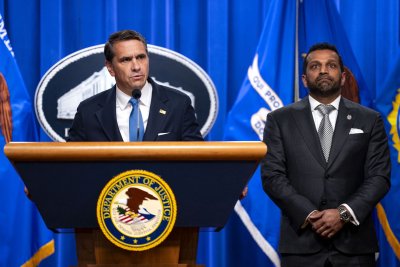
Acting Attorney General Todd Blanche announced the indictment from a Montgomery, Ala., grand jury during a press conference, alleging that between 2014 and 2023, the SPLC paid more than $3 million to informants in hate groups the organization had vowed to dismantle.
“As the indictment described, the SPLC was not dismantling these groups, but it was instead manufacturing the extremism it purports to oppose by paying sources to stoke racial hatred,” he said, alongside FBI Director Kash Patel.
The indictment, which was returned by an Alabama grand jury just minutes before the press conference, details payments to informants in groups such as the neo-Nazi National Alliance and the Ku Klux Klan, but does not detail extensive evidence that the money was “used to fund the leaders and organizers of racist groups.”
Federal prosecutors allege that the SPLC obtained money via donations by making “‘materially false representations and omissions about” what the money would be used for and utilized bank accounts linked to “fictitious entities” to covertly pay their field sources.
One SPLC informant is described in the court document as a member of the online leadership chat group behind the 2017 Unite The Right protest in Charlottesville, Va., where one person was killed when a car rammed counterprotesters.
This informant was paid more than $270,000 between 2015 and 2023, according to the indictment, which alleges that they attended the Unite the Right event “at the direction of the SPLC,” made “racist postings under the supervision of the SPLC and helped coordinate transportation to the event for several attendees.
Another SPLC informant described by federal prosecutors as being affiliated with the neo-Nazi National Alliance organization stole 25 boxes of documents from the headquarters of a violent extremist group, copied the materials for the SPLC and returned the originals. The court document alleges that the SPLC paid the informant more than $1 million between 2014 and 2023.
Blanche told reporters during the press conference that the informants were paid via pre-paid cards with funds from donors that were moved from bank accounts that the SPLC created for five fictitious organizations in order to shield the source of the funds.
“They attempted to hide their criminal activity from our financial banking network,” Patel said.
“They set up shell companies and entities around America so that the financial system that we rely on as everyday Americans were deceived into believing that money is not coming from the Southern Poverty Law Center in the perpetration of this scheme and fraud but rather fictitious entities they stood up to perpetuate this ongoing fraud.”
The indictment charges the SPLC with six counts of wire fraud, four counts of bank fraud and one count of conspiracy to commit money laundering.
Ahead of the press conference, SPLC CEO Bryan Fair announced in a video statement that the organization and its employees were the target of a federal investigation focused on its use of informants, though they had yet to know all the details.
He defended the SPLC’s use of informants as necessary to protect themselves and the public after decades of being “engaged in unprecedented litigation to dismantle the Klan and other hate groups.”
Information the SPLC gained from the informants was frequently shared with local and federal law enforcement, including the FBI, he said, adding that they did not broadly share their use of informants to protect their identities.
“While we no longer work with paid informants, we continue to take their safety seriously. These individuals risked their lives to infiltrate and inform on the activities of our nation’s most radical and violent extremist groups,” he said, vowing to fight the allegations.
“We will not be intimidated into silence or contrition, and we will not abandon our mission or the communities we serve.”
The SPLC has long faced criticism from some Republicans and conservatives, who say the prominent anti-hate nonprofit has drifted from its mission of fighting extremism and White supremacy by labeling several right-wing organizations as hate groups.
In October, Patel announced that the FBI severed ties with the SPLC, accusing it of having “long abandoned civil rights work and turned into a partisan smear machine.”
Democrats, SPLC supporters and critics of the Trump administration lambasted the indictment as politically motivated, with the American Civil Liberties Union calling it “another example of the Trump administration’s extreme attempts to silence its critics.”
“Let’s be clear about what’s happening here. This administration is using the full weight of federal prosecution to target an organization whose mission is rooting out violent extremism,” Sen. Cory Booker, D-N.J., said online.
“This is part and parcel of Trump’s assault on free speech, on nonprofits and on anyone who dares to disagree with him.”
House Majority Leader Hakeem Jeffries, D-N.Y., called the indictment “baseless and illegitimate.”
“These partisan hacks who continue to weaponize the criminal justice system against perceived opponents will never intimidate us,” he said.