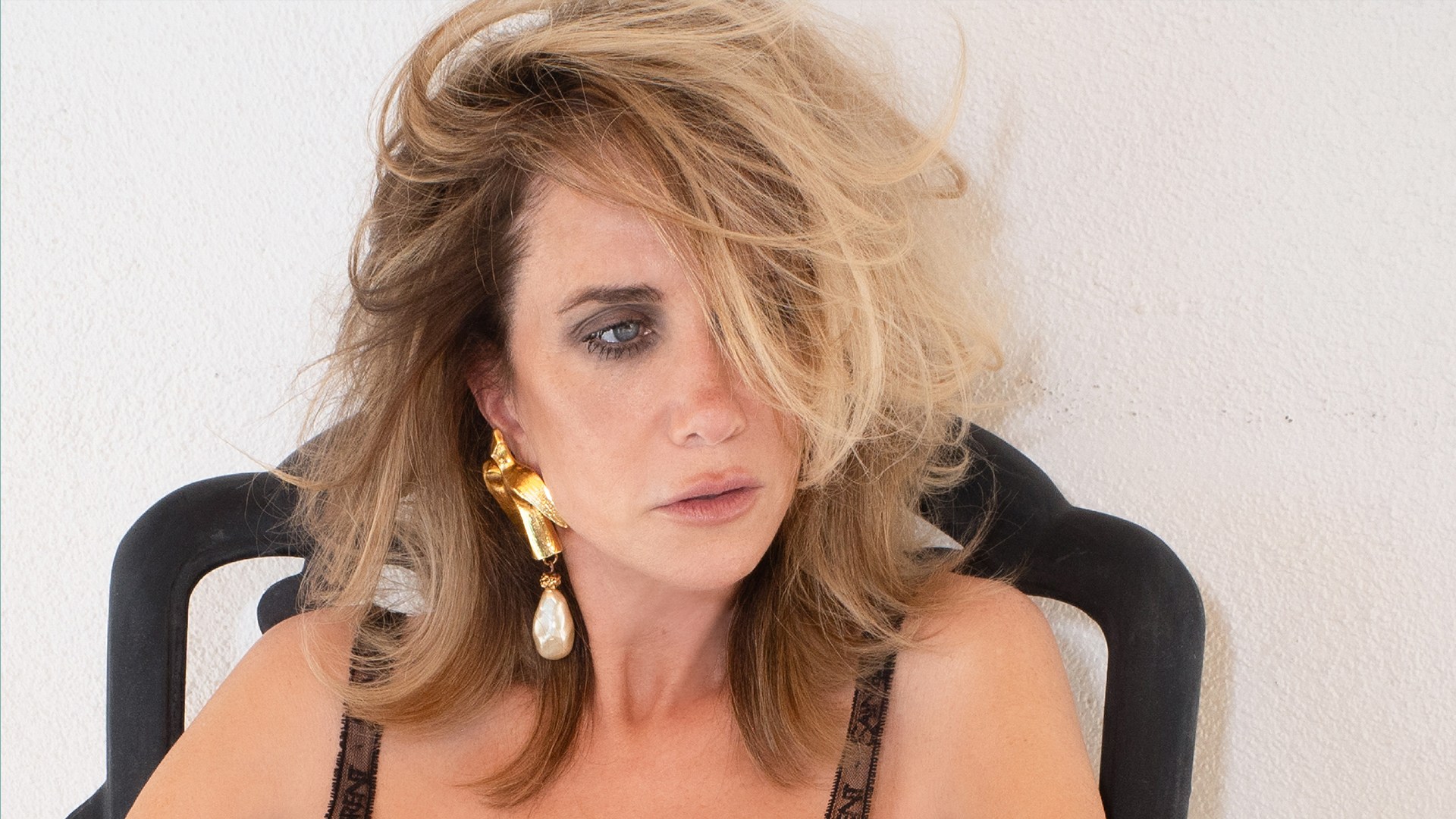
Kristen Wiig stunned with her makeover for her spread in the latest issue of Perfect magazineCredit: Yasmine Diba/PerfectThe actress showed an edgy look in a black minidress with a super-high slitCredit: Yasmine Diba/PerfectKristen also showcased her figure in a skintight black dress with a see-through lace topCredit: Yasmine Diba/PerfectThe Saturday Night Live alum ditched her bra and shirt in another photo, covering her bare breasts with a black blazerCredit: Yasmine Diba/Perfect
Kristen, 53, looked completely transformed in her skimpy all-black outfits, which were considerably more revealing than her usual attire.
One photo captured the comedian posing in a body-hugging mini dress and a blazer.
Sign up for the Showbiz newsletter
Thank you!
The dress featured beading over her chest and a matching design on the cuffs of her coat.
Meanwhile, her legs were on full display, with her dress’s super-high slit showcasing her upper thighs.
Kristen finished the look with white pointed-toe heels, heavy makeup, and her tousled blonde hair at her shoulders.
The Bridesmaids star kept the edgy style in another photo, modeling a skintight dress with a see-through lace top.
She slouched in a chair, her hair covering half her face, showing off dark eye makeup and massive gold statement earrings.
Kristen’s third outfit again showed the TV star in a different light as she rocked pants and a matching blazer, with nothing underneath.
Most read in Entertainment
The Masters of the Universe star ditched her bra and a shirt to tease her bare breasts beneath the blazer.
She wore long, dangly earrings with the same messy hair-look and heavy makeup.
Kristen continued to stun in her photos, as another captured the Saturday Night Live alum standing by a pool in a bra and panty set.
She added see-through lace tights and high heels to her bottom half, keeping her abs and toned arms exposed on top.
Kristen posed in black lingerie with completely see-through black tightsCredit: Yasmine Diba/PerfectKristen flaunted her abs and toned arms in a black bra and leggings while baking in the kitchenCredit: Yasmine Diba/PerfectThe Palm Royale actress also stunned in a strapless black bra with a deep V-neckCredit: Yasmine Diba/PerfectKristen also donned a long-sleeved black sweaterdress with big fur sleevesCredit: Yasmine Diba/Perfect
The Despicable Me star concealed her eyes with a massive bucket hat, posing with her hands on her hips.
Kristen wore a similar ensemble during a baking session in the kitchen, including a tiny bra, leggings, and leather boots.
She perched one leg on a table while mixing ingredients in a bowl, oversized sunglasses covering her eyes.
A couple of other inside shots captured the Palm Royale actress in a form-fitting strapless dress with a deep V-neck, and a long-sleeved sweater dress with big fur sleeves.
It’s rare to see Kristen in such daring looks, worlds apart from her hysterical costume in her iconic Target Lady sketch on SNL.
She also wore a prim-and-proper wardrobe with bright colors and perfectly styled hairdos in her latest TV series, Palm Royale.
The Apple TV series, which follows her character Maxine Dellacorte-Simmons as she vies to become the belle of 1960s Palm Beach, was canceled earlier this year after two seasons.
President Trump lashed out Sunday at NBC’s “Meet the Press” moderator Kristen Welker, calling on the Federal Communications Commission to punish her over comments she made about the president’s record in endorsing primary candidates.
“Kristen Welker, the Unpopular ‘Hostess’ of the once great Meet the Press, now considered Meet the Fake Press, just stated that Donald Trump has ‘mixed results’ on his Endorsements of Candidates, when the recent WINS of Darline Graham and Mike Mazzei, stand at 100% for the U.S. Senate, and 98% for the U.S. House, recently and over the longterm,” Trump wrote on Truth Social.
Trump actually endorsed Mazzei in the Oklahoma governor’s race, not a congressional seat.
“How can anyone be allowed to say this, working for freely given Public Airwaves?” Trump added. “Because of this purposeful inaccuracy, she will be reported to the FCC for rebuke or punishment.”
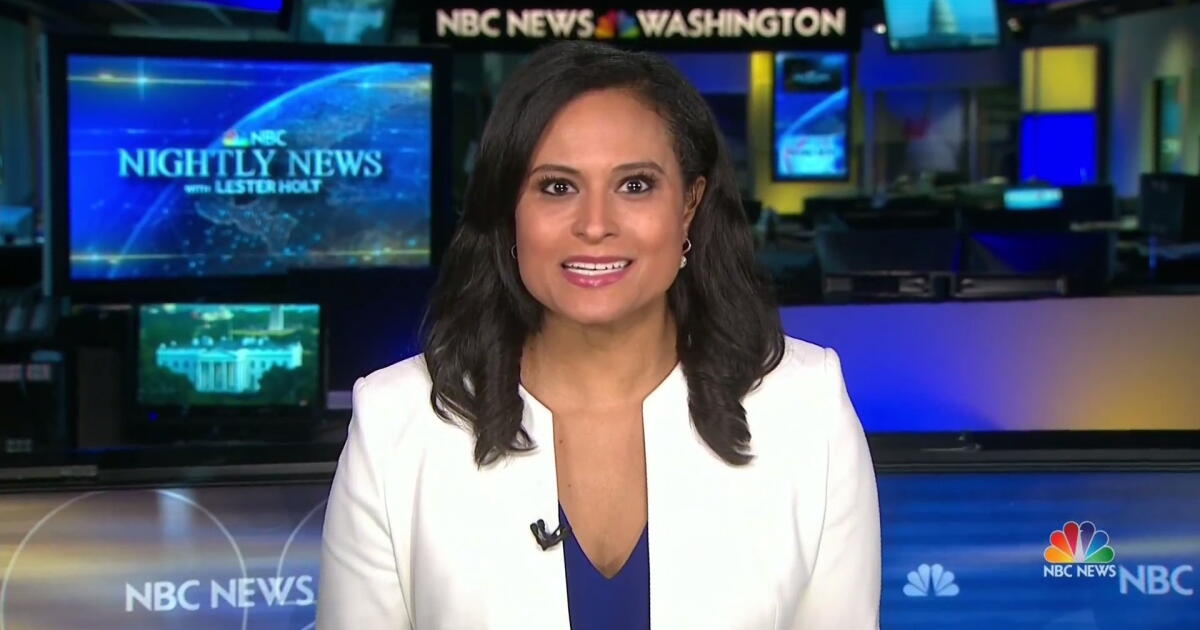
Welker was previewing Sunday’s edition of “Meet the Press” on NBC’s Washington station WRC when she made the remarks about Trump’s endorsements.
“He’s going to loom large over these midterms,” Welker said. “There’s no doubt about that. He, of course, has endorsed a slate of candidates in the primaries. He’s had some mixed results, but most recently, his pick of Senator Darline Graham, of course, the sister of the late Senator Lindsey Graham, was successful in her primary battle, so now she takes on Dr. Annie Andrews in South Carolina.”
In a statement, NBC News expressed its support for Welker. “Kristen is one of the best in the business and we stand by her,” a representative said in a statement.
FCC Chairman Brendan Carr has shown a willingness to use his agency’s levers to go after broadcast media outlets Trump deems unfriendly. In April, he called for an early review of the TV station licenses held by ABC, claiming the company’s diversity and inclusion policies are in violation of federal anti-discrimination laws.
ABC has filed a lawsuit against the FCC to block the review, saying it was motivated by Trump’s animus toward the late-night host Jimmy Kimmel.
Going after Welker for an anodyne analysis that did not match the president’s perception of his endorsement results would be a stretch, according to the FCC’s own guidelines.
“The FCC’s authority to take action on complaints about the accuracy or bias of news networks, stations, reporters or commentators in how they cover — or sometimes opt to not cover — events is narrow,” according to the FCC website. “The agency is prohibited by law from engaging in censorship or infringing on First Amendment rights of the press.”
Anna Gomez, the lone Democratic member of the FCC, said Trump’s comments are dangerous and also demonstrate a fundamental lack of understanding of the agency’s role.
“As I’ve said many times, the FCC has no authority to punish journalists this administration doesn’t like,” Gomez wrote on the social platform X. “These threats to press freedom are dangerous. They undermine the foundation of our democracy, and they have no place in it.”
Trump is clearly sensitive about critiques of his endorsement powers. On Friday, Bill Maher did a lengthy segment on his show “Real Time,” apologizing to the president for having said “almost none” of his endorsed candidates are winning their primaries. Maher noted that out of 260 candidates endorsed by Trump, only nine have lost. Maher noted that many of those candidates were heavy favorites to win but agreed that his statement was not accurate.
Maher also gave a strong indication that Trump had texted him to express his unhappiness over his comments.
But “Real Time” is on cable and streaming where the FCC has no say on programming content. The agency regulates broadcast channels that are delivered over the public airwaves.
The Federal Communications Commission under Trump has tried to target news outlets for spreading ‘fake’ news.
Published On 30 Aug 202630 Aug 2026
United States President Donald Trump says he will report a prominent NBC television journalist to the federal agency in charge of regulating broadcast news outlets for “rebuke or punishment”.
In a post on Truth Social on Sunday, Trump took issue with Kristen Welker’s characterisation of his endorsements of electoral candidates as having “mixed results” in the primaries leading up to November’s elections.
Recommended Stories
list of 3 itemsend of list
“How can anyone be allowed to say this, working for freely given public airwaves?” Trump wrote. He also posted, without any attribution of where he got the data, a chart showing 98 percent of the candidates he endorsed had won their elections.
“Because of this purposeful inaccuracy, she will be reported to the FCC,” the Federal Communications Commission, he said.
Welker hosted the 2020 presidential election debate between Trump and former President Joe Biden and currently hosts NBC’s weekly news programme Meet the Press.
‘Crooked networks’
In June, Welker had a one-on-one interview with Trump that ended in a heated exchange as she pressed the Republican president on continuing to claim the Democratic Party had cheated in the 2020 presidential election, in which Biden defeated Trump.
“Your elections are crooked, and you’re crooked, and Meet the Press is crooked and so is ABC and CBS and CNN. You’re one-sided crooked networks,” Trump said shortly before pulling off his microphone and leaving the interview.
Trump, who has long had a tumultuous relationship with those US television news networks, has increasingly threatened to use the FCC to target what he says is false news.
This month, ABC News’s owner, Disney, sued the FCC, saying the agency was conducting an early licence review of eight of the network’s stations, a move that it said was “retaliation” against it. ABC said the FCC was seeking “a media industry too fearful of official reprisal to report the news freely”.
The review followed a row between the network and the FCC after Trump and his wife Melania called on it to fire late-night TV host Jimmy Kimmel over a joke he had made about her.
President Trump has also filed several multibillion-dollar civil lawsuits against news outlets alleging defamation. Last year, he filed a $10bn lawsuit against the BBC, which he said unfairly edited a clip of him speaking just before his supporters stormed the US Capitol on January 6, 2021, to make it seem like he had called for violence.
Trump sued The New York Times for $15bn and The Wall Street Journal for $10bn, alleging defamation over reporting on issues such as how he amassed his wealth and his relationship to convicted sex offender Jeffrey Epstein. A judge threw out the case against The Wall Street Journal. Trump refiled the case against The New York Times after a judge dismissed the first complaint against the newspaper last year.
Attempts to compel reporters to reveal sources
The warning from Trump also comes as his administration has taken the rare step of using the courts to try to pressure journalists into giving up confidential sources for stories that have pointed out wrongdoing.
This month, The New York Times said agents from the FBI showed up at the home of one of its reporters in February to deliver a subpoena seeking cooperation for an investigation into a story that revealed how a secret US Navy SEALs mission in North Korea had ended up with them opening fire on a North Korean boat.
In July, the US Department of Justice also tried to subpoena three other journalists from the newspaper after they reported on security concerns with the president’s new Air Force One jet. Investigators were seeking phone records of the journalists but withdrew the requests after a federal judge upbraided the tactic in court, saying they were violating the First Amendment, a provision in the US Constitution that protects freedom of the press.
Reporters at The Wall Street Journal and The Washington Post have also been subpoenaed in recent months for national security coverage, including for reporting on internal Pentagon warnings about the US-Israel war on Iran.
News media freedom groups like the Committee to Protect Journalists have criticised the Trump administration for targeting critical media. In April, the group Reporters Sans Frontieres, or Reporters Without Borders, said the US has fallen to a “historic low” in its annual global press freedom rankings, dropping from 57th in the world to 64th.
The back-to-back news this week of the deaths of Dolly Parton and Tim Curry — both at age 80 — felt like an unfair and twisted threat to our peace.
Both were extraordinary cultural forces whose screen and stage work lit up and shaped our lives, so its no wonder the emotional whirlpool led to one large group chat on social media, with fans posting favorite performance clips and interview soundbites. I took comfort in many, including Parton singing “Jolene” at the Grand Ole Opry in 1988 and eight minutes of Curry in the frantic “how it was done” climax in “Clue” (1985), which he reportedly performed so intensely he had to be taken to the hospital for high blood pressure.
Our writers captured the depth of the legacy each leaves behind.
Sign up to get recommendations for the TV shows and streaming movies you can’t miss, plus exclusive interviews with the talent behind your favorite titles, in your inbox every Friday.
By continuing, you agree to our Terms of Service, which include arbitration and a class action waiver. You agree that we and our third-party vendors may collect and use your information, including through cookies, pixels and similar technologies, for the purposes set forth in our Privacy Policy such as personalizing your experience and ads.
The country music superstar’s performance in 1982’s “The Best Little Whorehouse in Texas,” which earned her a Golden Globe nomination, is one of our streaming recommendations this week. (For those seeking community while celebrating the life of Parton, AMC Theatres announced screenings for the film, as well as “Steel Magnolias,” in select locations through Sept. 2.) Our other streaming suggestion, if you need a life vest to keep afloat through the tears, is a series featuring veteran fashion police partners reuniting again — this time, to dole out critiques of fictional characters.
Also in this week’s Screen Gab, we spoke with actor Kristen Johnston about the Season 2 return of “Leanne.” Best known for her role as Sally Solomon in the hit ’90s sitcom “3rd Rock From the Sun,” Johnston has built a career bringing laughs to comedies like TV Land’s “The Exes” and CBS’ “Mom.” Lately, she’s been bringing her seasoned comedy skills to Netflix’s multi-cam sitcom, which captures the messy (and funny) experiences of women navigating midlife — like dealing with menopause or the horrors of the modern dating scene. Stand-up comedian Leanne Morgan stars as the titular character, while Johnston plays her brutally honest sister, Carol.
“Not every show has to be, you know, medieval dragons,” Johnston says. “There’s room for a couple of silly women in their 50s trying to figure it out.” Read more from Johnston in Guest Spot. In the meantime, I’m off to mix and bake a cuppa flour, a cuppa sugar and a cuppa fruit cocktail with the juice at 350 till it’s gold and bubbly. See you next week. — Yvonne Villarreal
Turn on
Recommendations from the film and TV experts at The Times
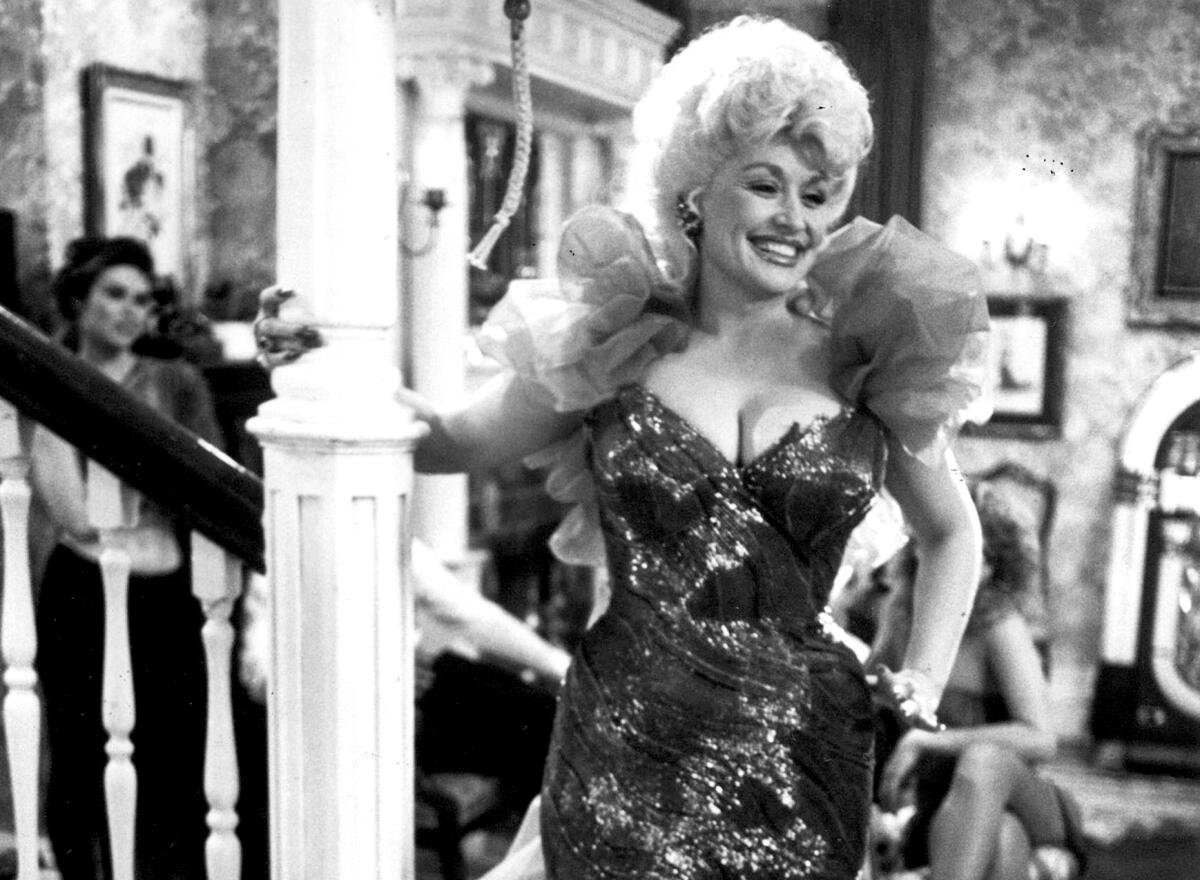
Dolly Parton as Miss Mona in the 1982 movie “The Best Little Whorehouse in Texas.”
(Universal Pictures)
“The Best Little Whorehouse in Texas” (VOD)
Dolly Parton cemented her movie star status with her feature debut “9 to 5” alongside Jane Fonda and Lily Tomlin. But outside of the irresistible title song, Parton did not sing in the film. She makes up for it with her second film, 1982’s “The Best Little Whorehouse in Texas.” Adapted from the Broadway musical, the country superstar dazzles as Miss Mona Stangley, the proprietress of the popular “Chicken Ranch” brothel. With her characteristic down-home charm, she makes her place of business seem as wholesome as apple (“There’s lots of goodwill and maybe one small thrill, but there’s nothing dirty going on,” she sings in the opening number). Parton also contributed two extra songs to the soundtrack alongside the original Broadway score, including her hit “I Will Always Love You.” — Greg Braxton
Clinton Kelly, left, and Stacy London in “Why’d They Wear That?”
(Jordan Petsy / Simple Alien)
“Why’d They Wear That?” (YouTube)
Stacy London and Clinton Kelly are back with a third “Wear” show, after “What Not To Wear” and last year’s “Wear Whatever the F You Want.” This one’s for the Stacy and Clinton fans, as it removes the clients and makeover elements and sits the hosts on a bed together in front of a TV as they critique what characters wear in the movies, viewing film through the lens of clothing, hair and makeup. (It’s very smart.) The films and actors they highlight are meaningful to one or the other — they don’t always agree — which is to say they broadly represent the tastes of people born in 1969. The range of subjects encompasses “Meatballs,” “Poltergeist,” “Best in Show,” “Gentlemen Prefer Blondes” and “The Empire Strikes Back,” in which episode you will learn that London views Darth Vader as “the Karl Lagerfeld of outer space” (“monochromatic dressing … quiet luxury and he doesn’t change — he invests in his pieces”). One episode is a tribute to Catherine O’Hara. With no one’s feelings to dance around, they can be as critical as they like, but snark isn’t the point so much as celebration and the delight of old friends sharing their own, often self-deprecating stories. Come for the analysis, stay for the laughter, or vice versa. — Robert Lloyd
Guest spot
A weekly chat with actors, writers, directors and more about what they’re working on — and what they’re watching
Leanne Morgan, left, and Kristen Johnston in Season 2 of “Leanne.”
(Patrick Mcelhenney / Netflix)
In “Leanne,” Kristen Johnston plays the ultimate ride-or-die sister you want in your corner — she turns chaotic moments into fun, tells the hard truths and provides unwavering emotional support. The Netflix sitcom stars comedienne Leanne Morgan as a woman trying to rebuild her life after her husband of 33 years left her for someone else. Helping her navigate the emotional rubble is her family, including her fiercely loyal, unfiltered, twice-divorced sister, Carol (Johnston). As Leanne confronts more change in Season 2, like turning 60 and coming to terms with aging parents that require more care, Carol remains a blunt support system. Over the phone, Johnston discussed her connection to the themes explored in the comedy and the genre of TV that has her hooked these days. — Y.V.
Change continues to be a theme in Season 2. It opens with Leanne resisting the idea of turning 60 and still not ready to be alone with herself. Carol is there to remind her that she’s capable. Tell me about your 50s, Kristen. How are you feeling about this stage of your life and the prospect of turning 60?
Oh my God! Honestly, I never even thought I’d make it to my 50s. So, the fact that I’m still here is a pretty big miracle. My 50s has just continued to be about trying to figure out my place in the world and deepening my friendships with my friends, my family. That’s about it.
Are there things you used to worry about that now you’re like, “I can handle that”?
I used to worry about everything, and now I really couldn’t give a s—. I don’t live for other people’s opinions anymore, and that was probably something I lived for for a long time. When you get fame really early, you just condition yourself to not make anyone upset and not get found out by the tabloids or be stalked. I don’t know. I do enjoy really just trying to live. Other people’s opinions matter to me, but they’re not the reason I do or don’t do anything.
You and Leanne both get a chance to play with the idea of getting older early in the season with a daydream sequence about being in the retirement home. What was that like? It hits at such a big topic that many people come to grips with at some point, which is the idea of caring for aging parents.
That’s a huge topic this season, and it one it matters to me because my mom is still here — thank God. But it’s stuff that really comes up a lot. When it’s time to get them into a home, it’s so hard, and of course, they never want to go. Who would? But literally doing that scene was so great because I’m so into prosthetics and makeup. We had a lot of fun coming up with what each of us would be.
Kristen Johnston, left, and Leanne Morgan in “Leanne.”
(Patrick Mcelhenney / Netflix)
The bond between Leanne and Carol is such an important element of the show. What do you think this show really gets right about sisterhood?
It feels very real. You have one who’s a black sheep and always blamed for everything, then you’ve got one who’s the Goody Two-shoes and got married at the right time and had kids. Carol did none of that. But throughout that, and much more important than the rivalry and being mad at each other or whatever, is just this absolute unending love. And I feel very sisterly towards Leanne. I get really emotional about her because I feel like she’s my sister. They’re pretty easy scenes to act.
You’ve worked in multi-cam sitcoms across broadcast, cable and streaming. Do you feel a difference?
I don’t know if it’s as much that they’re different, but the times sure have been different. I’m from the era where we would have the head of the studio come to every taping and send us cards and thank you or call you to come over to his house for his 60th birthday or whatever. That doesn’t really happen anymore. I’m from this other era, which really felt more personal and felt more one-on-one. Now it really just feels like, “Don’t look at me. I just want thanks for the paycheck.”
And it seems hard to even gauge how well the shows are doing.
Exactly. Leanne was so nervous about all that at first, and I just said, “Look, all we can do is our our best. Let’s just be funny and have fun, and everything else is above our pay grade.” So she went with that. That’s how we kind of roll.
OK, tell me — how often are you asked about the “Splat!” episode of “Sex and the City”? How often do people come up to you about Lexi?
It’s crazy. It’s all anybody wants to talk about, any podcasters or anything. Really, I would say 80% of the conversations I’ve had in the last few weeks are focused mainly on that.
What does that tell you that a role that was a one-off could have that kind of lasting impact?
It’s the shock of what happens in that scene more than almost anything. There was kind of this angry “I’m gonna live no matter what” vibe to her. So to watch her fall to her death out of her own hubris, it’s just a perfect little encapsulation of a moment in New York City, and I think that’s why people love it. It’s also probably one of the bigger, bigger acting choices I’ve ever made. That was Michael Patrick King. I can’t believe it still matters to people, but obviously, I’m thrilled it does. I did like three takes [of the fall]. And it could have been the stunt woman [who made the cut]. I honestly don’t know who they cut to for what.
Because when people say, “Are you a Carrie? Are you a Charlotte?” A lot of people say, “I’m Lexi.”
They tell me that all the time. I just go, “Oh, babes.” I wouldn’t really want to cling to her as like an inspiration for your character, but I think what they mean is they’re probably bawdy. There are worse things to be in life.
What’s the most recent thing you watched that you’re obsessed with?
I’ve gone down the K-drama rabbit hole. And something I loved is this C-drama called “Pursuit of Jade” on Netflix. It’s so well-done, really good and very thrilling. A period show. Love it. I’ve been sucked into that. Oh, for K-drama — “Bon Appétit, Your Majesty.” That’s pretty much where I’ve been living.
What’s your go-to comfort watch?
I like spooky, weird stuff like “True Detective,” “Broadchurch.” I just did a rewatch. I can’t believe “Broadchurch” is my comfort show. Anything with really good character development, fantastic acting. I love it.