South Korea-Japan summit set for Jan. 13 in Japanese PM’s hometown

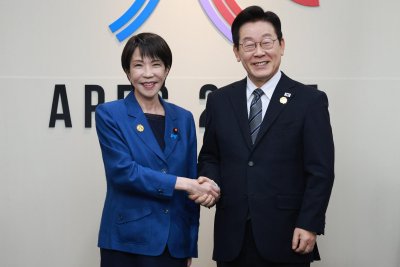
South Korean President Lee Jae Myung (R) shakes hands with Japanese Prime Minister Sanae Takaichi ahead of their talks in Gyeongju, North Gyeongsang Province, southeastern South Korea, 30 October 2025. Photo by YONHAP / EPA
Jan. 9 (Asia Today) — South Korean President Lee Jae-myung will visit Japan for a two-day, one-night trip starting Jan. 13, the presidential office said Thursday, with historical issues including the Chosei coal mine incident expected to be addressed alongside future-oriented cooperation.
The visit will mark the first round of Korea-Japan shuttle diplomacy this year and Lee’s second visit to Japan since taking office. It will also be his third meeting with Japanese Prime Minister Takaichi Sanae, following encounters at last year’s Asia-Pacific Economic Cooperation summit in Gyeongju and the Group of 20 summit.
According to the presidential office, Lee will arrive in Nara Prefecture, Takaichi’s hometown, on the afternoon of Jan. 13. The summit will include a closed-door meeting, an expanded session and a joint news conference, followed by a dinner between the two leaders.
The leaders are expected to discuss expanding cooperation in areas directly affecting people’s daily lives, including intellectual property protection, emerging technologies such as artificial intelligence, efforts to counter transnational crimes including fraud, social issues and people-to-people exchanges.
They also plan to explore humanitarian approaches to historical issues, including the Chosei coal mine incident, which involves the remains of Korean forced laborers from Japan’s colonial period.
Woo Sung-lak, head of the National Security Office, told reporters during a briefing at the presidential office that Seoul is seeking “new progress” on the issue, including the possibility of DNA testing on remains. He said discussions on historical matters could extend to other areas as well.
“Historical issues have always existed between South Korea and Japan,” Woo said. “Although they are rooted in the past, they remain current issues that must be managed carefully so they do not hinder future cooperation.”
Woo said the government aims to build goodwill and tangible outcomes in bilateral relations when conditions are favorable, and to use that momentum later when more difficult issues arise.
On regional security matters, Woo said summit meetings typically include discussions on surrounding regional developments and noted that similar exchanges of views took place during Lee’s recent summit with China.
On the morning of Jan. 14, Lee and Takaichi are scheduled to attend goodwill events, including a visit to Rurinsan Temple, before Lee meets with South Korean residents in Japan and returns home.
The summit has drawn attention because it will be held outside Tokyo, reflecting Lee’s stated interest in regional development. Last year, Lee met with former Japanese Prime Minister Shigeru Ishiba in Busan, focusing on revitalizing local economies and regional governments. Lee has since expressed interest in holding future summits in regional areas of Japan.
Woo said the idea of a regional summit grew out of discussions between Lee and Ishiba, adding that Nara Prefecture holds symbolic significance as both Takaichi’s hometown and a site of historical and cultural exchange between South Korea and Japan.
— Reported by Asia Today; translated by UPI
© Asia Today. Unauthorized reproduction or redistribution prohibited.