


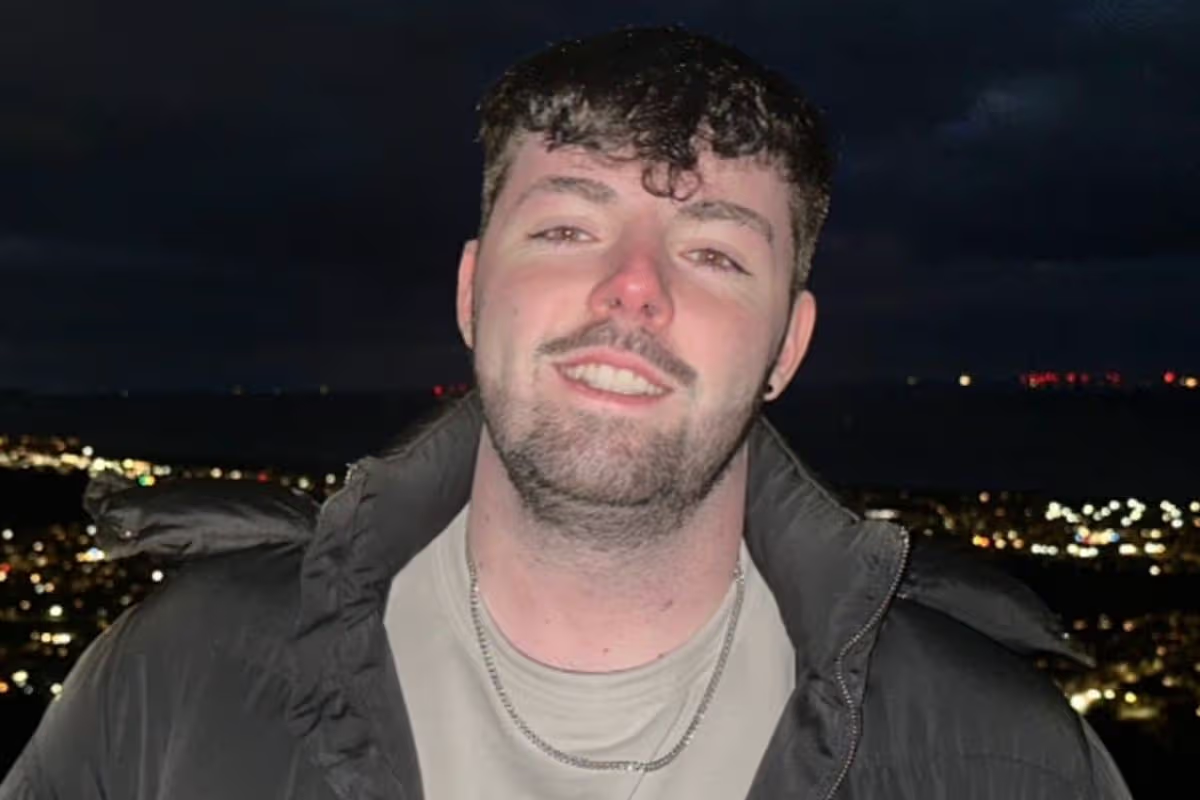
Ruben Chorlton-Owen, 24, from North Wales, visited the popular destination with his partner, Amber. He admitted he wishes he knew what it was really like before visiting the hotspot

Ruben Chorlton-Owen visited a popular holiday hotspot(Image: Ruben Chorlton-Owen)
Holidays are meant to be one of life’s greatest pleasures, but sometimes the reality can be vastly different from expectations, with certain mishaps leaving travellers utterly floored. Ruben Chorlton-Owen, 24, recently jetted off to a sought-after travel destination hoping to bask in the sunshine and escape the daily grind.
Unfortunately, things didn’t pan out quite as smoothly as he’d anticipated, with several surprises along the way, and one particular episode left him genuinely shocked. Despite the country’s growing reputation as a trending holiday hotspot, he insists there are important warnings potential visitors should heed before booking their trip, describing the travel advice as absolutely essential.
Ruben, hailing from North Wales, recently recounted his experiences in detail. He’s far from the first traveller whose holiday has taken an unexpected turn either.
He explained: “I paid £170 each for a sunrise hot air balloon ride while in Morocco, and there’s one thing they don’t really tell you beforehand. The flight itself was smooth and the views were incredible, but the landing was something else entirely.
“The basket slammed into the ground three times before tipping over. A woman next to me hit her head, my partner did too, and I hurt my back slightly, although thankfully we were all ok.
“Afterwards, I found out that this type of hard landing can sometimes be considered ‘normal’, depending on wind conditions, but that’s not something clearly spelled out to tourists before they go up. In the air, it feels calm and controlled, so the impact comes as a real shock.”
However, this wasn’t the sole disappointment during his trip, as he revealed he encountered several other “issues” whilst there. The travel enthusiast warns that visitors really need to exercise caution when travelling to the destination.
“Seemingly friendly people approach tourists offering to ‘guide’ them near the markets ‘souk’ before demanding a lot of money,” he explained. “I fell for this myself.
“[There were] suggestions to use illegal taxi apps involving drivers who are not licensed nor vetted, and strict Moroccan currency rules which mean you can’t get dirhams in the UK before you travel, and to exchange back you must keep bank receipts etc. A lot have been caught out on this.”
For those unfamiliar with the country, Morocco is an incredibly popular African holiday destination. It attracted more than 17.4 million international tourists in 2024 alone, according to reports.
The North African nation is renowned for its easy accessibility from Europe, rich culture, varied landscapes and budget-friendly, genuine experiences. Popular destinations include locations such as Marrakech and Chefchaouen.
This may explain why Ruben was eager to visit. He travelled with his partner, Amber, earlier this month, and it was actually her suggestion to go.
Their expectations of the trip were vastly different. Nevertheless, he maintained they had an enjoyable time, though he believes travellers need to remain vigilant when visiting.
When questioned about why he chose Morocco, Ruben revealed: “It was my partner’s idea, but something I’ve always wanted to do on my bucket list too. A lot of people do it (the balloon ride) unless they’re afraid of heights.
“I wouldn’t say Morocco itself is a holiday from hell, but there are a few things people should be cautious about. It’s quite up and coming, and I think more people are starting to go there.
“Morocco is somewhere I would go back to. It’s not that Morocco is necessarily a bad place. We stayed at a hotel near the beach and all the staff were really friendly, really helpful and couldn’t do enough.
“People just need to stay safe on holiday. There are a few things you should be cautious about.”
Regarding the balloon rides, however, it’s reported they frequently involve bumpy landings. Hard landings (referred to as a “British landing” or a controlled drag) are considered normal and commonplace for hot air balloons in Morocco, particularly when wind speeds are elevated or when touching down on uneven, desert terrain.
Although they are often characterised as “crash” or bumpy landings, they can be fairly routine. It’s regarded as a safe and anticipated procedure to bring the balloon to a halt.
Ensure our latest headlines always appear at the top of your Google Search by making us a Preferred Source. Click here to activate or add us as your Preferred Source in your Google search settings.