Judge dismisses human smuggling charges against Kilmar Abrego Garcia, who was mistakenly deported
NASHVILLE — A federal judge on Friday dismissed a human smuggling case against Kilmar Abrego Garcia, finding that the Justice Department’s pursuit of criminal charges was designed to punish him for challenging his mistaken deportation to El Salvador last year.
The ruling amounted to an extraordinary rebuke of a Justice Department that under President Trump has repeatedly been accused of targeting defendants for political purposes. The Trump administration touted the charges against Abrego Garcia last year at a press conference in which then-Atty. Gen. Pam Bondi declared, “This is what American justice looks like.”
“The evidence before this court sadly reflects an abuse of prosecuting power,” U.S. District Judge Waverly Crenshaw, in Nashville, said in his ruling granting Abrego Garcia’s motion to dismiss for “selective or vindictive prosecution.” Without Abrego Garcia’s “successful lawsuit challenging his removal to El Salvador, the government would not have brought this prosecution.”
Abrego Garcia’s deportation became an embarrassment for Trump officials when they were ordered to return him to the U.S. In his motion to dismiss, Abrego Garcia claimed that the timing of the criminal charges and inflammatory statements about him by top Trump officials demonstrated that the prosecution was vindictive.
“Kilmar Abrego Garcia is a victim of a politicized, vindictive White House and its lawyers at what used to be an independent Justice Department,” his criminal defense attorneys said in a statement after Friday’s ruling. “We are so pleased that he is a free man.”
The Justice Department vowed to appeal, calling the judge’s order “wrong and dangerous.”
Crenshaw stopped short of finding the government acted with “actual vindictiveness,” a rarely met standard that usually requires evidence like a prosecutor admitting that charges were filed in retaliation against someone. But the judge did find there was enough evidence of “presumptive vindictiveness” — including the timing of the indictment, statements made by then-U.S. Deputy Aty. Gen. Todd Blanche, and the sustained oversight of the case by other top Justice Department officials — that the case against Abrego Garcia was thoroughly tainted.
The government’s own explanations weren’t convincing, Crenshaw wrote.
Abrego Garcia was charged with human smuggling and conspiracy to commit human smuggling, with prosecutors claiming that he accepted money to transport within the United States people who were in the country illegally.
The charges stem from a 2022 traffic stop in Tennessee for speeding. Body camera footage from a Tennessee Highway Patrol officer shows a calm exchange with Abrego Garcia. There were nine passengers in the car, and the officers discussed among themselves their suspicions of smuggling. However, Abrego Garcia was eventually allowed to continue driving with only a warning.
In the Friday ruling, Crenshaw wrote that the timing of the charges was central to the presumption of vindictiveness. Homeland Security had been aware of the traffic stop for two years and had closed the case against Abrego Garcia when it deported him. Once the U.S. Supreme Court ruled that he should be brought back to the U.S., they reopened the case. While the government bore the responsibility to rebut the presumption of vindictiveness, prosecutors did not call as a witness the person who reopened the case, to explain why. Instead they offered only “secondhand testimony.”
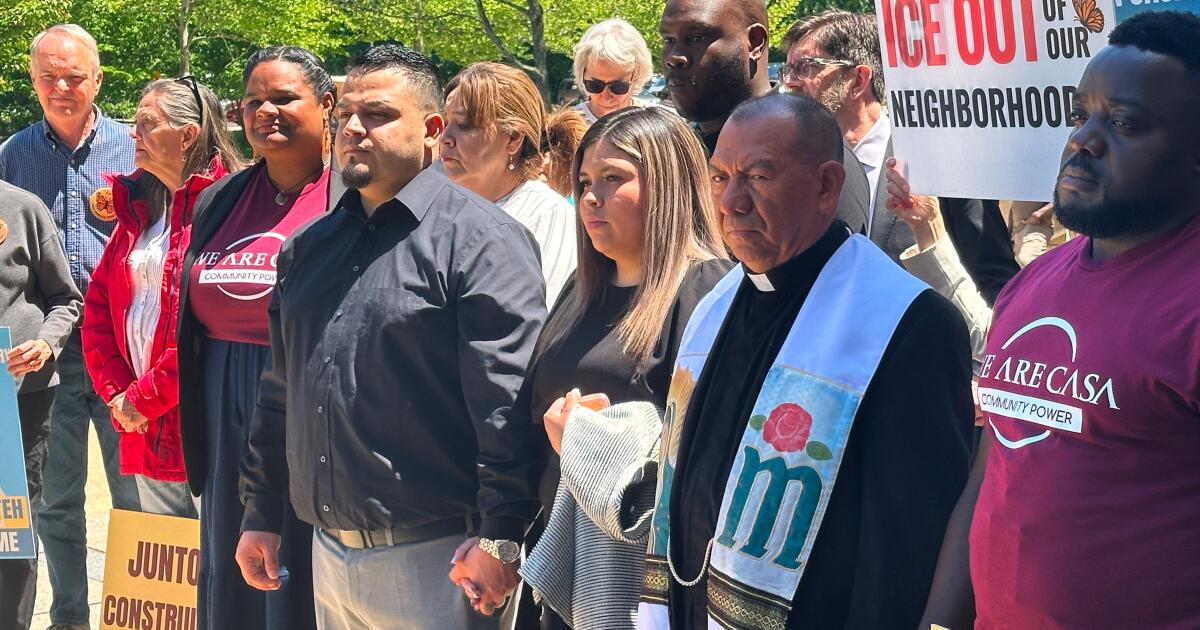
In a statement released by the group We are CASA, which has been supporting Abrego Garcia and his family, he thanked God for the dismissal of the criminal charges.
“Justice is a big word and an even bigger promise to fulfill; and I am grateful that today, justice has taken a step forward,” he said.
Abrego Garcia’s deportation violated a 2019 immigration court order granting him protection from deportation to his home country, after the judge found he faced danger there from a gang that targeted his family. Abrego Garcia is a Salvadoran citizen with an American wife and child who has lived in Maryland for years although he immigrated to the U.S. illegally as a teenager. The 2019 order allowed him to live and work in the U.S. under Immigration and Customs Enforcement supervision, but he was not given residency status.
Meanwhile, Trump administration officials have said Abrego Garcia cannot remain in the U.S. They have vowed to deport him to a third country, most recently Liberia.
Loller writes for the Associated Press.
