ken calvert

Coachella Valley Republicans fear alienation after Tuesday election

Joy Miedecke, who runs the largest Republican club in the Coachella Valley, handed out scores of “No on Prop. 50” lawn signs before election day.

But Tuesday morning, she knew the ballot measure would pass.

Proposition 50, Gov. Gavin Newsom’s plan to challenge President Trump, easily prevailed last week. The ballot measure, created to level the playing field with Republican gerrymandering efforts in Texas and other GOP states, reconfigured California congressional districts to favor Democrats as they try to take back the U.S. House of Representatives in next year’s midterms.

As a consequence, Coachella Valley’s Republicans could soon be represented by anti-Trump Democrats in Washington.

California Republicans, far outnumbered by those on the left, for years have felt ignored in a state where Democrats reign, and the passage of Proposition 50 only adds to the sense of political hopelessness.

“The Democrats get their way because we don’t have enough people,” said Miedecke, of her party’s struggles in California.

Bordered by the San Jacinto and Santa Rosa mountains, the desert basin has long been a magnet for conservative retirees and vacationers, including former Republican presidents.
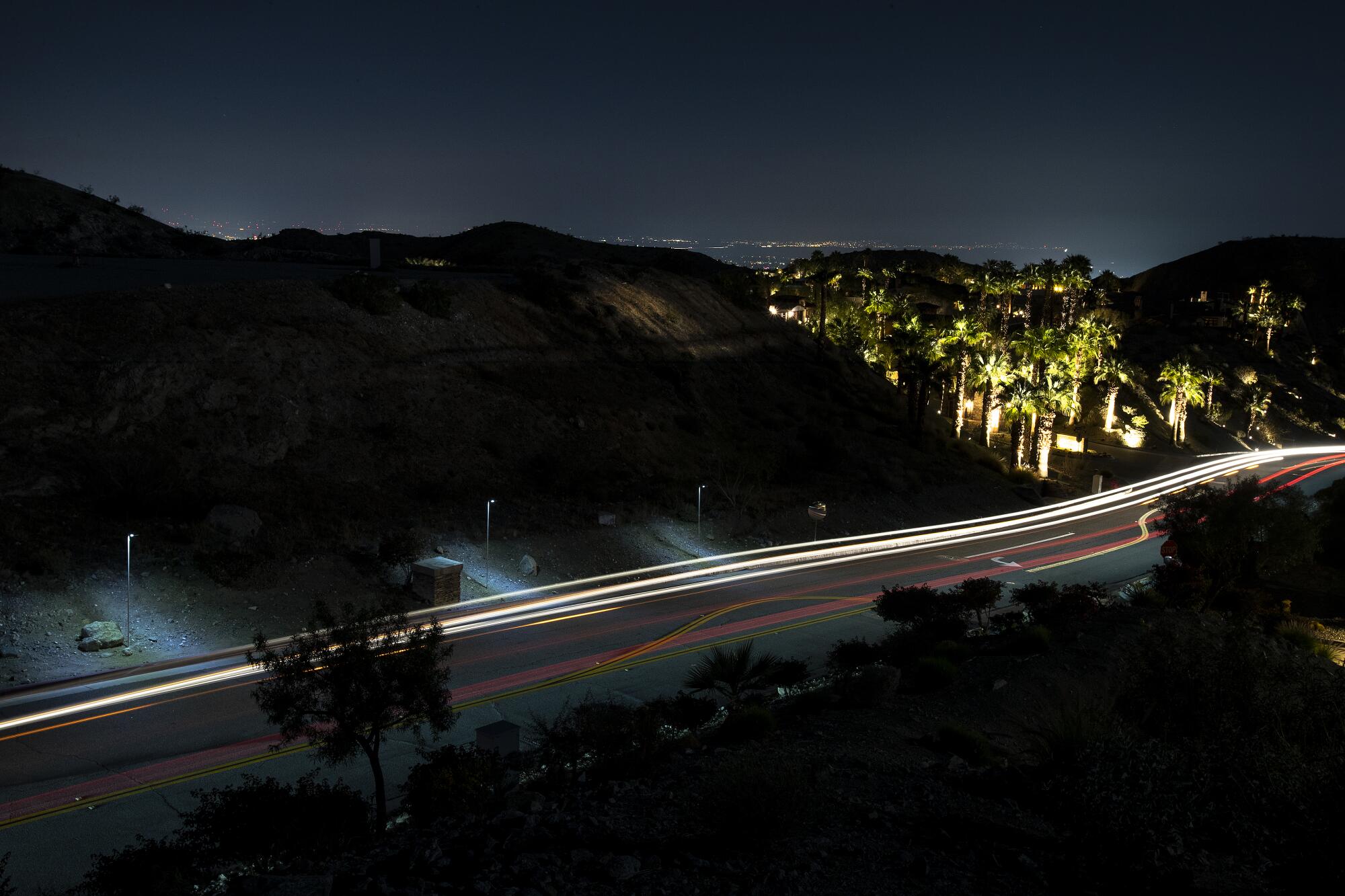
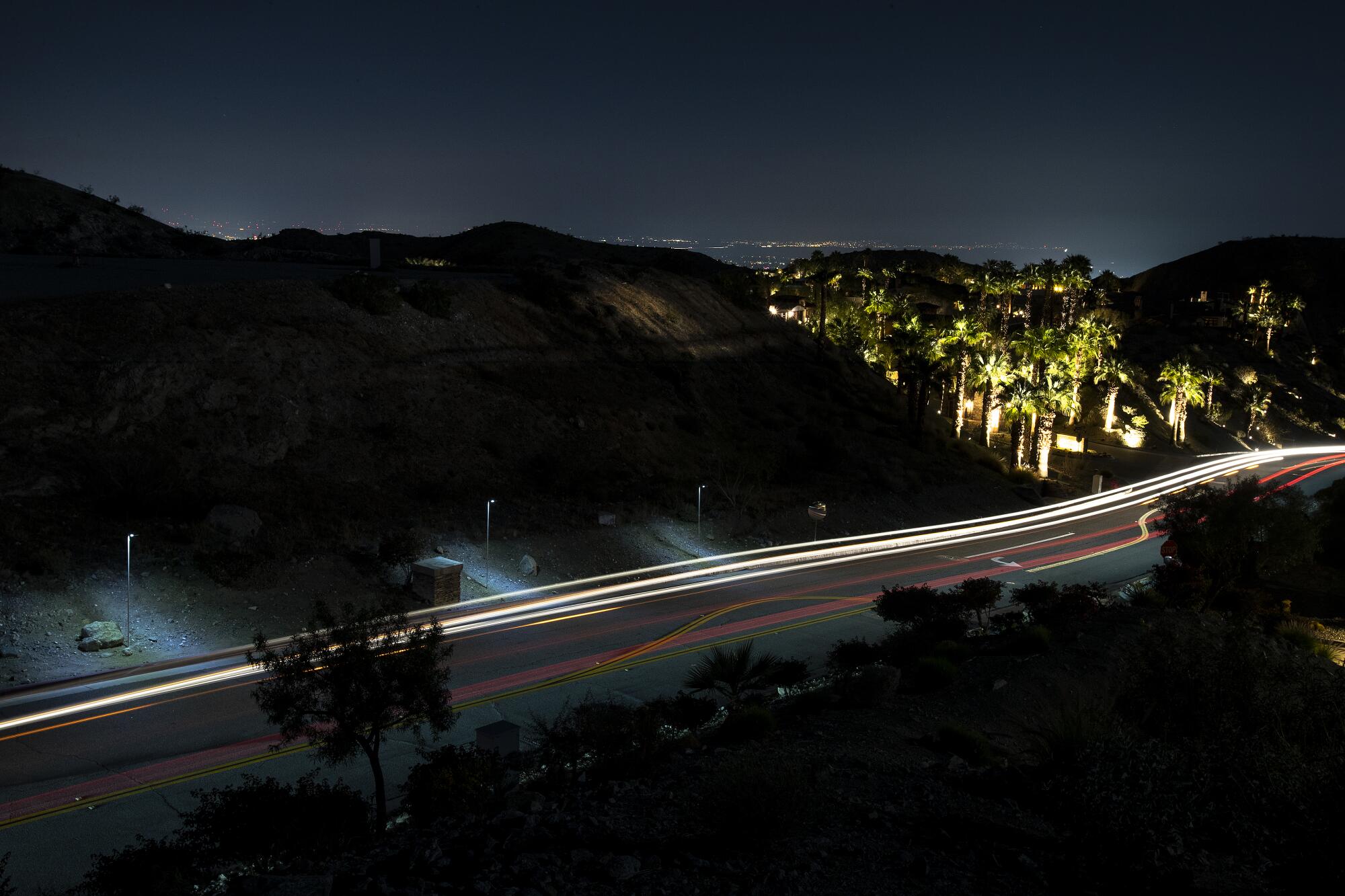
A cluster of palm trees light the evening landscape

A cluster of palm trees light the evening landscape on Frank Sinatra Drive in Rancho Mirage.

(Gina Ferazzi/Los Angeles Times)

The local hospital is named after President Eisenhower. President Ford enjoyed the many emerald golf courses in his later years and his wife, former first lady Betty Ford, founded her namesake addiction treatment center in the desert valley.

Voters in Indian Wells, parts of La Quinta and Cahuilla Hills backed Trump in the 2024 presidential election. Under Prop. 50, some or all of those areas will move to a congressional district led by Democrat Raul Ruiz, an emergency room physician raised in the Coachella Valley, or join with left-leaning San Diego County suburbs in a new meandering district specifically crafted to favor Democratic candidates.
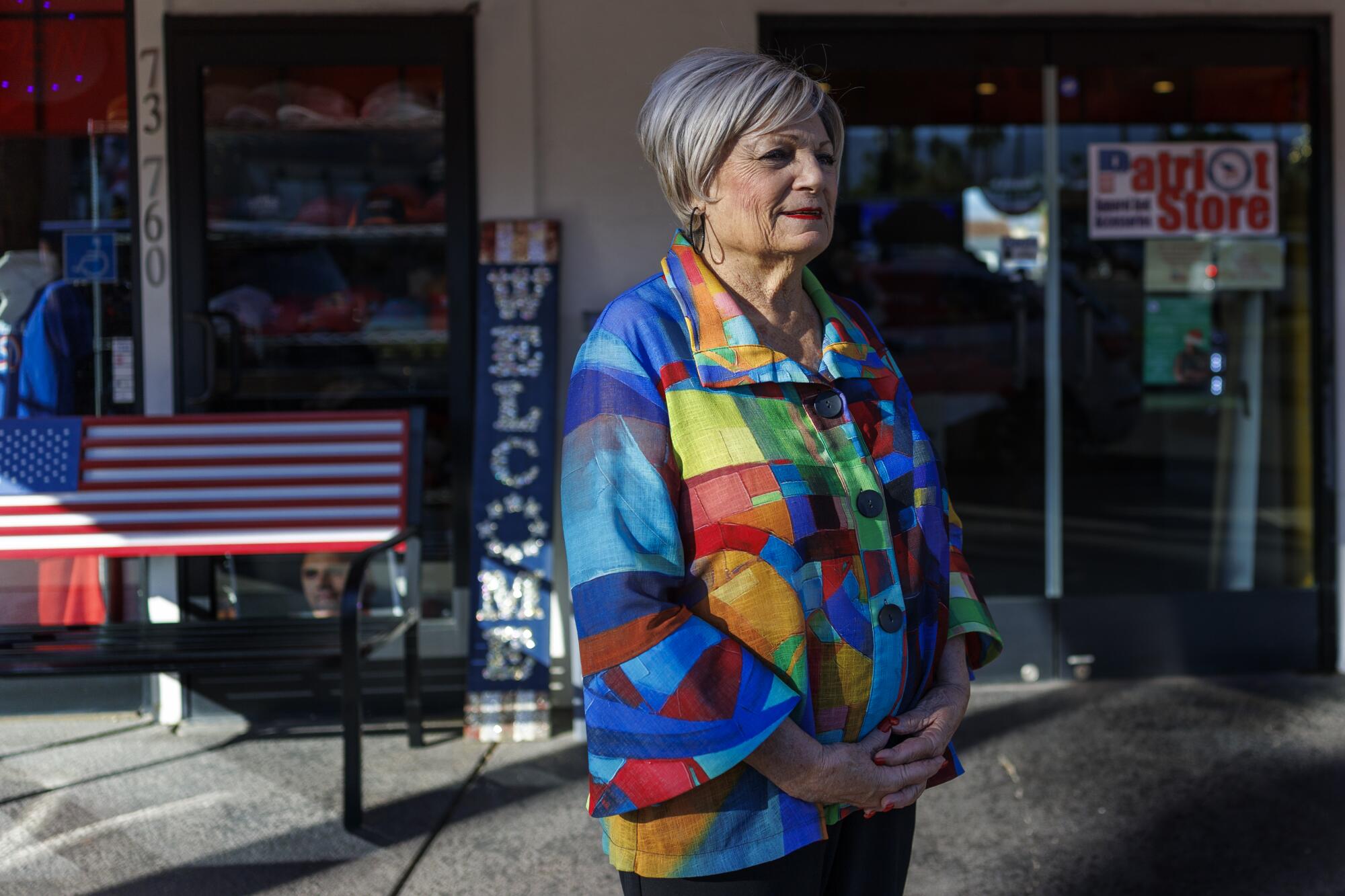
A woman in a multicolored top stands in an office.

Joy Miedecke of Indio is president of the East Valley Republican Women Patriots. She blames the California GOP for failing to adequately fund opposition to Proposition 50.

“The party is at the bottom,” said Miedecke, 80. “It’s at the very bottom. We have nowhere to go but up.”

Sitting in her club’s retail store on Wednesday, Miedecke blamed the California Republican Party and its allies, saying they failed to raise enough money to blunt Prop. 50’s anti-Trump message.

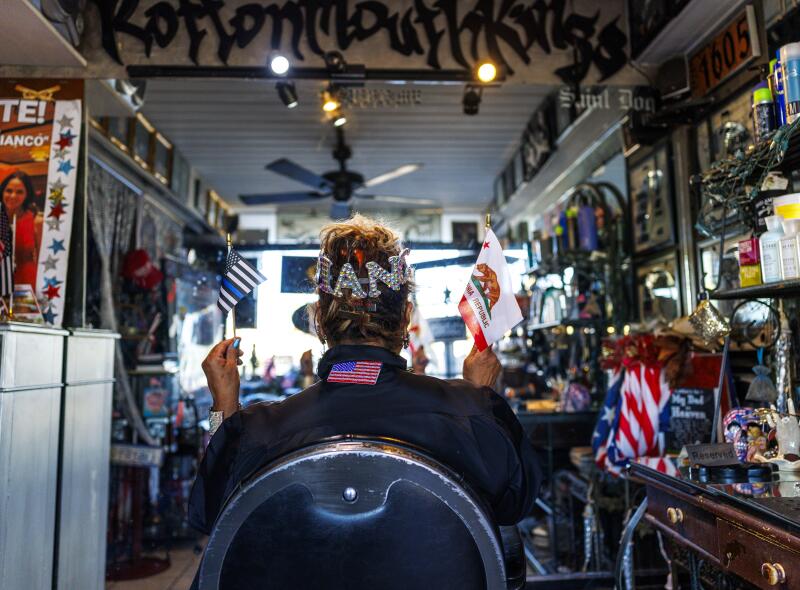
A life-sized cardboard cutout of California Republican gubernatorial candidate and Riverside County Sheriff Chad Bianco stood near stacks of red MAGA hats and “Alligator Alcatraz” T-shirts. A President Reagan cardboard cutout also greeted visitors.

Volunteer Chris Mahr checks signatures on petitions

Volunteer Chris Mahr checks signatures on petitions at the East Valley Republican Women Patriots on Nov. 6 in Palm Desert. Republicans fear Proposition 50’s passage will weaken representation in the Coachella Valley.

Republican voters in the Coachella Valley spent the days after the Nov. 4 special election criticizing the Republican Party and California’s Democratic leadership. In Facebook chat groups, in bars and on neighborhood walks, locals weighed in on the new congressional district lines and the proxy battle between Trump and Newsom.

On Wednesday, gleaming Lincoln Navigators and Cadillac Escalades cruised down a main drag, past tidy green lawns before disappearing into residential communities hidden behind sand-colored gates.

Kay Hillery, 89, who lives in an Indian Wells neighborhood known for its architecturally significant Midcentury Modern homes, is bracing for more bad news.

She anticipates that GOP congressional candidates will have a harder time raising money because the new districts marginalize Republicans.

“I am ashamed of the Republicans for not getting out the vote,” said Hillery, who moved to the desert from Arcadia in 1989.


1

A ceramic figurine of Trump is on display at the East Valley Republican Women Patriots store in Palm Desert.

2

A Trump key chain dangles on top of a large God Bless America button which hangs next to a hair dryer and a Bible

3

Inside the "Just Marylou" hair salon is decorated in Republican posters and slogans.

1. A ceramic figurine of Trump is on display at the East Valley Republican Women Patriots store in Palm Desert. 2. A Trump key chain dangles on top of a large God Bless America button which hangs next to a hair dryer and a Bible inside “Just Marylou” hair salon. 3. Inside the “Just Marylou” hair salon is decorated in Republican posters and slogans.

Voters who backed Prop. 50, however, were reenergized.

“It’s important to take a position when we need to, and we needed to take a position as a state,” said Linda Blank, president of the Indian Wells Preservation Foundation.

Indian Wells is best known for its premiere tennis tournament, top-level golf courses and palm tree-lined roadways. Eisenhower, who lived in Indian Wells part time, is memorialized with a statue outside City Hall.

The heavily Republican city for years hosted the state’s Republican Party convention and donor retreats organized by right-wing libertarians David and Charles Koch. (David Koch died in 2019.)

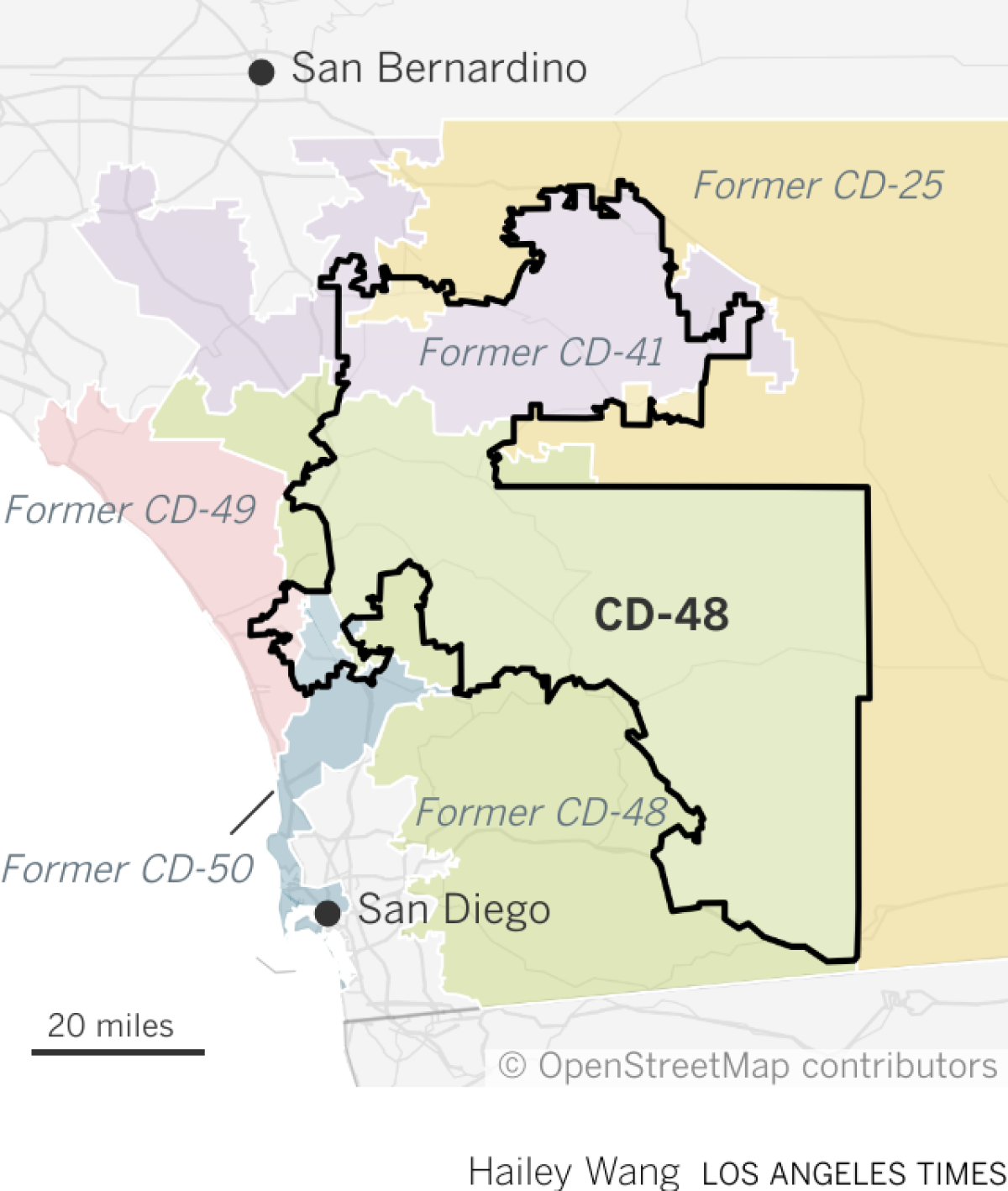
Following Tuesday’s election, Indian Wells will lose its Republican representative, Ken Calvert, and become part of the newly drawn district that reaches into San Diego County.

That area is represented by Rep. Darrell Issa (R-Bonsall), but Democrats are trying to oust him by extending his district into bluer neighborhoods.
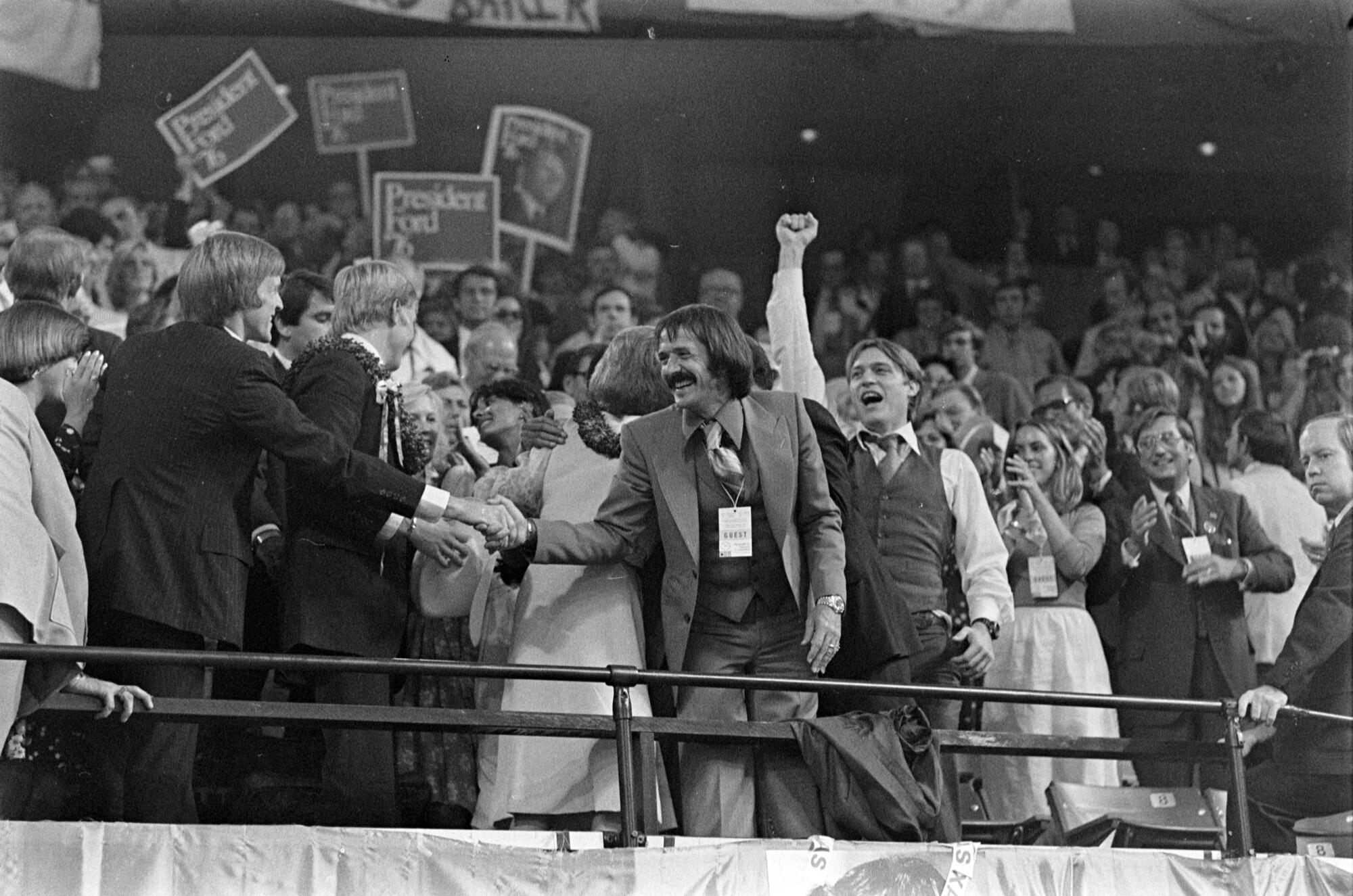
a black and white photo of the 1976 Republican National Convention

Michael Ford, left, Sonny Bono, center, and John Gardner Ford, right of Bono, attend the third day of the 1976 Republican National Convention at Kemper Arena in Kansas City, Mo.

(Guy DeLort/Penske Media via Getty Images)

A major portion of the Riverside County desert region once was represented by Rep. Sonny Bono, the singer, who was a Republican. After he was killed in a ski accident in 1998, his wife, Mary Bono, also a Republican, ran for his seat and served in Congress until 2013.

The Coachella Valley is now a political patchwork, home also to the Democratic havens of Palm Springs and Cathedral City and divided towns of Rancho Mirage and Palm Desert.

Today, the region is split into congressional districts held by Calvert, a Republican who lives in far-off Corona, and Democrat Ruiz.

Calvert announced last week that he’ll run in a new district in Orange and Riverside counties. The good news for Calvert is that it’s a heavily Republican district. The bad news is Republican Rep. Young Kim of Anaheim Hills is also running in that district.

Calvert, in an emailed statement, blamed Newsom for disenfranchising Republicans throughout California — who account for 5.7 million of the 22.9 million voters in the state.

“Conservatives deserve to have their voices heard, not be drowned out by partisan moves to advance a one-sided political agenda,” said Calvert. His office didn’t respond when asked about the congressman’s views on Texas’ redistricting actions.

Indian Wells Mayor Bruce Whitman said Calvert was instrumental in directing millions of dollars to a wash project that will help development.
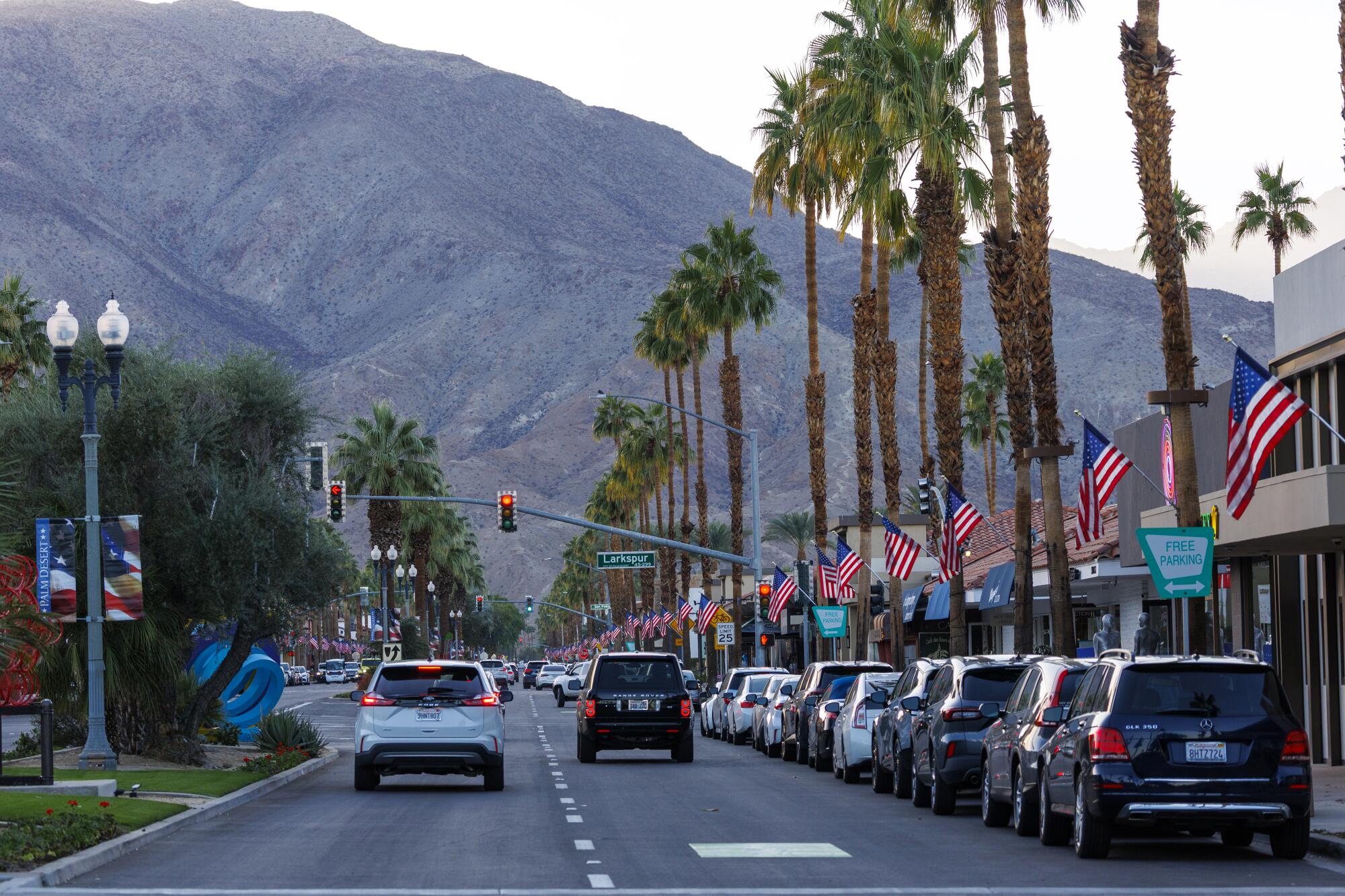
American flags adorn El Paseo Shopping District

U.S. flags adorn El Paseo Shopping District on Nov. 6 in Palm Desert.

In nearby liberal Palm Springs, city leaders passed a resolution supporting immigrants and celebrated an all-LGBTQ+ city council in 2017.

Indian Wells’ political leadership remains apolitical, Whitman said.

“National issues like sanctuary city resolutions, or resolutions supporting Israel or Palestinians — it’s just not our thing,” he said.

At the Nest bar in Indian Wells, tourists from Canada and Oregon on Wednesday night mingled with silver-haired locals.

As Michael Jackson’s “Billie Jean” played, 60-something resident John — who declined to give his last name— predicted the redistricting wars would end as a “wash” between California and Texas.

“It’s just a game,” he said, sounding dismissive.
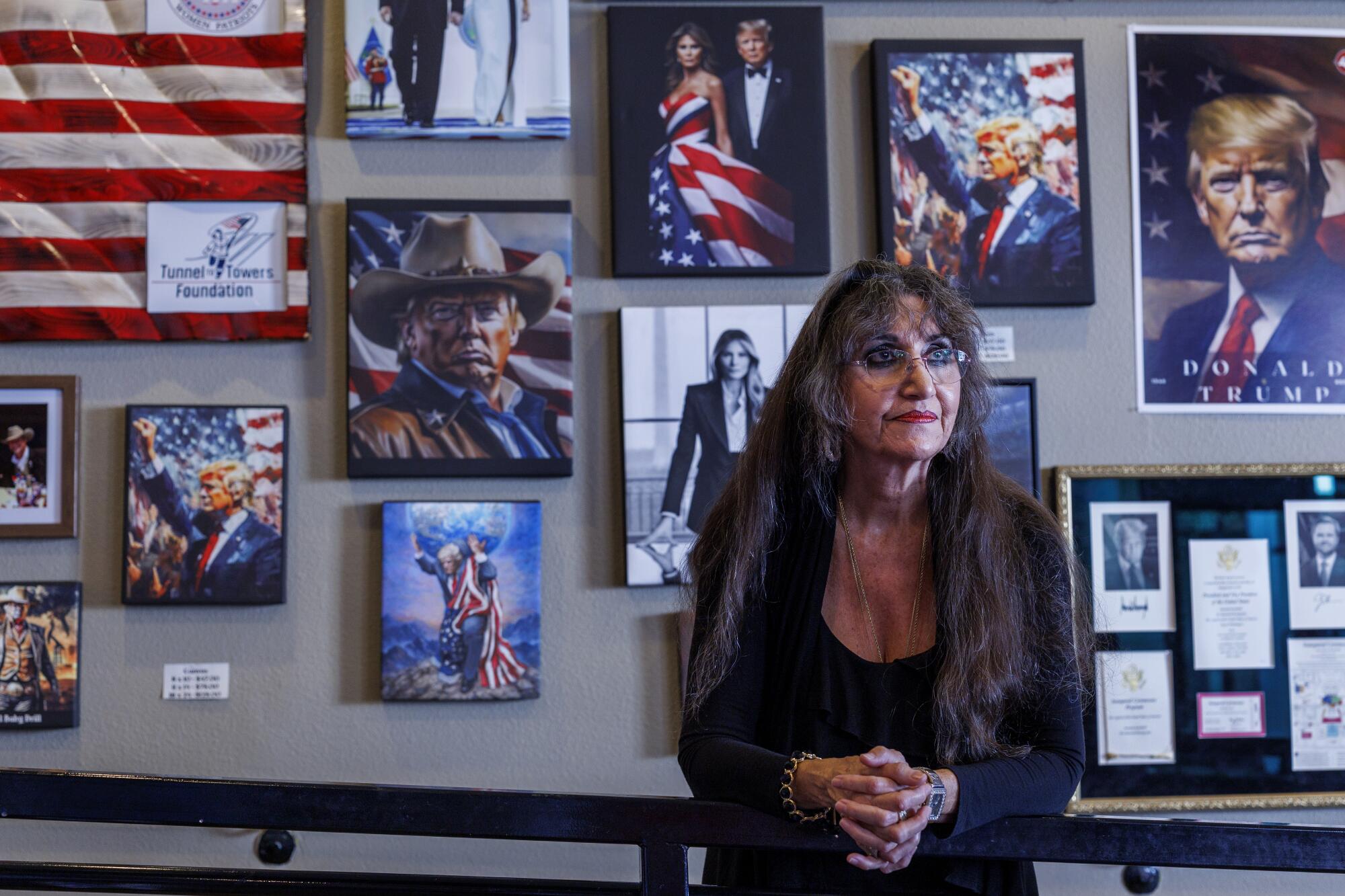
a woman stands in front of a wall covered with Trump photographs and paintings

Sandra Schulz of Palm Desert, executive vice president of the East Valley Republican Women Patriots, stands in front of a wall covered with Trump photographs and paintings on Nov. 6 in Palm Desert.

Dan Schnur, who teaches political communications at USC and UC Berkeley, sees another outcome. Taking away congressional representation from the party’s last remaining conservative bastions leaves the party even less relevant, he said.

The California Republican Party hasn’t done meaningful statewide work since then-Gov. Arnold Schwarzenegger left office, Schnur said.

“They decided many years ago that they just weren’t going to engage seriously in state politics anymore,” said Schnur. “If you’re a California Republican, you focus on national politics and you work on local races.”
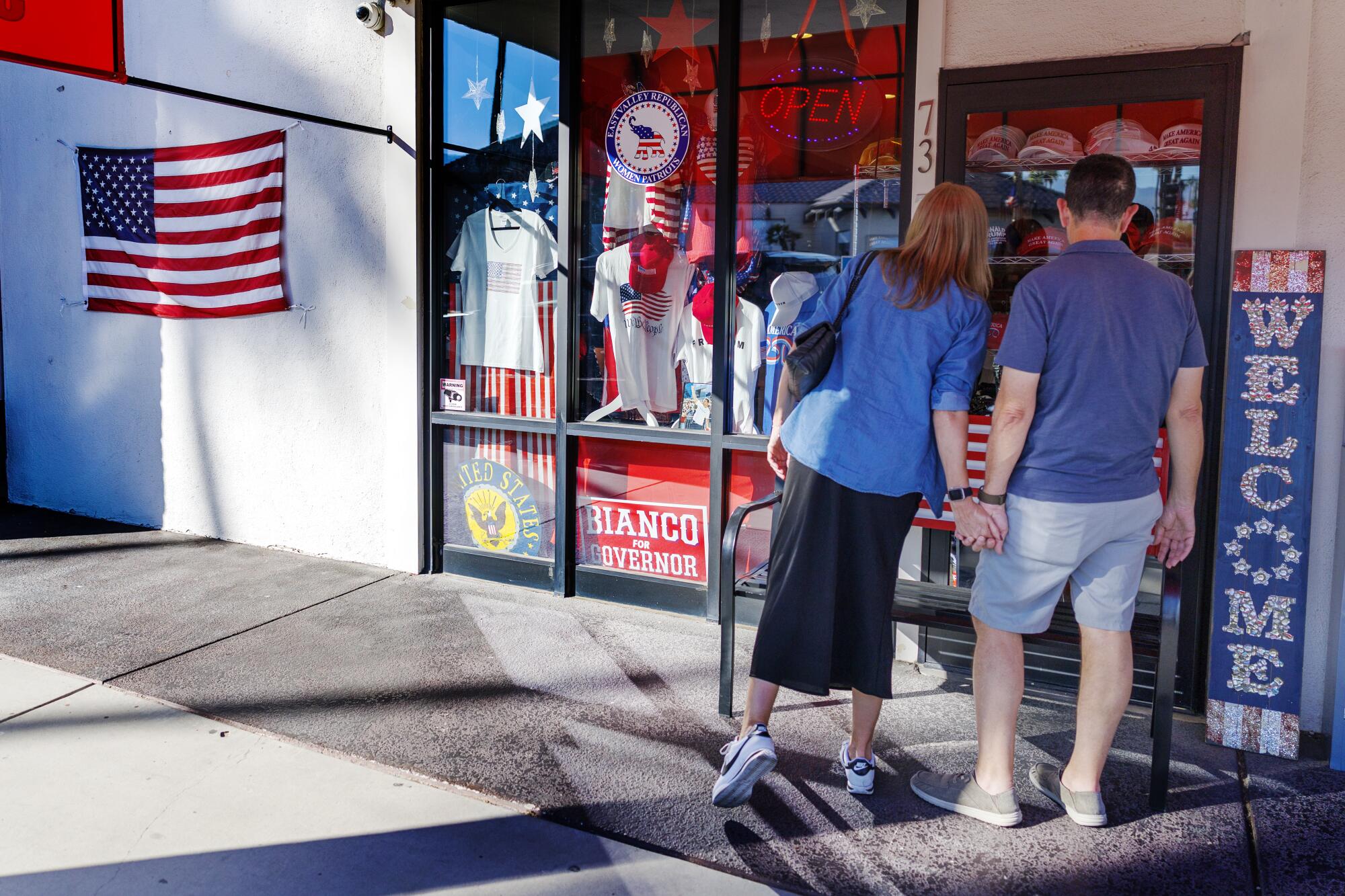
Tourists look at the Republican items in the store window

Tourists look at the Republican items in the store window at the East Valley Republican Women Patriots store on Nov. 6 in Palm Desert.

In 2007, then-Gov. Schwarzenegger spoke at a GOP state party convention in Indian Wells and warned his fellow Republicans that they needed to pivot to the political center and attract more moderates.

Schwarzenegger drew a parallel to the film industry, telling the convention crowd: “We are dying at the box office. We are not filling the seats.”

The former governor opposed Prop. 50, but limited his involvement with Republicans in the campaign to defeat the measure.

Indian Wells resident Peter Rammer, 69, a retired tech executive, described himself as a Republican who didn’t always vote along party lines. He is increasingly frustrated with Democrats’ handling of homelessness in California.

He voted against Prop. 50, but predicted the Democratic wins in New Jersey and Virginia would force the Republican Party to pay more attention to regional issues.

“I’m just not happy with how everything is going on the country right now,” said Rammer, standing outside Indian Wells City Hall. “There’s just so much turmoil, it’s crazy. But Trump — the guy I voted for — causes a lot of it.”
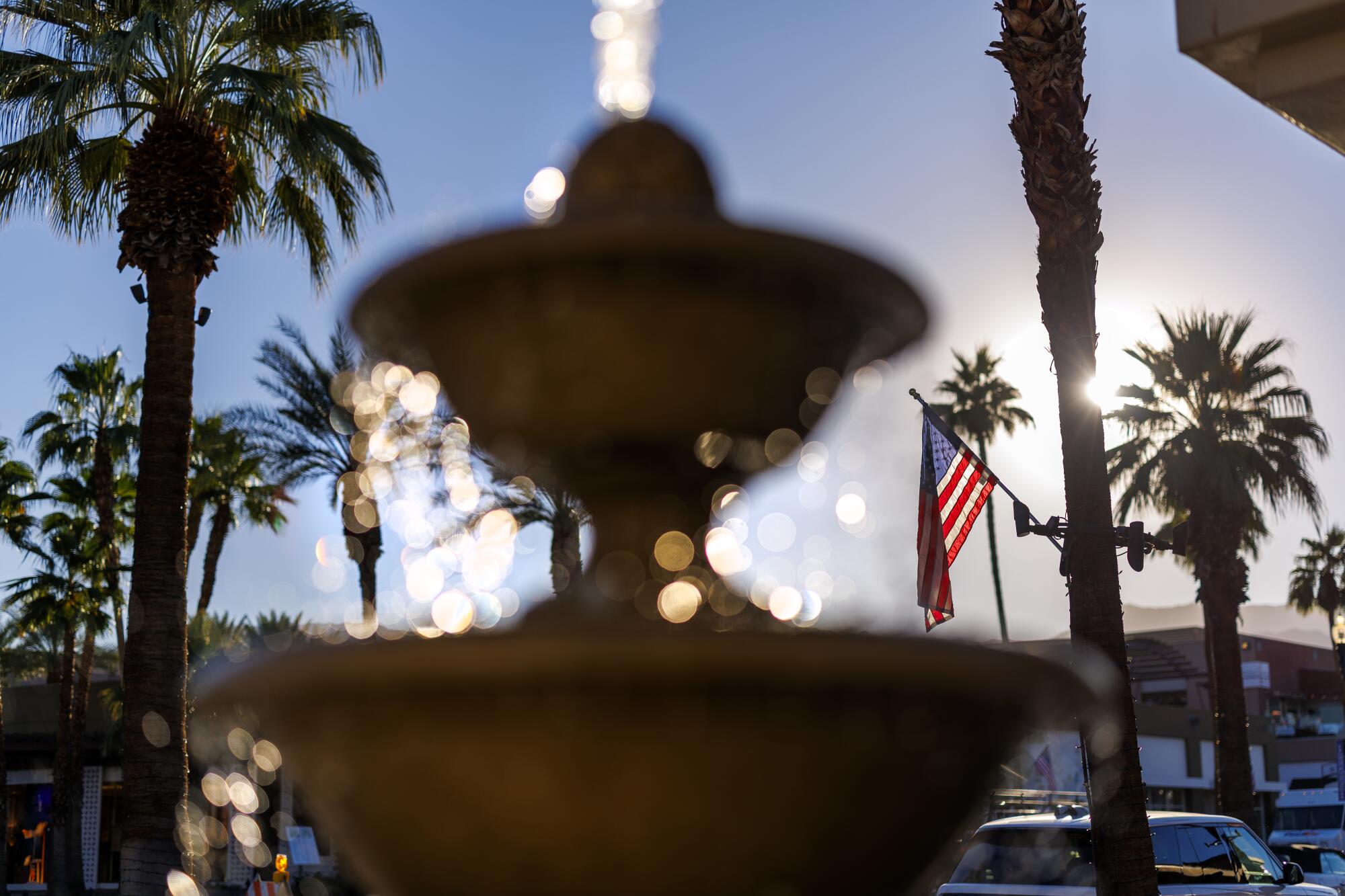
American flags adorn El Paseo Shopping District

American flags adorn El Paseo Shopping District in staunchly Republican Palm Desert.

Back in Palm Desert, Republican club president Miedecke was focused on the next campaign: Getting the word out about a ballot measure by Assemblymember Carl DeMaio (R-San Diego).

It would require voter ID and proof of citizenship in California elections — another polarizing issue.
Source link

Will these six California GOP House members survive new districts?

California Republicans in Congress are vastly outnumbered by their Democratic counterparts in the state — and it may get worse.

Five of the nine GOP seats are at risk after California voters passed Proposition 50 in Tuesday’s special election. The measure, put on the ballot by the Democratic-led state Legislature, reshaped California congressional districts in a way that was specifically designed to unseat Republican incumbents.

The new maps target areas held by Reps. Kevin Kiley and Doug LaMalfa in Northern California, Rep. David Valadao in the Central Valley, and Reps. Ken Calvert, Young Kim and Darrell Issa in Southern California. The radical reconfiguration not only put Republicans in danger, but probably protects vulnerable Democratic officeholders by adding more voters from their own party into their reconfigured districts.

Already, California’s Republican members hold just nine seats in the U.S. House of Representatives, while Democrats have 43.

Proposition 50’s passage also sets off an intraparty fight for a newly created Republican seat in Riverside and Orange counties, which will pit two GOP incumbents against one another — Calvert of Corona and Kim of Anaheim Hills — knocking one of them out of office. Calvert and Kim on Wednesday announced they planned to run for that seat.

“With the passage of Prop. 50, Californians were sold a bill of goods, allowing [Gov.] Gavin Newsom and his radical allies in Sacramento an unprecedented power grab to redraw the Congressional map and silence those who disagree with his extreme policies,” Calvert said in a statement.

Newsom and other Democratic leaders argue that redistricting, which normally happens once a decade by an independent commission, was necessary after GOP leaders in Texas redrew their own congressional districts — at the request of President Trump — in a bid to add more seats for their party and retain Republican control of the House.

The passage of Proposition 50 will boost Democratic efforts to win control of the House after the 2026 election, a victory that likely would stifle parts of Trump’s agenda and open the president and his administration to a litany of congressional investigations.

Proposition 50 is expected to exacerbate the political isolation that millions of Republicans in California already feel, especially in the state’s vast northern and inland territories, and conservative suburban enclaves.

Trump won 38% of the presidential vote in California last year. About a quarter of the state’s registered voters are Republicans. Yet, Democrats have held every statewide office since 2011, and have an iron grip on the California congressional delegation.

Some California Republicans may be left asking: “Who in Congress is representing our views and who do we turn to?” said Mark Baldassare, survey director of the nonpartisan Public Policy Institute of California.

Cook Political Report, which tracks elections, changed 11 California congressional district race ratings Tuesday, with all but one district moving in Democrats’ favor.

Political consultant Rob Stutzman remains skeptical that Democrats will win all five congressional seats targeted by Newsom in the 2026 midterm elections. Some of the GOP representatives have deep roots in the community and have survived past challenges by Democrats, Stutzman said.

Newsom and others “may have overpromised what Prop. 50 could do,” Stutzman said.

Here are the top six Republicans whose districts were changed by Proposition 50 and who may find their political future at risk.

Rep. Doug LaMalfa (R-Richvale)

In Northern California, LaMalfa appears likely to run in one of two redesigned districts: One that stretches toward Mendocino National Forest and south toward Santa Rosa, or another that runs along the Oregon border and down the coast to the San Francisco Bay Area.

His current district, which spreads across the deeply conservative northeast corner of California to the Sacramento suburbs, was carved up by Proposition 50 and replaced with three districts that favor Democrats.

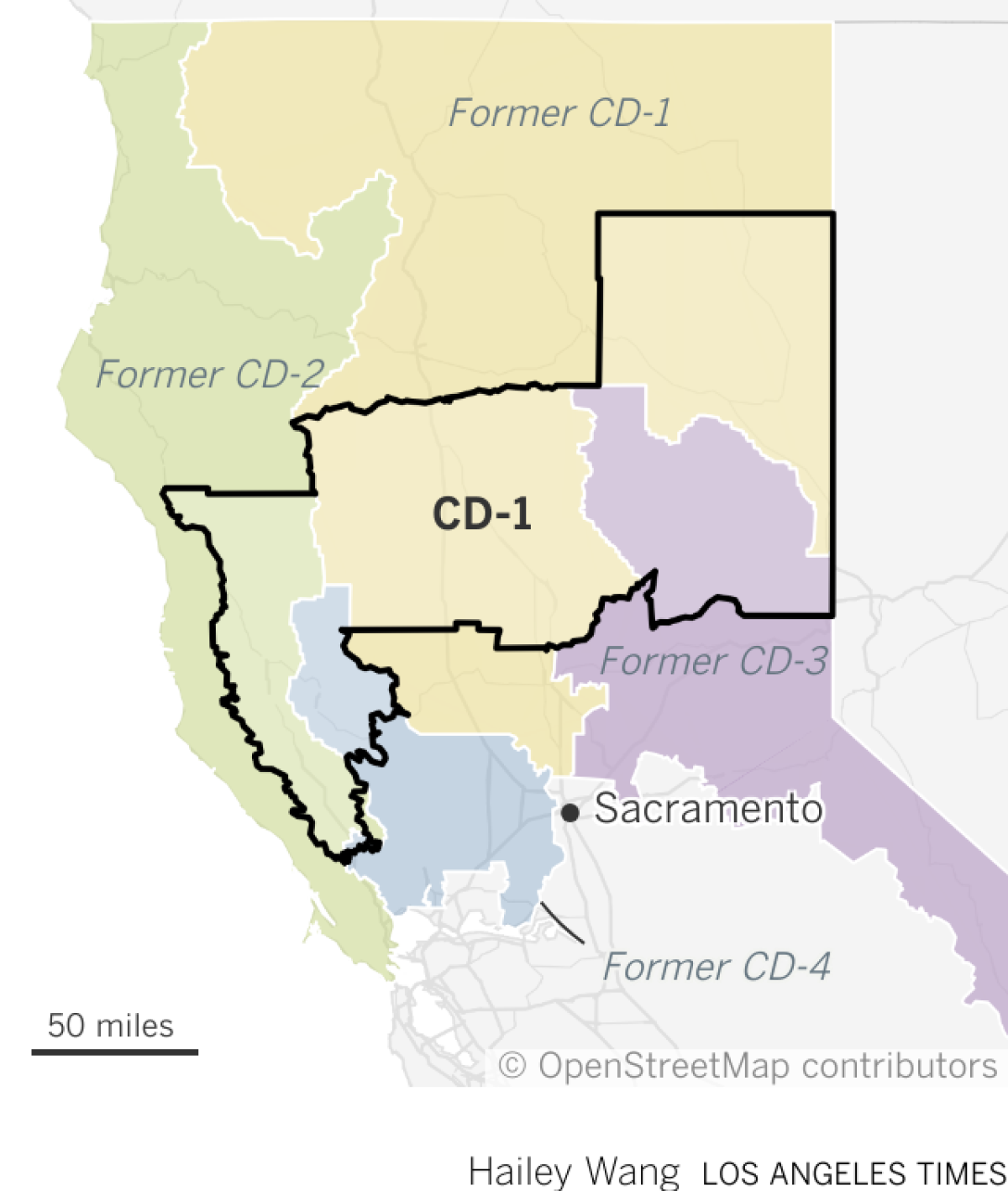
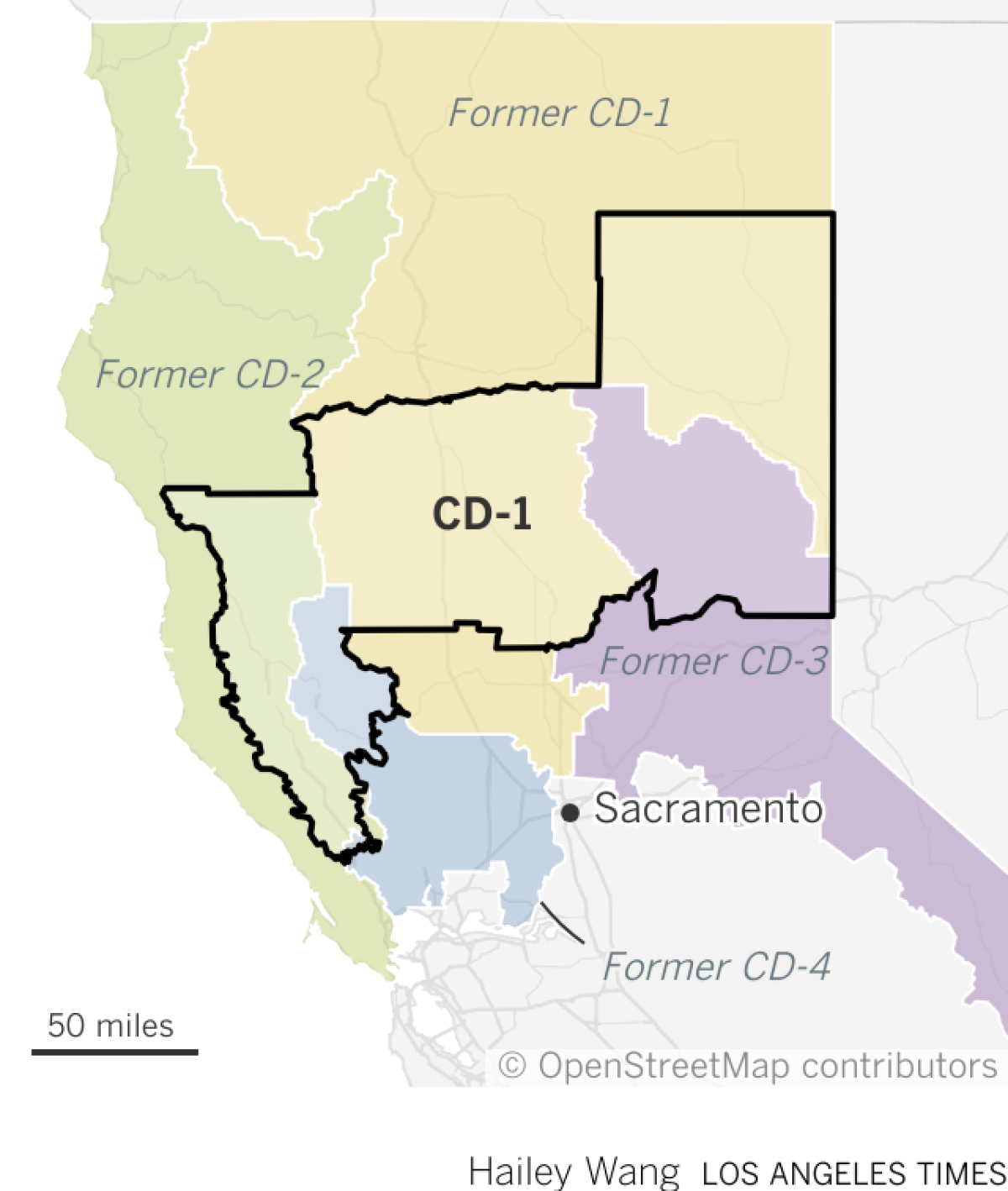
Map shows the new boundary of the first congressional district, which is located north of Sacramento and includes Chico. The district is composed of areas from former first, second, third and fourth congressional districts.

“They’re not going to kidnap my district here without a battle,” LaMalfa, 65, said Tuesday.

Democrats running for Congressional District 1’s seat — the seat that includes Mendocino National Forest — include Audrey Denney, an education director who unsuccessfully challenged LaMalfa in 2018 and 2020.

Rep. Kevin Kiley (R-Rocklin)

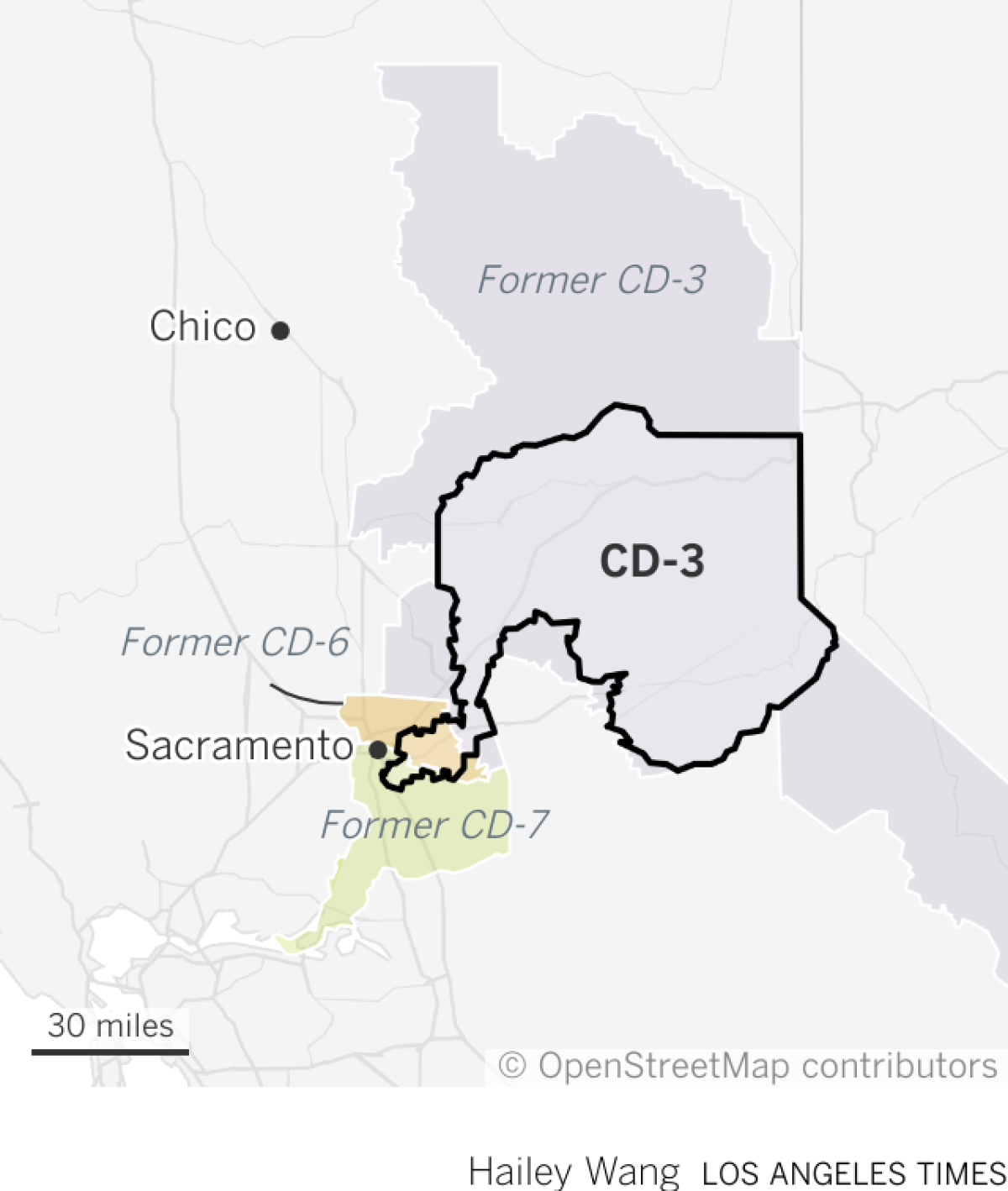
Kiley’s new district takes in neighborhoods in and around Sacramento, pulling in Democratic voters and losing former Republican communities along the Nevada border.

Map shows the new third congressional district boundary near Sacramento. The new is composed of parts of the former third, sixth and seventh districts.

He hasn’t said which district he’ll seek.

“My current district is split six different ways,” Kiley, 40, said Wednesday. “In that sense, I have a lot of options.”

On Tuesday night, he promised to “work across party lines to find a national solution to the age-old plague of gerrymandering, and in particular, to the more recent affliction of mid-decade gerrymandering.”

Rep. David Valadao (R-Hanford)

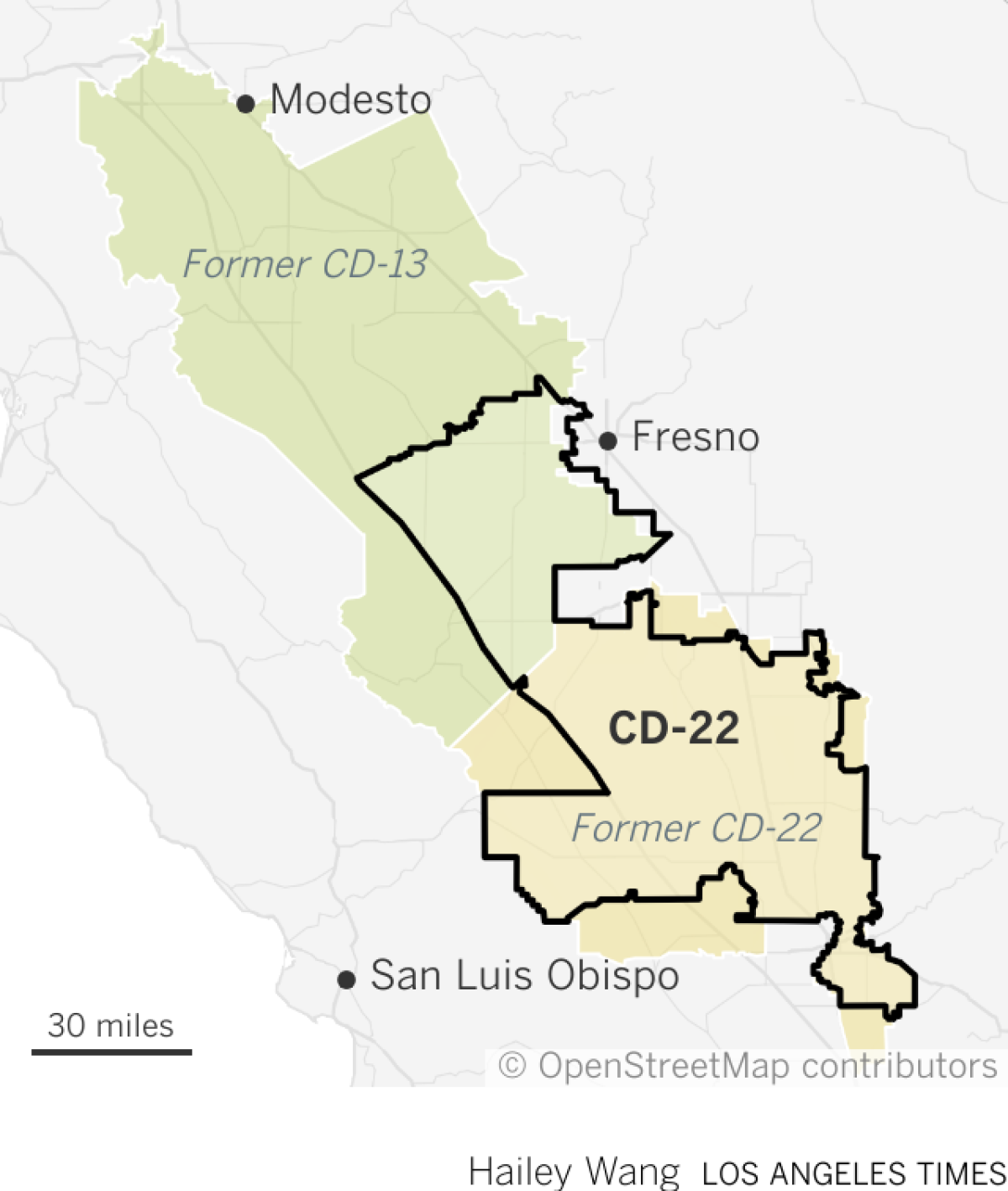
Valadao’s predominantly Latino district in the Central Valley extends north post-Proposition 50, gaining more registered Democrats.

Map shows the boundary of the new 22nd congressional district, which is located near Fresno. The new district is composed of some of the former 13th and 22nd congressional districts.

Still, more Democratic voters doesn’t necessarily translate to a Democratic victory, given the conservative attitudes in the region. A dairy farmer, Valadao, 48, has survived past challenges, in part due to poor turnout among Democrats and his popularity among moderate voters in the Central Valley.

Among those who have announced their intention to challenge Valadao is Visalia school board trustee Randy Villegas, a Democrat.

Valadao was among the few Republicans who voted to impeach President Trump following the Jan. 6, 2021, attack on the U.S. Capitol by Trump supporters, increasing his appeal to Democratic voters. But he could also be vulnerable because of his support for Trump’s “Big Beautiful Bill,” which cut medical benefits for roughly two-thirds of his constituents. The representative argued his district will get concessions for rural hospitals, water infrastructure and agricultural investments in the legislation.

A Valadao spokesperson didn’t immediately respond for a request for comment Tuesday night.

Rep. Ken Calvert (R-Corona) and Rep. Young Kim (R-Anaheim Hills)

Nearly all of Calvert’s district was moved north, and now takes in the Los Angeles County communities of Pomona, Ontario and Fontana.

However, Calvert, 72, announced he would run for the newly formed 40th Congressional District, which includes western Riverside County and eastern Orange County, including his hometown of Corona, as well as Murrieta and Mission Viejo. It’s a strongly Republican district now shared by Republican colleague Kim of Anaheim Hills.

“Californians in the newly drawn 40th District deserve a proven conservative they can trust and a fighter who has delivered results for Riverside and Orange County for decades,” Calvert said in a statement Wednesday. “No one else comes close to my record of service to the new 40th. I’ve lived here my entire life and already represent the majority of this district in Congress.”

Calvert praised Trump’s economic record and efforts to “secure our borders,” a direct appeal to the president’s MAGA base living in the region.

Michael Moodian, public policy researcher at Chapman University, expects Calvert will face a “tough fight” with Kim in the 2026 election.

Calvert is the longest-serving Republican member of California’s congressional delegation and is well known among voters in the area, while Kim is a strong fundraiser and has a moderate tone given that her current district is politically divided, Moodian said.

Kim, 63, one of the first Korean American women elected to Congress, last year won a third term.

Kim on Wednesday boasted that she was one of the most prominent Republican fundraisers in Congress and had a proven record of winning tough races.

“I’m running because California needs proven fighters who will stand with President Trump to advance a bold America First agenda that restores law and order in our communities, strengthens our national security, and protects the American Dream for future generations,” Kim said in a statement.

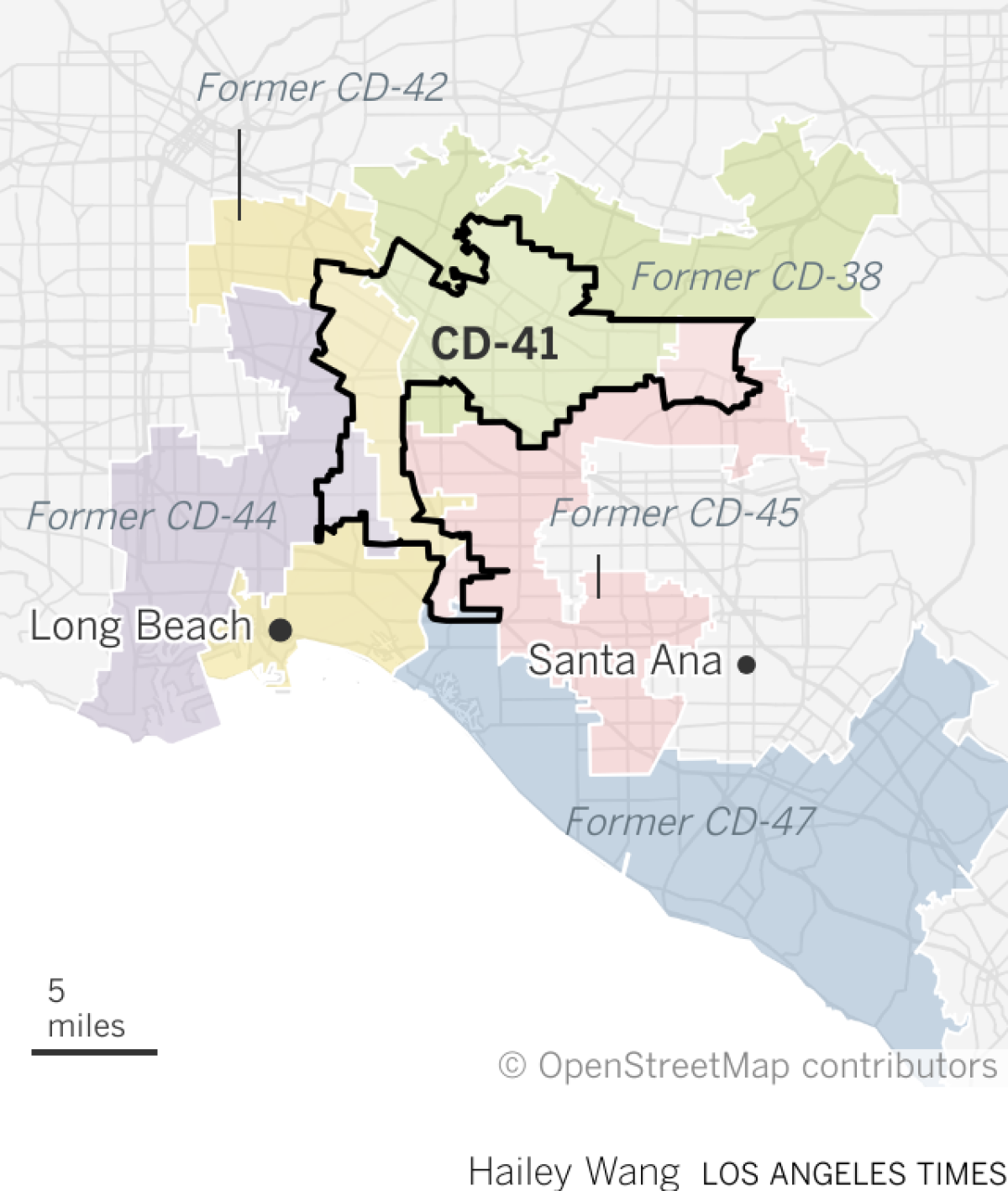
Map shows the boundary of the new 41st congressional district, which cities such as Downey, Lakewood, Whittier and La Habra. The new boundary is composed of areas from the former 38th, 42nd, 44th, 45th and 47th congressional districts.

Calvert has survived previous redistricting rounds, including in 2021, when the overwhelmingly liberal Palm Springs — the first city in the nation to elect an all-LGBTQ+ city council — was added to his district and the Republican-heavy Temecula was taken out.

In 2024, Calvert fended off former federal prosecutor Will Rollins, besting the young Democrat 51.7% to 48.3%.

Rep. Darrell Issa (R-Bonsall)

Post-Proposition 50, Issa’s Republican stronghold in Southern California becomes more narrowly divided among Democrats and Republicans and gets a larger share of Latino voters. Like Calvert and Kim, Issa may decide to run in the new Republican-majority seat in Riverside and Orange counties.

Map shows the boundary of the new 48th congressional district, located between San Bernardino and San Diego. The new district is composed of areas from the former 48th, 25th, 41st, 49th and 50th congressional districts.

“California is my home,” Issa said Tuesday night. “And it’s worth fighting for,”

He called Proposition 50 “the worst gerrymander in history” and vowed to continue to represent “the people of California — regardless of their party or where they live.”

Issa, 72, lost a legal challenge last week over the new maps, which he sought to block.

According to the complaint filed in federal court, Issa claimed he would be harmed because he would lose “seniority advantages in committee proceedings” and have “reduced influence over legislative priorities and committee work affecting my constituents,” NBC7 in San Diego reported.

Democratic San Diego City Councilmember Marni von Wilpert and perennial candidate Ammar Campa-Najjar are among those challenging Issa in his new seat.

Source link