Keir

Newspaper headlines: A ‘bruising week’ for Sir Keir and ‘Order Andrew to give evidence’

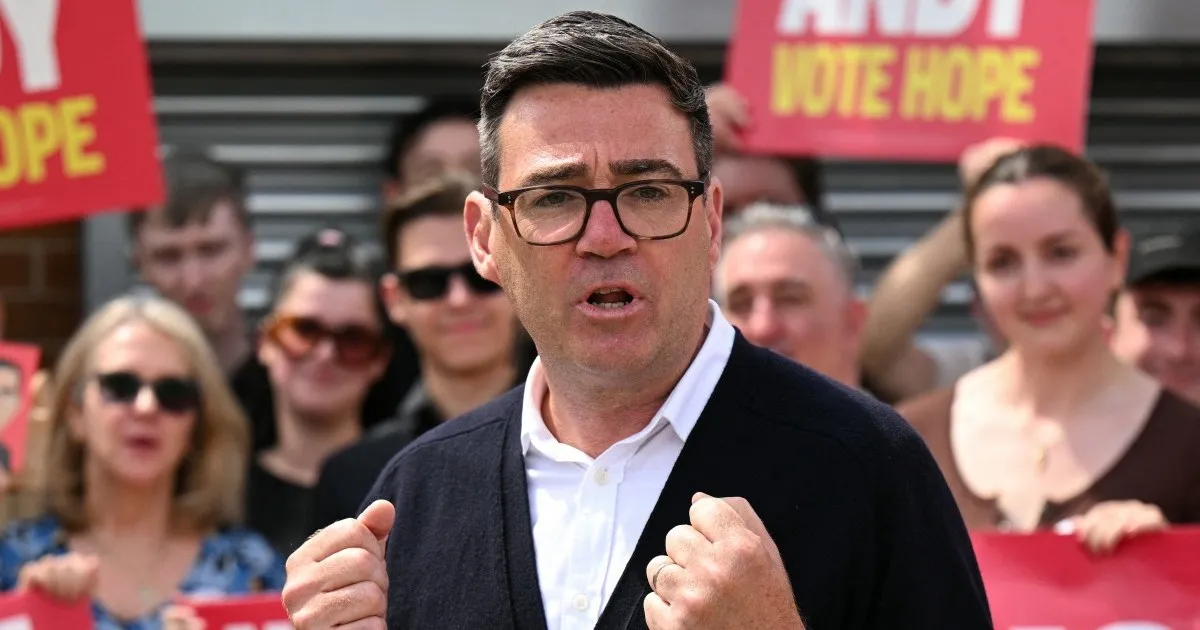
The Sunday Times leads on its interview with the Prime Minister, saying he vowed to fight and win the next general election. The paper describes Sir Keir Starmer as “defiant”, with Labour expecting to suffer heavy losses in elections next month. Separately, the paper notes, allies of the mayor of Greater Manchester, Andy Burnham, are continuing efforts to secure him a route back to Parliament, potentially paving the way for a leadership challenge.

Source link

Keir Starmer tells social media firms he is considering a child ban

Europe, Middle East and Africa President of Snap, Ronan Harris (L), and Wifredo Fernandez, director of global government affairs at X, leave No. 10 Downing Street in London on Thursday morning after meeting Prime Minister Keir Starmer to discuss ways to protect children safe when they are on social media . Photo by Neil Hall/EPA

April 16 (UPI) — British Prime Minister Keir Starmer put the big five social media firms on notice Thursday that he was considering state intervention, including the nuclear option of a ban, if they did not do more to protect children from being harmed by their products.

Starmer warned executives from Meta, Snap, Google, TikTok and X at a meeting in Downing Street that something had to give, saying a ban on children accessing their platforms would be “preferable to a world where harm is the price” for social media use.

“Things can’t go on like this, they must change because right now social media is putting our children at risk. In a world in which children are protected, even if that means access is restricted, that is preferable to a world where harm is the price of participation,” said Starmer.

“I am determined we will build a better future for our children, and look forward to working with you on this. I do think this can be done. I think the question is not whether it is done, the question is how it is done,” he added.

Executives attending the meeting included Google U.K. managing director Kate Alessi, Markus Reinisch, a public policy principal at Meta, and X’s global government affairs director Wifredo Fernandez.

TikTok was represented by Alistair Law, director of public policy for northern Europe, while Snap was represented by Europe president Ronan Harris.

Starmer put to the firms the negative impacts of social media use on children’s ability to concentrate, their sleep, relationships and the way they view the world that have been flagged by parents and child experts.

“It’s clear to me that parents aren’t asking us for tweaks at the edges, they’re asking us whether a system that clearly isn’t working for children should be allowed to continue at all. Companies have to grip this and work with us to do better by British children,” he said.

No. 10 had earlier acknowledged that some of the tech firms had “stepped up” by disabling autoplay of videos for children by default and providing better tools to parents to limit the amount of time their children spend looking at screens, but took a much tougher line at Thursday’s meeting.

Starmer’s Labour administration has previously pushed back on pressure from parents, educators and child safety advocates for an Australia-style ban for children younger than 16 on fears it could drive them onto the dark web and make them more vulnerable when they eventually begin using the apps by hindering development of their digital skills.

Most social media sites operating in Britain do not permit children younger than 13 to use their products.

However, in the past three months, Starmer’s administration has twice been forced to use its House of Commons majority to override two efforts by the House of Lords, the upper chamber of Parliament, to amend a government bill to include a ban for children younger than 16.

The most recent of these was on Wednesday in which the government defeated the Lords’ latest attempt to force through a ban, but with a reduced majority from the previous vote on March 10. More than 240 of 650 MPs either failed to show or abstained.

In January, 60 Labour Party backbenchers signed a letter urging Starmer to bring forward a ban.

The government managed to fend off the first challenge in March by launching a three-month public consultation on how to proceed with anticipation inside his administration growing that Starmer will yield to pressure for a ban when the findings are published in the summer.

Children race to push colored eggs across the grass during the annual Easter Egg Roll event on the South Lawn of the White House in Washington on April 21, 2025. Easter this year takes place on April 5. Photo by Samuel Corum/UPI | License Photo

Source link

UK PM Keir Starmer visits Gulf to shore up ‘fragile’ US-Iran ceasefire | US-Israel war on Iran

NewsFeed

As UK Prime Minister Keir Starmer arrived in Doha as part of a Gulf tour spanning Saudi Arabia, the UAE, Bahrain and Qatar, he discussed efforts to secure the US-Iran ceasefire and reopen the Strait of Hormuz. Starmer warned there’s more ‘work to do’, stressing the need for regional partners to restore global energy flows.

Source link

Keir Starmer’s policy on the Iran war is a recipe for catastrophe | US-Israel war on Iran

In March 2003, a million people took to the streets of London to oppose the illegal invasion of Iraq. Seeing straight through the lie that Iraq possessed weapons of mass destruction, protesters warned the British government in no uncertain terms: This action would trigger a spiral of misery, hatred and death.

More than 20 years on, most people now recognise the Iraq war for what it was: a catastrophic mistake that fuelled a string of subsequent conflicts and instability. The United Kingdom had followed the United States into an illegal war – and more than a million Iraqi men, women and children paid the price.

Unfortunately, not everybody has learned the lessons from the past. It has been almost a month since the US and Israel launched their attacks on Iran. More than 1,400 Iranians and more than 1,000 Lebanese people have been killed.

In seeking to justify the bombing, US President Donald Trump spoke of the need to eliminate “imminent threats from the Iranian regime”, whose “menacing activities directly endanger the United States, our troops, our bases overseas and our allies throughout the world”. He said the goal was to make sure Iran “will never have a nuclear weapon”. Sound familiar?

The first casualty of war is the truth, so let us get the facts straight: These are lies that have been peddled to justify an illegal and unprovoked war. As the National Counterterrorism Center Director, Joe Kent, said in his resignation letter last week, Iran “posed no imminent threat to our nation” and that it was “clear that [the US] started this war due to pressure from Israel and its powerful American lobby”.

There is only one nuclear-armed state in the Middle East: Israel. Next month’s UN Conference of the Parties to the Treaty on the Non-Proliferation of Nuclear Weapons would have been the perfect place to call for an end to the nuclear arms race. A diplomatic solution was possible, but the US and Israel chose war instead. In doing so, they have jeopardised the safety of humankind around the world. So, too, have those nations that have decided to lend support to their war of aggression.

Shortly after the attacks on Iran began, British Prime Minister Keir Starmer gave the US permission to use British military bases for strikes on Iranian missile sites. Last week, his government agreed to let the US use British bases to strike Iranian sites targeting the Strait of Hormuz.

The UK could have followed in the footsteps of Spain and said, “No way, absolutely not. We will not be involved in this illegal war in any way whatsoever.” Instead, it has dragged itself into another catastrophic conflict.

Astonishingly, the prime minister still maintains that the British government is not involved – a line that has been regurgitated by many across our media. He says the UK is allowing its sites to be used only for “defensive” strikes. What nonsense.

The reality is, if a bomber takes off from Royal Air Force base Fairford and bombs targets in Iran, we are involved in that act of aggression. If civilians die, will their families stop mourning when they are told that they were bombed for “defensive purposes”? No matter how Starmer dresses it up, he cannot change the truth: The UK is directly involved in this war.

Mark my words: This is a historic mistake that jeopardises the safety of us all. That’s why, earlier this month, I tabled a bill in the House of Commons that would require parliamentary approval for any British involvement in military action. That includes the use of British bases by other nations.

So far, the prime minister has refused to pass this legislation. With no debate, no discussion and no vote, he is dragging Britain into another disastrous illegal war.

Just like with the invasion of Iraq in 2003, today, those of us who oppose the war on Iran are accused of giving succour to authoritarian regimes and leaders. Whatever one thinks of the governments of various places, there is no basis in law for an attack to bring about regime change. There is no basis in history that bombing from the sky would bring about human rights either.

Trump couldn’t care less about people’s human rights. Whether it’s in Iran, Venezuela or Cuba, he is interested in one thing and one thing only: seizing resources and political control around the world.

If the UK cares about international law, it would be standing up to Trump, not bending over backwards to appease him.

The story of US-led foreign interventions is a story of chaos, instability and misery. How many more of these catastrophic failures do we need before we learn the lesson? And what will it take for the UK to finally defend a consistent, ethical foreign policy based on international law, sovereignty and peace?

The views expressed in this article are the author’s own and do not necessarily reflect Al Jazeera’s editorial stance.

Source link