justice department file

Epstein’s accusers grapple with complex emotions about promised release of Justice Department files

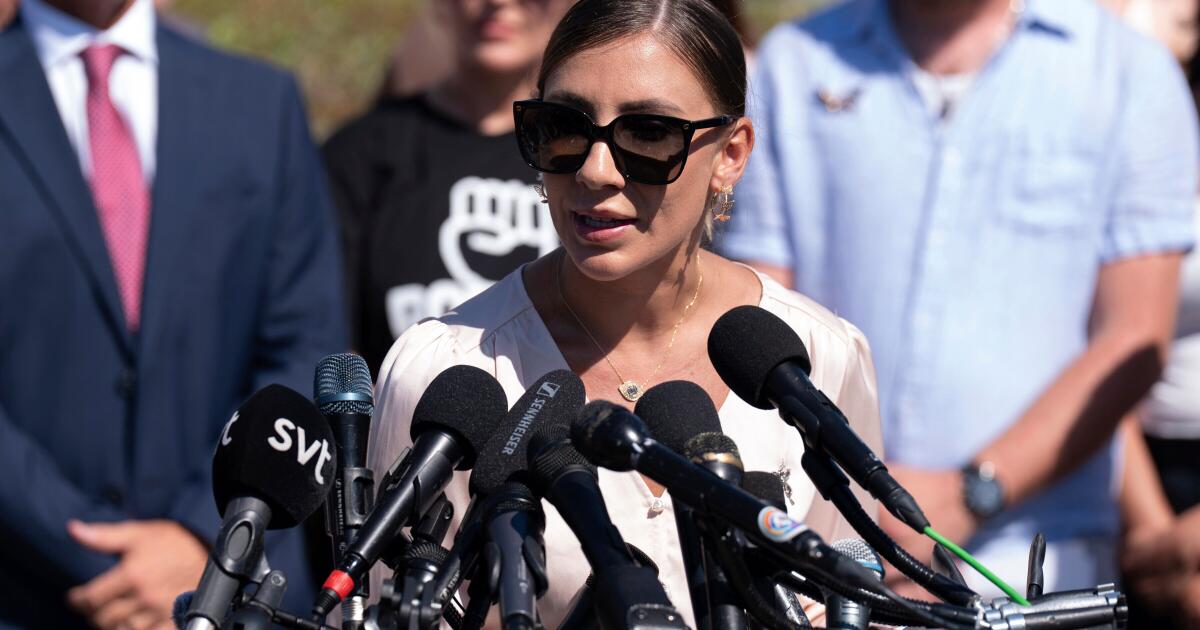
For Marina Lacerda, the upcoming publication of U.S. government files on Jeffrey Epstein represents more than an opportunity for justice.

She says she was just 14 when Epstein started sexually abusing her at his New York mansion, but she struggles to recall much of what happened because it is such a dark period in her life.

Now, she’s hoping that the files will reveal more about the trauma that distorted so much of her adolescence.

“I feel that the government and the FBI knows more than I do, and that scares me, because it’s my life, it’s my past,” she told the Associated Press.

President Trump signed legislation last week that will force the Justice Department to release documents from its voluminous files on Epstein.

“We have waited long enough. We’ve fought long enough,” Lacerda said.

It isn’t clear yet how much new information will be in the files, gathered over two decades of investigations into Epstein’s alleged sexual abuse of many girls and women.

Some of his accusers expect the files to provide a level of transparency they had hardly allowed themselves to believe would materialize, but the release of the documents will be a more complicated moment for others.

Two federal investigations cut short

The FBI and police in Palm Beach, Fla., began investigating Epstein in the mid-2000s after several underage girls said he had paid them for sex acts. He pleaded guilty in 2008 to charges including procuring a minor for prostitution, but a secret deal with the U.S. attorney in Florida — future Trump Cabinet member Alex Acosta — allowed him to avoid a federal prosecution. He served little more than a year in custody.

Jena-Lisa Jones says she was abused by Epstein in Palm Beach in 2002, when she was 14. She did not report the abuse to the police at the time, but she later became one of many accusers to sue the multimillionaire.

The Miami Herald published a series of articles about Epstein in 2018 that exposed new details about how the federal prosecution was shelved. A year later, federal prosecutors in New York, where Epstein owned a mansion, revived the case and charged him with sex trafficking.

Jones said she was interviewed during that federal investigation and was prepared to testify in court.

“It was very important for me to have my moment, for him to see my face and hear my words, and me have that control and power back,” Jones said.

But that day never came.

Epstein killed himself in a federal jail cell in New York City in August 2019.

In lieu of her day in court, Jones and others are hoping for a public reckoning with the publication of the government files on Epstein.

While the government only ever charged two people in connection with the abuse case — Epstein and his longtime confidant Ghislaine Maxwell, who is in prison for her related crimes — at least one of Epstein’s accusers has claimed she was instructed to have sex with other rich and powerful men.

Jones didn’t make similar claims, but said she believes the documents could map out a “broad scheme” involving others.

“I’m hoping they’re shaking a little bit and that they have what’s coming for them,” Jones said.

Filling in the gaps

Lacerda, now 37, is also hoping the files will clarify her own personal experience, which is muddled by the pain she said she endured at that time in her life.

“I was just a child and it’s just trauma. That’s what trauma does to your brain,” Lacerda said.

An immigrant from Brazil, Lacerda said she was working three jobs to support herself and her family the summer before 9th grade when a friend said she could make $300 if she gave Epstein massages.

The first time she massaged Epstein, he told her to remove her shirt, she said.

Lacerda said she was soon spending so much time working for Epstein that she dropped out of school. The sexual abuse persisted until she turned 17, when Epstein informed her that she was “too old,” she said.

Lacerda wondered whether the files might include videos and photographs of her and other victims at Epstein’s properties.

“I need to know — for my healing process and for the adult in me — what I did as a child,” Lacerda said. “It will be re-traumatizing, but it’s transparency — and I need it,” she said.

Accusers wonder, why now?

For Lacerda, the elation around the upcoming release of the files gave way to familiar feelings for many women who survive abuse: fear and paranoia.

“In the heat of the moment, we were like, ‘Wow, this is like, everything that we’ve been fighting for.’ And then we had to take a moment and be like, ‘Wait a minute. Why is he releasing the files all of a sudden?’ ” Lacerda said.

The abrupt change in the political momentum made her uneasy. She wondered whether the documents would be doctored or redacted to protect people connected to Epstein.

Others echoed her concerns, and wondered if the government would sufficiently protect victims who have remained anonymous, who fear scrutiny and harassment if their names were to become public.

“For the rest of my life, I will never truly trust the government because of what they’ve done to us,” Jones said.

Haley Robson, who says she was abused by Epstein when she was 16, has the same concerns.

Robson was a leading voice in advocating for the Florida legislation signed in 2024 that unsealed the grand jury transcripts from the 2006 state case against Epstein.

She said the political maneuvering in recent months about the files led to nonstop anxiety, reminiscent of how she felt when she was abused as a teenager.

“I guess it really comes from the trauma I’ve endured, because this is kind of what Jeffrey Epstein did to us. You know, he wasn’t transparent. He played these manipulation tactics,” she said. “It’s triggering for anybody who’s been in that situation.”

Still, Robson said she is trying to savor the victory while she can.

“This is the first time since 2006 where I don’t feel like the underdog,” she said.

Riddle writes for the Associated Press.
Source link

Could Trump destroy the Epstein files?

In political exile at his mansion in Florida, under investigation for possessing highly classified documents, Donald Trump summoned his lawyer in 2022 for a fateful conversation. A folder had been compiled with 38 documents that should have been returned to the federal government. But Trump had other ideas.

Making a plucking motion, Trump suggested his attorney, Evan Corcoran, remove the most incriminating material. “Why don’t you take them with you to your hotel room, and if there’s anything really bad in there, like, you know, pluck it out,” Corcoran memorialized in a series of notes that surfaced during criminal proceedings.

Trump’s purported willingness to conceal evidence from law enforcement as a private citizen is now fueling concern on Capitol Hill that his efforts to thwart the release of Justice Department files in the Jeffrey Epstein investigation could lead to similar obstructive efforts — this time wielding the powers of the presidency.

Since resuming office in January, Trump has opposed releasing files from the federal probe into the conduct of his former friend, a convicted sex offender and alleged sex trafficker who is believed to have abused more than 200 women and girls. But bipartisan fervor has only grown over the case, with House lawmakers across party lines expected to unite behind a bill on Tuesday that would compel the release of the documents.

Last week, facing intensifying public pressure, the House Oversight Committee released over 20,000 files from Epstein’s estate that referenced Trump more than 1,000 times.

Those files, which included emails from Epstein himself, showed the notorious financier believed that Trump had intimate knowledge of his criminal conduct. “He knew about the girls,” Epstein wrote, referring to Trump as the “dog that hasn’t barked.”

Rep. Dave Min (D-Irvine), a member of the oversight committee, noted Trump could order the release of the Justice Department files without any action from Congress.

“The fact that he has not done so, coupled with his long and well documented history of lying and obstructing justice, raises serious concerns that he is still trying to stop this investigation,” Min said in an interview, “either by trying to persuade Senate Republicans to vote against the release or through other mechanisms.”

A spokesperson for Sen. Adam Schiff (D-Calif.) said that altering or destroying portions of the Epstein files “would violate a wide range of federal laws.”

“The senator is certainly concerned that Donald Trump, who was investigated and indicted for obstruction, will persist in trying to stonewall and otherwise prevent the full release of all the documents and information in the U.S. government’s possession,” the spokesperson said, “even if the law is passed with overwhelming bipartisan support.”

After the House votes on the bill, titled the Epstein Files Transparency Act, bipartisan support in the Senate would be required to pass the measure. Trump would then have to sign it into law.

Trump encouraged Republican House members to support it over the weekend after enough GOP lawmakers broke ranks last week to compel a vote, overriding opposition from the speaker of the House. Still, it is unclear whether the president will support the measure as it proceeds to his desk.

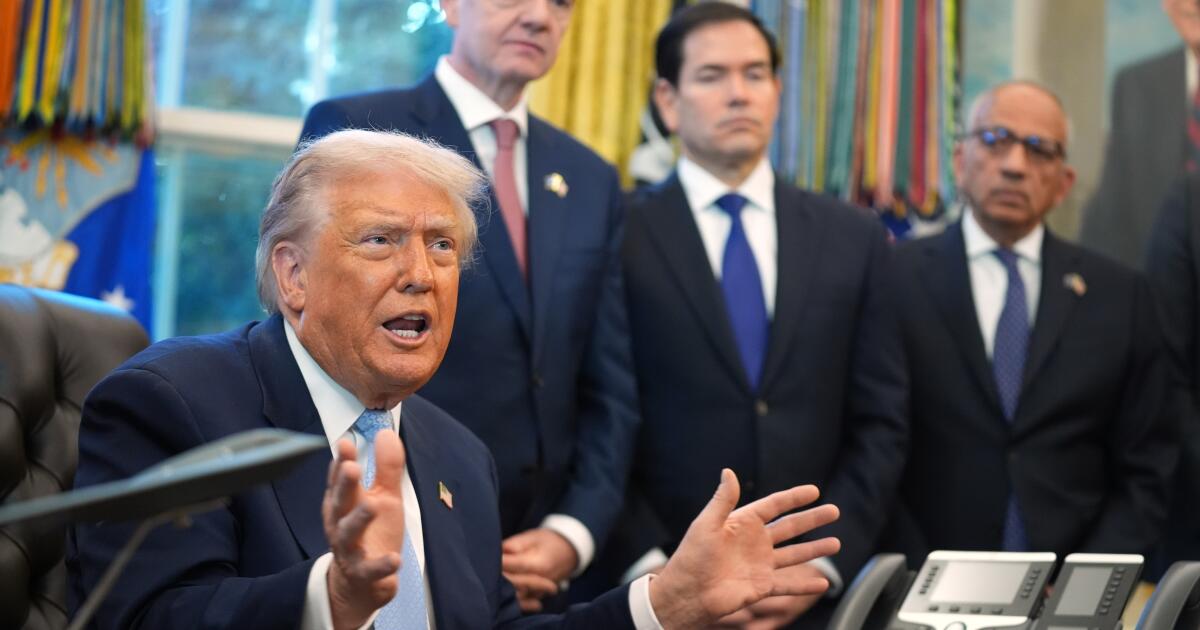
On Monday, Trump said he would sign the bill if it ultimately passes. “Let the Senate look at it,” he told reporters.

The bill prohibits the attorney general, Pam Bondi, from withholding, delaying or redacting the publication of “any record, document, communication, or investigative material on the basis of embarrassment, reputational harm, or political sensitivity, including to any government official, public figure, or foreign dignitary.”

But caveats in the bill could provide Trump and Bondi with loopholes to keep records related to the president concealed.

“Because DOJ possesses and controls these files, it is far from certain that a vote to disclose ‘the Epstein files’ will include documents pertaining to Donald Trump,” said Barbara McQuade, who served as the United States attorney for the eastern district of Michigan from 2010 until 2017, when Trump requested a slew of resignations from U.S. attorneys.

Already, this past spring, FBI Director Kash Patel directed a Freedom of Information Act team to work with hundreds of agents to comb through the entire trove of files from the investigation, and directed them to redact references to Trump, citing his status as a private citizen with privacy protections when the probe first launched in 2006, Bloomberg reported at the time.

“It would be improper for Trump to order the documents destroyed, but Bondi could redact or remove some in the name of grand jury secrecy or privacy laws,” McQuade added. “As long as there’s a pending criminal investigation, I think she can either block disclosure of the entire file or block disclosure of individuals who are not being charged, including Trump.”

Destroying the documents would be a taller task, and “would need a loyal secretary or equivalent,” said Rhodri Jeffreys-Jones, a professor emeritus and FBI historian at the University of Edinburgh.

Jeffreys-Jones recalled J. Edgar Hoover’s assistant, Helen Gandy, spending weeks at his home destroying the famed FBI director’s personal file on the dirty secrets of America’s rich and powerful.

It would also be illegal, scholars say, pointing to the Federal Records Act that prohibits anyone — including presidents — from destroying government documents.

After President Nixon attempted to assert executive authority over a collection of incriminating tapes that would ultimately end his presidency, Congress passed the Presidential Recordings and Materials Preservation Act, asserting that government documents and presidential records are federal property. Courts have repeatedly upheld the law.

While presidents are immune from prosecution over their official conduct, ordering the destruction of documents from a criminal investigation would not fall under presidential duties, legal scholars said, exposing Trump to charges of obstructing justice if he were to do so.

“Multiple federal laws bar anyone, including the president or those around him, from destroying or altering material contained in the Epstein files, including various federal record-keeping laws and criminal statutes. But that doesn’t mean that Trump or his cronies won’t consider trying,” said Norm Eisen, who served as chief ethics lawyer for President Obama and counsel for the House Judiciary Committee during Trump’s first impeachment trial.

The Democracy Defenders Fund, a nonprofit organization co-founded by Eisen, has sued the Trump administration for all records in the Epstein investigation related to Trump, warning that “court supervision is needed” to ensure Trump doesn’t attempt to subvert a lawful directive to release them.

“Perhaps the greatest danger is not altering documents but wrongly withholding them or producing and redacting them,” Eisen added. “Those are both issues that we can get at in our litigation, and where court supervision can be valuable.”

Jeffreys-Jones also said that Trump may attempt to order redactions based on claims of national security. But “this might be unconvincing for two reasons,” he said.

“Trump was not yet president at the time,” he said, and “it would raise ancillary questions if redactions did not operate in the case of President Clinton.”

Last week, Trump directed the Justice Department to investigate Epstein’s ties to Democratic figures, including Clinton, former Treasury Secretary Larry Summers, and Reid Hoffman, LinkedIn’s co-founder and a major Democratic donor.

He made no request for the department to similarly investigate Republicans.

Times staff writer Ana Ceballos contributed to this report.

Source link