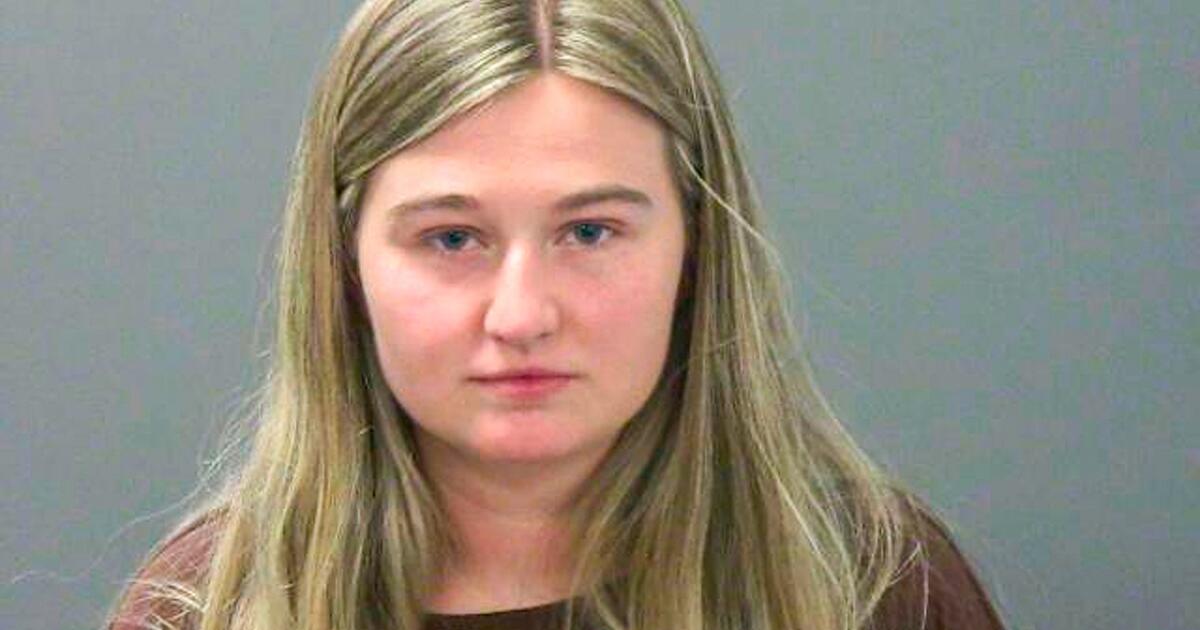
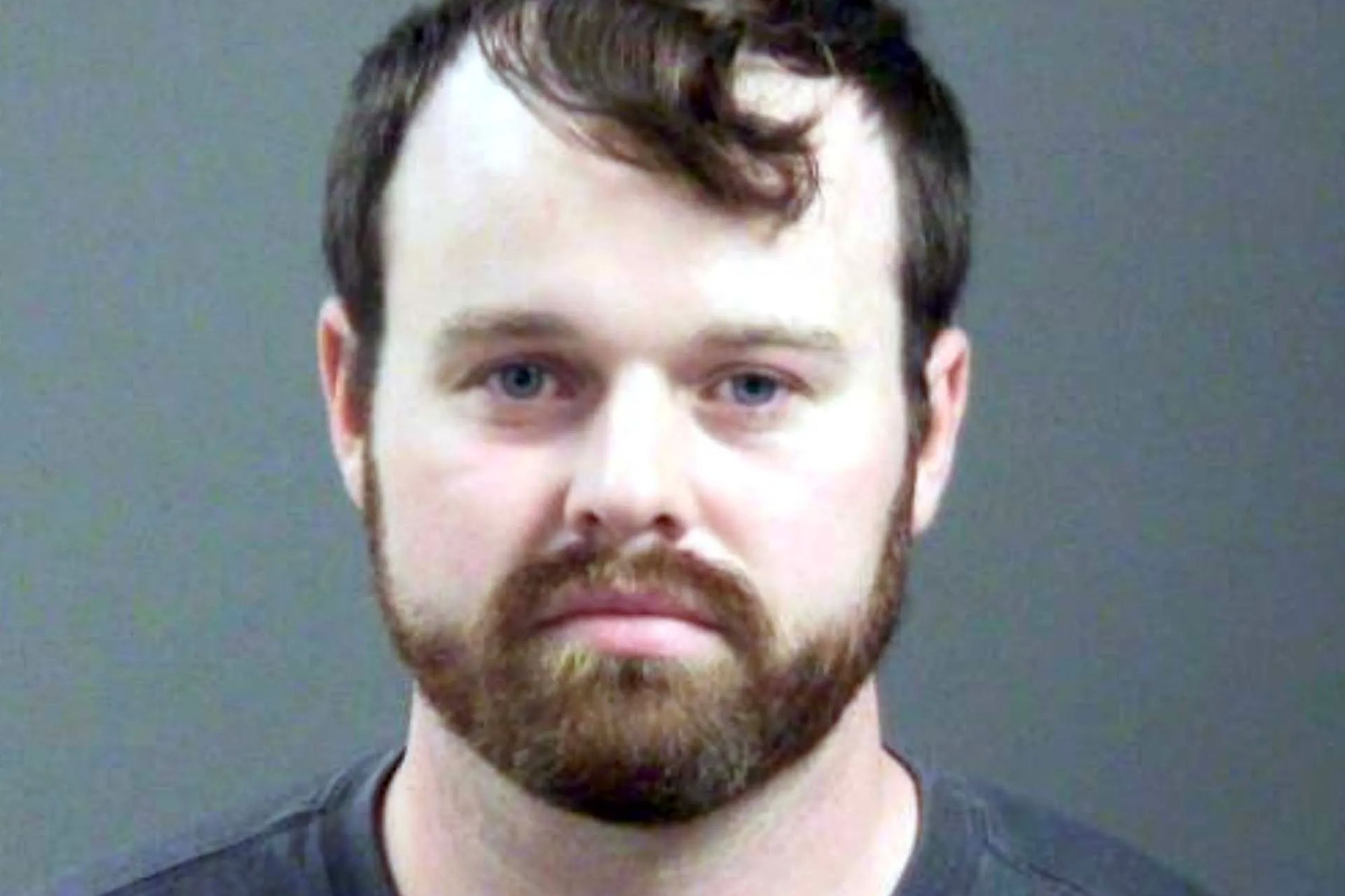
Two days after reality TV personality Joseph Duggar was arrested on suspicion of molesting a minor, Arkansas police arrested his wife, Kendra Duggar, on misdemeanor child abuse charges.
Kendra Duggar, 27, as well as Joseph Duggar, 31, face four counts each of endangering the welfare of a minor and second-degree false imprisonment.
According to KNWA, the Tontitown Police Department confirmed that the Duggars’ charges in Arkansas were unrelated to Joseph Duggar’s case in Florida. The news outlet reported that Tontitown police said this separate investigation was “launched on the heels of the alleged incident in Florida.”
People Magazine reported that a source close to the family told the outlet that the arrest was “the result of a home inspection, and the door locks being on the exterior of the doors. “
A spokesperson for the family told People that the charges filed against Kendra Duggar were “totally unrelated” to Joseph Duggar’s case in Florida. “She’s not suspected or accused of participating in his alleged crime.”
Last week, Joseph Duggar, known for the TLC series “19 Kids and Counting,” was arrested in Arkansas by local law enforcement on suspicion of molesting a minor in Florida, the Bay County Sheriff’s Office announced in a statement.
The Sheriff’s Office said it received a report on Wednesday of past sexual abuse involving Duggar and a 14-year-old girl. The girl alleged several incidents of abuse including one when she was 9 years old, police said.
The teenager, according to law enforcement, accused Duggar of molesting her in 2020 while she was vacationing with family and staying at a residence in Panama City Beach.
According to the statement, the victim said Duggar “eventually apologized” for the abuse. Duggar also “admitted his actions to the girl’s father and to Tontitown detectives” in Arkansas, Duggar’s home state, law officials said. The city’s Police Department confirmed Duggar’s arrest in a separate statement, noting it acted on a warrant issued by the Bay County Sheriff’s Office.
The former reality star was charged with molestation of a victim younger than 12 and “lewd and lascivious behavior conducted” by an adult. Duggar, who is currently jailed at the Washington County Detention Center, awaits extradition to Florida. He could not immediately be reached for comment.
Joseph Duggar, his parents, Jim Bob and Michelle Duggar, and his siblings garnered reality TV fame in 2008 with the launch of TLC’s “19 Kids and Counting.” The series followed the Christian fundamentalist clan who used their television platform to preach purity, modesty and religious devotion. The family’s facade shattered in 2015 when Josh, the firstborn Duggar child, was accused of molesting five younger girls — four of whom were his sisters — when he was 15. The series was canceled that year.
In a separate case, Josh was convicted on two counts of possessing and receiving child pornography in December 2021. He was sentenced to 12½ years in prison in 2022. The Supreme Court rejected his efforts to appeal his case last June.
Amy Duggar Kind, a cousin of Joseph and Josh Duggar and series regular on “19 Kids and Counting,” released a statement prior to the arrest of Kendra Duggar “praying for Joseph’s wife, Kendra, as she begins to process this, and for the protection of their children,” and then a follow-up statement once news of Kendra’s arrest went public.
“My statement released on Friday, March 20th was written and submitted before I had any knowledge of Kendra Duggar’s arrest,” she wrote.
“When I wrote that I was praying for Kendra ‘as she begins to process this,’ I was speaking to what I believed at the time — that she was a wife and mother blindsided by devastating news about her husband. I want that context to be unambiguous. Those words were written in a different moment, with different information. The world changed a few hours later.
“I have now learned that Kendra Duggar was arrested on Friday on four counts of second-degree endangering the welfare of a minor and four counts of second-degree false imprisonment. These are serious charges. They are not the same as Joseph’s charges, but they are not small, and I will not treat them as small.
“I am not going to rush to conclusions about what Kendra knew, when she knew it, or what her role was in any of this. That is the job of law enforcement and the courts, and I trust that process to unfold. What I will say is this: the moment a person faces criminal charges for the endangerment of children, my prayers shift. They shift entirely and without apology to the children.
“To the four children in that home — I see you. I pray for you. None of this is your fault, and none of this is your burden to carry.
“To the original victim, who is now fourteen years old and has watched this story explode across every screen in the country: I am so deeply sorry. You did an incredibly brave thing by coming forward. You deserve to have every institution around you work on your behalf — not to protect the people who hurt you, and not to protect the image of a family. You. I am still praying for you and your family above all else.”
Kendra Duggar was booked into the Washington County Detention Center on March 20 and released on a $1,470 bond the same day.
Times staff writer Alexandra Del Rosario contributed to this report.
Another member of the Duggar family, famous for the TLC series “19 Kids and Counting,” faces allegations of child sex abuse.
Joseph Duggar, the 31-year-old son of Jim Bob and Michelle Duggar and the younger brother of convicted sex offender Josh Duggar, was arrested Wednesday afternoon in Arkansas by local law enforcement on suspicion of molesting a minor in Florida, the Bay County Sheriff’s Office announced in a statement. The sheriff’s office said it received a report on Wednesday of past sexual abuse allegedly involving Duggar and a 14-year-old girl. The girl alleged she was 9 years old during one of several alleged incidents, police said.
The teenager, according to law enforcement, accused Duggar of molesting her in 2020 while she was vacationing with family and staying at a residence in Panama City Beach. He is accused of touching the girl’s genitals and rubbing her thighs.
Resources for survivors of sexual assault
If you or someone you know is the victim of sexual violence, you can find support using RAINN’s National Sexual Assault Hotline. Call (800) 656-HOPE or visit online.rainn.org to speak with a trained support specialist.
According to the statement, the victim said Duggar “eventually apologized” for the abuse, and he stopped touching her. Duggar had also “admitted his action’s to the girl’s father and to Tontitown detectives in Arkansas, Duggar’s home state, law officials said. The Tontitown Police Department confirmed Duggar’s arrest in a separate statement, noting it acted on a warrant issued by the Bay County Sheriff’s Office.
The former reality star was charged with molestation of a victim younger than 12 and “lewd and lascivious behavior conducted” by an adult. Duggar, who is currently jailed at the Washington County Detention Center, awaits extradition to Florida. He could not immediately be reached for comment.
Joseph Duggar, his parents and his siblings — whose first names also begin with the letter J — became unexpected reality TV stars with the premiere of TLC’s “19 Kids and Counting” in 2008. The series followed the giant family, highlighting their Christian fundamentalist lifestyle. The family’s once-charming facade of purity and religious devotion quickly faded in 2015 when Josh, the firstborn Duggar child, was accused of molesting five younger girls — four of whom were his sisters — when he was 15. The series was canceled that year.
In a separate case, Josh was convicted on two counts of possessing and receiving child pornography in December 2021. He was sentenced to 12 ½ years in prison in 2022. The Supreme Court rejected his efforts to appeal his case last June.
Fifteen years after the premiere of “19 Kids and Counting,” the series, the Duggar family and their devotion to the Institute in Basic Life Principles were subject to close scrutiny in the Prime Video docuseries “Shiny Happy People: Duggar Family Secrets.”
Jill Diillard, the second-eldest Duggar daughter and one of Josh’s victims, spoke out for the 2023 docuseries.
“I believe strongly that victims should always be protected. Victims should always be cared for,” she said. “You’re out there, your story’s out there. … I’d rather have some say in what that looks like.”
Joseph Duggar, 31, was arrested by the Tontitown Police Department in Arkansas. Photo courtesy of the Washington County Sheriff, Arkansas
March 19 (UPI) — Law enforcement officials arrested Joseph Duggar, one of the stars of TLC’s 19 Kids and Counting on sex abuse charges involving a 9-year-old girl, Florida authorities said.
The Bay County Sheriff’s Office said Duggar, 31, was arrested Wednesday by authorities in Arkansas and was awaiting extradition to Florida.
He faces charges of lewd and lascivious behavior by a person 18 years or older, and lewd and lascivious behavior involving a victim less than 12 years old.
Duggar’s arrest came after a 14-year-old girl told the Tontitown Police Department in Arkansas about sexual abuse that took place when she was 9 years old. She said there were several incidents during a family vacation to Panama City Beach, Fla., in 2020.
“The victim reported Duggar repeatedly asked her to sit on his lap,” a news release from the Bay County Sheriff’s Office said.
“As the vacation continued, he also asked her to sit next to him on a couch and covered them with a blanket.”
The release said that during this time, Duggar inappropriately touched the girl. The girl told police that Duggar later apologized and stopped the alleged actions.
The sheriff’s office did not specify how Duggar and the girl knew each other. The release said the girl told her father about the alleged incidents, and her father confronted Duggar on Tuesday.
“Duggar admitted his actions to the victim’s father and to Tontitown detectives,” the release said.
Joseph Duggar’s eldest brother, Josh Duggar, was sentenced to more than 12 years in prison in 2022 on a child pornography conviction. The family’s reality show on TLC was canceled in 2015 after a police report revealed that Josh Duggar molested younger girls.
FORMER 19 Kids and Counting star Joseph Duggar has been arrested for alleged child sex crimes against a nine-year-old girl.
The 31-year-old from Arkansas allegedly molested the child six years ago on a vacation in Florida.
Sign up for the Showbiz newsletter
Thank you!
Joseph Duggar has been arrested and charged with child molestationCredit: The Mega AgencyDuggar (third from left) allegedly admitted his crimes to the victim’s fatherCredit: Alamy
On Wednesday, the former TLC star was charged with molestation of a victim under 12 years old and with lewd and lascivious behavior of a person 18 years or older, the Bay County Sheriff’s Office said.
The girl, now 14 years old, told investigators that the incident took place while she was on family vacation in Panama City in 2020.
Duggar, who was booked into the Washing County jail in Arkansas, is awaiting extradition to Bay County.
It is alleged that Duggar asked the victim to sit on his lap, the Bay County Sheriff’s Office said.
“As the vacation continued, he also asked her to sit next to him on a couch and covered them with a blanket,” it has been claimed.
“During this time, Duggar manipulated the victim’s underwear and grazed her genitals.
“Duggar would also continue to rub his hands on her thighs.”
“The victim stated Duggar eventually apologized for his actions and the incidents stopped after the apology,” the authorities said.
Most read in Entertainment
The allegations and arrest come after the victim had a forensic interview due to reports of past sexual abuse.
Her father allegedly confronted Duggar about the allegations and the reality star “allegedly admitted his actions to the father and Tontitown detectives,” and the alleged abuse stopped, per officials.
Duggar, 31, is married and has three childrenCredit: Little Duggar Family/Instagram
Duggar is married to his wife Kendra, with whom he shares three young children.
The Duggar family has not issued a statement following the arrest.
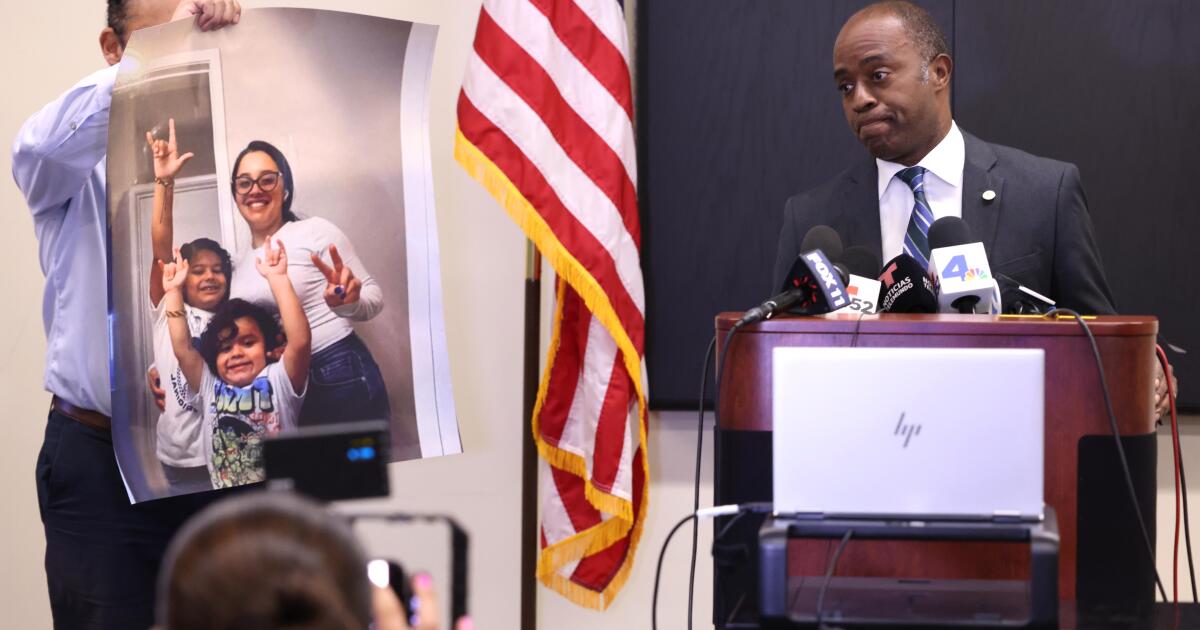
A deaf 6-year-old boy snatched by immigration agents from Northern California and deported to Colombia this month needs to be returned to the U.S. immediately or he could die, a lawyer representing the child said Wednesday.
Attorney Nikolas De Bremaeker said the boy, Joseph Lodano Rodriguez, was “at risk every day that he is not getting his treatments.” The child has a cochlear implant that requires the same routine maintenance and cleaning he was receiving stateside but may not get in Colombia.
“Joseph is at immense risk for his life if he does not continue the treatment that he was receiving in the United States,” De Bremaeker said at a virtual news conference hosted by California Supt. of Public Instruction Tony Thurmond, a Democratic gubernatorial candidate.
“He is at risk of infection, he is at risk of meningitis, he is at risk of death if he is not given the proper care for his surgical implants.”
Joseph, his 28-year-old mother, Lesly Rodriguez Gutierrez, and another son, 5, were detained by federal agents on March 3 while attending an immigration meeting and deported shortly after.
Rodriguez Gutierrez traveled to the United States in 2022 seeking asylum from domestic violence and lived in Hayward. She was told in the run up to the March 3 meeting that she needed to bring her two children for a routine check-in to update the photos Immigration and Customs Enforcement had of them.
Shortly after arriving, ICE agents “tried to force her to sign a document without explanation, and then pushed the family into a vehicle to be put on a flight to a faraway detention facility, “ De Bremaeker told The Times earlier.
The Department of Homeland Security did not respond to questions sent Wednesday after office hours but has consistently said that Rodriguez Gutierrez was “an illegal alien from Colombia” who “illegally entered the United States in 2022.”
She was issued a removal order on Nov. 25, 2024, according to DHS.
Thurmond, the superintendent, called on the public to lobby Congress and the Trump administration “to return Joseph so he can continue his studies.”
Thurmond showed a 40-second clip of Joseph and his family at a Colombian facility for the deaf.
The child appeared to struggle communicating with his sibling and mother, while his brother repeatedly tried to give directions to him in Spanish with little avail.
Joseph’s only language is American Sign Language, Thurmond said. Joseph was studying at the state-funded Fremont’s California School for the Deaf.
“Joseph is struggling,” Thurmond said. “He does not have the ability to communicate with anyone and in many ways, he can barely communicate with his mom. Like Joseph’s mom, Lesly was just beginning to learn American Sign Language.”
Both California senators — Alex Padilla and Adam Schiff — along with state Democratic congressional members Eric Swalwell, Nanette Barragán, Zoe Lofgren, Kevin Mullin and Lateefah Simon called on the U.S. Department of Homeland Security and the State Department to investigate the deportation.
The group is also calling on both government agencies to return the family to the U.S. through the process of humanitarian parole. That move would allow Joseph to re-enroll in school and receive specialized care.
Celena Ponce, founder of Hands United, a nonprofit organization dedicated to aiding deaf immigrant children and families, said her group was trying to connect the family with the deaf community and services, like interpreters, in Colombia.
She said, however, that Joseph and his family face several challenges. The first hurdle if he ends up staying in Colombia, is that he and his mother will have to learn Colombian sign language, which differs from American sign language.
Ponce added that Joseph also suffered language deprivation, meaning he is delayed in comparison to other 6-year-olds who are hearing.
“Because Colombia does not have residential schools similar to what California has, the ability to be fully immersed in language is not present,” she said.
Whatever gains he made at the California School for the Deaf would likely end, she said.
Times staff writers Clara Harter and Christopher Buchanan contributed to this report.
Los Angeles has a secret magic to which you have to earn access, and the way you earn it is by making it, becoming a contributor to the city’s misapprehended culture of spectacle and soul, diversity and monolithic elitism. It’s a get-in-where-you-fit-in or get-edged-all-the-way-out kind of city, wherein a deceptively laissez-faire game of musical chairs can determine your fate. Kahlil Joseph has a private magic to which you have to earn access, and you earn it by resonating with the untapped nerve centers of Black culture that animate this city, and even then you might be denied.
Joseph is like the city (Los Angeles, not Hollywood), and the city enforces confidentiality, drive, wit, style and devotion often mistaken for diva-ism. The filmmaker and video artist moved to Los Angeles from Seattle for university, and was quickly followed by his brother, the painter Noah Davis, who would found the Underground Museum, a venue and near-speakeasy with West Coast casual gravitas and pan-African rigor and breadth, which became as important to the zeitgeist of Black Los Angeles as both brothers have.
Movie still from Kahlil Joseph’s film “Blknws: Terms & Conditions.” Funmilayo Akechukwu (Kaneza Schaal) channels a 93-year-old W.E.B Dubois, 200 years in the past.
In somewhat rapid succession, Joseph lost his father, Keven Davis, an accomplished attorney who represented the likes of the Williams sisters and Wynton Marsalis, in 2012, and his brother Noah in 2015. Joseph navigated those years in the wake with unadorned reverence, while starting a family of his own and directing some of the most transcendent music videos of the 2010s. As testament to his resilience and that of the community around him, grief sharpened Joseph’s purpose and became a kind of grace he transmuted into moving images so saturated with feeling, sans easy pathos, they offered new ways of seeing. The stakes were higher and layered with the existential absurdity of abrupt shifts, which he carried with an elegant, slightly seething temperament that has found its expression in the work. It’s relevant that he shares a birthday with Miles Davis — this is Los Angeles, where it’s customary for a person to request your cosmic DNA before asking your name — and it’s relevant that like Miles, Joseph’s vocal tone is whisper-pitched, toward the mode of retreat that begets echo; you lean in and hear him twice. His quiet tone is not shyness or false modesty but circumspection and a sense of boundaries that imply respect and love for real communication. You sense this in his work ethic and what it produces, an intimacy of form that implies an almost ritualistic attentiveness to the world around him on its own terms. In the 2012 Flying Lotus music video “Until the Quiet Comes,” directed by Joseph and set in Los Angeles, death and rebirth are addressed as a duet, companions in the expansion of collective consciousness instead of foils or adversaries, as a fallen child leaves his body and returns more alive than before he was bloodied on screen. And the violent scenes aren’t grotesque or didactic — think of Miles’ muted trumpet sound reconfigured as resurrection visuals, of his ability to play and stage ballads so well that their uptempo momentum moves into territories too macabre to mute. Like Miles, Joseph tests and stretches his range.
With the closure of the family-run Underground Museum, first in 2020 and then officially in 2022, the path uptempo was visited by more obstacles and disappointments, a shift, if temporary, in Joseph’s role in the local community, as he became more private and distant from public elegy. On the phone recently, Joseph and I discussed the trauma economy, how much of a trap it is for Black art and artists, especially in this post-BLM, post-Obama, post-neoliberal dominance, post-nonprofit industrial complex dominance territory we’re all in now, whether we face it or not. As antidote and balm to the market for repackaged abjection, Joseph adapted the sensibility that makes his music video landscapes so lush and transgressive for the art world with “Blknws,” which debuted in 2019 as an imagined syndication or television network, a nonlinear merger of digitized Black archival material pulled from the center to the margins and the radical academic avant-garde — an infinitely looping ensemble wherein Fred Moten enters into conversation with memes of ghetto-fabulous street gymnasts doing backflips into a fried chicken spot, for example, collapsing so-called high and low into an endless woodshed for an impossible concert.
The result was so compelling that the project was commissioned by A24 as a feature film sans script, then purchased from them by Rich Spirit and released last year as “Blknws: Terms & Conditions.” In this longer and more structured form, what began as an intentional scattering of ashes becomes an elegiac letter home mediated by shipwreck. Joseph weaves together an imaginary “Transatlantic Biennial” and W.E.B. Dubois’ “Encyclopedia Africana” — a project that Henry Louis Gates Jr. and Kwame Anthony Appiah transformed into a book, which Joseph’s father had given his brother before they passed. In this way, the film becomes a manifesto for alternate destinies within the Black experience, and a semi-formal goodbye letter to the delusional but politically expedient optimism of the 2010s, wherein the end of the neoliberal order becomes a gateway to renewed self-possession and agency. Since our grief is less of a ready-made commodity lately, we can reorient it around ourselves, a little safer and more sovereign from the gnawing public gaze. And we can be more honest about its paces and paths in that more autonomous landscape. “Blknws” arrives how a successful jazz album does, belligerently inconclusive about the next stylistic leaps the music might make but clearly in the process of launching in that unknown or unspeakable (perhaps secret) direction. The film is agitation made vivid and precise in the dialectic between theorized “Black Study” and practical applications of Black marronage, where we realize that big disembodied ideas are no more sophisticated than what can be danced and gestured at and spoken in our real and virtual conversations. Here, the multiverse becomes one transcendental, transatlantic consciousness where past and present, life and afterlife, blur the way they do in Joseph’s interpretation of “Until The Quiet Comes” to give us a film with a song-like hook and an album’s non-sequitur whimsy.
Movie still from Kahlil Joseph’s film “Blknws: Terms & Conditions.” The underwater study of Funmilayo Akechukwu (Kaneza Schaal) located in the hold of the ship.
Over the last several months, I’ve discussed with Joseph what might become of the momentum propelling “Blknws: Terms & Conditions,” after the film’s run, as speculators enclose searching for clues and stake in his next project. He’s considered its potential evolution into a media company, a real paper, a production house, a series of related films, or a hybrid of all of these endeavors. Alongside his experience on all sides of the art world, he has an acute awareness of the wayward state of print and digital culture, writing and production, the constant closure or downsizing of veteran media outlets, the aftermath of diversity fever in the form of shrinking major magazines often starting with those who cover culture explicitly, the mass turn toward brand-name digital platforms that become extractive monopolies and diminish what can be covered and produced as writers and artists are overworked, understaffed and undervalued. Galleries are also closing and downsizing, and films that don’t oblige the content farm aren’t solicited as readily as influencer-helmed or easily digestible projects that can be played as background noise for scrolling.
After a screening last December of “Blknws: Terms & Conditions” at 2220 Arts + Archives, a space I co-curate, the rapt audience of local cinephiles seemed eager for some magic-bullet insight into Joseph’s path to creative breakthrough and relative creative freedom. Rather than hacks and shortcuts, he shouted out collaborators and inspirations — Wales Bonner, who hand-stitched garments for the film’s Ghana-based scenes; British composer Klein, who helped score the film; Joseph’s time in Brazil, where his father was from and where he went to high school. Sensibility and natural eclecticism, rather than unchecked ambition, is what propels Joseph; he has an innate knack for assembling bands and ensembles, good taste and good timing.
Kahlil Joseph with friends at the screening of “Blknws: Terms & Conditions.”
“I found the encyclopedia at the Underground,” he explains, of the DuBois work that became central to “Blknws.” “It seemed no one had looked through it, as if my dad and brother left it for me in the future.” And instead of ruminating on the weight of that inheritance, he integrates it into his film, whose refrain-as-question is do you remember the future? As if his father and brother are awake in some scenes, asking him to remember. Another resurrection. “I just want to make films,” Joseph reaffirms as a personal coda when the questions get too meta or abstract, never conflating the material conditions of the craft with the magical thinking that can unfold in scripts and on screen. Most everyone in attendance at 2220 seemed to be there to meet or support one of their favorite artists, one of the devout purists of our time who manages to remain that without getting smug, lazy or feral, all common pitfalls.
Last October, I gave Joseph a copy of Hemingway’s “A Moveable Feast,” which I’d just finished reading myself for the first time. I was impressed to the point of restlessness with the authority of Hemingway’s memory, his recall; it’s one of those books you wanna throw at the wall and absorb word for word at the same time. Hemingway seemed to effortlessly savor and store every detail of his days, while remaining agile and present enough within them to focus on writing one true thing after another, in his daily sessions at the typewriter, as if possessing two coterminal minds and the capacity to access or silence both at will. A juggler too advanced for the circus, language’s great folk hero. Joseph is kind of like this, capable of intense simultaneous focus on both creative and mundane tasks without complaint, and he took to the book as I expected he might, sharing my sense of awe over the writer’s command of time and scene. They are both among the artists who have a polite way of making those around them feel like a team and want to work a little harder and little less aggressively (more communally) at the same time. Editors at his post-production studio have come from all over the country to work with him based on that leadership.
Joseph’s next feature, he suggests, will certainly be more narrative, more of a linear beginning-middle-end story, more Hemingway-esque in its commitments to the blunt daily reality that “Blknws” blurs with Black myth. He and his family have sacrificed unquantifiably in effort to defy stale archetypes and outdated patterns of art practice, and it might be his time or turn to be reciprocated for having endured those risks, time to give his family unequivocal and vivid afterlives on and off screen.