John Thune

Trump signs stopgap funding to end shutdown after narrow House OK

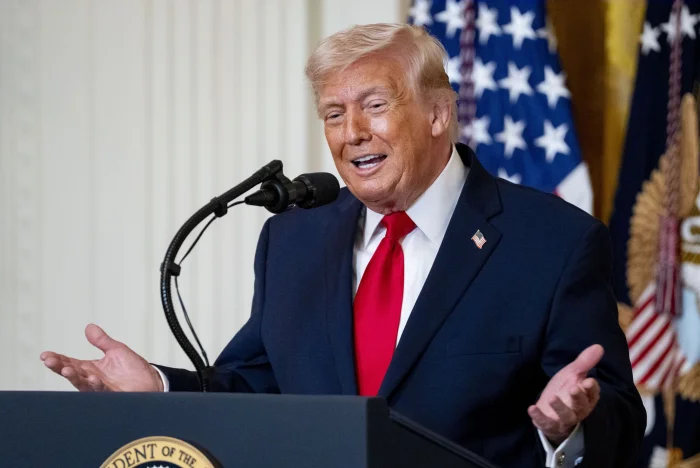
Nov. 12 (UPI) — President Donald Trump late Wednesday signed legislation to reopen the federal government, resuming programs and again paying millions of workers, blaming Democrats for the longest shutdown in history at 43 days.

The new stopgap bill will fund the government through Jan. 30, and provide a full year of funding for the Supplemental Nutrition Assistance Program and veterans programs. Furloughed employees are expected to return to report on Thursday.

The U.S. House, convening for the first time in two months, approved legislation sent two days earlier by the Senate. Most Democrats and Republicans have been on opposite sides on enhanced health insurance subsidies through the Affordable Care Act.

At 8:21 p.m., the House voted 222-209 to send the stopgap funding bill to the president. The outcome wasn’t strictly along party lines with six Democrats voting yes and two Republicans voting no. There were two not voting and two vacancies.

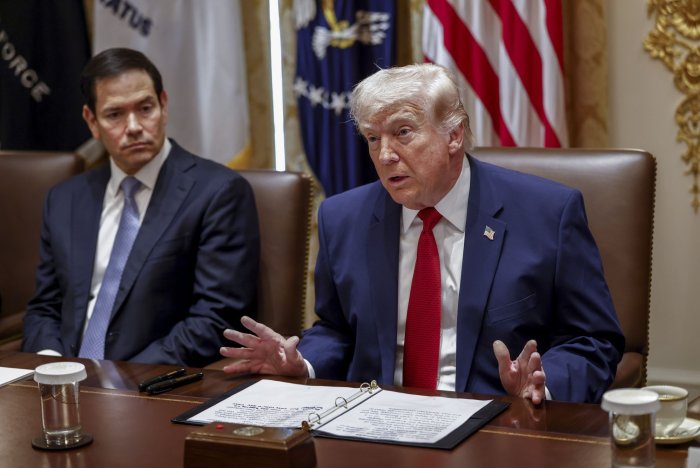
Two hours later, Trump appeared in the Oval Office with U.S. House Speaker Mike Johnson, Senate Majority Leader John Thune — both Republicans — as well as other House members. Also, financial industry leaders, whom he dined with earlier at the White House, watched the signing.

“I just want to tell the American people, you should not forget this when we come up to midterms and other things,” Trump said about elections in 2026 for the House and Senate. “Don’t forget what they’ve done to our country.”

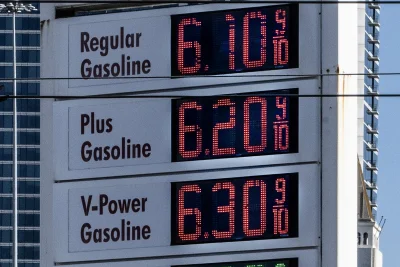
In the public ceremony, Trump blasted the Affordable Care Act as “Obama madness,” bragged about the record-high stock market and spoke about gas prices around $2.50 a gallon. He didn’t take any questions from reporters.

Trump wants Obamacare to be scrapped.

“We’ll work on something having to do with healthcare,” said Trump, who hasn’t been able to find a replacement since first being president in 2017. “We can do a lot better.”

He has proposed bypassing providers with direct payment to users, who then could purchase their own plans.

“I’m calling today for insurance companies not to be paid,” Trump said, “but for this massive amount of money to be given directly to the people.” Basic Medicare is administered by the government rather than companies.

The House had been out of session since Sept. 19, when it passed the first version of a continuing resolution to temporarily fund the government. The Senate held 14 votes on the same legislation, but failed to reach the 60-vote supermajority needed to pass it.

The House originally approved the spending bill on a majority vote, but the Senate needed 60 votes and approval was held up in finding enough Democrats to agree to legislation that doesn’t guarantee enhanced health insurance subsidies starting Jan. 1.

The GOP holds a 53-47 edge.

Trump again on Wednesday night called for an end to the filibuster, saying “if we had the filibuster terminated, this would never happen again.”

Most Republicans have opposed this “nuclear option,” because Democrats could use it when they are in power.

After the House Rules Committee advanced the Senate bill Tuesday night, the full chamber convened at 4:08 p.m., and began debate for one hour at 4:36 p.m. The bill advanced 213-209.

The GOP has a 219-214 advantage, with Democrat Adelita Grijalvi having been sworn in when the House convened. She was elected Sept. 23. There are two vacancies.

Government reopens

At least 670,000 federal employees furloughed will return to work and roughly 730,000 essential workers, including air traffic control workers, will be paid, according to the Bipartisan Policy Center.

The White House’s Office of Management and Budget furloughed workers will return on Thursday.

“Agencies should take all necessary steps to ensure that offices open in a prompt and orderly manner on November 13, 2025,” the memorandum released Wednesday night reads.

Essential workers had to work without pay, including air traffic control personnel. This resulted in several thousand flights being canceled.

Government programs also will resume, including 42 million people receiving monthly payments from the Supplemental Nutrition Assistance Program. For the first time in history, November money wasn’t sent electronically.

“For 40 days, hardworking Americans have endured flight cancellations, missed paychecks and empty dinner tables – all because Democrats closed the government,” Johnson posted on X with a video before the vote.

“It was foolish, pointless, cruel and entirely avoidable. Republicans have been working every day to get the government reopened for the American people, and today we should finally be able to overcome the Democrats and accomplish our mission.”

Divided on insurance subsidies

The program, which became known as Obamacare, was approved in 2010 during Barack Obama’s presidency. A record 25 million were enrolled this year.

The credits were enhanced in 2021 by the American Rescue Plan Act during the pandemic and extended one year later through 2015. They increased the amount of financial assistance, expanded eligibility and capped the percentage of household income for the benchmark silver plan.

Eight senators who caucus with the Democrats voted Monday in favor of the new bill on Tuesday night, allowing the chamber to pass it with a vote of 60-40.

The Senate broke the impasse over the weekend after Republicans agreed to hold a separate vote on ACA tax credits in December.

On Wednesday night, Johnson told reporters that Republicans are “pulling together the best ideas that we think can, in the quickest fashion, bring premiums down.”

And that includes working with Democrats.

“I sent a note to Hakeem Jeffries and I said, ‘Look, we would love to do this in a bipartisan fashion,’ you know, and he and I exchanged texts yesterday about that.”

Democrats focus on healthcare

Jeffries unsuccessfully attempted a three-year extension of Obamacare by a discharge petition. There would be a vote if the minority party can secure support for a majority of the chamber — a total of 218 signatures. But there are only 214 Democrats and there wasn’t sufficient GOP backing.

“Affordable Care Act tax credits were extended by three years in the Inflation Reduction Act,” Jeffries said outside the Capitol before the House convened. “The legislation that we will introduce in the context of the discharge petition will provide that level of certainty to working-class Americans who are on the verge of seeing their premiums, copays and deductibles skyrocket in some cases, experiencing increases of $1,000 or $2,000 per year.”

Jeffries said Democrats will continue to fight on healthcae.

“We’ll continue to fight for the principle that in this great country, the wealthiest country in the history of the world, healthcare can’t simply be a privilege available only to the well-off, the wealthy and the well-connected.

“Healthcare must be a right available to every single American. And that’s the fight that House Democrats will continue to wage for the American people.”

Colorado Rep. Jeff Hurd said he wanted to extend the enhanced premium tax credits for time to work on “the underlying drivers that are pushing up those health care costs to begin with.”

Workers union wants healthcare addresses

The American Federation of State, County and Municipal Employees, with 1.4 million members, called on Congress to help Americans afford health insurance.

“AFSCME members have been clear from the start of this shutdown: we need to lower health care costs and fund public services,” AFSCME President Lee Saunders said in a statement to UPI.

“Unfortunately, this administration and the Project 2025 ideologues in Congress refused to come to the table to address the healthcare crisis gripping families across the country. We applaud all of the leaders in Congress who stood up and sounded the alarm about the massive insurance premium hikes affecting millions of Americans.

“The fight to protect families from these increases is far from over. Now that the government is reopening, we’re calling on members of Congress to keep their promise and hold a vote to extend the Affordable Care Act tax credits. Working families cannot afford to wait any longer to lower health care costs.”

Provision on suing DOJ

The legislation includes funds for eight senators to sue the Department of Justice for obtaining their phone records during an investigation when Joe Biden was president.

Rather than removing the provision and returning it to the Senate, Johnson said he plans to have separate legislation next week.

“I was very angry about it,” Johnson said. “I was, and a lot of my members called me and said, ‘Did you know about it?’ We had no idea. That was dropped in at the last minute. And I did not appreciate that, nor did most of the House members. Many of them were very – are very angry about that.”

Democrats also opposed the provision.

“What makes this corruption so staggering is that the payout is specifically designed to go to eight senators whose phone records were lawfully subpoenaed under due process by the Department of Justice,” Rep. Rosa DeLauro, the top Democrat on the House Appropriations panel, wrote in a statement.

She accused the senators of voting “to shove taxpayer dollars into their own pockets — $500,000 for each time their records were inspected.”

Daniel Haynes contributed to this report.

President Donald Trump speaks to members of the media during a swearing in ceremony for Sergio Gor, the new U.S. Ambassador to India, in the Oval Office of the White House on Monday. Photo by Craig Hudson/UPI | License Photo

Source link

Senate Republicans tie healthcare subsidies to abortion limits

Nov. 11 (UPI) — Senate Republicans have signaled that they are willing to negotiate with Democrats on healthcare subsidies, but are demanding tighter abortion rules on insurance plans.

Senate Republican Leader John Thune described his party’s negotiating position to reporters before the chamber passed a bill on Monday to reopen the government, according to NBC News. Thune’s remarks set the stage for the next partisan fight over expiring health care subsidies that were at the center of the longest government shutdown on record.

Sen. Ron Wyden, D-Ore., sharply criticized the Republican proposal in a floor speech Saturday, calling it “a backdoor national abortion ban.”

“Democrats must dismiss this radical Trojan horse against women’s essential healthcare out of hand,” he said.

Senate Democrats earlier demanded that an extension of pandemic-era enhanced subsidies be included in any government-funding bill. That demand was left out of a funding bill that passed the Senate on Monday and is expected to pass the House.

With no extension of the subsidies in place, individuals who purchase health insurance through Affordable Care Act marketplaces will see steep premium rises — some by thousands of dollars a month — beginning next year.

Republicans have expressed a willingness to negotiate on the enhanced subsidies, but Thune said that in exchange for an extension of the subsidies, Republicans will ask for more stringent enforcement of longstanding restrictions on federal funding being used for abortion, known as the Hyde Amendment.

“A one-year extension along the lines of what [Democrats] are suggesting, and without Hyde protections — doesn’t even get close,” Thune said, according to NBC News.

Wyden said in his floor speech that the Affordable Care Act, also known as Obamacare, already bars the use of taxpayer money for abortions.

However, Republicans want to block states from allowing people to access abortions through the Affordable Care Act marketplaces using state or other funding, NBC News reported.

Sen. Mike Rounds, R-S.D., has indicated he’s open to extending the subsidies, but said Republicans won’t support it without the abortion restrictions.

Source link

Senate plans series of votes to end record shutdown

Nov. 10 (UPI) — The U.S. Senate plans a series of votes Monday night to try to end the record-long shutdown as House Speaker Mike Johnson called representatives to return to Washington to be there when a bill reaches them.

Earlier, Senate Majority Leader John Thune of South Dakota said they were in a “holding pattern.”

Late Monday afternoon, the GOP’s whip office told CNN a vote would begin after 5 p.m. p.m. John Barrasso of Wyoming mobilizec members for key votes. A GOP aide confirmed the plans to CBS News.

On Sept. 19, the House approved short-gap spending legislation along party lines 217-213 that doesn’t include healthcare subsidies next year through the Affordable Care Act, known as Obamacare. Only a majority is needed in the House, but the Senate needs 60 votes in the 100-member chamber.

The Senate is scheduled to go into recess Tuesday for Veterans Day and was seeking to conclude business before then.

Thune said the American people “have suffered for long enough,” and other senators were reasonably optimistic.

“It’s very close,” said Sen. Mike Rounds, who also serves South Dakota. “We’ll work our way through a couple of issues.”

“I’m optimistic, yeah,” Florida Sen. Rick Scott said. “People want to, you know, they want to get — they want to go home.”

Sen. Rand Paul of Kentucky is the only Republican to vote against past funding bills. He wants hemp farming in the agriculture appropriations bill in exchange for allowing the legislation to move quickly. The Senate plans to vote on the amendment.

“If Rand wants to plant his flag and hold the government shut down for over hemp in Kentucky, take that fight on. I think he’ll lose that one pretty hard,” said Sen. Markwayne Mullin of Oklahoma, noting that another senator wants an amendment to withhold pay from members during government shutdowns.

Monday marked the 41st day of the United States’ longest-running government shutdown, which started Oct. 1. It beat the previous longest shutdown of 35 days, which took place in 2018 and 2019 during President Donald Trump‘s first term.

Despite the pending vote, Johnson further pushed against the Democrats’ battle to extend health insurance subsidies. The Senate would vote separately on the subsidies next month.

“There’ll be long days and long nights here for the foreseeable future to make up for all this lost time that was imposed upon us,” Johnson told reporters.

Senators held a procedural vote Sunday in which seven Democrats and one Independent joined Republicans to narrowly advance a funding measure 60-40.

In exchange for the Democrats’ votes, Republicans agreed to hold a vote in the future on extending Obamacare subsidies.

There are more steps to take before senators hold an official vote on legislation to fund the government through January, including a measure on how long the chamber will debate.

All but a few Democrats have voted 14 times against the House stopgap measure out of concerns over a lack of an extension to the ACA tax credits, set to expire end of December. More than 20 million U.S. citizens currently rely the ACA on for health insurance.

“The American people have now awoken to Trump’s healthcare crisis,” Senate Democratic leader Chuck Schumer of New York said.

“Healthcare is once again at the forefront of people’s minds,” Schumer said on the Senate floor. “People now see that premiums are about to skyrocket. They’re terrified about how they’re going to pay for their insurance.”

The new measure would reverse all shutdown-related job layoffs, guarantee federal worker pay during the shutdown, establish a specific budget process and fund the Supplemental Nutrition Assistance Program through September.

Johnson said he will give a 36-hour notice before any House votes, but did not offer a specific timeline.

The speaker, who has kept the lower chamber out of session since late September, indicated that a vote could occur as early as this week.

Any bill passed by both chambers will require a signature by Trump to become law. Trump said he intends to sign the legislation.

“Well, it depends what deal we’re talking about, but if it’s the deal I heard about … they want to change the deal a little bit, but I would say so,” Trump told CNN’s Kaitlan Collins in the Oval Office.

“I think, based on everything I’m hearing, they haven’t changed anything, and we have support from enough Democrats, and we’re going to be opening up our country. It’s too bad it was closed, but we’ll be opening up our country very quickly.”

That includes adhering to a provision that would reverse layoffs of federal workers his administration pushed during the shutdown.

In the House, Johnson plans to swear in Adelita Grijalva of Arizona when the members return, according to a CNN source.

Grijalva was elected Sept 23, but Johnson refused to swear her in until Senate Democrats agreed to reopen the government.

Once Grijalva is sworn in, she is expected to become the 218th signature necessary to bypass leadership and force a vote on compelling the release of files in the Jeffrey Epstein sex-abuse case.

Minority Leader Hakeem Jeffries said Monday that House Democrats would continue to oppose the spending bill that advanced in the Senate this weekend.

“As House Democrats, we know we’re on the right side of this fight, the right side of the American people, and we’re not going to support partisan Republican spending bill that continues to gut the health care of the American people, and we’re going to continue the fight to extend the Affordable Care Act tax credits,” he said at a news conference.

Furloughed federal workers line up as Jose Andres’ World Central Kitchen’s Relief Team sets up a free meal distribution site in Washington, D.C., on Monday. Photo by Bonnie Cash/UPI | License Photo

Source link

Senate advances resolution to end government shutdown

Nov. 9 (UPI) — The U.S. Senate on Sunday night voted to advance a proposal that, if passed by Congress, would fund the federal government through the end of January, marking an important step toward ending the nation’s longest shutdown.

The Senate advanced the continuing appropriations bill in a 60-40 vote, with eight Democrats joining their Republican colleagues, after the Democratic caucus had maintained a strong resistance to passing a bill to reopen the government during 14 previous votes.

The bill was advanced as the 40-day government shutdown strained the United States, with many airports facing significant delays and flight reductions due to worker shortages and the food supplies of low-income households threatened by a lack of federal funding for the Supplemental Nutrition Assistance Program.

Senate Democratic Whip Dick Durbin of Illinois, who was among those who voted in favor of the resolution, said in a statement Sunday that the bill is not the same as the one Democrats rejected 14 previous times.

“Republicans finally woke up and realized their Groundhog Day needed to end. This bill is not perfect, but it takes important steps to reduce their shutdown’s hurt,” he said on X.

“Not only would it fully fund SNAP for the year ahead, but it would reverse the mass firings the Trump administration ordered throughout the shutdown.”

Along with Durbin, the other Democrats who voted in favor of the bill are: Sens. John Fetterman of Pennsylvania, Sens. Maggie Hassan and Jeanne Shaheen of New Hampshire and Catherine Cortez Masto and Jacky Rosen of Nevada.

Sen. Angus King, an independent from Maine but who caucuses with the Democrats, also voted “yes” to the resolution.

Explaining his vote, King said the bill will “alleviate the crisis that is now occurring in SNAP, in food insecurity across the country.”

“Food pantries can’t do it by themselves,” he said in a video message published late Sunday to his X account.

The resolution still needs to be debated and passed by the Senate and House and then be signed by President Donald Trump for the government shutdown to end.

The resolution included a “minibus” package of legislation, which, if it is approved by the Senate, would then be amended to include a full year of government funding.

The deal also includes a vote on extending tax credits for people who buy insurance through the Affordable Care Act — agreement on which has been the linchpin in the 40-day federal government shutdown.

Durbin, in his statement, said it was now up to Senate Majority Leader John Thune, R-S.D., to schedule the promised vote on the ACA tax credits for next month.

“And we will see to it that he makes good on his word for the millions of Americans worried they won’t be able to afford healthcare in January,” he said.

The resolution was advanced after it was reported Sunday afternoon that the Republicans had secured enough Democratic votes to advance it.

Some lawmakers had expressed hope that they might be able to end the shutdown after Senators discussed three bills that would fund the government for a full year.

Programs for veterans affairs and agriculture subsidies were released early Sunday, and a more complete funding measure for the legislative branch was released later in the day.

The extended shutdown has put SNAP benefits on hold and snarled air traffic at the nation’s busiest airports amid the ongoing impasse, which has stretched well into its second month.

Staffing shortages and flight cancellations have caused travel disruptions and forced many air traffic controllers to work without pay.

Senate Democrats have been holding out for a one-year extension of Biden-era subsidies for health insurance premiums for people who buy coverage on the federal Marketplace under the Affordable Care Act.

The shutdown also prompted the Trump administration to cancel scheduled military flyovers at a handful of NFL games, including at the Washington, D.C., area stadium that hosts the Washington Commanders, where Trump attended the game Sunday between the Commanders and Detroit Lions.

Trump has expressed wishes to have the Commanders rename the stadium after him. ESPN reported that it would be discussed between the president and team ownership during the contest.

Source link

Senate has ‘more than enough’ votes to end shutdown Sunday night

Nov. 9 (UPI) — The Senate was poised to end the longest government shutdown in U.S. history Sunday night as Democrats and Republicans said the two sides have reached a tentative budget agreement.

Axios and The Hill reported on Sunday afternoon that 10 Senate Democrats are expected to vote in favor of the House bill to fund and reopen the government through January. Politico reported Sunday night that there are “more than enough” votes for passage.

Senate Majority Leader John Thune, R-S.D., who said that the Senate would remain in session until the impasse is resolved, said earlier Sunday that he expected a 15th vote on the bill Sunday night.

The vote would include a “minibus” package of legislation, which, if it is approved by the Senate, would then be amended to include a full year of government funding.

The deal also includes a vote, on a date established in the package, on extending tax credits for people who buy insurance through the Affordable Care Act — agreement on which has been the linchpin in the 40-day federal government shutdown.

Democrats are set for a caucus meeting tonight, CBS News reported.

Some lawmakers expressed hope that they may be able to end the shutdown after Senators discussed three bills that would fund the government for a full year.

Programs for veterans affairs and agriculture subsidies were released early Sunday, and a more complete funding measure for the legislative branch was released later in the day.

The extended shutdown has put SNAP benefits on hold and snarled air traffic at the nation’s busiest airports amid the ongoing impasse, which has stretched well into its second month.

Staffing shortages and flight cancellations have caused travel disruptions and forced many air traffic controllers to work without pay.

Senate Democrats have been holding out for a one year extension of Biden-era subsidies for health insurance premiums for people who buy coverage on the federal Marketplace under the Affordable Care Act. Thune promised Democrats a vote on extending the subsides in December as part of the agreement.

The shutdown also prompted the Trump administration to cancel scheduled military flyovers at a handful of NFL games, including at the Washington, D.C, area stadium that hosts the Washington Commanders, where President Donald Trump attended the game Sunday between the Commanders and Detroit Lions.

Trump has expressed wishes to have the Commanders name the stadium after him. ESPN reported that it would be discussed between the president and team ownership during the contest.

Source link

Senate adjourns with no vote will resume session on Sunday

Nov. 8 (UPI) — The federal government will extend its record-long close to 40 days after the Senate adjourned with no vote held on a possible budget deal on Saturday.

A small number of centrist Democratic Party senators have been negotiating with Republicans behind closed doors to try to craft a funding measure that would reopen the federal government, CNN reported.

They are making progress but said there disagreement remains over Democrats’ demand to extend Affordable Care Act credits that are scheduled to expire at the end of the year.

Senate Republicans are meeting at 12:30 p.m. EST on Sunday before resuming session.

Senate Majority Leader John Thune, R-S.D., earlier said the Senate will work through the weekend to try to end the budget impasse and reopen the federal government, which shut down when the 2026 fiscal year started without a budget in place in Oct. 1.

Thune also said the Senate will continue to meet until a budget deal is approved.

The Senate was scheduled to be in recess around Veterans Day, which is Tuesday.

Instead, it convened after noon in a rare Saturday session, which was the fourth this year.

The last Sunday session was on Feb. 11, 2024, for a vote on emergency national security appropriations.

With the government closed for more than a month, around 900,000 workers are furloughed and another 700,000 are working without pay — a number that includes air traffic controllers, which has resulted in staffing issues and forced flight cancellations.

Food assistance through the Supplemental Nutrition Assistance Program was paused for this month, although the Supreme Court is set to decide a case on whether the Trump administration is legally required to fund the program.

The issue holding up an end to the shutdown is an extension of subsidies available for some Americans who purchase health insurance through an Affordable Care Act exchange. The ACA is also referred to as Obamacare.

Republicans want a clean funding bill with health insurance to be considered later, while Democrats want the government’s subsidies to be extended into next year as part of a funding bill.

A record 24.3 million have purchased insurance through one of the exchanges, with nine out of 10 receiving some sort of financial assistance.

Open enrollment began on Nov. 1 for most policyholders, one month after the shutdown began.

Rates will rise 26% on average next year, according to a KFF analysis — not including the end of the subsidies. In all, costs will more than double, according to a separate KFF analysis of data from the Centers for Medicare and Medicaid Services.

Thune, of South Dakota, said both sides negotiated overnight on a possible short-term spending bill, while bipartisan negotiations also have been ongoing but not fruitful.

“I’m frustrated like everybody is,” GOP Sen. Roger Marshall of Kansas told reporters on Saturday. “Every American is frustrated. Nobody wins in a shutdown, especially one that is this long.

Asked whether there could be a deal, he responded, “None. None at all. I’m almost speechless. What has not been said?”

Thune said a 15th vote on advancing the House-passed continuing resolution is not currently scheduled, but could come up later in the day.

In past votes, a few Democrats have approved the bill but 60 votes are needed. The Republicans have a 53-47 edge in the chamber.

“There’s still only one path out — it’s a clean funding extension,” Thune said on the Senate floor Saturday.

Senators have been told they will be given 24 hours to read the text of an agreement, a GOP aide told CNN.

Sen. Markwayne Mullin of Oklahoma told reporters that consensus has emerged in the Republican conference around a Jan. 30 funding end date.

GOP senators have pushed for the funding with the goal of including longer-term appropriations bills and extending the deadline for funding, in exchange for a future vote on healthcare.

“The question is whether we can have everything ready to go,” Thune told reporters. “We’re getting close to having it ready. Ideally, it’d be great to set it up so we could vote today, but we have to … have the votes to actually pass it.”

On Friday, Republicans shot down a Democratic push toward a deal featuring a one-year tax credit extension on health insurance. Thune said the tax extension would be considered after the shutdown ends.

“That’s what we’re going to negotiate once the government opens up,” Thune said Friday.

Minor Leader Chuck Schumer of New York criticized Republicans for rejecting the idea.

“Yesterday, we offered Republicans a perfectly reasonable compromise to get out of this horrible shutdown that they installed on the American people,” Schumer said on the House floor. “We offered three things: we all vote to reopen the government, we all approve a one-time temporary extension of current ACA premium tax credits, and then after we reopen we negotiate.”

“I know many Republicans stormed out the gate to dismiss this offer, but that’s a terrible mistake,” he added.

Schumer said it doesn’t need to be negotiated because the idea “is not a new policy, this is not negotiating a shutdown.”

Thune has been adamant that he can’t guarantee Democrats a tax extension process.

President Donald Trump, who is at his estate in South Florida, has been pressing to end the filibuster rule and instead have bills pass by a majority of the 100 senators. Most Republicans are opposed to this “nuclear” option, fearing Democrats will do that when they are in power.

“Democrats are cracking like dogs on the Shutdown because they are deathly afraid that I am making progress with the Republicans on TERMINATING THE FILIBUSTER!,” Trump posted on Truth Social on Saturday afternoon. “Whether we make a Deal or not, THE REPUBLICANS MUST ‘BLOW UP’ THE FILIBUSTER, AND APPROVE HUNDREDS OF LONG SOUGHT, BUT NEVER GOTTEN, POLICY WINS LIKE, AS JUST A SMALL EXAMPLE, VOTER ID (IDENTIFICATION). Only a LOSER would not agree to doing this!”

End Obamacare?

Trump also told Republicans to end Obamacare, something he has attempted to do since he first became president in 2017.

He called it the “worst Healthcare anywhere in the World.”

On Saturday morning in a post on Truth Social, he said money used for the program should be sent directly to the public instead of “money sucking Insurance Companies in order to save the bad Healthcare provided by ObamaCare.

“In other words, take it from the BIG, BAD Insurance Companies, give it to the people.”

Medicare, mainly for seniors, has Part A and B that don’t go through insurance companies and are run by the U.S. government’s Centers for Medicare & Medicaid Services.

Sen. Lindsey Graham of South Carolina, an ally of Trump, touted the proposal.

“We’re not going to extend this program for a year because that would be unfair to the taxpayer,” Graham said on the Senate floor. “That would continue a healthcare system that’s out of control. It would enrich health insurance companies even more. We’re not going to do that. We’re going to replace this broken system with something that is actually better for the consumer to meet the goal of lowering health care costs.”

Graham said he spoke with Trump on Saturday morning and that the president told him he would “like to sit down and see if we can come up with a better solution. I know we can, but we’re not going to do it while the government’s shut down.”

Graham also urged Democrats to “end this madness.”

“To my Democratic colleagues, let’s open up the government and act like adults and see if we can get this problem in a better spot. We’ll never do it with the government shut down,” he said.

President Donald Trump greets the Prime Minister of Hungary Viktor Orban outside the West Wing of the White House on Friday. Photo by Aaron Schwartz/UPI | License Photo

Source link

Trump wants investigation of meatpacking industry amid beef price rise

Nov. 7 (UPI) — President Donald Trump on Friday wants the U.S. Justice Department to investigate the meatpacking industry for possible price fixing and collusion.

Trump posted about the situation on Truth Social while flying to South Florida for the weekend and after he met in the White House with three Republican senators from beef-producing states, who are opposed to importing beef from Argentina.

“I have asked the DOJ to immediately begin an investigation into the meatpacking companies, who are driving up the price of beef through illicit collusion, price fixing, and price manipulation,” Trump posted.

“We will always protect our American Ranchers, and they are being blamed for what is being done by a majority of foreign-owned meatpackers, who artificially inflate prices and jeopardize the security of our Nation’s food supply.

“Action must be taken immediately to protect consumers, combat Illegal monopolies, and ensure these corporations are not criminally profiting at the expense of the American people. I am asking the DOJ to act expeditiously.”

A short time later, he posted: “Cattle prices have dropped substantially, the price of boxed beef has gone up — therefore, you know that something is ‘fishy.’ We will get to the bottom of it very quickly. If there is criminality, those people responsible will pay a steep price!”

After the messages, Attorney General Pam Bondi posted on X: “Our investigation is underway! My Antitrust Division led by @AAGSlater has taken the lead in partnership with our friend @SecRollins at @USDA.”

Brooke Rollins is the agriculture secretary and Abigail “Gail” Slater leads the DOJ’s Antitrust Division.

The top four meatpackers control more than about 85% of the U.S. market — American companies Tyson and Cargill with JBS and National subsidiaries of Brazilian companies.

“This consolidation allows them to suppress prices paid to ranchers while keeping consumer prices high,” Farm Action said. “Importing more beef into this rigged system will not lower costs for families or restore fair markets for producers.

Three of the companies have been sued.

In October, Cargill and Tyson agreed to pay $87.5 million to settle a case alleging price fixing for beef while also denying any wrongdoing.

Earlier this year, JBS agreed to pay $83.5 million for its portion of a separate suit over alleged cattle price fixing.

Trump was taking aim on meatpacking instead of cattle raising, which has been affected by drought, smaller herds, labor shortages and lingering COVID-19 effects, Axios reported.

Trump has said overall grocery prices are going down but concedes beef costs are rising.

A CNN fact check pointed out in September that they were 1.4% higher than in January, when Trump returned to office, according to the Consumer Price Index.

There was a 0.6% increase in average grocery prices from July 2025 to August 2025, the biggest month-to-month jump in three years

Beef is up 13% in one year — the highest over most food items — according to the CPI.

Trump has attempted to increase the nation’s beef supply with increased imports.

The cattle industry and legislators, including Republicans, have opposed this move.

“President Trump’s plan to buy beef from Argentina is a betrayal of the American rancher,” Farm Action said.

“Those of us who raise cattle have finally started to see what profit looks like after facing years of high input costs and market manipulation by the meatpacking monopoly.

“After crashing the soybean market and gifting Argentina our largest export buyer, he’s now poised to do the same to the cattle market. Importing Argentinian beef would send U.S. cattle prices plummeting -and with the meatpacking industry as consolidated as it is, consumers may not see lower beef prices either. Washington should be focused on fixing our broken cattle market, not rewarding foreign competitors.”

Senate Majority Leader John Thune of South Dakota, opposes the imports.

“This isn’t the way to do it,” Thune told Semafor in October. “It’s created a lot of uncertainty in that market. So I’m hoping that the White House has gotten the message.”

Trump met with some Republican senators from beef-producing states: Sen. Cindy Hyde-Smith of Mississippi, Tim Sheehy of Montana and Markwayne Mullin of Oklahoma.

Hyde-Smith is a Republican from Mississippi whose family raises cattle. She is opposed to the imports.

In October, he announced plans to quadruple the tariff quota for imported Argentine beef from 20,000 to 80,000 metric tons. Any imports above this new quota with no tariff would still be subject to a higher 26.4% tariff.

In October, Trump authorized $20 billion loan to Argentina’s government and another $20 billion in financing from private lenders and sovereign wealth funds. It has been described as a bailout to Argentine President Javier Milei.

Source link

Sen. Chuck Schumer offers path to end government shutdown

Nov. 7 (UPI) — Democrats are ready to end the federal government shutdown if Republicans agree to extend Affordable Care Act credits for another year, Senate Minority Leader Chuck Schumer announced Friday afternoon.

Schumer, D-N.Y., said Senate Democrats favor passing a temporary funding measure and three other bills that would fund the federal government for one year, CNN reported.

“Democrats are offering a very simple compromise,” Schumer said on the Senate floor.

“Now, the ball is in the Republicans’ court,” he added. “We need Republicans to just say yes.”

Schumer’s announcement came after Senate Majority Leader John Thune, R-S.D., earlier said the Senate will work through the weekend to negotiate reopening the federal government and possibly vote after a bipartisan effort failed Thursday.

Thune wanted to hold another vote on the House-approved continuing resolution to fund the federal government through Nov. 21, but Senate Democrats aren’t on board, he told media earlier Friday.

“Our members are going to be advised to be available if, in fact, there’s a need to vote,” he said.

“We will see what happens and whether or not, over the course of the next couple of days, the Democrats can find their way to re-engage again,” Thune added.

Thune earlier this week expressed optimism that a funding agreement would be made this week, but that ended after Senate Democrats met on Thursday.

“All I know is that the pep rally they had at lunch yesterday evidently changed some minds,” he said Friday.

“We had given them everything they wanted and had asked for,” Thune explained. “At some point, I was gonna say they have to take ‘yes’ for an answer, and they were trending in that direction.”

The impasse is due to Senate Democrats not trusting President Donald Trump to agree to extend Affordable Care Act tax credits that expire after December and to stop firing federal employees, The Hill reported.

Senate Democrats held a working lunch on Thursday, as referenced by Thune, during which they rejected a bipartisan proposal to reopen the government.

Sens. Gary Peters, D-Mich., Jeanne Shaheen, D-N.H., and Angus King, I-Maine, had worked out a deal with the GOP, which buoyed Thune’s hope of ending the government shutdown on its record 38th day.

Senate Democrats discussed the bipartisan proposal during their Thursday lunch and rejected it due to their distrust of the president.

The proposal would have included a short-term funding measure to reopen the government and a three-year appropriations bill that would have funded the Agriculture Department, Veterans Affairs, military construction and the legislative branch.

The USDA funding would have meant full funding for currently suspended Supplemental Nutrition Assistance Program benefits.

Lacking strong guarantees that the president would support extending Affordable Care Act credits that initially were enacted during the COVID-19 pandemic and that are scheduled to expire at the end of the year, the Senate Democrats said they won’t support the bipartisan plan to move forward.

Despite the continued opposition from Senate Democrats, Thune doesn’t expect the shutdown to continue into the Thanksgiving holiday weekend at the end of the month, he said while appearing on Fox News Friday.

Thune needs at least five more Senate Democrats to join with Democratic Party Sens. John Fetterman of Pennsylvania, Catherine Cortez Masto of Nevada and King, who caucuses with Senate Democrats, to approve the continuing resolution.

Fetterman, Masto and King consistently have voted in favor of continuing the 2025 fiscal year budget while negotiating the budget for the 2026 fiscal year, which started on Oct. 1.

Republican Sen. Rand Paul of Kentucky is the only Republican senator to continually vote against the measure.

The House-approved continuing resolution consistently has received a majority of support in the Senate, but it has not received the 60 votes needed to overcome the Senate’s filibuster rule for passage.

Source link

U.S. Senate convenes on 34th day of shutdown

Nov. 3 (UPI) — The U.S. Senate reconvened Monday afternoon for a possible funding bill as the federal government shutdown moved one day closer to a record 35 days, set in 2019 during President Donald Trump‘s first term.

There have been 13 unsuccessful procedural votes on a House-passed continuing resolution, which would fund the government through Nov. 21.

The Senate convened at 3 p.m. after last meeting on Thursday. The House hasn’t been in session since Sept. 19. The government shut down on Oct. 1.

Senate Majority Leader John Thune told reporters Monday that he is “optimistic” but not necessarily “confident” senators from both parties will reach a deal to reopen the government this week.

“Based on sort of my gut of how things operate, I think we’re getting close to an off-ramp. But this is unlike any other government shutdown in terms of the way Democrats reacted to it,” he said.

Thune hopes to have an agreement this week because the Senate is scheduled to be in recess next week for Veterans Day.

“There were a lot of conversations over the weekend and hopefully that will bring about the desired result,” Thine said. “But you know, if we don’t start seeing some progress or some evidence of that by at least the middle of this week, it’s hard to see how we would finish anything by the end of the week. And I think that would be the objective here, to try and get something that we could send back to the House that would open up the government.”

Thune said he is agreeable to extending the resolution until January.

Speaker Mike Johnson said Monday that GOP leaders are discussing ways to deal with the expiration date of the continuing resolution that passed the House 217-212 on Sept. 19.

The House only needs a majority to pass legislation.

In the Senate, they have failed to reach the required 60 votes. The Republicans have a 53-47 advantage.

Trump has called for Senate Republicans to “get rid of the filibuster” to allow them to pass the stopgap funding bill with a simple majority. The so-called “nuclear option” would eliminate the need for the 60-vote supermajority typically required to pass legislation in the upper chamber.

Thune said he’s against invoking the nuclear option for fear Democrats would use it as a precedent and take advantage of it when they control the Senate in the future.

In fact, he said Monday that there’s not enough support among his colleagues on scrapping the filibuster.

“The votes aren’t there,” Thune told reporters.

The Trump administration opposes negotiating with Democrats on healthcare until the government reopens. The Democrats don’t want to approve any funding bill until subsidies for the Affordable Care Act, known as Obamacare, are extended into next year.

“Our position has been very clear,” one White House official told CNN. “The clean CR [continuing resolution] needs to be passed, and then there’s room for talks after that.”

The White House is calling it a “Democratic shutdown” on its website and social media.

A bipartisan quartet of House lawmakers released a “statement of principles” Monday for an extension of Obamacare subsidies for two years and an income cap for eligibility, Politico reported. It was by Republican Reps. Don Bacon of Nebraska and Jeff Hurd of Colorado, and Democratic Reps. Tom Suozzi of New York and Josh Gottheimer of New Jersey.

House Minority Leader Hakeem Jeffries of New York said lawmakers have been on a “taxpayer-funded vacation” instead of negotiating and Trump was at his home in Florida, including hosting a $1 million-per-play campaign fundraising dinner.

“What’s Donald Trump been doing this weekend? He was on the golf course, spitting in the face of the American people with his inaction and his indifference,” Jeffries said.

Only essential personnel are working and without pay. That includes air traffic controllers. Flights have been delayed at airports throughout the nation. At last 670,000 federal employees have been furloughed and roughly 730,000 working without pay. In past shutdowns, workers off the job received back pay.

“There is a level of risk that gets injected into the system when we have a controller that’s doing two jobs instead of one,” Transportation Secretary Sean Duffy said Sunday on ABC News’ This Week. “We will delay, we will cancel, any kind of flight across the national airspace to make sure people are safe.”

Flights are being spaced out to handle the diminished staff.

From Friday morning until Sunday night, 98 Federal Aviation Administration facilities reported a “staffing trigger” in which air traffic controllers had to alter operations to keep the airspace safe.

FlightAware reported 5,890 total delays involving U.S. airports on Sunday. The delays aren’t only related to air traffic control issues.

Source link