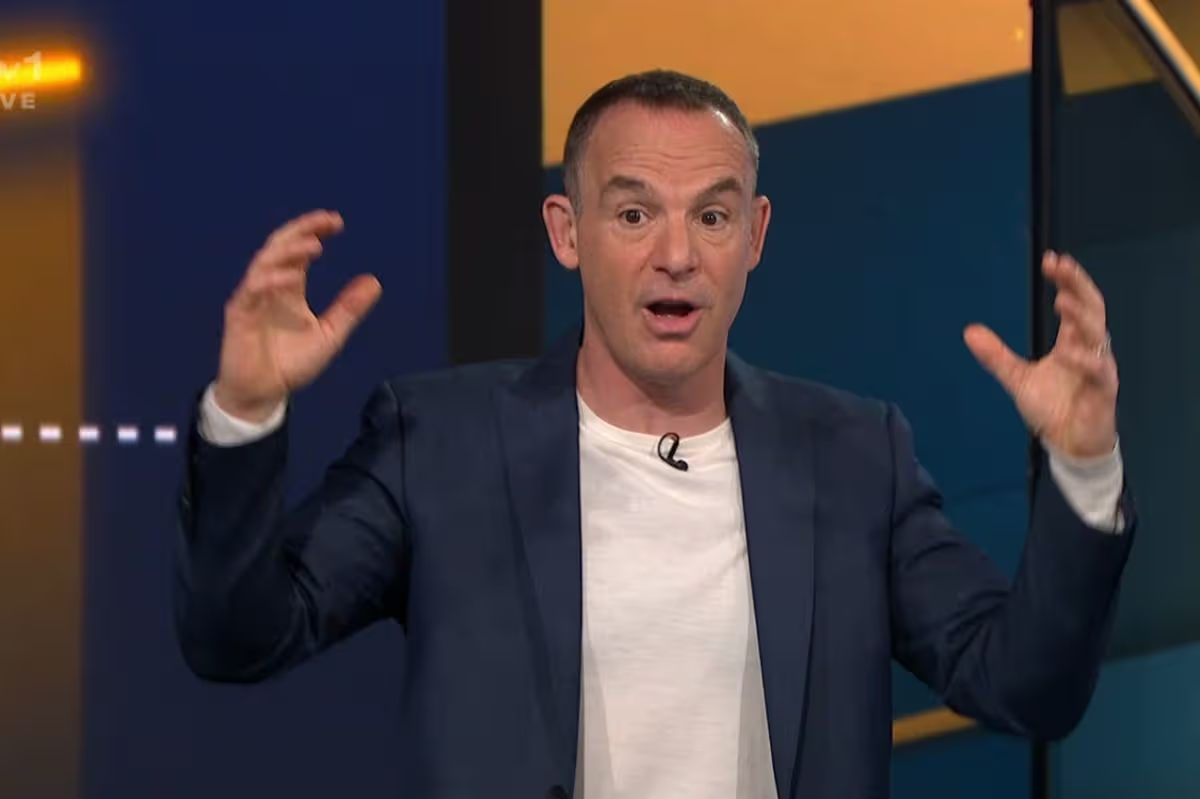
The finance expert has said these could help make travelling much smoother

Martin Lewis’ wallet ‘essentials’ before any trip abroad(Image: ITV)
Martin Lewis has said that Brits going abroad should have up to five essential items in their dedicated ‘holiday wallet’. These important items could make travelling much easier, and in some cases, cheaper, through one simple money-saving technique.
According to the Money Saving Expert (MSE) website, founded by Martin Lewis, he has previously suggested that people set aside a separate wallet or purse for use only when abroad. He recommends keeping five items inside at all times, even when you get back to the UK, to make future holidays ‘easier’.
The financial broadcaster calls this his ‘overseas wallet or purse‘, and he has followed this advice for decades. In the 2013 blog post, the ITV regular said: “I genuinely have a second wallet I pick up when I go abroad. Not to better match my overseas shoes, but as a MoneySaving arsenal to ensure that when I am away, I get more bang for my buck.”
Starting with some of the most common and relevant to the average traveller. Martin suggested that this wallet should have a specific bank card for overseas use.
He said: “Everyone who regularly travels abroad should hold a specialist overseas credit card. This isn’t about borrowing, it’s simply an easy vehicle to get the best exchange rates in every country.
“Spending abroad on most plastic should be avoided. While banks and building societies themselves get the nigh-on perfect Visa/Mastercard wholesale rate, they then add a 3% load to what they charge us.” If you can’t get a credit card or don’t want one, prepay cards are effectively an electronic traveller’s cheque.
Martin wrote: “Load it up with cash in advance and use it while away. If you lose it, no problem, pay a replacement fee and the cash is re-credited.”
If you frequent the same country or region often, cash leftover from previous trips. Although it can be tempting to swap anything back into pounds straight away, it could be a welcome surprise for future trips – whether that be a few months, a year or more later.
If people are often travelling in European countries, such as Spain, France, Italy, and Greece, it might be worth keeping a UK Global Health Insurance Card (GHIC) in their travel wallet for emergency medical care . It is free on the official NHS site and lets UK travellers access state-run healthcare in EU countries and Switzerland for certain medical costs, often at the same price locals pay.
These cards don’t replace travel insurance, which you’ll need for things such as cancellations, private hospitals or repatriation. Check the expiry date at the bottom right of your card now, as many could be travelling with expired cards.
For anyone who drives abroad, keep your original driving license handy (and remember to swap it out of any physical travel wallets before packing them away). Martin said: “As well as the obvious car hire advantages, it’s also useful as ID, which is often demanded when paying by card.”
For those planning to drive outside the European Union, it’s either recommended or compulsory in 140 countries to have an International Driving Permit as well as your UK licence. The AA has a country-by-country guide to what’s needed here.
When travelling further afield, and over to the United States, a copy of your ESTA (Electronic System for Travel Authorisation) number will be handy to keep close. An ESTA lasts for two years, or until your passport expires, whichever comes first. Once it runs out, you’ll need to apply for a new one.
Although you don’t need to present the reference number at Border Protection when you land in the US, print or screenshot it and bring it to the airport. That’s because some airlines may require it at check-in, so check with yours.
Martin also said: “My wallet’s also packed with unspent small euro and dollar notes. After all, why pay to change back £30 or £40 of foreign currency? Leave it sitting for next time.” Martin also recommends keeping a photocopy of your passport. He said: “Just in case my passport goes missing, the key details can be very useful.”