Israels

Is Israel’s government waging war on Al Jazeera and the media? | Israel-Palestine conflict News

The Israeli government is cracking down on critical media outlets, giving it unprecedented control over how its actions are presented to its citizens.

Among the moves is the so-called Al Jazeera Law, which allows the government to shut down foreign media outlets on national security grounds. On Tuesday, the Israeli parliament approved the extension of the law for two years after it was introduced during Israel’s genocidal war on Gaza to essentially stop Al Jazeera’s operations in Israel.

Recommended Stories

list of 4 itemsend of list

Separately, the government is also moving to shut down the popular Army Radio network, one of two publicly funded Israeli news outlets. The radio station is often criticised by the Israeli right wing, which views Army Radio as being biased against it.

Israelis are still reliant on receiving their news from traditional outlets with about half relying on broadcast news for information on current affairs and about a third similarly relying upon radio stations.

The tone of the media that is allowed to publish and broadcast is important. According to analysts inside Israel, the selective broadcasting of Palestinian suffering during Israel’s war on Gaza has helped sustain the carnage and reinforced a sense of grievance that allows for Israel’s continued assaults on Gaza as well as regional countries, such as Syria, Yemen and Lebanon.

Despite what observers characterise as a media environment firmly rigged in its favour, the far-right government of Prime Minister Benjamin Netanyahu, which contains ministers convicted of “terrorism” offences and others who have repeatedly called for the illegal annexation of the occupied West Bank, is looking nevertheless to bypass legal checks on its control of the media and bring more of Israel’s information feed under its control.

Let’s take a closer look.

Because the government believes it is too critical.

Israeli politicians have long complained about how the war in Gaza has been covered in both the international and domestic media.

But the government added a new accusation in November, partly blaming the media for the Hamas-led attacks on southern Israel on October 7, 2023.

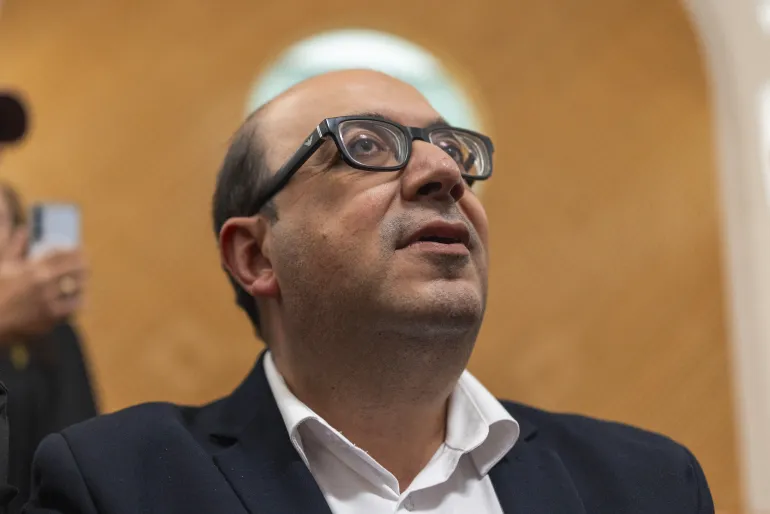
“If there hadn’t been a media entirely mobilised to encourage refusal [to volunteer to reserve duty] and reckless opposition to the judicial reform, there wouldn’t have been such a rift in the nation that led the enemy to seize the opportunity,” Communications Minister Shlomo Karhi said as he introduced a bill to increase government control of the news environment, referring to attempts by the Israeli government to reduce the independence of the judiciary.

Israel's Prime Minister Benjamin Netanyahu, right, speaks to Minister of Communications Shlomo Karhi at the Knesset, Israel's parliament
Israeli Prime Minister Benjamin Netanyahu, right, speaks to Minister of Communications Shlomo Karhi in the Knesset in West Jerusalem [File: Maya Alleruzzo/AP Photo]

In addition to the ‘Al Jazeera Law’, there are three items of legislation under way: a plan to privatise Israel’s public broadcaster, Kan, the move to abolish Army Radio, and an initiative to bring the media regulator under government control.

Both Army Radio and Kan, the other state-funded outlet with editorial independence, have carried numerous reports critical of the government.

This week, Kan aired an interview with Netanyahu’s former spokesperson Eli Feldstein, who told the broadcaster that the prime minister had instructed him to develop a strategy to help evade responsibility for the October 7 attacks.

Meanwhile, Israeli Defence Minister Israel Katz, justifying the move to shut down Army Radio, said on Monday that the outlet had become a platform to attack the Israeli military and its soldiers.

Israel is also potentially changing the way it regulates its media. In November, the Israeli parliament pressed ahead with a bill that would abolish existing media regulators and replace them with a new authority appointed by the government, potentially allowing for even greater state interference.

Israel's Attorney General Gali Baharav-Miara listens on as she attends a cabinet meeting at the Bible Lands Museum in Jerusalem on June 5, 2024. GIL COHEN-MAGEN/Pool via REUTERS
Israeli Attorney General Gali Baharav-Miara attends a cabinet meeting at the Bible Lands Museum in Jerusalem [Gil Cohen-Magen/Pool via Reuters]

Lastly, Israel has also codified into law the emergency legislation banning foreign media outlets whose output it disagrees with. It was first enacted as emergency legislation in May 2024 when Israel used it to ban Al Jazeera from its territory, and it was then used in the same month to halt the activity of The Associated Press after the government accused the United States-based news agency of sharing footage with Al Jazeera.

Under the new law, the communications minister – with the prime minister’s sign-off and the backing of a ministerial committee – may halt a foreign broadcaster’s transmissions if the prime minister accepts a professional assessment that the outlet poses a security threat. The minister can also shut the broadcaster’s offices, confiscate equipment used to produce its content and block access to its website.

Have the moves been criticised?

The International Federation of Journalists (IFJ) and the United Kingdom’s National Union of Journalists have criticised Israel’s decision to legislate against foreign media platforms it deems a security threat.

In a statement, IFJ General Secretary Anthony Bellanger said: “Israel is openly waging a battle against media outlets, both local and foreign, that criticise the government’s narrative: that is typical behavior of authoritarian regimes. We are deeply concerned about the Israeli parliament passing this controversial bill, as it would be a serious blow to free speech and media freedom, and a direct attack on the public’s right to know.”

The attempt to shutter Army Radio has also been heavily criticised with Israeli Attorney General Gali Baharav-Miara declaring the move unlawful and accusing Netanyahu’s coalition of making public broadcasting “weakened, threatened and institutionally silenced and its future shrouded in mist”.

Baharav-Miara has also criticised the move to place media regulation under government control, saying the bill “endangers the very principle of press freedom”.

Not very.

The Israeli media have overwhelmingly been a consistent cheerleader of the Israeli government’s actions in Gaza, where more than 70,000 Palestinians have been killed by Israel, and in the occupied West Bank.

The suffering of Palestinians is rarely shown, and when it is, it is often justified.

Even as Israel has killed more than 270 journalists and media workers in Gaza, the Israeli media have provided cover for the actions of its government and military.

That means Israelis often don’t recogise the hypocrisy of their government’s statements.

An example came in June after Iran struck an evacuated hospital during the 12-day war between Israel and Iran. The Israeli government called the incident a war crime, and the Israeli media reflected that outrage.

But the attack came after Israel had been accused by a variety of organisations, including the United Nations, of systematically destroying Gaza’s healthcare system with medical workers targeted for arrest and frequently tortured despite their protection under international law.

“The Israeli media … sees its job as not to educate – it’s to shape and mould a public that is ready to support war and aggression,” journalist Orly Noy told Al Jazeera from West Jerusalem in the wake of the strike on the Israeli medical centre. “It genuinely sees itself as having a special role in this.”

Source link

Iran executes man accused of spying for Israel’s Mossad: State media | Israel-Iran conflict News

Aghil Keshavarz is the tenth person put to death for espionage since June conflict with Israel.

Iran has executed a man convicted of spying for Israel’s Mossad intelligence agency, judicial authorities announced, as Tehran continues a widening crackdown on alleged collaborators following the 12-day Israel-United States-Iran war earlier this year.

Aghil Keshavarz was put to death on Saturday morning after the Supreme Court upheld his conviction on espionage charges, according to Mizan, the judiciary’s official news agency.

Recommended Stories

list of 2 itemsend of list

The 27-year-old architecture student was arrested earlier this year in the northwestern city of Urmia after military patrols caught him photographing an army headquarters building.

The execution adds to a growing number of people put to death for espionage since the June conflict, with at least 10 executed by September alone.

In September, Iran executed a man it said was “one of the most important spies for Israel in Iran”.

In October, Tehran toughened legislation against alleged spies for Israel and the US, making espionage automatically punishable by death and asset confiscation.

According to the Mizan report, Keshavarz was accused of conducting more than 200 missions for Israeli intelligence services across Tehran, Isfahan, Urmia and Shahroud.

The missions allegedly included photographing target sites, conducting opinion polling, and monitoring traffic patterns at specific locations.

Authorities said he communicated with both Israel’s Mossad and military officials through encrypted messaging platforms, receiving payment in cryptocurrency after completing assignments.

The judiciary said Keshavarz had “knowingly cooperated” with Israeli services with the intention of harming Iran’s Islamic Republic.

The Oslo-based Iran Human Rights group has previously disputed similar espionage convictions, saying suspects are often tortured into false confessions.

Israel’s offensive in June involved 12 days of air attacks, including several against Iran’s top generals and nuclear scientists, as well as civilians in residential areas, for which Iran retaliated with barrages of missiles and drones. The US also carried out extensive strikes, on Israel’s behalf, on Iranian nuclear sites during the conflict. According to Amnesty International, Israeli attacks on Iran killed at least 1,100 people.

In response to the June war and protests in recent years over the state of the economy and women’s rights, as well as calls for regime change, Iran has sentenced more people to death.

Source link

Gaza’s tech workers code from rubble as Israel’s war destroys digital life | Israel-Palestine conflict News

In a territory where 81 percent of buildings lie damaged or destroyed, a small community of young Palestinians is fighting to preserve what remains of Gaza’s digital world.

Coders, repair technicians and freelance workers are labouring under impossible conditions to keep the besieged enclave connected to the outside world.

Recommended Stories

list of 3 itemsend of list

Against all odds, Gaza’s youths continue to adapt. They work offline, code in notebooks, store solar power whenever the sun is out, and wait for rare moments of connectivity to send their work to clients around the world.

In a war that has taken nearly everything, digital skills have become a form of survival – and resilience.

Many now also rely on online work to make a living. But even that fragile lifeline is now hanging by a thread after more than two years of Israel’s genocidal war.

Gaza coders
Palestinians work on laptops and mobile devices in Gaza despite widespread destruction of telecommunications infrastructure [Al Jazeera]

According to the Palestinian Central Bureau of Statistics, Israeli forces have “deliberately and systematically destroyed” the telecommunications infrastructure.

“We just always look for another way to get connected, always find another way,” said Shaima Abu Al Atta, a coder working from a displacement camp. “This is what actually gave us purpose because if we didn’t do this, we would just die surviving and not doing anything. We would die internally.”

Before the war erupted in October 2023, Gaza had a modest but vibrant tech scene. Innovation hubs hosted coding bootcamps, and hundreds of freelancers worked remotely for international clients. Much of that ecosystem now lies in ruins.

Shareef Naim, an engineer who led a technology hub, described what was lost. His building housed more than 12 programmers with contracts for companies outside Gaza, he said. “The team was very active,” Naim told Al Jazeera.

Today, the structure is destroyed, though some team members are still trying to work from tents and emergency shelters.

Gaza coders
Technicians in Gaza work to repair telecommunications equipment amid severe shortages of spare parts and electricity [Al Jazeera]

Computer technician A’aed Shamaly says, “The main challenge is electricity. Today, electricity is not available all the time, and if it is available, it is unstable,  and there will be a lot of cuts. Prices are also high.”

Electricity, when available at all, is unstable and prohibitively expensive, $12 per kilowatt compared with $1.50 for 10 kilowatts before the war, he said. “There are no spare parts,” he added, so technicians must scavenge components from broken equipment pulled from bombed buildings.

The scale of destruction is staggering. According to the United Nations Satellite Centre (UNOSAT), approximately 198,273 structures across Gaza have been damaged, with 123,464 completely destroyed. The telecommunications sector has been particularly hard hit.

Data from the Palestinian Central Bureau of Statistics reveals that 64 percent of mobile phone towers were out of service as of early April 2025. In Rafah, coverage has collapsed to just 27 percent, down from near-universal access before the war.

During the war, connectivity watchdog NetBlocks documented repeated disruptions, including what it called a “near-total telecoms blackout” in January 2024 that lasted for days.

Israel has long restricted Gaza to outdated 2G mobile technology while allowing 4G in the occupied West Bank.

The telecommunications sector’s value has cratered from $13m in 2023 to just $1.5m in 2024, an 89 percent collapse. Estimated losses exceed half a billion dollars, while reconstruction is projected to cost at least $90m.

Gaza coders
Palestinians struggle to maintain internet connectivity in Gaza, where most telecommunications infrastructure has been destroyed [Al Jazeera]

The consequences ripple across Gaza’s economy and society.

Remote work was a crucial income source in a territory where unemployment exceeded 79 percent even before October 2023. Now, erratic internet access has pushed many freelancers into joblessness just as Israeli-induced famine has sent food prices soaring.

The telecommunications collapse has also paralysed the banking system, preventing money transfers and leaving families unable to access cash. Healthcare has been disrupted, with the World Health Organization documenting deaths caused by the inability to contact emergency services in time.

Even during the fragile ceasefire that took effect in October 2025, Israel has blocked essential repair equipment from entering Gaza. The restrictions form part of what analysts describe as a deliberate strategy to maintain control over Palestinian digital infrastructure and suppress the flow of information to the outside world.

The future remains deeply uncertain, as efforts to push a fragile ceasefire forward appear to stall and Israel threatens the possibility of returning to full-scale war.

Source link

Canadian MP blocked from West Bank rejects Israel’s ‘safety concern’ claims | Israel-Palestine conflict News

A Canadian lawmaker who was denied entry to the occupied West Bank, alongside fellow politicians and civil society leaders, has dismissed Israel’s claims that the delegation posed a threat to public safety.

Jenny Kwan, a Canadian MP with the left-leaning New Democratic Party (NDP), questioned whether Canada’s recognition of an independent Palestinian state earlier this year contributed to Israel’s decision to block the group.

Recommended Stories

list of 3 itemsend of list

“How is it that members of parliament are a public safety concern?” she said in an interview with Al Jazeera. “How is it that civil society organisations who are doing humanitarian work… [are] a security concern?”

Kwan and five other MPs were among 30 Canadian delegates denied entry to the Israeli-occupied West Bank on Tuesday after Israel deemed them a risk to public safety.

The delegation, organised by nonprofit group The Canadian-Muslim Vote, was turned back to Jordan at the King Hussein (Allenby) Bridge crossing, which connects Jordan with the West Bank and is controlled by Israel on the Palestinian side, after an hours-long security check.

Kwan said another female MP in the group was “manhandled” by Israeli border agents while attempting to keep an eye on a delegate who was being taken for additional interrogation.

“She was shoved – not once, not twice, but multiple times – by border agents there,” Kwan said. “A member of parliament was handled in that way – If you were just an everyday person, what else could have happened?”

The delegates had been expected to meet with Palestinian community members to discuss daily realities in the West Bank, where residents have faced a surge in Israeli military and settler violence.

They were also planning to meet with Jewish families affected by the conflict, said Kwan, who described the three-day trip as a fact-finding mission.

“I reject the notion that that is a public safety concern,” she said of the delegation’s mission.

Lack of information

Global Affairs Canada, the country’s Foreign Ministry, did not respond to Al Jazeera’s questions about the incident.

Canadian Foreign Affairs Minister Anita Anand said on Tuesday afternoon that the ministry was in contact with the delegation and had “expressed Canada’s objections regarding the mistreatment of these Canadians while attempting to cross”.

The Israeli military did not respond to Al Jazeera’s repeated requests for comment.

In a statement to Canada’s public broadcaster CBC News, the Israeli military agency that oversees affairs in the occupied Palestinian territory, COGAT, said the Canadian delegates were turned back because they arrived “without prior coordination”.

COGAT also said the group’s members were “denied for security reasons”.

But the delegates said they had applied for, and received, Israel Electronic Travel Authorization permits before they reached the crossing. Kwan also said the Canadian government informed Israel ahead of time of the delegation’s plans.

“I’m not quite sure exactly what kind of coordination is required,” Kwan told Al Jazeera.

“We followed every step that we’re supposed to follow, so I’m not quite sure exactly what they mean or what they’re referring to.”

Canada-Israel ties

Canada, a longstanding supporter of Israel, faced the ire of Israeli Prime Minister Benjamin Netanyahu after it joined several European allies in recognising an independent Palestinian state in September.

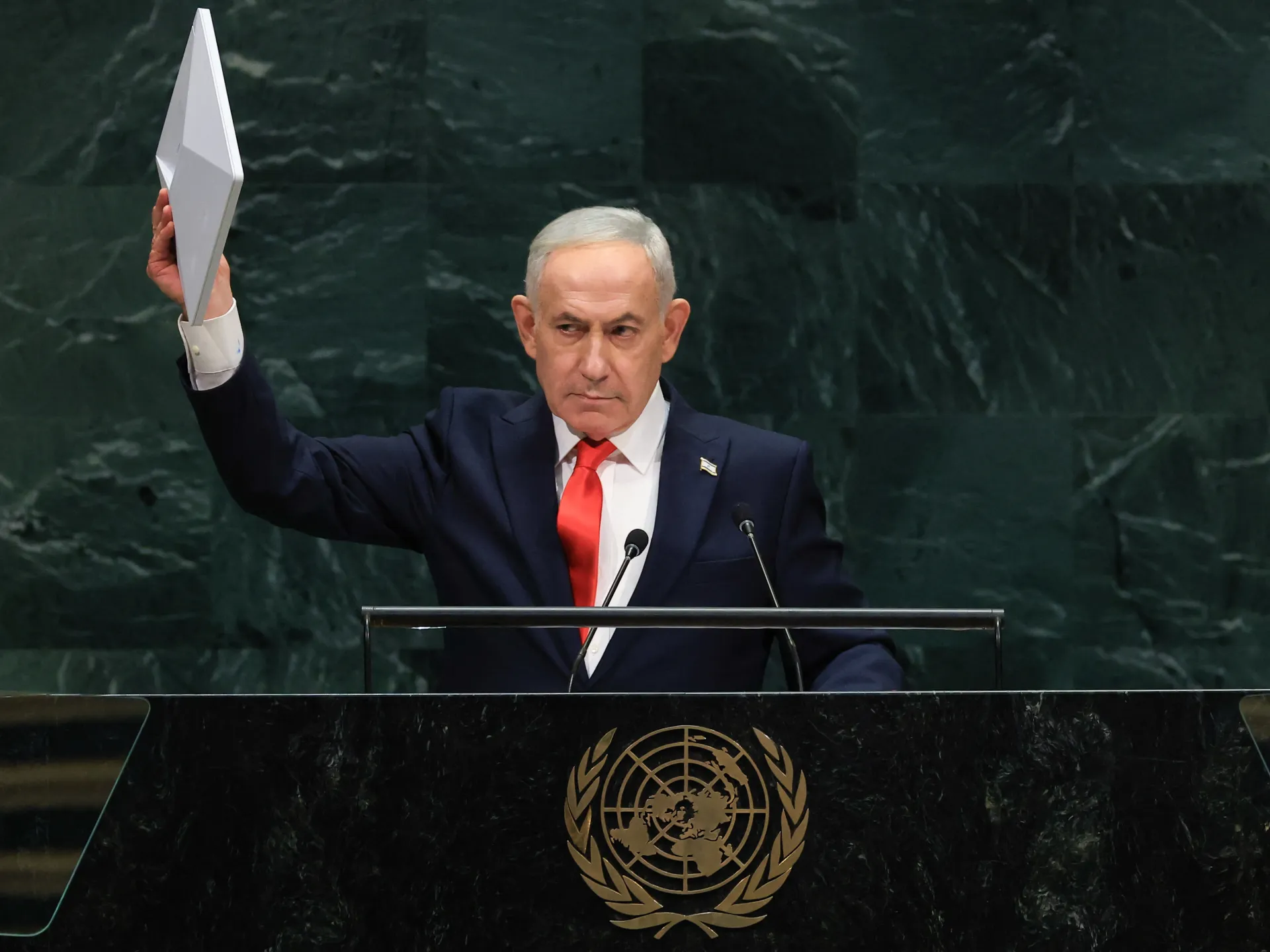
“Israel will not allow you to shove a terror state down our throats,” Netanyahu said in a speech at the United Nations General Assembly in New York City.

The recognition came after months of mass protests in Canada and other Western countries demanding an end to Israel’s genocidal war against Palestinians in Gaza, which has killed more than 70,000 people since October 2023.

Rights advocates also called for action to stem a surge in deadly Israeli violence against Palestinians in the West Bank.

Against that backdrop, members of the Canadian delegation questioned whether their entry refusal was part of an Israeli effort to prevent people from witnessing what is happening on the ground in the Palestinian territory.

“‘What are they trying to hide?’ is the question that comes to mind,” Fawad Kalsi, the CEO of the relief group Penny Appeal Canada and one of the delegates, told Al Jazeera on Tuesday.

Kwan, the Canadian MP, raised a similar question, saying, “If people cannot witness” what is happening on the ground in the West Bank, “then misinformation and disinformation will continue”.

She added that she also saw foreign doctors being turned back to Jordan at the King Hussein (Allenby) Bridge crossing as they tried to bring medicine and baby formula into the West Bank.

“If we as members of parliament could face denial of entry,” she said, “imagine what is going on on the ground with other people, and the difficulties that they face, that we do not know about.”

Source link

How Israel’s expansion push deepens Palestinian suffering in West Bank | Israel-Palestine conflict News

A new wave of Israeli policies is changing the reality and boundaries on the ground in the occupied West Bank.

The Israeli government has approved the formalisation of 19 so-called settlement outposts as independent settlements in the occupied West Bank. This is the third wave of such formalisations this year by the government, which considers settlement expansion and annexation a top priority. During an earlier ceremony of formalisation, Finance Minister Bezalel Smotrich said, “We are advancing de facto sovereignty on the ground to prevent any possibility of establishing an Arab state in [the West Bank].”

Settlement outposts, which are illegal under international law, are set up by a small group of settlers without prior government authorisation. This does not mean that the settlers, who are often more ideological and violent, do not enjoy government protection. Israeli human rights organisations say that settlers in these so-called outposts enjoy protection, electricity and other services from the Israeli army. The formalisation opens the door to additional government funds, infrastructure and expansion.

Many of the settlement outposts formalised in this latest decision are concentrated in the northeastern part of the West Bank, an area that traditionally has had very little settlement activity. They also include the formalisation of two outposts evacuated in 2005 by the government of Israeli then-Prime Minister Ariel Sharon.

While these government decisions may seem bureaucratic, they are in fact strategic in nature. They support the more ideological and often more violent settlers entrenching their presence and taking over yet more Palestinian land, and becoming more brazen in their attacks against Palestinians, which are unprecedented in scope and effect.

The Israeli human rights organisation B’Tselem estimates that settler attacks against Palestinians have forcibly displaced 44 communities across the West Bank in the past two years. These arson attacks, vandalism, physical assault and deadly shootings are done under the protection of Israeli soldiers. During these settler attacks, 34 Palestinians were killed, including three children. None of the perpetrators has been brought to justice. In fact, policing of these groups has dropped under the direction of Israel’s national security minister, Itamar Ben-Gvir, who is a settler himself.

United Nations Secretary-General Antonio Guterres recently sounded the alarm about Israel’s record-breaking expansion of illegal settlements in the West Bank and the unprecedented levels of state-backed settler violence. In a briefing to the UN Security Council, Guterres reminded states that all settlements are illegal under international law. He also warned that they erode Palestinian rights recognised under this law, including to a state of their own.

In September, United States President Donald Trump said he “will not allow” Israel to annex the West Bank, without offering details of what actions he would take to prevent such a move.

But Israel is undeterred. The government continues to pursue its agenda of land grab, territorial expansion and annexation by a myriad of measures that fragment, dispossess and isolate Palestinians in the West Bank, including East Jerusalem, and continues its genocidal violence in Gaza.

More than 32,000 Palestinians have been forcibly displaced from their homes in three refugee camps in the occupied West Bank for nearly a year. The Israeli army continues to occupy Nur Shams, Tulkarem and Jenin refugee camps and ban residents from returning. Meanwhile, Israeli forces have demolished and damaged 1,460 buildings in those camps, according to a preliminary UN estimate. This huge, destructive campaign has changed the geography of the camps and plunged more families into economic and social despair.

This is the state hundreds of thousands of Palestinians across the West Bank find themselves in because of Israeli restrictions, home demolitions and land grabs. The Israeli army has set up close to 1,000 gates across the West Bank, turning communities into open-air prisons. This has a direct and devastating effect on the social fabric, economy and vitality of these communities, which live on land that is grabbed from under them to execute the expansion of illegal settlements, roads and so-called buffer zones around them.

According to the UN Conference on Trade and Development, Israeli practices and policies over the past two years have cost the Palestinian people 69 years of development. The organisation recently reported that the Palestinian gross domestic product (GDP) has shrunk to 2010 levels. This is visible most starkly in Gaza, but it is palpable in the West Bank as well.

The results of these policies and this reality are Palestinians leaving their homes and Israel expanding. During the summer, Israeli Prime Minister Benjamin Netanyahu told a local news station he was on a “historic and spiritual mission”, in reference to the vision of the Greater Israel that he said he was “very” attached to.

Source link

Virtual reality offers escape to Gaza children wounded in Israel’s war | Israel-Palestine conflict News

VR headsets are offering injured, traumatised Palestinian children some respite from hardship in war-torn Gaza.

Inside a makeshift tent in the heart of the besieged Gaza Strip, Israel’s genocidal war, which has destroyed neighbourhoods, schools and hospitals, decimated families and shattered lives for more than two years, no longer exists.

Virtual reality technology is taking Palestinian children struggling with physical and psychological wounds to a world away, where they can feel safe again.

Recommended Stories

list of 3 itemsend of list

“After I was injured in the head, I try to forget the pain,” Salah Abu Rukba, a Palestinian child taking part in the sessions, told Al Jazeera at the VR Tent in az-Zawayda, central Gaza.

“When I put on the headset, I forget the injury. I feel comfort as I forget the destruction, the war, and even the sound of the drones disappears.”

Gaza children
Salah Abu Rukba sustained an injury to his head during Israel’s genocidal war on Gaza [Screen grab/ Al Jazeera]

Lama Abu Dalal, communication officer at Gaza MedTech – the technology initiative spearheading the project – said Abu Rukba and the others have constant reminders of the war etched in their bodies.

But the VR headset makes them forget their life-changing wounds and simply be children again, if only for a few moments.

Gaza MedTech was launched by Palestinian innovator Mosab Ali, who used VR to comfort his injured son. Ali was later killed in an Israeli attack.

Studies have confirmed that VR can have beneficial effects in the treatment of mental disorders, including post-traumatic stress disorder (PTSD). Offering this service in Gaza is hard to sustain, as spare parts of the equipment are barred from entry into Gaza by Israel’s ongoing punishing blockade.

Gaza children
Gaza MedTech was launched by Palestinian innovator Mosab Ali, who used VR to comfort his injured son [Screen grab/Al Jazeera]

Since a ceasefire formally went into effect on October 10, Israel has allowed slightly more aid in, although far less than Gaza’s needs and what the agreement clearly stipulated. Israel continues to restrict the free flow of humanitarian aid and medical supplies.

Authorities in Gaza say the truce has been violated by Israel at least 738 times since taking effect.

The United Nations estimates that more than 90 percent of children in Gaza are showing signs of severe stress driven by the loss of safety and stability, and will require long-term support to heal from the psychological effect of the conflict.

Multiple UN bodies, including the World Health Organization (WHO), the UN humanitarian office OCHA, and independent UN experts, have called for immediate and unimpeded access to Gaza for essential medical equipment and psychological support.

Source link

Eurovision winner Nemo returns trophy in protest over Israel’s inclusion | Israel-Palestine conflict News

Singer’s statement follows walkout by five countries after organisers cleared Israel to participate in next year’s contest.

Swiss Eurovision winner Nemo said they will return their 2024 victory trophy because Israel is being allowed to compete in the pop music competition.

The singer, who won the 2024 edition with operatic pop track, The Code, posted a video on Instagram showing them placing the trophy in a box to be sent back to the Geneva headquarters of the European Broadcasting Union (EBU).

Recommended Stories

list of 3 itemsend of list

“Eurovision says it stands for unity, for inclusion and dignity for all people,” Nemo said, adding that Israel’s participation amid its ongoing genocidal war on Gaza showed those ideals were at odds with organisers’ decisions.

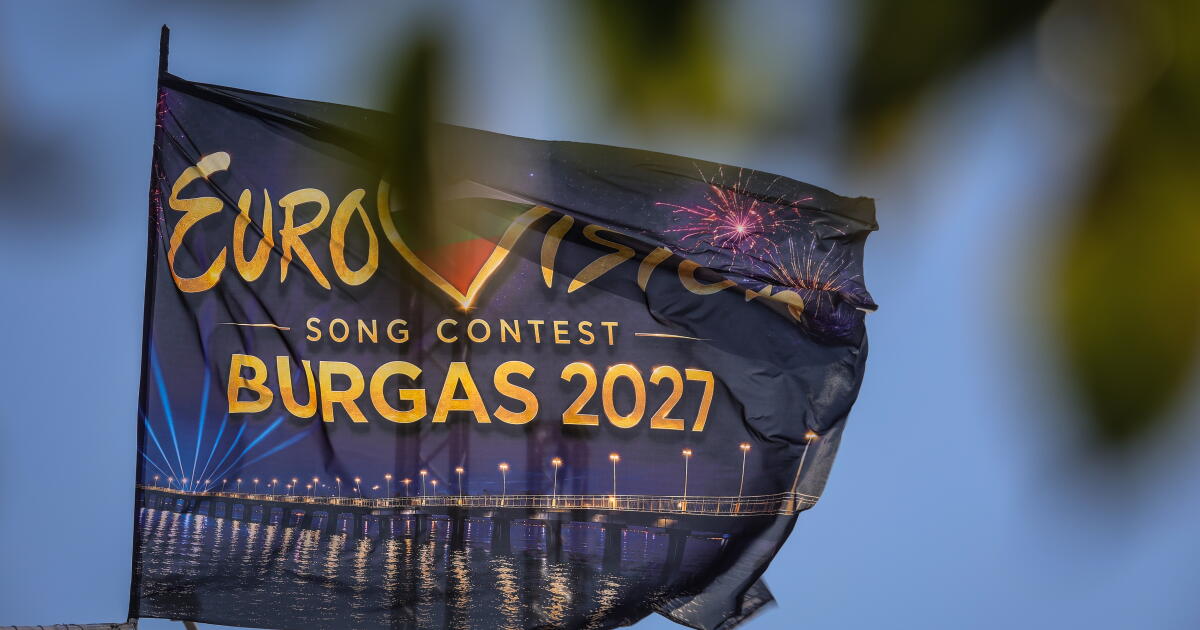
The EBU, which organises Eurovision, cleared Israel last week to take part in next year’s event in Austria, prompting Spain, the Netherlands, Ireland, Slovenia and Iceland to announce they would be boycotting the contest.

“When entire countries withdraw, it should be clear that something is deeply wrong,” Nemo said on Thursday.

On Friday, contest director Martin Green said in a statement sent to The Associated Press that organisers were “saddened that Nemo wishes to return their trophy which they deservedly won in 2024”.

“We respect the deeply held views Nemo has expressed and they will always remain a valued part of the Eurovision Song Contest family,” he added.

Next year’s Eurovision is scheduled to take place in Austria’s capital, Vienna, after Austrian singer JJ won the 2025 contest in Basel, Switzerland. Traditionally, the winning country hosts the following year.

“This is not about individuals or artists. It’s about the fact that the contest was repeatedly used to soften the image of a state accused of severe wrongdoing, all while the EBU insists that this contest is non-political,” said Nemo.

“Live what you claim. If the values we celebrate on stage aren’t lived off stage, then even the most beautiful songs become meaningless,” they added.

Israel’s genocidal war on Gaza has killed at least 70,369 Palestinians, according to the territory’s health authorities.

The country’s military has continued to attack the enclave despite a ceasefire with Palestinian group Hamas reached back in October.

Source link

US lawmakers join calls for justice in Israel’s attacks on journalists | Freedom of the Press News

Washington, DC – American journalist Dylan Collins wants to know “who pulled the trigger” in the 2023 Israeli double-tap strike in south Lebanon that injured him and killed Reuters video reporter Issam Abdallah.

Collins and his supporters are also seeking information about the military orders that led to the deadly attack. But more than two years later, Israel has not provided adequate answers on why it targeted the clearly identifiable reporters.

Recommended Stories

list of 3 itemsend of list

Press freedom advocates and three United States legislators joined Collins, an AFP and former Al Jazeera journalist, outside the US Capitol on Thursday to renew calls for accountability in this case and for the more than 250 other killings of journalists by Israel.

“I want to know who pulled the trigger; I want to know what command structure approved it, and I want to know why it’s gone unaddressed until today – on our strike and all the others targeted,” Collins said.

Senator Peter Welch and Congresswoman Becca Balint, who represent Collins’s home state of Vermont, and Senator Chris Van Hollen stressed on Thursday that they will continue to push for accountability in the strike, which wounded six journalists.

“We’re not letting it go. It doesn’t matter how long they stonewall us. We’re not letting it go,” Balint told reporters.

The attack

Welch said he was sending his seventh letter to the US Department of State demanding answers, accusing Israel of obfuscation.

Israeli authorities, he said, claim they investigated the attack and ruled the shooting unintentional, but they provided no evidence that they questioned soldiers. Israel also never contacted the key witnesses – namely, Colins and other survivors of the strike.

A man holding a video camera surrounded by a tree with blossoms
Slain Reuters journalist Issam Abdallah on assignment in Zaporizhia, Ukraine, April 17, 2022 [File: Ueslei Marcelino/Reuters]

In October, the Israeli army told the AFP news agency that the attack was still “under review” in an apparent contradiction of what Welch had been told.

“The investigation, non-investigation – there’s nothing there,” Welch said. “You’re basically getting the run-around, and you’re getting stonewalled. That’s the bottom line.”

Israel received more than $21bn in US military aid during the two years of its genocidal war on Gaza.

Throughout the war, Israel has stepped up its attacks on the press. But the country has a long history of killing journalists without accountability.

The October 13, 2023, strike, which wounded Al Jazeera’s Carmen Joukhadar and Elie Brakhia and left AFP’s Christina Assi with life-altering injuries, was well-documented in part because the journalists were livestreaming their reporting.

The correspondents, who had set up their equipment on a hilltop near the Lebanese-Israeli border to cover the escalation on the front, were in clearly marked press gear and vehicles.

Israeli drones had also circled above the journalists before the attack.

“We thought the fact that we could be seen was a good thing, that it would protect us. But after a little less than an hour at the site, we were hit twice by tank fire, two shells on the same target, 37 seconds apart,” Collins said at a news conference on Thursday.

“The first strike killed Issam instantly and nearly blew Christina’s legs off her body. As I rushed to put a tourniquet on her, we were hit the second time, and I sustained multiple shrapnel wounds.”

The AFP journalist added that the attack seemed “unfathomable in its brutality” at that time, but “we have since seen the same type of attack repeated dozens of times.”

Israel has been regularly employing such double-tap attacks, including in other strikes on journalists in Gaza.

“This is not an incident in the fog of war. It was a war crime carried out in broad daylight and broadcast on live television,” Collins said.

Earlier this year, UN rapporteur Morris Tidball-Binz called the 2023 strike “a premeditated, targeted and double-tapped attack from the Israeli forces, a clear violation, in my opinion, of IHL (international humanitarian law), a war crime”.

US response

Despite the wounding of a US citizen in the strike, the administration of then-President Joe Biden – which claimed to champion freedom of the press and the “rules-based order” – did next to nothing to hold Israel to account.

Biden’s successor, Donald Trump, also pushed on with unconditional US support for Israel.

On Thursday, Collins decried the lack of action from the US government, saying that he reached out to officials in Washington, DC, and showed them footage of the strike.

“I thought that when an American citizen is wounded in an attack carried out by the US’s greatest ally in the Middle East that we would be able to get some answers. But for two years, I’ve been met by deafening silence,” he told reporters.

“In fact, neither the Biden nor the Trump administrations have ever publicly acknowledged that a US citizen was wounded in this attack.”

Israeli soldiers and settlers have killed at least 10 US citizens, including Al Jazeera correspondent Shireen Abu Akleh, over the past decade.

Senator Van Hollen said accountability in the October 13, 2023, attack is important for journalists and US citizens across the world.

“We have not seen accountability or justice in this case, and the State Department – our own government – has not done much of anything really to pursue justice in this case,” Van Hollen told reporters.

“It is part of a broader pattern of impunity for attacks on Americans and on journalists by the government of Israel.”

He called the US approach a “dereliction of duty” by the Trump and Biden administrations.

Israeli ‘investigation’

Amelia Evans, advocacy director at the Committee to Protect Journalists (CPJ), said Senator Welch’s description of the Israeli probe shows that the country’s “purported investigative bodies are not functioning to deliver justice but to shield Israeli forces from accountability”.

Evans urged the Trump administration to “take action” and demand the completion of probes into the killing of Abu Akleh in 2022 and the 2023 attack on journalists in Lebanon.

“It must demand Israel name all the military officials throughout the command chain who were involved in both cases,” she said.

“But as Israel’s key strategic ally, the United States must do much more than that. It must publicly recognise Israel’s failure to properly investigate the war crimes committed by its military.”

Israel often uses claims of investigation in response to abuses.

Former State Department spokesperson Matthew Miller, who spent almost two years defending Israeli war crimes and justifying Washington’s unflinching support for its Middle East ally, acknowledged that tactic recently.

“We do know that Israel has opened investigations,” Miller, who incessantly invoked alleged Israeli probes from the State Department podium, said in June.

“But, look, we are many months into those investigations. And we’re not seeing Israeli soldiers held accountable.”

‘Chilling effect’

Amid the push for justice, Collins paid tribute to his colleague Abdallah, who was killed in the 2023 Israeli attack.

“Losing Issam was tough on everyone,” he told Al Jazeera. “He was like the dynamo of the press scene in Lebanon. He knew everyone. He was always the first person to help you out if you’re in a jam. He had a larger-than-life personality.”

The killing of Abdullah, Collins added, had a “chilling effect” on the coverage of that conflict, which escalated into a full-blown war between Israel and Hezbollah in September 2024.

The violence saw Israel all but wipe out nearly all the border towns in Lebanon.

Even after a ceasefire was reached in November of last year, the Israeli military continues to prevent reconstruction in the devastated villages as it carries out near-daily attacks across the country.

“If the intention was to stop people from covering the war, then it has worked to some degree,” said Collins.

Source link