How Hollywood’s ‘boys’ club’ prepared these actors for ‘The Pitt’
Since launching at the start of 2025, “The Pitt” has emerged as more than just a hyperrealistic depiction of an embattled American emergency department. Using its hospital setting as a social microcosm, HBO Max’s Emmy-winning juggernaut has explored various systemic issues — including the misogyny that women of color face in the workplace.
“Some of the stories from real physicians and nurses that I’ve spoken to are so crazy. The system feels like it’s 15, 20 years behind other industries,” says Sepideh Moafi, who portrays attending Dr. Baran Al-Hashimi. “There is still this older culture of a boundaryless style of work where [there’s] a lack of understanding and compassion,” with respect to pregnancy and childcare, for working women.
“The Pitt’s” depiction of such subjects includes unflinching attention to microaggressions and unconscious biases. Isa Briones, who plays second-year resident Dr. Trinity Santos, recalls hearing from qualified on-set doctors that “a lot of female physicians will wear their lab coats, because it makes them look like more of an authority.”
“We have a female, half-Asian doctor on our set who consistently says that people talk to the nurse in the room if they’re a white man instead of her,” adds Supriya Ganesh, whose character, fourth-year resident Dr. Samira Mohan, is mistaken for a nurse in Season 2, despite having “DOCTOR” emblazoned on her name tag.

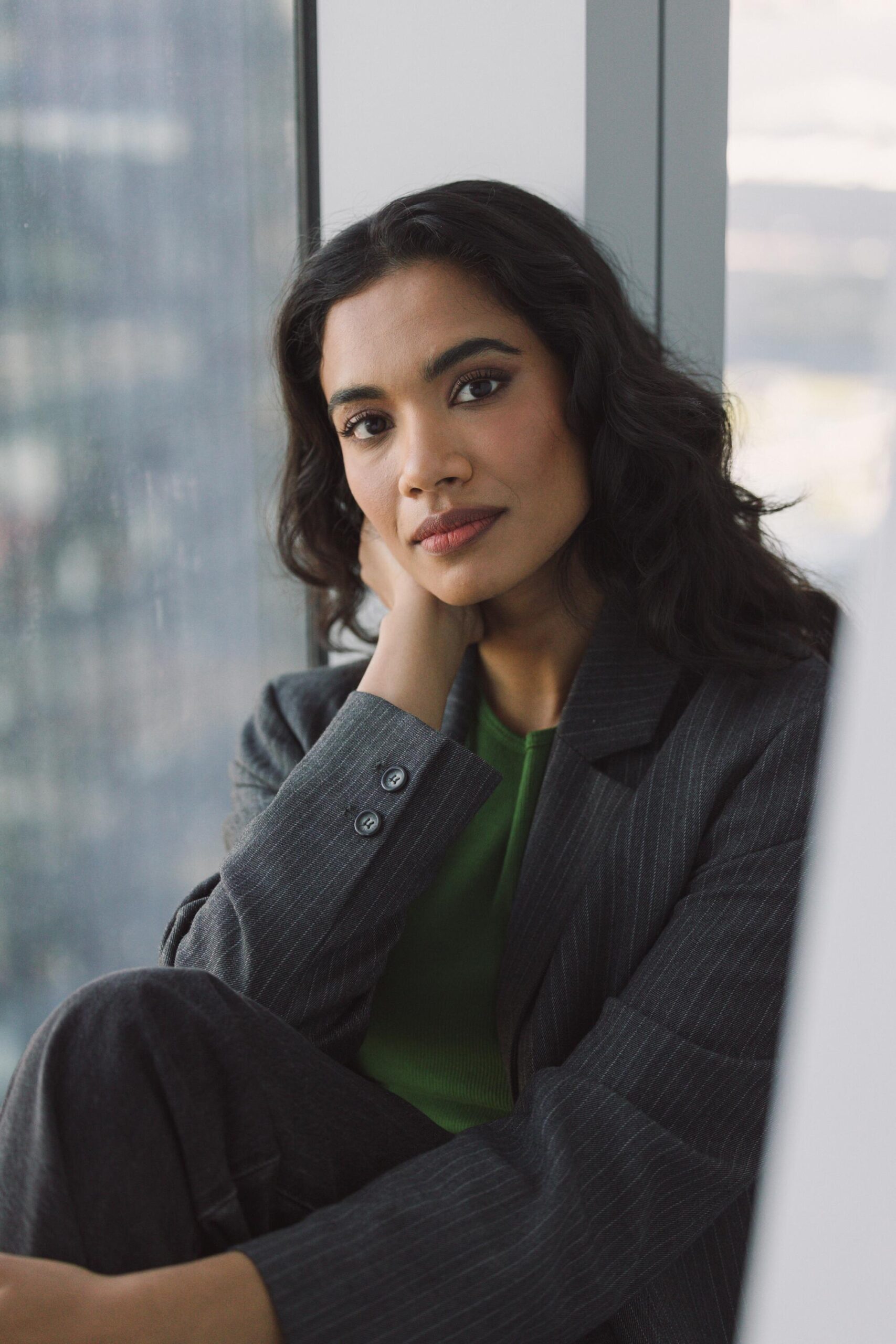
Supriya Ganesh.
(Justin Jun Lee / For The Times)
Nor is the series reluctant to show the other side of the dynamic, as doctors Robinavitch (Noah Wyle) and Langdon (Patrick Ball) lash out against their colleagues in lieu of acknowledging their own flaws. Although the women of “The Pitt” would never compare acting to saving lives, Briones believes that the experiences of women — especially from marginalized communities — share commonalities across many male-dominated industries.
“The entertainment business constantly feels like a boys’ club that you cannot penetrate no matter what you do, because it’s still always going to be these older white men who are making all the decisions,” she says. “That’s why seeing the storyline with Langdon and Robby informed my performance so much, because I know this feeling of being like, ‘Why the f— are these men fist-bumping each other? I’m also here! I’m doing my job too!’”
“As a woman in any field, if you express emotion, if you make your opinion or your voice heard, then it’s like, ‘You’re talking too much. You’re being hysterical,’” Moafi says.

Sepideh Moafi.
(Justin Jun Lee / For The Times)
In holding up a mirror to the healthcare system, showrunner R. Scott Gemmill also wanted to explore the linguistic diversity of its practitioners, allowing his actors of color to reconnect with their mother tongues.
“Language shapes who you are, how you see the world,” Moafi says. Al-Hashimi became a polyglot — speaking English, Farsi and Armenian — in part to curb the effects of a seizure disorder on her temporal lobe, which is crucial for language comprehension. “[Language] connects you to different registers in the body. The rhythms are different, and the emotional access is more immediate.”
During Season 1, Santos — who, like Briones, is half-Filipino — surprised nurses Princess (Kristin Villanueva) and Perlah (Amielynn Abellera) by chiming in on their gossip session in Tagalog. But wanting to show “a more vulnerable side of Santos” this season, Briones worked with her own actor father, Jon Jon, to find a Filipino lullaby that she could sing to baby Jane Doe.
To reflect the 100-plus languages spoken in the Philippines, they selected a Hiligaynon lullaby called “Ili Ili Tulog Anay.” Briones advocated for the scene not to have subtitles: “It should be just this quiet moment that you don’t have to understand [the language] to understand, but also it’s a great moment for people who do speak it to feel that little secret joy.”
For Briones, speaking Tagalog at work has opened up difficult conversations with her immigrant father, who feels shame about not passing down enough cultural knowledge to his children. “I’ve been starting with Rosetta Stone, so I can start conversing with my dad and then he can help me, because I want to be able to talk to my lola and she doesn’t have to work through English,” she says. “This show has reminded me of how important that is to me.”

Isa Briones.
(Justin Jun Lee / For The Times)
Ganesh, who grew up in New Delhi, felt strongly that Mohan should not be fluent in Hindi because of its similarities to Nepali, the language that doctors struggled to identify when treating a patient in the first season. Instead, the actor chose to infuse her own heritage into the character, who uses Tamil as a way to feel connected to her late father.
“She chooses to speak it with her mom, because maybe that’s the only other person she has in her life who she can speak it to,” explains Ganesh, who recalls consulting multiple generations of her own family — and even her on-set coach’s family — for the Tamil dialogue. “She wants to preserve that as much as she can, even though it’s already filtered through her being American and being born in this country.”
That part of Indian American culture will be lost next season, with Ganesh officially departing at the end of Season 2. The actor reiterates that the “creative decision” to write Mohan off was made by executive producers Gemmill, Wyle and John Wells: “They work with such intention on the show and make all the choices that they make for that reason, so I think it’s better to ask them for answers.”
“I’m going to treasure all the memories I had working with these two and everyone else,” Ganesh adds. “It’s been so great just getting all the love from the fans. I feel sad for them, too, that they won’t get to see this character.”
“The representation that you brought to the show is so beautiful,” Briones chimes in. “Seeing the fans ride for you so hard and be like, ‘This was the first time I felt represented on camera,’ it’s really gorgeous to see everyone coming out and celebrating that and celebrating you.”
For her part, Moafi believes that Dr. Mohan will be remembered for the way “she won’t compromise humanity in how she delivers care.” “The power of strength comes from vulnerability, and in order to go fast, you have to slow down,” she adds. “That’s something that is so ingrained in us, as women.”