Irans

Trump says US would back strikes against Iran’s missile programme | Donald Trump News

Speaking alongside Benjamin Netanyahu, Trump threatens to ‘knock’ down Iran’s attempts to rebuild nuclear capabilities.

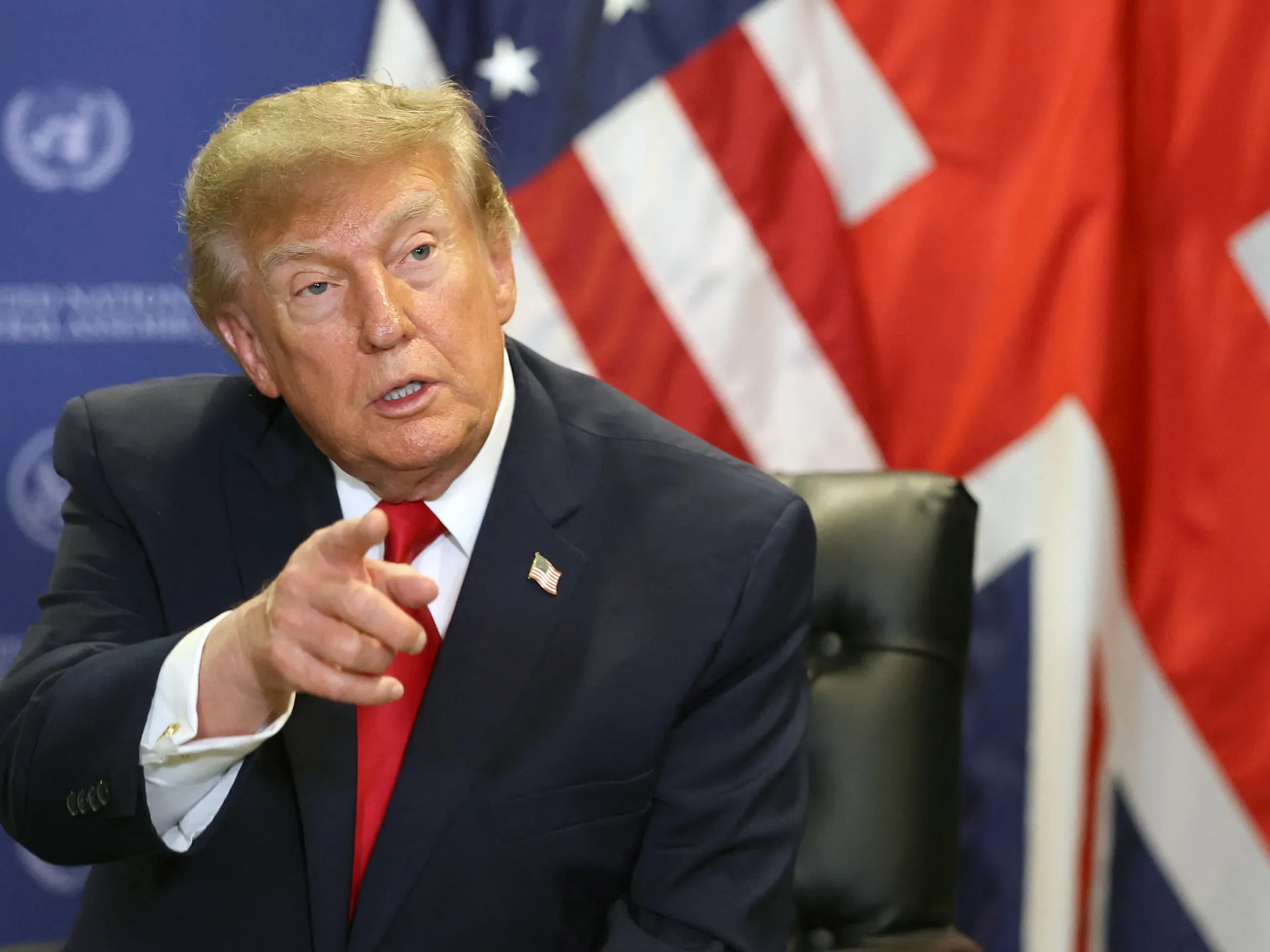
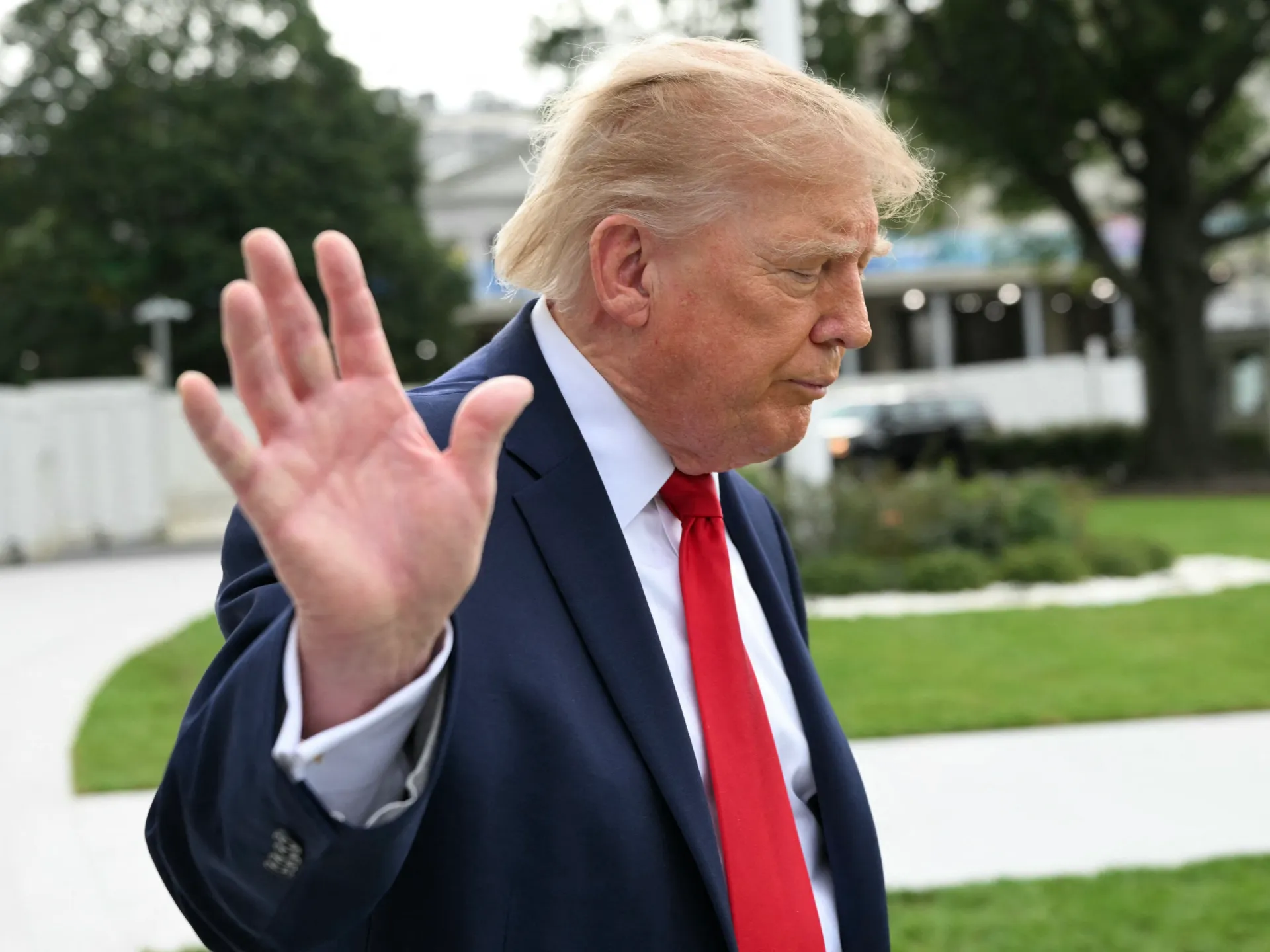
United States President Donald Trump suggested that Washington would consider further military action against Iran if Tehran rebuilds its nuclear programme or missile capacity.

Speaking in Florida on Monday, Trump did not rule out a follow-up attack after the June air strikes that damaged three Iranian nuclear facilities.

Recommended Stories

list of 3 itemsend of list

“Now I hear that Iran is trying to build up again, and if they are, we’re going to have to knock them down,” Trump told reporters. “We’ll knock them down. We’ll knock the hell out of them. But hopefully that’s not happening.”

Trump issued his threat as he welcomed Israeli Prime Minister Benjamin Netanyahu to his Mar-a-Lago estate in Palm Beach, Florida.

Trump said that the US and Israel have been “extremely victorious” against their enemies, referring to the wars in Gaza and Lebanon, and the strikes against Iran in June.

When asked whether the US would back an Israeli attack against Iran targeting Tehran’s missile programme, Trump said, “If they will continue with the missiles, yes; the nuclear, fast. Okay, one will be yes, absolutely. The other is: We’ll do it immediately.”

Another round of strikes against Iran would likely stir internal opposition in the US, including from segments of Trump’s own base of support.

Trump has repeatedly said that the June strikes “obliterated” Iran’s nuclear programme.

With the nuclear issue address, according to Trump, Israeli officials and their US allies have been drumming up concern about Iran’s missiles.

Tehran fired hundreds of missiles at Israel in June in response to the unprovoked Israeli attack that killed the country’s top generals, several nuclear scientists and hundreds of civilians.

Senator Lindsey Graham, an Iran hawk who is close to Trump, visited Israel this month and repeated the talking points about the dangers of Iran’s long-range missiles, warning that Iran is producing them “in very high numbers”.

“We cannot allow Iran to produce ballistic missiles because they could overwhelm the Iron Dome,” he told The Jerusalem Post, referring to Israel’s air defence system. “It’s a major threat.”

Iran has ruled out negotiating over its missile programme, which is at the core of its defence strategy.

On Monday, Trumps said Iran should “make a deal” with the US.

“If they want to make a deal, that’s much smarter,” Trump said. “You know, they could have made a deal the last time before we went through a big attack on them, and they decided not to make the deal. They wish they made that deal.”

The prospect of returning to war in the Middle East comes weeks after the Trump administration released a National Security Strategy calling for shifting foreign policy resources away from the region and focusing on the Western Hemisphere.

In June, Iran responded to the US strikes with a missile attack against a US base in Qatar, which did not result in American casualties. Trump announced a ceasefire to end the war shortly after the Iranian response.

But advocates warn that another episode of attacking Iran may escalate into a longer, broader war.

Trita Parsi, executive vice president at the Quincy Institute, a US think tank that promotes diplomacy, told Al Jazeera last week that the Iranian response would be “much harsher” if the country is attacked again.

“The Iranians understand that unless they strike back hard and dispel the view that Iran is a country that you can bomb every six months – unless they do that – Iran will become a country that Israel will bomb every six months,” Parsi said.

Source link

Protests, strikes after Iran’s economic situation rapidly deteriorates | Israel-Iran conflict News

Iranians are further squeezed every day amid a tanking economy, an energy crisis, water bankruptcy and lethal pollution.

Several protests have erupted in downtown Tehran after business owners closed down their shops in reaction to a free-falling national currency, and no improvement appears in sight amid multiple ongoing crises.

Shopkeepers near two major tech and mobile phone shopping centres in the capital’s Jomhouri area closed their businesses and chanted slogans on Sunday, before more incidents were recorded on Monday afternoon, this time with other people appearing to participate.

Recommended Stories

list of 3 itemsend of list

Videos circulating on social media showed that there were more gatherings in the same area, as well as other nearby neighbourhoods in downtown Tehran. “Don’t be afraid, we are together,” demonstrators chanted.

There was a heavy deployment of anti-riot personnel in full gear on the streets, with multiple videos showing that tear gas was deployed and people were forced to disperse.

Many shops were closed down by owners in and around Tehran’s Grand Bazaar as well, with some footage showing business owners asking others to do the same.

State media outlets also acknowledged the protests, but quickly reacted to emphasise that the shopkeepers are only concerned about economic conditions and have no qualms with the theocratic establishment that has been ruling the country since a 1979 revolution that ousted the United States-backed shah of Iran.

The government’s IRNA news agency claimed that vendors selling mobile phones were disgruntled after their businesses were threatened by the unchecked depreciation of the Iranian currency, the rial.

The rial registered yet another all-time record low of over 1.42 million per US dollar on Monday before regaining some ground.

But the currency is not the only problem. For years, Iran has also been dealing with an exacerbating energy crisis, which has periodically contributed to deadly air pollution that claims tens of thousands of lives each year.

Most dams feeding Tehran and a large number of major cities across Iran continue to remain at near-empty levels amid a water crisis. Iran also has one of the most closed-off internet landscapes in the world.

The continuing decline of purchasing power for 90 million Iranians comes amid increasing pressure from the US, Israel and their European allies over Iran’s nuclear programme.

Israel and the US attacked Iran in June during a 12-day war that killed more than 1,000 people, including civilians, dozens of top-ranking military and intelligence commanders, and nuclear scientists.

The attacks also significantly damaged or destroyed most of Iran’s nuclear facilities, which were under the supervision of the International Atomic Energy Agency (IAEA). The watchdog has since been denied entry to the bombed sites, with no diplomatic breakthrough in sight as the West applies more pressure.

Iran last saw nationwide protests in 2022 and 2023, with many thousands pouring into streets across the country after the death in police custody of 22-year-old Mahsa Amini for alleged non-compliance with strict Islamic laws regarding headscarves.

Hundreds of people were killed, over 20,000 people were arrested, and several people were executed in connection with the protests before they subsided. Authorities blamed foreign influence and “rioters” trying to destabilise the country, as they did with previous rounds of protests.

In parliament on Sunday to defend the controversial budget bill his administration has presented, President Masoud Pezeshkian painted a grim picture of the situation.

His highly contractionary budget bill proposes a 20 percent increase in wages while inflation stands at around 50 percent, consistently one of the highest in the world over the past several years. Taxes are slated to increase by 62 percent.

“They tell me you’re taxing too much, and they’re saying you must increase wages,” Pezeshkian told lawmakers. “Well, somebody tell me, where do I get the money from?”

Source link

Iran’s government budget reveals tough road ahead as currency hits new low | Business and Economy News

Tehran, Iran – Iran’s currency has been registering new lows amid ongoing economic turmoil that is also reflected in a planned budget for next year that effectively shrinks public spending.

Each United States dollar was priced at about 1.36 million rials in the open market on Wednesday in Tehran, its highest rate ever, before the Iranian currency slightly regained ground on Thursday.

Recommended Stories

list of 3 itemsend of list

The embattled national currency has been rapidly declining over recent weeks as the US and its Western allies pile on their sanctions and diplomatic pressure, and the threat of another war with Israel lingers.

President Masoud Pezeshkian this week sent his administration’s finalised proposed budget to the hardline-dominated parliament for the upcoming Iranian calendar year, which starts in late March. The budget will then have to be greenlit by the 12-member Guardian Council before being ratified into law in the coming weeks.

The presented budget nominally grew by just over 5 percent compared with last year, but inflation currently stands at about 50 percent – indicating that the government envisions lower spending while managing a so-called “resistance economy” as it faces a massive budget crunch yet again.

But minimum wages are to be raised far below the inflation rate, too, at only 20 percent, meaning that Iranians are once more guaranteed to have far less spending power next year as the embattled national currency sinks.

epa12605803 Iranians view Yalda decorations as they prepare to celebrate the Yalda feast in Tehran, Iran, 20 December 2025. Yalda is an ancient tradition marking the onset of winter and the longest night of the year. The celebration goes back thousands of years to the time when Zoroastrianism was the predominant religion of ancient Persia. Watermelons and pomegranates, along with dried fruit, are the main specialties of the Yalda feast. EPA/ABEDIN TAHERKENAREH
Iranians view decorations as they prepare to celebrate the Yalda feast, an ancient tradition marking the onset of winter and the longest night of the year, in Tehran, Iran, on December 20, 2025 [Abedin Taherkenareh/EPA]

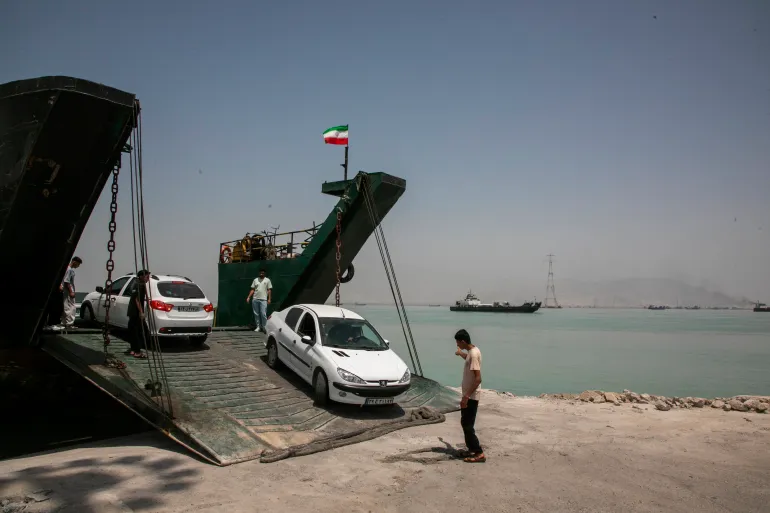
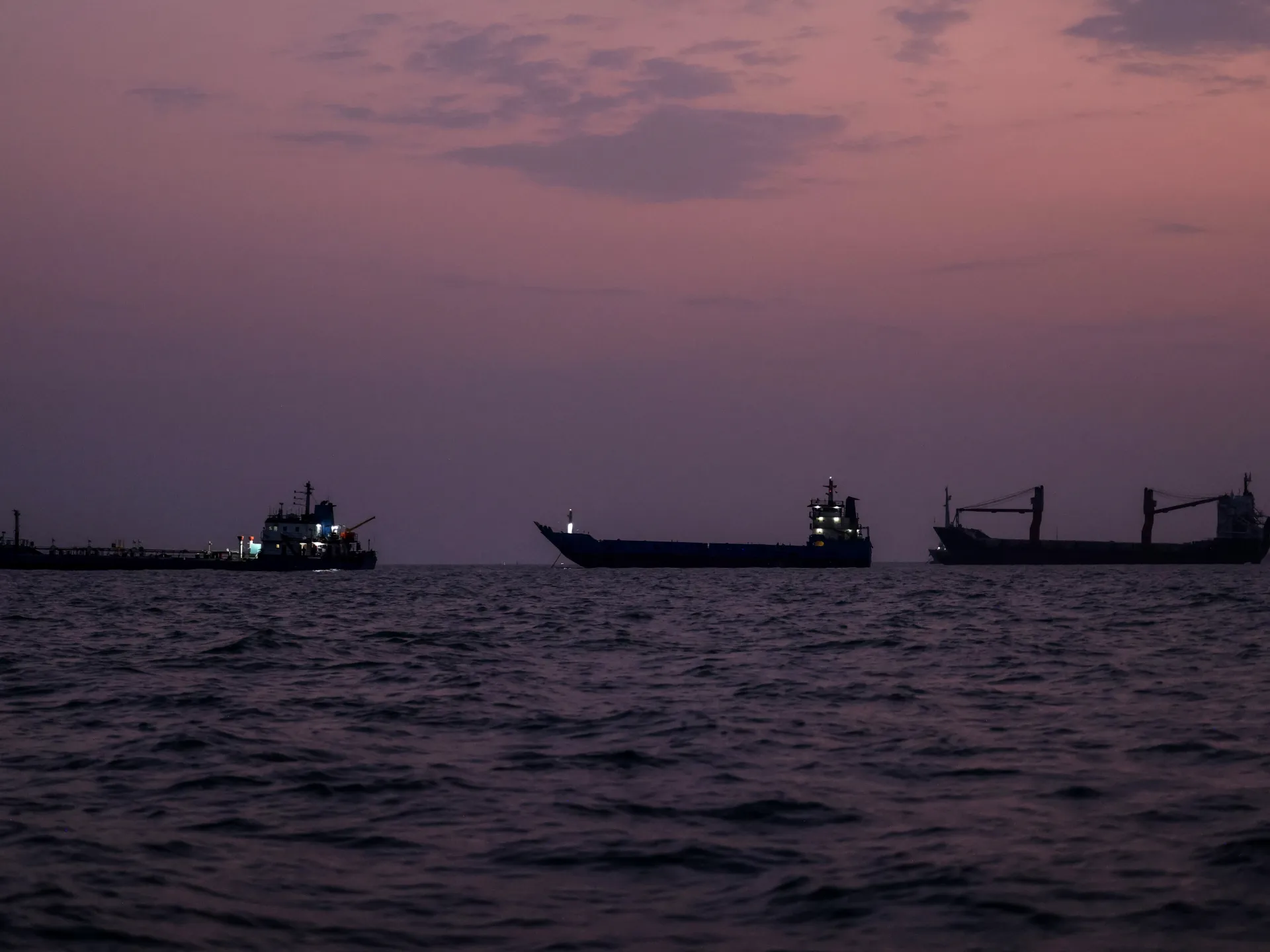
At the same time, the budget says the government sees taxes rising by a massive 62 percent next year, as authorities try to gradually decrease dependence on oil revenues amid US efforts to drive down Iranian exports, which are carried by a shadow fleet of ships mostly to China.

At the current exchange rate, the whole budget is worth about $106bn, several times lower than the projected 2026 budgets of regional players like Turkiye, Saudi Arabia and Israel.

Iran’s rent-distributing multi-tier exchange rate system is still at play, with the government proposing allocating a rate for customs duties, import valuation and budget accounting tables, and another closer to the open market rate used for oil revenue realisation.

An earlier subsidised exchange rate, which was far lower than the open market rate, has now been abandoned. Any excess cash resulting from this is expected to be doled out to low-income Iranians in the form of electronic coupons that can be used to buy essential items like food.

For the first time, the budget is drafted in new rials as four zeros are expected to be removed from the ailing national currency by the time the budget is operational for next year.

After years of back and forth, the parliament in October approved the government plan to lop off four zeros. The move is only cosmetic and will not help with the runaway inflation, but proponents argued it was necessary after years of currency devaluation.

Budget spells grim outlook

Several major factors have already been raising alarm over how bad the economic situation could become next year.

Iranians online reacted poorly to the fact that the government predicts wages will be far outpaced by inflation and tax collection. Others were concerned that eliminating the subsidised rate for essential goods could cause another price shock in the short term.

Many shared a video of Pezeshkian from last year running for president, when he said during a televised interview that the stark disparity between wage increases and inflation is a “grave injustice” being done to the Iranian people.

“Unfortunately, so long as we do not resolve the structural issues, we are making labourers and government workers poorer by the day while those with money get bigger and bigger,” Pezeshkian said at the time.

“This inflation is an additional tax on the poor and the disenfranchised.”

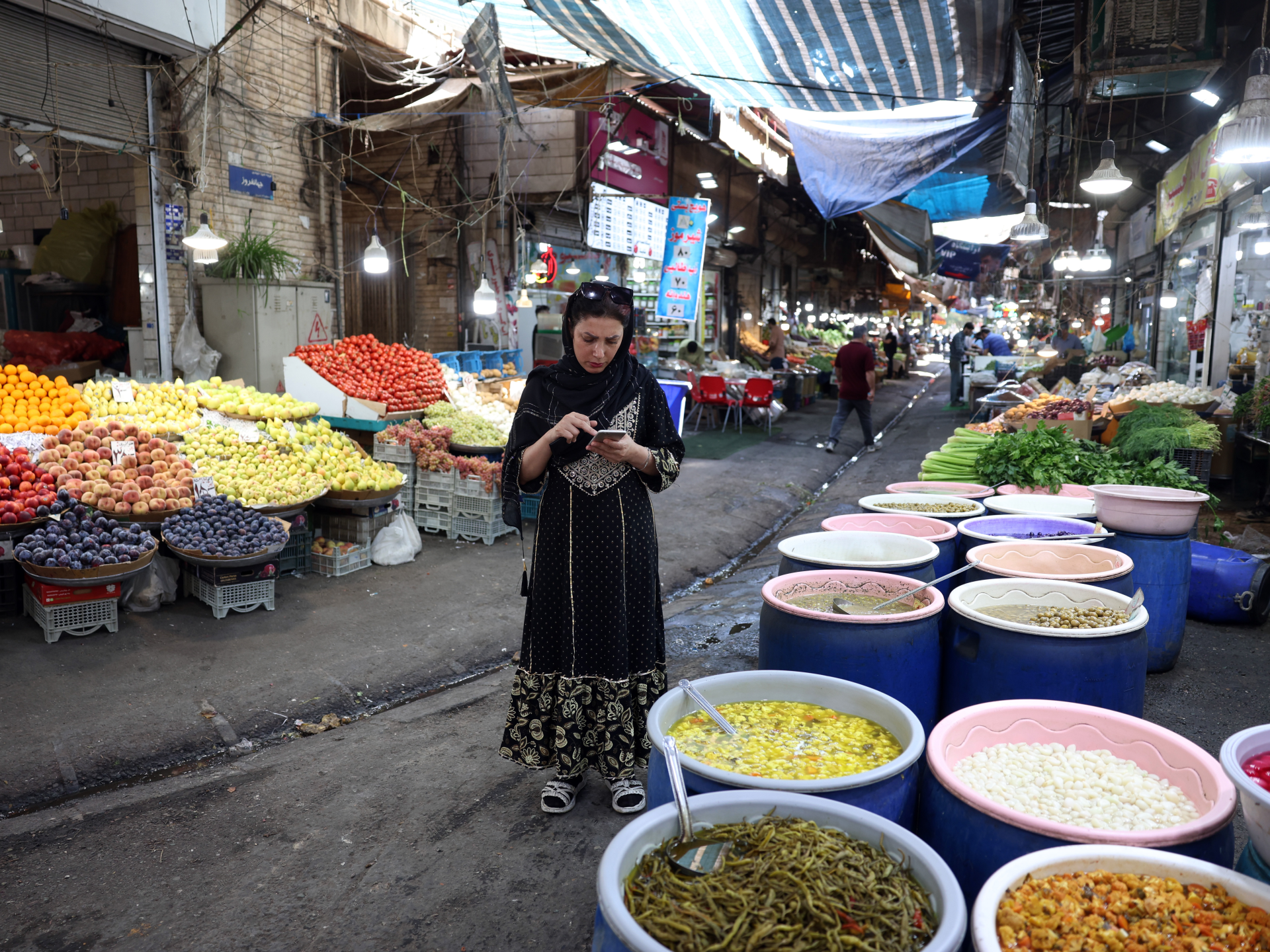
Iranian women shop in a local market as the value of the Iranian rial drops, in Tehran, Iran, December 20, 2025. Majid Asgaripour/WANA (West Asia News Agency) via REUTERS ATTENTION EDITORS - THIS PICTURE WAS PROVIDED BY A THIRD PARTY
Iranian women shop in a local market as the value of the Iranian rial drops, in Tehran, Iran, on December 20, 2025 [Majid Asgaripour/WANA (West Asia News Agency) via Reuters]

But successive governments have failed to eliminate budget deficits or rein in banks teetering on the brink of insolvency, therefore relying on the central bank to print more money to run the country and, in turn, exacerbate inflation.

Earlier in December, the government proceeded with increasing the price cap of petroleum despite repeated assurances it had no plans to that effect this year. The move has already led to increased transport costs, which will end up taking inflation higher.

There are now four price tiers for petroleum, with the cheapest and lowest quality that is available to most Iranians costing up to 50,000 rials per litre (about $1.19) and higher quality imported fuel delivered this week at 800,000 rials per litre ($19).

Hamid Pourmohammadi, who heads the Plan and Budget Organization of Iran, insisted that the government has devised a 20-point plan to be unveiled soon that will reduce pressure on the livelihoods of Iran’s 90 million population.

“The government is trying to adopt an active approach to address the economic challenges of the people, businesses and economists, so there is no perception of complacency in these economic conditions,” he said.

Source link

Iran’s Deadly Crackdown on Alleged Israeli Spies Intensifies

NEWS BRIEF Iran executed a man on Saturday accused of spying for Israel, the latest in an escalating series of death sentences carried out amid a deepening shadow war between Tehran and Jerusalem. The execution, described by human rights groups as based on coerced confessions, underscores Iran’s harsh response to perceived security threats and the […]

The post Iran’s Deadly Crackdown on Alleged Israeli Spies Intensifies appeared first on Modern Diplomacy.

Source link

Iran’s foreign minister says strikes won’t stop nuclear programme | Israel-Iran conflict

Exclusive: Iran’s foreign minister sits down with Fault Lines to discuss the nuclear standoff and diplomatic deadlock.

In an exclusive, wide-ranging interview recorded in October with Al Jazeera’s Fault Lines documentary programme, Iranian Foreign Minister Abbas Araghchi tells correspondent Hind Hassan that strikes by Israel and the United States in June caused “serious damage” to Iran’s nuclear facilities but insists its nuclear programme will continue.

“Technology cannot be eliminated by bombing,” he says, arguing that Iran’s scientific knowledge remains intact.

As Iran remains locked in a standoff with the US and refuses to renew negotiations while zero uranium enrichment demands remain in place, Araghchi says European snapback sanctions have undermined future cooperation with the United Nations nuclear watchdog, the International Atomic Energy Agency, and Iran would reconsider how it cooperates in the future.

Despite emphasising that “diplomacy is our priority,” the foreign minister insists that Iran is prepared to fight back if it is attacked again. Araghchi maintains that while Tehran has “never trusted the United States as an honest negotiating partner”, Iran remains prepared to engage diplomatically if both sides respect each other’s rights and pursue mutual interests based on equality.

Source link