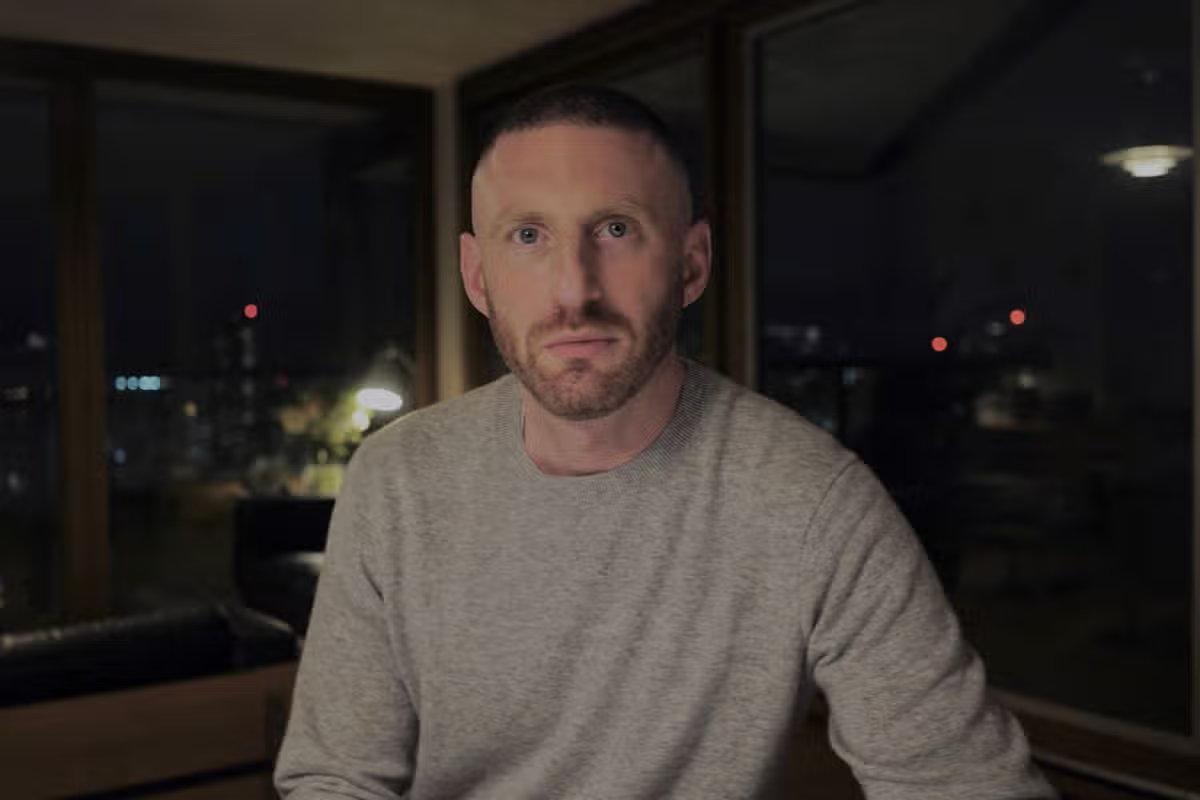
The Great ADHD Myth? sparked fury among viewers as it sought to ‘determine whether ADHD is a genuine neurodevelopmental disorder, or a social construct’

The documentary features NHS psychiatrist Dr Max Pemberton(Image: Minnow Productions)
Channel 4 has been hit with hundreds more complaints over its controversial ADHD documentary.
The Great ADHD Myth? sparked fury among viewers as it sought to “determine whether ADHD is a genuine neurodevelopmental disorder, or a social construct”. Last week, the media regulator confirmed that it had received 9,656 complaints after the show aired on Tuesday, August 18.
And the rage is still ongoing, with Ofcom receiving another 561 complaints, bringing it to a jaw-dropping total of 10,217.
An Ofcom spokesperson told the Mirror: “Complaints relate to the representation of ADHD in the programme.”
It comes after charity ADHD UK filed a furious complaint to the media regulator themselves, saying: “ADHD is not a myth. It is not a social construct.”
The documentary featured a 10-year-old boy with ADHD who made changes to his lifestyle and stopped taking his medication in an attempt to see how it would affect him. At the end of the programme, his mum said that he would continue to not take his medication – however a caption later confirmed at the end that he had resumed taking the drugs and his school performance improved.
“The programme’s own end credits told you what its 60 minutes wouldn’t: the boy at its centre went back on his medication, and his schoolwork improved,” said ADHD UK. “Their experiment disproved their conclusion. They aired their version anyway. We have already complained to Ofcom.”
The NHS recently released information about the number of people affected by ADHD. Data from May 2025 reports that it is estimated that 2,498,000 people in England have ADHD, including those without a diagnosis.
Of those, an estimated 741,000 are children and young people aged between five and 24. The report also stated that in March 2025, up to 20,000 people were newly referred for an ADHD assessment to mental health services, an increase of 13.5% from the previous year.
In a statement shared after the documentary was announced, amid backlash, a Channel 4 spokesperson stated, “This documentary does not deny the lived experience of people with ADHD traits, but does hear from a group of senior medical and academic experts – many of whom work or have worked with the NHS or have held presidential roles at professional membership bodies – who seek to question whether ADHD is a neurodevelopmental disorder. They also ask whether modern living has contributed to a rise in diagnoses, and whether there may be better alternatives for children than medication.”
The documentary featured NHS psychiatrist Dr Max Pemberton, who had previously said: “As a psychiatrist, I’ve watched ADHD go from a diagnosis that was only occasionally made and after careful assessment, to one that is increasingly demanded and dispensed, and I wanted to understand why.
“There’s no doubt that the people seeking these diagnoses are genuinely struggling; that isn’t in question. What the film asks is whether ADHD is really the best explanation for that struggle and my hope is that we come away with permission to ask better questions about what modern life is doing to all of us.”
When the documentary was first announced, viewers were left appalled. One wrote: “The endless hostility toward people with ADHD, autism, and anxiety is reaching a terrifying point.”
Another wrote: “More demonising and minimising those with mental health struggles. Fabulous.” One person called it “absolutely disgusting”, while another said it was “incredibly hurtful”.
However, some viewers called the documentary “interesting”, with one writing: “Interesting programme on Channel 4 about ADHD.” Another called it “great”, while a third said: “I filled it in to say how interesting I found the programme. I have a child with a diagnosis of ADHD.”
The Mirror has reached out to Channel 4 for comment.
Like this story? For more of the latest showbiz news and gossip, follow Mirror Celebs on TikTok, Snapchat, Instagram, Twitter, Facebook, YouTube and Threads.