intelligence official

Professor known for ‘torture memos’ will advise conspiracy probe focused on perceived Trump foes

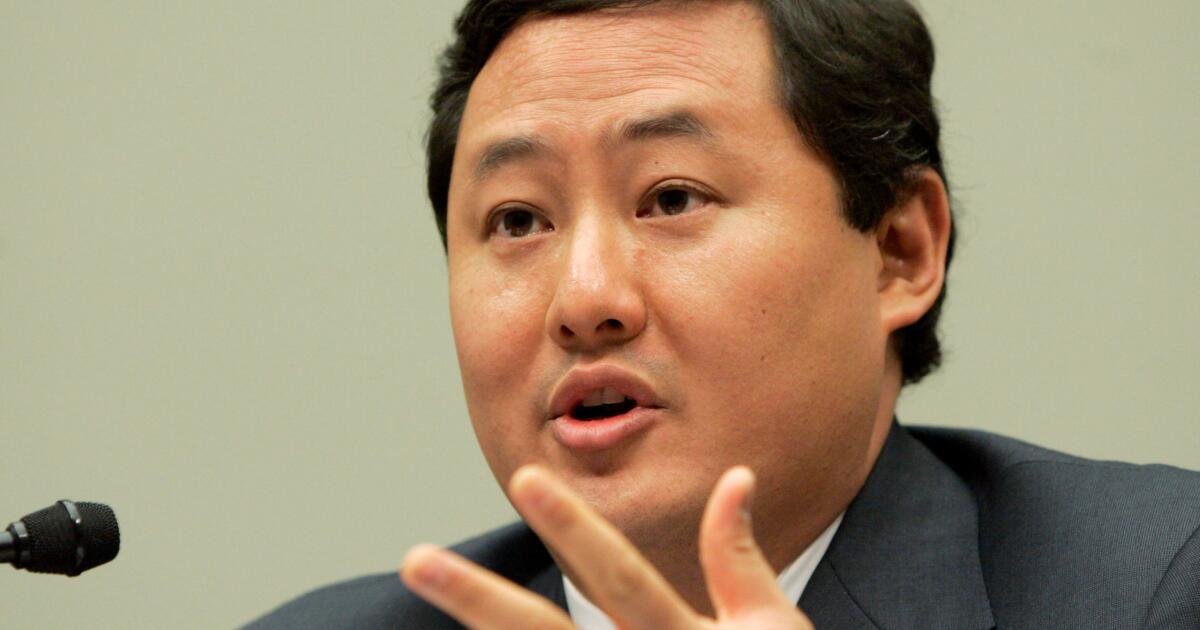
A conservative law professor known for his expansive views of presidential power and for decades-old memos that justified harsh interrogation techniques after the Sept. 11, 2001 terror attacks says he will be advising a team of prosecutors investigating whether former law enforcement and intelligence officials conspired against President Donald Trump.

John Yoo confirmed in an email to the Associated Press on Monday that he would be assisting Joe diGenova, the former Justice Department prosecutor who was assigned in April to investigate whether officials, who over the last decade scrutinized Trump, participated in a criminal conspiracy against the Republican president.

“He’s a lawyer. He’s going to be helping us,” diGenova said in a brief telephone interview about Yoo. He did not elaborate.

A law professor at the University of California, Berkeley, Yoo was a senior Justice Department official in the George W. Bush administration who served as a lead author of the so-called “torture memos” that government officials used to justify using “enhanced interrogation” techniques on potential terror suspects. The Justice Department later rescinded the memos.

In the years since, he’s remained a prominent proponent of broad executive authority, telling the AP in a 2020 interview that he had told Trump administration officials multiple times that a Supreme Court ruling which rejected Trump’s effort to end the Deferred Action for Childhood Arrivals program, or DACA, opened the door to enormous new presidential power.

The conspiracy investigation is being conducted in Florida, but the scope is unclear, as is whether any criminal charges will be brought.

Prosecutors have centered at least part of the probe on the long-concluded investigation into Russian interference in the 2016 U.S. presidential election. Investigators have issued a broad swath of subpoenas for records and conducted interviews related to the creation of an intelligence community assessment, released in January 2017, that found that Russia engaged in wide-ranging election interference to boost Trump over his Democratic opponent Hillary Clinton.

A 2019 report by special counsel Robert Mueller affirmed that Russia interfered on Trump’s behalf and that the Trump campaign repeatedly welcomed the assistance, but it did not find sufficient evidence to establish a criminal conspiracy between Moscow and the campaign.

Several subsequent investigations into the Russia probe have identified multiple errors into how it was conducted, and a former FBI lawyer pleaded guilty in 2020 to doctoring an email during the course of the inquiry. But none of the reviews have identified criminal misconduct by any senior law enforcement or intelligence official involved in the investigation.

Trump has nonetheless continued to demand retribution and has sought to punish top officials from that time at the FBI and CIA.

Asked in a Fox News Channel interview in May what the Justice Department had done to address claims of a long-running conspiracy to bring down Trump, acting Attorney General Todd Blanche said, “That’s exactly what we’re investigating right now.”

Yoo’s involvement in the investigation was earlier reported by Politico and CNN.

Tucker writes for the Associated Press.

Source link

Senate extends surveillance powers until April 30 after longer renewal collapsed in House

The Senate approved a short-term renewal until April 30 of a controversial surveillance program used by U.S. spy agencies, following a chaotic, post-midnight scramble in the House to keep the authority from expiring.

The measure cleared the Senate by voice vote, without a formal roll call, as Congress raced to meet a Monday deadline. It now heads to President Trump, who had pushed for a clean 18-month extension, for his signature.

GOP leaders in the House rushed lawmakers back into session late Thursday with a series of back-to-back votes that collapsed in dramatic failure, before they quickly pushed ahead the stopgap measure as they race to keep the surveillance program running past Monday’s expiration date.

First they unveiled a new plan that would have extended the program for five years, with revisions. Then they tried to salvage a shorter 18-month renewal that Trump had demanded and Speaker Mike Johnson had previously backed. Some 20 Republicans joined most Democrats in blocking its advance.

Shortly after 2 a.m. they quickly agreed to the 10-day extension, which was agreed to on a voice vote without a formal roll call. It next goes to the Senate, which is gaveling for a rare Friday session, as Congress races to keep the surveillance program running.

“We were very close tonight,” said Johnson after the late-night action.

But Democrats blasted the middle-of-the-night voting as amateur hour. “Are you kidding me? Who the hell is running this place?” said Rep. Jim McGovern, D-Mass., during a fiery floor debate.

At the center of the standoff that has stretched throughout the week is Section 702 of the Foreign Intelligence Surveillance Act, which permits the CIA, National Security Agency, FBI and other agencies to collect and analyze vast amounts of overseas communications without a warrant. In doing so, they can incidentally sweep up communications involving Americans who interact with foreign targets.

U.S. officials say the authority is critical to disrupting terrorist plots, cyber intrusions and foreign espionage.

Surveillance program fight is a debate over privacy and security

Its path to passage has teetered all week in a familiar fight, as lawmakers weigh civil liberties concerns against intelligence officials’ warnings about national security risks.

Opponents of the surveillance tool point to past misuses. FBI officials repeatedly violated their own standards when searching intelligence related to the Jan. 6, 2021, attack on the Capitol and racial justice protests in 2020, according to a 2024 court order.

Trump and his allies had lobbied aggressively all week for a clean renewal of the program, without changes.

A group of Republicans traveled to the White House on Tuesday, and on Wednesday CIA Director John Ratcliffe spoke directly with GOP lawmakers. House Majority Leader Steve Scalise said Thursday there had “been negotiations late into the night with the White House and some of our members.”

“I am asking Republicans to UNIFY, and vote together on the test vote to bring a clean Bill to the floor,” Trump wrote on Truth Social this week. “We need to stick together.”

The result of days of negotiations

Thursday’s proceedings came to a standstill as lawmakers retreated behind closed doors and Johnson reached for an agreement to resolve the standoff.

Shortly before midnight GOP leaders announced a new proposal, a five-year extension, with revisions. The changes were designed to win over skeptics of the surveillance program who have demanded greater oversight to protect Americans’ privacy.

Among the changes are new provisions to ensure that only FBI attorneys can authorize queries on U.S. persons, and to require the Office of the Director of National Intelligence to review such cases, said Rep. Austin Scott, R-Ga., during the debate.

But the final product, a 14-page amendment, did not go far enough for some holdouts in either party.

With Johnson controlling a slim majority, he has little room for dissent. As the Republicans fell short on both efforts before the short extension, a handful of Democrats stepped in to try to help them advance the longer extensions, but most Democrats were opposed.

“We just defeated Johnson’s efforts to sneak through a 5-year FISA authorization tonight,” said Democratic Rep, Ro Khanna of California. “Now, they will have to fight in daylight.”

Cappelletti and Mascaro write for the Associated Press.

Source link