Racism in Venezuela? A Question No One Wants to Answer
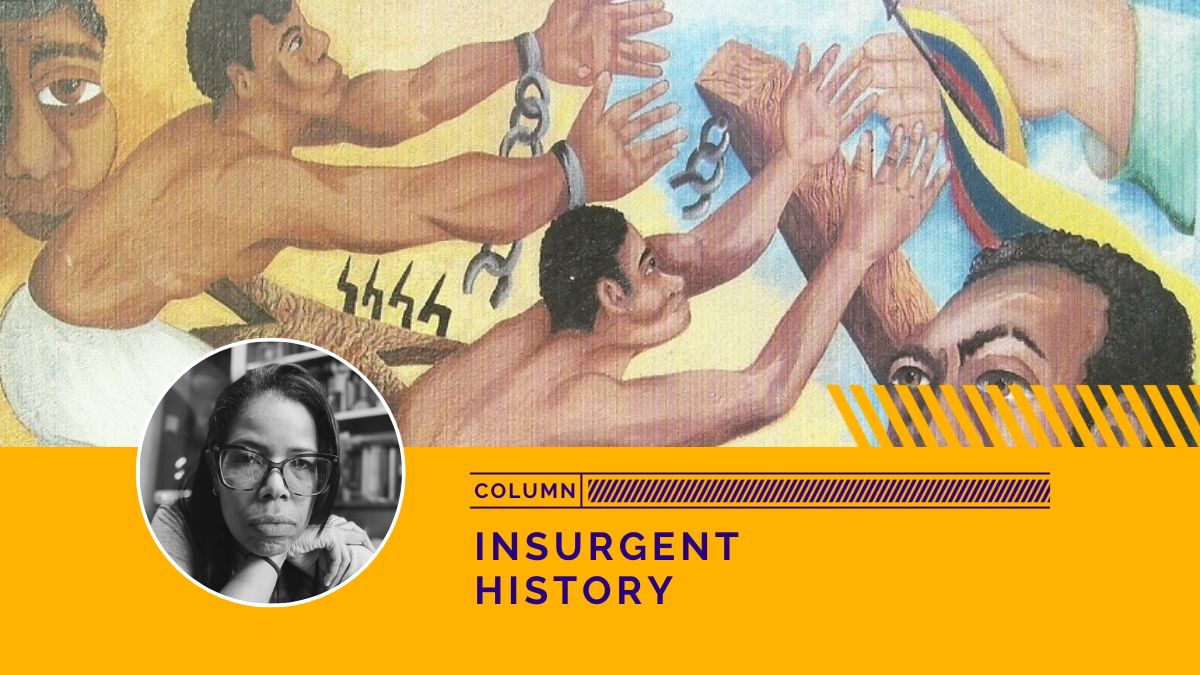
The Day of Venezuelan Afro-Descendance celebrates José Leonardo Chirino’s uprising against the Spanish crown in 1795. (Venezuelanalysis)
“In my humble opinion, you have never known how to make coffee or Negroes. The former you leave too light, the latter too black.”
– Venezuelan poet and politician Andrés Eloy Blanco to US visitors, 1944
Contemporary racist attitudes in Venezuela have deep roots in the colonial period (sixteenth to nineteenth centuries). After independence, Venezuela constructed a national narrative that claimed to have overcome racism through miscegenation. We were (are) a “café con leche” (coffee with milk) nation, a blend in which racial differences had dissolved. But this supposed harmony concealed a persistent idea: whiteness remained the ideal, while African and Indigenous identities were seen as something to be diluted and gradually eliminated.
This whitening process was not only biological, but also cultural and political. Paradoxically, racism in Venezuela became invisible to those who practiced it and even to those who suffered from it, masked under the pretext that “here we are all mestizos.” However, we have seen that when political conflicts intensify, the mask of mestizaje falls away and colonial prejudices resurface.
The origin of an ideology
Although the validity of the term “race” has been questioned – on the grounds that we all belong to the human race and differ only in phenotypic traits – according to Venezuelan historian Luis Felipe Pellicer, “…if racism exists, race exists,” but only as an ideological construct of domination, and by no means as a scientific truth.
Racism emerged in Venezuela as a result of an exploitative and extractive economy that created a need for enslaved labor. Initially, this labor force consisted of Indigenous people and was later supplemented by individuals brought from the Atlantic coast of Africa. Countries such as present-day Ghana, Togo, Benin, Angola, and the Republic of the Congo were particularly affected.
Now, the issue of slavery in Africa has deeper roots that warrant a more comprehensive examination, but in the Americas this system underwent a transformation, and what began as an economic activity ultimately established ideas that created negative associations around those subjected to slavery, thereby inventing the political and social category of “blackness.” By merging the condition of slavery with skin pigmentation into a single concept, the colonial mindset ended up stigmatizing every cultural and vital expression of these groups, considering them inferior, ugly, and despicable.
One of the characteristics of enslavement in the Americas was dehumanization and its racial justification. That is to say, here the idea of enslavement due to war or debt repayment was abandoned. The automatic association was: you are a slave because you are a Black African, and vice versa. This phenomenon created the idea that all Africans and their descendants were predestined for servitude and forced labor.
The racist backlash
The recent incident in Madrid that saw supporters of far-right leader María Corina Machado shout slogans against Venezuelan Acting President Delcy Rodríguez reflects a deep social divide. Sectors of the opposition who identify – whether phenotypically or aspirationally – with a Eurocentric worldview and the ideal of “whiteness” believe that the exercise of power by groups they associate with or perceive as people of African descent constitutes a historical affront. For decades before the Bolivarian Revolution, epithets like “monkey,” “mulatto,” “zambo,” “bembón,” and “bad hair,” among others, paraded across TV screens and in the national press with complete normality and often disguised as jokes – another mechanism for propagating Venezuelan racism. Following his government’s post-2001 radicalization of revolutionary reforms, Hugo Chávez was himself notoriously called a “monkey” and prominently caricatured as such by Venezuela’s right-wing opposition.
It is no surprise, then, that the presence of figures such as Venezuela’s current acting president transcends the issue of political ideology to constitute a rupture in “quality,” a term used in eighteenth-century Venezuela. “What is quality or race?” asks Pellicer. “It is an idea of inferiority regarding a human group that is transmitted, corporeally, through sexual reproduction.” It is an affront, then, to the natural order of things, to the pyramid of colonial society that placed peninsular Spaniards at the apex and people of African descent at the base.
With the chant “Fuera la mona” (“Out with the monkey”), the Venezuelan far-right hurled an insult that reveals their undemocratic nature. But more importantly, these insults are not even linked to any incompetence in governance, but rather to what these groups perceive as “racial incompetence.” It is the expression of a wounded “whiteness” that uses racism as a defense mechanism against what they see as a displacement of their traditional privileges. It is, in essence, an attempt to restore a colonial order.
Racism is a power structure. “Colonial thought,” Pellicer observes, “invents the other, whether Indigenous, mestizo, mulatto, or Black, as well as the white self … thereby establishing the ideology of race as the primary marker of inequality, beginning with the invasion of the Americas.” The struggle for honor in the colony was a struggle for differentiation and political recognition. Today, the “animalization” of non-white political leaders is the continuation of that colonial war, which is why the Madrid slur is not a simple rudeness; it is an act of historical violence. It is the voice of the eighteenth century trying to silence the twenty-first. And at this point, one must ask: what is admirable about the idea that, based on skin color, some are more or less fit to govern a country?
The slave owner/racist does not see a person; he sees a tool, a piece of property, and for this to happen, the mind must adopt a psychopathic and callous mindset. The racist needs to strip the oppressed of their status as subjects in order to invoke a visceral fear of otherness that, if acknowledged, threatens their illusion of superiority. Choosing to be part of this ideological operation of domination today should be a source of shame, for it is the most glaring expression of a violence that heralds the end of humanity.
From Cortés to Díaz Ayuso
This exclusionary mindset is part of a transatlantic trend toward neocolonial revival that seeks to re-legitimize old hierarchies. A telling example is Spanish right-wing politician Isabel Díaz Ayuso’s recent visit to Mexico, where her proposal to celebrate the figure of Hernán Cortés serves as an ideological parallel to the “Fuera la mona” chants heard in Madrid. By attempting to portray the invasion and genocide in the Americas as a “civilizing” feat, Ayuso revives the logic of the “society of qualities”: a structure where moral and political superiority is an exclusive Hispanic and white inheritance, while Indigenous and Afro-descendant peoples are reduced to a state of barbarism remediable only through paternalistic tutelage.
This narrative is not merely a historical debate, but a contemporary validation of the racial hierarchy and justification for overthrowing processes of popular sovereignty in Latin America. Ayuso’s discourse seeks to reaffirm a “Hispanic identity” that views ethnic otherness as a threat to the values of Western civilization. In this sense, what happened in Madrid is a clear symptom of the reactionary neo-fascist wave sweeping large parts of the Global North and South.
Racist remarks
The trauma of Venezuela’s War of Independence (1810–1830) and the Federal War (1859–1863) created the need to invent a narrative in which Venezuelan society was free of conflicts and differences, and thus the persistence of racial and social tensions has been glossed over. However, it resurfaces in comments such as: “Fuera la mona”; “We need to improve the race”; “Black but refined”; “Money whitens.”
In 1948, conservative writer Arturo Uslar Pietri responded to Rómulo Gallegos’s presidential campaign by stating: “Anyone who speaks of blacks or whites, anyone who invokes racial hatred or privileges, denies the essence of Venezuela. In Venezuela, in political and social matters, there are neither whites nor blacks, neither mestizos nor Indigenous people. There are only Venezuelans .” This argument was almost exactly the same as that put forward by María Corina Machado when asked about the event at La Puerta del Sol, stating that it had occurred because of the fissures of hatred that Chavismo introduced into its discourse over 27 years in power.
The end of denial
As part of the commemoration of the Day of Venezuelan Afro-Descendance, established under the Hugo Chávez government in 2005 to be celebrated every May 10 [on the anniversary of the 1795 slave uprising led by José Leonardo Chirino], it is both pertinent and necessary to reflect on and understand that racism in Venezuela is a long-standing phenomenon that surfaces with particular virulence during times of political crisis. The historical association between power and whiteness, inherited from the colonial era and reinforced by twentieth-century positivist thought, remains alive in the minds of sections of society that refuse to accept the nation’s diversity, including among working-class communities through what is known as endoracism.
Understanding the origin of this phenomenon is the first step toward dismantling it. We must move from the false harmony of “café con leche” to true decolonial justice, where a person’s “quality” is not dictated by their “whiteness.” The Madrid incident reminds us that the battle for Venezuela’s mental independence far from over.
Rosanna Álvarez holds an MSc in History of Republican Venezuela from the Central University of Venezuela (UCV). She is a researcher at the Centro de Estudios Simón Bolívar and Fundación Hugo Chávez, as well as a writer at the Libertador 8 Estrellas magazine. She is the author of Venezuela vista e imaginada. Un recorrido visual por nuestra historia and host of the Bolívar Nuestro show on Radio del Sur.
The views expressed in this article are the author’s own and do not necessarily reflect those of the Venezuelanalysis editorial staff.