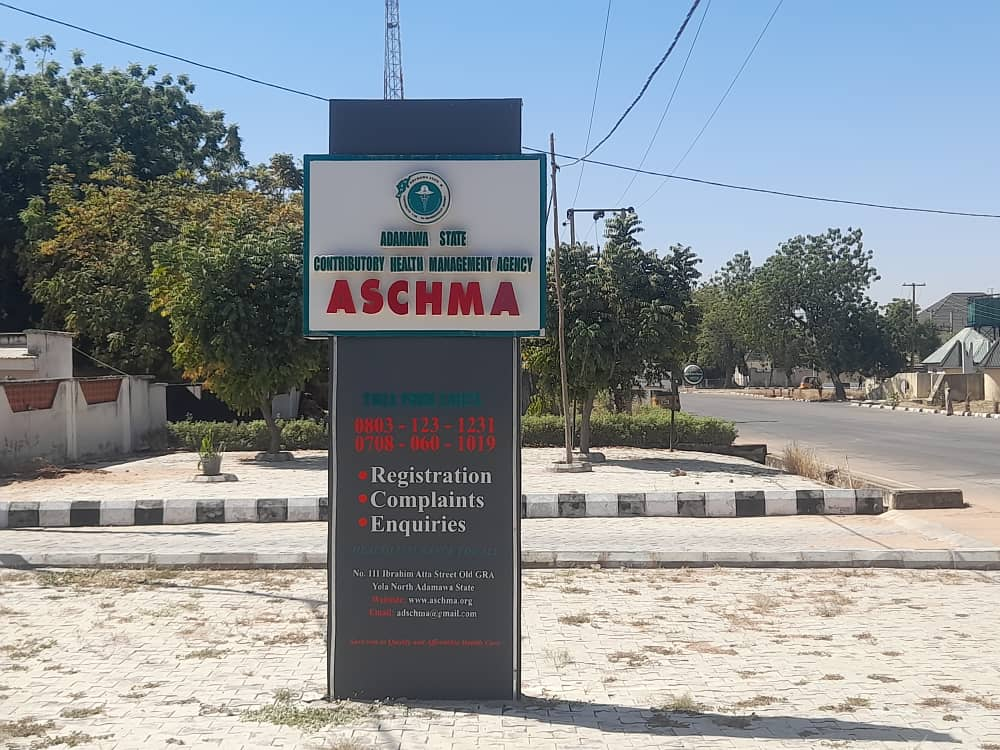
Broken Digital Health Systems Push Insured Patients to Pay Out-of-Pocket in Adamawa
Jimmy John had been battling a severe toothache for days. The pain made eating and sleeping almost impossible. Early in the morning on Monday, July 7, 2025, he walked into New Boshang Hospital in Jimeta-Yola, northeastern Nigeria, hoping for relief. He queued, was registered, and eventually called in to see a clinician.
After an examination and scans, he was told that he needed a root canal, a dental procedure that removes infected or inflamed pulp from inside a tooth. Jimmy didn’t bother about the cost; the procedure is covered by his insurance under Adamawa State’s health insurance scheme.
However, he was asked to wait.
The hospital needed to confirm his insurance details. A desk officer explained that an authorisation code would be sent from his Health Maintenance Organisation (HMO). It would not take long, he was told. Two days at most.
Jimmy left the facility with painkillers and a promise, but the aches kept getting worse.
“It was a terrible toothache,” he said.
Two days passed. Then a week. “It took about three weeks,” Jimmy told HumAngle. “I had to be constantly calling and asking if it had been sent.” Each time, the answer was the same: they were still waiting for the code.
By the third week of waiting, Jimmy made a decision he had hoped to avoid. “I ended up paying ₦35,000 for something my insurance should have covered,” he said. “The money I planned to use for food was what I used for treatment.”
Growing coverage, inconsistent access
Launched in 2020, Adamawa State’s contributory health insurance scheme has expanded in recent years. The Adamawa State Contributory Health Management Agency (ASCHMA) now covers the formal sector, informal sector, equity, retirees’, and tertiary students’ health plans. Official figures show that more than 170,000 people are enrolled across the state, a significant increase from its early years.
Yet, Jimmy’s experience showed that being insured does not always mean being able to access care when it is needed.

Under ASCHMA’s design, access to healthcare operates at two levels. At the primary care level, enrollees are entitled to services such as malaria treatment, antenatal care, immunisation, and basic diagnostics by simply presenting their insurance ID card at their chosen facility.
According to ASCHMA’s Executive Secretary, Ujulu Amos, this process does not require involvement from HMOs. “Verification at that point only requires an ID card,” he explained. “Once the hospital cross-checks the enrollee’s number with the list sent to them, the person is entitled to access all primary care. The HMO is not involved.”
The process changes once a patient needs secondary or specialised care, such as surgery or a root canal procedure. At that stage, hospitals must request an authorisation code from the patient’s HMO before treatment can proceed. The code allows the hospital to later claim payment for the service.
Ujulu emphasised that this authorisation step is meant to be fast and tightly regulated.
“In our operational guideline, requesting a code should not take more than one hour,” he said. “Three hours is the maximum. If it takes three days, that is a problem.”
In Jimmy’s case, that process stretched into three weeks.
Where the system breaks down
At the heart of these delays is a lack of interoperable digital health infrastructure. While hospitals can confirm that a patient is enrolled, they cannot proceed with secondary care without explicit approval from the HMO, even when coverage is obvious.
This multi-step process, often reliant on emails, phone calls, and individual responsiveness, leaves patients stuck in the middle.
Ujulu said patients are not powerless in such situations. According to him, ASCHMA operates a 24-hour toll-free call centre that enrollees can contact if authorisation delays exceed the allowed timeframe. In such cases, the agency can intervene, issue the authorisation, and later deduct the cost from the HMO. HumAngle attempted to reach the agency through the toll-free line, and the line was active at the time of reporting.
Beyond awareness gaps, however, fundamental system weaknesses are a factor. Many health facilities still rely on manual processes, and digital literacy among healthcare workers remains low, slowing down requests.

“We discovered low digital literacy among healthcare workers as one of the bottlenecks,” Ujulu admitted. “A good number of them either are not willing or don’t know how to log into the platform to request the code.”
In practice, this means insurance verification is hardly real-time or reliable.
At New Boshang Hospital, staff say such delays are common once care goes beyond the primary level. Godiya James, a technician at the dental unit, explained that authorisation requests often stall.
“We send the diagnosis and treatment plan for authorisation,” she said. Sometimes it takes a day or two for us to get a response. Sometimes it takes longer. Sometimes there won’t be a response until we resend it.”
Some patients, she added, can’t wait longer.
For patients like Jimmy, long wait periods mean prolonged pain.
What’s the issue?
Health insurance schemes like ASCHMA are designed to reduce out-of-pocket spending, which dominates healthcare expenditure in Nigeria, yet the systems that support them are not well-connected. Many facilities and HMOs rely on emails, phone calls, paper records or ad-hoc networks to verify coverage.
Without digital interoperability, the ability for different software and data systems to talk to one another, each verification becomes a manual transaction, dependent on network stability, personal responsiveness, or manual cross-checking.
Farida Abalis Paul, Chief Operating Officer of A&M Healthcare, one of the HMOs working with ASCHMA, said verification depends largely on monthly enrolment lists.
“Once a facility requests verification, we check the list. If the person’s name is there, they can go ahead with treatment,” she explained. However, the process is delayed when a patient’s name is missing from the list, even if they hold a valid insurance card.
This can result from delayed updates, data entry errors, or changes in facility selection.
“You may have an ID card, but when we check the list, your name is not there,” she said. “Today you’re on the list, tomorrow you’re not. Along the line, something happened.”
When this happens, HMOs cannot approve care until ASCHMA corrects the records.
For patients, the consequences are immediate.
Aishatu Haliru, a lecturer at Adamawa State Polytechnic, Yola, was turned away from the Specialist Hospital despite presenting her insurance card.
“They told me my name was not on the list,” she said. “I couldn’t understand how that happens when nothing has changed.”
She was referred to ASCHMA, where an official confirmed that her record had been omitted during a routine database update. Although the issue was corrected the same day, Aishatu missed the clinic schedule and had to wait several more days for care.
“But the question is, why did it disappear in the first place?” she asked.
Ujulu, ASCHMA’s Executive Secretary, argued that such disappearances could result from platform migration, noting that data loss also slows down authorisation processes for patients like Jimmy.
These gaps highlight a broader challenge within Nigeria’s evolving digital health system.
Nigeria’s push toward efficient digital healthcare systems
At the national level, Nigeria has begun laying policy foundations for digital transformation in healthcare, although implementation remains uneven.
One of the key efforts is the Nigeria Digital in Health Initiative (NDHI), which aims to build a national digital health architecture that supports interoperable electronic medical records and efficient data exchange between healthcare facilities, insurers, and government systems. In practical terms, such a system would allow clinics to instantly confirm a patient’s insurance coverage, treatment entitlements, and provider claims eligibility, eliminating the kind of long delays Jimmy experienced.
Alongside this, the National Digital Public Infrastructure (DPI) Framework and the emerging Nigerian Data Exchange standards, coordinated by the National Information Technology Development Agency (NITDA), seek to promote shared digital rails for public services. These include interoperability, data security, and service integration.
Applied to healthcare, these principles mean that insurance verification, patient identity, and claims processing should function as shared public infrastructure: secure, privacy-preserving, and accessible across institutions. In practice, a hospital should be able to instantly confirm a patient’s coverage without manual escalation.
NITDA’s ongoing strategic roadmap also emphasises inclusive access to digital infrastructure across the country and equitable digital literacy, both of which are foundational to reliable nationwide digital service delivery.
The goal of such policies is straightforward: when systems can talk to each other securely and immediately, services like insurance verification become almost instant, reducing delays and unnecessary costs.
“Interoperability sounds like a technical word, but in reality, it’s about time, trust, and dignity,” said Muhammed Bello Buhari, a Nigerian-based digital rights activist.
In a state like Adamawa, where insecurity and economic pressure already shape access to care, the ability of systems to speak to one another determines whether insurance works in practice or remains theoretical, leaving people insured on paper but uninsured in practice.
Muhammed argues that without shared, real-time systems, patients are pushed into delays and out-of-pocket payments not because they lack coverage, but because institutions cannot confirm what they already know.
“Interoperability is less about cutting-edge innovation and more about treating health information as essential public infrastructure that respects patients’ vulnerability and ensures care moves quickly, reliably, and with dignity,” he added. “When a patient arrives sick or in pain, insurance must work immediately, or it loses its value.”
This report is produced under the DPI Africa Journalism Fellowship Programme of the Media Foundation for West Africa and Co-Develop.