insurance company

Lawmakers return to Washington facing Venezuela concerns, shutdown threat

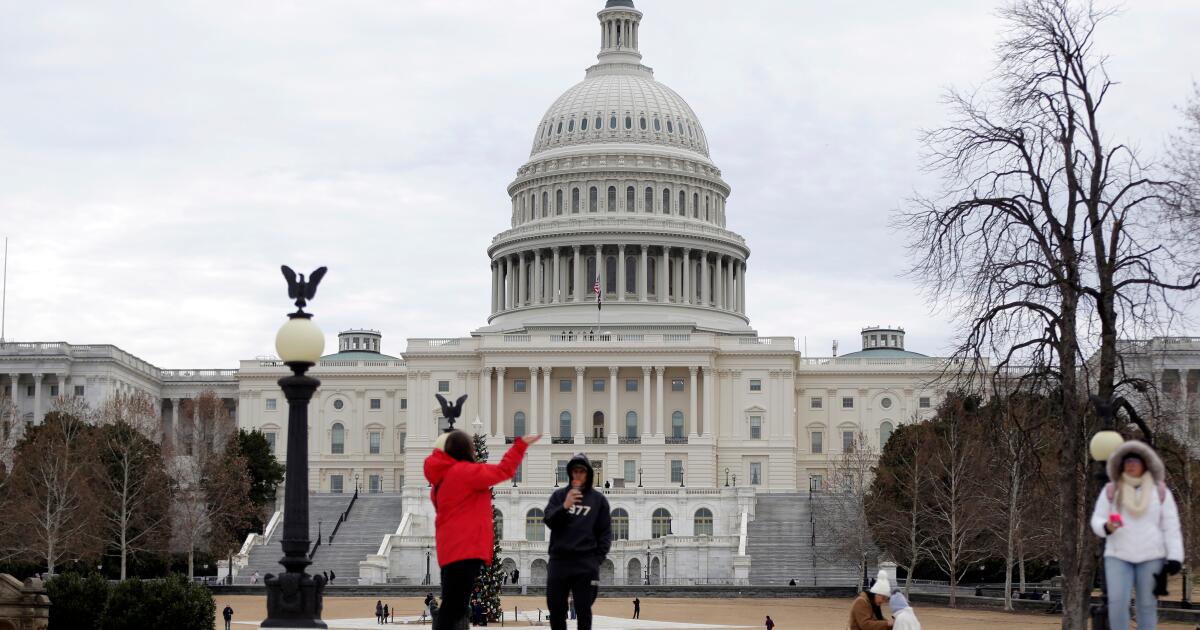
Lawmakers are returning to Washington this week confronting the fallout from the stunning capture of Venezuelan President Nicolás Maduro — and familiar complaints about the Trump administration deciding to bypass Congress on military operations that have led to this moment.

Democratic leaders are demanding the administration immediately brief Congress. Republican leaders indicated over the weekend those plans are being scheduled, but some lawmakers expressed frustration Sunday that the details have been slow to arrive.

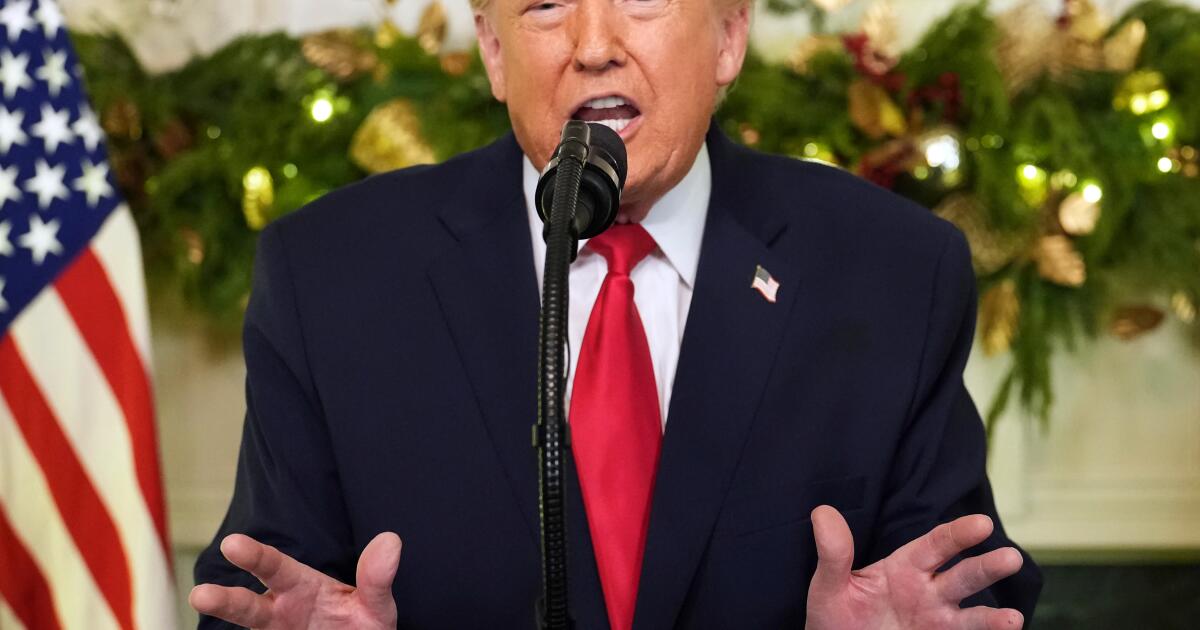
President Trump told the nation Saturday that the United States intends to “run” Venezuela and take control over the country’s oil operations now that Maduro has been captured and brought to New York to stand trial in a criminal case centered on narco-terrorism charges.

The administration did not brief Congress ahead of the actions, leaving Democrats and some Republicans expressing public frustration with the decision to sideline Congress.

“Congress should have been informed about the operation earlier and needs to be involved as this situation evolves,” Sen. Susan Collins (R-Maine) said in a social media post Saturday.

Appearing on the Sunday news shows, Senate Minority Leader Chuck Schumer and House Minority Leader Hakeem Jeffries, both of New York, ticked through a growing list of unknowns — and laid out plans for their party to try and reassert Congress’ authority over acts of war.

“The problem here is that there are so many unanswered questions,” Schumer said on ABC’s “This Week.” “How long do they intend to be there? How many troops do we need after one day? After one week? After one year? How much is it going to cost and what are the boundaries?”

Jeffries told NBC’s “Meet the Press” that he was worried about Trump running Venezuela, saying he has “done a terrible job running the United States of America” and should be focused on the job at home.

In the coming days, Jeffries said Democrats will prioritize legislative action to try and put a check on the administration, “to ensure that no further military steps occur absent explicit congressional approval.”

As discussions over Venezuela loom, lawmakers also face major decisions on how to address rising costs of healthcare, prevent another government shutdown and deal with the Trump administration’s handling of the Epstein files.

Much of the unfinished business reflects a Congress that opted to punt some of its toughest and most politically divisive decisions into the new year, a move that could slow negotiations as lawmakers may be reluctant to give the other side high-profile policy wins in the lead-up to the 2026 midterm elections.

First and foremost, Congress faces the monumental task of averting yet another government shutdown — just two months after the longest shutdown in U.S. history ended. Lawmakers have until Jan. 30 to pass spending bills needed to keep the federal government open. Both chambers are scheduled to be in session for three weeks before the shutdown deadline — with the House slated to be out of session the week immediately before.

Lawmakers were able to resolve key funding disputes late last year, including funding for Supplemental Nutrition Assistance Program benefits, also known as food stamps, and other government programs. But disagreements over healthcare spending remain a major sticking point in budget negotiations, intensified now that millions of Americans are facing higher healthcare costs after lawmakers allowed Affordable Care Act tax credits to expire on Thursday.

“We can still find a solution to this,” said Rep. Kevin Kiley (R-Rocklin), who has proposed legislation to extend the tax credits for two years. “We need to come up with ways to make people whole. That needs to be a top priority as soon as we get back.”

Despite that urgency, Republican efforts to be the author of broad healthcare reforms have gotten little traction.

Underscoring the political pressure over the issue, four moderate House Republicans late last year defied party leadership and joined House Democrats to force a floor vote on a three-year extension of the subsidies. That vote is expected to take place in the coming weeks. Even if the House effort succeeds, its prospects remain dim in the Senate, where Republicans last month blocked a three-year extension.

Meanwhile, President Trump is proposing giving more money directly to people for their healthcare, rather than to insurance companies. A White House official said the administration is also pursuing reforms to lower the cost of prescription drugs.

Trump said last month that he plans to summon a group of healthcare executives to Washington early in the year to pressure them to lower costs.

“I’m going to call in the insurance companies that are making so much money, and they have to make less, a lot less,” Trump said during an Oval Office announcement. “I’m going to see if they get their price down, to put it very bluntly. And I think that is a very big statement.”

There is an expectation that Trump’s increasing hostility to insurance companies will play a role in any Republican healthcare reform proposal. If Congress does not act, the president is expected to leverage the “bully pulpit” to pressure drug and insurance companies to lower healthcare prices for consumers through executive action, said Nick Iarossi, a Trump fundraiser.

“The president is locked in on the affordability message and I believe anything he can accomplish unilaterally without Congress he will do to provide relief to consumers,” Iarossi said.

While lawmakers negotiate government funding and healthcare policy, the continuing Epstein saga is expected to take up significant bandwidth.

Democrats and a few Republicans have been unhappy with the Department of Justice’s decision to heavily redact or withhold documents from a legally mandated release of files related to its investigation of Jeffrey Epstein, a convicted sex offender who died in a Manhattan jail awaiting trial on sex trafficking charges.

Some are weighing options for holding Atty. Gen. Pam Bondi accountable.

Rep. Ro Khanna (D-Fremont), who co-sponsored the law that mandated the release with Rep. Thomas Massie (R-Ky.), said he and Massie will bring contempt charges against Bondi in an attempt to force her to comply with the law.

“The survivors and the public demand transparency and justice,” Khanna said in a statement.

Under a law passed by Congress and signed by Trump, the Justice Department was required to release all Epstein files by Dec. 19, and released about 100,000 pages on that day. In the days that followed, the Justice Department said more than 5.2 million documents have been discovered and need to be reviewed.

“We have lawyers working around the clock to review and make the legally required redactions to protect victims, and we will release the documents as soon as possible,” the Justice Department said in a social media post on Dec. 24. “Due to the mass volume of material, this process may take a few more weeks.”

Rep. Robert Garcia, the top Democrat on the House Oversight Committee, told MS NOW last week that pressure to address the matter will come to a head in the new year when lawmakers are back at work.

“When we get back to Congress here in this next week, we’re going to find out really quick if Republicans are serious about actually putting away and taking on pedophiles and some of the worst people and traffickers in modern history, or if they’re going to bend the knee to Donald Trump,” said Garcia, of Long Beach.
Source link

Beneath the rambling, Trump laid out a chilling healthcare plan

Folks, who was supposed to be watching grandpa last night? Because he got out, got on TV and … It. Was. Not. Good.

For 18 long minutes Wednesday evening, we were subjected to a rant by President Trump that predictably careened from immigrants (bad) to jobs (good), rarely slowing down for reality. But jumbled between the vitriol and venom was a vision of American healthcare that would have horror villainess M3GAN shaking in her Mary Janes — a vision that we all should be afraid of because it would take us back to a dark era when insurance couldn’t be counted on.

Trump’s remarks offered only a sketchy outline, per usual, in which the costs of health insurance premiums may be lower — but it will be because the coverage is terrible. Yes, you’ll save money. But so what? A cheap car without wheels is not a deal.

“The money should go to the people,” Trump said of his sort-of plan.

The money he vaguely was alluding to is the government subsidies that make insurance under the Affordable Care Act affordable. After antics and a mini-rebellion by four Republicans also on Wednesday, Congress basically failed to do anything meaningful on healthcare — pretty much ensuring those subsidies will disappear with the New Year.

Starting in January, premiums for too many people are going to leap skyward without the subsidies, jumping by an average of $1,016 according to the health policy research group KFF.

That’s bad enough. But Trump would like to make it worse.

The Affordable Care Act is about much more than those subsidies. Before it took effect in 2014, insurance companies in many states could deny coverage for preexisting conditions. This didn’t have to be big-ticket stuff like cancer. A kid with asthma? A mom with colitis? Those were the kind of routine but chronic problems that prevented millions from obtaining insurance — and therefore care.

Obamacare required that policies sold on its exchange did not discriminate. In addition, the ACA required plans to limit out-of-pocket costs and end lifetime dollar caps, and provide a baseline of coverage that included essentials such as maternity care. Those standards put pressure on all plans to include more, even those offered through large employers.

Trump would like to undo much of that. He instead wants to fall back on the stunt he loves the most — send a check!

What he is suggesting by sending subsidy money directly to consumers also most likely would open the market to plans without the regulation of the ACA. So yes, small businesses or even groups of individuals might be able to band together to buy insurance, but there likely would be fewer rules about what — or whom — it has to cover.

Most people aren’t savvy or careful enough to understand the limitations of their insurance before it matters. So it has a $2-million lifetime cap? That sounds like a lot until your kid needs a treatment that eats through that in a couple of months. Then what?

Trump suggested people pay for it themselves, out of health savings accounts funded by that subsidy check sent directly to taxpayers. Because that definitely will work, and people won’t spend the money on groceries or rent, and what they do save certainly will cover any medical expenses.

“You’ll get much better healthcare at a much lower price,” Trump claimed Wednesday. “The only losers will be insurance companies that have gotten rich, and the Democrat Party, which is totally controlled by those same insurance companies. They will not be happy, but that’s OK with me because you, the people, are finally going to be getting great healthcare at a lower cost.”

He then bizarrely tried to blame the expiring subsidies on Democrats.

Democrats “are demanding those increases and it’s their fault,” he said. “It is not the Republicans’ fault. It’s the Democrats’ fault. It’s the Unaffordable Care Act, and everybody knew it.”

It seems like Trump just wants to lower costs at the expense of quality. Here’s where I take issue with the Democrats. I am not here to defend insurance companies or our healthcare system. Both clearly need reform.

But why are the Democrats failing to explain what “The money should go to the people” will mean?

I get that affordability is the message, and as someone who bought both a steak and a carton of milk this week, I understand just how powerful that issue is.

Still, everyone, Democrat or Republican, wants decent healthcare they can afford, and the peace of mind of knowing if something terrible happens, they will have access to help. There is no American who gladly would pay for insurance each month, no matter how low the premium, that is going to leave them without care when they or their loved ones need it most.

Grandpa Trump doesn’t have this worry, since he has the best healthcare our tax dollars can buy.

But when he promises to send a check instead of providing governance and regulation of one of the most critical purchases in our lives, the message is sickening: My victory in exchange for your well-being.

Source link

Angels insurers may play role in Skaggs wrongful death trial

Four years after the family of deceased Angels pitcher Tyler Skaggs filed a wrongful death suit against the Angels, and two months into often contentious testimony in an Orange County Superior Court courtroom, jurors are set to begin deliberations on whether Skaggs’ widow and parents deserve hundreds of millions of dollars.

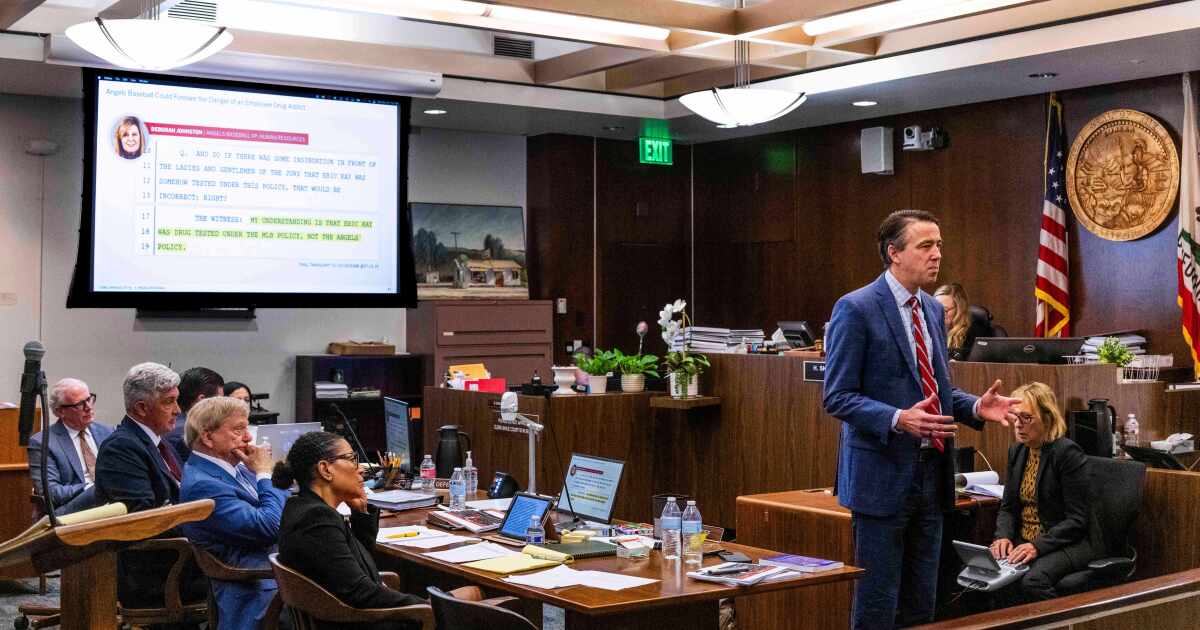
During closing statements Monday, plaintiffs lawyer Daniel Dutko argued that the Angels were negligent in failing to supervise Eric Kay, the drug-addicted team communications director who gave Skaggs the fentanyl that killed him in 2019.

However, Angels lawyer Todd Theodora insisted that Skaggs was a selfish, secretive opioid addict who for years manipulated Kay into obtaining drugs for him. Theodora told the jury that the Angels didn’t owe the Skaggs family any award.

“He died when he was doing things we teach our children and grandchildren not to do — do not chop up and snort pills from the street,” Theodora said.

But it’s not just Skaggs’ family and the Angels who have a lot riding on the jury’s decision. Among those powerful stakeholders who have been watching the proceedings closely are the agencies that insure the Angels.

According to people with knowledge of the Angels’ defense, the team is insured by several companies that each provide coverage with various limits, and it’s possible that those insurers could facilitate a case settlement even before the jury reaches its verdict.

“Insurance companies are in the business of mitigating risk; they don’t like uncertainty,” said Brian Panish, a Los Angeles personal injury lawyer who was not involved in the case but has won several landmark jury verdicts. “They calculate risk and proceed from there. In this case we are talking about multiple insurance companies, a tower of insurance.”

Even though the insurance companies represent the Angels, they ultimately could reduce risk for the Skaggs family and their lawyers through an 11th-hour settlement.

Legal experts say that in cases where enormous sums of money are at stake, the two sides can reach what is called a high-low agreement, with the insurance companies promising to pay plaintiffs an agreed-upon sum even if the jury awards nothing. In exchange the plaintiffs accept an agreed-upon cap to their award — even if the jury thought they deserved more.

A nightmare outcome for the Skaggs family would be the jury awarding them nothing, meaning that in addition to widow Carli Skaggs and parents Debbie Hetman and Darrell Skaggs leaving empty-handed, their high-powered legal team that has spent thousands of hours on the case wouldn’t be paid. Their contingency fee — typically 35% to 40% of an award — would be zero.

A high-low agreement with the Angels would ensure that Skaggs’ lawyers are paid and the family gets some money even if the jury denies them anything.

Both sides are scrambling to assess risk before the jury returns a verdict. Another source of information for the Angels has been a “shadow jury,” a half-dozen or so people hired by the insurance companies to sit in on the trial and provide feedback to the Angels lawyers on their reactions to the testimony.

Next could come negotiations with little time to spare.

“Who is going to blink first?” Panish said. “The posturing and maneuvering is over. The hay is in the barn. The bricks have been laid. I’d be very surprised if they aren’t talking already.”

A person with knowledge of backroom negotiations between the two sides said one insurance company with a relatively low limit on its coverage of the Angels — near the bottom of the tower — has blocked progress toward a settlement. The insurance companies eventually made a “lowball offer” more than a month ago that was rejected by the Skaggs family.

“If a settlement proposal is within the insurance policy limits, there will be pressure on the defense to settle,” Panish said. “But if it is above the limits, say coverage is for $50 million and the demand is $100 million, the insurance companies can’t force the Angels to settle because they would have to pay the excess amount.”

The facts regarding Skaggs’ death are not in dispute. An autopsy concluded the 27-year-old left-hander accidentally died of asphyxia after aspirating his own vomit while under the influence of fentanyl, oxycodone and alcohol the night of July 1, 2019, when the Angels were in Texas for a three-game series against the Rangers.

Kay provided Skaggs with the counterfeit oxycodone pill laced with fentanyl and is serving 22 years in federal prison for his role in the death.

The Skaggs family legal team, led by attorneys Rusty Hardin, Shaun Holley and Dutko, argued that several Angels employees knew about Kay’s own years-long addiction to opioids and ignored team and Major League Baseball policies by failing to report or punish Kay.

Dutko said Kay was operating within his scope of employment when he gave Skaggs and several other players opioid pills — a stance vigorously opposed by Theodora. Dutko referred to testimony that Kay did anything he could to please players — obtaining Viagra prescriptions and marijuana vape pens for them, booking tee times and massages, and humoring them by taking a fastball off his knee and eating pimples off the back of star outfielder Mike Trout.

“From Viagra to vape pens to opioids. Eric Kay’s job responsibility was to get the players anything they wanted,” Dutko said.

Theodora continually portrayed Skaggs as a conniving drug addict who callously pressured Kay to obtain pills for him and doled out pills to teammates, even pressuring Kay to deliver opioids shortly after the longtime employee and admitted drug addict came out of rehab.

On Monday, Theodora reviewed testimony from five of Skaggs’ teammates dating back to 2011 and argued that not only had Skaggs’ drug use escalated over a nine-year period, but that Skaggs had introduced Kay to them and personally obtained pills for the players.

“It’s called the chain of distribution,” Theodora said.

The Skaggs family is seeking not only lost earnings and emotional distress damages but also punitive damages. California law doesn’t allow punitive damages in a wrongful death case, but precedent going back to the O.J. Simpson case makes an exception if the person suffered property damage before death. Skaggs lawyers believe Kay was responsible for fentanyl contaminating the pitcher’s iPad, which was confiscated and never returned to the family.

“The jury first must find the defendant liable for economic and emotional distress damages, and then a second deliberation will determine if punitive damages are appropriate,” said Edson K. McClellan, an Irvine lawyer who specializes in high-stakes civil and employment litigation. “The purpose of punitive damages is to send a message to the defendant: Don’t do this again.”

McClellan said a purpose of closing statements is to “sway hearts,” to persuade jurors who might not have made up their minds. Both sides gave impassioned arguments that the case they presented over two months validated a verdict in their favor.

Source link