Insecurity

Insecurity Destroying Healthcare in Nigeria’s Madagali 

Hannatu Charles* carried her pregnancy to full term. She attended all antenatal sessions and was eager to meet her baby. 

In January, when she was due, she went into labour around 7 p.m. Unfortunately, the primary healthcare centre in Kirchinga, a community in Madagali local government area of Adamawa state in northeastern Nigeria, closes around 6 p.m. Her family immediately called one of the traditional birth attendants in the community.

Hannatu laboured for hours, yet her baby did not emerge despite the efforts of the traditional birth attendant. By 10 p.m., warning bells began to ring in her mind, as by that time, all doors in Kirchinga had been shut and all access routes deserted. 

“We decided to try to see if we could at least meet one person at the primary healthcare centre, so my husband and my neighbour took me there that night, but we didn’t meet any midwife or any healthcare staff,” she told HumAngle. 

The centre was closed. All the healthcare staff had gone and would only return the next morning. Night shifts no longer hold. These changes were made due to the scale of insecurity. 

Hannatu told HumAngle they returned home, where she continued to push, but despite her efforts, she was unable to deliver. The birth attendant noted that the baby was in breech position and, therefore, an experienced midwife or a gynaecologist was required. The only way they could access such care was by travelling to the Cottage Hospital in Gulak Local Government or the General Hospital in Michika Local Government, both many hours away. 

Hannatu said they would have made the journey that night on a regular day, but now,  it was too risky. Movement in Kirchinga was restricted after dark as Boko Haram terrorists roamed the area, especially at night. There was also no way to access vehicles or get a driver to take the,m as all routes were closed. 

She said she was willing to persevere until dawn when the roads would reopen, but by midnight, the pain intensified, and the midwife doubled her efforts. A stillborn was delivered. 

“I’m not the first to lose a child because of the security situation in this region,” Hannatu said as she talked about how insecurity destroys healthcare. “In fact, I’m lucky to be alive,” she added, stressing that several women and their babies had died.

According to Hannatu, the women who went into labour during the day in Kirchinga are considered lucky. 

The healthcare crisis 

Kyauta Ibrahim, a community health extension worker, spends her days at the primary school in Limankara, another community in the same Madagali that has, since the past decade, been repurposed as the community’s healthcare centre. Since residents began returning to Madagali in 2016 — two years after Boko Haram attacks displaced them — she and her colleagues have provided medical services from this makeshift facility.

“We are yet to move to the permanent site. We were asked to stay here to perform our duties,” she said. When the insurgents struck, they torched several structures, including the original primary healthcare centre where she worked.

For Limankara residents, this temporary facility remains the only nearby source of medical care. With few doctors remaining in the region, patients are often forced to travel long distances to better-equipped centres in Shuwa, Michika, or Gulak, particularly in emergencies.

Before the insurgency, the primary healthcare centre in Limankara served the local population and neighbouring communities such as Sakur and Lakundi, providing antenatal care, deliveries, and basic medical services. After peace was gradually restored in 2016, the state government converted one of the primary schools into a modest healthcare facility to meet the community’s needs.

A decade later, the school still functions as the healthcare centre. The situation worsened as medical doctors and other professionals began withdrawing, leaving indigenous community health extension workers to manage the facility. In 2016, most health centres in Madagali and Michika were closed because many professionals had either been killed or fled permanently.

As of 2019, the World Health Organisation’s Health Resources Availability Monitoring System (HeRAMS) highlighted that only 45 per cent of health centres in Adamawa were fully functional after 12 per cent had been destroyed and 34 per cent severely damaged by Boko Haram attacks. 

Kyauta told HumAngle that, aside from staff shortages, inadequate healthcare equipment continues to affect healthcare delivery in the area. The temporary primary healthcare centre now closes by late evening due to recurring Boko Haram attacks, leaving pregnant women and children most vulnerable.

“When a woman starts labour at night, she can’t even go to the primary healthcare centre and has to give birth at home,” she said. Complicated cases are referred to Shuwa, and if necessary, to the General Hospital in Michika or the Gulak cottage hospital, all of which are some distance away. 

Esther Markus, a mother of six from Wagga, another community in Madagali, travels six hours for a round trip to Gulak for medical care. Emergencies are further complicated by a 6 p.m. curfew. Traditional birth attendants handle routine deliveries, but high-risk cases, like breech births or sudden illness at night, go untreated until morning.

“Once it’s 6 p.m., we can’t take sick people to the hospital, so we leave them till the next day in the hands of God, and if the person dies, then we accept it,” said Hamidu Ahmadu, Limankara’s community leader.

Residents said security remains precarious. “A few days ago, the soldiers guarding us were attacked, so since then, they leave once it is 5 p.m. and head back to their headquarters in town. Our youths guard us all through the night,” Esther added. 

Hamidu told HumAngle that the community has a population of about 3,000. He acknowledged the efforts of some humanitarian organisations that have visited the area in the past to treat malnourished children and provide basic healthcare services to residents, but the gap remains. 

In 2024, the International Committee of the Red Cross (ICRC) resumed operations in Madagali after being unable to operate since 2018. The following year, the organisation provided basic healthcare and nutrition services to residents and also renovated the existing healthcare facility in Madagali town, which has become a haven for displaced persons in villages around the area. This has helped mitigate how insecurity affects healthcare in Madagali. 

Despite these humanitarian efforts to restore healthcare access in conflict-prone communities in Madagali, however, factors like the curfew, abductions, and the absence of medical professionals continue to limit access to services. 

Medical professionals are fleeing 

Kirchinga, the community in Madagali where Halima had the stillbirth, faces a similar plight. Although it has a functional primary healthcare centre, the lack of medical professionals severely affects service delivery.  

“Since the insecurity started, the doctors have stopped staying. They no longer live in the community but only show up from time to time,” said Bitrus Kwada, a Kirchinga resident.

Boko Haram terrorists have abducted, killed, or threatened several health and humanitarian workers in the northeastern region. In 2018, some medical workers were kidnapped and later killed in Borno. The following year, Boko Haram attacked Kirchinga and Shuwa communities, burning houses, shops, and clinics after killing three people. 

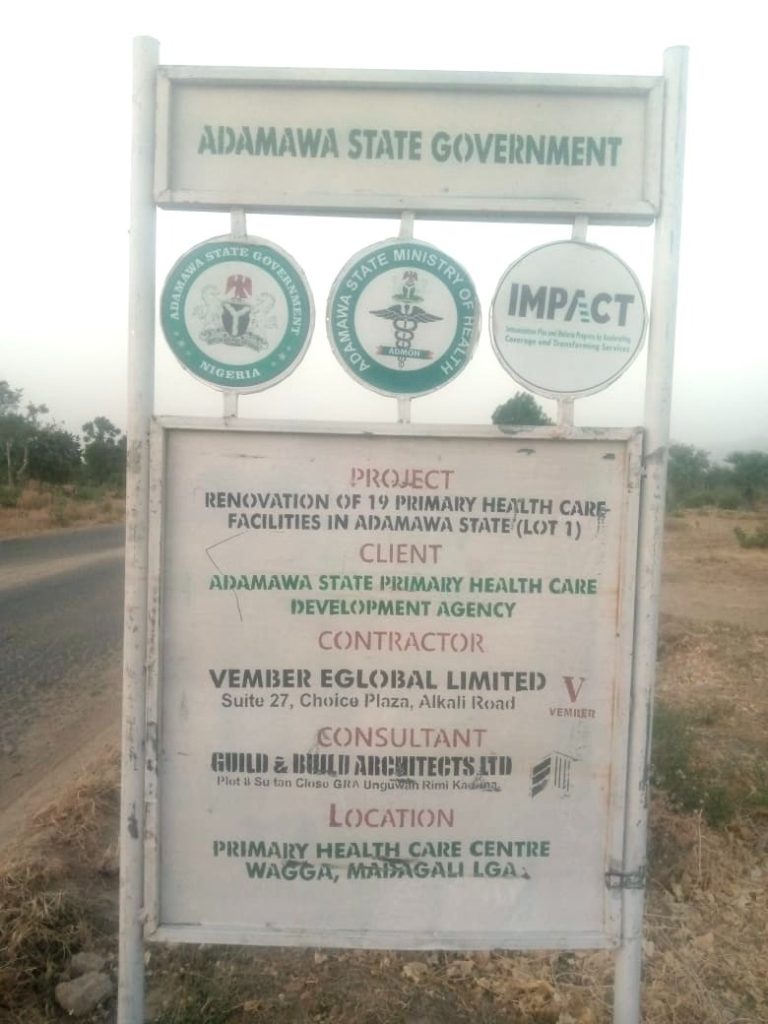
Signboard for Adamawa State Government health project, renovation of 19 primary care facilities, located in Wagga, Madagali LGA.
Signpost of the Primary Health Care Centre in Wagga Lawan which was destroyed by Boko Haram in 2014 and recently rebuilt by the State government. Photo: Cyrus Ezra 

By 2020, Bitrus explained, healthcare workers, including doctors, who once lived in Kirchinga had either been transferred or fled, leaving them only occasionally available and unable to respond to emergencies.

“We suffer when it comes to emergency treatment at night,” Bitrus stated.  

Over the years, several women with complicated pregnancies have died during childbirth, along with their babies, due to the absence of doctors and surgeons. 

Blessing Dingami, another resident of Kirchinga, told HumAngle that before the insurgency started in 2014, the primary healthcare centre in the community was staffed by a medical doctor, two nurses, and another healthcare provider who ran the facility round the clock, with support from community health extension workers.

Following the attacks, the centre collapsed, forcing the professionals to flee. Although the government has since renovated it, community health extension workers now manage the facility, and the quality of services has declined.

Even though movement in Kirchinga is unrestricted until 10 p.m., accessing medical care is increasingly difficult. “There was a time when people from our community were involved in a ghastly accident at night, and we rushed them to the centre, but there was no professional to handle their case,” Blessing recounted. 

She noted that the healthcare centre no longer provides scanning, surgery, and other services it previously offered. Residents now have to travel for over half an hour to Shuwa and sometimes to Gulak, where there is a cottage hospital.

In Wagga Lawan, another community in Madagali, the primary healthcare centre was destroyed during Boko Haram attacks in 2014 but was recently rebuilt and commissioned by the state government.

Despite the renovation, many Madagali residents remain unable or afraid to use the facility. People from Wagga Mongoro, Thidakwa, and even Limankara travel there, yet fear of kidnapping, its remote location, and the surrounding bushes keep many away, particularly at night.

Green buildings under a clear blue sky, with dry grass and scattered trees in the foreground. Hills are visible in the background.
The recently renovated healthcare centre in Wagga Lawan. Photo: Cyrus Ezra 

“The centre is located on the outskirts of the town, and bushes surround it, so people are afraid to go there for services, especially at night, due to fear of kidnapping,” said Cyril Ezra, a resident. Travel to the facility takes over an hour by bike. 

In 2025, Boko Haram attacked Wagga Mongoro, killing four people, injuring many others, and razing property—underscoring why many remain hesitant to use even the newly rebuilt facility.

Uncertainty 

Peace Ijanada Simon, a midwife at Shuwa’s primary healthcare centre, said the facility is overburdened with deliveries and emergencies from surrounding communities, as theirs lack night services. Although staff work night shifts, service is inconsistent due to recent kidnappings and a lack of reliable electricity. 

“There is no power supply. We use torchlights for most deliveries. If we can’t handle it, we refer immediately to Gulak or Michika,” she said.

In Kirchinga, locals have lost hope for the return of professional healthcare workers. “From 2014 to today, we’ve been facing security challenges because Boko Haram can attack at any time and destroy our things. Some of our people have been killed. Two years back, the situation changed into kidnappings,” he said. 

Bitrus explained that the terrorists mostly show up at night when locals are sleeping and carry out these abductions. “Ransoms have been paid, and some have been released. We have soldiers here, but I don’t think they are taking strong action,” he added.

Maradi, a community near Kirchinga, was attacked on Jan. 23. One resident who resisted capture was killed in his home, while a hunter who confronted the attackers that night was also killed, and another person was abducted that night. 

“We don’t sleep. From midnight, we stay awake till 3 a.m. because that’s the time they normally come. We have to stay conscious,” he said. 
Source link

Unilateral Sanctions, Food Insecurity and Food Sovereignty Construction in Venezuela: Challenges and Prospects for Zero Hunger in a Transforming Petrostate

Venezuelan popular power organizations have developed creative solutions to advance food sovereignty while under the US blockade. (FAO)

Natalia Burdynska Schuurman defended her MsC thesis at the University of Edinburgh on Venezuela’s struggle for food security and food sovereignty amid wide-reaching US-led unilateral sanctions.

See below for the abstract, research questions, and the full text.

Abstract

As global development actors grapple with mounting pressures to feed the world population, growing enforcement of unilateral coercive measures jeopardizes efforts to advance Sustainable Development Goal 2 (SDG-2, “Zero Hunger”). This dissertation examines efforts to achieve food security in Venezuela, a state currently targeted by over 1,000 unilateral coercive measures, since its incorporation as a constitutional right in 1999 and how such processes have been shaped by economic sanctions targeting its oil industry introduced by the United States in 2015. It employs a literature review, secondary data analysis and archival research, adopting a political economy and world systems lens as well as a historical, relational and interactive approach to food sovereignty research, centering the perspectives and experiences of Venezuelan communities. This dissertation argues that unilateral sanctions targeting Venezuela’s oil industry triggered the collapse of a political economy of food security structurally dependent on Venezuela’s macroeconomic stability within a dollarized international trade and financial system, catalyzing efforts to rebuild Venezuela’s food and agricultural system that transformed the landscape of national food sovereignty construction. It is hoped that this dissertation yields new insights into challenges and prospects facing national efforts to construct food sovereignty and global efforts to achieve food security today.

[…]

Research questions

This dissertation answers the primary question: How have unilateral sanctions
targeting Venezuela’s oil industry shaped efforts to achieve food security in
Venezuela?

It addresses the following contributory questions: What was the state of affairs characterizing Venezuela’s food and agricultural system prior to 2015? What advances and setbacks have been identified concerning the national goal to achieve food security, as enshrined in Venezuela’s Constitution of 1999? How have financial and trade sanctions targeting Venezuela’s oil industry introduced by the United States in 2015 correlated with macroeconomic and food security trends in Venezuela? How have financial and trade sanctions targeting Venezuela’s oil industry impacted food production, distribution and access in Venezuela? How have state and societal actors engaged in efforts to achieve food security in Venezuela responded to these consequences?

Source link

Insecurity on Borno Roads Still Affecting Commerce 

It was early in the morning, and Yakubu Buba stood in front of his house in Gamboru, northeastern Nigeria, looking towards the horizon. He was not waiting for a vehicle. He was waiting for cattle.

From across the Cameroon border, they came in low, patient herds, hooves lifting dust into the air. Yakubu breathed in deeply and smiled.  He enjoys the smell of fresh animal droppings, he says. “It replenishes the soul.”

The herds come daily. “About ten of them,” the 57-year-old estimates. “They are guided into Kasuwan Shanu, where they are loaded onto trucks bound for Maiduguri.”

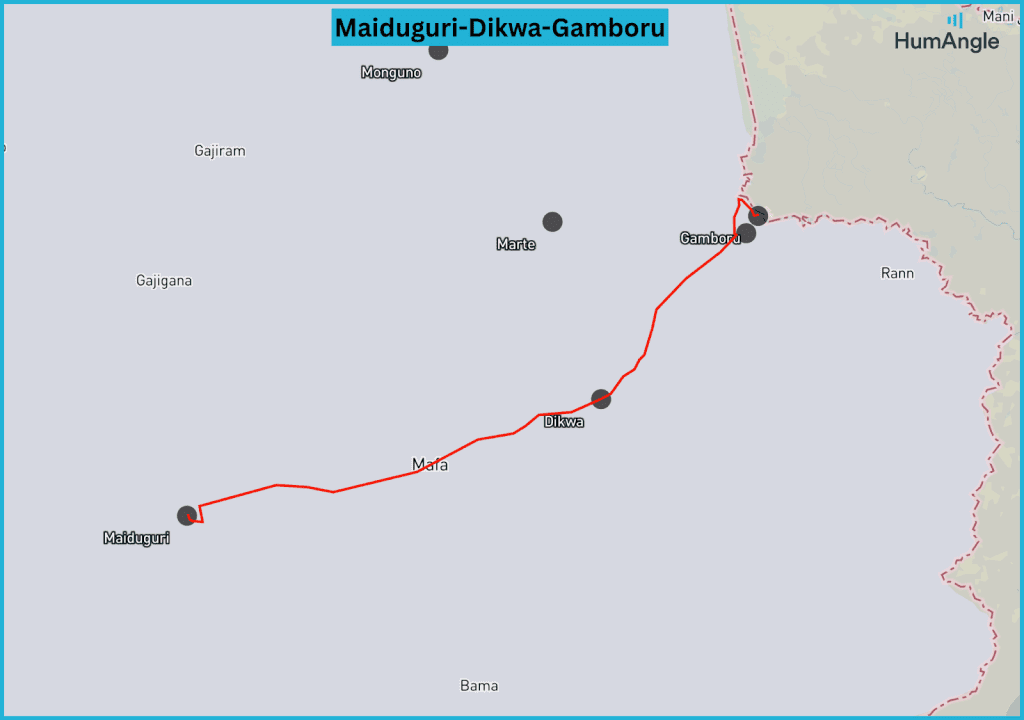
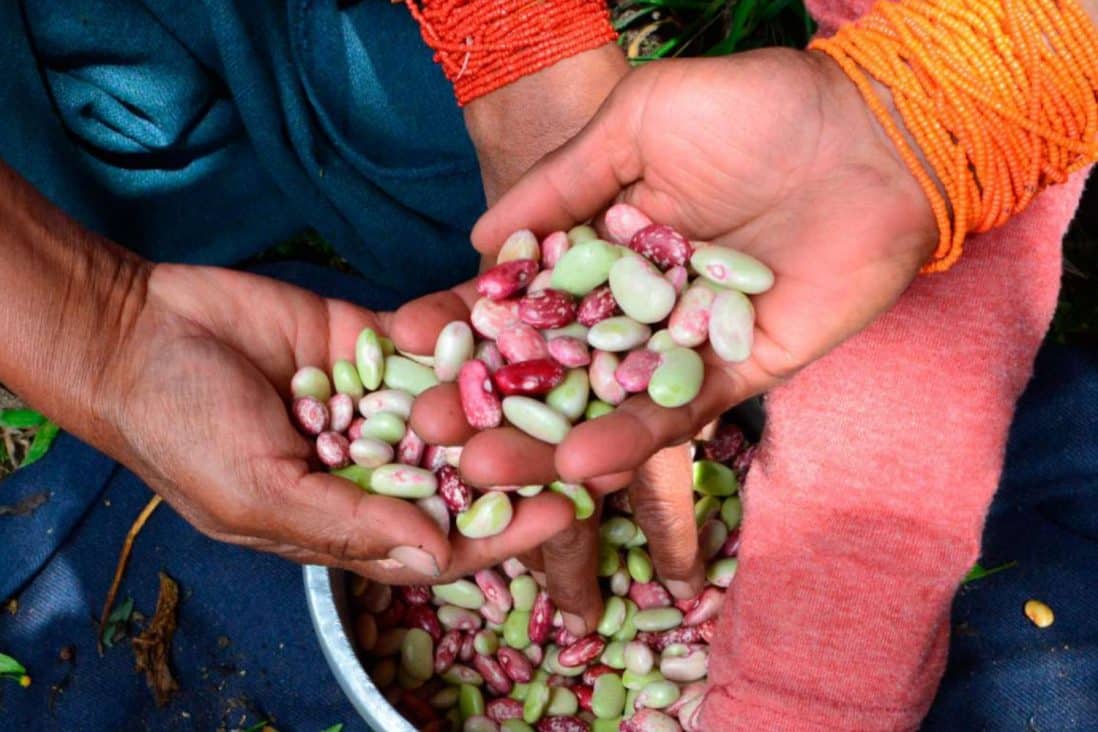
That same morning, he, too, was headed to Maiduguri. A bean merchant since he was 17, Yakubu began travelling the Maiduguri-Dikwa-Gamboru road in 1986, importing beans from Cameroon and selling them onward to traders at the Muna Market who supplied to markets across Nigeria.

Map showing the Maiduguri-Dikwa-Gamboru route in Nigeria, with marked locations along the path.
A map illustration of the Maiduguri-Dikwa-Gamboru route. Illustration: Mansir Muhammed/HumAngle.

Gamboru sits on the Nigerian-Cameroon border in the northeast. A few kilometres away is Ngala, which links Nigeria and Chad. Through these borders, traders export processed goods like flour into Cameroon and Chad, Yakubu says. And when crossing back, they would import beans, sesame, and groundnuts. Animals, in whole or in parts, like hides, are the most imported from these countries, he says.

At the Muna Motor Park in Maiduguri, where I met Yakubu, this pattern was once predictable. Vehicles arrived full and left fuller. Mustapha Hauwami, a 47-year-old driver who began plying the route in 1980, remembers when the park felt like a tide. “We transport traders and passengers to Gamboru and Dikwa daily,” he says. “Most of those coming from Gamboru are Chadian traders.” He drove twice a day, sometimes more.

Outdoor market scene with people and colorful produce stalls. A large yellow sign reads "Muna Garage, Borno" with an MTN logo.
Entrance of the Muna Motor Park, Maiduguri. Here, commuters board vehicles to Dikwa, Gamboru, and Chad. Photo: Al’amin Umar/HumAngle.

The pattern got interrupted, slowly. Conflict came, and fear crept in. “It became too risky to travel,” Mustapha says. Checkpoints began to pop up, and movement became impossible without military escorts. “There are at least 20 checkpoints on the road,” Mustapha says. “Importing goods became difficult,” Yakubu adds.

Man in red jacket standing by a red car with sacks on top, holding money. Street scene with a cart and umbrella in the background.
Mustapha Hauwami stands beside his vehicle, waiting to transport passengers to Gamboru at the Muna Motor Park. Photo: Al’amin Umar/HumAngle.

Movements became restricted

The effects were uneven. While Maiduguri’s economy tightened under restricted access, border towns like Gamboru adapted in unexpected ways. Cut off from Maiduguri at the height of the Boko Haram conflict, traders there turned outward. “We relied entirely on Chad and Cameroon,” Yakubu recalls.

Over time, goods from Maiduguri began arriving again, but now as just one stream among many. “They became cheaper in Gamboru,” he said. “Goods were coming from both Maiduguri and the neighbouring countries.”

The movement did not stop. It rerouted. The road’s restriction reshaped the advantage, redistributing it. What Maiduguri lost in centrality, border towns gained in flexibility.

Elsewhere, the pattern repeated with variations. On the Maiduguri-Bama-Gwoza road, Muhammad Haruna remembers when nights were just nights. He began driving in 1981, commuting passengers to Bama, Gwoza, Pulka, Yola, and Mubi. “Driving to Bama took at least 40 minutes,” he recalls. “For Banki, Gwoza, and Kirawa, it was one hour and 30 minutes.” There were few checkpoints, he says. And these existed because of criminals. “And travelling to Mubi was three hours, while Yola was not more than five hours.” The roads were free, even at night. “On market days, as many as 200 fully loaded Gulf cars carried traders into these towns,” says Bamai Mustapha, Chairman of the Bama Park National Union of Road Transport Workers.

Map showing the red route from Maiduguri to Gwoza passing through Bama and Pulka.
A map illustration of the Maiduguri-Bama-Gwoza route. Illustration: Mansir Muhammed/HumAngle.

Here, too, the Boko Haram conflict affected the flow. Most of the roads became inaccessible, forcing drivers to take a long route passing through the forest into Dikwa, before reaching Bama, until it became totally impossible to travel. “After escaping abduction in 2015, I stopped driving,” Muhammad says. “I sold the car and went into trading.”

Some traders shifted focus to Yola, Muhammad says. They would import from Cameroon into Yola instead. “Others import to Jalingo.”

When calm slowly returned, the routes reopened, but with limited access. “In some of the towns, curfew starts early,” says Muhammad. “They close Bama and Konduga by 5 p.m.” “If you leave Maiduguri by 2 p.m. with Gwoza passengers, you must spend the night in Bama.”

Still, it is not totally safe. “There was a time we got stuck for about a week in Konduga, while going to Gwoza, waiting for military escorts,” Muhammad recalls.

There have been recurring attacks and abductions on these routes for about a decade. The Boko Haram terror group has turned to the kidnapping economy as one of its revenue windows. “The most dangerous route is between Gwoza and Limankara,” Muhammad reveals. “The terrorists would plant mines on the roads. You cannot follow the route without a military escort.”

Despite that, they must travel the route. “It leads into Cameroon. We often transport traders and goods imported from Cameroon through Banki, Kirawa, and Pulka into Maiduguri.” At least seven trucks filled with grains enter Maiduguri from Pulka daily, he says. “It used to be around 30.” “This is the same for Gwoza, Madagali, and other towns.” 

The goods coming in, especially grains and animals, are transported onwards to Lagos in southwestern Nigeria and other cities, Bamai says. “They pass the Maiduguri-Damaturu road.”

The fish stopped coming

The story is the same on the Maiduguri-Baga-Monguno road. This is the backbone of Maiduguri’s fish trade. Audu Gambo began plying this route in 1990, transporting passengers, including traders and farmers, to Baga daily. “Driving to Baga used to take only two hours and 30 minutes,” the 54-year-old recalls. “There were few customs and immigration checkpoints, and the roads were good,” he adds. This enabled him to make a full trip twice, he says, until the conflict interrupted this frequency.

“Travelling has become difficult and restricted,” Audu says. “The entrance to Baga closes at 2 p.m.” So, they must leave Maiduguri as early as 8 a.m. “There are at least 30 checkpoints before reaching Baga,” he says. “Most of the drivers here are from Baga. Those of us from Maiduguri rarely travel the route.”

Map showing the Maiduguri-Monguno-Baga route in Nigeria, marked in red, with surrounding towns and Lake Chad highlighted.
A map illustration of the Maiduguri-Monguno-Baga route. Illustration: Mansir Muhammed/HumAngle.

This affected the city’s source of protein. “I stopped going to Baga in 2017,” Abubakar Mustapha, a fish trader, recalls. It was 10 a.m. when I met him at his stall at the Baga Road Fish Market. “If it were before [the insurgency], we would have finished trading by this time,” he says. The influx of fish into the market has reduced. “They were cheaper and in abundance in the past. We used to offload at least five trucks of fish daily in the market.”

When the insurgency peaked, Abubakar recalls, it became one truck in days, until it became too risky to travel. The road became totally inaccessible.

Man in yellow attire sits beside stacks of smoked fish and boxes in a rustic market stall.
Abubakar Mustapha, sits in front of his stall at the Baga Road Fish Market, Maiduguri. Photo: Al’amin Umar/HumAngle.

Then the focus shifted to neighbouring countries. “We began importing from Cameroon, Chad, and Niger,” Abubakar recalls. “Fish from Cameroon and Chad are imported through the Maiduguri-Gamboru road. Those from Niger are brought in through Geidam in Yobe State,” and are transported through the Maiduguri-Damaturu road. “At least four trucks from these countries are offloaded daily,” he estimates. However, transporting to Maiduguri became costly. “Each cartoon costs 4,000 to import,” he says. So, traders relocated to Hadejia and Yola. “More than 50 per cent left.”

In the past two years, however, there has been cautious improvement. The market’s population has increased as previously closed roads are now accessible, Abubakar says. “Some traders have returned and they can now directly import from Baga and Monguno. Yesterday, we offloaded four vans. And the day before, it was three. It doesn’t go below or beyond this number.”

Man arranging smoked goods at an outdoor market stall, with a phone placed on the mat beside stacks of the product.
A fish trader opposite Abubakar’s stall displays his goods at the Baga Road Fish Market, Maiduguri. Photo: Al’amin Umar/HumAngle.

Yet, consignments from neighbouring countries make up the majority. “Fishers cannot freely access the water from the shores of Baga and Monguno,” he says. The shore there is one of the strongholds of the Islamic State West Africa Province (ISWAP) terror group. To fish in the water, fishers must pay.

That afternoon, Yakubu Buba boarded a vehicle at the Muna Park back to Gamboru. His beans had been delivered. He has learned to accept delays as the new rules of the road. Still, he remembers it used to be free.

Source link