Selma Blair allegedly had a violent episode aboard a Delta Airlines flight.
The “Cruel Intentions” star was taken into custody and transported to a hospital for evaluation on Sunday night after allegedly becoming physically abusive with the flight staff, according to the New York Port Authority. The Port Authority Police Department responded to a call around 11 p.m., when a flight coming from Los Angeles International Airport landed at John F. Kennedy International Airport, and two flight attendants needed medical assistance after an alleged altercation while in flight. One flight attendant was also transported to the hospital for further evaluation.
The FBI is investigating the incident.
According to representatives for Blair, “Selma experienced a medical emergency that led to the alleged conduct. Upon landing, she received immediate medical attention and is currently in stable condition.”
In dispatch audio, obtained by TMZ, a flight attendant suffered a bloody nose and Blair is alleged to have “bashed her head” against an overhead compartment.
A spokesperson for Delta told The Times in an emailed statement, “Delta has zero tolerance for unruly or unlawful behavior, as the safety of our customers and crew always comes first.”
In 2016, Blair was hospitalized after an incident on a flight to Los Angeles International Airport from Cancun, Mexico. She subsequently apologized for the behavior, saying in a statement, “I made a big mistake yesterday. After a lovely trip with my son and his Dad, I mixed alcohol with medication, and that caused me to black out and led me to say and do things that I deeply regret.”
The FBI could not immediately be reached for comment.
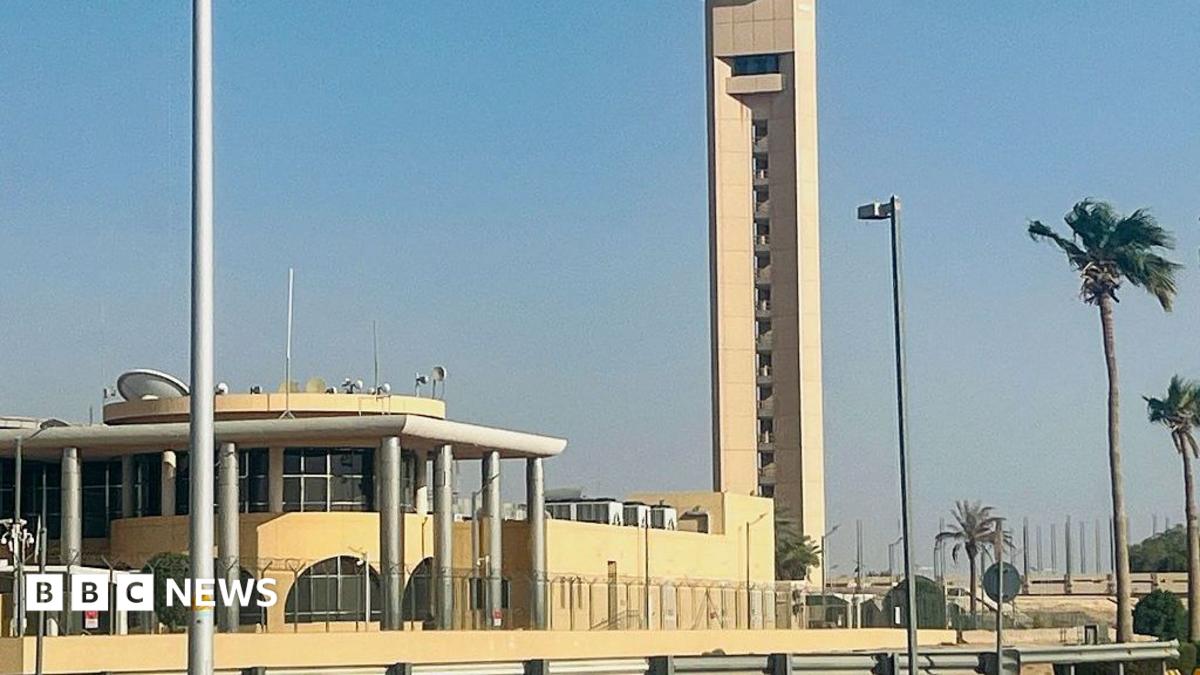
Several people have been injured in another attack on an international airport in the Saudi capital Riyadh, reports say, days after Yemen’s Houthis claimed to have carried out strikes on the hub.
King Khalid International Airport in Riyadh was evacuated after a loud blast was heard on Saturday, two international news agencies have reported.
More than a dozen ambulances were seen rushing to the airport, according to Reuters, citing an eyewitness. Saudi authorities have not commented, while the airport told passengers to check with their airline before travelling there.
The US embassy said it was “aware of attacks on King Khalid International Airport” and urged American citizens to avoid the airport and surrounding areas.
The attack comes a day after authorities said three Saudis including a pilot were killed in two attacks on the airport by the Iran-backed Houthis the day prior. Another three people were killed in Houthi attacks on two Saudi airports on 6 and 7 October.
A source at a local hospital told news agency AFP that dozens of people had been wounded in Saturday’s attack.
“I saw 401 hit, I saw injured in front of my eyes. Everyone was running,” an eyewitness who said they had been at gate 401 in the domestic terminal told AFP.
While there has been no official confirmation of an attack, western embassies in Saudi Arabia have warned their citizens away from the airport.
Several Gulf airlines said they had cancelled their flights to and from the airport. with Kuwait Airways citing the “security situation” there.
All flights to Riyadh have either been diverted or cancelled, aviation tracker Flightradar shows.
Doctors had been asked to report to hospitals to address the situation, a medical source told AFP.
“We were told we are dealing with a ‘serious emergency situation’,” the medical source told the agency.
The suspected attack comes during a marked escalation in renewed fighting between Yemen’s Saudi-backed government forces and the Houthis, who control most of the country’s north-west.
The Houthis say they are targeting Saudi Arabia over its support for government forces in Yemen’s civil war.
The conflict worsened after the Houthis seized strategically important stretches of the Red Sea coast in a rapid offensive.
That included the port of Mokha on the Bab al-Mandab Strait, which is the narrowest point of the Red Sea and a chokepoint for global shipping. Yemeni pro-government forces have since said they had “secured” the strait at the southern end of the Red Sea.
A Saudi-led coalition was formed in 2015 after Arab countries joined forces to stop the Houthis taking over Yemen from the country’s internationally recognised government.
A temporary ceasefire was brokered in 2022 after years of air strikes and ground fighting led to the deaths of hundreds of thousands of people, triggering one of the world’s worst humanitarian crises.
But the informal truce began to unravel in July.
The Houthis announced a “maritime embargo” against Saudi Arabia and began missile and drone attacks on Saudi airports, oil facilities and tankers in the Red Sea. They said they were retaliating against what they described as a years-long Saudi blockade and for an air strike on Sanaa airport.
South Korea has accused North Korea of planting mines that caused an explosion in the Demilitarized Zone last week, injuring two South Korean personnel and violating the armistice agreement that ended the Korean War.
South Korean Defence Minister Kang Shin-chul told a parliamentary committee on Tuesday that the mines were North Korean and appeared to have been planted as part of Pyongyang’s efforts to strengthen its border defenses near the Military Demarcation Line that divides the DMZ.
Kang said the incident warranted a response from Seoul, although he declined to specify what measures the South Korean military might take.
Seoul Blames North Korea for the DMZ Explosion
“The responsibility lies with North Korea, so we will take corresponding measures,” Kang said, adding that the military had several response options and would implement them in stages.
Stay ahead of the geopolitical week.
MD Briefing delivers expert analysis across five global fronts — the Indo-Pacific, energy, geoeconomics, European security, and the Middle East — every Monday morning. Free.
He said a key question was whether North Korea had planted the mines knowing that South Korean troops could enter the area and potentially be injured.
The South Korean Joint Chiefs of Staff said an investigation conducted jointly with the United Nations Command had also uncovered another North Korean resin anti personnel mine close to the site of the September 21 explosion.
The newly discovered mine was different from those believed to have caused last week’s blast.
Another Mine Found South of the Military Line
JCS Vice Chairman Kwon Dae-won said the mines did not appear to have drifted into the area where they were discovered.
The United Nations Command assessed that the additional mines were clearly located south of the Military Demarcation Line, according to South Korean officials.
The findings have heightened concerns about the dangers created by North Korea’s ongoing efforts to fortify its side of one of the world’s most heavily militarized borders.
The DMZ has remained a highly sensitive area since the 1953 armistice, with even limited incidents carrying the potential to trigger a broader military confrontation.
A New Mine Incident Revives Memories of 2015
The latest blast has echoes of a 2015 confrontation, when North Korean mines seriously injured South Korean soldiers inside the DMZ.
South Korea responded by restarting loudspeaker broadcasts aimed at North Korea across the border. Pyongyang condemned the broadcasts, and tensions escalated into a military standoff before the two sides reached a high level agreement.
The current incident is unfolding under different political circumstances, however, as Seoul is simultaneously attempting to reopen dialogue with Pyongyang.
South Korea’s Dialogue Push Faces a Fresh Challenge
South Korean President Lee Jae Myung has sought to encourage North Korea to return to dialogue after years of worsening relations.
Pyongyang has instead moved in the opposite direction, declaring South Korea an enemy state and abandoning its previous policy goal of peaceful reunification.
That shift has made military incidents along the border increasingly sensitive.
For Seoul, the challenge is to respond to the alleged mine deployment while avoiding measures that could further damage its efforts to restore communication with Pyongyang.
North Korea Remains Silent as Seoul Warns of a Response
North Korean state media has not publicly commented on the explosion or South Korea’s accusations.
North Korea’s mission to the United Nations and its embassies in Beijing and Singapore also did not immediately respond to requests for comment.
With the South Korean military warning that it will take corresponding measures, the incident could become another source of confrontation between the two Koreas.
The immediate priority is preventing further injuries and dealing with the mines around the Military Demarcation Line. But the larger concern is whether the latest explosion will trigger another cycle of military responses at a time when relations between Seoul and Pyongyang are already deeply strained.
The blast therefore carries significance beyond the two injured personnel. It has placed South Korea’s attempt to pursue dialogue with North Korea alongside the more immediate question of how Seoul responds to what it considers a violation of the armistice.