imports

EU expected to probe Balkan construction material imports over suspected Chinese tariff-dodging

Published on

The European Commission is considering opening an investigation into imports of certain construction materials from several Balkan countries over suspicions that they were made using low-cost Chinese glass fibre already subject to EU anti-dumping duties, according to people familiar with the matter.


ADVERTISEMENT


ADVERTISEMENT

The probe will focus on so-called open mesh fabrics, including thermal insulation systems.

The case comes as the European Commission continues to step up pressure on low-cost Chinese imports, which are contributing to the EU’s record-high €1 billion-a-day trade deficit with China. The commission launched negotiations with Beijing in June in a bid to rebalance trade ties, with hopes of securing tangible results by October.

EU Trade Commissioner Maroš Šefčovič expected to travel to China in October.

At the same time, the Commission has warned that it would deploy its trade defence instruments before the deadline to counter low-cost Chinese imports, arguing that China uses unfair practices to gain access to the EU market – including strategies to circumvent EU tariffs.

Open mesh fabrics are often manufactured with Chinese glass fibre, which the Commission has accused Chinese producers of selling at unfairly low prices on the EU market, causing injury to European manufacturers. The EU has targeted glass fibre with additional duties several times in recent years, including imports from Egypt that are produced by Chinese companies.

But Chinese producers are suspected of circumventing those anti-dumping and anti-subsidy duties by relying on local manufacturers in several Balkan countries to assemble open mesh fabrics using low-cost Chinese glass fibre.

The overcapacity problem

The EU produces around 1 million tonnes of melted glass annually from installations operating in eight countries, among them Germany, France and Italy.

But according to Glass Fibre Europe, which represents the glass fibre industry in Brussels, Chinese glass fibre overcapacity exceeds 100 percent of total EU market demand, raising the risk of further harm to European producers unless the EU strengthens its trade defence measures.

Over the past year, the number of cases involving alleged Chinese unfair trade practices across several industrial sectors has increased, and the Commission has been criticised for the length of its investigations.

At a summit in mid-June, EU leaders gave the Commission a mandate to review and update its trade defence instruments.

But the EU’s current trade regulation toolbox remains limited, with Commission only able to address unfair trade practices on a product-by-product basis. Additional safeguard measures – including tariffs and quotas – are also under consideration, Euronews has learned, to protect the European chemicals sector from intense Chinese competition.

The Commission was contacted for comment but did not reply.

Source link

Trump administration bans imports of Chinese-made humanoid robots

July 29 (UPI) — The United States announced a ban on imports of humanoid robots from China and other countries, citing “unacceptable risks” to national security and the safety of Americans.

The advanced robots ban, including humanoid, four-legged robots and bipeds, was part of a Federal Communications Commission update on Tuesday to a list of equipment and services “deemed to pose an unacceptable risk to the national security of the United States or the security and safety of U.S. persons” under the 2020 Secure Networks Act.

Power inverters that convert DC electricity to the AC electricity that flows across the country’s power grid were also banned.

The bans come after government agencies with “appropriate national security expertise” convened by President Donald Trump to look at the issue designated both technologies as national security threats.

“The networked capabilities of advanced robotic systems create extensive vulnerabilities and vectors for attacks that can manipulate the data and physical operation of the advanced robotic system. Relying on foreign-produced advanced robotic devices presents unacceptable supply chain and cybersecurity vulnerabilities,” the group said in its National Security Determination.

“Advanced robotic devices collect data that could be leveraged by malign actors to surveil Americans, enhance the capabilities of foreign intelligence services, or to remotely commandeer the robots,” it added.

China is the world’s largest producer of humanoid robots, with the United States its largest market.

Power-inverters, a critical kit which converts DC electricity from solar panels, batteries and other alternate energy sources into AC electricity enabling it to be fed into the U.S. energy grid, were also banned over fears overseas supplies could be manipulated or disrupted, compromising the United States’ electricity supply.

Any threat to electricity supply constituted a threat to the economy and national security, the FCC said, adding that in addition to supply chain vulnerabilities it was concerned increasingly networked inverters posed cybersecurity risks, including the possibility they could be switched off or used to harvest data as well as “facilitating remote access and surveillance by foreign government actors.”

Both bans only apply to new models and exempt overseas manufacturers with existing conditional waivers from the Public Safety and Homeland Security Bureau or, in the case of robots, the Defense Department, with the FCC saying it encouraged suppliers to apply for “conditional approval.”

FCC Chairman Brendan Carr said he welcomed the measures from the White House.

“I am pleased that the FCC has now added foreign produced advanced robotics and power inverters to the FCC’s Covered List. Following President Trump’s leadership, the FCC will continue to do our part to secure America’s critical supply chains and, with today’s action, the FCC is acting in lock step with our national security agencies to do just that,” said Carr.

China criticized the move, accusing the United States of overreach and erecting trade barriers.

“China firmly opposes the U.S. overstretching the concept of national security and going after Chinese companies. Protectionism does not make the U.S. more competitive and will only hurt the interests of U.S. companies and consumers,” Foreign Ministry spokeswoman Mao Ning told a news conference in Beijing on Wednesday.

“China will continue to do what is necessary to firmly defend the legitimate and lawful rights and interests of Chinese companies,” she added.

China’s Commerce Ministry called for the global community to combine forces to develop technologies “for the positive and for good,” saying Beijing resolutely stood against the “politicizing” of trade issues and the use of “groundless pretexts” to justify sanctions.

“China urges the United States to heed the objective and rational voices of the business communities in both countries, abandon its hegemonic mindset, and stop smearing Chinese companies and threatening them with sanctions,” a spokesperson for the ministry said.

White House Press Secretary Karoline Leavitt speaks during a press briefing in the James S. Brady Press Briefing Room at the White House on Thursday. Photo by Samuel Corum/UPI | License Photo

Source link

U.S. lifts ban on cattle imports from Mexico

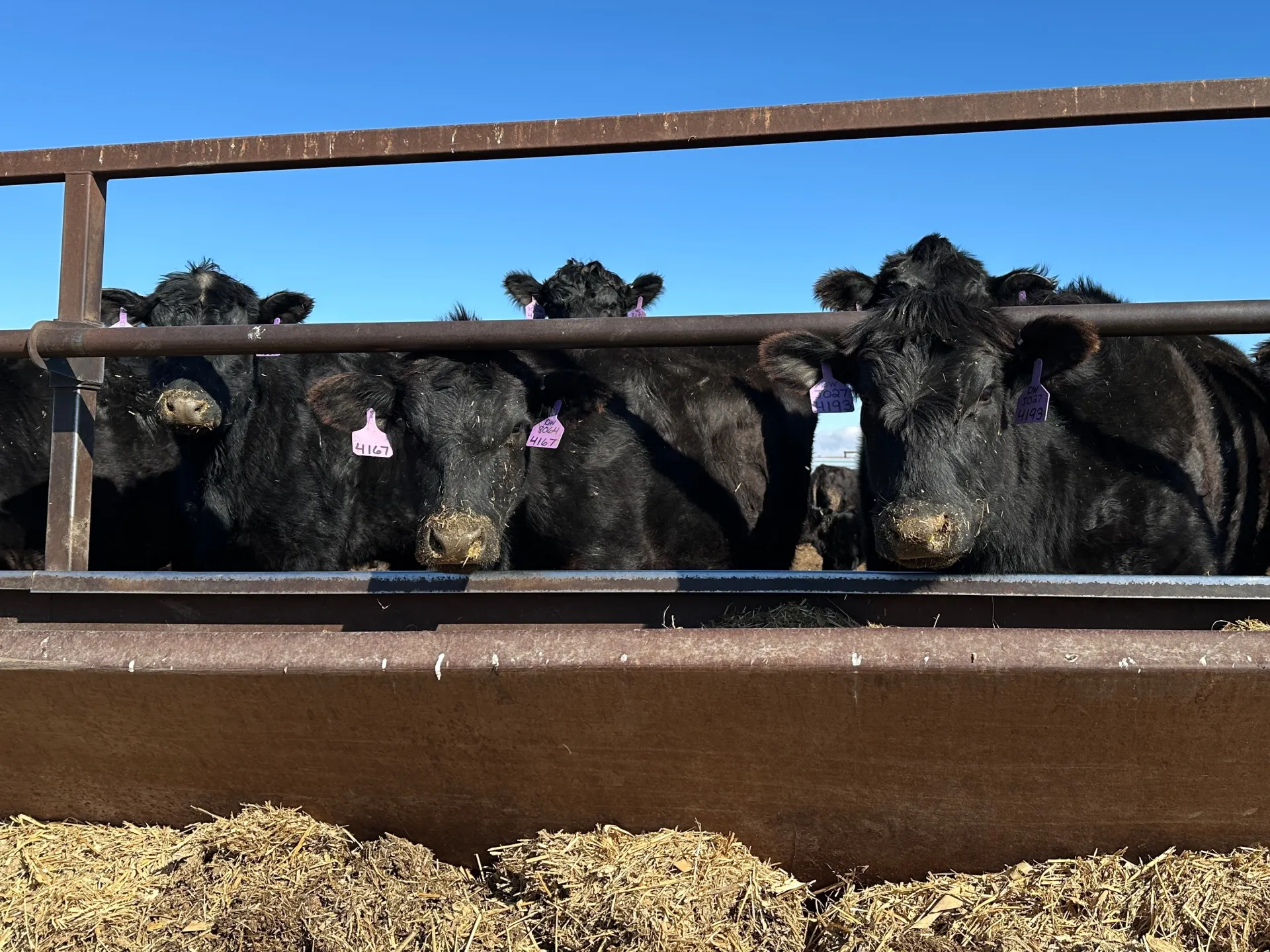
All cattle imports from Mexico were halted by the Biden administration in November 2024, when the first cases of the flesh-eating New World screwworm were detected in the south of the country. File Photo by Matias Martin Campaya/EPA

July 25 (UPI) — The Department of Agriculture on Friday lifted a ban on cattle imports from Mexico that had been in place to contain the spread of a parasite threatening U.S. livestock.

USDA Secretary Brooke Rollins said Douglas, Ariz., would be the first port of entry to be open on Aug. 24.

All cattle imports from Mexico were halted by the Biden administration in November 2024, when the first cases of the flesh-eating New World screwworm were detected in the south of the country.

“The closure of the Southern ports of entry for the last year has been a tough but necessary action to control the spread of NWS in Mexico and protect the American livestock industry,” Rollins said in a statement.

But closing the border came at a cost, Rollins said, causing “a significant economic challenge to various sectors of our industries in Texas.”

“There is no doubt that closing the ports last May caused higher prices in beef,” the agriculture secretary told reporters last month. “We’re obviously very focused on affordability, but the president agreed when we briefed him that we had to keep our livestock producers as safe as possible with this outbreak moving through Mexico.”

Despite border closures, there have been multiple cases of New World screwworm detected in the United States.

Source link

US targets China in move to ban military-grade drone imports | Xi Jinping News

Proposed rules would have US regulator block the entry of swarm-capable drones, mainly from China.

The US Federal Communications Commission (FCC) has moved to prohibit imports of advanced drones, mainly from China, citing mounting national security concerns over military-grade technology.

Under the proposed rules announced on Tuesday, the US regulator will block the entry of drones equipped with swarming capabilities and infrared sensors for high-resolution thermal imaging.

Recommended Stories

list of 3 itemsend of list

Meanwhile, exemptions for components produced outside China, introduced in December, have been extended until January 2028, suggesting a focus on isolating Chinese manufacturers, such as DJI and Autel Robotics.

The move comes days after US President Donald Trump accused China of interfering in the 2020 US elections. It signals a hardening of Washington’s stance against foreign-made surveillance technology, while attempting to mitigate immediate supply chain shocks for domestic users.

FCC officials said the measures were necessary to “secure the drone supply chain” and prevent sensitive data from being accessed by foreign states.

In 2022, the FCC banned telecommunications and video surveillance equipment from prominent Chinese brands, including Huawei and ZTE, citing an “unacceptable risk to national security”.

US security officials have warned that equipment from Chinese brands such as Huawei could be used to interfere with fifth-generation (5G) wireless networks and collect sensitive information.

One of the largest manufacturers of telecommunications equipment in the world, Huawei has had an embattled relationship with the US and its allies, facing some of the heaviest sanctions ever placed on a single company in the US.

In 2019, Trump signed into law the Secure and Trusted Communications Networks Act, which established criteria to identify communications services Washington deemed could pose a risk to national security.

The FCC’s latest move reflects a bipartisan consensus in Washington to treat foreign drone technology as an “unacceptable risk” to national infrastructure.

Source link

Trump imposes new 50% tariff on many Canadian imports

The Rainbow Bridge across the Niagara River, connecting the United States to Canada, is shown in 2024. On Monday, U.S. President Donald Trump signed orders mandating new 50% tariffs against some Canadian imports. File Photo by Joe Marino/UPI | License Photo

July 20 (UPI) — President Donald Trump signed orders Monday to impose a new 50% tariff on many Canadian imports, saying it’s because of “discriminatory treatment” of U.S. products.

The tariffs take effect Aug. 19 and affect a wide range of goods including wine, hockey sticks, electrical equipment and concrete.

Trump cited part of the Tariff Act of 1930 that allows a U.S. president to mandate a tariff up to 50% without congressional approval if a country is believed to be discriminating against U.S. goods. However, the law has not been applied this way before, CNN reported.

The Trump administration said the tariffs cover $20 billion worth of imports. They join ongoing tariffs from 15% to 50% imposed by the United States on Canadian steel, aluminum and copper, as well as Canadian softwood lumber, BBC News reported.

Last week, Trump threatened new tariffs on Canada as punishment for the smoke from hundreds of wildfires that drifted over the border and affected some U.S. cities. However, there was no mention of the wildfires in the orders signed Monday.

The tariffs affect all the goods in each category even if they are included under the existing free trade agreement between the United States, Canada and Mexico.

The Trump administration named dairy products, U.S. motor vehicles and alcohol Monday as the three U.S. products it says Canada discriminates against.

“President Trump is taking action to hold Canada accountable for its continued discrimination against and unreasonable and unequal treatment of U.S. commerce that has burdened and disadvantaged hard-working Americans,” a statement released by the White House said.

A few key Canadian imports are excluded from the new tariffs. These include energy products, potash, critical minerals, fish and some other goods.

In February, the U.S. Supreme Court struck down the international tariffs imposed by Trump under the International Emergency Economic Powers Act of 1977. Trump said at the time that he would find other ways to impose tariffs.

Ontario Premier Doug Ford said Monday that Canada should retaliate against the new tariffs.

“If these tariffs proceed, Canada should respond tariff fortariff, dollar for dollar,” Ford posted on social media.

Source link

Belgium bans imports from Israeli settlements in occupied Palestine | Israel-Palestine conflict News

The move lands as EU foreign ministers remain deadlocked over a bloc-wide ban on illegal settlement trade

Belgium’s federal government has approved a ban on importing goods produced in Israeli settlements in the occupied Palestinian territories.

It is the latest among a small but fast-growing group of European countries acting alone on a question still unresolved at EU level.

Recommended Stories

list of 3 itemsend of list

The decision came at the government’s final cabinet meeting before the summer break, the Belgian News Agency (Belga) reported on Saturday.

The move fulfils a commitment made last year over the scale of Israel’s bombardment of Gaza and its death toll.

Earlier this week, Belgian foreign minister Maxime Prevot pressed EU counterparts at a closed-doors meeting in Brussels for a bloc-wide ban, accusing the European Commission of offering ministers “a bone to chew on” rather than a genuine plan to act.

Belgium’s ban arrives as both a domestic pledge fulfilled and a signal to the EU leadership.

The case for tighter controls was strengthened this year by a Global Echo Litigation Center investigation, which examined more than 30,000 export documents covering thousands of Israeli agricultural shipments to Europe.

Roughly one in six contained goods grown in settlements in the occupied West Bank or Golan Heights, rising to nearly one in five among shipments bound for EU countries.

Investigators found exporters routinely obscured the true origin of the produce, labelling it Israeli, blending it with genuine Israeli stock, or shipping it under addresses unconnected to where it was grown.

Similar moves by others in Europe

The EU is Israel’s largest trading partner, buying close to 30 percent of its exports and accounting for nearly a third of its total trade in goods, worth 43 billion euros ($49bn) last year.

Belgium joins a list of states no longer waiting for EU-wide action.

Spain enshrined a ban in law last September, the Netherlands agreed to one in May and Slovenia adopted a similar measure earlier this year, though it has dramatically shifted its approach to Israel following the election of a more pro-Israel government.

Differences between the EU’s 27 member states have made it difficult for the bloc to act decisively on the issue.

Ireland’s parliament passed its own prohibition on July 15 , days before Belgium’s move.

The wave of national bans follows efforts earlier this month by the EU to coordinate action among its member states.

The European Commission reportedly circulated a paper to EU capitals setting out three options: an import ban, a licensing scheme, or high tariffs on settlement goods. However no decision was reached.

Five former European officials, including ex-Italian prime minister Enrico Letta and former German Vice Chancellor Sigmar Gabriel, published a joint call for the EU to adopt a bloc-wide ban.

They argued that national bans like Belgium’s carry limited weight alone, since goods cleared through customs in one member state can move freely across the rest of the bloc.

A ban, they wrote, would not amount to a sanction against Israel but would simply bring EU trade policy into line with restrictions it has applied before, including on conflict minerals and goods made with forced labour.

Several EU countries, including Spain, Italy and Germany, have also acted to restrict arms exports to Israel over the war in Gaza.

Source link

EU to probe Chinese Pekin duck imports as market-flooding row hots up

Published on Updated

The European Commission launched an investigation on Thursday into Chinese Peking duck after several EU producers complained of unfairly low prices harming their industry.


ADVERTISEMENT


ADVERTISEMENT

Without disclosing their names, the Commission said that five EU producers had complained that China is unfairly subsidising domestic production via its five-year plan for agricultural modernisation.

The probe comes at a time of heightened tensions between Beijing and Brussels, as the EU seeks to shield its market from cheap Chinese imports, triggering Beijing’s ire as it aims to preserve access to the lucrative European market.

After China repeatedly threatened retaliation over several EU legislative proposals restricting access to EU public procurement and setting strict conditions on foreign investment, the two sides started negotiations last week to ease tensions.

However, the EU’s latest move targeting duck imports could disrupt the talks by hitting China’s agricultural sector for the first time.

It also said that the volume and prices of imports had a “negative impact on the quantities sold, the level of prices charged and market share held by the Union industry,” and that this had resulted in “substantial adverse effects on the overall performance” of the sector.

The Commission’s investigation could result in anti-dumping duties being imposed on Chinese producers to protect the EU market.

Anti-dumping and anti-subsidy duties are among the EU’s main trade defence instruments against China’s aggressive push into its market. However, EU leaders gave the Commission a mandate in June to step up efforts to reduce the EU’s €1 billion-a-day trade deficit with China. They want the EU executive, which has competence over trade policy, to review its trade defence tools and pursue a dialogue with Beijing that delivers tangible results.

EU Trade Commissioner Maroš Šefčovič met his Chinese counterpart, Wang Wentao, in Brussels last Monday to kick-start negotiations aimed at restoring a level playing field and addressing trade imbalances, which Brussels said had become “unsustainable”.

The EU already imposed tariffs on Chinese electric vehicles in 2024, triggering China’s investigations and sanctions targeting EU brandy, pork and dairy products.

The EU hopes to achieve a breakthrough in negotiations with Beijing by October, when Šefčovič is due to travel to China.

Source link

Two-thirds of Europe’s LNG imports to come from the US amid increased reliance

Published on

Europe’s reliance on American liquefied natural gas is set to increase further next year as the EU continues efforts to phase out Russian fossil fuel imports, according to new analysis published by the IEEFA on Wednesday.


ADVERTISEMENT


ADVERTISEMENT

The report estimates that the US could supply close to two-thirds of Europe’s LNG imports in 2026, reinforcing Washington’s dominant position in the continent’s gas market after Russia’s invasion of Ukraine and the Iran war reshaped global energy flows.

According to IEEFA, the US already accounted for 57% of Europe’s LNG imports in 2025, a sharp increase compared with pre-war levels.

The organisation warned that the share could continue rising over the coming years if current import trends persist and additional long-term supply contracts enter into force.

The findings come as most European governments seek to fully eliminate Russian gas imports by 2027 under the European Commission’s REPowerEU strategy.

Since 2022, EU member states have rapidly expanded LNG purchases, particularly from the US, to compensate for declining Russian pipeline deliveries.

The IEEFA stated that the shift had improved Europe’s short-term energy security but also created a growing concentration risk.

The think tank argued that replacing dependence on Russian gas with heavy reliance on another single alternative supplier could expose Europe to future political and market instability.

Lower demand but higher imports and investment

The report noted that LNG imports from the US generally come at a higher cost than pipeline gas because of liquefaction, shipping and regasification expenses.

The IEEFA estimates that EU countries spent roughly €117 billion on US LNG imports between early 2022 and mid-2025.

Several European policymakers and regulators have previously warned against excessive dependence on imported LNG.

Earlier this year, European Commission Executive Vice President Teresa Ribera said the bloc should avoid replacing one energy dependency with another and accelerate investment in renewable power and electrification instead.

The European Union Agency for the Cooperation of Energy Regulators has also raised concerns about supply concentration risks linked to the growing role of US LNG in the European market.

The increase in LNG imports also comes despite a broader decline in European gas consumption in recent years.

High prices following the energy crisis, industrial weakness, energy-saving measures and faster deployment of renewable energy have all contributed to lower demand.

The IEEFA data shows Europe’s LNG imports declined in 2024 as gas consumption fell to its lowest level in more than a decade. However, imports rebounded in 2025 amid colder weather conditions and efforts by governments to replenish storage sites.

At the same time, several EU countries continue expanding LNG import infrastructure.

Germany, which previously relied heavily on Russian pipeline gas, has rapidly developed floating LNG terminals and emerged as one of the largest buyers of US LNG in Europe.

Analysts have also questioned whether Europe risks building excess LNG import capacity as long-term gas demand is expected to weaken further during the energy transition in the coming years.

Source link

EU to ban Brazilian meat imports from September

Published on

An EU committee made up of experts from member states voted on Tuesday to ban imports of Brazilian meat starting 3 September due to the use of antimicrobials to stimulate animal growth.


ADVERTISEMENT


ADVERTISEMENT

The decision to remove Brazil from the list of countries that comply with EU food safety standards comes as the EU-Mercosur free trade agreement between the EU and Brazil, Argentina, Paraguay, and Uruguay provisionally entered into force on 1 May.

The deal, which liberalises trade of agri-product between both sides of the Atlantic, remains fiercely opposed by EU farmers, who fear that different production standards on both sides of the Atlantic will create unfair competition from Latin American imports.

“The fact that the Union is able to enforce the rules is essential for trust, a level playing field, and good relations with our trading partners,” an EU diplomat told Euronews.

An official with knowledge of the file said that the vote was unanimous and makes Brazil the first country removed from the list of states complying with EU restrictions on antimicrobial use in animals.

The list of third countries which comply with EU requirements, and therefore can export food-producing animals to the EU, will be formally adopted in the coming days.

The European Commission has consistently said EU food safety rules would continue to apply to agricultural products imported from Latin America after the deal enters into force.

Commission’s spokesperson Eva Hrncirova confirmed to Euronews that from 3 September Brazil will no longer be able export to the EU commodities such as bovine, equine, poultry, eggs, aquaculture, honey and casings.

“Trade agreements do not change our rules,” Hrncirova said, adding: “The Commission establishes the Union’s mandatory sanitary and phytosanitary standards, and both our farmers and exporters from third countries have to comply with them.”

Brussels has also negotiated safeguards aimed at protecting EU farmers, including mechanisms to monitor potential market disruption from a surge in imports from Mercosur countries. Quotas were also introduced for sensitive products, including poultry and meat.

Once compliance with the safety rules is demonstrated by Brazil, the EU will be able to resume the imports, and Brazil will be able to benefit from the same tariff relief as the other Mercosur countries.

Source link