Hyundai, Kia launch MobED alliance to expand robot platform ecosystem

1 of 3 |
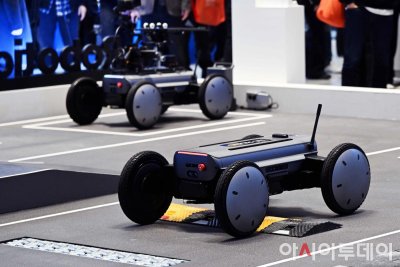
The 2026 Smart Factory & Automation World (AW 2026) opens at COEX in Seoul on March 4, showcasing next-generation manufacturing technologies under the theme “Autonomy, the Driver of Sustainability.” The three-day exhibition features 500 companies from 24 countries across 2,300 booths, presenting AI-driven smart manufacturing solutions, humanoid and industrial robots, digital twins and advanced automation systems. Hyundai Motor Group’s Robotics Lab also demonstrated its award-winning MobED mobile robot platform during the opening day. Photo by Asia Today
March 4 (Asia Today) — Hyundai Motor and Kia said Tuesday they have launched an industry partnership to accelerate commercialization of their mobile robot platform MobED and expand a broader ecosystem for customized robotic solutions.
The automakers said they held a launch ceremony for the MobED Alliance at the 2026 Smart Factory and Automation Industry Exhibition at COEX in Seoul and began domestic sales of MobED.
The alliance includes Hyundai Motor and Kia’s Robotics Lab, parts suppliers such as Hyundai Transys and SL, robotics solution firms including LS Tira U-Tech and Gaon Robotics and related organizations including the Korea AI and Robotics Industry Association, the companies said.
Hyundai Motor and Kia described the alliance as a multi-party cooperation framework designed to meet demand for robot solutions that can be deployed quickly in industrial settings.
MobED is a compact mobile platform built on four independently driven Drive-and-Lift mechanisms in an eccentric structure designed to improve mobility on uneven ground, the companies said. The platform can be paired with different “top modules” for tasks including logistics delivery, patrol operations, research and video production.
Hyundai Motor and Kia said they plan to move beyond selling MobED as a stand-alone platform and instead work with specialized partners to provide complete, industry-specific solutions, targeting business-to-business and business-to-government markets.
Under the partnership model, Hyundai Motor and Kia’s Robotics Lab will provide the platform and core technologies, parts suppliers will provide components such as sensors, electronic systems and batteries and solution companies will handle deployment and services at worksites. Related institutions will support testing and adoption environments, the companies said.
The automakers said solution firms plan to develop 10 types of industry-specific top modules, including modules for logistics delivery, drone stations for patrol missions and advertising signage.
Hyun Dong-jin, head of Hyundai Motor and Kia’s Robotics Lab, said MobED will evolve into more advanced robotic solutions through the alliance and the companies will work with partners to expand what he called a “physical AI” ecosystem.
Hyundai Motor and Kia said MobED won a best innovation award in the robotics category at CES 2026 in January and the companies plan to expand applications that combine intelligent software and hardware in industrial settings.
— Reported by Asia Today; translated by UPI
© Asia Today. Unauthorized reproduction or redistribution prohibited.
Original Korean report: https://www.asiatoday.co.kr/kn/view.php?key=20260304010001126