LIVE: Israel continues ceasefire violations; 1 Palestinian killed in Gaza | Gaza News
One more Palestinian killed by Israeli army in Gaza while two Palestinians, including a child, are shot dead in occupied West Bank.
Published On 21 Dec 2025
One more Palestinian killed by Israeli army in Gaza while two Palestinians, including a child, are shot dead in occupied West Bank.
UN refugee agency says women and children arriving ‘exhausted and severely traumatised’ after fleeing eastern DRC.
More than 84,000 people have fled to Burundi from the eastern Democratic Republic of the Congo (DRC) amid a Rwanda-backed rebel offensive near the countries’ shared border, according to the latest United Nations figures.
The UN refugee agency (UNHCR) said on Friday that Burundi had reached a “critical point” amid the influx of refugees and asylum seekers fleeing a surge in violence in the DRC’s South Kivu province.
list of 3 itemsend of list
“Thousands of people crossing the border on foot and by boats each day have overwhelmed local resources, creating a major humanitarian emergency that requires immediate global support,” UNHCR said, noting that more than 200,000 people had now sought refuge in Burundi.
“Women and children are particularly affected, arriving exhausted and severely traumatised, bearing the physical and psychological marks of terrifying violence. Our teams met pregnant women, who shared that they had not eaten in days.”
The exodus began in early December when the M23 rebel group launched an assault that culminated in the capture of Uvira, a strategic city in the eastern DRC that is home to hundreds of thousands of people.
Refugees started crossing into Burundi on December 5, with numbers surging after M23 seized control of Uvira on December 10. On Wednesday, M23 said it was withdrawing after international condemnation of its attack on the city.
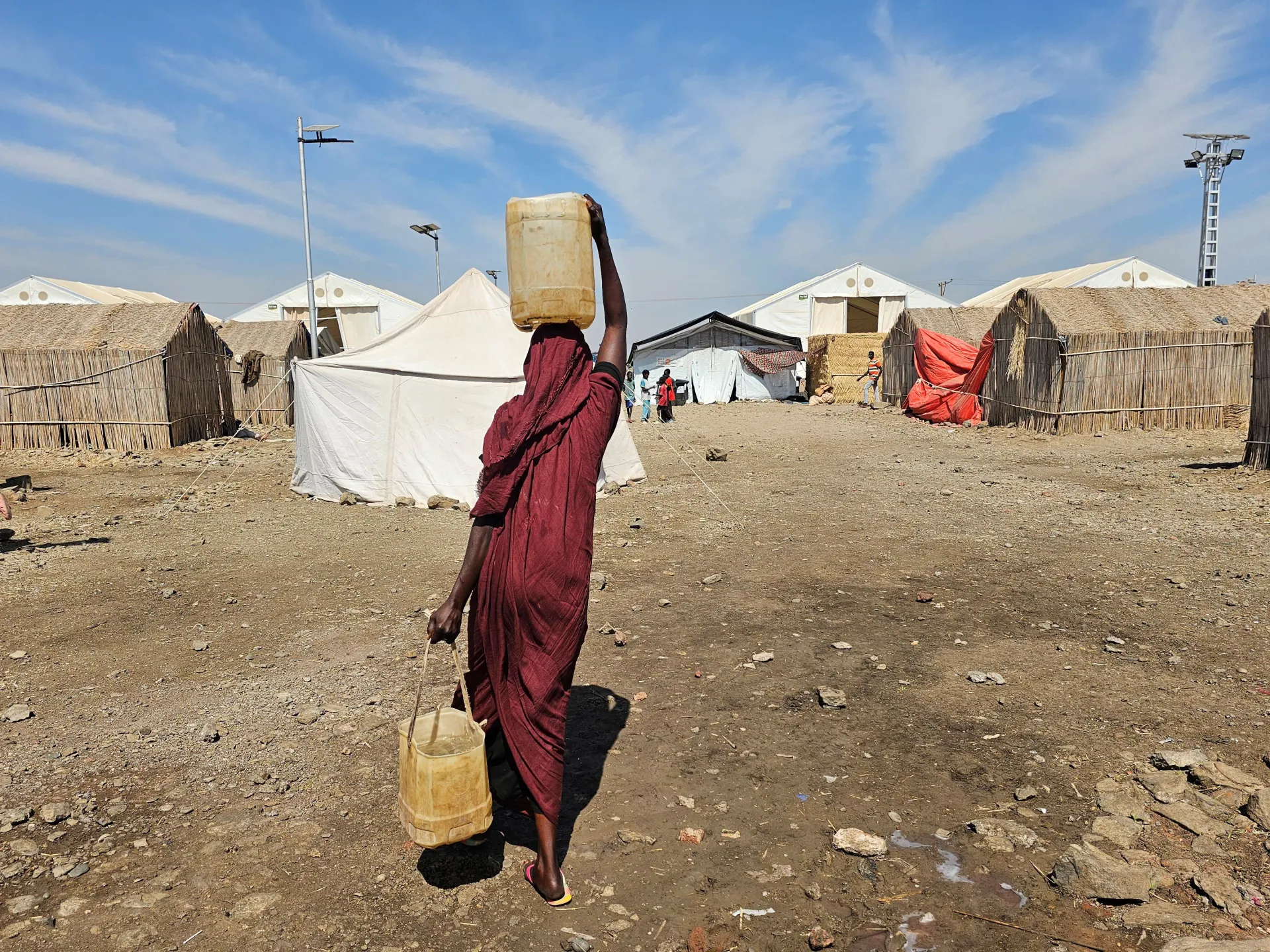
In Burundi, displaced families face difficult conditions at transit points and makeshift camps with minimal infrastructure, the UN said.
Many have sheltered under trees without adequate protection from the elements, and a lack of clean water and proper sanitation.
About half of those displaced are children less than the age of 18, along with numerous women, including some who are pregnant.
Ezechiel Nibigira, the Burundian president of the Economic Community of Central African States (ECCAS), reported 25,000 refugees in Gatumba in western Burundi, and nearly 40,000 in Buganda in the northwest, most of them “completely destitute”.
Augustin Minani, the administrator in Rumonge, told the AFP news agency that the situation was “catastrophic” and said “the vast majority are dying of hunger.”
Refugees recounted witnessing bombings and artillery fire, with some seeing relatives killed and others forced to abandon elderly family members who could not continue the journey.
M23 announced earlier this week it would begin withdrawing from Uvira, with the group’s leadership calling the move a “trust-building measure” to support United States- and Qatari-led peace efforts.
However, the Congolese Communications Minister Patrick Muyaya dismissed the announcement as a “diversion”, alleging it was meant to relieve pressure on Rwanda.
Local sources reported that M23 police and intelligence personnel remained deployed in the city on Thursday.
The offensive extended M23’s territorial gains this year after the group captured the major cities of Goma in January and Bukavu in February.
The rebel advance has given M23 control over substantial territory in the mineral-rich eastern DRC and severed a critical supply route for Congolese forces along the border with Burundi.
M23 launched the Uvira offensive less than a week after the presidents of the DRC and Rwanda met with US President Donald Trump in Washington, DC, to reaffirm their commitment to a peace agreement.
The rebels’ takeover of the city drew sharp criticism from Washington, with officials warning of consequences for what they described as Rwanda’s violation of the accord. Rwanda denies backing M23.
The fighting has killed more than 400 civilians in the DRC and displaced more than 200,000 since early December, according to regional officials and humanitarian organisations.
The broader conflict across the eastern part of the country, where more than 100 armed groups operate, has displaced more than seven million people, the UN refugee agency says.
US envoy Steve Witkoff to meet senior officials from Qatar, Egypt and Turkiye in Miami to discuss next phase of deal.
The United States Middle East envoy, Steve Witkoff, will hold talks in Miami, Florida, with senior officials from Qatar, Egypt and Turkiye as efforts continue to advance the next phase of the Gaza ceasefire, even as Israel repeatedly violates the truce on the ground.
A White House official told Al Jazeera Arabic on Friday that Witkoff is set to meet representatives from the three countries to discuss the future of the agreement aimed at halting Israel’s genocidal war on Gaza.
list of 3 itemsend of list
Axios separately reported that the meeting, scheduled for later on Friday, will include Qatari Prime Minister and Foreign Minister Sheikh Mohammed bin Abdulrahman bin Jassim Al Thani, Turkish Foreign Minister Hakan Fidan and Egyptian Foreign Minister Badr Abdelatty.
At the same time, Israel’s public broadcaster, quoting an Israeli official, said Prime Minister Benjamin Netanyahu is holding a restricted security consultation to examine the second phase of the ceasefire and potential scenarios.
That official warned that Israel could launch a new military campaign to disarm Hamas if US President Donald Trump were to disengage from the Gaza process, while acknowledging that such a move was unlikely because Trump wants to preserve calm in the enclave.
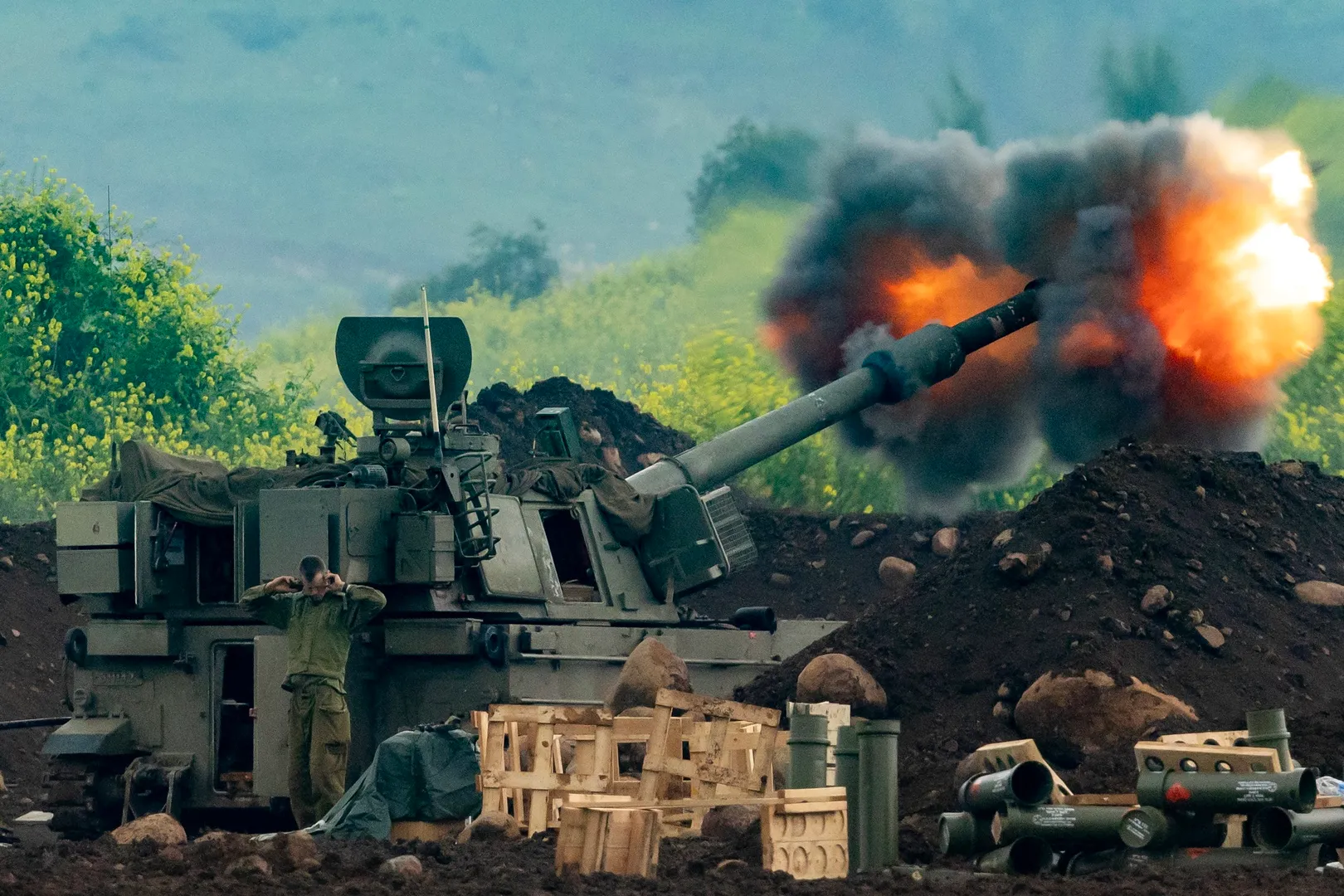
Despite Washington’s insistence that the ceasefire remains intact, Israeli attacks have continued almost uninterrupted, as it continues to renege on the terms of the first phase, as it blocks the free flow of desperately needed humanitarian aid into the besieged Palestinian territory.
According to an Al Jazeera analysis, Israeli forces carried out attacks on Gaza on 58 of the past 69 days of the truce, leaving only 11 days without reported deaths, injuries or violence.
In Washington, Trump said on Thursday that Netanyahu is likely to visit him in Florida during the Christmas holidays, as the US president presses for the launch of the agreement’s second phase.
“Yes, he will probably visit me in Florida. He wants to meet me. We haven’t formally arranged it yet, but he wants to meet me,” Trump told reporters.
Qatar and Egypt, who are mediating and guaranteeing the truce after a devastating two-year genocide in Gaza, have urged a transition to the second phase of the agreement. The plan includes a full Israeli military withdrawal and the deployment of an international stabilisation force (ISF).
Qatar’s prime minister warned on Wednesday that daily Israeli breaches of the Gaza ceasefire are threatening the entire agreement, as he called for urgent progress towards the next phase of the deal to end Israel’s genocidal war on the besieged Palestinian enclave.
Sheikh Mohammed made the appeal following talks with United States Secretary of State Marco Rubio in Washington, where he stressed that “delays and ceasefire violations endanger the entire process and place mediators in a difficult position”.
The ceasefire remains deeply unstable, and Palestinians and rights groups say it is a ceasefire only in name, amid Israeli violations and a rapidly deteriorating humanitarian situation in Gaza.
Since the truce took effect on October 10, 2025, Israel has repeatedly breached the agreement, killing hundreds of Palestinians.
Gaza’s Government Media Office says Israel committed at least 738 violations between October 10 and December 12, including air strikes, artillery fire and direct shootings.
Israeli forces shot at civilians 205 times, carried out 37 incursions beyond the so-called “yellow line”, bombed or shelled Gaza 358 times, demolished property on 138 occasions and detained 43 Palestinians, the office said.
Israel has also continued to block critical humanitarian aid while systematically destroying homes and infrastructure.
Against this backdrop, Israel Hayom quoted an Israeli security official as saying the so-called “yellow line” now marks Israel’s new border inside Gaza, adding that Israeli forces will not withdraw unless Hamas is disarmed. The official said the army is preparing to remain there indefinitely.
The newspaper also reported that Israeli military leaders are proposing continued control over half of Gaza, underscoring Israel’s apparent intent to entrench its occupation rather than implement a genuine ceasefire.
Compounding the misery in Gaza, a huge storm that recently hit the Strip has killed at least 13 people as torrential rains and fierce winds flooded tents and caused damaged buildings to collapse.
Israel’s two-year war has decimated more than 80 percent of the structures across Gaza, forcing hundreds of thousands of families to take refuge in flimsy tents or overcrowded makeshift shelters.
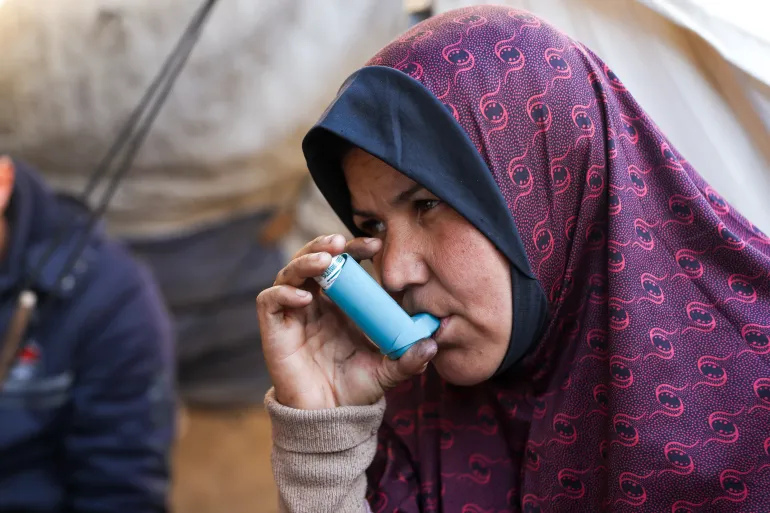
Winter storms are worsening conditions for hundreds of thousands of displaced Palestinians in Gaza, as aid agencies warn that Israeli restrictions are preventing lifesaving shelter assistance from reaching people across the besieged enclave.
The United Nations has said it has tents, blankets and other essential supplies ready to enter Gaza, but that Israeli authorities continue to block or restrict access through border crossings.
list of 4 itemsend of list
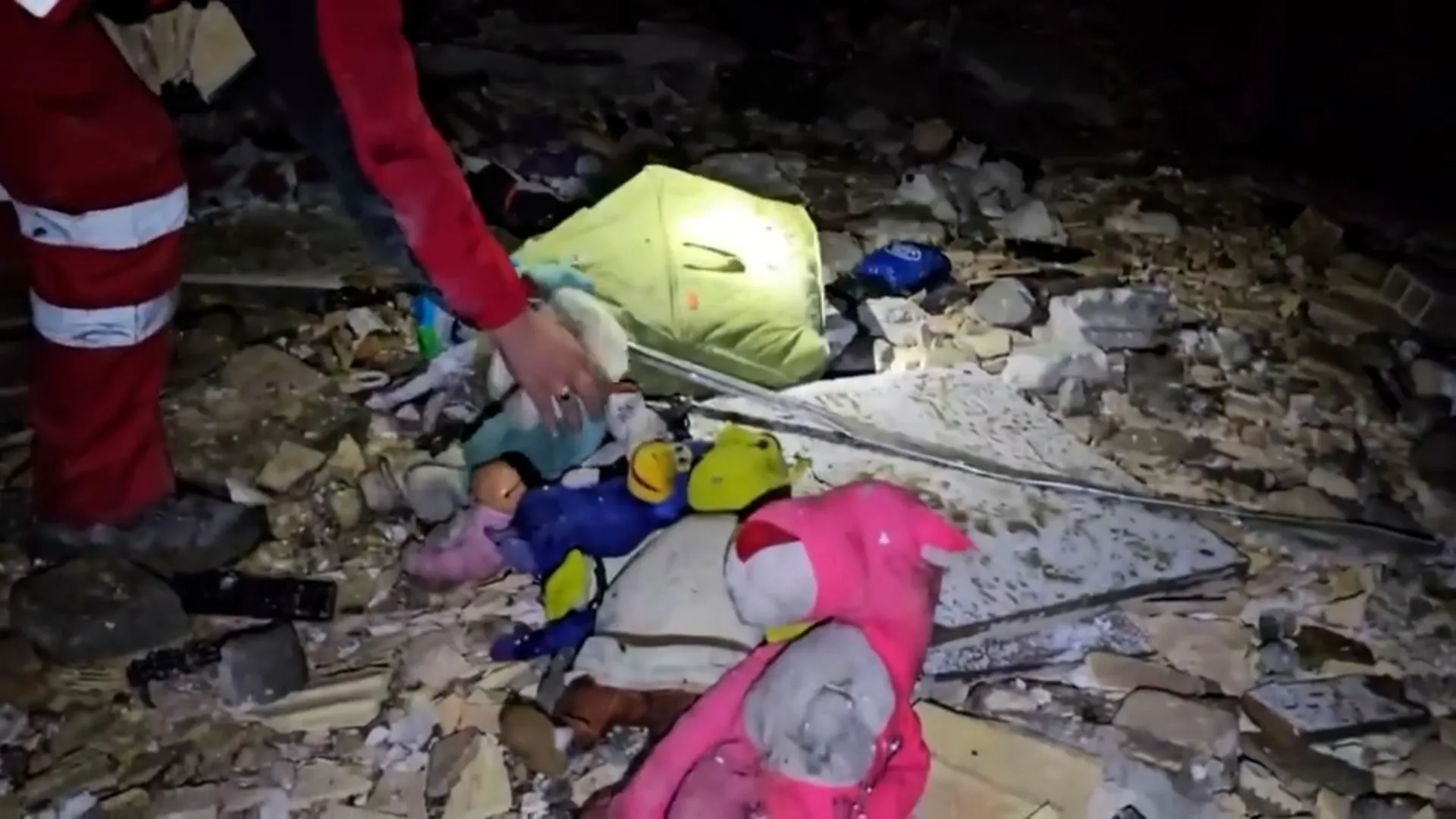
In Gaza City’s Shati refugee camp, the roof of a war-damaged family home collapsed during the storm, rescue workers said on Wednesday. Six Palestinians, including two children, were pulled alive from the rubble.
It comes after Gaza’s Ministry of Health said a two-week-old Palestinian infant froze to death, highlighting the risks faced by young and elderly people living in inadequate shelters.
A spokesperson for UN Secretary-General Antonio Guterres said the storms had damaged or destroyed shelters and personal belongings across the territory.
“The disruption has affected approximately 30,000 children across Gaza. Urgent repairs are needed to ensure these activities can resume without delay,” Farhan Haq said.
The Palestinian Civil Defence in Gaza added in a statement that “what we are experiencing now in the Gaza Strip is a true humanitarian catastrophe”.
The worsening humanitarian situation comes as Qatar’s Prime Minister Sheikh Mohammed bin Abdulrahman bin Jassim Al Thani held talks in Washington, DC, with United States Secretary of State Marco Rubio on efforts to stabilise the tenuous ceasefire in Gaza.
According to Qatari officials, the talks focused on Qatar’s role as a mediator, the urgent need for aid to enter Gaza, and moving negotiations towards the second stage of a US-backed plan to end Israel’s genocidal war against the Palestinian people in Gaza.
Al Jazeera’s Alan Fisher, reporting from Washington, said Sheikh Mohammed stressed that humanitarian assistance must be allowed into Gaza “unconditionally”.
“He said aid has to be taken into Gaza unconditionally, clearly making reference to the fact that a number of aid agencies have said that Israel is blocking the access to aid for millions of people in Gaza,” Fisher said.
The Qatari prime minister also discussed the possibility of an international stabilisation force to be deployed in Gaza after the war, saying such a force should act impartially.
“There has been a lot of talk in the US over the past couple of weeks about how this force would work towards the disarmament of Hamas,” Fisher said.
Sheikh Mohammed also called for swift progress towards the second phase of the ceasefire agreement.
“He said that stage two of the ceasefire deal has to be moved to pretty quickly,” Fisher said, adding that US officials were hoping to announce early in the new year which countries would contribute troops to a stabilisation force.
Meanwhile, violence continued in Gaza despite the ceasefire, with at least 11 Palestinians wounded in Israeli attacks in central Gaza City, according to medical sources.
The Israeli army said it is investigating after a mortar shell fired near Gaza’s so-called yellow line “missed its target”.
Al Jazeera journalists in Gaza reported Israeli artillery shelling east of the southern city of Khan Younis. Medical sources said Israeli gunfire also wounded two people in the Tuffah neighbourhood of eastern Gaza City.
In the occupied West Bank, where Israeli military and settler attacks have escalated in recent days, Palestinian news agency Wafa reported that Israeli troops shot and wounded a man in his 20s in the foot in Qalqilya. He was taken to hospital and is reported to be in stable condition.
Since October 2023, at least 70,668 Palestinians have been killed and 171,152 wounded in Israeli attacks on Gaza, according to Palestinian health authorities. In Israel, 1,139 people were killed during the Hamas-led October 7 attack, and more than 200 others were taken captive.
Winter came to Gaza last month with a violent storm. I woke up at night to a disaster. Our tent was flooded with water which had transformed our “floor” into a shallow pool. The mattresses and pillows were completely soaked, cooking pots were submerged, the clothes were drenched, and even our bags— which function as our “closets”—were filled with water. Nothing inside remained dry.
As I tried to understand what was happening, I suddenly heard children crying at the entrance of our tent. I opened it quickly and found three children from the neighbouring tents, their lips blue from the cold, with their mother trembling behind them saying, “We are completely soaked… the rain leaked inside and the water reached everywhere.”
The same tragic scene was repeated all around us: women, children, and elderly people sitting in the street under the rain, their bedding drenched and their belongings scattered, while confusion and cries filled the air.
All 1.4 million displaced Palestinians who lack proper shelter suffered that day—people with no protection against the weather or its sudden storms.
For us, it took two full days for our belongings to dry because the sun barely appeared; everything stayed cold and damp. We didn’t move to another place—we stayed where we were, trying to salvage whatever we could, because there was simply nowhere else to go.
Only a week later, an even stronger winter storm arrived with severe rainfall. Tents were flooded again; little children froze in the rain again.
This week, when Storm Byron hit, we were flooded once again. Despite all our efforts to reinforce the tents, secure them tightly, and bring in stronger tarps, nothing worked. The winds were fiercer, the rain heavier, and the water pushed its way inside from every direction. The ground no longer absorbed anything. The water began rising rapidly beneath our feet, turning the entire area into a swamp.
According to the authorities, the strong winds destroyed at least 27,000 tents. These are 27,000 families who already struggled and now have nothing, no shelter, nowhere to hide from the rain and cold.
The rain also brought down damaged homes where people had been sheltering. Every time there is a storm or strong wind, we hear the sound of falling debris and concrete pillars from badly damaged buildings near us. This time, the situation was so bad that 11 people were killed by collapsed buildings.
It is clear that after everything we have endured, we – like other displaced Palestinians – cannot survive a third winter in these harsh conditions. We survived two winters in displacement, living in tents that protected neither from cold nor rain, waiting with exhausted patience for a ceasefire that would end our suffering. The ceasefire finally came, but relief did not. We remain in the same place, with bodies drained by malnutrition and illness, under tents worn out by the sun and wind.
We are a family of seven living in a tent that is four by four metres (13 feet by 13 feet). Among us are two children aged five and 10 and our grandmother, aged 80. We, the adults, can push through the cold and hardship. But how can the elderly and children bear what we live every day?
We sleep on mattresses pressed directly against the ground, with cold seeping in from below and above, with only two blankets that can’t shield us from the freezing nights. Everyone in the tent has two blankets each, barely enough to offer temporary warmth. There is no source of heating—no electricity, no heater—just tired bodies trying to share whatever warmth remains.
My grandmother cannot tolerate the cold at all. I watch her shiver through the night, her hand on her chest as if trying to hold herself together. All we can do is pile every blanket we have on top of her and watch anxiously until she is able to fall asleep.
Many people in Gaza live in conditions far worse than ours.
Most families who just want a modest tent over their heads cannot afford one. The price of tents can go as high as $1,000; the rent one has to pay to pitch a tent on a piece of land can be as much as $500. Those who cannot pay live in the street in makeshift shelters.
Salah al-Din Street, for example, is crowded with them. Most are simply blankets hung and wrapped around small spaces for minimal privacy, offering no protection from rain or cold. With any strong gust of wind, they burst open.
There are also children living directly in the streets, sleeping on the cold ground. Many have lost their mothers or fathers during the war. When you pass by, you see them—sometimes silent, sometimes crying, sometimes searching for something to eat.
Despite repeated promises of aid and reconstruction, the trickle of supplies that entered Gaza has made almost no difference on the ground. Earlier this month, the United Nations announced it had managed to distribute only 300 tents during November; 230,000 families received a single food parcel each.
We did not receive any food parcel—there are simply too many people in need, and the quantities are far too small for everyone to access. Even if we had received one, its contents wouldn’t have lasted us longer than a week or two.
Food prices continue to be high. Nutritious items like meat and eggs are either unavailable or cost too much. Most families have not eaten a proper protein meal in months.
There is no mass campaign to remove rubble or level the ground so people can pitch their tents due to an equipment shortage. No steps have been taken to provide permanent housing for families.
All of this means we now face a terrifying possibility: that life in a tent—one that can be flooded or ripped apart by the wind at any moment—may become our long-term reality. This is an unbearable thought.
During the bombardment, we lived with the constant fear of death, and perhaps the intensity of the war overshadowed everything else—the cold, the rain, the tents shaking above our heads. But now, after the mass bombing has stopped, we are facing the full ugliness of Gaza’s “new normal”.
I fear this winter will be much worse for Gaza. With no heating, no real shelter, and the weather getting worse each day, we are likely to see many deaths among the children, the elderly and the chronically ill. Already, the first deaths from hypothermia were reported – babies Rahaf Abu Jazar and Taim al-Khawaja and nine-year-old Hadeel al-Masri. If the world is really committed to ending the genocide in Gaza, it needs to take real, urgent action and ensure that we have at least the basic conditions for survival: food, housing and medical care.
The views expressed in this article are the author’s own and do not necessarily reflect Al Jazeera’s editorial stance.
Renewed border clashes between Cambodia and Thailand entered a second week after Bangkok denied US President Donald Trump’s claim that a truce had been agreed to halt the deadly fighting.
Published On 14 Dec 202514 Dec 2025
Share
Congolese refugees have recounted harrowing scenes of death and family separation as they fled intensified fighting in the eastern Democratic Republic of the Congo (DRC), where Rwanda-backed M23 rebels captured a strategic city despite a recent United States-brokered peace agreement.
M23 has cemented control over Uvira, a key lakeside city in DRC’s South Kivu province that it seized on Wednesday, despite a peace accord that President Donald Trump had called “historic” when signed in Washington just one week earlier.
list of 3 itemsend of list
Al Jazeera, which is the first international broadcaster to gain access to the city since M23’s takeover, saw residents tentatively returning home after days of violence, amid a heavy presence of rebel fighters on Friday.
The day before, M23 fighters combed the streets to flush out remaining Congolese forces and allied militias – known as “Wazalendo” – after taking over key parts of the city.
Meanwhile, at Nyarushishi refugee camp in Rwanda’s Rusizi district, Akilimali Mirindi told the AFP news agency she fled South Kivu with just three of her 10 children after bombs destroyed her home near the border.
“I don’t know what happened to the other seven, or their father,” the 40-year-old said, describing corpses scattered along escape routes as about 1,000 people reached the camp following renewed clashes this month.
Regional officials said more than 413 civilians have been killed since fighting escalated in early December, with women and children among the dead.
The offensive has displaced about 200,000 people, and threatens to drag neighbouring Burundi deeper into a conflict that has already uprooted more than seven million across eastern DRC, according to United Nations figures.
Uvira sits on Lake Tanganyika’s northern shore, directly across from Burundi’s largest city, and serves as South Kivu’s interim government headquarters after M23 seized the provincial capital, Bukavu, in February.
Al Jazeera correspondent Alain Uaykani, who gained access to the city on Friday, reported a tenuous calm and the heavy presence of M23 soldiers but described harrowing scenes on the journey there.
“Here in Uvira, we have seen different groups of the Red Cross with their equipment, collecting bodies, and conducting burials across the road,” Uaykani said.
He added that the Al Jazeera crew saw abandoned military trucks destroyed along the road to Uvira, and the remains of people who were killed.
Residents who fled Uvira told AFP of bombardment from multiple directions as M23 fighters battled Congolese forces and their Burundian allies around the port city.
“Bombs were raining down on us from different directions,” Thomas Mutabazi, 67, told AFP at the refugee camp. “We had to leave our families and our fields.”
Refugee Jeanette Bendereza had already escaped to Burundi once this year during an earlier M23 push in February, only to return to DRC when authorities said peace had been restored. “We found M23 in charge,” she said.
When violence erupted again, she ran with four children as “bombs started falling from Burundian fighters”, losing her phone and contact with her husband in the chaos.
Another refugee, Olinabangi Kayibanda, witnessed a pregnant neighbour killed alongside her two children when their house was bombed. “Even children were dying, so we decided to flee,” the 56-year-old told an AFP reporter.
M23 spokesperson Lawrence Kanyuka announced on Wednesday that Uvira had been “fully liberated” and urged residents to return home.
Fighting had already resumed even as Trump last week hosted Congolese President Felix Tshisekedi and his Rwandan counterpart Paul Kagame at a widely attended signing ceremony.
The December 4 Washington agreement obliged Rwanda to cease supporting armed groups, though the M23 was not party to those negotiations and is instead involved in separate Qatar-mediated talks with Kinshasa.
DRC’s government accused Rwanda of deploying special forces and foreign mercenaries to Uvira “in clear violation” of both the Washington and earlier Doha agreements.
The US embassy in Kinshasa urged Rwandan forces to withdraw, while Congolese Foreign Minister Therese Kayikwamba Wagner called for Washington to impose sanctions, saying condemnation alone was insufficient.
Rwanda denies backing M23 and blames Congolese and Burundian forces for ceasefire violations.
In a statement on Thursday, President Kagame claimed that more than 20,000 Burundian soldiers were operating across multiple Congolese locations and accused them of shelling civilians in Minembwe.
UN Secretary-General Antonio Guterres warned the escalation “increases the risk of a broader regional conflagration” and called for an immediate cessation of hostilities.
Displaced Palestinians in dire need of tents, blankets, warm clothing in harsh winter climate.
A baby girl whose family was displaced by Israel’s genocidal war against the Palestinian people in Gaza has died of exposure to the winter cold as Storm Byron lashed the enclave amid Israel’s continued restrictions on essential winter supplies.
Eight-month-old Rahaf Abu Jazar was reported dead on Thursday after her family’s tent in Khan Younis took in water as heavy rainfall flooded tent camps across the enclave overnight, according to the Reuters news agency.
list of 3 itemsend of list
Her mother, Hejar Abu Jazar, fed the baby before they went to sleep. “When we woke up, we found the rain over her and the wind on her, and the girl died of cold suddenly,” she told Reuters.
With hundreds of thousands of Palestinian families now sheltering in flimsy tents, Gaza’s civil defence agency struggled to cope, receiving more than 2,500 phone calls over a 24-hour period.
The agency reported that three buildings collapsed in Gaza City due to the storm.
Meanwhile, tents and other winter supplies remain blocked at the border as Israel continues to restrict the flow of aid into the enclave.
The Norwegian Refugee Council (NRC) said only 15,600 tents had been brought into Gaza since the ceasefire came into effect in October.
Those tents have gone to help approximately 88,000 Palestinians, according to NRC. This is in a territory where 1.29 million people are in need of shelter.
Israeli rights group B’Tselem said more than 6,500 trucks are currently waiting to be allowed by Israel into Gaza with essential winter supplies, including tents, blankets, warm clothing and hygiene materials.
Jonathan Crickx, chief of communication at UNICEF Palestine, said the scale of the disaster was “huge”, warning of a looming health disaster as children wandered the camps barefoot.
“What we’re scared of is that there is very poor hygiene, and all that pouring rain could enable the appearance of waterborne diseases like acute diarrhoea,” he said.
Reporting from Gaza City, Al Jazeera’s Hani Mahmoud said many families were leaving the seaport area as the winds picked up on Thursday. “They’re trying to get deeper inside Gaza City, to shelter in any of the remaining intact buildings – at least for the night,” he said.
As twilight descended, Mahmoud said many families faced a difficult night ahead. “Along with every other struggle that people have been going through for the past two years, there’s another battle now with the forces of nature,” he said.
Farhan Haq, spokesperson for United Nations chief Antonio Guterres, warned that more children could die of hypothermia. “That’s why we need to make sure that we can get warm clothing, tents and tarps and shelters [into Gaza],” he said.
The UN’s humanitarian office processed more than 160 flooding alerts since Thursday morning as Storm Byron barrelled through the enclave, said Haq.
Storm Byron is set to hit Gaza as nearly 1.5 million Palestinians shelter in flood-prone camps with little protection. Aid groups say Israel’s restrictions on vital shelter materials — including timber and tent poles — have left families exposed to severe winds, rain, and disease.
Published On 11 Dec 202511 Dec 2025
Share
Al Jazeera’s Barnaby Lo has been to a displacement camp in Cambodia where people have taken refuge from cross-border fighting with Thailand. Half a million people have been displaced by the fighting.
Published On 11 Dec 202511 Dec 2025
Share
According to Gaza’s Health Ministry, Israeli fire since the start of the ceasefire has killed at least 377 people.
Hamas has said the ceasefire cannot move forward while Israel continues its violations of the agreement, with Gaza authorities saying the truce has been breached at least 738 times since taking effect in October.
Husam Badran, a Hamas official, called on mediators to increase pressure on Israel to fully implement its existing commitments.
list of 4 itemsend of list
“The next phase cannot begin as long as the [Israeli] occupation continues its violations of the agreement and evades its commitments,” Badran said.
“Hamas has asked the mediators to pressure the occupation to complete the implementation of the first phase,” he added.
The ceasefire, which came into effect on October 10, focused on the exchange of captives held in Gaza for Palestinian prisoners held by Israel, and a partial withdrawal of Israeli forces from Gaza.
But details of the next phase, including Gaza’s future governance, the potential deployment of an international stabilisation force, and the establishment of what has been termed a “board of peace”, remain unresolved.
Meanwhile, anger continues to rise among Palestinians and the international community as Israeli attacks persist. According to Gaza’s Ministry of Health, Israeli attacks since the start of the ceasefire have killed at least 377 people and wounded 987.
A United States official told Al Jazeera Arabic that negotiations on the next phase of the ceasefire are advancing, but key obstacles still need to be overcome.
The official said Washington expects the first deployment of an international stabilisation force to begin in early 2026.
Talks are currently focused on which countries would contribute to such a force, how it would be commanded and what its rules of engagement would be.
It comes as former United Kingdom Prime Minister Tony Blair has reportedly been dropped by the “board of peace”, a panel envisioned by the US to oversee redevelopment in Gaza.
The official said the US-backed ceasefire plan, endorsed by the United Nations Security Council, clearly stipulates Israel’s complete withdrawal from Gaza and Hamas’s disarmament.
They added that discussions are under way to form a police force drawn from the local population in Gaza.
The US is also aware of the increasing demands for humanitarian access, the official said, and is working to remove barriers to aid delivery.
Meanwhile, UN spokesman Stephane Dujarric responded to a claim by Israeli Lieutenant General Eyal Zamir that the so-called “yellow line”, currently marking Israeli-held territory inside Gaza, constitutes a “new border”.
Israeli forces have remained in about 58 percent of Gaza since a partial withdrawal to the yellow line. Under the ceasefire plan, Israeli forces are meant to withdraw fully from the territory, although there is no timeframe for a withdrawal in the agreement.
The Israeli military has launched an air strike and artillery attacks on areas of Khan Younis still under its control. There have been no reports of casualties.
In northern Gaza, the Israeli army has continued building demolitions in Beit Lahiya.
“These actions constitute a blatant violation of international humanitarian law and a deliberate undermining of the essence of the ceasefire and the provisions of its attached humanitarian protocol,” Gaza authorities said in a statement.
Israel’s genocidal war against the Palestinian people in Gaza has killed at least 70,366 Palestinians and wounded 171,064 since October 2023, according to Gaza health authorities.
At least of 1,139 people were killed during the October 7, 2023, Hamas-led attack on southern Israel, according to Israeli statistics, and more than 200 others were seized as captives.
Blair was the only figure named for the board when Donald Trump announced a 20-point plan to end Israel’s war on Gaza.
Published On 9 Dec 20259 Dec 2025
Share
Tony Blair has been dropped from consideration for a role on a proposed US-led “board of peace” for Gaza after objections from Arab and Muslim governments, the Financial Times (FT) newspaper has reported.
Blair was the only figure named for the board when Donald Trump announced a 20-point plan to end Israel’s genocidal war against the Palestinian people in Gaza in September, with the US president describing the former UK prime minister as a “very good man”.
list of 4 itemsend of list
Blair praised the plan as “bold and intelligent” and signalled he was willing to serve on the board, which would be chaired by Trump himself.
But diplomats from several Arab and Muslim states objected to Blair’s involvement, the FT reported on Monday.
As British Prime Minister, Blair strongly supported the US-led so-called “war on terror” and sent tens of thousands of British troops to join the 2003 US-led invasion of Iraq, which was launched based on false claims that Iraq’s then leader, Saddam Hussein, had developed weapons of mass destruction.
In the Middle East region, Blair remains widely viewed as partially responsible for the war’s devastation.
Since leaving office in 2007, he has set up the Tony Blair Institute (TBI), which has worked with governments accused of repression to help improve their image.
His institute was also involved with a project, led by Israeli business figures, developing “day-after” plans for Gaza alongside Israeli business figures.
The project included proposals for a coastal resort dubbed the “Trump Riviera” and a manufacturing hub named after Elon Musk – ideas critics said ignore human rights and threaten Palestinians with displacement.
There was no immediate comment from Blair’s office. An ally quoted by the FT rejected claims that opposition from regional governments had forced him out of Trump’s planned “peace board”, insisting discussions were ongoing.
Another source said Blair could still return in “a different capacity”, noting he is favoured by both Washington and Tel Aviv.
Trump’s Gaza plan led to a tenuous ceasefire between Israel and Hamas, with Israeli forces continuing attacks across the besieged territory. At least 377 people have been killed in Israeli attacks since the ceasefire took effect in October, according to Gaza authorities. More than 70,000 people have been killed since Israel launched its genocidal war against the Palestinian people in Gaza in October 2023, according to Gaza health authorities.
The moment a deadly fire broke out at a nightclub in Goa, India, was caught on camera. The blaze killed at least 25 people, including four tourists. Authorities are investigating safety violations and the venue’s operators.
Published On 8 Dec 20258 Dec 2025
Share
A prominent Sudanese doctor’s group has accused the paramilitary Rapid Support Forces (RSF) of raping at least 19 women as they fled the city of el-Fasher in Darfur.
The Sudan Doctors Network said in a statement on Sunday that it documented the rapes among women who had fled to the town of al-Dabba in the neighbouring Northern State.
list of 4 itemsend of list
Two of the women were pregnant, the group said.
“The Sudan Doctors Network strongly condemns the gang rape being perpetrated by the RSF against women escaping the horrors of El-Fasher, affirming that it constitutes a direct targeting of women in a blatant violation of all international laws that criminalise the use of women’s bodies as a weapon of oppression,” the group wrote on X.
Sudan Doctors Network: We have documented 19 cases of rape committed by the Rapid Support Forces, including two pregnant women, at Al-Afad Camp in Al-Dabba
The Sudan Doctors Network team at Al-Afad Camp in Al-Dabba has documented the rape of 19 women while they were fleeing from… pic.twitter.com/u5qWp4bdSD
— Sudan Doctors Network – شبكة أطباء السودان (@SDN154) December 7, 2025
Sudan has been engulfed in civil war since April 2023, when fighting erupted between the Sudanese army and the paramilitary RSF. The conflict has killed tens of thousands of people and displaced more than 12 million, according to the United Nations. It has also left some 30 million in need of humanitarian aid.
The RSF took the city of el-Fasher, the capital of the state of North Darfur, in October after an 18-month campaign of siege and starvation. The city was the Sudanese army’s last stronghold in the region.
Survivors who fled the city in the subsequent days recounted mass killings, rape, pillaging and other atrocities, prompting an international outcry.
Amnesty International has accused the RSF of “war crimes”, while the UN Human Rights Council has ordered an investigation into the abuses in el-Fasher. Officials who visited Darfur and spoke to survivors described the region as an “absolute horror show” and a “crime scene”.
Mohammed Elsheikh, a spokesperson for the Sudan Doctors Network, told Al Jazeera on Sunday that he was “100 percent sure” that sexual violence committed by RSF fighters is far more widespread than reported.
“Because most of the communities look at it as a stigma, most of the raped women tend not to disclose this information,” he said.
Elsheikh said the network had also documented 23 cases of rape among women who fled el-Fasher for the nearby town of Tawila.
“Unfortunately, the age of these raped victims varies from 15 years to 23 years old,” he said.
In its statement, the Sudan Doctors Network urged the international community to take urgent action to protect Sudanese women and girls.
It also called for “serious pressure on RSF leaders to immediately stop these assaults, respect international humanitarian law, and secure safe corridors for women and children”.
The latest accusations came amid a growing outcry over another RSF attack on a pre-school in the state of South Kordofan that local officials said killed at least 116 people. Some 46 of the victims were children, according to the officials.
On Sunday, Justice Minister Abdullah Dirife said Khartoum was willing to pursue political talks aimed at ending the conflict, but insisted that any settlement must “ensure there is no presence for ‘terrorist’ militias in both the political and military arenas”.
Speaking to Al Jazeera on the sidelines of the Doha Forum, he said the rebels “need to agree to give their weapons in specific areas and leave all these cities, and the police should take over”.
Dirife also called for putting a stop to the “transfer of weapons and the infiltration of mercenaries into Sudan” and claimed that fighters and arms were entering from regions including South America, Chad and the UAE.
The RSF currently holds all five states of Darfur, while the Sudanese army retains control of most of the remaining 13 states, including Khartoum.
Dirife also accused the RSF of repeatedly breaking past commitments to adhere to regional and global mediation initiatives.
“The last initiative we signed was the Jeddah Declaration. However, this militia didn’t commit to what we agreed on,” he said in Doha.
The Jeddah Declaration – brokered by the United States and Saudi Arabia in May 2023 – was meant to protect civilians and lay the groundwork for humanitarian access. Several ceasefires followed, but both sides were accused of violating them, prompting the mediators to suspend talks.
The UN has meanwhile formally declared famine in el-Fasher and Kaduguli in South Kordofan and warned of the risk of a hunger crisis in 20 additional areas across the Greater Darfur and Greater Kordofan regions.
The World Food Programme’s Deputy Executive Director Carl Skau told Al Jazeera on Sunday that the agency was providing aid to five million people, including two million in areas that are difficult to reach, but warned that assistance has fallen far short of needs.
“World attention needs to be on Sudan now, and diplomatic efforts need to be stepped up in order to prevent the same disaster we saw in el-Fasher,” he said.
Syria is marking one year since the fall of longtime ruler Bashar al-Assad after nearly 14 years of war.
Published On 8 Dec 20258 Dec 2025
Share