





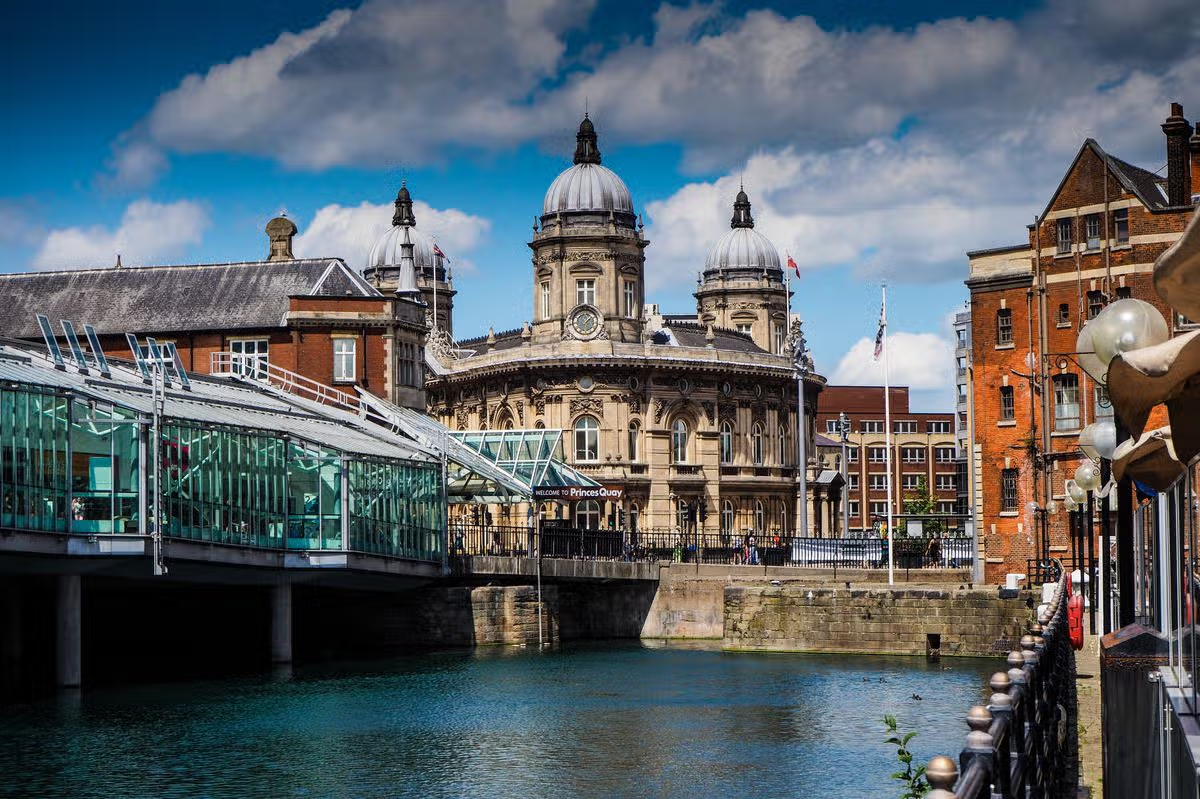
A UK city that is often overlooked and at the centre of brutal jokes could welcome back a beloved lido following concerns over open-water deaths amid the balmy heatwaves

A former lido could return to this often overlooked UK city(Image: Getty Images)
A UK city that has often been ridiculed is planning to restore its mega lido after it was demolished almost 40 years ago.
For countless years, Hull has been the subject of mockery, partly due to its previous reputation as one of the ‘UK’s worst places to live’ and its sharp industrial decline in the fishing and shipping industries. Even those who have never visited the East Yorkshire city find themselves going along with the unfair narrative, despite its significant progress.
Today, the city, officially called Kingston upon Hull, boasts lively independent bars, restaurants, art galleries, and hidden gems dotted along the waterside, as well as the mega amphitheatre Stage@TheDock. It’s also home to one of the ‘UK’s best wildlife attractions’, The Deep, a colossal aquarium with more than 3,500 marine animals. It has ahistoric quarter, the Old Town, with cobbled lanes, medieval architecture and museums.
Proving just how far it’s come as a city, Hull was named as one of the ‘best places in the world to travel to in 2026’ by National Geographic, and was the only UK destination to make the acclaimed list. And there’s much more to come from the city, with proposed plans to welcome back its once thriving lido.
During the summer months, the open-air swimming pool in East Park, which opened in 1964, was a haven for locals looking for a refreshing dip. But after 24 years, the lido closed in 1985 and was demolished in 1988.
While East Park maintains a children’s water play area, an Animal Education Centre, the Pavilion Cafe, a boat house, play areas and an outdoor gym today, its former lido is still yearned for. Even more so now, in the hope of providing another safe, outdoor swimming environment after tragic events unfolded during the UK’s recent hot weather, which has seen at least 18 people die in open water.
Now, the local council in Hull has agreed to look into the prospect of restoring the former lido in East Park. According to the BBC, Councillor Jessica Smith said: “As the weather gets warmer, we see the same tragic stories repeated year after year. Open water is unforgiving; it doesn’t matter how confident you are, it doesn’t matter how fit you are.”
The proposal, put forward by Jessica during Drowning Prevention Week, has been supported by Councillor Kalvin Neal, who noted that it might need to be relocated. “Although it is something that could be looked at, potentially that isn’t the best place, it could be somewhere else that might be better,” he commented.
It would undoubtedly be a welcome addition back to Hull, with the city’s only council-run lido located at Albert Avenue Pools and Fitness. This outdoor heated swimming pool, which was opened in 2023 after a £10.5 million refurbishment, is available to use from May to September, and has proven to be a huge success in the city.
On swimming safety, Cllr Jessica previously commented: “As local councillors we have a duty to do our best to provide safe swimming facilities and adequate education to our young people,” as reported by Hull Live.
“In a city surrounded by water and home to many lakes, drains and other bodies of water, this is a crucial issue for our communities this summer.” Councillor George Grozav is seconding the proposal. “Every death in open water is a tragedy, and far too many of these incidents involve children and young people.”
Do you have a travel story to share? Email webtravel@reachplc.com