homegrown

South Korea signs deal to build first homegrown air-defense destroyer

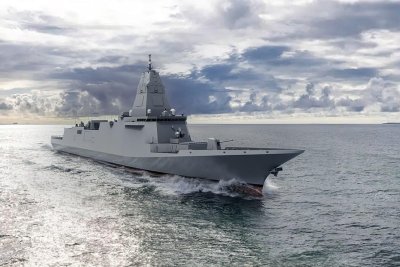
A front-view rendering of the KDDX next-generation destroyer. Photo courtesy of Hanwha Ocean

July 31 (Asia Today) — South Korea’s arms procurement agency signed a contract with Hanwha Ocean on Friday for the detailed design and construction of the first KDDX next-generation destroyer.

The agreement moves the long-delayed naval program into its full design and construction stage after nearly three years of disputes over the selection of a shipbuilder.

The lead ship is scheduled to be delivered to the South Korean Navy by the end of 2032.

The Defense Acquisition Program Administration said KDDX will be South Korea’s first large destroyer built with a domestically developed hull, combat management system, multifunction radar and other core weapons systems.

Although the vessel is sometimes described in South Korea as a Korean-style Aegis destroyer or a mini-Aegis ship, it is not expected to use the U.S.-developed Aegis Combat System.

Instead, the destroyer will combine a South Korean integrated combat system with an indigenous phased-array radar to detect, track and engage aircraft, missiles, ships and other threats.

The contract for the detailed design and lead ship is valued at about 882.1 billion won, or about $617 million.

The entire program, including five additional destroyers, is expected to cost about 7.8 trillion won, or $5.46 billion.

The government has not determined which companies will build the five follow-on ships or how those contracts will be awarded.

Contract ends prolonged shipbuilder dispute

Hanwha Ocean, formerly Daewoo Shipbuilding and Marine Engineering, completed the KDDX conceptual design.

HD Hyundai Heavy Industries later conducted the basic design, leading to expectations that it would receive a negotiated contract for the detailed design and lead ship.

Hanwha Ocean instead called for a competitive bidding process, citing a military-secrets case involving HD Hyundai Heavy Industries employees.

The acquisition agency accepted that request and held a competition.

Hanwha Ocean and HD Hyundai Heavy Industries were reportedly separated by less than 0.6 point in the final evaluation.

A 1.2-point security penalty imposed on HD Hyundai Heavy Industries was considered decisive.

Employees of the company had been convicted of photographing or improperly handling military secrets related to the KDDX program.

Hanwha Ocean was selected as the preferred bidder June 11. The company’s selection had previously been reported as part of a six-ship program valued at approximately 7.8 trillion won or $5.46 billion.

HD Hyundai Heavy Industries challenged the evaluation but its objection was rejected in early July. Negotiations between the acquisition agency and Hanwha Ocean then led to Friday’s final agreement.

The contract was signed before all cost data were finalized. The final value may therefore be adjusted to reflect verified construction expenses.

South Korean systems to replace foreign equipment

The KDDX is expected to displace about 7,000 tons when lightly loaded and will be larger than South Korea’s Chungmugong Yi Sun-sin-class destroyers.

It will be smaller than the Navy’s Sejong the Great and Jeongjo the Great-class destroyers equipped with the American Aegis system.

The ship will feature a low-observable design and an integrated mast intended to reduce its radar signature.

Planned armament includes a 5-inch naval gun and South Korean vertical launch systems capable of carrying surface-to-air, anti-ship, land-attack and anti-submarine weapons.

The exact number of vertical launch cells has not been officially confirmed.

The acquisition agency said major systems, including the combat management system, sonar, multifunction phased-array radar and ship-launched surface-to-air missiles, will be developed domestically.

South Korea plans to apply technologies developed since the basic design was completed, including digital-twin construction, layered counter-drone defenses and a communications environment using 5G and integrated wired and wireless networks.

A digital twin is a computerized replica of the ship that can be used to test design changes, construction procedures and equipment performance before work is carried out on the physical vessel.

The Navy is also considering integrated electric propulsion to reduce noise and improve anti-submarine survivability.

Automation is expected to reduce the number of sailors required to operate the ship compared with older destroyer classes.

Schedule remains a challenge

The KDDX basic design was completed in December 2023 and the detailed design and lead ship construction were originally expected to begin soon afterward.

Disputes between Hanwha Ocean and HD Hyundai Heavy Industries delayed the program by about two years.

The acquisition agency and Hanwha Ocean will now need to shorten portions of the development and construction schedule to meet the 2032 delivery target.

Jung Jae-jun, head of the acquisition agency’s force resources division, described KDDX as a national project bringing together South Korea’s shipbuilding and defense capabilities.

Jung said the government would examine several options for the construction of the follow-on vessels while seeking to deploy the new destroyers on schedule.

He said the program could also strengthen the international competitiveness of South Korean naval vessels.

Hanwha Ocean previously said it felt a significant responsibility after being selected as the preferred bidder and would work with the government to normalize the delayed program.

Competition between Hanwha Ocean and HD Hyundai Heavy Industries is expected to continue as the government determines how to award contracts for the five remaining destroyers.

— Reported by Asia Today; translated by UPI

© Asia Today. Unauthorized reproduction or redistribution prohibited.

Original Korean report: https://www.asiatoday.co.kr/kn/view.php?key=20260731010011621

Source link

Ukraine’s Homegrown Glide Bomb Breaks Cover

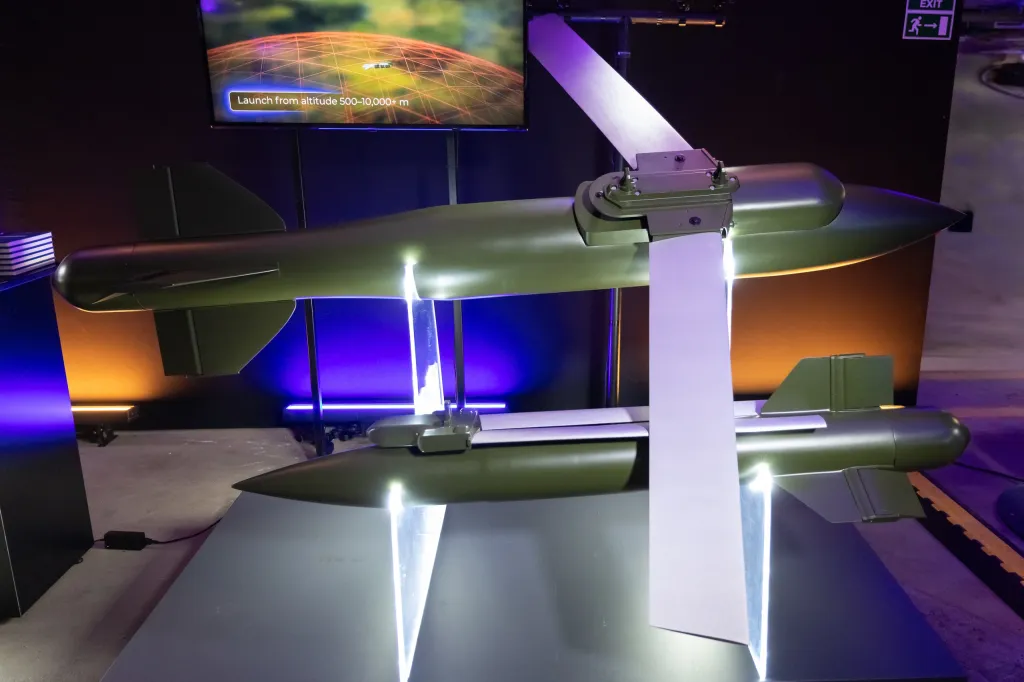
Ukraine has provided imagery of its first homegrown glide bomb, which it says is now ready for combat. Developments by both sides in the Ukraine conflict underscore the fact that standoff munitions of all kinds are in particularly high demand, to counter the increasing density and lethality of enemy air defenses.

According to the Ukrainian Minister of Defense, Mykhailo Fedorov, the development of the weapon — the name of which hasn’t been revealed — took 17 months. A product of Brave1, the defense tech arm of the Ukrainian government, the weapon is said to carry a 250-kilogram (551-pound) warhead, to which is attached a wing kit and some kind of guidance system, the nature of which has not been disclosed.

The first Ukrainian glide bomb from @BRAVE1ua is ready for combat deployment. Development took 17 months. The warhead weighs 250 kg. The Ukrainian glide bomb features a unique design created specifically for the realities of modern warfare.

Pilots are currently rehearsing… pic.twitter.com/Pnr15iTG9L

— Mykhailo Fedorov (@FedorovMykhailo) May 18, 2026

In a statement today, Brave1 said the glide bomb “has completed all required trials,” and has now been declared ready for combat. The weapon is said to be able to hit targets “dozens of kilometers behind enemy lines.”

Ukraine had no guided aerial bomb. Now it does.

DG Industry, a Brave1 participant, has completed all required trials and declared the weapon ready for combat after 17 month of development. The bomb carries a 250 kg warhead, hits targets dozens of kilometers behind enemy lines,… pic.twitter.com/EXP0PiLOHl

— BRAVE1 (@BRAVE1ua) May 18, 2026

With the Ukrainian Ministry of Defense having placed a first order, pilots are now said to be training with the weapon, meaning that combat deployment is “imminent.”

Ukrainian authorities claim that the weapon was designed from scratch and was “not copied from Western or Soviet systems.”

A close-up of the Ukrainian glide bomb (painted red for testing) in flight. Ukrainian Ministry of Defense screencap

An accompanying video shows the release of the weapon from a Ukrainian Air Force Su-24 Fencer swing-wing attack jet. The bomb is then seen with its range-extending wings deployed; interestingly, these are seen extended immediately after release. Otherwise, the weapon also features notably large cruciform tailfins. The apparent lugs seen under the body of the munitions suggest that, like Russian glide bombs, the weapon ‘topples over’ to assume the correct profile before the wings deploy.

A Russian UMPK glide bomb strapped on a Su-34. Russian Ministry of Defense

We have reached out to Brave1 for more details on the glide bomb.

It is also worth noting that a previous video, from August 2024, showed another type of air-launched munition, apparently also homegrown, being released from a Ukrainian Su-24, as you can read about here.

A full view of the Su-24 carrying the mystery munition that appeared in 2024. @UkrAirForce/Telegram capture

👀👀👀

A Ukrainian Sukhoi Su-24M bomber spotted with (I believe) previously unseen munition installed under its wing.

According to the original source, the video is dated to August 2024. The description says: “A bomber conducts a test flight to test a new guided aerial bomb.”… pic.twitter.com/LZsX5I4PxM

— Status-6 (War & Military News) (@Archer83Able) September 6, 2024

Again, we have reached out to Brave1 to better understand if there is any relationship between these weapons. However, the development of the new weapon officially began in December of 2024, several months after the mystery munition appeared.

As for the Ukrainian Air Force, the new glide bomb should provide an important addition to Western-supplied weapons in this class.

Ukraine already employs the Joint Direct Attack Munition-Extended Range (JDAM-ER) and AASM-250 Hammer bomb supplied by the United States and France, respectively. The Ukrainian Air Force also makes extensive use of the U.S.-supplied Small Diameter Bomb (SDB), which also has pop-out wings.

A Ukrainian MiG-29 carrying a JDAM-ER glide bomb. This one carries a slogan commemorating the birthday of the then Ukrainian Armed Forces commander-in-chief, Valerii Zaluzhnyi. Ukrainian Air Force

At the same time, the new weapon helps Ukraine match similar weapons that are proliferating in the Russian inventory. The Russian Aerospace Forces have, for several years now, been making extensive use of increasingly larger dumb bombs fitted with add-on precision guidance kits. Russia has also been working to refine its glide bombs, making them more effective than the original, fairly crude designs.

Based on Ukraine’s experience with its expanding roster of longer-range kamikaze drones and glide bombs currently in service with both sites, a satellite navigation-assisted inertial guidance system would be used to direct the glide bomb to a specific set of coordinates. Additional seekers are possible, but not probable at this time.

It is not clear if the new Ukrainian weapon has any kind of powerplant. Ukraine has already been employing multiple types of jet-powered kamikaze drones. More importantly, Ukraine’s French-supplied Hammer precision-guided bombs also feature a rocket booster. This feature is of unique utility for Ukraine, which often slings its glide bombs via pop-up launch profiles from low level executed by its fighter and attack aircraft. This is due to the extremely heavy air defenses near the front lines. Even without a motor, however, the weapon provides an important capability and one that is increasingly important as stocks of Western-supplied munitions are eroded or their supply is otherwise interrupted.

A video compilation provides a look at the French-made Hammer munition being used by Ukrainian Su-25 attack jets, including low-level toss bombing:

ЖАБА. ЗСУ Су-25 . З Новим роком , друзі ! thumbnail

ЖАБА. ЗСУ Су-25 . З Новим роком , друзі !


We will likely have to wait to see the weapon in action before establishing whether it can be launched from platforms other than the Su-24, although this would seem almost guaranteed.

While Ukraine’s Su-24s are the country’s launch platforms for stealthy Storm Shadow and SCALP-EG air-launched cruise missiles provided by the United Kingdom and France, its MiG-29 Fulcrums and Su-27 Flankers have been the primary carriers for other Western-supplied air-launched precision air-to-ground munitions like the JDAM-ER, SDB, and Hammer bombs, as well as AGM-88 High-speed Anti-Radiation Missiles (HARM). The size of the weapon would allow it to be carried by any of these platforms, as well as Su-25 Frogfoot attack jets, which also deliver Hammers.

A video of the moment of release of two French-supplied AASM-250 Hammer guided bombs from a Ukrainian MiG-29 fighter jet.

The pilot of this particular airframe, 27-year-old Captain Oleksandr Myhulia, perished while performing a combat mission on August 12, 2024.… pic.twitter.com/yNEbbaFUPt

— Status-6 (War & Military News) (@Archer83Able) August 14, 2024

Whatever the launch platforms and the new weapon’s exact capabilities, its biggest advantage is that it offers a domestic source of air-launched precision-guided munitions with some kind of standoff range. The longer-range Storm Shadows and SCALP-EGs were provided only in relatively limited quantities to Ukraine. They can only be launched by the Su-24 and are reserved for more strategic targets.

A Ukrainian Su-24 carrying a SCALP-EG cruise missile. Ukrainian Ministry of Defense

Meanwhile, the JDAM-ER has never been in widespread use with the U.S. military or other foreign armed forces, so the quantities available are questionable.

An inert JDAM-ER in flight after release. Royal Australian Air Force

To help meet the shortfall, the U.S. Air Force launched a project to develop a new, relatively low-cost precision-guided air-launched standoff munition focused primarily on meeting Ukrainian demands for weapons of this kind. In August of last year, it was reported that Washington had approved the transfer of thousands of these Extended Range Attack Munitions (ERAM) to Ukraine. As well as the Rusty Dagger from Zone 5 Technologies, CoAspire developed the Rapidly Adaptable Affordable Cruise Missile (RAACM) under the ERAM program. 

However, evidence of these weapons being employed by Ukraine has yet to emerge.

A full, unedited view of the Rusty Dagger Extended Range Attack Munition live-fire test on Jan. 22, 2025, at Eglin Air Force Base, Florida. via U.S. Air Force

There is also the fact that a domestically developed standoff weapon can be used without restriction against any kind of target. Previously, longer-ranged Western-supplied weapons have come with restrictions on their employment. As a result, Ukrainian officials have repeatedly and publicly called for more flexibility in striking targets inside Russia proper. This became especially critical during the Ukrainian incursion into the latter country’s Kursk region.

The apparent rapid pace of development of Ukraine’s first homegrown glide bomb suggests that this is an urgent requirement and one that may well have been driven by problems in the availability of equivalent Western munitions. With that in mind, combined with claims that the weapon is now ready for combat, we may not have to wait too long for evidence of it being used in action.

Contact the author: thomas@thewarzone.com

Thomas is a defense writer and editor with over 20 years of experience covering military aerospace topics and conflicts. He’s written a number of books, edited many more, and has contributed to many of the world’s leading aviation publications. Before joining The War Zone in 2020, he was the editor of AirForces Monthly.


Source link