hockey

U.S. Olympics hockey hero Jack Hughes’ future includes dental implants

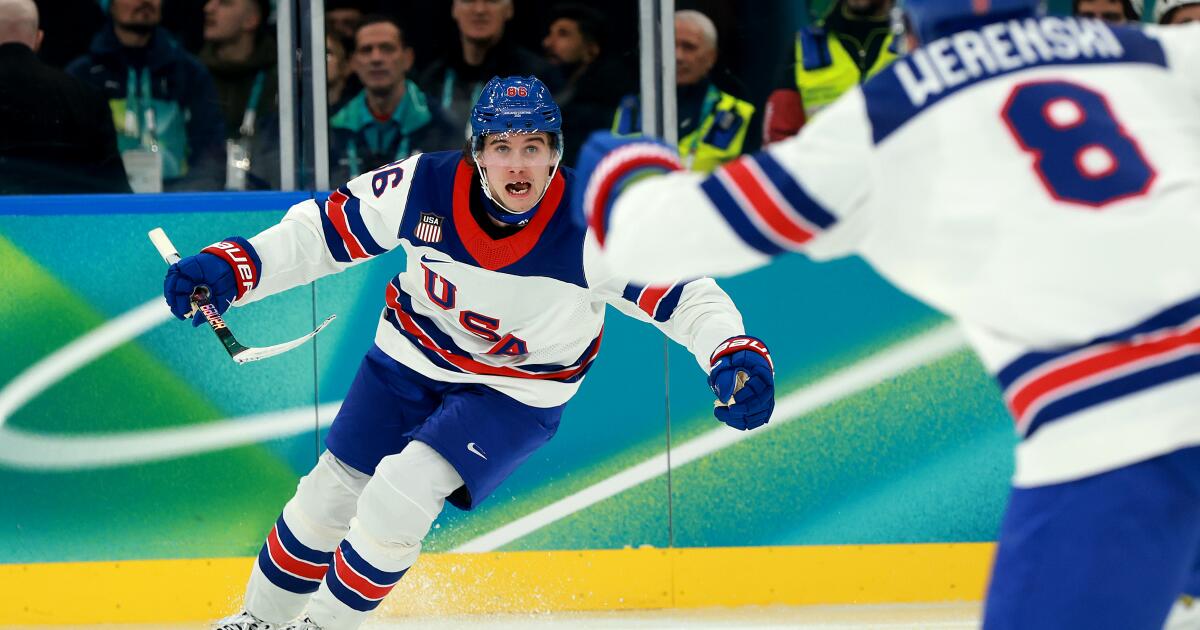
Milan-Cortina Olympics hero Jack Hughes is likely looking at a dental implant to replace teeth knocked from his mouth in the third period of the men’s hockey final between the United States and Canada on Sunday.

Once the euphoria of scoring the winning goal in overtime subsides and celebrations cease, Hughes will undergo a surgical procedure that most dentists agree is far superior to alternatives such as dental bridges or partial dentures.

Titanium posts will be inserted into his jawbone, serving as new roots for the teeth. Once the posts are secure and his mouth has healed, custom crowns matched to his natural teeth in shape, color, and size will be placed on top of each post.

Hughes, who is in year four of an eight-year, $64 million contract with the New Jersey Devils of the NHL, has no worries about affording the best care possible. Sure, health care is free in Italy and he could have remained there for the procedure, but he told reporters he wants it done on home turf.

Jack Hughes looks skyward and smiles

The United States’ Jack Hughes reacts after receiving his gold medal after Team USA defeated Canada in the men’s ice hockey gold medal game.

(Luca Bruno / AP)

“I’m lucky I’m from the best country in the world, and we’ve got great dentists there, too,” Hughes said while caressing the gold medal hanging from his neck. “I’m lucky I’m American, and they’re gonna fix me right up.”

When Canadian forward Sam Bennett’s high stick slammed into his mouth in the third period, Hughes looked down and rolled his eyes.

“I looked on the ice and saw my teeth,” said Hughes, who had a tooth knocked out in an NHL game a few years ago. “I was like, ‘Here we go again.’ The last time that happened, it wasn’t very fun.”

Losing teeth is an occupational hazard for hockey players. They know implants can be as good as the real thing. Hughes played on even while resembling a Jack-o-lantern.

“Who cares at this point, to be honest?” U.S. teammate Matt Boldy said. “I think more people are looking at his medal than his teeth. I’m sure he’ll be OK.”

Attention certainly focused on Hughes’ heroics in overtime. He re-entered the game a minute into the 3-on-3 overtime and quickly found himself the only U.S. player between Canadian superstar Connor McDavid and the goal.

Oh, and McDavid had the puck on his stick.

Hughes retreated slightly, bracing for another painful collision by using his body as a barrier. McDavid couldn’t get off a clean shot and goaltender Connor Hellebuyck — whose game-long heroics will forever be remembered — slapped the puck away.

Less than a minute later, Hughes fielded a cross-ice pass from Zach Werenski and fired it past Canadian goaltender Jordan Binnington. Game over.

“I got it to the right guy,” Werenski said. “He’s been hot all tournament.”

That hasn’t been true for long. Hughes underperformed in last year’s 4 Nations Face-Off — which Canada won — before shoulder surgery ended his NHL season. This season, he missed five weeks with the Devils after slicing his right thumb open on broken glass at a team dinner.

His older brother and teammate Quinn Hughes, who led the U.S. team with eight points during the Olympics, knows the emotional roller-coaster that Jack has endured. The thrill ride couldn’t have ended any better.

“[Jack] is an animal,” Quinn said. “He’s gone through a lot with his shoulders. He takes a lot of [crap]. No one loves the game more than him. He’s got so much passion. He’s a gamer. He made it happen.”

Their parents, Jim and Ellen, were in attendance. Ellen Weinberg-Hughes is a Player Development Consultant for the U.S. women’s hockey team, which also won gold. No doubt mom will be scheduling that dentist appointment for Jack sooner than later.

Source link

U.S. defeats Canada for first men’s Olympic hockey gold since 1980

Talk about a closing ceremony.

The final medals of the Milan-Cortina Games were handed out Sunday and these Olympics truly saved the best for last, with the U.S. men’s hockey game grabbing the last gold with a 2-1 overtime win over Canada.

Of course it went to overtime. How else should a U.S.-Canada final end?

Jack Hughes, left alone on the left wing, provided the winning goal 1:41 into overtime, beating Canadian goalie Jordan Binnington cleanly and setting off a wild celebration that left the ice littered with U.S. gloves, sticks and helmets. The Canadian players watched from the bench, many with their heads in their gloves hands.

The other goals came from Matt Boldy, who gave the U.S. a lead early in the first period, and Cale Makar, who evened things for Canada late in the second.

The medal was the 33rd of these Games for the U.S. and the 12th gold, most by an American team in the Winter Olympics. They finished second to Norway, which won a record 41 medals, 18 of them gold.

The title was the Americans’ first in men’s hockey since 1980 and it came on the 46th anniversary of the “Miracle On Ice” win over the mighty Soviets, in what was essentially a semifinal in the Lake Placid Games.

The Canadian team the U.S. beat Sunday was no less mighty. It scored 27 times on its unbeaten run to the final, with Connor McDavid getting 13 points, a record for an Olympic tournament featuring NHL players. And with the NHL players returning to the Winter Games for the first time in 12 years, Canada may have had more elite-level marquee players than any team in Olympic history.

U.S. players celebrate immediately after beating Canada in overtime for the gold medal.

U.S. players celebrate immediately after beating Canada in overtime for the gold medal at the Milan-Cortina Olympic Games on Sunday.

(David J. Phillip / Associated Press)

But it was the U.S. that drew first blood, scoring in the sixth minute on a brilliant individual effort from Boldy. The play started with Toronto Maples Leafs captain Auston Matthews digging the puck out along the boards in the U.S. end. He then fed Boldy, a Minnesota Wild forward, who flipped the puck ahead of him as he entered the Canadian zone.

Boldy had Makar and Devon Toews to beat, which he did by skating between them before backhanding the puck by Binnington for his second goal of the tournament.

Back in the Catman Cafe in Mansfield, Mass., where Boldy’s mom Jen works as a bartender, the crowd came to its feet and cheered. It was the third time in as many elimination games that Canada trailed entering the second period.

The turning point in regulation came in a three-minute span in the middle of the second period. First, U.S. goalie Connor Hellebuyck stopped McDavid at the end of a breakaway it. Then less than a minute later, the U.S. took two penalties 28 seconds apart, giving Canada a five-on-three power play.

U.S. goaltender Connor Hellebuyck blocks a shot by Canada's Macklin Celebrini during the third period Sunday.

U.S. goaltender Connor Hellebuyck blocks a shot by Canada’s Macklin Celebrini during the third period Sunday.

(Carolyn Kaster / Associated Press)

With the crowd chanting “USA! USA!,” Hellebuyck, who stopped 41 shots in a phenomenal effort, came up big again and the Americans killed both penalties. The U.S. was 18 for 18 on the penalty kill in the tournament.

Makar, however, wouldn’t be denied later in the period, sending a blistering wrister from the center of the right circle just over Hellebuyck’s arm 84 seconds before the intermission. The score stayed that way until Hughes’ goal.

The game was arguably the most-anticipated event of the Milan-Cortina Games — in North America, if not in Italy. Hundreds of bars and restaurants in the U.S. and Canada were packed for early morning viewing parties. In Toronto, Scotiabank Arena, home to the Maple Leafs, opened its doors at 7 a.m. and sold $15 tickets to people to watch the game on TV. In Lake Placid, N.Y., the Olympic Center cafe opened to fans at 8 a.m. while in Milan, the 14,000 people packed into the Santa Giulia Arena were a sea of red Canadian jerseys and white American ones.

Six times the U.S. has finished second to Canada in an Olympic hockey tournament, the last in 2010 when Sidney Crosby’s goal in overtime gave Canada a record ninth gold medal. Crosby, Canada’s captain, did not dress for Sunday’s game after sustaining a lower-body injury earlier in the tournament.

United States players celebrate after defeating Canada for the gold medal at the Milan-Cortina Games on Sunday.

United States players celebrate after defeating Canada for the gold medal at the Milan-Cortina Games on Sunday.

(Hassan Ammar / Associated Press)

That wasn’t the only sign this game would be different for the Americans. As the team was wrapping up its final practice in Milan on Saturday, a spider dropped from the ceiling. Don’t kill it, a local volunteer warned the players. In Italy, the appearance of a spider is considered a sign of coming good fortune.

With the U.S. beating Canada in overtime in the women’s gold-medal last Thursday, the Milan-Cortina Games marked the first time the Americans have beaten Canada in both hockey finals. Canada has swept the men’s and women’s gold three times, in 2002, 2010 and 2014.

Source link

Letters: Apology or not, UCLA coach Mick Cronin must go

p]:text-cms-story-body-color-text clearfix”>

How does Mick Cronin survive this, sending his own player off the court after hustling hard on defense to get a piece of the ball but unfortunately too much contact and drew a foul. Does he not constantly rip his team for weak defense?

Steven Jamerson, you deserved better from your coach and I won’t be surprised if your teammates and UCLA’s decision-makers agree going forward. Except …. he just recently got an extension. Way to go, Martin Jarmond.

Ron Mortvedt
San Bernardino


How can UCLA’s combustible coach possibly demand discipline, hold his players responsible, or blame them for failing to take accountability when, night after night, he’s the most unhinged person in the building? Hey Mick, as my grandma used to say, “When you point a finger at someone, three point back at you.”

Steve Ross
Carmel


Bill Plaschke nailed it in his column today. Mick Cronin just seems to be angry all the time prowling the sidelines. What does that look like to a kid still playing in high school? How AD Martin Jarmond gave him an extended contract with a $22.5-million buyout is beyond me. It’s going to cost UCLA to move on from him. It would be a lot easier if he only starts throwing chairs.

Paul Atkinson
Ventura


The sky has fallen! For the first time I can remember I agree with something Bill Plaschke has written!

Julian Pollok

Palm Desert


As a lifelong fan and proud alumnus, I believe it’s time for UCLA to seriously evaluate the direction of its men’s basketball program. Why would we want a head coach who appears angry every time he’s in the spotlight? Leadership sets the tone, and right now that tone feels tense and joyless. Players want to compete for someone who inspires them and makes them better — not someone whose public demeanor seems rooted in frustration.

Watching from the outside, it often looks like the team is playing tight rather than confident, and that reflects leadership. Mick Cronin has had success and deserves credit for that, but UCLA basketball is bigger than any one résumé; if the standard is sustained excellence and a culture players are proud to represent, then it’s fair to question whether this is the right long-term fit for the program.

Michael Gesas
Beverly Hills

Source link

2026 Winter Olympics ice hockey: Canada and USA to meet in charged final

USA meanwhile have stars of their own, but don’t have the attacking gifts of the Canadians.

“The Tkachuk brothers [Brady and Matthew], and Jack Eichel, that attacking line has worked well together,” Bennett said.

“What they have not had is much scoring from captain Auston Matthews, he has not yet taken any of the games by the horns. They are OK, but not more than that.”

However, the Americans have the best defenceman at the Games in Quinn Hughes, who scored the crucial winner against Sweden.

“He might be the best three-on-three player in the world,” said Bennett. “He loves to keep possession, and is always looking to make an exciting play.”

It sets up a mouth-watering finale of an Olympic ice hockey competition which has benefitted hugely from the return of National Hockey League (NHL) players for the first time since 2014.

The attendance of players from the top North American league was in doubt for a time over concerns about the ice quality at the unfinished Milano Santagiulia Ice Hockey Arena, but they have been a major boon for the Games.

“This is the highest level of hockey we have ever seen at an Olympics,” said Bennett. “The NHL players have made it a different world.

“At the last two Olympics, games have been good but have missed the quality in the final third, the big moments. Players didn’t have the skillset to break a game, so saw a lot of tight, dull games

“Some of what the players have been doing here has been mind-blowing. One of the goals scored for Canada, McDavid saucered this pass from the back door [behind the goal], it lands as McKinnon is shooting, on the half-volley. That’s when you recognise it.

“I have been getting phone calls from people in the hockey world, all they have been saying is, this is so good. There have been periods where Kent [Simpson, BBC co-commentator] and I have just been sat watching, smiling, laughing.”

Canada have won gold in three of the five Olympics when NHL players have featured and will fancy their chances in a game on Sunday which could be as fascinating in the stands as it is on the ice.

It is highly likely that Canadian prime minister Mark Carney will be in Milan for the game.

Not only is Canada as a country hockey-mad, but so is Carney – when working as governor of the Bank of England, he would play for a recreational team in Haringey, north London.

The big question is whether his American counterpart will also be in Italy.

Source link

U.S. women need overtime to beat Canada for Olympic hockey gold

A gold medal that seemed firmly in the grasp of the U.S. women’s hockey team nearly slipped through its fingers in the final of the Milan-Cortina Games on Thursday, but the Americans rallied to win 2-1 on Megan Keller’s goal just over four minutes into overtime.

Kristin O’Neill’s shorthanded goal less than a minute into the second period gave Canada its goal while Hilary Knight matched that for the U.S. with 2:04 to play, deflecting a Laila Edwards’ slap shot from the high slot through her legs and past Canadian goalie Ann-Renee Desbiens to send the game to the extra period.

The goal, Knight’s 15th in Olympic competition, broke the American record and came seconds after U.S. coach John Wroblewski had pulled his goalie for an extra attacker.

Keller then won it, taking a long Taylor Heise pass on the left wing, racing into the Canadian zone, stickhandling around defender Claire Thompson before beating goalie Desbiens cleanly.

The gold was the second in the last three Olympics for the Americans, who are ranked No. 1 in the world. Both have come against Canada while the victory was the eighth straight for the U.S. over their northern neighbor dating to last April’s world championship.

The overtime rules are unique for gold-medal games, with the teams playing three-on-three for 20-minute periods, with the first goal deciding the winner. Games cannot end in a shootout.

In the preliminary round, overtimes were limited to five minutes, followed by a five-round shootout. In the knockout stage, the overtime period was extended to 10 minutes, followed by a shootout.

None of that figured in Thursday’s result.

The young Americans, who had 12 women playing in their first Olympics, looked uncharacteristically rattled in a scoreless first period in which they took two penalties — one for too many players on the ice — and were outshot 8-6. It was just the third time in the tournament the U.S. went an entire period without a goal.

Things got worse 54 seconds into the second period when O’Neill outskated Edwards up the center of the ice on a breakaway, took a short centering pass from Laura Stacey, then deked U.S. goalie Aerin Frankel to the ice before beating her to her gloved side for the first goal of the game.

That snapped a 352-minute scoreless streak for the U.S. and marked the first time the Americans trailed in Milan.

For much of the game Canada was faster, smarter and more poised. And Desbiens was spectacular in goal. In Canada’s group-play loss to the U.S., she was pulled in the third period after giving up five goals. This time she came within two minutes of shutting out a team that had scored 31 times in its previous six games.

Source link

U.S. men defeat Sweden in overtime, advance to Olympic hockey semifinals

The U.S. men haven’t stood on the podium at the end of an Olympic hockey tournament in 16 years and haven’t played for a medal in 12.

In fact, it’s been so long since an American hockey team took home a prize from the Winter Games none of the players on this year’s team, the second youngest in the Milan-Cortina competition, had finished high school the last time it happened.

No one on the team was even alive the last time the U.S. won gold in 1980.

This team has a chance to end that drought after beating Sweden 2-1 in overtime Wednesday to advance to Friday’s semifinals, where they will play Slovakia. The win was the Americans’ first over Sweden in an Olympic tournament in nine games dating to 1960.

The winning goal came from Quinn Hughes 3:27 into the extra period. Canada also advanced to the semifinals, overcoming one-goal deficits twice to beat Czechia 4-3 in overtime. Canada will play Finland, another overtime winner, in its semifinals.

The first U.S. goal came from Dylan Larkin of the Detroit Red Wings but Sweden forced the overtime when it pulled its goalie, allowing Mika Zibanejad to score on a slap shot from the left circle with 91 seconds left in regulation.

Hughes, a Minnesota Wild defenseman, then ended things, circling around the ice to create space, then skating into the high slot and blasting a shot between two defenders and past Swedish goalie Jacob Markstrom.

“Quinn, he’s a special player,” said defenseman Noah Hanifin of the Vegas Golden Knights. “So much swagger and confidence on the ice. And he’s always looking to take over. He did that for us in overtime.”

The game began like a heavyweight title fight, with both teams cautiously probing the other for weaknesses. The U.S. finally found one midway through the second period with Larkin deflecting in a one-timer from Jack Hughes at the blue line. Hughes’ shot was headed directly into the pads of Markstrom, who was perfectly positioned for an easy save, before Larkin, perched on the doorstep, reached out to deflect the puck by Markstrom on his gloved side.

The Americans haven’t trailed since the middle of the second period of their second game. But losing a lead with just 1 ½ minutes to play tested the team’s “character, just the will to win,” forward Brady Tkachuk said.

“That’s something that can deflate you and end your tournament, if you don’t just put your mind back in a good spot,” he added. “It shows the character being able to bounce back get that one.”

“That’s a big momentum shift. But there wasn’t any panic,” Charlie McAvoy added. “I got back to the bench [and] it’s just you’ve got to flush it. That was kind of what I was saying to myself. It’s a tie game now.”

Dylan Larkin (21) is congratulated by U.S. teammates on the bench as he skates off ice after scoring a goal against Sweden.

Dylan Larkin (21) is congratulated by U.S. teammates on the bench as he skates off the ice after scoring a goal against Sweden during the second period Wednesday.

(Hassan Ammar / Associated Press)

It didn’t stay that way for long before Hughes broke Sweden’s heart, beating Markstrom cleanly. Markstrom was otherwise spectacular, making 38 saves — two with his helmeted head and probably deserved a better fate.

In the last two Olympic tournaments the Americans, playing without NHL players, were bounced in the quarterfinals while Canada got no further than the bronze-medal game. The top pros didn’t participate in the 2018 Games because of a dispute between the NHL and the International Olympic Committee regarding insurance, travel costs and marketing rights. They were held out four years ago over scheduling complications caused by the coronavirus pandemic.

Not surprisingly, getting some of the best players in the world back has made a difference, with the unbeaten Canadians rolling to a tournament-best plus-18 goal differential while the averaged 4 1/2 goals a game in their four wins.

“It’s been unreal,” Hanifin said of the tournament. “It’s so fun to be a part of. Anytime you get into these one-game eliminations, anything can happen so you’ve got to be to be prepared.

“But that’s part of what makes the Olympics so special and hard to win.”

Canada’s comeback spoiled good performances by a pair of Anaheim Ducks. Defenseman Radko Gudas got an assist on the Czechs’ first score while NHL teammate Lukas Dostal turned away 37 shots in goal. But Montreal Canadiens’ captain Nick Suzuki got a fortunate bounce on a deflection to tie the score with 3:27 left in regulation before Vegas’ Mitch Marner scored the game-winner 82 seconds in overtime for Canada, which led for less than six minutes.

On his way to the dressing room, Gudas picked some snow off the ice and kissed it. At 35, this was his second and likely last Olympic tournament.

“It’s a mix of emotions, because you feel sad but proud in the same time,” said Dostal, who was playing in his first Olympics. “It hurts. It’s probably gonna hurt for a long time.”

The victory might have come at a high cost for Canada, which saw captain Sidney Crosby limp to the dressing room in the second period following a collision with Gudas along the boards. Crosby, who has two goals and four assists in the tournament, will undergo an MRI exam on Thursday; his status for Friday’s semifinal is unknown.

For the U.S. and Canada, two more wins brings a gold medal while a loss Friday means that dream is over.

“It’s a one-game tournament,” Canada’s Tom Wilson said. “It’s not seven games. It’s a one-game tournament. And everybody thinks they can win.”

Source link

Olympics: U.S. women’s hockey beats Sweden, reaches gold-medal game

The U.S. advanced to the final of the women’s hockey tournament at the Milan-Cortina Olympics with a 5-0 rout of Sweden on Monday and will meet the winner of the second semifinal between Canada and Switzerland in Thursday’s gold-medal game.

The goals came from Cayla Barnes, Taylor Heise, Kendall Coyne, Hayley Scamurra and Abbey Murphy. Hannah Bilka had two assists while Aerin Frankel turned back 23 shots in pitching the Americans’ fifth consecutive shutout, running their scoreless streak to more than 331 minutes. The unbeaten U.S. has scored at least five times in each of its six games, outscoring opponents 31-1 overall.

Kendall Coyne raises her stock and celebrates with her teammates after scoring against Sweden.

Kendall Coyne, top left, celebrates with her teammates after scoring against Sweden in the second period Monday.

(Robert Gauthier / Los Angeles Times)

Barnes got things started 5:09 into the first period, taking a pass from Kelley Pannek behind the goal line, settling it inside the right faceoff circle, then blasting a shot over the shoulder of Swedish goalie Ebba Svensson Traff for her first goal of the Games. Barnes is the 15th American to score in the tournament.

But that was all the U.S. would get in a first period in which it built a 13-2 shot advantage.

Heise doubled the advantage midway through the second period, although Bilka did most of the work, taking the puck at center ice and driving hard up the right wing before slipping a deft pass across the front of the goal for Heise, who had an easy tap-in.

Six minutes later Murphy made it 3-0 and the rout was on, with Coyne and Scamurra adding goals 109 seconds apart to extend the U.S. lead to 5-0 heading into the second intermission.

U.S. forward Abbey Murphy scores past Sweden goalkeeper Ebba Svensson Traff in the second period Monday.

U.S. forward Abbey Murphy, right, scores past Sweden goalkeeper Ebba Svensson Traff in the second period Monday.

(Robert Gauthier / Los Angeles Times)

Source link

U.S. hockey beats Germany at Olympics, stays perfect in group play

The U.S. will take the No. 2 seed into the quarterfinals of the men’s hockey tournament of the Milan-Cortina Olympics after beating Germany 5-1 on Sunday to finish group play unbeaten.

The Americans’ opponent in the final eight will be determined in a four-game qualification round Tuesday. Canada, also unbeaten after it thrashed France 10-2 earlier in the day, will take the top seed into the quarterfinals by virtue of its plus-17 goal differential.

The U.S. got two scores Sunday from Auston Matthews and goals from Zach Werenski, Brock Faber and Tage Thompson. Germany’s only score came from Tim Stutzle of the Ottawa Senators, his fourth of the Olympics, with less than nine minutes to play.

The Americans outshot Germany 13-3 during the first 16 minutes, but a combination of poor puck handling and sloppy play in front of the net kept them off the scoreboard until Werenski, a defenseman with the Columbus Blue Jackets, took a pass from Matthews in the center of the right circle, stepped up and drilled a wrister past goalie Maximilian Franzreb nine seconds before the first intermission.

The U.S. thought it had a goal moments earlier when Vegas Golden Knights’ forward Jack Eichel drove the puck from the top of the left circle though a crowd and into the back of the net. But the officials ruled the play had been whistled dead before the shot.

Matthews, the Toronto Maple Leafs’ captain, doubled the advantage 3:25 into the second period, poking the rebound of a Quinn Hughes’ shot by Franzreb for his second power-play goal of the Olympics.

Faber, who plays for he Minnesota Wild, made it 3-0 with less than 2:30 left in the second period, playing the puck off the boards near the blue line and flicking it on goal where Eichel got a stick up in front of Franzreb, distracting the goalie as he reached up unsuccessfully to glove the puck.

Thompson, of the Buffalo Sabres, and Matthews closed out the scoring for the U.S. with goals less than five minutes apart into the final period.

Source link

U.S. women’s hockey team rolls to Olympic quarterfinals, routs Canada

The U.S. won its group and will advance to the quarterfinals of the Milan-Cortina Winter Games as the top seed after routing Canada 5-0 on Tuesday at the Milano Santagiulia Ice Hockey Arena.

Two of the goals came Hannah Bilka with Carolina Harvey, Kirsten Simms and Laila Edwards scoring one apiece.

The win was the seventh in a row for the U.S. over Canada, dating to last April’s world championships. And the Americans dominated from the start, taking its earliest lead of the tournament on Harvey’s goal 3:45 into the first period.

The score came following a faceoff, with Haley Winn working the puck to the high slot for Harvey, who fired a neat wrister by Canadian goalie Ann-Renee Desbiens for her second goal in Olympic competition and her second in as many nights.

Abbey Murphy set up the next one, sending a behind-the-back pass from the end boards to the front of the goal for a wide-open Bilka, who made it 2-0 with a right-handed finish with less than three minutes left in the first period.

The U.S. made it 3-0 on a disputed goal 81 seconds into the second period with the referees, after a long review, ruling that Simms had pushed the puck through a mass of bodies in the crease and across the goal line. Canadian coach Troy Ryan challenged the goal but lost, earning a bench minor for delay of game.

The next U.S. goal was indisputable with Bilka blasting a short one-timer by Desbiens seven minutes before the second intermission. Abbey got her third assist and Harvey her second on the play. With eight minutes left, Edwards closed out the scoring from the high slot — almost the exact same place from where Harvey got the opening goal — driving Desbiens from the game with Ryan bringing on Emerance Maschmeyer to close things out.

The U.S. has scored exactly five goals in each of its four games, scoring in all 12 periods it has played in the Olympic tournament.

Aerin Frankel turned away 20 shots in goal, posting the third shutout in as many games for the U.S., which ran it scoreless streak to 151 minutes.

Canada was playng without its captain, Marie Phillip-Poulin, who left Monday’s win over Czechia after taking a heavy hit along the boards from Kristyna Kaltounkova that left her unable to put weight on her right leg.

The three-time Olympic gold medalist and four-time world champion was listed as day-to-day.

Source link

Pro Hockey League: England survive fightback to beat Spain

England’s men survived a fightback from Spain to secure a 4-2 win in Valencia and move level on points with leaders the Netherlands in the FIH Hockey Pro League table.

England went ahead after only three minutes through Jacob Payton before Sam Ward doubled their lead via a drag from a penalty corner.

A Jose Basterra brace either side of half-time pulled Spain level, before Stuart Rushmere edged England back in front.

Spain had a chance to equalise with two minutes to go but could not take advantage of a penalty corner, before England raced up the field on the counter to seal victory through Ward’s second goal.

England remain second in the table on goal difference behind the Netherlands, with both sides having secured 15 points from eight matches.

England’s women bounced back from defeat by the Netherlands on Monday with a 2-0 win against China.

Grace Balsdon put England ahead by dragging in from a penalty corner, before goalkeeper Miriam Pritchard kept out a flurry of attempts in the third quarter.

China piled on the pressure in the final quarter in search of an equaliser, but it was England who found the net again, this time via a Tessa Howard deflected strike.

The victory sees England remain fifth in the table on seven points.

Source link

Winter Olympics: U.S. women’s hockey dominates vs. Finland

The U.S. women’s hockey team came into the Milan-Cortina Winter Games ranked No. 1 in the world. And two games into group play, it’s shown that ranking might be something of an understatement.

With Saturday’s 5-0 victory over No. 3 Finland, the unbeaten Americans have outscored their two opponents 10-1 and outshot them 91-25. The goals Saturday came from Alex Carpenter, Taylor Heise, Megan Keller, Hilary Knight and Abbey Murphy. Keller and Laila Edwards each had two assists.

In goal, Aerin Frankel faced just 11 shots in posting the first shutout of the Olympic tournament.

Just as in its opening win over No. 4 Czechia, the U.S. eased its way into the game before going ahead to stay late in the first period on a power-play goal from Carpenter. The score came seven seconds after Finland’s Susanna Tapani was sent off for hooking.

The Americans doubled the advantage 2½ minutes into the second period at the end of a beautiful passing sequence that saw Britta Curl feed Murphy, whose cross-crease pass found Heise on the doorstep for the easy goal.

Sixty-six seconds later Keller’s unassisted goal made it 3-0 and the rout was on.

Next came a power-play goal from Knight, her 14th in Olympic play, equaling Natalie Darwitz and Katie King for the most in team history. Murphy closed out the scoring, banging in a rebound at the right post with less than five minutes to play.

With 10 goals, the U.S. is tied with Sweden for most in the tournament while the Americans’ goal differential of plus-nine is the best. It was the 11th straight Olympic win for the U.S. over Finland, the bronze medalist four years ago.

Source link

Laila Edwards sparks U.S. women’s hockey to Olympic win over Czechia

Laila Edwards finally got out from under the spotlight and onto the ice for the U.S. women’s hockey team Thursday. It was a simple act, but one that made history.

Yet for Edwards, it was just another day at the office.

“It didn’t feel different at all,” she said. “It’s still hockey at the end of the day. Even though it’s the highest level, it’s still hockey.”

With her first shift in Thursday’s 5-1 win over Czechia, on the first day of hockey at the Milan-Cortina Winter Games, Edwards became the first Black woman to play for the U.S. national team in an Olympic tournament. On a team full of record-breakers, it was a significant milestone, one that has become a storyline for the world’s top-ranked team.

“Cameras constantly in her face. She does a good job of whatever she needs to do,” said teammate Tessa Janecke, who had two second-period assists. “It’s very inspiring for us as her teammates, but as well as the next generation.”

And that, of course, is the point.

“Representation matters,” Edwards said. “There’s been a lot of young kids or parents of young kids who have reached out or I’ve run into that say, ‘You know, my daughter plays sports because of you. And she feels seen and represented,’ and that’s just really motivating.”

Just 22, Edwards is already accustomed to breaking barriers and being the youngest this or the first that.

In 2023, she became the first Black player on the women’s senior national team in any competition; a year later, she became, at 20, the youngest player to win the MVP award in the World Championship.

But if doing that has been easy, talking about it has taken some work.

“I could not do interviews or not talk about it, but then the story doesn’t get out there,” she said. “And maybe a little girl doesn’t see me, who looks like her. So I think that’s what’s more important.”

On Thursday, playing before Vice President JD Vance, Secretary of State Marco Rubio and a packed house at the Milano Rho Ice Hockey Arena, Edwards marked her Olympic debut by helping put the Americans ahead to stay, feeding Megan Keller in the high slot for a slap shot that Alex Carpenter redirected in a first-period power-play goal.

Second-period goals from Joy Dunne and Hayley Scamurra — both on assists from Janecke — and third-period goals from Scamurra and Hilary Knight, sandwiched around one from Czechia’s Barbora Jurickova, accounted for the final score in a game in which the top-ranked Americans outshot the fourth-ranked Czechs 42-14.

Still, the night belonged to Edwards, a player Knight calls “the future of the sport.” But she’s doing pretty well in the present too, having already won two national championships with Wisconsin and two world championship medals with Team USA.

Edwards started skating shortly after she learned to walk, then switched to hockey before starting kindergarten, when her father Robert, who played the game as a child, enrolled her and three siblings in a youth hockey program. By 8, she was so advanced she was playing with boys’ teams and for high school she left her native Cleveland Heights, Ohio, for the elite girls’ hockey program at Bishop Kearney High School in Rochester, N.Y.

Although she was a high-scoring forward in high school and college — she led the nation with 35 goals as a junior at Wisconsin — she’s proven versatile enough to play on the blue line in the Olympics. That’s a little like playing a running back at right guard.

“I couldn’t even imagine that,” forward Abbey Murphy said of Edwards, who skated a team-high 25 shifts Thursday. “She took it and she just kind of ate it up and she made defenseman look easy. She’s magic on the blue line.”

At 6-foot-1 and 185 pounds — making her the biggest and most physical player on the U.S. team — Edwards was well-suited for the move.

“She’s so dynamic, so athletic, you could put her in goal and she would perform,” said Caroline Harvey, a teammate in high school, college and now with the national team. “She’s just adjusted so well. It’s seamless. It doesn’t even seem like she’s switched positions.”

Edwards hasn’t made her journey to the Olympics alone, however, a fact she acknowledged after Thursday’s game. Although her father is responsible for her start in hockey, it looked like he wouldn’t be able to travel to Milan to see his daughter make history. So Edwards’ parents started a crowdfunding campaign to pay for flights and accommodations.

Jason and Travis Kelce, brothers and former Super Bowl players who also grew up in Cleveland Heights, learned of the campaign and quickly kicked in $10,000, allowing 14 members of Edwards’ family to come to Italy — where their cheers were audible every time her name was announced.

“They show support,” Edwards said. “And they’re really cool guys.”

After her Olympic debut Thursday, there are a lot of little girls who can say the same about Edwards.

Source link

2026 Winter Olympics: Delayed Milano Santagiulia Ice Hockey Arena hosts first match

Beset by delays, concerns and last-minute building works, the Milano Santagiulia Ice Hockey Arena finally opened its doors to the Olympics on Thursday.

And while, as the International Olympic Committee admitted, it was not completely ready for its opening game, the arena was in a much better state than it had been when BBC Sport visited five days prior.

The 11,800-capacity stadium was nearly full for the Group B match between Italy and Olympic debutants France, won 4-1 by the host nation.

On the Saturday before the fixture, we found a frantic construction site, with building materials and dust inside and outside the stadium.

Rubbish littered the floor, lifts and toilets were covered in plastic wraps and many areas of the arena, including hospitality boxes as well as food and drink stalls, were unfinished.

Christophe Dubi, the International Olympic Committee’s executive director for the Olympic Games, admitted on Sunday: “Do we have every single space in that venue finished? No. And is everything in that venue needed [for the matches to take place]? No.”

Returning on the morning of the first game – about three hours before face-off – we found the piles of rubble and building materials gone from the concourses inside and out.

Not all the amenities were quite ready, with merchandise stalls being built and posters still to be put up. This is just over three hours before the opening match.

Inside the arena, one side of the stadium was simply a big black wall. This houses temporary stands on top of what will eventually be a stage for concerts, and was supposed to feature large boards with Olympic branding.

In the stands, it was very dusty and dirty. The arena had the feel of a new build, finished in a hurry without much spit and polish.

And around the stadium, it is an actual building site. The arena stands virtually alone in wasteland, 25 minutes’ walk from the nearest metro station and with no amenities, barring a car park, nearby. Bella Italia this is not.

Source link

Hilary Knight’s hockey achievements go beyond gold medals and titles

If Hilary Knight is the GOAT of women’s ice hockey, then Caroline Harvey is the kid.

That isn’t just a reference to her age, 23, which makes her the seventh-youngest player on the U.S. Olympic team. The term is also used for baby goats. And with Knight, the oldest player on the U.S. team, expected to retire from Olympic competition after the Milan Cortina Games, that makes Harvey the GOAT in waiting.

“Hilary is a great role model,” Harvey said. “She did blaze that trail. It’s been exciting to see what she did, the legacy she left.”

Like the 10 world championship gold medals, most by a hockey player of either gender; the soon-to-be five Olympic appearances, most by any American hockey player; the scoring titles and MVP awards. But the real legacy she’ll leave will have little to do with any of that.

In 2019, while at the height of her career, Knight risked everything when she joined more than 200 other players in boycotting the existing women’s hockey leagues to form the Professional Women’s Hockey Players Assn. Four years later that led to the creation of the well-funded Professional Women’s Hockey League, with eight teams playing in the U.S. and Canada.

Knight said she took inspiration for that campaign from the 1999 Women’s World Cup soccer team of Mia Hamm, Julie Foudy and Brandi Chastain, which not only won the title but soon after began the decades-long fight with the U.S. Soccer Federation that eventually ended with the women getting the same pay and benefits as the men’s team.

“We credit the ‘99ers to sort of helping us with our vision and creating more equitable space,” she said. “We’re far from there but we’re taking great steps in that direction.”

In fact, women’s hockey has never been better, a popularity both Knight and Harvey hope to build on in the Olympic tournament, which begins Thursday with the U.S. facing Czechia.

“Visibility is really important; continuing to get those eyes,” said Knight, a tireless promoter of the game. “We’re going to have some new and unique viewership. With the Olympics in itself [viewers] might accidentally watch hockey and be like ‘I love this sport.’

“Just having more programming elevates the game on the global stage. And that’s really exciting.”

U.S. forward Hilary Knight skates to the bench after scoring against Canada in November 2023.

U.S. forward Hilary Knight skates to the bench after scoring against Canada in November 2023.

(Ross D. Franklin / Associated Press)

The game Knight, 36, is championing is really one she built, especially in the U.S. A two-time NCAA champion at Wisconsin, she’ll be going for her fifth Olympic medal — and second gold — in Milan. Yet she insists the experience never gets old.

“Every Olympics feels like my first Olympics,” she said. “Each is so unique. You’re in a different country, a different culture, just so much fun to be able to explore. The Olympics are so special, whether it’s your first or your fifth.”

These Games are likely to feel a little different, though, since they’ll end with her passing the baton to Harvey, who followed Knight to Wisconsin. The two women have more in common than just their alma mater, though.

Both were the youngest players on the team when they made their Olympic debuts, Knight as a high-scoring forward in 2010 and Harvey as a physical, offensive-minded defenseman in 2022. Both have won multiple world championships and both began their careers playing on boys teams. As children, they both told relatives they would someday play in the Olympics — a prediction that was particularly bold for Knight since women’s hockey wasn’t even an Olympic sport then.

When Harvey joined the national team ahead of the 2021 world championships, Knight shared some advice.

“She said something to the effect of ‘it’s the same game, no matter what level you’re at. Trust your instincts, play natural, play free,’” Harvey said. “That just really stuck with me.

U.S. defenseman Caroline Harvey shoots during a Rivalry Series game against Canada in November.

U.S. defenseman Caroline Harvey shoots during a Rivalry Series game against Canada in November.

(Jason Miller / Getty Images)

“Hopefully at some point [I] grow into that leadership role,” she continued. “I’ve had some years now and that past Olympics, it was more of a being a sponge. I’m always trying to learn something new every day from the veterans.”

One thing she’s learned recently is how to beat Canada, which could come in handy in Milan since the U.S. will face its northern neighbors in the final game of group play, and likely a second time in the knockout rounds.

Canada has won five of the last six women’s Olympic tournaments, beating the U.S. in four of the those finals, including the most recent one in 2022. But the U.S. swept Canada in the pre-Olympic Rivalry Series, winning the four games by a combined 24-7. Knight and Abbey Murphy led the tournament in scoring with five goals each.

“When the puck drops, your heart is beating out of your chest,” Knight said of playing Canada. “You’re like ‘am I human? This is insane. This is awesome.’”

Still, when Knight finally does hang up her skates for the final time, those won’t necessarily be the memories she holds closest from her Olympic career.

“I get to do cool things with cool people on a daily basis,” she said. “What I’ve been able to accomplish in my career is incredible. And I’ve obviously played with amazing women and I’m so grateful for every opportunity that I’ve had.

“I’m just at a place where I want to embrace these lasting memories and moments with teammates and friends and family, all those people that go into this journey. That’s what I’m looking forward to.”

After that, the GOAT will give way to the kid.

Source link

Santa Clarita hockey team wins title after player’s dad is killed

A father driving his daughter and two other families from the Santa Clarita Flyers hockey club to a tournament in Colorado was killed last week in a horrific crash in treacherous weather.

Three days later the Flyers won the Western Girls Hockey League 12U title with a 1-0 victory in overtime Sunday, their fifth win of the tournament.

The players met for two hours the night of the accident and decided they would participate rather than pull out and head home.

“We knew that the families in the crash would want us to play and decided not just to do it for ourselves, but do it for them mostly,” Flyers captain Sophia Boyle told Denver 9News. “We are more than a team. It’s like we are a giant family.

“We knew what we wanted, we tried our hardest and we got it.”

The driver of a Colorado Department of Transportation plow truck traveling on snow-covered and wet roads Thursday morning lost control on Interstate 70, drove through the median and hit the Flyers’ Ford Transit van head-on, according to the Clear Creek County Sheriff’s Office.

The van was knocked down an icy embankment before coming to rest, and the driver, Manuel Lorenzana of Chatsworth, was pronounced dead at the scene. Four children were treated for minor injuries at a local hospital; a fifth was flown to a trauma center with critical injuries. Three adults were admitted to the hospital, one in serious condition.

Lorenzana, 38, a noted tattoo artist and lifelong San Fernando Valley resident, was remembered as “a hero and the epitome of what an amazing man, father, partner and friend should be,” his family wrote on a GoFundMe page.

“He was the most thoughtful, loving and supportive man to his soulmate April, and the most caring, involved, fun, kind and loving parent, and best friend, to his daughter Brody.”

Brody was released from the hospital and joined her teammates Saturday. After opening the double-elimination tournament with two victories Friday and a loss in their first game Saturday, the Flyers advanced with a 14-0 win.

Santa Clarita Valley residents gathered at the Flyers’ home rink, the Cube Ice and Entertainment Center, to watch a stream of the game that unfortunately malfunctioned. Still, the crowd stayed, with several people refreshing the league’s website to keep up with the game and shouting when the Flyers scored.

Two victories Sunday — both shutouts — gave the Flyers the title. Moments before the championship game, the Flyers raised their sticks in a silent nod to Manny Lorenzana. Khaleesi Bewer scored the winning goal in overtime, and afterward the Flyers sang Katy Perry’s “California Gurls. ”

“It’s unbelievable how much people have rallied behind these girls,” said Prescott Littlefield, president of the Flyers organization. “If there is a silver lining to this, the amount of support they’ve gotten is beyond my ability to comprehend. The families are so grateful.”


Source link

How Anaheim Ducks and the Offspring combine hockey and punk rock

Thousands of cheering fans surround the ice at the Honda Center. The arena is loud, packed with fans in Anaheim Ducks jerseys. As the puck drops and the action starts, players zoom back and forth until — boom! A shot, and the Ducks score. But when the music hits for the first goal of the game, it’s not the typical “We Will Rock You” by Queen. It’s “Come Out and Play” by local heroes, and one of Orange County’s most influential punk bands, the Offspring.

To celebrate the third annual Come Out and Play Night, the Ducks have once again collaborated with the band for an evening of hockey, music and special exclusive merchandise for fans. The event will take place Tuesday at the Honda Center against the Vancouver Canucks. The collaborative effort began in 2024, but at the time, no one knew if it would last, including the Offspring’s guitarist, Kevin “Noodles” Wasserman, who told The Times in a phone interview from Canada while on tour with Bad Religion that he and the band hoped it would be more than a one-time event. “This was the first time we’d ever teamed up with an organized sports team, and the fact that it’s an Orange County team, where we grew up, made it feel right,” Noodles said. “It’s been really fun, but we had no idea how long it would last. Now it’s three years later.”

Merrit Tully, senior vice president and chief marketing officer of the Ducks said that the concept for the collaboration between the club and the Offspring came organically as part of an evolution the organization was going through.

“We started putting a lot more emphasis on the in-arena experience a little over three years ago. That gave us the opportunity to rethink music, not just as something played between periods, but as something that could really elevate the experience for fans and players alike,” Tully said. “As this was happening, we approached our 30th season, and we were really leaning into our Orange County roots. We looked at collaborating with the Offspring, since they grew up just a few miles from here, and their rise happened at the same time our franchise was starting. This just felt authentically Orange County in a way that was hard to ignore.”

Ducks goalie Lukas Dostal and Noodles hold albums by the Offspring.

Ducks goalie Lukas Dostal and Noodles hold albums by the Offspring.

(Jordan Bathe)

For Ducks goalie Lukas Dostal, who was recently named NHL Third Star of the Week, having a collaboration with a band like the Offspring has special sentimental meaning. “I remember growing up hearing rock music a lot back in my home country, the Czech Republic,” Dostal said. “My parents would play punk rock and metal when they were driving me to the rink for practice, so hearing the Offspring now kind of brings me back to that.”

Dostal said that he loves many rock and alternative bands he remembers hearing back in his home country, such as Linkin Park. He also said that, as an athlete, music is part of his daily regimen, and it is the same with the Ducks. “We listen to music every day, before practice, before games. It’s a big part of how we get ready,” he said. “I grew up listening to this kind of music, so whenever I hear these songs, it just pumps me up.”

For fans who attended the two previous Come Out and Play Nights, people should expect lots of enthusiasm and high energy, mixing the intensity of a concert and a hockey game. “Those nights definitely had a different vibe. You can feel it from the ice,” Dostal said. “The fans are excited, the music is louder, and it just feels like something special for everyone in the building.”

Noodles said he agreed with Dostal and added that he thinks the collaboration makes sense because there are a lot of parallels between punk rock and sports like surfing, skating and ice hockey. “With surfing and skating, there’s always been that mix of flow and violence. You’re carving, you’re gliding, and then sometimes you take a wave on the head,” he said. “Hockey has that same thing. It can be really violent, but then there are moments where it’s all speed and movement.”

With a band having a successful career for over three decades, Noodles said there have been instances of being approached by professional athletes who are fans of the Offspring. “Over the years, we’ve had professional athletes come up to us as fans for sure. One time, Dennis Rodman came out onstage with us and did ‘Come Out and Play,’” he said. “Our producer, Bob Rock, is a huge hockey fan and really got us into going to the Ducks and Kings games.”

Members of the band the Offspring pose for a photo during a pre-game puck ceremony

Members of the band the Offspring pose for a photo during a pre-game puck ceremony of the game between the Anaheim Ducks and the Vancouver Canucks on Feb. 27, 2025, at Honda Center.

(Debora Robinson / NHLI via Getty Images)

Noodles said he appreciates that a band like the Offspring has generations of fans and values how much the OC music scene is still thriving. “We’ve always had late teens and early 20s kids in the front row, but now we’re seeing younger kids and their parents, too. There’s a really wide age range at our shows now, and that’s been pretty cool to see,” he said. “The Orange County scene is still really alive. You see a mix of people from the old bands, but there are also a lot of younger bands coming up. I actually love going to see younger bands because nobody cares who I am. I can just stand in the pit and watch the show.”

This idea of generations of fans is also seen in the NHL, and Dostal agrees it can be seen with fans of the Ducks. He said this is one of the reasons he loves working with an OC band. “The Offspring are local, the Ducks represent Orange County, and I’m really happy I can be part of something that connects the two,” he said. Dostal also said that a custom collaborative design on a mask will be revealed at the Come Out and Play Night against the Canucks. “I worked with the guys in the Offspring, we threw around ideas together, and I told them they could basically do whatever they wanted. I’m really excited for fans to see it,” Dostal said.

Fans of the Ducks and the Offspring can expect a night to remember. It’s all about connection, and giving fans of the music and the team a chance to bring the worlds of sports and punk together for one special night. “Beyond ticket sales, we look at how fans respond in the building,” Tully said. “When we score and the arena reacts together to an Offspring song, that tells us the connection is real.”

Dostal agreed with the sentiment and said he is humbled by the collaborative event, which he said is fan emphasized. “The Offspring is a huge band all over the world, so being able to work with them and represent that on the ice is something I really appreciate.”

Source link

2026 Winter Olympics: Ice hockey venue still being built five days before Games

Santagiulia is due to host many of the biggest ice hockey fixtures at the Games, including the men’s and women’s gold medal matches.

The first match is due to be held there on Thursday, 5 February, when hosts Italy face France in their first game of the women’s competition.

However, the stadium, less than a week before that game, is far from ready to host matches.

The stadium has been the centre of concerns throughout the build-up to the Games, including resulting in a boycott warning from the National Hockey League (NHL).

The rink in Milan, approved by the International Ice Hockey Federation, is shorter than the minimum requirement in the NHL, leading to suggestions there could be an increase in high-speed collisions. The quality of the ice has also been questioned.

“Obviously, if the players feel that the ice is unsafe, we’re not going to play,” NHL deputy commissioner Bill Daly said in November. “It’s as simple as that.”

The NHL said it was “pleased” with the test event at the arena in January, although that did not pass without incident. During the event there was a short delay while a small hole in the ice had to be repaired.

Santagiulia is one of two ice hockey venues for the Games, with the Milano Rho Arena staging some group-stage matches.

The Rho Arena, a temporary venue constructed in the Fiera Milano exhibition centre, has a capacity of 5,800 – 6,000 fewer than Santagiulia.

BBC Sport visited all four venues in the Milan Cluster which will host events during the Games, which officially run between 6 and 22 February.

As well as the ice hockey venues, speed skating will take place at a temporary venue in Fiera Milano to the west of the city, while short track and figure skating are at Unipol Forum on the southern outskirts.

The International Olympic Committee (IOC) has been contacted for comment.

Source link