The Southern Section will hold its four track and field prelims on Saturday at four high schools, but lots of focus will take place at the Division 3 meet at Yorba Linda.
Servite, with its outstanding sprinters, and Sherman Oaks Notre Dame, with sprinters, hurdlers and shotputters, will be trying to qualify their best athletes in preparation to battle it out at the Southern Section championships on May 16 at Moorpark High.
“We’re trying to qualify but also build upon all our races,” Servite coach Brandon Thomas said.
Servite looks finally healthy. Robert Gardner, a sprinter who was hurt all season, ran 10.87 seconds last week in the 100 meters in his comeback race. He’ll be one of four Servite athletes trying to qualify in the 100. Another previously injured athlete, Jaelen Hunter, has also returned and will be in the 400.
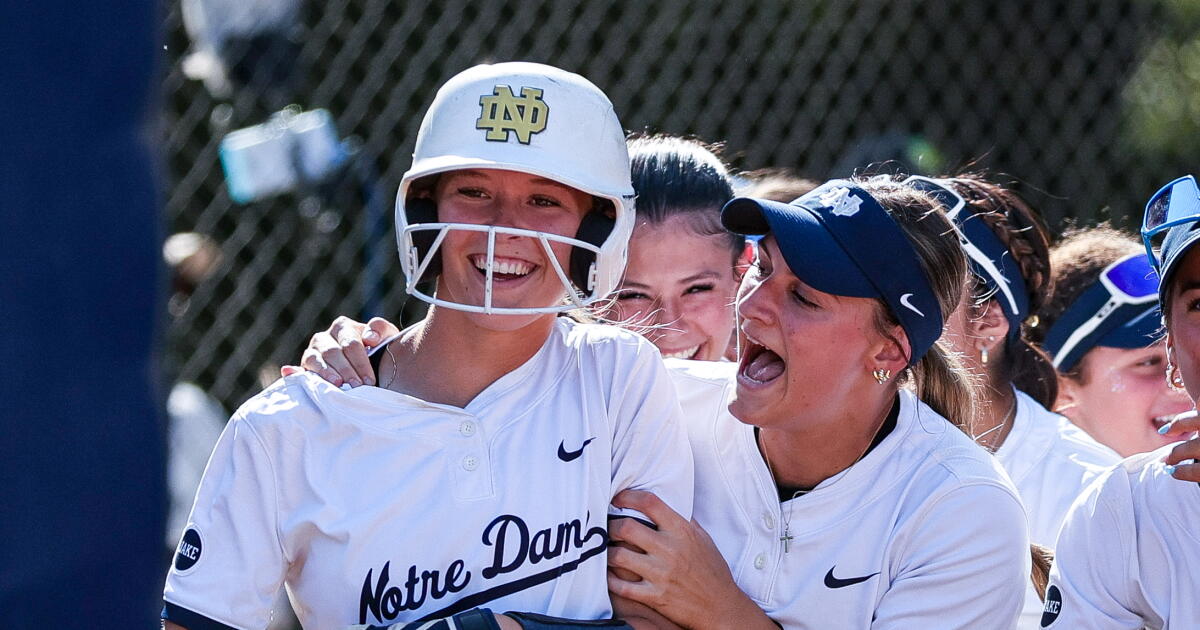
Notre Dame’s Brayden Borquez recovered from his spill at the Arcadia Invitational to win the 110 hurdles last week at the Mission League finals. JJ Harel, the defending state champion in the high jump, is also gearing up to score points in the long jump and triple jump.
The ninth in an occasional seriesof profiles on Southern California athletes who have flourished in their post-playing careers.
When the Dodgers drafted David Lesch in January 1980, they had visions of his fastball lighting up radar guns at Dodger Stadium.
He never made it that far.
Lesch never climbed above the lowest rung on the minor league ladder, where he pitched just 10 innings and gave up more runs, hits and walks than he got outs. Less than 18 months after he was drafted, Lesch, wracked by a rotator cuff injury, was released, his major league dream over before he was old enough to legally buy a beer.
“I went to Disney World after that,” he said.
But that wasn’t the only decision the Dodgers made that changed Lesch’s life. When he was drafted, the team gave him just a small bonus, but sweetened the deal by offering to pay for college if he ever went back to school. For the team, it seemed a safe bet.
“They probably have this algorithm saying ‘this is the No. 1 draft pick. If he doesn’t make it, he’s not going back to college. He’ll be assistant baseball coach of his high school or something,’” Lesch said.
Oops.
Lesch not only went back to college, but he also wound up getting three degrees, including a master’s and a PhD from Harvard. It was arguably the most important investment in humanity the Dodgers made since signing Jackie Robinson, because Lesch went on to become one of the world’s top experts on the Middle East, writing 18 books and more than 140 other publications while advising four presidents and a cadre of United Nations diplomats.
David Lesch interacts with students in his history class at Trinity University in San Antonio.
(Lucero Salinas / Trinity University)
“That was the best deal,” Lesch, 65, said by phone from San Antonio, where he is the Ewing Halsell Distinguished Professor of History at Trinity University.
“Without that I probably could not have said yes to Harvard because of the price. The Dodgers committed to paying.”
And by doing so, the Dodgers may have altered history just a bit.
Lesch’s regular meetings with Syrian president Bashar al-Assad, which ended with Lesch facilitating an important if temporary breakthrough in U.S.-Syrian relations? The diplomatic and conflict-resolution work in Syria and the wider U.N. initiatives on regional issues throughout the Middle East? The thousands of students Lesch inspired to go on to perform important diplomatic and public-service roles of their own?
None of that happens if Lesch’s shoulder had held on or if the Dodgers had reneged on their deal.
“It was very fortunate that he hurt his rotator cuff. Baseball’s loss is academia’s gain,” said Robert Freedman, a scholar and expert on Russian and Middle Eastern politics who taught Lesch at the University of Maryland Baltimore County.
“I’ve been teaching for, I guess, 60 years now and I can tell when a student can see a complex problem and can penetrate right to the heart of the problem very quickly. He was one of those students.”
Still, it took a slightly offhand comment from Freedman, who now teaches at Johns Hopkins, to launch Lesch on his post-baseball career.
“We were having lunch and he was looking for a project and I mentioned to him ‘you know, there hasn’t been a good American scholar doing work on Syria for many, many years,’” he said.
“That struck his interest.”
Playing a child’s game and managing life-and-death Middle East politics share very little in common. But Lesch made the transition seamlessly.
“It is like he’s several different people, or has been,” said journalist and author Catherine Nixon Cooke, whose book “Dodgers to Damascus: David Lesch’s Journey from Baseball to the Middle East” traces those parallel lives.
“I’m wondering if, in a sense, it all worked out the way it was supposed to,” Cooke continued. “Even though his dream was to be a major leaguer, David certainly has reinvented himself to this really remarkable man following a completely different path.
“It was the Dodgers who paid for him to go to Harvard and so it’s kind of a weird thing. Baseball took away his dream because he got hurt, but baseball also gave him his backup plan.”
Lesch was still a teenager when, 20 minutes into his first spring training camp in Vero Beach, Fla., Dodgers manager Tommy Lasorda plucked him off a minor league practice field to pitch batting practice in the main stadium.
It was the first time — and nearly the last — that Lesch faced big-league hitters. And it didn’t start well.
Batting practice pitchers throw from behind an L-shaped screen that protects them from comebackers and Lesch had never used one. That, combined with his understandable nervousness, caused him to short-arm his first fastball, which sailed at Cey’s head, sending him sprawling into the dirt.
“He got up and gave me this mean look,” Lesch said. “I remember it so vividly right now. I really thought I was going to be released that day.”
Instead, he gathered himself and finished the session, earning pats on the back from both Garvey and Lasorda. The incident, he said, has colored the rest of his life.
“I’ve met with presidents, prime ministers, been in war zones, all sorts of things,” Lesch said. “Anytime I say ‘well, you know, this should make me nervous,’ I think about that episode and the fact that I made it through and did OK.”
In high school, Lesch had focused on basketball and baseball. Academics? Not so much. So after spending his freshman year of college at Western Maryland College, he transferred to Central Arizona, a junior college, so he would be eligible for the January 1980 draft, allowing him to trade his books in for a baseball.
The so-called secondary draft, which was discontinued six years later, was specifically targeted toward winter high school graduates, junior college players, college dropouts and amateurs who had been previously drafted but did not sign. As a result, the bonuses teams offered winter draft picks were just a fraction of what players taken in the June draft received.
Lesch’s was so low, he can’t even remember what it was.
“I want to say $10,000 to $15,000,” he said. “No more than $20,000.”
When it became clear the Dodgers weren’t going to budge on the money, Lesch’s father, Warren, a family physician in suburban Baltimore, pulled out the Harford County phone book and looked up the number for Baltimore Orioles coach Cal Ripken Sr. Lesch played high school ball against Ripken’s son Cal Jr., who had been a second-round draft pick of the Orioles two years earlier. So his father thought the Ripkens might have some advice on what to ask of the Dodgers.
David Lesch, a former Dodgers draft pick, stands on the baseball diamond at Trinity University in San Antonio.
(Lucero Salinas / Trinity University)
“Ripken goes ‘does your son like school and is he smart?’” Lesch’s older brother Bob remembers. “So Ripken suggested if they offer you XYZ bonus money, take less and say ‘I’ll take this amount, but you have to cover education if he doesn’t make it.’”
Neither side thought that clause would ever be triggered; Lesch, a big, intimidating right-hander who threw bullets from behind Coke-bottle eyeglasses, wasn’t headed to a classroom, he was going to Dodger Stadium.
Until he wasn’t.
Lesch missed a couple of weeks with a back injury. By overcompensating for the sore back, he developed paralysis in the ulnar nerve in his right arm, limiting him to five appearances in his first minor league season.
He arrived healthy for his second spring in Vero Beach and threw three no-hit innings in his first outing against double-A and triple-A players, creating such a buzz that Ron Perranoski, the Dodgers’ major league pitching coach, showed up to watch his second game. By then the shoulder and back stiffness that shortened his first season had returned, and Lesch was rocked. Perranoski left early and unimpressed.
Lesch’s delivery had one major flaw: He threw directly overhand, as opposed to three-quarters or even sidearm, which can increase velocity but also places additional strain on the shoulder and elbow. As a result, his fastball could top out in the mid-90s one day, but when the stiffness and pain returned, it left him throwing in the low 80s.
The inconsistency continued to plague Lesch, and eventually the Dodgers decided they’d seen enough and released him. When he got back to Maryland, Lesch’s father sent him to see an orthopedic surgeon, who found the problem wasn’t in his back or elbow but rather the rotator cuff.
“We didn’t live in the era of pitch counts. So he just pitched,” said David Souter, a high school and college teammate who went on to develop big-league pitchers.
“He had the ability if he was developed and stayed healthy. I think he probably overthrew and tore his rotator cuff and nobody knew it.”
If Lesch had come along 10 years later, when rotator cuff surgeries were common, he might have returned to the mound. But in 1981, a rotator cuff injury was a death sentence for a pitcher.
“It’s just a crapshoot based on physiology,” Lesch said. “I probably was destined. Something would have happened.”
If he could do it over again, Lesch said he would change one thing.
“I’d throw sidearm,” he said. “It’s much less stress.”
He threw to big league hitters just one more time. Following the strike that interrupted the 1981 season, Ripken Sr. phoned Lesch back and asked him to throw batting practice at Memorial Stadium to help the Orioles prepare for the resumption of play. As a reward, the Orioles let Lesch hit — he never had batted in the minors — and he drove a pitch over the left-field wall, then dropped the bat and walked away.
He never stepped on a major league field again.
The Dodgers’ investment in Lesch’s education appeared manageable when he enrolled at a satellite campus of the University of Maryland, in part because his brother Bob was the school’s sports information director.
But it was 1981 and the Middle East was at the forefront of geopolitics. Lesch became convinced the Middle East would be central to world affairs for decades to come. Inspired and encouraged by Freedman and another professor, Lou Cantori, he applied to graduate school at Harvard, Georgetown, Johns Hopkins and the University of Chicago, knowing he couldn’t afford any of those schools on his own.
“I probably could not have said yes to Harvard when they accepted me because of the price,” Lesch said. “The Dodgers had committed to paying and whatever it was, it was a lot more collectively — my undergraduate MA and PhD — than I had gotten in the bonus.”
That wasn’t the only time his baseball background worked in his favor. Years after starting at Harvard, Lesch stumbled upon written evaluations of his application and learned that his grade-point average and other factors were similar to those of other applicants, but it was his athletic career that had swung enough votes in his favor to get him accepted.
“Failure is at the core of sports. And so you have to have this resiliency,” Lesch said. “What a lot of the top colleges have found is that these young kids out of high school who somehow get a 4.6 GPA, they come in — and I’ve seen this as a professor — they get their first C and they’re distraught.
“Athletes stick with it. They say ‘how can I turn this around? How can I get better?’ Admissions departments across the board have looked at athletes much differently.”
The struggles Lesch experienced on the diamond did not follow him into academia. Yet becoming an expert on the Middle East definitely was a backup plan.
“His first passion was clearly baseball and basketball,” said Souter, the former teammate. “Every kid dreamed … that.”
If the shoulder injury wasn’t a strong enough sign that that dream was over, the fire that destroyed Lesch’s childhood home a few years later was. The flames, which severely burned both his parents, also erased his baseball career, consuming all the photos and memorabilia he had collected, save for the championship ring from his one minor league season, which he found buried in the embers. It was the only thing to survive the blaze intact.
David Lesch’s championship ring from his one minor league season, the only surviving keepsake of his professional career after a his family’s home was destroyed in a fire.
(Courtesy of David Lesch)
A post-graduate trip to Syria, the first of more than 30 visits he has made to the country, sealed the deal a few years later. The love he once had for baseball he now felt for a strange and mysterious place that was as old as history itself yet as secretive as the classical ciphers.
Soon Lesch was helping arrange high-level meetings between Syrian president Hafez al-Assad and President George H.W. Bush, a baseball fan who seemed as interested in Lesch’s Dodgers days as his Middle Eastern expertise. But his big break came during the first presidential term of Bush’s son George W. Bush, when Bashar al-Assad, who succeeded his father as Syria’s president, welcomed Lesch for the first of many interviews that informed his book, “The New Lion of Damascus: Bashar al-Assad and Modern Syria.”
“His forte is listening,” Cooke, the biographer, said of Lesch, whose polite, unassuming manner reflects an adult life spent mostly in San Antonio. “When he goes in to try to mediate something, he is a big listener. There is a side of David that doesn’t talk much. But he’s listening.”
The book humanized al-Assad and opened, for a time, the possibility of normalized relations between Syria and the West, with Lesch serving as an unofficial liaison between Damascus and Washington, as well as other Western capitals.
“He’s absolutely a critical player in what we would call two-track diplomacy,” Freedman said. “If the government wants to reach out but doesn’t want to take the political consequences, they send somebody to sound out the situation.
“It’s absolutely critical that we have people like that who can speak the language and understand the overall context, which sadly is lacking in the current administration.”
David Lesch teaches students in his history class at Trinity University in San Antonio.
(Lucero Salinas / Trinity University)
But that opening closed as quickly as it opened. Lesch’s close contacts with al-Assad raised suspicions among some in Syria, and Lesch was poisoned twice. His relationship with al-Assad was severed completely shortly afterward when he criticized al-Assad for failing to implement promised reforms and becoming a “bloodthirsty tyrant.” The Syrian civil war took nearly 700,000 lives and displace another 6.7 million people before al-Assad and his family fled into exile in Russia in 2024.
“Many governments think that they can reduce war to a calculation,” Lesch said. “What we cannot measure accurately or fully appreciate is the human element. We cannot assess a people’s sense of grievance, passion, revenge, ideological commitment and historical circumstances that shaped the nature of their response and staying power.
“This is where academics can make a contribution to policy, giving it the depth and insight gleaned from years of study and learning the culture and the people.”
Baseball’s loss wasn’t just academia’s gain. It may prove to be humanity’s as well.
“I don’t really have any regrets,” Lesch said. “My career turned out great. I could not think of doing anything else at this point and, in fact, in a way I’m glad [baseball] didn’t work out.”
On the soccer pitch, Cobi Jones was defined by blinding speed, a tireless work rate and an exceptional soccer IQ. But that’s not what stood out most when you watched him play.
It was the shoulder-length dreadlocks that made him instantly recognizable whether he was playing for the Galaxy or the national team.
So those became the most important — and more difficult — things to replicate in the nine-foot-tall bronze sculpture of Jones that the Galaxy will unveil Sunday before the team’s MLS matinee with Real Salt Lake.
“Essentially you build it out of clay and then you take it to a foundry and you pour bronze over the clay. That turns it into a statue,” said Galaxy president Tom Braun, who oversaw the process. “But you can’t do that with the hair. You have to build them individually and then solder them in.”
That meant artists Oscar Leon and Omri Amrany had to painstakingly join approximately 100 separate dreadlocks into the sculpture. The result, said Braun, one of two people other than the artists to have seen the finished statue, is remarkable.
“This is a once-in-a-lifetime piece that is going to show him, and everything about him, in a really iconic way,” Braun said. “But I think when it comes to the hair specifically, they did a really nice job.”
The statue will join liked-sized tributes to David Beckham and Landon Donovan in Legends Plaza, which fronts the main entrance at Dignity Health Sports Park. Those sculptures, also done in Amrany’s studio, were unveiled in 2019 and 2021 respectively.
For Jones, the tribute is humbling.
“Just to be in the plaza itself and have a statue, that’s the incredible part for me,” he said. “When I’m long gone that statue will be there. My grandkids, hopefully, will still be able to see it.”
Yet having himself rendered in bronze was the furthest thing from Jones’ mind when he started playing soccer as a 5-year-old in Westlake Village.
“I don’t think that crossed anyone’s mind,” said Jones, 55. “It was all about just playing and having fun and trying to be the best player that I could possibly be. I was more focused on how do I beat the opponent in front of me than thinking about 20 years, 30 years down the road.”
”It makes me truly think about the past a bit more,” he continued. “All the various things that had to happen — that did happen — that came to this moment. It makes you kind of reminisce [on] the various histories and all the people that helped you.”
The statue is as much a monument to Jones’ self-confidence and refusal to quit as it is to his stellar playing career. Unable to land a scholarship coming out of high school, Jones used his academic success to enroll at UCLA, where he played as a walk-on for a strong Bruin team coached by Sigi Schmid. He wound up leading UCLA to its second NCAA championship while earning All-American honors — as well as a scholarship and a place in the school’s Hall of Fame.
Galaxy star Cobi Jones heads the ball above the Chicago Fire’s Carlos Bocanegra on Oct. 17, 2001.
(Fred Jewell / Associated Press)
He played the first of a U.S.-record 164 games with the national team in 1992 and played in the first of three World Cups in 1994 before starting a professional career that would take him to teams in three countries. He spent the majority of that time with the Galaxy, appearing in a franchise-record 306 games while making five All-Star teams and winning two MLS Cups, two Supporters’ Shields, two U.S. Open Cups and a CONCACAF title. He also served the team as an assistant coach and interim manager.
“It’s unequivocal that Cobi should have gotten a statue,” Braun said. “No one is doubting the contribution that Cobi Jones has had on the Galaxy and U.S. Soccer. So I think was an easy one for us to decide on and it’s probably long overdue.”
The plaza is nowhere near full, nor has the list of Galaxy players and coaches who deserve statues been exhausted, so Braun said there likely will be more sculptures added in the near future.
Jones had substantial input into the design of his statue, choosing the pose and offering other guidance. But it was important the statue show motion, as the Beckham and Donovan sculptures do. And the most obvious way to do that was to have Jones’ ample dreadlocks flowing behind him.
It might have been the most obvious way, but it certainly wasn’t the easiest one.
“We asked [Amrany] if he ever sculpted hair like this and he said no,” Braun said.
And he probably won’t do it again either — at least not for the Galaxy.
“They got to a point where they started to do it and we wanted some adjustments,” Braun recalled. “We wanted the hair to flow a different way and we thought maybe the hair was too long so we had them shorten it and move the hair a certain way that makes it look like it’s in motion.”
Although Jones said he wasn’t allowed to see the finished product so he has little idea how he has been rendered for history. He’ll find out Sunday.
“They took me out of the statue process as they started getting to the face and the head and hair and all that so that I could still have some element of surprise when it’s unveiled,” he said.
It figures to be a hair-raising moment.
⚽ You have read the latest installment of On Soccer with Kevin Baxter. The weekly column takes you behind the scenes and shines a spotlight on unique stories. Listen to Baxter on this week’s episode of the “Corner of the Galaxy” podcast.
Jordan Ayala, a standout sophomore pitcher and hitter at Norco High, is the latest baseball player to reclassify and become a member of the class of 2027 next season, he confirmed on Tuesday during the first round of the Boras Classic.
Another player who has reclassified from the same tournament is Huntington Beach pitcher Jared Grindlinger, who will join the class of 2026, making himself available for this summer’s MLB amateur draft.
All this is happening with uncertainty about a possible MLB lockout when the current collective bargaining agreement runs out and not knowing what changes might happen to the draft.
Ayala, 16, said he’s moving his graduation date up to preserve his arm and take a look at becoming a professional after high school.
Huntington Beach coach Benji Medure said reclassifying is not for everyone.
“It takes a special person,” he said. “You’re putting yourself out there.”
Don’t be surprised to see more top players joining the reclassification movement next year.
This is a daily look at the positive happenings in high school sports. To submit any news, please email eric.sondheimer@latimes.com.
Call them the Geek Squad, the Surfer Dudes or the Genius Squad from Redondo Union High.
In an unprecedented achievement, three starters for the Sea Hawks’ 13-2 volleyball team — Tommy Spalding, Vaughan Flaherty and Carter Mirabal — are headed to MIT this fall.
Their final assignment in Advanced Placement Physics 2 should be figuring out the astronomical odds of how three best friends from the same volleyball team could be admitted to one of the most prestigious universities in the world.
“There’s no way,” was the reaction of Mirabal’s father when he heard the news.
“It’s crazy,” coach Kevin Norman said.
Steve Jobs and Steve Wozniak founded Apple hanging out in a garage. Who knows what inventions, ideas or technological feats will be imagined in gyms or on surfboards as these three Southern California teenagers unleash their brain power and love for having fun on the East Coast.
“Probably twice a week, I’ll call him, ‘Yo, I have this idea,’” Spalding said of his conversations with Mirabal. “Ninety-nine percent of the time, we usually don’t do anything about it. But it’s throwing ideas out there and hopefully one is going to stick.”
One Spalding idea: “When I was driving home from Joshua Tree, I was stuck in traffic. I was like, ‘Dude, what if we made a Google Maps type of app that utilized AI and had a camera in your car that analyzed the road, tells you what lane to be in to go the fastest and also be able to look at the traffic lights and tell you if this left arrow is red, then go straight, turn left at the next street.”
Elon Musk, beware.
MIT-bound Redondo Union volleyball players Tommy Spalding, left, Vaughan Flaherty and Carter Mirabal.
(Eric Sondheimer / Los Angeles Times)
They’ve formed a band, “Ratiohead,” a parody of the English rock band Radiohead, with lyrics from math. They’re preparing for the battle of the bands. Spalding is the vocalist, Maribal is on keyboard and Flaherty, the 6-foot-5 redhead, plays guitar.
“We’re looking for a drummer,” Spalding said.
Spalding has a 4.65 GPA and 1490 SAT score. Flaherty is at 4.4 and 1560. Mirabal is at 4.4 and 1510. Spalding said his hardest class was AP European history. Mirabal chose honors chemistry. Each received one B in four years of high school. Flaherty has received multiple Bs and said, “I think it goes to show you that you don’t have to be perfect to get into these schools if you have the potential and you’re willing to work hard and be a good fit.”
Flaherty is so witty he might be able to do a comedy routine, with Spalding serving as his wing man.
“Someone might have messed up, but I’m not going to tell them,” Flaherty said of the threesome earning a spot in the MIT class of 2030.
“Maybe it was chemistry,” Spalding quipped.
If they can make a movie, “The Social Network,” about the invention of Facebook. and a TV series, “Big Bang Theory,” about smart geeks, just wait until someone figures out the entertainment value following around this threesome.
Coming Wednesday in L.A. Times is one of my favorite stories. How 3 Redondo Union volleyball players were accepted to . . . MIT. Yes, it’s hard to believe and the players are talented in many things. Here’s Tommy Spalding and Carter Miribal, part of the new band, “Ratiohead.” pic.twitter.com/MBWvPXvIxF
Spalding has all the attributes of a future entrepreneur and loves tinkering with cars. He sent a two-minute video to MIT as part of his application process that showed himself and his father, Michael, turning a 2002 yellow school bus into an RV.
Mirabal has his own YouTube channel, “Carter’s Stuff Review.” He wants to be a mechanical engineer and explore the business side. Flaherty would be happy sending rockets and satellites into space while living near the beach.
All three hang out at the beach, either playing volleyball or surfing. Spalding brought his grandfather’s ping-pong table to the volleyball room at school for more fun. Cornhole is another game they play.
None set out at the beginning of high school seeking a path that leads to MIT, which accepts only about five students for every 100 applicants. “We weren’t taking the classes because we want to go to MIT,” Spalding said. “We just enjoy the subjects.”
There are smart genes in their families. Spalding’s parents are both educators, one an AP physics teacher at Peninsula High, the other a middle school vice principal. Mirabal’s father is an accountant. Flaherty’s father owns two Handel’s ice cream stores (everyone wants to hang out with Flaherty on a hot day).
Each has a story to tell about how they learned of being accepted to MIT.
Mirabal was playing volleyball in his backyard on Dec. 15 with teammates. He was going to wait until his friends left to check the email for fear of rejection. Instead, with them huddled around, he opened the email and everyone started screaming, “Yo!”
Spalding was with Mirabal and headed home to share the moment with his parents when he received a text from the MIT volleyball coach walking out the door congratulating him. “Welcome to the MIT family,” it read.
Flaherty had to wait until March 14 — Pi Day — to see if he was going to make it three for three.
He was driving home from Joshua Tree national park with his girlfriend and Tommy’s girlfriend in the car. The traffic was so bad it came to a standstill so he checked his cellphone.
“I opened it up. I saw the confetti but didn’t realize what it meant until I got a couple lines down,” he said. “The first reaction was disbelief because I thought there was no chance after these two got in.”
In fact, Flaherty said the person doing the MIT interview admitted later, “I’m not going to lie. I thought that was the killer for your application.”
They’ll be playing NCAA Division III volleyball. Mirabal and Spalding will be roommates. “Vaughan will room with someone else because he said he’d be too comfortable with us and be a bad roommate,” Spalding said.
So are they really OK leaving Southern California?
“I wouldn’t say OK with it,” Spalding said.
“It is a sacrifice,” Mirabal said.
Just know the beach will always draw them back to sunny Southern California as the three sat in the Redondo Union volleyball locker room wearing shorts, sandals and their MIT shirts.
“As much as we study, I feel at the end of the day we want to have fun,” Spalding said.
They’re not expecting to re-create “Animal House” at MIT, but let’s see what happens when three surfer dudes from the same high school in California show up with open minds and lots of ideas to explore.
When you’re already an All-American in high school and several new players show up perhaps as talented as you, the challenge is developing chemistry and seeing who’s going to remain humble and unselfish for the good of the team.
Maxi Adams, Sierra Canyon’s 6-foot-8 senior, was the big man on campus until another All-American, Brandon McCoy, showed up this season, along with Brannon Martinsen, a former Trinity League player of the year. Not only did Adams welcome them, he adjusted his game and changed his role.
“Anything for the win,” he said. “Trust the coach’s game plan.”
Maxi Adams of Sierra Canyon rises to deliver a dunk against Harvard-Westlake in Open Division championship game.
(Steve Galluzzo)
Adams continued to contribute as a scorer, rebounder and defender, and when the games got much more important in the playoffs, he asserted himself and delivered, such as a 26-point performance in the Southern Section Open Division final.
The North Carolina-bound Adams has been selected The Times’ boys basketball player of the year for the 2025-26 season.
Sierra Canyon went 30-1 and won the Southern Section Open Division championship and state Open Division title even though Adams was injured in the first quarter of the state final. He averaged 16 points and 7.2 rebounds with 10 double doubles.
“He’s a great player,” said Harvard-Westlake coach David Rebibo, whose team lost three times to Sierra Canyon.
Adams’ development of his skills and maturity over his four years of high school, first at Narbonne, then Gardena Serra and his final two seasons at Sierra Canyon, have been impressive. He went from being uncomfortable as a freshman to being versatile, confident and a leader as a senior.
His willingness to embrace the changes at Sierra Canyon this season were key.
“It wasn’t hard,” he said. “We played well together and spent a lot of time together. At the next level, you’re going to have to be able to play with great players. I just carry that forward.”
His older brother, Marcus, was a standout at Narbonne and played this past season at Arizona State after previously being at Cal State Northridge. For Maxi to handle things this season with his brother far away showed he’s ready to embark on his own journey in college basketball.
As for his mentality, Adams said, “We come to work every single time. We put in the time.”
Back in 2022 when the Adams brothers played together at Narbonne. Marcus and Maxi. They’ve become pretty good basketball players, Marcus at Arizona State, Maxi at Sierra Canyon then on to North Carolina. pic.twitter.com/l6NhXwKIPL