Henry

‘Finest medieval ruins’ in UK with links to princes in the tower and Henry VIII

Ludlow is a beautiful market town in Shropshire, which has everything you could want, from regular food festivals to historic sites and stunning countryside walks

Those seeking a peaceful escape from Britain’s bustling cities should consider Ludlow, a picturesque market town in Shropshire that offers everything from regular food festivals to historic landmarks and breathtaking countryside walks. Whilst sometimes overshadowed by neighbouring Shrewsbury and Hereford, Ludlow remains an essential destination for anyone visiting the region.

From its medieval castle and museums to restaurants housed in ancient halls and pubs within 16th-century buildings, Ludlow’s rich heritage is proudly showcased throughout. The castle dates back to the Norman Conquest and ranks among the “finest medieval ruins” in Britain, according to the Ludlow Castle website.

Given its location near Wales, Ludlow Castle served a crucial function during the English-Welsh conflicts. In 1223, King Henry III and Welsh prince Llywelyn ap Iorwerth held peace negotiations at the fortress.

Throughout history, Ludlow Castle has housed many prominent personalities, including Roger Mortimer, who joined forces with Queen Isabella to depose her husband, Edward II, in 1327.

During the 15th century, Edward IV frequently visited Ludlow and established a governing council there to oversee his Welsh territories.

Edward IV also dispatched his sons, the future King Edward V and his brother Prince Richard, to reside at the castle. The brothers would subsequently become infamous as the Princes in the Tower, after they vanished from the Tower of London in 1483, reports the Express.

Ludlow Castle also holds profound historical significance as the place where Prince Arthur died in 1502, a tragedy that ultimately paved the way for his younger brother to ascend the throne as King Henry VIII.

Since the Civil War, Ludlow Castle has gradually crumbled into ruins, though much of its impressive exterior remains intact, making it well worth exploring.

Another must-see attraction is St Laurence’s Church, which, like the castle, traces its origins back to the Norman invasion. As Shropshire’s largest parish church, St Laurence’s has earned the nickname “Cathedral of the Marches”.

Those seeking outdoor relaxation can visit Ludlow Millennium Green or enjoy a walk along the Mortimer Trail, a long-distance footpath stretching from Ludlow to Kington on the Herefordshire-Wales border.

No trip to Ludlow would be complete without stopping at the renowned Ludlow Farm Shop, which promises a “one-of-a-kind” shopping experience, according to the town’s official website.

The town regularly plays host to Antique, Local Produce and Craft Markets. It’s worth checking the Ludlow Market website before your visit if you fancy attending any of these events.

As the festive season approaches, families will be delighted to learn that Santa will be taking up residence at Ludlow Castle from 6 to 23 December, giving children the chance to enjoy a magical encounter with Father Christmas in the castle’s stunning grotto.

Source link

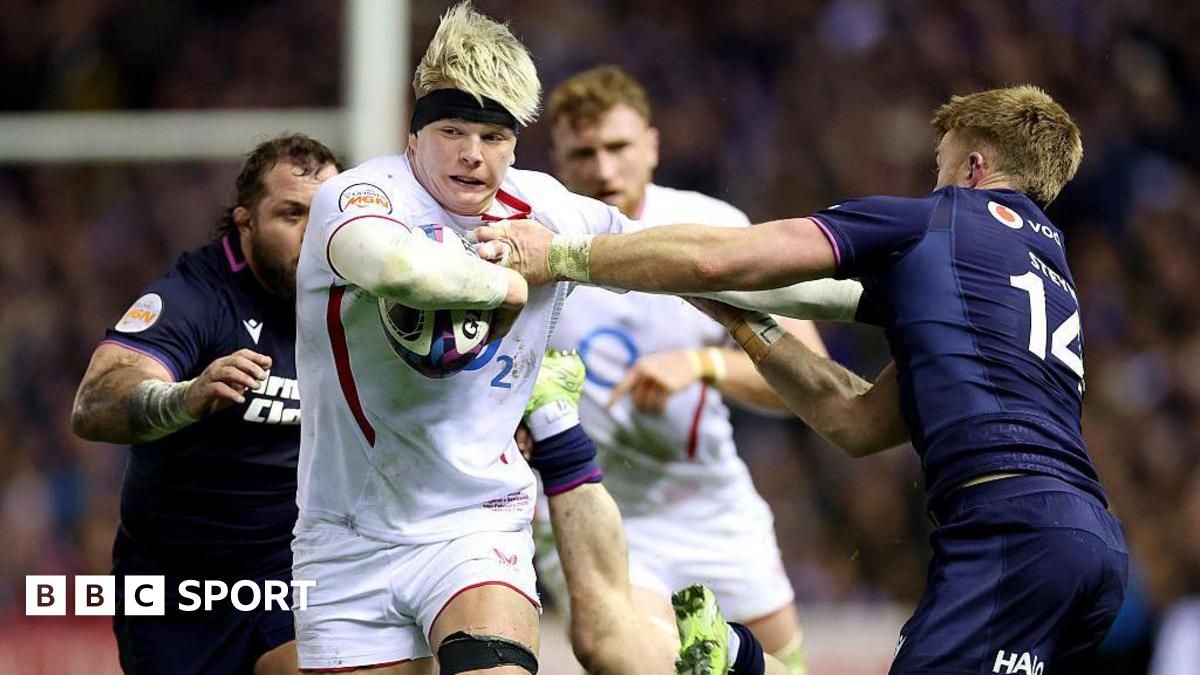
England 25-7 Australia: Henry Pollock & Ben Earl shine at Twickenham

Tries from warp-speed back-row pair Ben Earl and Henry Pollock helped England see off Australia as their power-packed bench ultimately swung an untidy opening autumn Test.

After the Wallabies edged a 10-try classic last year, England took revenge with a performance heavy on perspiration, if a little short on cohesion, at Allianz Stadium Twickenham.

Australia trailed by only three points at the break after wing Harry Potter’s breakaway try had given them a lifeline back into the contest.

But replacement Pollock scampered in just before the hour to restore England’s cushion, before a snipe from Alex Mitchell and a rolling maul steered over the line by Luke Cowan-Dickie ensured they could see out the final stages in comfort.

England have won eight successive Tests, a run stretching back to their defeat in the opening game of this year’s Six Nations in Ireland.

Source link

Mater Dei rallies from 21 points down to upset St. John Bosco

Mater Dei trailed 24-3. The Trinity League title appeared destined to belong to St. John Bosco, another win to cap an undefeated for the consensus No. 1 team in the nation.

Until Chris Henry Jr. emerged for two touchdowns and 214 yards on five receptions.

“He could be a track star,” said Mater Dei coach Raul Lara, referencing Henry’s 70-yard touchdown catch near the end of the second quarter.

Until Kayden Dixon-Wyatt took over alongside his teammate — both Ohio State commits — and turned on the burners for three second-half scores.

“I wish I could be the quarterback,” Lara joked about his senior wide receivers.

Testing the wide receiver corps of Mater Dei — who outpowered the Braves’ impressive trio of Division I-committed receivers — left St. John Bosco hapless on Friday night in Bellflower. Mater Dei (7-2, 4-1) finished on a 33-7 run, Ryan Hopkins tossing five touchdowns in that span to help the Monarchs defeat St. John Bosco 36-31 in comeback fashion.

Mater Dei High's CJ Lavender Jr. leaps high to make an interception during the game against St. John Bosco on Friday night.

Mater Dei High’s CJ Lavender Jr. leaps high to make an interception during the game against St. John Bosco on Friday night.

(Craig Weston)

Hopkins finished 13-of-21 passing for 295 yards and the five touchdowns.

All of the doubts over the Monarchs’ regular-season campaign could be close to washed away as the second-half domination confirmed another year when Mater Dei at least owns a share of the Trinity League title.

Since Santa Margarita (7-3, 4-1) also won Friday — defeating JSerra 41-14 — the Eagles, along with Mater Dei and St. John Bosco (9-1, 4-1) earned a share of the Trinity League crown.

Defensive stands set up plays such as Henry’s 70-yard touchdown grab to cut the Braves’ lead to seven with 4:12 remaining in the third quarter. Mater Dei defensive back CJ Lavender Jr. forced and recovered a fumble in the first quarter to set up the Monarchs’ first points: a field goal.

Lavender then intercepted St. John Bosco sophomore quarterback Koa Malau’ulu twice more.

One pick created a silver-platter touchdown for Dixon-Wyatt, who finished with four receptions for 46 yards and three touchdowns, while the other turnover allowed Mater Dei to seal the game on fourth and 10 from its own 10-yard line.

“Anything he threw, I was going to go get it,” said Lavender, who now has a team-high seven interceptions on the season.

Mater Dei receiver Chris Henry Jr. hauls in a pass over his shoulder ahead of two St. John Bosco defenders on Friday night.

Mater Dei receiver Chris Henry Jr. hauls in a pass over his shoulder ahead of two St. John Bosco defenders on Friday night.

(Craig Weston)

Before the final interception — which came with 1:34 remaining in the game — St. John Bosco was driving. An unsportsmanlike penalty even provided the Braves at first and inches from the goal line.

But a bad snap to Malau’ulu pushed the Braves backward to the seven-yard line. A run for a loss brought St. John Bosco to the 10-yard line that then led to an interception.

Henry, who hadn’t played since Oct. 10 against Orange Lutheran, said he was itching to get back out on the field to play St. John Bosco.

“It was really difficult,” Henry said of his time off the field. “But I was ready for a game like this.”

Henry will have plenty more opportunities upcoming in the CIF Southern Section Division 1 playoffs, starting next week.

The trio of Trinity League teams likely will see Sierra Canyon (10-0) — which finished its Mission League-winning campaign with a 52-3 victory over Loyola — among the teams they could face off against in the playoffs.

Source link

Former St. Francis guard Andre Henry ready for sixth year at UC Irvine

With a sixth year of basketball eligibility at UC Irvine, former St. Francis High guard Andre Henry has become so familiar with coach Russell Turner that both consider each other family.

Henry, who was injured last season after nine games, is back healthy, and Turner thinks he’s ready to be a standout on offense and defense this season.

He calls Henry one of the finest recruits he ever signed out of St. Francis in 2020. In 2023-24, he was the Big West Conference defensive player of the year.

“Andre was probably the top-ranked recruit we ever got,” said Turner, in his 16th season. “I watched him elevate his team at St. Francis and he’s still that type of personality. I’m thrilled where is right now and he’s going to have a great season on both sides of the ball. There’s not a limit he can accomplish.”

  • Share via

UC Irvine men’s basketball coach talks about how Andre Henry has become a standout on the court for the Anteaters.

Turner said he’s grateful for Henry’s loyalty and commitment to the UC Irvine basketball program.

“Andre has become family with me and my staff,” he said. “He’s made great sacrifices to remain in our program. I think he sees we’re committed to him and I certainly see how committed he and his family have been to us. Hopefully, we can write the end to a great story in his sixth year.”

This is a daily look at the positive happenings in high school sports. To submit any news, please email [email protected].

Source link

World Rowing Championships: Lauren Henry wins single sculls silver

Lauren Henry said she was “sad” to miss out on a first ever women’s single sculls gold for Great Britain after being edged out by Ireland’s Fiona Murtagh in a photo finish on the final day of the World Rowing Championships in Shanghai.

Henry’s silver medal was Britain’s eighth of the championships, the most of any competing nation, with a total of three golds, four silver and one bronze.

Only the Netherlands finished with more gold medals – with four.

Henry, 23, had won a medal in every international race she competed in this year, while 30-year-old Murtagh had never before won a major regatta.

But after opening a big lead with a blistering start, Murtagh hung on as Henry reeled her in in the final 500m, with the Briton eventually losing by just 0.03 seconds.

“Obviously, I’m really pleased to come away with a medal, but it is disappointing,” said Henry.

“I said I was coming here for the gold and it’s sad to miss out by less than a centimetre.

“I’m going to use this during the winter and come back better and stronger next season. Hopefully I can win that elusive women’s single sculling gold for Great Britain at a World Championships.”

Source link

Henry Jaglom dead: Indie director shunned big studios

Henry Jaglom, the uncompromising indie filmmaker who eschewed big-budget operations in order to preserve his creative vision, died Monday night. He was 87.

Jaglom died at his Santa Monica home surrounded by his family, his daughter Sabrina Jaglom said. The writer-director, whose filmography includes “Last Summer in the Hamptons” and “Eating,” was known for his intimate, naturalistic style and foregrounding of women’s stories in his work.

Sabrina, also a director, said in a statement that her father was “larger-than-life, and made the world a lot more colorful for those of us lucky enough to know him.”

“But, most of all, he was the most loving and supportive Dad. He will be greatly missed, but impossible to forget,” she said Thursday.

From his earliest directing gigs, Jaglom was committed to creating autobiographically inspired and emotionally resonant stories with as little studio intervention as possible. He kept costs low, cast his friends and family in his movies and pursued an improvisational production style that preceded the early-2000s film genre mumblecore.

“My movies talk about the emotional side of life,” Jaglom told The Times in 2009.

“I just try to have people do what we do, which is sit around, talk, deal with the emotions of life,” he said. “It can be touching, sad, happy, but it allows people to go through some of what they go through in life and not feel isolated and lonely.”

Jaglom’s 1985 film, “Always,” in which he co-starred with his ex-wife Patrice Townsend, was inspired by the disintegration of the couple’s own relationship. Jaglom and Townsend divorced two years before the film’s release.

Nearly a decade later, conversations Jaglom had with his second wife, actor Victoria Foyt, about parenthood were distilled into 1994’s “Babyfever,” which the couple wrote, directed and Foyt starred in.

Former Times staff writer Chris Willman called the comedy-drama “remarkable in its comprehensive documentary aspects.”

“Jaglom is, as always, big on verite and improvisation; with such a large cast milling about the airy, oceanside house, he’s managed to cover just about every conceivable baby base, with sentiments ranging from banal self-interest to self-conscious belly laughs, and a lot of very real, undeniably affecting poignancy in-between,” Willman wrote in his review of the film.

“Babyfever” was lauded for sincerely engaging with topics affecting women and for starring a mostly female cast — both of which were trademarks for Jaglom, who went on to form a women’s arm to HHH Rainbow Productions, his production company with producers Howard Zucker and Henry Lange, which for many years was located on the Sunset Strip in West Hollywood.

“Women are the most disenfranchised people in this business,” he told The Times in 1987. “They still have to play mostly by men’s rules. And as I’ve been successfully making million-dollar movies for some time now I thought: ‘Why can’t they do it too?’”

Jaglom was a mentee and close confidant of acclaimed filmmaker and actor Orson Welles, whose farewell performance came in Jaglom’s 1987 comedy “Someone to Love,” which screened at the Cannes Film Festival.

“He plays himself, shedding even the persona he adopted for TV talk shows,” Jaglom told The Times of Welles’ acting style in the film. “People will finally get to see him the way I knew him; it’s almost as if he was sitting there having lunch with you.”

Peter Biskind compiled conversations between the longtime friends for his popular 2013 book, “My Lunches With Orson: Conversations Between Henry Jaglom and Orson Welles.”

Several people approached Jaglom about publishing the tapes before Biskind came knocking, the director told The Times in 2013. But Biskind was the first one he took seriously.

“I said, ‘You want to put yourself through all this?’” Jaglom said. “And he said, ‘Yeah, on the one condition that you don’t censor me.’”

Jaglom, born in London in 1938, was the child of Jewish parents who immigrated to England to escape Nazi persecution. Later, Jaglom’s family moved to New York, where Jaglom spent his formative years and returned after attending the University of Pennsylvania.

In New York, Jaglom trained with Lee Strasberg at the Actors Studio, acting in and directing off-Broadway theater and cabaret before moving to Hollywood in the late 1960s. The multihyphenate went on to make his directorial debut in 1971 with “A Safe Place,” which starred Wells and Jack Nicholson.

After finding commercial success with his third film, “Sitting Ducks” (1980), Jaglom told The Times in 1987 that he was pitched by several big-time studio heads who said, “‘When you’re ready to make a serious movie, a big movie, come and see me.’”

“I said: ‘If you love my films why would you want me to come and make one of your big ones?’” Jaglom said, adding that with a large studio at the helm, directors run the risk of ceding the “final cut.”

“As far as I’m concerned all the big stars and fancy limos and fine dressing rooms aren’t worth a thing if you don’t control your film creatively,” he said.

For years, Henry ate at the same cafe on Santa Monica’s Montana Avenue. He was always delighted when fans and aspiring filmmakers stopped to say hello.

In addition to Sabrina, Jaglom is survived by a son, Simon Jaglom, and ex-wives Townsend and Foyt, Sabrina and Simon’s mother.

Source link

Mater Dei gets bounce-back win over Bishop Gorman in Vegas

In a town where you can make your own luck or can sink further into an abyss, Mater Dei High dug deep, wiped away memories from a loss last week and answered a gut-check call to come away with a 27-24 road victory over Bishop Gorman on Friday night. Coach Raul Lara brought up the word “resurrection” during a postgame huddle with his players.

The win surely resurrects Mater Dei’s season. It was doom and gloom one week ago when the Monarchs fell behind 28-0 to Corona Centennial, then rallied but lost 43-36. Seven turnovers left everyone wondering if the Monarchs were no longer a top team after being ranked No. 1 in the nation by several organizations.

Friday’s performance against an unbeaten Bishop Gorman team saw Mater Dei turn to two of its preseason All-Americans on offense, tight end Mark Bowman and receiver Chris Henry Jr. Bowman had touchdown catches of 29 and 36 yards. Henry had two touchdown catches, including the game-winner with 6:06 left from 37 yards.

Quarterback Ryan Hopkins, bouncing back from turnovers last week, kept firing away against a strong Bishop Gorman defense, getting the ball to his outstanding receivers and not letting penalties or an interception reduce his confidence.

“It’s facing adversity,” Hopkins said. “Last week was a tough one. This is a step forward. It’s next-play mentality.”

There were ominous black clouds passing above that let out a dose of rain more than three hours before kickoff, but the weather cleared and the Monarchs didn’t have to put up with the downpour and lightning delay that St. John Bosco endued in 2014 during a 34-31 loss to Bishop Gorman.

It was an entertaining first half that ended in a 14-14 tie. Both teams missed scoring opportunities. Mater Dei blocked a Bishop Gorman field-goal attempt that was returned by Aaryan Washington to the 13-yard line, then had to settle for a 30-yard field goal by Jerry Shifman. Bishop Gorman forced a fumble by Hopkins, and Prince Williams returned it for a touchdown that was nullified by defensive holding.

Soon Hopkins connected with Henry on a 54-yard pass to the one-yard line in the final seconds. But a Mater Dei illegal procedure penalty and little time left the Monarchs to settle for a 23-yard field goal to tie the score.

Mater Dei (3-1) had zero penalties in the first quarter, a major improvement from previous games, but the Monarchs went back to making mistakes after that. There was an offsides on a fourth-and-short play. There was a five-yard penalty before kicking off the ball. Through all that, the Monarchs persevered.

“Great game,” Lara said. “Two great teams and great programs. We knew it was going to be a fight. I’m proud of my guys.”

Bishop Gorman quarterback Maika Eugenio was effective moving in the pocket to get the ball to his top receivers and passed for two touchdowns. Massiah Ming had receptions of 62 and 38 yards.

Mater Dei hasn’t lost more than one game in season since 2014, so the pressure was on.

“It’s finding that chemistry and continuing to grind,” Lara said. “I think all the games are going to be like this. Everyone is gunning for us.”

Bowman, the USC commit who reclassified from junior to senior to begin his college career next year, finally got the opportunity to show off his receiving skills. He came in with only seven catches in three games but was left open several times, and Hopkins made Bishop Gorman pay. Hopkins said Bowman has been making an equal impact with his blocking.

“He’s putting everything on the line every play,” Hopkins said.

One of the stars on defense for Mater Dei was linebacker Ezekiel Su’a. He had a sack and also deflected one of Eugenio’s passes in a key second-half play.

The Monarchs are off next week before opening Trinity League play against Orange Lutheran on Oct. 3. Bishop Gorman comes to Southern California next Saturday for another Trinity League matchup against Santa Margarita at Trabuco Hills.

This win means the mojo is back for the Monarchs. This was an improved performance that needs to be sustained for their regular-season finale against St. John Bosco on Halloween and possible matchup against unbeaten Sierra Canyon or a rematch with Centennial in the Southern Section Division 1 playoffs.


Source link

British and Irish Lions 2025: Henry Pollock and the rise of the light-loose forward

Taking a longer view all those figures are significantly higher than they were in preceding decades.

Opta’s analysis of Rugby World Cup tournaments, external shows an average ball-in-play time of less than 32 minutes in 2003, and just over 28 minutes at the inaugural 1987 edition.

Phil Dowson, Pollock’s director of rugby at Northampton, was a back row himself, with a 16-year top-flight career and seven England caps to his name before he moved into coaching.

He cites former Wallabies David Pocock and Phil Waugh, England’s Neil Back and ex-Harlequins flanker Will Skinner as back rows of yesteryear who excelled despite lacking the heft.

“All those were athletic, maybe not as much as Henry Pollock, but they would have created a ton of turnovers and covered a lot of ground,” he told BBC Sport.

“But perhaps we are in a cycle at the moment with the increased amount of ball in play – I think naturally that will drop the weights of people because you can’t keep moving if you are a big unit.

“I think that is key to the athleticism and weight of some of the guys.

“There have been loads of horror stories about players being repeatedly told to bulk up and then either got injured or couldn’t move around as they wish or lost that key attacking threat.

“We are conscious of that and finding that balance between power and speed is incredibly important.”

Lions head coach Farrell, who has picked Pollock, Morgan and Earl as the back row for their final pre-Test series warm-up game, has his own balance to strike.

Australia have their own fast-forward fetcher in the excellent Fraser McReight. Yet Will Skelton (135kg, 21st 4 lb) and Rob Valetini (117kg, 18st 6lb) also loom as heavyweight Wallaby forward options.

Does Farrell add ballast to his back row by including Ollie Chessum, more usually a second row, to counter their direct threat?

Or does he go for a warp-speed selection that runs the legs off the Wallabies and prioritises a breakdown battle the Lions have struggled to master so far?

Spoil a tactic or follow a trend? His choice will be fascinating.

Source link

Argentina v England: Henry Slade out of tour with hand injury

Henry Slade is out of the tour of Argentina and the United States with a hand injury, leaving England with inexperienced midfield options as they attempt to seal a series win over the Pumas.

Slade played the full 80 minutes in the 35-12 first-Test win over Argentina in La Plata on Saturday but will miss the rematch in San Juan this weekend.

Seb Atkinson made his first Test appearance in La Plata while Max Ojomoh, Luke Northmore and Oscar Beard – the other specialist centres in the 36-player squad – are still uncapped.

Fraser Dingwall and Ollie Lawrence, who emerged as England’s first-choice midfield during the Six Nations, are both injured while the versatile Elliot Daly has returned from the British and Irish Lions tour of Australia with a fractured arm.

Slade, who won his 73rd England cap against Argentina, was also a back-up option at fly-half, with uncapped Charlie Atkinson the only direct cover for the experienced George Ford.

Co-captains Ford and Jamie George and flanker Sam Underhill – with 102, 100 and 41 caps respectively – are now the only players with more than 40 caps in the squad.

England, whose tour will conclude with a one-off Test against the United States on 19 July, have no plans to summon a replacement for Slade.

Steve Borthwick’s side produced one of their best performances of the head coach’s reign in La Plata, surviving the sin-binning of Alex Coles and Seb Atkinson to lead 3-0 at half-time, before accelerating away to victory via four second-half tries.

The win takes England above their opponents to fifth in the world ranking.

The Pumas, who rested some of their France-based players for the first Test, have brought in Bordeaux-Begles second row Guido Petti for the second game.

The 30-year-old, who scored a try in their Top 14 final loss against Toulouse on 28 June, will join up with Harlequins next season.

Source link

EastEnders Shirley Carter star Linda Henry reunites with Danny Dyer in Sky’s Mr Bigstuff

Linda Henry, Shaun Williamson and Rula Lenska are just some famous faces set to make a guest appearance on Sky’s Mr Bigstuff alongside Danny Dyer, Ryan Sampson and Harriet Webb

Danny Dyer and Linda Henry
Danny Dyer and Linda Henry will both appear in the second series of Sky’s Mr Bigstuff(Image: BBC/Kieron McCarron/Jack Barnes)

Danny Dyer’s EastEnders mother Linda Henry is joining him for the second series of Mr Bigstuff.

Soap icon Danny, Brassic favourite and series creator Ryan Sampson and Big Boys star Harriet Webb return in series two of the comedy, premiering this July on Sky and NOW.

Series one earned Danny his first-ever BAFTA TV award for his performance as Lee Campbell, the estranged brother of Glen, played by Ryan.

Set in suburban Essex, the series was a huge hit with audiences, becoming Sky Max’s highest-rated new original comedy in three years.

Series two picks up two weeks after the shock news that the brothers’ dad’s not actually dead, and Lee and Glen are handling it very differently.

Lee Campbell and Glen Campbell
Series two picks up two weeks after the shock news that the brothers’ dad’s not actually dead

But, with chaos mounting and questions piling up, the brothers unite on a mission to track him down.

Meanwhile, Kirsty’s taking charge in the bedroom and the boardroom, but one badly timed kiss – and a mysterious blackmailer -threaten to bring it all crashing down.

With secrets spilling and tempers flaring, it’s only a matter of time before the family blows up – again.

The brothers aren’t the only ones bringing chaos – first-look images tease guest stars including Danny’s former EastEnders co-star Linda as Pam.

Linda Henry as Pam in Mr Bigstuff
Linda plays Pam, a no-nonsense, hands-on mechanic at the family haulage firm(Image: Sky)

Known for her portrayal of Shirley Carter in EastEnders, Linda reunites with Danny to play Pam, a no-nonsense, hands-on mechanic at the family haulage firm.

Fellow EastEnders legend Shaun Williamson, who played Barry Evans, will also make a guest appearance as an angry clown in episode five.

Guest-starring in episode two, Rula Lensk, renowned for her roles in Coronation Street and her memorable appearance on Celebrity Big Brothe, delivers high comedy as Rita, an eccentric and flirtatious woman the brothers believe is connected to their missing dad, Don Campbell.

Rula Lenska in Mr Bigstuff
Rula Lenska delivers high comedy as Rita(Image: Sky)

Also joining series two are Ryan’s Brassic co-stars Tom Hanson and Parth Thakerar, as well as Shobna Gulati (Coronation Street) David Mumeni (Stath Lets Flats) and Alan Ford (Snatch).

Returning cast include Adrian Scarborough (Gavin and Stacey), Fatiha El-Ghorri (Taskmaster), Victoria Alcock (Bad Girls), Ned Dennehy (Peaky Blinders) and and Clive Russell (Ripper Street).

The new series of Mr Bigstuff starts this July on Sky and NOW

Source link

Henry Salvatori, GOP Kingmaker, Dies

Henry Salvatori, an Italian immigrant who became a confidant and major contributor to the nation’s most powerful and successful Republicans, including three U.S. presidents, has died. He was 96.

Salvatori, remembered as a key figure in Ronald Reagan’s “kitchen cabinet” of advisors, died Sunday at St. John’s Medical Center in Santa Monica.

A champion of conservative causes for decades, Salvatori used proceeds from the sale of his highly profitable oil company, Western Geophysical Corp., to become an important contributor and influence in the presidential campaigns of Barry Goldwater, Richard Nixon, Ronald Reagan and Gerald R. Ford.

The oil company Salvatori founded in 1933 now operates as Western Atlas, a division of Litton Industries. Despite his innovative seismic instrument that lent accuracy to prospecting for oil, Salvatori was more famous as a behind-the-scenes politician.

He became so well known as an eminence of the Republican conservative hierarchy that when Democrat Jesse Unruh launched his fall gubernatorial campaign against Reagan on Labor Day in 1970, he chose to do so in front of Salvatori’s Bel-Air home.

As Unruh told a host of reporters that Salvatori stood to get a $4,113 property tax break if a tax-shift bill proposed by the then-governor became law, Salvatori, fresh from his tennis court, yelled through the gate: “Oh, you ass, you.”

The next day, Reagan assailed Unruh for “harassing” Salvatori.

Salvatori was not one to accept such conduct quietly. He said later that he was pleased the tactic had apparently not done Unruh any political good, and he continued to complain that Unruh “had the gall to come into my driveway.”

Salvatori, unlike many other insider Republican advisors, seldom attempted to stay out of the limelight. He readily made himself accessible to reporters and others, and he never was apologetic or secretive about his views.

He was a conservative long associated with highly conservative candidates, buthe sometimes displayed a streak of independence. He once said that despite being an avid anti-Communist, he could accept a socialist government as long as it respected individual freedoms. And after directing then-Los Angeles Mayor Sam Yorty’s drive for reelection in 1969, he tried, in a speech at the maverick conservative Democrat’s inaugural, to hold out an olive branch to blacks who had been offended by the racial nature of Yorty’s campaign against challenger Tom Bradley.

A few years later, Salvatori temporarily broke with Reagan, supporting the more moderate incumbent, Ford, for the 1976 presidential nomination. Later, however, his ties with Reagan were restored and he was a supporter of Reagan in 1980 and 1984.

Salvatori was born in Rome on March 28, 1901. He came to the United States as a child and grew up in New Jersey, where his father was a wholesale grocer.

Educated at Pennsylvania and Columbia universities, he became an expert in the science of prospecting for oil by seismic methods. By the late 1950s, his company was the world’s largest offshore seismic contractor.

But it was as a political advisor, campaign director and big contributor that Salvatori became best known. San Francisco Mayor Joseph Alioto, in fact, once charged that Salvatori, not Reagan, was the real governor of California, through all the money he raised for Reagan and the influence he wielded.

Salvatori usually acted with a strong hand. As finance chairman of the Goldwater presidential campaign in 1964, he was accused in a book written later by the two men who handled the campaign’s public relations with almost strangling the effort by holding back on money for staff so that it could be saved for television advertising. Salvatori’s “most ineluctable fault,” said the book by Herbert M. Baus and William B. Ross, was that he “could not keep his hands off the nuts and bolts of the campaign.”

Characteristically, a year after the book appeared, when he was brought in as campaign director on an emergency basis to save Yorty from defeat by Bradley, the first step Salvatori took was to hire Ross as his chief assistant.

Salvatori and his late wife, Grace, gave a reported $90,000 to the Republican Party in 1968, and contributed $100,000 to Nixon’s reelection campaign in 1972.

Besides their political contributions, they gave major gifts to USC, Stanford University, Caltech, Pepperdine University, Claremont McKenna College, the University of Pennsylvania, Howard University and the Marlborough School in Los Angeles, among others. Schools are named after Salvatori at USC and Stanford. The Salvatoris also contributed greatly to hospitals, children’s clubs, civic groups and the arts.

Politically most active during the period in the 1960s and early ‘70s when anti-Vietnam War fervor and campus dissidence were at their height, Salvatori was unabashedly opposed to the protesters.

“These revolutionaries and critics of our society, lacking wisdom and understanding and beguiled by Communist-inspired ideology, focus on the unresolved problems of our nation and demand instant solutions,” he said at a Columbus Day observance at Los Angeles City Hall in 1970. “Deficient in perspective and realism and with little understanding of our inspiring history, they would destroy the highest civil order ever created by man–the United States of America.”

Salvatori always was proud of his role. “The Eastern press in particular always describes me by implication at least as if I’m secret, or sinister, perhaps, a mysterious guy in the background,” he once said. “This isn’t so.”

Instead, he was assertive, in private as well as public.

Probably the most famous example of Salvatori’s self-confidence and general assertiveness was his attempt, on Feb. 25, 1976, when he was 75, to personally fight off two young masked gunmen who invaded his home and carried off $450,000 in silverware and other loot.

At one point, he pulled a pistol on the pair but was quickly disarmed. He suffered a 2 1/2-inch cut on his right leg in a scuffle with the gunmen, who finally left him and his wife bound hand and foot in an upstairs bedroom. The injury later required an operation.

“There wouldn’t have been any violence if I didn’t react,” a calm and unruffled Salvatori told reporters a few hours later. He said the two burglars seemed surprised when he grabbed for his weapon in a night stand and quoted one of them as saying, “Can you imagine this guy pulling a gun on us?”

Police said Salvatori was lucky he was not shot. Much of what was stolen was later recovered, and the two burglars were convicted and sentenced to prison.

Survivors include a son, Henry Ford Salvatori; a daughter, Laurie Salvatori Champion, and a grandson. His wife of 54 years, Grace, died in 1990.

Funeral services will be private. Memorial donations may be made to St. John’s Hospital Foundation.

Source link

Henry Grabar’s ‘Paved Paradise’ might just change your mind about parking

My favorite books fall into one of two categories: novels that immerse me in another world, or nonfiction works that transform how I see our world.

When I read the latter, I share what I learned from the book with my partner for months afterward. She jokes that these books become my personality, but it’s not really a joke. In grad school, a professor asked us to each share a fun fact about ourselves, and I shared that my favorite book is about parking minimums. (I was studying business, not urban planning, so no one else seemed to find this very “fun.”)

When given the chance to write this newsletter, I knew I had to convince subscribers to check out “Paved Paradise: How Parking Explains the World” by Henry Grabar. True to the title, it will change how you see the world — it did for me, at least.

Today, I talk to Grabar about why he became fascinated with parking policy, whether L.A. can pull off a car-free Summer Olympics in 2028 and how the current White House administration is affecting the future of American transportation. I also share some of my other favorite books about transportation and urban planning before checking out the latest news in the book world.

✍️ Author Chat

This Q&A has been edited for length and clarity.

You cover various urban issues for Slate. Was there a book that inspired your interest in these topics?

The first thing I read about city planning that made me feel like this was a real subject of inquiry and study was Jane Jacobs’ famous book, “The Death and Life of Great American Cities.” She even has a passage about parking lots as “border vacuums” and the way that they kind of suck the life out of the surrounding streets. I read that when I was probably 17.

My direct inspiration for “Paved Paradise” came more out of my reporting for Slate. It just seemed that beneath every single subject, there was a story about parking. Then I learned that many people in the field had already devoted their careers to studying parking. But that just meant there was a lot of interesting material there and a big gap between what professionals understood about the importance of parking and what the general public saw as its role.

'Paved Paradise,' by Henry Grabar

‘Paved Paradise,’ by Henry Grabar

(Penguin Press)

You mentioned Jane Jacobs’ book. What are some of your lesser-known favorite books about transportation and urban planning?

“Family Properties” by Beryl Satter is a great book about race and housing in Chicago.

“Saving America’s Cities: Ed Logue and the Struggle to Renew Urban America in the Suburban Age” by Lizabeth Cullen is a biography, but it’s also an urban renewal history that offers an interesting and nuanced perspective on the aims of the urban renewers.

“The Invention of Brownstone Brooklyn: Gentrification and the Search for Authenticity in Postwar New York” by Suleiman Osman holds many interesting lessons for our cities today.

As a famously sprawling city, L.A. features prominently in Paved Paradise. Since the book came out, city leaders have promoted the idea of a car-free Olympics. Do you think that’s feasible?

That would be great. I hope they stick to that aim. It’s going to be challenging, of course, but at the same time, if there’s one thing we know about mega-events, it’s just very, very difficult on a spatial level to get everybody where they’re going if everyone arrives in a single-family vehicle.

I was at the Olympics in Paris last year, where I met [L.A. Mayor] Karen Bass very briefly. She seemed inspired by what was happening there. But it’s hard to make a point-by-point comparison between Paris and Los Angeles because they’re such different cities. At the same time, I do think planners in L.A. grasp this will be a much more fun event if it can summon some of that public-spiritedness that was on display in Paris, where the venues and the fans zones were all connected, rather than these isolated sites that are only accessed by car.

A man smiling in a gray t-shirt and blue blazer.

Henry Grabar’s ‘Paved Paradise’ diagnoses the blight of parking.

(Lisa Larson-Walker)

Since you published your book, Donald Trump has returned to the White House. To what degree does the federal government affect how much, at a city level, we are able to chip away at our parking-dependent infrastructure?

The federal government is a huge player in the way our cities and streets look. There are a lot of city and county transportation departments wondering what will happen with these projects where money was allocated by Washington or they were expecting it to be allocated later.

If there’s any silver lining to it, to accomplish their transportation goals, cities are going to have to do more with less and rethink some of the policy decisions they’ve taken for granted that are in their control, like parking policy.

Is there another topic in this realm that you hope to turn into a book someday?

I’m working on another book that follows the construction of a series of multifamily buildings from start to finish. By embedding with these projects as they make their way through the acquisition of the land, the design of the building, the zoning, the permitting, the financing and finally the construction, I’ll be able to identify and illuminate some of the barriers to having enough housing that go beyond whether it is permitted by zoning, which I know is a hot topic in California.

I’m trying to look across the country because this is increasingly a national problem, and there are variations from place to place in the issues that come into play.

📚 Book Recs

Now for some other books that have, to varying degrees, become my personality…

“Crossings: How Road Ecology Is Shaping the Future of Our Planet” explains how highways affect wildlife in ways both obvious (roadkill) and obscure (traffic noise pushing birds away from their habitats). Author Ben Goldfarb also highlights the creative solutions road ecologists are coming up with to help animals navigate our car-centric world.

If you’ve had an address your whole life, you’ve probably never thought much about it. “The Address Book: What Street Addresses Reveal About Identity, Race, Wealth, and Power” changed that for me. Author Deirdre Mask digs into the consequences of not having an address, the dark reasoning behind why we began numbering homes and so much more.

In “Road to Nowhere: What Silicon Valley Gets Wrong About the Future of Transportation,” author Paris Marx pokes holes in many of the silver-bullet transportation solutions we have today, from autonomous vehicles to electric scooters, arguing these efforts often overlook the most vulnerable in our society and sometimes create more problems than they solve.

(Please note: The Times may earn a commission through links to Bookshop.org, whose fees support independent bookstores.)

📰 The Week(s) in Books

President Biden at a campaign rally in Raleigh, N.C..

President Biden at a campaign rally in Raleigh, N.C..

(Matt Kelley / Associated Press)

Jake Tapper and Alex Thompson’s buzzy book about Joe Biden’s diminished capacities and the associated cover-up is “reads like a Shakespearean drama on steroids,” Leigh Haber writes in her review of “Original Sin: President Biden’s Decline, Its Cover-Up, and His Disastrous Choice to Run Again.” Times television and media business reporter Stephen Battaglio spoke with Tapper about the book. “I have never experienced the ability to get behind the scenes in so many different rooms as for these recountings as I was for this book,” the CNN anchor said. “I felt like people needed to get this off their chest. It was almost like they were unburdening themselves.”

Media mogul Barry Diller’s memoir, “Who Knew,” hit shelves this week. Here are the four biggest revelations.

In his new book, “Is a River Alive?,” Robert Macfarlane questions the way we treat nature by visiting three threatened rivers in different parts of the world.

With his 40th novel, “Nightshade,” out this week, author and former Los Angeles Times reporter Michael Connelly shared what keeps him writing at 68 years old.

In his new book, “Diet, Drugs, and Dopamine: The New Science of Achieving a Healthy Weight,” David A. Kessler argues Big Food has purposefully engineered ultraprocessed foods to be addictive. The Times spoke with Kessler, a former FDA commissioner, about healthy long-term weight-loss strategies, guidelines for using GLP-1s safely, the body-positivity movement and improving lifespan.

If you haven’t gotten enough book recs by this point in the newsletter, The Times has also compiled 30 must-read books for summer.

Source link

Remembering the Henry Waxman-Howard Berman machine

SACRAMENTO — The defeat of Rep. Howard Berman last fall marked the end of an era in California politics.

Berman, a former state Assemblyman who lost a bitter fight for the speakership in 1980, went on to serve the San Fernando Valley for three decades in Congress. During that time, he and fellow Rep. Henry Waxman built a network of political allies that came to be known as the Waxman-Berman machine.

The National Journal’s Shane Goldmacher takes a look at the powerful political alliance and this history of the two men’s friendship.

Advertisement

“A Waxman-Berman blessing could make a political career. The two dished out campaign cash, forged alliances, drew districts for friends (and themselves), and developed microtargeting techniques before a word for it even existed.”

ALSO:

California fires contractor on troubled computer project

Lawmaker wants to extend carpool lane access for clean cars

Advertisement

California Senate majority calls for federal action on gun control

[email protected]

@anthonyyorklat

Advertisement


Source link