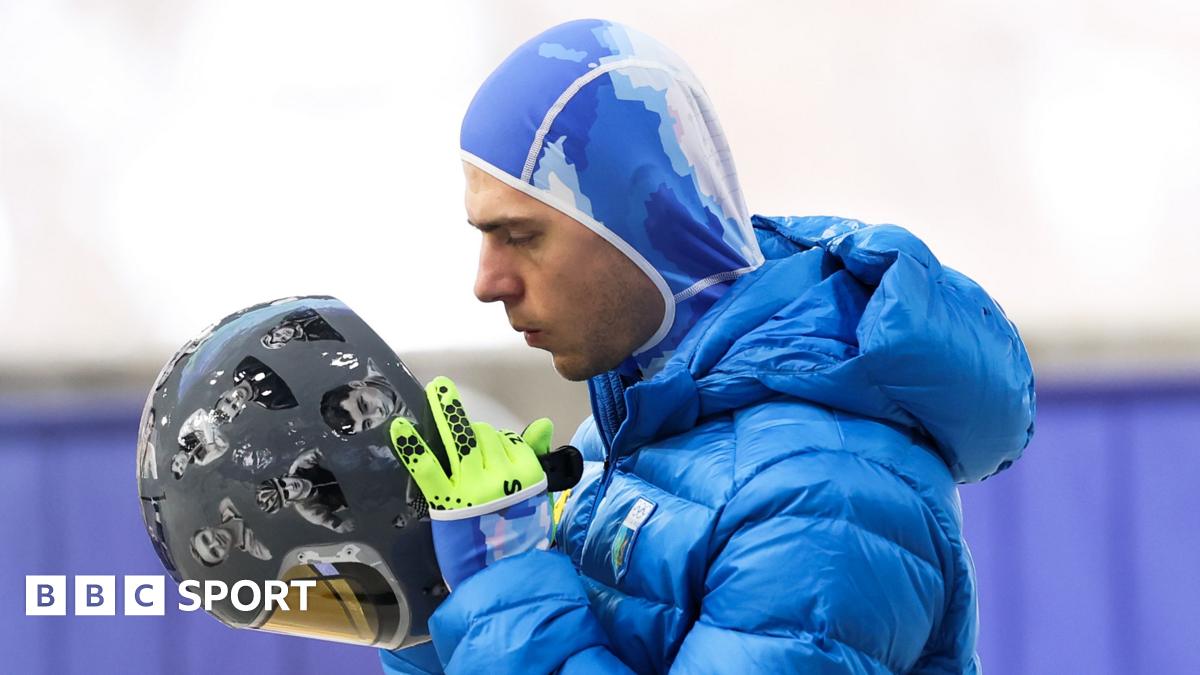
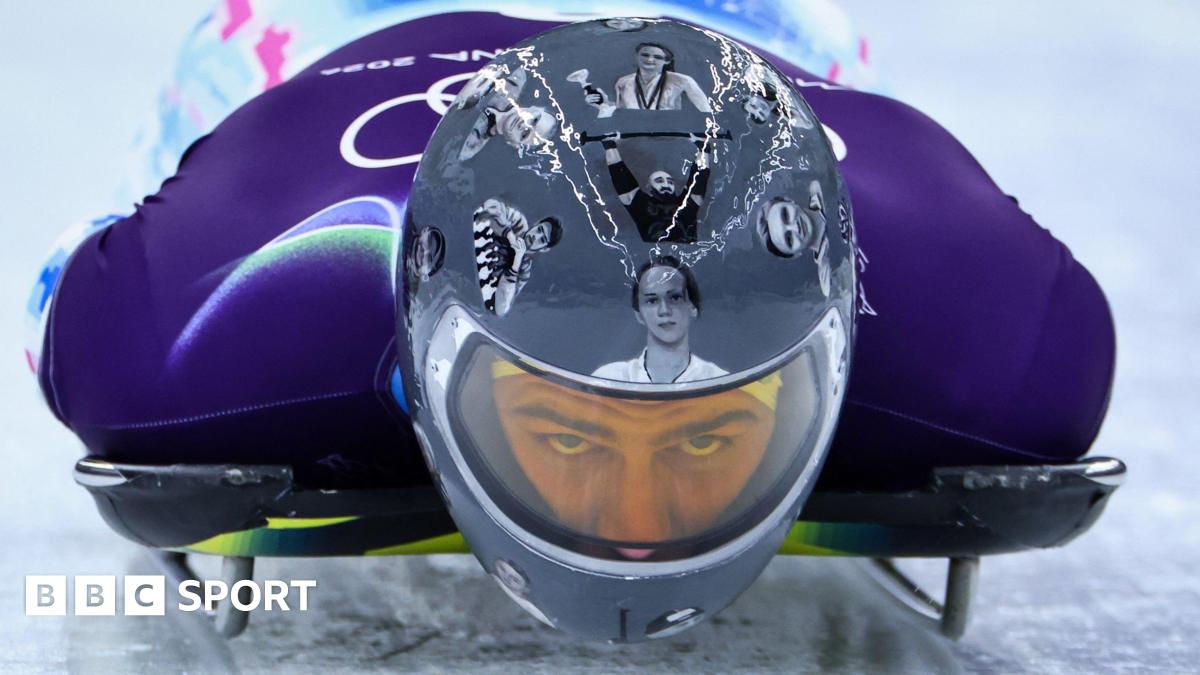
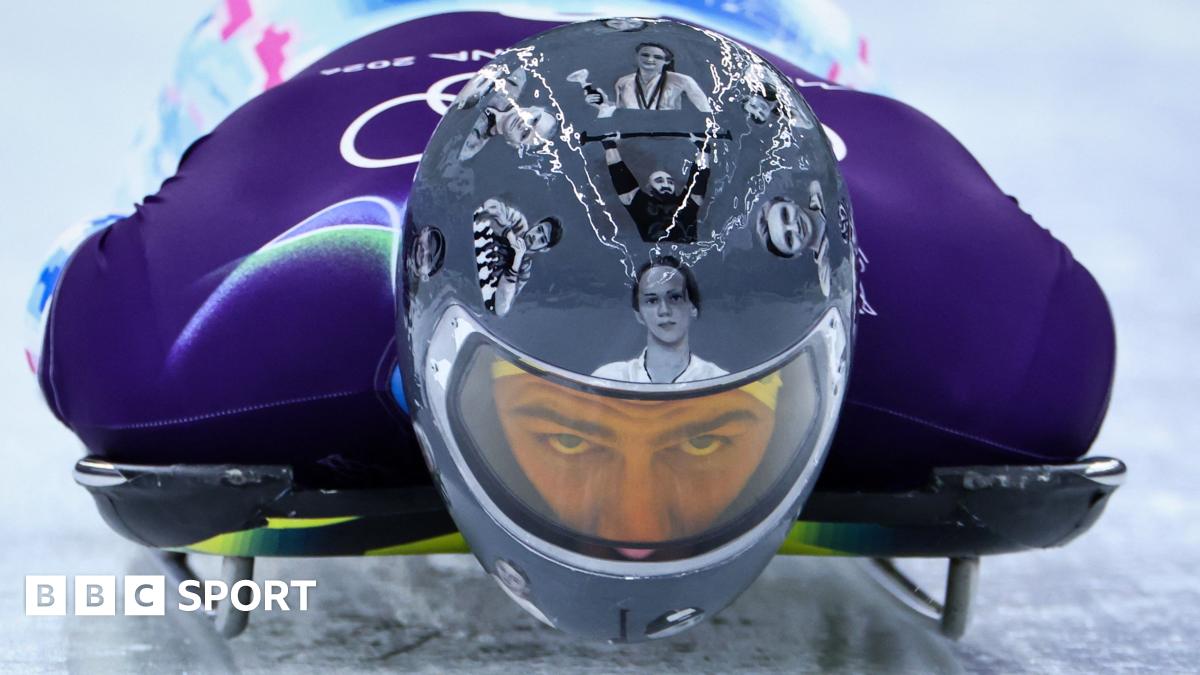
helmet

Ukrainian Olympian loses appeal over helmet honoring war dead

Ukrainian skeleton athlete Vladyslav Heraskevych took his case to sport’s highest court Friday, detailing the reasons why he wanted to race at the Milan-Cortina Olympics in a helmet that paid tribute to his country’s war dead.

The arbitrator was moved by his story but ruled against him anyway, denying him his last chance for a win of any kind at this year’s Winter Olympics.

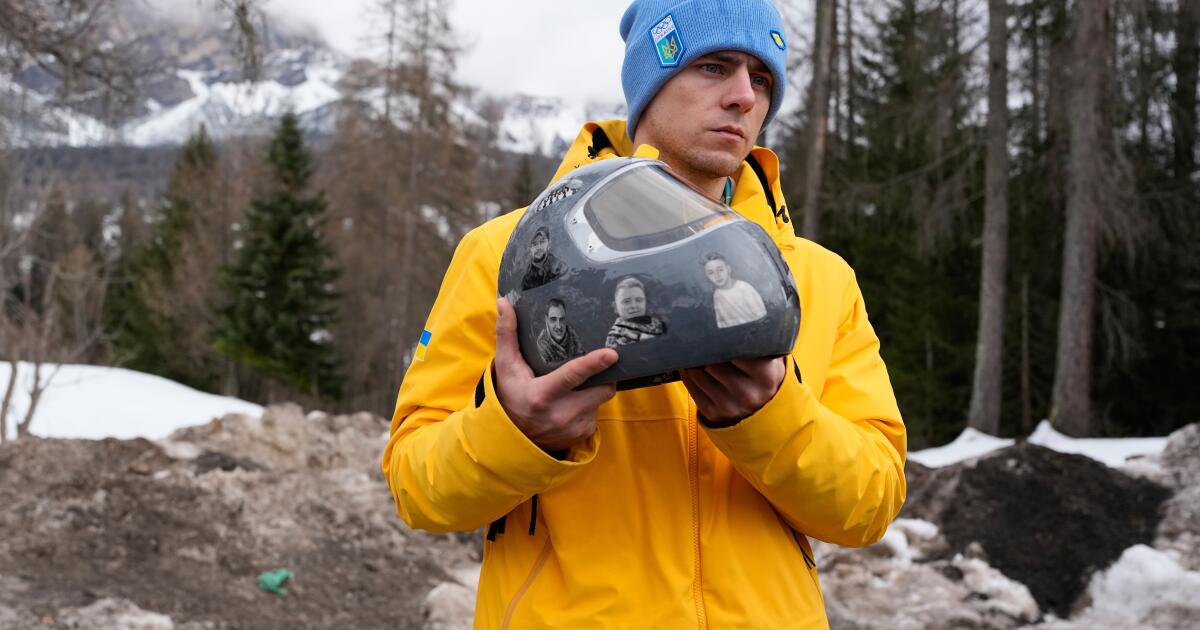
The Court of Arbitration for Sport denied Heraskevych’s appeal of his disqualification from the men’s skeleton race, agreeing with the International Olympic Committee and the sliding sport’s federation that his plan to wear a helmet showing the faces of more than 20 Ukrainian coaches and athletes killed since Russia invaded their country four years ago would violate Olympic rules.

“The court sided with the IOC and upheld the decision that an athlete could be disqualified from the Olympic Games without actual misconduct, without a technical or safety threat, and before the start,” wrote Yevhen Pronin, Heraskevych’s attorney.

The Court of Arbitration for Sport said the sole arbitrator who heard the case sided with IOC policy about what athletes at an Olympics can say on a field of play — and that the “memory helmet” Heraskevych brought to the Milan-Cortina Games would not align with the rules.

The arbitrator, the court said, “found these limitations reasonable and proportionate,” especially since Heraskevych could show his helmet away from the racing surface, such as in interview areas and on social media. Heraskevych also wore the helmet in training runs.

The court added that the arbitrator “is fully sympathetic to Mr. Heraskevych’s commemoration and to his attempt to raise awareness for the grief and devastation suffered by the Ukrainian people, and Ukrainian athletes because of the war.”

The appeal, which Heraskevych believed he would win, was largely moot anyway. He was disqualified from the competition 45 minutes before its start on Thursday, and whatever the Court of Arbitration for Sport said Friday wouldn’t have changed that.

“Looks like this train has left,” Heraskevych said after Friday’s hearing, knowing there was no way he could race. He left Cortina d’Ampezzo’s Olympic village on Thursday night with no plans to return.

He was blocked from racing by the IOC and the International Bobsled and Skeleton Federation on Thursday after the slider and his father emerged from a last-minute, last-ditch meeting with IOC President Kirsty Coventry — who was unable to get Heraskevych to change his mind.

Coventry reiterated Friday that she believed the disqualification was justified. The IOC made its decision based on the guidelines for athlete expression at the Olympics, he said.

They say, in part, “the focus on the field of play during competitions and official ceremonies must be on celebrating athletes’ performances.” Heraskevych never made it to the field of play — not in competition, anyway.

“I think that he in some ways understood that but was very committed to his beliefs, which I can respect,” Coventry said. “But sadly, it doesn’t change the rules.”

The IOC contends that the rule is in place for multiple reasons, including protecting the athletes from pressure from their own countries or others about using Olympic platforms to make statements.

“I never expected it to be such a big scandal,” Heraskevych said.

He also said he found it puzzling that his accreditation for the Games was taken away, then returned in short order Thursday in what seemed like a goodwill gesture.

“A mockery,” he said.

The Court of Arbitration for Sport did agree that Heraskevych should keep his accreditation.

Heraskevych said he felt his disqualification fed into Russian propaganda, noting that he and other Ukrainian athletes have seen Russian flags at events at these Games — even though they are not allowed by Olympic rule. He has previously spoken out against the IOC’s decision to allow Russians and Belarusians to compete at Milan-Cortina as “neutral” athletes and said the IOC empowered Russia by awarding it the 2014 Sochi Games.

He also wondered why other tributes from these Olympics, such as U.S. figure skater Maxim Naumov displaying a photo of his late parents — killed in a plane crash last year — have been permitted without penalty.

Italian snowboard competitor Roland Fischnaller had a small Russian flag image on the back of his helmet during these Games, and Israeli skeleton athlete Jared Firestone wore a kippah with the names of the 11 athletes and coaches who were killed representing that country during the 1972 Munich Olympics.

Pronin wrote that IOC representatives at Friday’s hearing said that “they were not punished because they did not declare this in advance, but did it after the fact, so there was no point in disqualifying them.”

The IOC said those cases were not in violation of any rules. Naumov showed his photo in the kiss-and-cry area and not while he was actually on the ice; Fischnaller’s helmet was a tribute to all the past Olympic sites he competed at, with Sochi included; and Firestone’s kippah “was covered by a beanie,” IOC spokesman Mark Adams said.

The IOC offered Heraskevych the chance to compete with a different helmet and bring the tribute helmet through the interview area after his runs. He also could have worn a black armband, which the IOC typically bans. It just didn’t want him making a statement by competing in the helmet.

“I think it’s the wrong side of history for the IOC,” Heraskevych said.

Reynolds writes for the Associated Press. AP journalists Annie Risemberg and Stefanie Dazio in Milan and Vasilisa Stepanenko in Warsaw contributed to this report.
Source link

2026 Winter Olympics: Why Vladyslav Heraskevych was banned for remembrance helmet

The decision to ban Heraskevych has drawn shock and condemnation from many former and current Olympic athletes.

Lizzy Yarnold, Team GB’s two-time Olympic skeleton gold medallist, told BBC Sport: “I think it is actually quite shocking. Within the sliding community there is shock and confusion.

“This [wearing the helmet] was a reaction to something which was an act of memorial and incredibly emotionally important to him.

“I think the IOC owe him an apology and this was the wrong decision.”

Two-time Olympic bobsledder John Jackson was equally unimpressed with the IOC.

Jackson, who also served as a Royal Marines commando, told the BBC: “His approach to that is about remembering those who have fallen.

“For me, being military and now a veteran, remembrance is really important to all veterans. We have all lost friends and colleagues in conflict, and we all know someone who isn’t here and paid the ultimate sacrifice.

“I support him in what he was trying to achieve. It is really important to remember those who have given their life for something that ultimately doesn’t need to happen.”

Heraskevych meanwhile told the BBC that being banned only left him feeling “emptiness.”

“Yesterday and before yesterday I was training good. I could be among the medallists for this event, but suddenly because of some interpretation of the rules that I do not agree with, I am not able to compete,” he said.

“Expression guidelines – what do you consider as expression? Many others here in this arena have helmets with different colours and I believe that is also a kind of expression.

“Some others had national symbols, that is also expression. For some reason, their helmets weren’t checked and they were allowed to compete but I am not.

“I believe they [those who have fallen] deserve to be here because of their sacrifice. I want to honour them and their families.”

Heraskevych’s international team mates showed their support throughout Thursday’s competition in Italy.

Alpine skier Dmytro Shepiuk displayed a note reading “Ukrainian heroes with us” after competing, while luger Olena Smaha also voiced support for Heraskevych wearing a glove reading: “Remembrance is not a violation.”

Ukraine president Volodymyr Zelensky accused the IOC of “playing into the hands of the Russian aggressor” after Heraskevych’s disqualification

“Sport shouldn’t mean amnesia, and the Olympic movement should help stop wars, not play into the hands of aggressors,” he wrote on X, external.

“Unfortunately, the decision of the International Olympic Committee to disqualify Ukrainian skeleton racer Vladyslav Heraskevych says otherwise.”

Source link

Vladyslav Heraskevych: Ukraine skeleton racer wears helmet despite IOC ban

Ukrainian skeleton racer Vladyslav Heraskevych says he will wear his helmet of remembrance on race days “because these athletes deserve to be on the track” – despite the International Olympic Committee banning him from doing so.

Heraskevych wore the helmet, which features images of athletes killed during Russia’s invasion of his home country, during a training session on Thursday after being told it was not allowed.

The IOC says the helmet breaks the rules laid down in the Olympic Charter and suggests he could instead wear a black armband to pay tribute.

Heraskevych says he does not believe the IOC will impose sanctions on him for continuing to wear it, adding: “I believe we have all the rights to wear this helmet in competition because it is fully compliant with the rules.

“I believe the IOC doesn’t have enough black bands to honour all of the athletes.”

The IOC has not confirmed whether it would disqualify Heraskevych for continuing to wear the helmet, saying it is “not helpful to look at hypotheticals”.

Rule 50.2 of the Olympic Charter states “no kind of demonstration or political, religious or racial propaganda is permitted in any Olympic sites, venues or other areas”.

Mark Adams, a spokesperson for the IOC, said they will contact Heraskevych on Thursday to “reiterate his many opportunities to express his grief”.

The men’s skeleton heats begin on Thursday with the final runs on Friday and Adams says he can show the helmet in mixed zones and on social media but “the field of play is sacrosanct”.

“We really want him to compete, we want all athletes to have their moment,” Adams said.

“[It’s] not helpful to look at hypotheticals. It’s not helpful to speculate now, but there are rules and regulations the athletes want us to enforce. In the end it would be an IOC matter.

“We don’t want to prosecute this issue in public – the way we hope we can deal with this is on a human level. It is in everyone’s interest for him to compete.”

Heraskevych said that many of those pictured on his helmet were athletes, including teenage weightlifter Alina Peregudova, boxer Pavlo Ishchenko and ice hockey player Oleksiy Loginov, and some of them were his friends.

“With this helmet we keep memories about these athletes,” he said.

“Some of them were part of the Olympic movement – they were part of the Olympic family. I believe they deserve to be here.”

The IOC has previously disqualified athletes for displaying political messages.

Afghan breakdancer Manizha Talash, who represented the Refugee Olympic Team at the 2024 Paris Games, was disqualified for displaying a ‘Free Afghan Women’ slogan on her cape during a pre-qualifier dance battle.

Source link

Vladyslav Heraskevych: Ukraine skeleton racer says IOC banned war victims helmet

Ukranian skeleton racer Vladyslav Heraskevych claims the International Olympic Committee has banned his helmet featuring images of people killed in the war in his home country, in a decision that “breaks my heart”.

The 26-year-old wore the helmet during a Winter Olympics training session in Cortina, and had promised before the Games to use the event as a platform to keep attention on the conflict.

The IOC is yet to confirm publicly if it has banned the helmet.

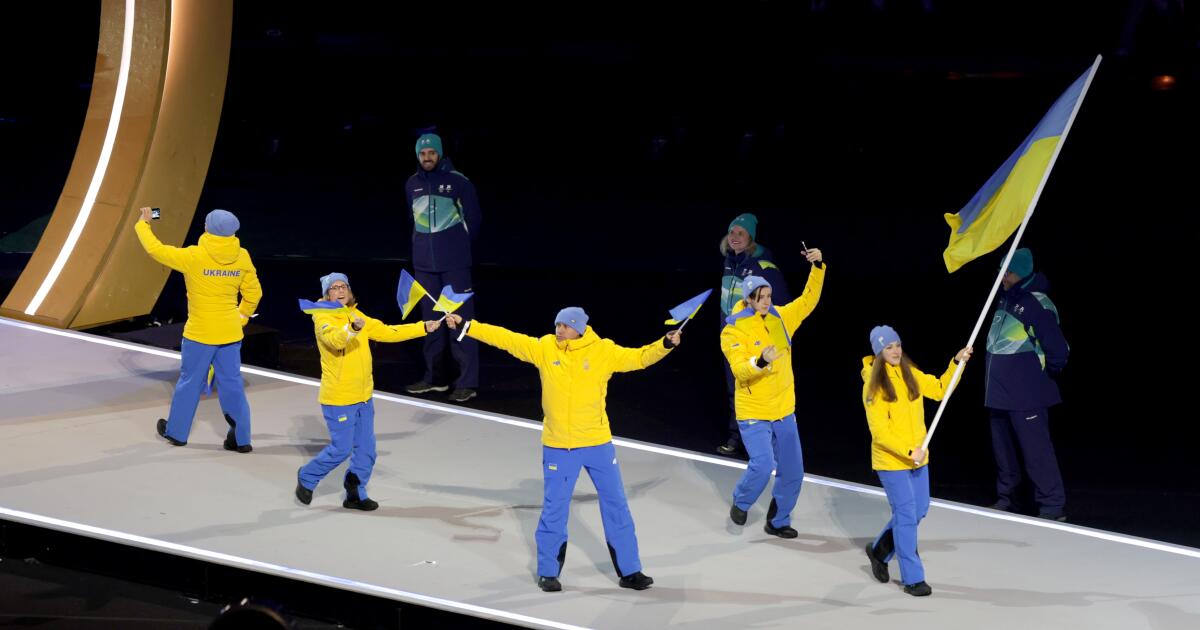
“The IOC has banned the use of my helmet at official training sessions and competitions,” said Heraskevych, who was a Ukraine flagbearer in Friday’s opening ceremony, on Instagram, external.

“A decision that simply breaks my heart. The feeling that the IOC is betraying those athletes who were part of the Olympic movement, not allowing them to be honoured on the sports arena where these athletes will never be able to step again.

“Despite precedents in modern times and in the past when the IOC allowed such tributes, this time they decided to set special rules just for Ukraine.”

Heraskevych told Reuters that many of those pictured on his helmet were athletes including teenage weightlifter Alina Peregudova, boxer Pavlo Ishchenko and ice hockey player Oleksiy Loginov, and stated some of them were his friends.

Heraskevych said Toshio Tsurunaga, the IOC representative in charge of communications between athletes, national Olympic committees and the IOC, had been to the athletes’ village to tell him.

“He said it’s because of rule 50,” Heraskevych told Reuters.

Rule 50.2 of the Olympic Charter states that “no kind of demonstration or political, religious or racial propaganda is permitted in any Olympic sites, venues or other areas”.

He said earlier on Monday that the IOC had contacted Ukraine’s Olympic Committee over the helmet.

The IOC said it had not received any official request to use the helmet in competition, which starts on 12 February.

Meanwhile, Ukraine president Volodymyr Zelensky thanked Heraskevych “for reminding the world of the price of our struggle” in a post on X, external.

The post continued: “This truth cannot be inconvenient, inappropriate, or called a ‘political demonstration at a sporting event’. It is a reminder to the entire world of what modern Russia is.”

Heraskevych, Ukraine’s first skeleton athlete, held up a ‘No War in Ukraine’ sign at the 2022 Beijing Olympics, days before Russia’s 2022 invasion of the country.

Rule 50.2 of the Olympic Charter states: “No kind of demonstration or political, religious or racial propaganda is permitted in any Olympic sites, venues or other areas.”

Heraskevych had said he intended to respect Olympic rules which prohibit political demonstrations at venues while still raising awareness about the war in Ukraine at the Games.

Following Russia’s full-scale invasion of Ukraine in 2022 athletes from Russia and Belarus were largely banned from international sport, but there has since been a gradual return to competition.

The IOC cleared 13 athletes from Russia, external to compete as Individual Neutral Athletes (AINs) in Milan-Cortina.

BBC Sport has approached the IOC for comment.


Source link