
Iran war live: Trump hints new strikes, says US knocked ‘hell out’ of Iran
Trump indicates new strikes on Iran, saying the US has knocked the 'hell out' of the country.
Source link
Trump indicates new strikes on Iran, saying the US has knocked the 'hell out' of the country.
Source link
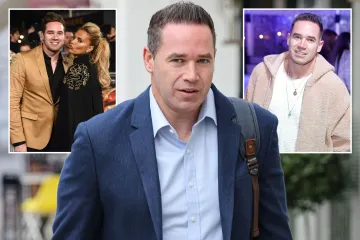
TOM CRUISE has built a career on cheating death, but even the veteran star couldn’t escape a crash landing at the weekend.
The Hollywood heavyweight is facing one of the most humiliating moments of his career after Digger, his first film since the last Mission: Impossible, bombed with critics and at the box office.
And it comes at the end of a bruising year for the star, from the collapse of his whirlwind romance with actress Ana de Armas to his daughter Suri dropping his surname.
The satirical black comedy took just £15million globally in its opening weekend, and industry experts fear it could lose as much as £100million.
It is one of the weakest debuts of Cruise’s career — a bitter result for a film billed to be the start of his next big chapter, as the ageing star looks to slow down the stunts and be taken seriously.
Instead, his bold attempt to prove he could move beyond the action-man image has been met with a resounding thumbs down.
The film scored a C+ CinemaScore, one of the lowest ratings of his career, while critics have been sharply divided.
Cruise, 64, plays a balding, pot-bellied Texan oil tycoon in the movie, directed by Oscar-winner Alejandro G Inarritu, the man behind Birdman and The Revenant.
It was meant to be a daring creative swing for a star who has spent decades being synonymous with blockbuster action.
But audiences appear to just want the old Tom back.
The film’s £125million production budget, coupled with an estimated £75million marketing spend, means its disappointing box-office debut is unlikely to justify its hefty price tag.
Reviews were so divisive that Warner Bros reportedly resorted to running “decide for yourself” adverts in the run-up to release, after estimates were repeatedly revised down.
One fan summarised it as: “Tom Cruise’s Digger is a disaster — I couldn’t wait for it to be over.”
For Cruise, who has been box office gold since Risky Business and Top Gun in the Eighties, the figures will make uncomfortable reading.
His last major disappointment was 2017’s The Mummy, but since then he has enjoyed one of the biggest career resurgences in Hollywood.
Top Gun: Maverick became a global phenomenon, while Mission: Impossible kept him at the top of the action game well into his 60s.
Digger was supposed to prove there was another side to him. Instead, it marks his lowest box office opening in nearly 20 years.
Though Cruise certainly did everything he could to sell it.
He threw himself into the campaign, appearing on Travis and Jason Kelce’s New Heights podcast, dancing through the spirit tunnel on The Jennifer Hudson Show and landing his first magazine cover story in two decades with a topless shoot for GQ.
He even brought the Prince and Princess of Wales to the London premiere at the end of last month, where they met the cast.
Defending the film after the mixed reviews, Cruise told a screening audience: “OK, the door’s open. Now I want to push it again.”
He added: “This film is handmade. People want to see real things.”
But the response has left the awards buzz that once surrounded Digger fading fast.
Cruise had been tipped to land his first competitive Oscar after years of nominations, but those hopes now look considerably more distant.
It could also force the Hollywood veteran to reconsider whether audiences really want to see him outside of blockbuster action. There is already a clear indication of where he may go next.
Rather than continuing to take creative risks, Cruise is returning to familiar territory with a sequel to 1990’s Days Of Thunder, co-starring Anne Hathaway, while Top Gun 3 is also in the works, with him reprising his role as Maverick.
For a star whose career has been built on refusing to play it safe, it could be that the safest option is exactly what he needs.
Speaking to GQ, Cruise said: “Life, I’m coming right at it. It’s coming at me and I’m coming right at it.”
He certainly was not wrong about the second part.
Because Digger is far from the only thing to have knocked him off his stride this year.
In July, it emerged that his 20-year-old daughter Suri had seemingly severed her final tie with her famous father, after more than a decade of estrangement.
The college student has dropped the Cruise surname entirely, opting to go by Suri Noelle, her mother Katie Holmes’s middle name.
She publicly registered to vote in Pennsylvania, where she is studying, under the new moniker.
Suri was born in April 2006, and her parents tied the knot six months later.
They divorced in 2012 over irreconcilable differences, and the pair’s last public appearance together was that same year.
Insiders have since claimed Cruise and Suri have not seen one another privately in more than a decade.
Katie, meanwhile, has been enjoying a summer of love after making things official with a new man on her arm — artist Jason Bard Yarmosky — who is said to have helped her move on from the “trauma” of her marriage to Tom. But Tom’s love life has been rather more bruising.
Last October, Cruise suffered an even more public heartbreak, when The Sun exclusively revealed he had split from Ana de Armas after less than nine months together.
The star was first linked to the Cuban-born actress, 37, in February 2025, and they went public in the spring after being pictured holding hands during a break in Vermont.
Two months later, Tom whisked Ana to Madrid on his private jet, before they flew to London by helicopter for her 37th birthday, sharing selfies and describing it as “a fun night out on the town”.
She was also his date to David Beckham’s 50th birthday party in May 2025.
But a source close to the couple told The Sun at the time: “Tom and Ana had a good time together but their time as a couple has run its course.
“They are going to remain good friends but they aren’t dating any more.
“The spark had gone between them but they still love each other’s company and they’ve both been really adult about it.”
A year on, the contrast between the former couple could hardly be starker. While Cruise licks his wounds, Ana appears to have moved on in spectacular fashion.
She has been linked to Venezuelan musician Beto Montenegro after the pair were spotted dancing at a concert in Madrid and sharing kisses on a romantic getaway to Spain’s Formentera island.
Before that, she was briefly pictured with venture capitalist Marcelo Valente in Los Angeles following the Cruise split.
A source said of Beto: “He’s an extremely charming and sophisticated guy, and he checks all the boxes Ana’s looking for right now.
“It’s an exclusive relationship, and they’ve had a pretty magical summer.”
Ana has also been getting back in front of the cameras, with a strong slate of projects, including espionage thriller Impunity.
Her John Wick spin-off Ballerina has kept her firmly in the blockbuster world, too.
And just this week she was pictured rubbing shoulders with an A-list crowd at a private Louis Vuitton party in Paris, joining Emma Stone and Chloe Grace Moretz.
She looked every inch the Hollywood star in a long-sleeved blouse, carrying a Louis Vuitton box clutch with gold trim.
There is still some unfinished business between the exes. Their joint project, Deeper, has been put on hold because of budget issues.
It all leaves Cruise facing a very different end to the year than the one he had planned.
He has, of course, bounced back from career setbacks before, and with Top Gun 3 and Days Of Thunder 2 on the way, he will be hoping a return to familiar territory can restore his reputation.
But for now, the man who has spent a lifetime defying gravity is facing being brought back down to earth.
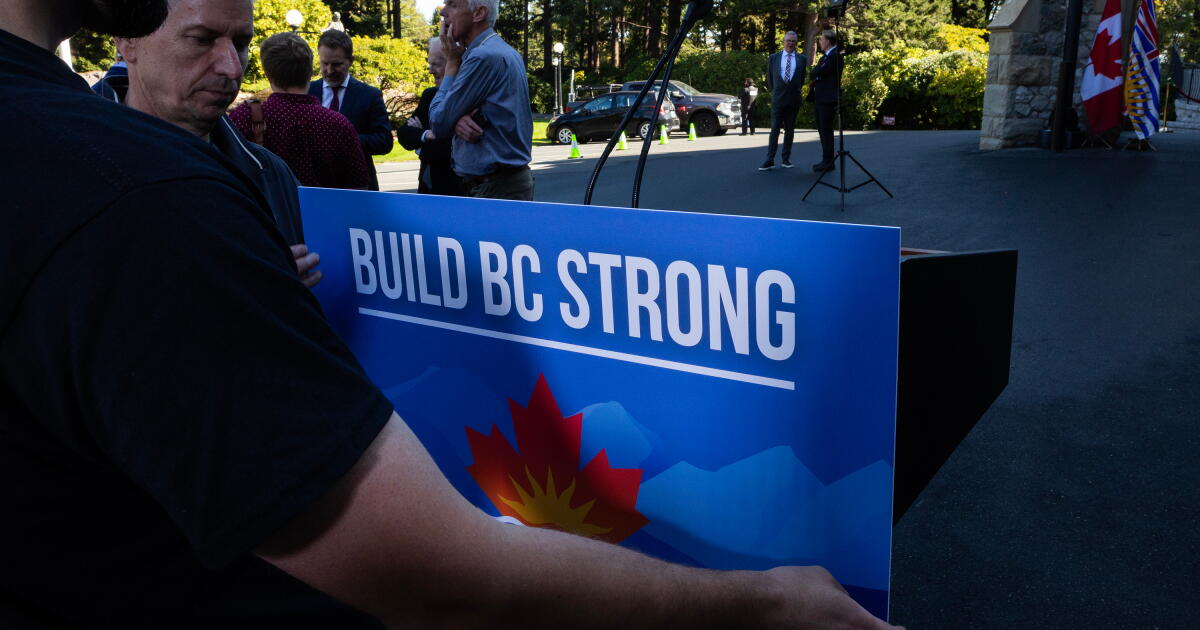
VICTORIA, British Columbia — A Canadian provincial premier called a snap election Tuesday, saying President Trump’s attacks on Canada are threatening jobs, businesses and the country’s ability to determine its own future.
The provincial election comes after U.S.-Canada trade talks broke down, deepening a dispute that has brought steep tariffs. British Columbia Premier David Eby effectively put Trump on the ballot, arguing the election offers British Columbians a choice between his government’s efforts to resist U.S. economic pressure and opponents he accused of embracing “MAGA-style politics.”
“Join us saying hell no to Trump and to his politics,” Eby said in announcing the Oct. 24 election.
Eby said Trump’s trade war and threats against Canada have changed conditions in British Columbia enough to justify an election two years early.
“Donald Trump is attacking our workers, he’s targeting our businesses, and he is threatening our sovereignty,” Eby said. “He’s threatening our ability to make decisions for ourselves.”
The left-leaning New Democratic Party leader said British Columbia needs to build a “firebreak” against Trump’s economic policies by protecting workers and businesses, reducing its dependence on the United States and finding new markets for Canadian products.
“This isn’t just a trade dispute,” Eby said. “It’s about the life that you and your family are building.”
Eby said British Columbia’s exports to the United States have fallen 4% while exports to other markets have risen 16%.
He also vowed to keep American alcohol off provincial shelves, saying “not one drop of Jack Daniels” would return until Canada gets a fair deal with the United States.
The New Democrats won a narrow majority in the 2024 provincial election, giving Eby enough seats to govern without relying on another party, and he was not required to call another election until 2028.
The election call also comes amid turmoil among the opposition British Columbia Conservatives. Kerry-Lynne Findlay resigned as party leader Sunday following a wave of defections and expulsions from her caucus. Lorne Doerkson was named interim leader.

