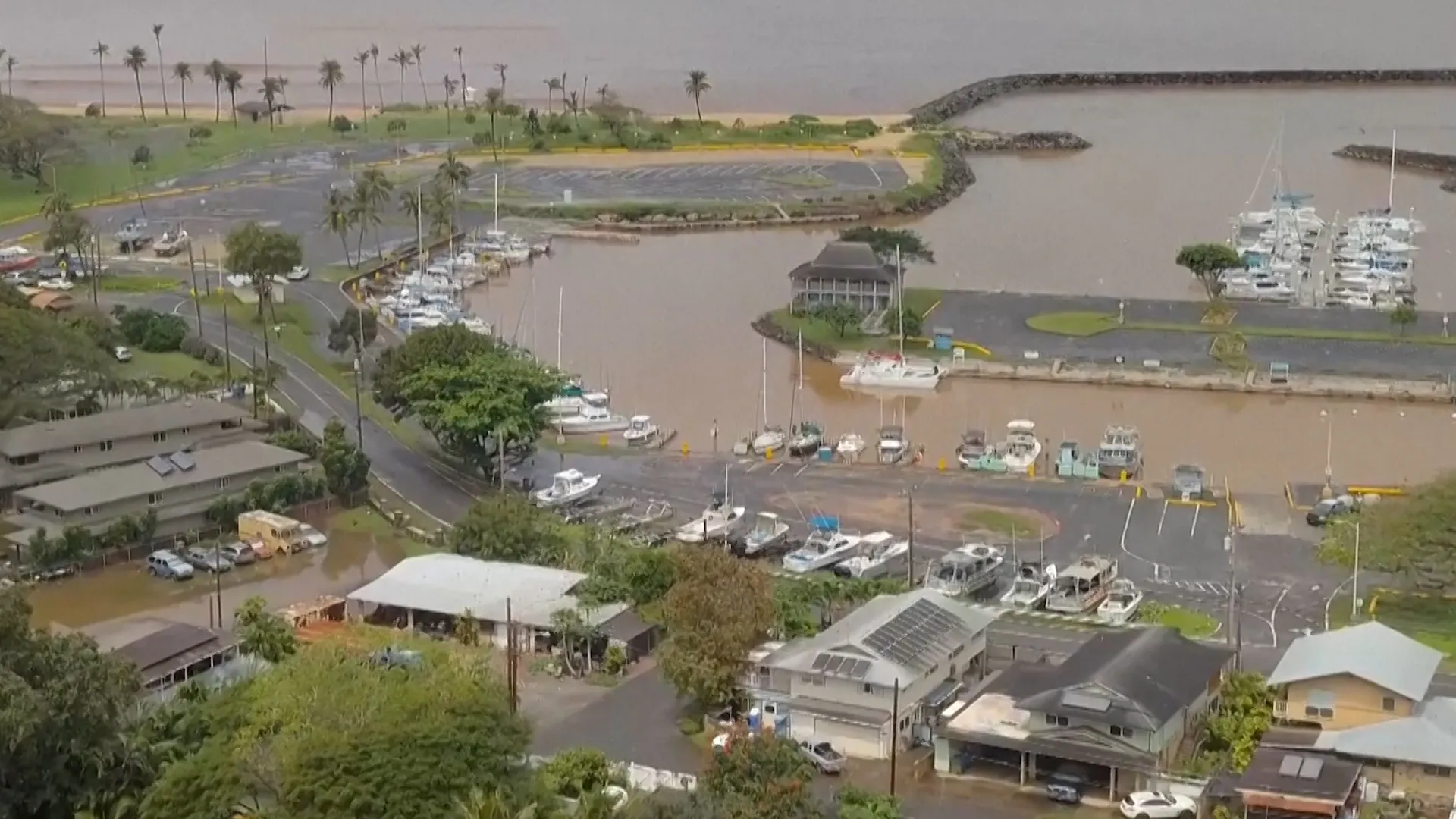
HAWAII

Gorgeous island dubbed ‘Hawaii of Europe’ is 23C in January with £17 flights

This island offers the perfect winter escape with average temperatures of 20C in January – and it’s just a four-hour flight from London

As murmurs of snow and icy conditions intensify, and the January weather settles in, it’s hardly surprising that many are dreaming of escaping to warmer climes – minus the peak-season throngs.

Those blessed with sufficient funds and holiday allowance might contemplate Cancun, but there’s a secret paradise much nearer that can be reached for a fraction of the price: an island hailed as the “Hawaii of Europe”, merely a four-hour journey from London (which is due to crash down to -3C this week).

Positioned 500km from Africa’s shores and 450km north of the Canary Islands, Madeira is renowned as Cristiano Ronaldo’s homeland – not, bewilderingly, the English sponge cake bearing the same moniker. The Portuguese island chain comprises four territories: Madeira, Porto Santo, the Desertas, and the Selvagens.

It serves as a perfect winter retreat, offering average temperatures as high as 23C on the warmest January days. The Met Office reports that the archipelago typically basks in six hours of daily sunshine throughout winter. Nevertheless, weather patterns differ considerably across mountainous areas, influenced by elevation. Even during quieter months, the heavily populated isle can still appear bustling, particularly following its social media fame as a breathtaking oceanic sanctuary competing with tropical paradises.

“If you’re looking for winter sun, you won’t have much trouble finding it in Madeira in January. Daytime temperatures can be 20°C in the south below what’s called the ‘banana line’, the best place for cultivating the fruit. Yet look at the mountaintops from Funchal, and you may well see snow glittering in the sunlight. Madeirans take their first sea swims of the year, but you might want to wait a few months,” explains Responsible Travel.

Even during the quieter months, the heavily populated island can still seem busy, particularly following its social media fame as a breathtaking oceanic retreat competing with tropical hotspots, according to the Express.

As a delightful perk, Madeira operates on the UK’s timezone, meaning you won’t squander valuable time off wrestling with jet lag.

Madeira, the main island, is bursting with attractions and adventures crammed into its compact area, ideal for those seeking more than simply lounging in the sun and making their friends back home envious. Must-see experiences include trekking up Pico Ruivo, wandering through the lush gardens at Monte Palace, and visiting local wineries to discover the area’s fascinating wine-making heritage.

The island’s famous Madeira wine found its way to England during the 1800s and was traditionally served alongside lemon and almond-flavoured madeira cake – remarkably giving the dessert its name despite having no other link.

According to Visit Madeira, Ponta do Sol boasts the island’s highest annual sunshine hours. It’s described as a “place much appreciated by those seeking to enjoy sunny days on the beach or in contact with some idyllic spots in nature”.

For culture enthusiasts, Ponta do Sol Beach is unbeatable during their visit. Boasting excellent water quality and a charming setting, this compact 160-metre stretch is ideal for tranquillity seekers. Meanwhile, Madalena do Mar Beach sits nestled near dramatic rocky cliffs and is adored by swimmers. Visit Madeira explains: “This bathing resort is a combination of pebbles and black sand. It is bathed by crystal-clear waters with mild temperatures all year round, and low swell.”

In terms of how long to stay, Lonely Planet’s Austin Bush suggests: “Because Madeira’s highlights are found at all over the island, you shouldn’t plan a stay of under four days. Consider a night in Funchal to get oriented, then supplement this with stops in one or two more destinations elsewhere on the island. Dedicate a day to active pursuits, followed ideally by a day to recover on the beach. Tack on at least another two nights if you plan to hit Porto Santo, the other inhabited island that forms part of the Madeiran archipelago.”

Direct flights to Madeira operate from numerous major UK airports, including Manchester, Liverpool, Leeds, Bristol and Gatwick. From northern England, the journey to Madeira takes roughly four hours, compared to approximately 19 hours to reach Hawaii – which has no direct connections from the UK. Right now, there are flights from Bristol for £17, Manchester for £24 and Birmingham for £32 this January.

Source link

The ‘Hawaii of Europe’ that rivals the Canary Islands

THE Canary Islands have long been a go-to destination for winter sun.

But you can see similar beaches, luscious landscapes and year-round sunshine further into the Atlantic Ocean, with a Portuguese twist.

Porto Martins in Terceira has stunningly turquoise watersCredit: Shutterstock

The Azores are an archipelago of nine islands, between 870 to 1,000 miles west of Portugal.

They have even been nicknamed the “Hawaii of Europe” due to their vibrant greenery and dramatic scenery.

They also share a similar volcanic landscape, with 26 active volcanoes spread across the islands.

However, the lesser-trodden Azores do not see as many visitors as winter sun competitors Lanzarote and Tenerife.

Read more on tropical islands

HIDDEN PARADISE

Look around the idyllic tropical island – with only 6,000 visitors a year


SHORE THING

I went to the Jurassic Park-like tropical island that has direct BA flights

They’re easy to get to from the UK, with airlines British Airways operating direct flights from London to São Miguel.

Once you’ve landed in São Miguel, you can hop from island to island by ferry or inter-island flight.

The best time to visit them is in spring or summer, when temperatures peak to a sunny 25 °C.

Plus, these islands make for a rather inexpensive holiday.

Most read in Beach holidays

Most attractions are outdoor spectacles, meaning that they are free to admire.

Food and drink is affordable across the islands, too, with lunch and a drink averaging around just €10.

São Miguel – best for water sports and volcanic baths

São Miguel is the largest and most popular of the islands, and is home to some mind-blowing nature and wildlife.

It is nicknamed “The Green Island” for its signature rolling green hills backed by thick forests.

There is plenty of beautiful flora which makes the island burst with colour in springtime – from bright blue hydrangeas to pink rhododendron.

The volcanic island is also home to over 30 geysers, waterfalls, geothermal pools, as well as two crater lakes: one green and one blue.

There is also plenty of wildlife to spot, including whales, dolphins, turtles lizards and exotic birds.

The best time of year to visit for bird, whale and dolphin watching is from April to October.

Apart from admiring the nature, there are plenty of unique places to visit in São Miguel like the island’s pineapple plantation and tea factory.

Lagoa do Fogo sits in São Miguel’s green valleyCredit: Getty
The Boca de Inferno viewpoint looks over the island’s twin green and blue lakesCredit: Getty
You can swim in geothermal pools on São Miguel islandCredit: Alamy

Santa Maria – best for cheap food and sunbathing

Santa Maria is the southernmost island in the Azores, meaning it is the hottest and sunniest option.

It’s also a super cheap destination, with a meal and a pint costing an average of £8.91 per person.

It’s also home to the largest waterfall in the Azores, Aveiro Waterfall.

It’s great for sporty travellers, with plenty of walking trails, snorkelling and diving.

Sao Lourenco bay in Santa Maria has formed in a volcanic craterCredit: Alamy

There’s 55 locations to go scuba diving, including caves and wrecks where you can come face to face with manta rays and whale sharks.

Hike to the island’s highest point, Pico Alto, for views over the rugged coastline.

For a unique experience, head to Barreiro de Faneca – the island’s vast “Red Desert” with a Martian-like landscape.

Or for something more chilled, you can spend your days sunbathing on its golden sand beaches to unwind.

Vila de Porto has some beautiful architecture, like this Santa Marian chapelCredit: Alamy

Central Group – best for outdoor adventurers

The Central Group is a cluster of five small Azores islands – Pico, Faial, Graciosa, São Jorge, and Terceira.

The latter three islands are sometimes referred to as “The Triangle” due to their formation in the water.

Pico is famously home to Mount Pico, the highest mountain in Portugal that towers over the islands.

Faial, on the other hand, is a tiny island more suited to day trip visits.

It’s often considered the best spot among the islands for whale and dolphin watching.

Mount Pico is the highest point in the whole of PortugalCredit: Alamy

Graciosa, or the “White Island”, is a peaceful UNESCO biosphere reserve.

With its unique features like craters and lava caves, this island is more for adventure and exploring than sunbathing.

Similarly, São Jorge is known for its rare landscape features.

Most notably it is known for its fajãs, which are flat coastal plains formed by lava flows.

Terceira is one of the larger islands in the Azores, and is home to their oldest city – Angra de Heroísmo.

Here, cobbled streets and historic buildings give this island a more bustling and lived-in feel than the others in the Central Group.

Praia da Vitoria Imperio chapel on Terceira Island stands out with its bright coloursCredit: Getty
Porto Pim bay on Faial Island has houses overlooking the calm watersCredit: Alamy

Flores and Corvo – best for remote island feel

Flores and Corvo are known as the Western islands of the Azores.

These islands are not as frequently visited as others, and make for a real remote island experience.

Flores is bursting with wild greenery and unspoilt landscapes, and is often called the most beautiful island in the Azores.

“Flores” is the Portuguese word for “flowers” – and this island really lives up to its name, blooming with colour in springtime.

And if you’re looking to feel like you’ve really gotten far away from the real world, Corvo is the smallest and most remote island of the archipelago.

Flores has a beautiful rugged coastlineCredit: Alamy
The landscapes of Corvo are unspoiltCredit: Alamy
Corvo is the smallest of the islandsCredit: Alamy

The island is home to just 430 people, who all live in one village called Vila do Corvo.

The island itself is tiny, covering just over 17 square kilometres.

Corvo only received electricity in 1963, and is most popular with birdwatchers and hikers.

These westernmost islands feel truly isolated – the perfect spot if you’re after that castaway, edge-of-the-world experience.

The islands are home to many volcanic craters which make for beautiful viewpointsCredit: Getty

Source link

Federal judge upholds Hawaii’s new climate change tax on cruise passengers

A federal judge’s ruling clears the way for Hawaii to include cruise ship passengers in a new tourist tax to help cope with climate change, a levy set to go into effect at the start of 2026.

U.S. District Judge Jill A. Otake on Tuesday denied a request seeking to stop officials from enforcing the new law on cruises.

In the nation’s first such levy to help cope with a warming planet, Hawaii Gov. Josh Green signed legislation in May that raises tax revenue to deal with eroding shorelines, wildfires and other climate problems. Officials estimate the tax will generate nearly $100 million annually.

The levy increases rates on hotel room and vacation rental stays but also imposes a new 11% tax on the gross fares paid by a cruise ship’s passengers, starting next year, prorated for the number of days the vessels are in Hawaii ports.

Cruise Lines International Assn. challenged the tax in a lawsuit, along with a Honolulu company that provides supplies and provisions to cruise ships and tour businesses out of Kauai and the Big Island that rely on cruise ship passengers. Among their arguments is that the new law violates the Constitution by taxing cruise ships for the privilege of entering Hawaii ports.

Plaintiff lawyers also argued that the tax would hurt tourism by making cruises more expensive. The lawsuit notes the law authorizes counties to collect an additional 3% surcharge, bringing the total to 14% of prorated fares.

“Cruise tourism generates nearly $1 billion in total economic impact for Hawai‘i and supports thousands of local jobs, and we remain focused on ensuring that success continues on a lawful, sustainable foundation,” association spokesperson Jim McCarthy said in a statement.

According to court records, plaintiffs will appeal. They asked the judge to grant an injunction pending an appeal and requested a ruling by Saturday afternoon, given that the law takes effect Jan. 1.

Hawaii will continue to defend the law, which requires cruise operators to pay their share of transient accommodation tax to address climate change threats to the state, state Atty. Gen. Anne Lopez said in a statement.

The U.S. government intervened in the case, calling the tax a “scheme to extort American citizens and businesses solely to benefit Hawaii” in conflict with federal law.

Kelleher writes for the Associated Press.

Source link

‘Europe’s answer to Hawaii’ is just 4 hours from UK with flights from £40

Often dubbed ‘Europe’s answer to Hawaii’, this region boasts dramatic landscapes, volcanic black sand beaches and crystal-clear waters, making it perfect for a winter getaway

With darker evenings drawing in and temperatures plummeting, it’s little wonder many Brits are fantasising about a sunshine escape to welcome in the new year. While countless warm destinations lie within easy reach for a lavish winter retreat, there’s one particular gem that’s earned the nickname “Europe’s answer to Hawaii” – and return flights start from a mere £40.

Nestled off Africa’s northwest coast and celebrated for its subtropical climate, is Madeira, in the Portuguese region. This volcanic archipelago consists of four islands, with Madeira being the principal one, and showcases striking scenery featuring mountain peaks, natural lava swimming spots, distinctive sandy shores and sparkling azure seas.

READ MORE: Virgin Atlantic launching flights to ‘world’s best destination for millennials’ in 2026

January proves an excellent month to explore this Portuguese paradise, with daytime temperatures climbing to a pleasant 19C. Historical records from January 2025 reveal Madeira even hit highs of 23C, while summer months can deliver balmy 28C conditions.

Thanks to its breathtaking volcanic landscape, mild climate and lush greenery, it’s unofficially crowned ‘Europe’s answer to Hawaii’, positioning it as an ideal winter getaway. Better still, travellers can snap up direct return flights from London Stansted to Madeira starting at just £40 with Ryanair throughout January, as shown on Skyscanner.

READ MORE: Best destinations where it’s hot and sunny in January, February and March

Madeira is home to some truly stunning beaches, many of which are adorned with unique pebbles or volcanic black sand, making them a must-visit. Among these is Praia Formosa, the largest beach in the capital, Funchal, and Seixal Beach, renowned for its soft, volcanic sand and dramatic backdrop of verdant cliffs.

Further afield, there’s Porto Moniz, famed for its extraordinary natural lava rock pools, and an ideal spot for a swim, or Machico Beach, with its golden sands and tranquil, turquoise waters. Another favourite is the breathtaking Complexo Balnear do Lido in Funchal, where you can take a dip in two seawater pools that gaze out over the majestic ocean.

READ MORE: ‘We’ve ditched the UK for Thailand by selling everything we owned’

Beyond the beaches, Madeira offers plenty more to explore. The capital, Funchal, boasts historical allure, serene botanical gardens, and bustling markets, while the Zona Velha district features quaint cobbled streets and charming independent shops. Come evening, it transforms into a lively hub, with bars and restaurants offering outdoor terraces perfect for watching the sunset over the North Atlantic Ocean.

Venture around the island, and you’ll find waterfalls to discover, world-class wine to taste, and boat tours to take, offering the chance to marvel at whales and dolphins in their natural habitat. While summer is often the prime time to spot these magnificent creatures, visitors have been known to catch sight of them earlier in the year.

The island is also a haven for hiking enthusiasts, with one of its most frequented trails being the cliffside path of Ponta de São Lourenço at the easternmost tip. The hike spans just under four miles and takes approximately 2.5 hours to complete along some uneven terrain, but the reward is breathtaking panoramic views across Madeira.

Another trail at Pico do Arieiro takes you to one of the island’s highest peaks, standing at an altitude of 1,818 metres. Although it’s a more strenuous hike, it offers a prime opportunity to soak in the stunning green mountain vistas, and there’s a shuttle bus available for the descent.

Do you have a travel story to share? Email webtravel@reachplc.com

Source link