How to Get to Heaven from Belfast is a dark comedy thriller series topping Netflix charts, and here’s everything you need to know about the actor who plays Liam
How to Get to Heaven from Belfast fans are recognising Darragh Hand(Image: NETFLIX)
How to Get to Heaven from Belfast fans are only just realising where they have seen Darragh Hand before.
Emerging star Darragh Hand portrays Liam, a Garda police officer who comes to the trio’s aid when they find themselves stranded on a road.
Liam plays a pivotal role in the investigation that forms the crux of the plot, and here’s everything you need to know about the actor’s past roles.
Darragh Hand is an Irish-Jamaican actor who has featured in big-name shows like Netflix’s Heartstopper and ITV’s detective series, Grace.
His television debut was as Kai Davis in the BBC’s long-standing drama, Silent Witness. He then landed the role of Leo in the third season of Grace.
Viewers might recognise him as Michael Holden from the third season of Netflix’s romantic drama, Heartstopper.
In his cameo in Radio Silence, Michael came across as geeky and awkward for an athlete, owing to his height and his thick-framed glasses.
The actor has also made his mark in theatre, with acclaimed performances in Dear England, Richard III, and The Land of Lost Content.
In conversation with Bustle, the 27 year old Olivier-nominated performer from Croydon discussed his Heartstopper role and what viewers can anticipate from the forthcoming film.
He revealed: “The fans of that show are some of the most loyal, dedicated fans I’ve ever experienced. It means so much to them as an audience, so I don’t know if there’s much I can give away.
“But it is the final instalment, so we will be saying goodbye to these characters, which is sad and beautiful – especially for a lot of the other cast [members who have] grown up with this show.”
He continued: “I will always be so grateful for Heartstopper because it introduced me into the TV/film realm in the best way possible. Even down to the comics – my character, Michael Holden, looks a bit different from how I look.
“And I would see people online absolutely crushing any narrative of, like, Oh, this is not how he looked in the comics. This is not how his hair was in the comics. They really vouched for me.
“They genuinely had my back, which was a bizarre but lovely thing. For that to be my introduction was beautiful.”
How to Get to Heaven from Belfast is on Netflix
**For the latest showbiz, TV, movie and streaming news, go to the new Everything Gossipwebsite**
The nation faces some tough questions following the unwittingly hilarious performance of U.S. Atty. Gen. Pam Bondi when she testified before the House Judiciary Committee on Wednesday about the Justice Department’s handling of the Epstein files, among other things.
Viewers were left asking themselves if the over-the-top dramatics they witnessed were in fact a midweek “SNL” comedy sketch, with Amy Poehler playing Bondi. But on second thought, no one is better at playing the Entitled Mean Girl than Bondi herself.
Deflecting from questions about the DOJ’s mishandling of the Epstein files, Bondi for nearly five hours interrupted, scoffed and yelled at her bipartisan interrogators. She rolled her eyes at questions that annoyed her (i.e. most of the questions asked by Dems), praised President Trump at the weirdest of times, and hurled personalized insults she’d noted ahead of time in a “burn binder” (more on that later).
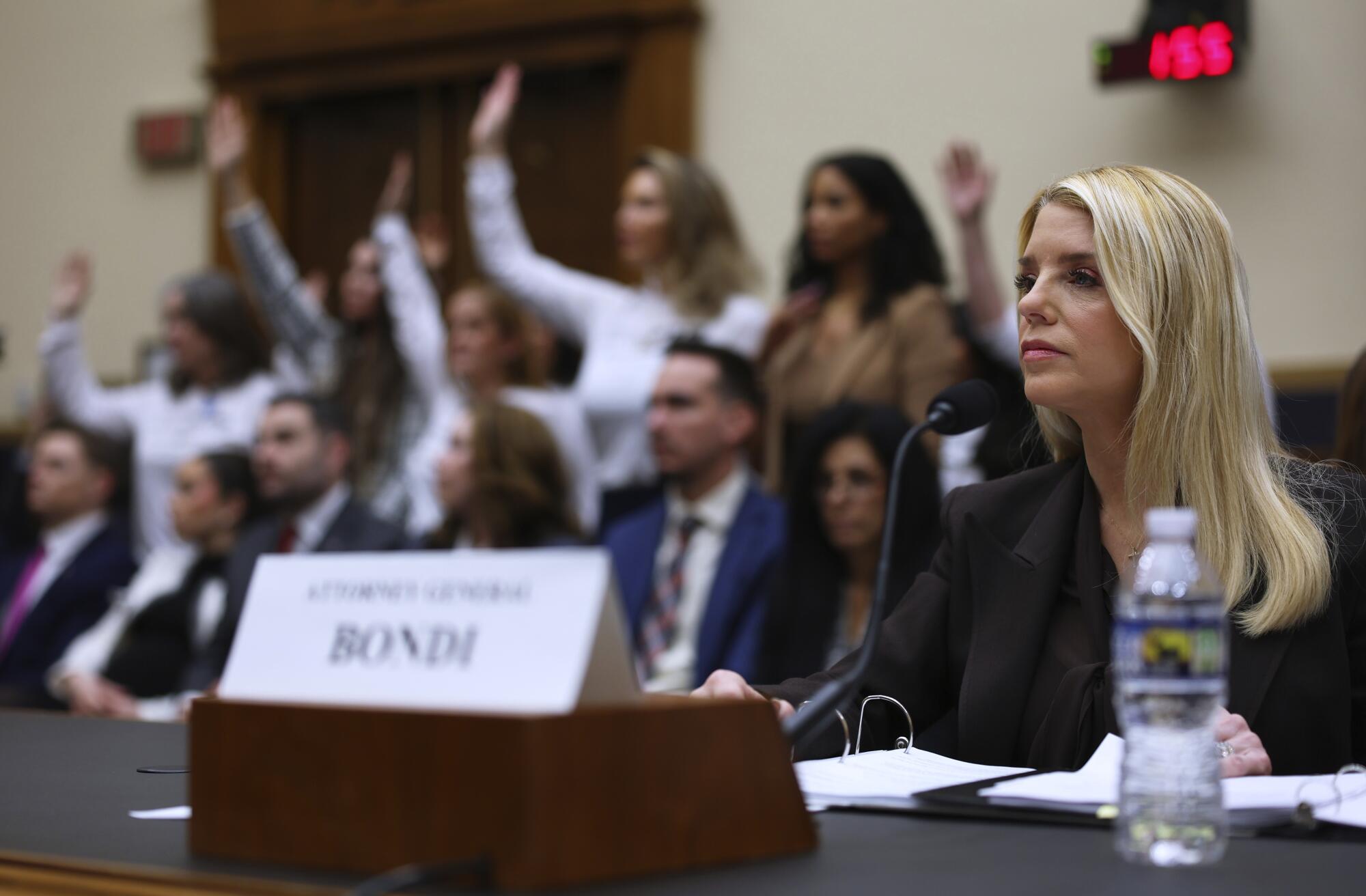
U.S. Atty. Gen. Pam Bondi appears before the House panel Wednesday as, behind her, survivors of sex trafficker Jeffrey Epstein respond to a question from the committee with a show of hands.
(Tom Brenner / Associated Press)
Bondi reserved her most dramatic how dare you! bellows for Democrats but did lash out at a few Republicans. Anyone who pressed her for transparency on the many questionable redactions in the Epstein documents risked a spiteful dressing down, including those who inquired if the DOJ was actively investigating any of the rich and powerful men involved in the disgraced financier’s sex trafficking enterprise.
She called Rep. Jamie Raskin (D-Md.) “a washed-up loser lawyer,” referred to Rep. Thomas Massie (R-Ky.) as “a failed politician” and accused Jewish House member Becca Balint (D-Vt.), who lost her grandfather in the Holocaust, of being antisemitic.
When Rep. Jerry Nadler (D-N.Y.) asked how many of Epstein’s accomplices she had indicted, rather than tell the truth — which is none — she launched into a non-sequitur talking point about the Dow Jones Industrial Average topping 50,000, the S&P 500 nearing 7,000 and the Nasdaq “smashing records” under President Trump. “You all should be apologizing,” Bondi said. “You sit here and you attack the president. I’m not going to have it. I’m not going to put up with it!”
Poehler is talented, but how does anyone top that performance?
If only the hearing were a comedy skit. The hundreds if not thousands of young women who were victimized by Epstein deserve justice, and the many rich, powerful men involved in his criminal enterprise deserve to be held accountable. Bondi claimed there were “pending investigations” into the case but gave little more detail.
Seated in the audience behind Bondi were survivors and families of late survivors of the sex trafficking ring operated by Epstein and his accomplice, Ghislaine Maxwell. The women were recognized, with their permission, at the start of the hearing.
Rep. Pramila Jayapal (D-Wash.) later addressed the group of women: “To the survivors in the room, if you are willing, please stand.” All of them stood up.
“And if you are willing, please raise your hands if you have still not been able to meet with this Department of Justice.” All of the women raised their hands.
Jayapal then addressed Bondi: “Attorney General Bondi, you apologized to the survivors in your opening statement for what they went through at the hands of Jeffrey Epstein. Will you turn to them now and apologize for what your Department of Justice has put them through with the absolutely unacceptable release of the Epstein files and their information?”
Bondi did not face the survivors, instead replying: “I’m not going to get into the gutter with this woman doing theatrics.”
The committee repeatedly asked about numerous problems they’d found in the DOJ’s redactions of the Epstein files, including redacting the names of his suspected co-conspirators while not redacting the names or photos of some of the victims.
She snapped back at them, reminding the room that her DOJ had released more than 3 million documents, and proclaiming loudly, “Donald Trump is the most transparent president in the nation’s history!”
It was all those other guys who dropped the ball, according to Bondi. Why hadn’t former Atty. Gen. Merrick Garland or President Biden investigated the disgraced financier? Rep. Massie cut her off at the knees.
“This goes over four administrations,” he said. “You don’t have to go back to Biden. Let’s go back to Obama. Let’s go back to George Bush. This cover-up spans decades, and you are responsible for this portion,” he said.
She accused Massie of suffering from “Trump derangement syndrome.”
Many of the personal attacks she launched at House members were prewritten in what’s become known as Bondi’s “burn binder,” a notebook filled with unflattering factoids about her inquisitors (she used a similar binder at a Senate hearing). Bondi referenced the guide with such frequency, Rep. Jared Moskowitz (D-Fla.) joked that he’d like to see her “flip to the Jared Moskowitz section of the binder. I’m interested to see what staff provided on the [opposition research] on me.”
If “SNL” does decide to spin a sketch out of the most unprofessional testimony ever by a U.S. attorney general, how can it ever top the show we just saw?
President Trump’s aura of invincibility is starting to vanish. Three new polls — including the usually Trump-hospitable Rasmussen — suggest that Joe Biden did a better job as president.
Worse still (for Trump), he’s underwater on immigration, foreign policy and the economy — the very trifecta that powered his return. An incumbent taking on water like that is no longer steering the ship of state, he’s bobbing in the deep end, reaching for a Mar-a-Lago pool noodle.
To be fair, Democrats have a proud tradition of snatching defeat from the jaws of victory. But suppose — purely hypothetically — that this sticks. Suppose Democrats win the midterms. And suppose a Democrat captures the White House in 2028.
Then what?
Trumpism isn’t a political movement so much as a recurring event. You don’t defeat it; you board up the windows and wait.
Even if Trump does not attempt a third term (a gambit the Constitution frowns upon), he will remain the dominant gravitational force in Republican politics for as long as he is sentient and within Wi-Fi range.
Which means any Democratic administration that follows would be well-advised to consider it is governing on borrowed time. In American politics, you are always one scandal, one recession or one deepfake video away from packing your belongings into a cardboard box.
Trump’s MAGA successor (whoever he or she might be) will inherit millions of ardent believers, now seasoned by experience, backed by tech billionaires and steeped in an authoritarian worldview.
So how exactly does the country “move on” when a sizable slice of its elite class appears to regard liberal democracy as more of an anachronism than a governing philosophy?
This is not an entirely new dilemma. After the Civil War, Americans had to decide whether to reconcile with the rebels or punish them or some mix of the two — and the path chosen by federal leaders shaped the next century through Reconstruction, Jim Crow and the long struggle for civil rights.
At Nuremberg, the Allies opted for trials instead of firing squads. Later, South Africa’s post-apartheid government attempted to achieve reconciliation via truth.
Each moment wrestled with the same problem: How do you impose consequences without becoming the very thing you were fighting in the first place — possibly sparking a never-ending cycle of revenge?
Which brings us to even more specific questions, such as where does Trumpism fit into this historical context — and should there be any accountability after MAGA?
Start with Trump himself. Even if he is legally immune regarding official acts, what about allegations of corruption? Trump and his family have amassed billions since returning to office.
It is difficult to picture a future Democratic administration hauling him into court, especially if Trump grants himself broad pardons and preemptive clemency on his way out of office.
So if accountability comes, it would probably target figures in his orbit — lieutenants, enablers, assorted capos not covered by pardons. But is even this level of accountability wise?
On one hand, it is about incentives and deterrence. If bad actors get to keep the money and their freedom, despite committing crimes, they (and imitators) will absolutely return for an encore.
On the other hand, a Democratic president might reasonably decide that voters would prefer lower grocery bills to more drama.
Trump himself offers a cautionary tale. He devoted enormous energy to retribution, grievance and settling scores. It is at least conceivable that he might have been in stronger political shape had he devoted comparable attention to, say, affordability.
There is also the uncomfortable fact that the past Trump indictments strengthened him politically. Nothing energizes a base like the words “They’re coming for me,” especially when followed by the words “and you’ll be next,” next to a fundraising link. Do Democrats want to create new martyrs and make rank-and-file Americans feel like “deplorables” who are being persecuted for their political beliefs?
So perhaps the answer is surgical. Focus on ringleaders. Spare the small fry. Proceed in sober legal tones. Make it about the law, not the spectacle.
Even this compromise would invite a backlash. Democrats, it seems, are damned if they do and damned if they don’t.
Unfortunately, there is no tidy answer. Too much punishment risks looking like vengeance. Too little risks sparking another sequel.
It may sound melodramatic to say this might be the most important question of our time. But while this republic has endured a lot, it might not survive the extremes of amnesia or revenge.
Choosing the narrow path in between will require something rarer than a landslide victory: justice with restraint.
Everywhere you looked, there was a veteran Dodger willing to sacrifice himself for the good of the team.
That needs to happen again.
That needs to happen now.
A player needs to spearhead a decision that will not be made by the big business that runs this team, a decision that will bypass the biased blather and directly connect to their many besieged fans, a decision that only a player can make.
In the wake of Thursday’s White House confirmation that the Dodgers will be making the traditional champions visit there this spring, somebody needs to send a clear message to President Donald Trump.
“No.”
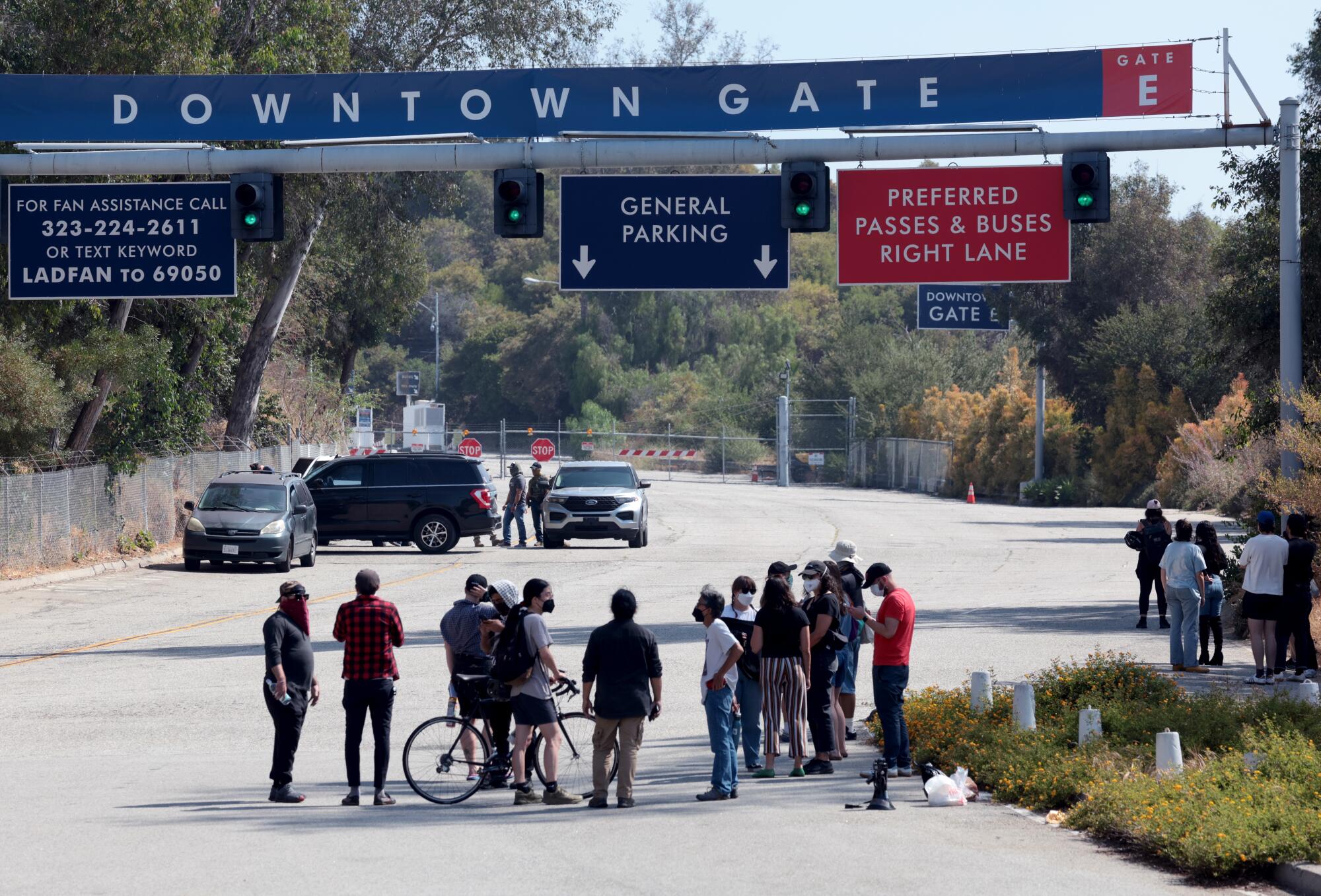
Federal immigration agents stage outside Gate E of Dodger Stadium on June 19. Sporadic immigration raids continue to roil Southern California.
No, they will not openly support an administration that has declared war on its fan base.
No, after basking in the adulation of four million diverse neighbors every summer, the players will not turn their backs on these people while the government continues to round them up despite no criminal history.
This isn’t about asking pro athletes to be politicians. This is about asking them to be people.
Some will say players should not be involved, that it’s a management decision high above the pay grade of the average southpaw or slugger. But when their backyard becomes a battlefield, those players need to fight back, and that time is now.
Dodger management will always leave any tough choice like this one up to the players. By virtue of hundreds of millions of dollars of salaries, the players are essentially partners who need to embrace that responsibility.
No matter what owner Mark Walter says, if the players don’t want to visit the White House, they won’t go.
No matter who shouts the loudest, whether it be conservatives or liberals, the players’ collective voice is the only one that counts.
So, when spring training begins next week, here’s hoping for a hero.
How about a standing ovation for the brave law-abiding immigrant family of four that cheers you from in the left-field pavilion even though they know they could be arrested and hauled away at any time?
How about a, “Let’s Go Dodgers” chant for the longtime residents with no criminal record who spent last October huddled around their TV sets clinging to your victories as reason for hope?
How about being there for so many who have been there for you?
A protestor wearing a Mookie Betts jersey and waving a Mexican and American flag stitched together protests ICE outside the Dodger Stadium game on June 21.
“This was something we discussed with all the players, all of whom wanted to go,” team president Stan Kasten told Hernández. “Remember, everyone in here grew up wanting to be a world champion and all the things that come with it, and it comes with a champagne toast, silliness in the locker room, a parade, rings, an invitation to the White House. It’s what they all come to associate with being world champions. Everyone wanted to go, and so we did.”
So they went, all of them except an injured Freddie Freeman. The event was even attended by Mookie Betts, who had previously declined a visit when he was with the Boston Red Sox.
Since then, the landscape has dramatically changed in light of the ICE raids that ramped up during the middle of the season.
This is no longer simply about the rebuke of a president. This is about a fight against a system that has consistently terrorized southern California streets and recently, in Minneapolis, resulted in the deaths of two American citizens at the hands of agents of the American government.
Surely the Dodgers clubhouse leaders see this. Surely they feel this.
They can’t be so insulated that they don’t notice the protests in city streets that resemble those near Chavez Ravine. They can’t be so sheltered that they don’t hear the outrage from people who look just like their biggest fans.
The players can’t hide from this. The players need to handle this.
“I was raised — by a man who served our country for 30 years — to respect the highest office in our country,” Roberts said. “For me, it doesn’t matter who is in the office, I’m going to go to the White House.”
Again, this is no longer about just Trump. This is about Tom Homan and Greg Bovino and Kristi Noem and all the other immigration officials that have wrought so much unfounded havoc.
Baseball clubhouses have traditionally leaned heavily to the right.
Nobody is asking anybody to disavow their beliefs. This is no longer about ideology, this is about standing up for those who are being wrongly arrested, being unfairly harassed or being made to feel constantly frightened in their own homes.
Dodger Stadium is one of those homes, and those who permanently live there need to do their best to provide comfort and safety for those who don’t.
Dodgers veteran leaders, this is your time.
Their White House visit would probably occur during the team’s trip to play the Washington Nationals in the first week of April. Here’s hoping that before the road trip, the secure and well-paid Dodgers veterans let the team’s kids understand what it means to be a Dodger and how declining a White House visit would be the Jackie Robinson thing to do.
Sending a title team to the White House is baseball tradition. Sending a message about equality and fairness and freedom is a Dodgers tradition.
Somebody in a Dodgers uniform needs to stand up for that tradition.
MEXICO CITY — Historians and observers accused the Trump administration of trying to rewrite American history to justify its own foreign policy decisions toward Latin America by posting a “historically inaccurate” version of the Mexican-American war.
The Monday statement from the White House commemorating the anniversary of the war described the conflict as a “legendary victory that secured the American Southwest, reasserted American sovereignty, and expanded the promise of American independence across our majestic continent.” The statement drew parallels between the period in U.S. history and its own increasingly aggressive policies toward Latin America, which it said would “ensure the Hemisphere remains safe.”
“Guided by our victory on the fields of Mexico 178 years ago, I have spared no effort in defending our southern border against invasion, upholding the rule of law, and protecting our homeland from forces of evil, violence, and destruction,” the statement said, though it was unsigned.
In the post, the White House makes no mention of the key role slavery played in the war and glorifies the wider “Manifest Destiny” period, which resulted in the displacement of hundreds of thousands of Native Americans from their land.
Sparking criticism
Alexander Aviña, Latin American history professor at Arizona State University, said the White House statement “underplays the massive amounts of violence that it took to expand” the U.S. to the Pacific shore at a time when the Trump administration has stuck its hand in Latin American affairs in a way not seen in decades, deposing Venezuela’s president, meddling in elections and threatening military action in Mexico and other countries.
“U.S. political leaders since then have seen this as an ugly aspect of U.S. history, this is a pretty clear instance of U.S. imperialism against its southern neighbor,” Aviña said. “The Trump administration is actually embracing this as a positive in U.S. history and framing it – inaccurately historically – as some sort of defensive measure to prevent the Mexico from invading them.”
On Tuesday, criticisms of the White House statement quickly rippled across social media.
Asked about the statement in her morning news briefing, Mexican President Claudia Sheinbaum guffawed, quipping and noting “we have to defend sovereignty.” Sheinbaum, who has walked a tight rope with the Trump administration, has responded to Trump with a balanced tone and occasionally with sarcasm, like when Trump changed the name of the Gulf of Mexico to the Gulf of America.
Historical sticking point
The Mexican-American war (1846–1848) was triggered by long-running border disputes between the U.S. and Mexico and the United States’ annexation of Texas in 1845. For years leading up to the war, Americans had gradually moved into the then-Mexican territory. Mexico had banned slavery and U.S. abolitionists feared the U.S. land grab was in part an attempt to add slave states.
After fighting broke out and successive U.S. victories, Mexico ceded more than 525,000 square miles of territory — including what now comprises Arizona, California, western Colorado, Nevada, New Mexico, Texas and Utah — to the U.S.
The moment turned Texas into a key chess piece during the U.S. Civil War and led former President Ulysses S. Grant to write later that the conflict with Mexico was “one of the most unjust ever waged by a stronger against a weaker nation.”
The Associated Press was formed when five New York City newspapers funded a pony express route through Alabama to bring news of the Mexican War — as it is sometimes known in the U.S. — north faster than the U.S. Post Office could deliver it.
The war continues to be a historical sticking point between the two countries, particularly as Sheinbaum repeatedly reminds Trump that her country is a sovereign nation whenever Trump openly weighs taking military action against Mexican cartels and pressures Mexico to bend to its will.
Rewriting history
The White House statement falls in line with wider actions taken by the Trump administration to mold the federal government’s language around its own creed, said Albert Camarillo, history professor at Stanford University, who described the statement as a “distorted, ahistorical, imperialist version” of the war.
Aviña said the statement serves “to assert rhetorically that the U.S. is justified in establishing its so-called ‘America First’ policy throughout the Americas,” regardless of the historical accuracy.
The Trump administration has ordered the rewriting of history on display at the Smithsonian Institution, saying it was “restoring truth and sanity to American history.”
The administration has scrubbed government websites of history, legal records and data it finds disagreeable. Trump also ordered the government to remove any signs that “inappropriately disparage Americans past or living,” including those making reference to slavery, destruction of Native American cultures and climate change.
“This statement is consistent with so many others that attempt to whitewash and reframe U.S. history and erase generations of historical scholarship,” Camarillo said.
Ryanair has told passengers to stop packing a popular toiletry in their hand luggage. If you make the mistake, it could cause a few problems at airport security
07:25, 03 Feb 2026Updated 07:25, 03 Feb 2026
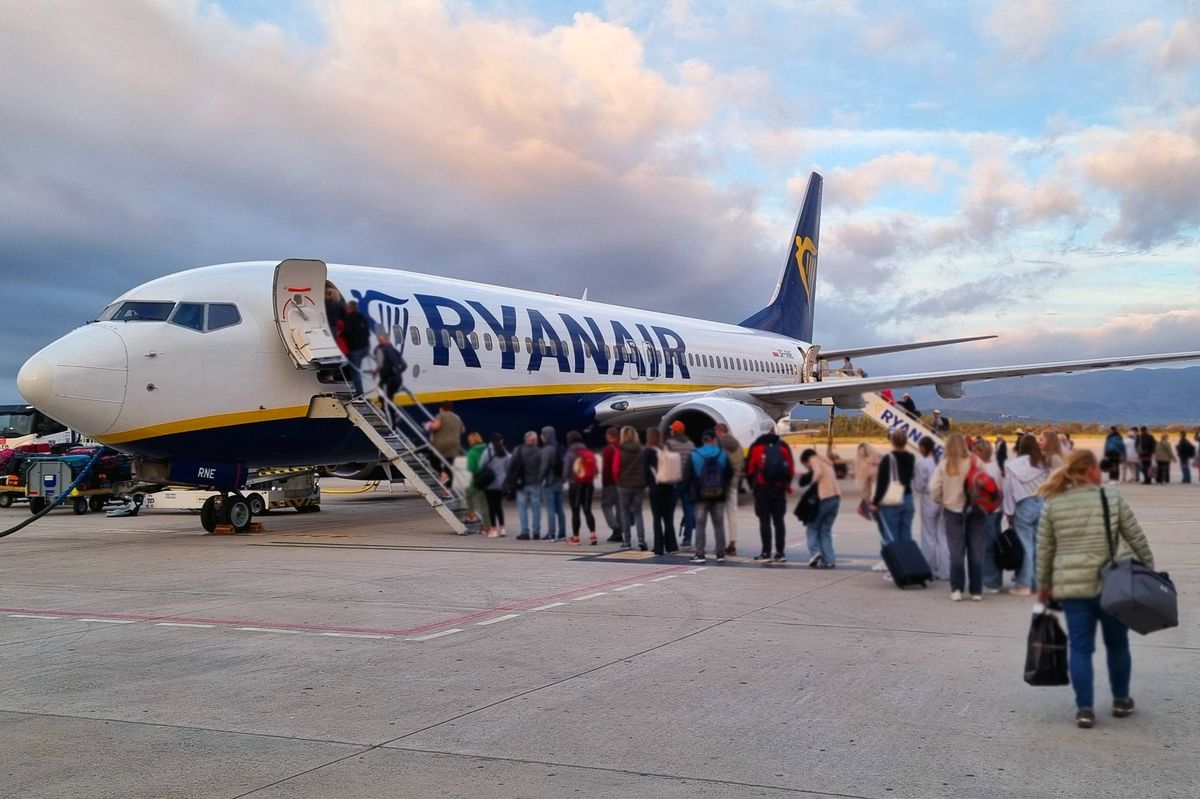
Ryanair told passengers to stop packing the toiletry (stock image)(Image: Getty Images)
There’s nothing like jetting off to a hot location during the winter months, but you need to ensure you pack your belongings in the right cases. In fact, airline Ryanair has told passengers they need to avoid placing a popular toiletry in their hand luggage if they want to travel through airport security with ease.
It’s worth paying attention to as, if you fail to follow the expert advice, it could land you in a spot of bother. In fact, it was recently brought up on Reddit after a traveller was left a little confused about the rules as to what he could carry in his hand luggage.
On Reddit, a social media user posted: “I recently started using safety razors and I was wondering if I could carry mine with one blade inside or a packet of blades. I don’t have a checked bag, only the carry-on.
“Previously I was always able to bring disposable razors with the blades stored in the plastic compartment. In the General terms & Conditions, Ryanair says safety razors are allowed but, I asked the support and, even though he wasn’t anywhere specific to answer my query, he said that sharp objects are not allowed.
“So, if I bring the safety razor with me with a blade in it, the worst that can happen is they are just going to remove the razor and give me the head/handle (enclosure thing) back?”
The question got a lot of people talking, as one person replied: “Safety razor will be fine. Really comes more down to the airport you are going through, not the airline, and even then it also comes down to the individual person you deal with.”
Another added: “OP (original poster) is not asking about safety razors per se. He’s asking about the blades, which are definitely prohibited items. Someone intent on causing harm could quite easily unscrew the razor and use the blade or spare blades as weapons.”
A third also replied: “NO, you cannot. Razor blades, including straight razor blades and replacement blades, are prohibited items because they could be used as weapons.
“However, as you said, fixed cartridge razors (disposable razors) generally are allowed in carry-on luggage. Safety razors (with blades in a plastic head) also are usually permitted in carry-on luggage. But NOT the type where you can unscrew the head and extract the blade.”
If you usually carry razors with you when you travel, which a lot of people do, it turns out there are some rules you need to follow. All you need to know is detailed on the Ryanair website.
What does Ryanair say?
The website reads: “The following items must not be carried on board, but may be carried as part of your checked baggage. Objects with a sharp point or sharp edge capable of being used to cause serious injury, including razors and razor blades (except safety or disposable razors with enclosed blades and razor heads held in plastic compartments).”
It also detailed all the other items that are banned in carry-on luggage. While each airline may differ slightly when it comes to its regulations, generally there are some rules you should follow.
Even though all razors aren’t banned in carry-on luggage, certain types are prohibited. Some airlines allow disposable razors, cartridge razors and electric shavers/epilators to be carried in hand luggage.
However, traditional safety razors, straight razors and loose razor blades are usually not allowed in the cabin and must be packed in checked luggage. This is due to the fact that they are so sharp.
If deemed dangerous, security can confiscate them and the mistake could see you facing delays at the airport. In a nutshell, it’s a packing mistake that’s really not worth making.
I was just getting settled in my seat for the first showing of “Melania” at the Grove cineplex when Melania Trump walked in.
OK, it wasn’t the Melania Trump, as in the first lady. But it was a reasonable facsimile.
The impersonator, followed by a man filming with his phone, strode in like a model, flinging her hair back and smiling as she addressed the six people — many of them critics from various press outlets — in the auditorium who were among the first in Los Angeles to see “Melania,” the controversial documentary that features the first lady as star and producer.
“Hi, everybody. I want to welcome you all to my movie,” the impersonator said in a Slovenian accent. She wore a stylish dark pantsuit and high heels, a frequent motif in the film which chronicles the real Melania Trump in the 20 days leading up to the second presidential inauguration of her husband, Donald Trump.
After a few more words of greeting, the impostor Melania flashed another smile as she exited.
I was stunned and extremely frustrated that I didn’t have time to capture the moment. It’s rare to find yourself in the presence of a first lady —even a fake one.
During the film, my fellow viewers were mostly silent, although there were a few murmurs of laughter as Melania Trump outlined the burdens of coordinating the correct outfit and decor for her re-entry to the White House.
“My creative vision is always clear, and it’s my responsibility to share my ideas with my team so they can bring it to life,” she says at one point.
Later in the film, when Donald Trump was formally introduced at the inauguration as the 47th president, one older woman sitting near the front of the theater applauded. And I could see her smiling as, onscreen, the first couple made their way through the White House following the ceremony.
“Being hand in hand with my husband at this moment is very emotional,” she says. “Nobody has endured what he has over the past few years. People tried to murder him, incarcerate him, slander him. But here he is. I’m so very proud.”
I hoped that Melania would be around in the lobby as we left the theater to ask us how we liked the film. But I was disappointed. Melania had left the building.
Marc Anthony and Nadia Ferreira have plans to grow their family, announcing on Wednesday that a little one is on the way.
The couple revealed in a joint Instagram post that their son “Marquito is going to be a big brother.” They posted a photo of their hands, along with their son’s hand, cradling Ferreira‘s baby bump. The pair also wrote in their caption in Spanish that their anniversary is a gift and God is great.
Grammy-winning “Vivir mi Vida” singer Anthony, 57, married model and former Miss Universe Paraguay and 2021 Miss Universe runner-up Ferreira, 26,in January 2023 in a star-studded ceremony in Miami. David Beckham served as best man and Salma Hayek, Lin-Manuel Miranda and Luis Fonsi were on the guest list.
The child will be Anthony’s eighth. The musician (real name Marco Antonio Muñiz) shares two adult children with ex-girlfriend Debbie Rosado, and two grown children from his marriage to former Miss Universe Dayanara Torres. He also shares twin teenagers with ex-wife Jennifer Lopez.
As Ferreira revealed news of her pregnancy, Anthony teased an upcoming collaboration with singer Nathy Peluso. The pair of Grammy winners posted a clip of themselves singing and dancing in a studio and urged followers to pre-save their latest song “Como En El Idilio.”
Anthony teased additional music on Tuesday. He posted a black-and-white video of himself and musicians performing in a studio. The clip ended simply with white text reading: “Feb 06.”
What seems to be Anthony’s newest music foray will drop a week before he launches his residency at the Fontainebleau Las Vegas. His Vegas My Way circuit of 10 live performances begins Feb. 13. Additional dates and information can be found on the residency’s website.
Ryanair has told all passengers to stop putting a popular item in their hand luggage from January. It turns out, it should never be stored there and could cause problems at security
08:01, 27 Jan 2026Updated 08:01, 27 Jan 2026
Ryanair has told passengers to stop packing a certain item (stock image)(Image: Dmitri Zelenevski via Getty Images)
With the UK being so wet and dreary at this time of year, it’s no wonder people dream of escaping to other parts of the world, but there are some things you need to know if you’re preparing to hop on a plane. When it comes to packing, there are some important rules you need to follow to ensure your airport experience goes smoothly.
According to Ryanair, certain items should never be packed in your hand luggage, and one of them is super popular at this time of year. From January, you may want to think a little more about how you’re preparing to travel.
Previously, the topic came up on Reddit when a social media user asked: “Looking for a trekking pole to buy. Which kind of pole (collapsible/telescopic) would be better so that it could be brought as a carry-on bag on Ryanair/Iberia?”
It got a lot of people talking, and they were quick to point out an essential piece of information, and it’s worth noting if you’re planning on going skiing any time soon. One person replied: “I don’t think it really matters what airline you fly. You have to get past security with them, and they are usually not allowed.”
Another wrote: “You will always be taking a risk unless you put them in a checked bag.” A third also replied: “Trekking poles are not allowed in your carry-on. This rule is not always enforced, but that is the rule.
“One time I flew to a location with my poles in my carry-on, but they wouldn’t let me on the flight to come back with those same poles in my carry-on (same airline).”
However, according to Ryanair, this isn’t the only thing you need to be aware of. If you’re going skiing any time from January, you need to stop packing poles in your carry-on luggage too.
What does Ryanair say?
According to the airline, various items are prohibited in carry-on luggage, and all of these are detailed on the website. However, when it comes to poles, it offers specific advice.
It reads: “The following items must not be carried on board, but may be carried as part of your checked baggage. Objects with a sharp point or sharp edge capable of being used to cause serious injury.”
Ski poles and hiking poles feature in the list, so it’s important you don’t take them in your hand luggage. Generally, they need to be checked in, as they are deemed too sharp to carry through airport security.
Due to their length and sharp tips, they are considered potential weapons. While some travellers may find success with collapsible poles tucked away, security agents typically require them to be checked.
Though some airline guidelines may differ, the safest option is to put them in your checked luggage. This will help avoid any problems or delays at airport security.
If you opt to try and take them through, you risk having to surrender them at airport security. It’s a gamble that’s really not worth taking when you travel.