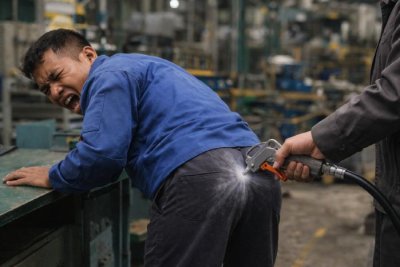
Illustration generated using ChatGPT. Image by Asia Today
April 7 (Asia Today) — South Korea’s Labor Ministry launched a joint inspection Tuesday after a foreign worker was seriously injured at a manufacturing plant in Hwaseong, where a high-pressure air gun was allegedly used, causing internal organ damage.
The Ministry of Employment and Labor said it began a combined labor and occupational safety inspection of the facility following media reports of the incident.
Authorities plan to examine whether the worker was subjected to assault or workplace harassment, as well as possible violations of labor laws, including unpaid wages. The probe will also review compliance with safety regulations under the Industrial Safety and Health Act.
Officials said they will investigate whether the company attempted to conceal the workplace injury or failed to implement required safety measures.
If serious violations are confirmed – including abuse, harassment or major industrial safety breaches – the ministry said it will pursue strict measures such as revoking or restricting employment permits and seeking criminal prosecution.
The victim filed for workers’ compensation benefits Tuesday with the Korea Workers’ Compensation and Welfare Service, and the ministry said it will ensure the claim is processed promptly.
Separately, the ministry has been conducting broader inspections this month targeting workplaces employing large numbers of foreign workers. The inspections focus on sites suspected of labor violations, including those with frequent worker turnover, prior complaints, or records of serious accidents.
As part of the inspections, authorities are conducting surveys and interviews with foreign workers to assess workplace conditions, including potential abuse or harassment.
Labor Minister Kim Young-hoon said all workers, regardless of nationality or immigration status, are entitled to safety and dignity.
“We sincerely apologize to the injured worker and colleagues who witnessed the incident,” Kim said. “We will thoroughly investigate the case and take strict action against any violations of the law.”
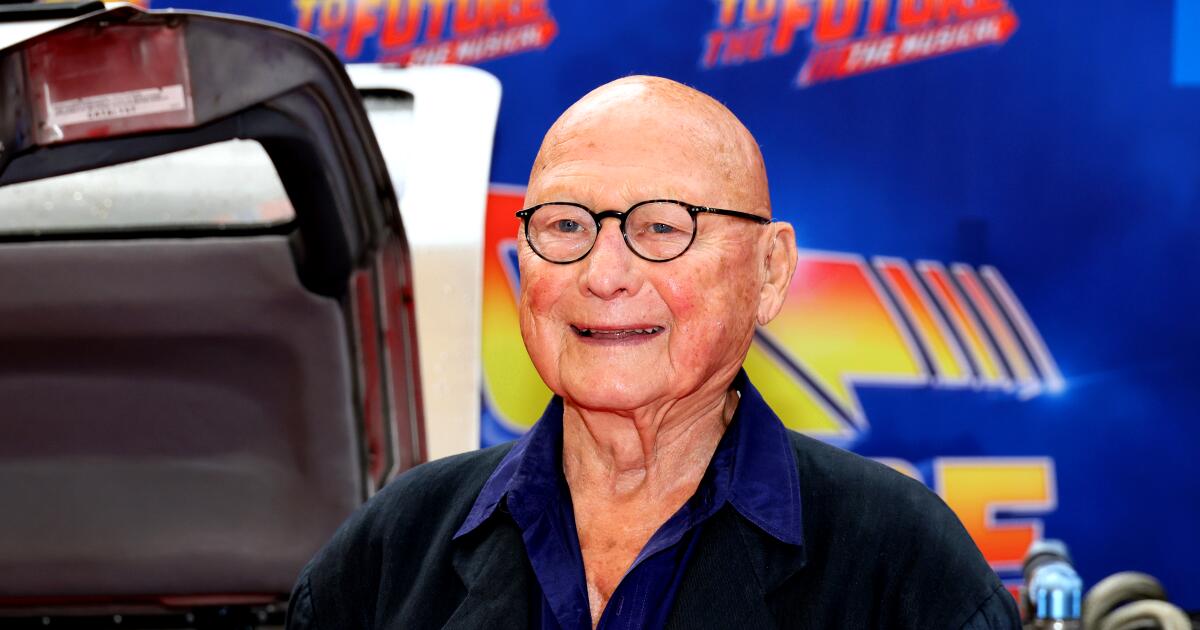
Actor James Tolkan, known for his role as the Hill Valley High principal in “Back to the Future” and the no-nonsense commanding officer in “Top Gun” has died. He was 94.
Tolkan died Thursday in Lake Placid, N.Y., where he lived, his booking agent, John Alcantar, told the Associated Press on Saturday.
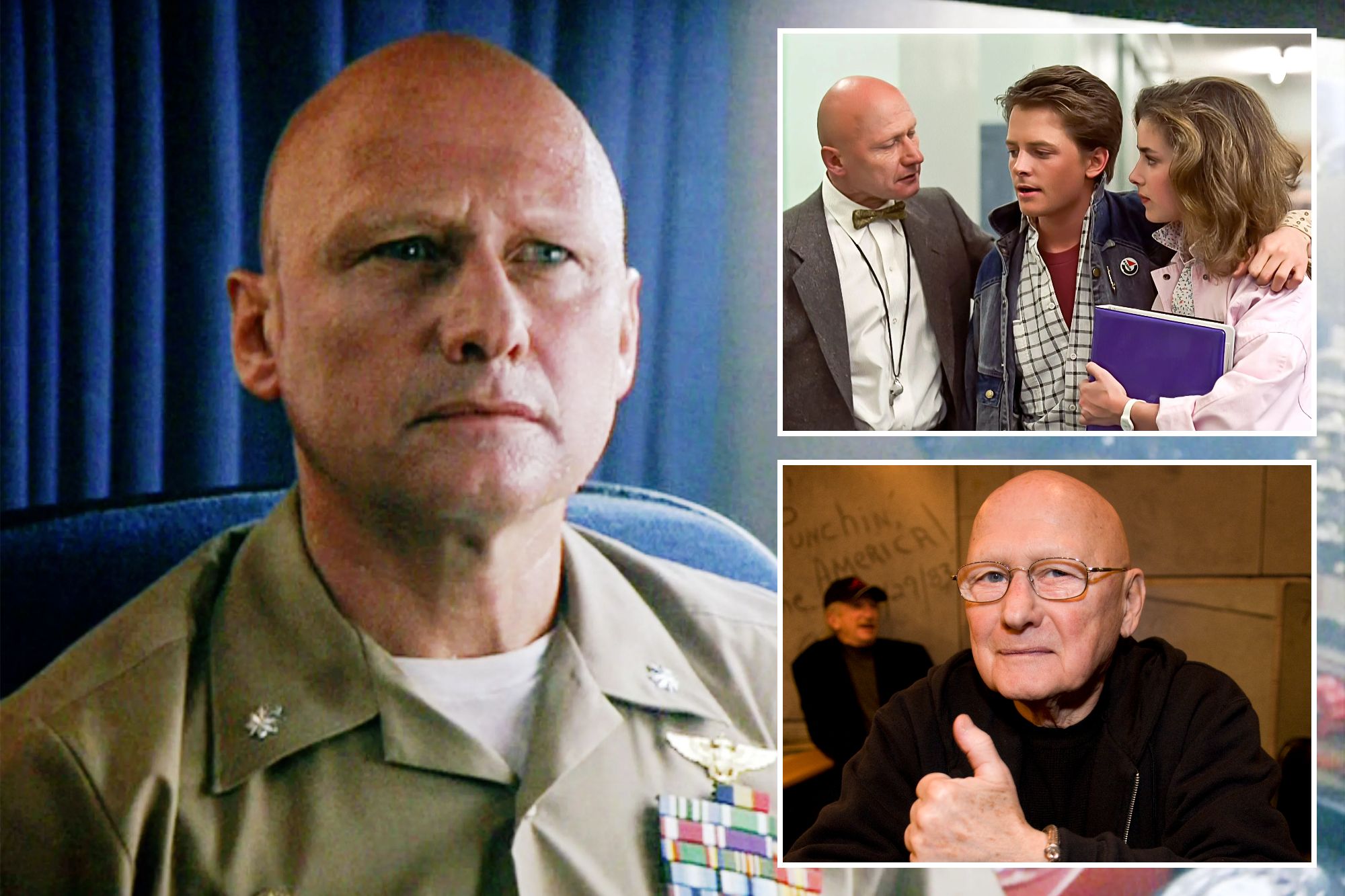
In “Back to the Future,” Tolkan portrayed Vice Principal Gerald Strickland, who surveyed the school’s halls with a whistle around his neck and a tardy slip burning a hole in his pocket.
“You got a real attitude problem, McFly,” Tolkan’s character snaps at Michael J. Fox’s character, Marty McFly, in the cult classic 1985 film. “You’re a slacker. You remind me of your father when he went here. He was a slacker, too.”
The line became one of Tolkan’s most famous, and mega-fans would flock to Comic-Cons around the country to ask the star to call them a slacker, requests he typically obliged.
The actor had a number of film and television gigs through the 1960s and ’70s, but he was doing David Mement’s Broadway play “Glengarry Glen Ross” when he got the offer to play Strickland in “Back to the Future.”
“I always said, ‘I’m never going to Hollywood until they send for me,’ ” he told T.C. Restani during a 2015 interview. “And I said, OK, this is my chance. And of course, nobody realized that it was going to be such an important picture. But it was. It was one of those marvelous events where all the planets were aligned and ‘Back to the Future’ became this shooting star of a movie.”
Tolkan was also well known for drilling Maverick and Goose with swift reprimands and tough love between puffs of his cigar as their commanding officer, Tom “Stinger” Jardian, in the 1986 blockbuster “Top Gun.”
“That was very special, because when you make a movie you never know, but in ‘Top Gun,’ everybody felt like it was going to be a success,” Tolkan told Bob McCarthy during a 2016 Comic-Con interview. “ They just felt it, knew it right from the first day.”
Born June 20, 1931, in Calumet, Mich., Tolkan was the son of a cattle dealer — Ralph M. Tolkan. He moved around in his adolescence, spending time in Chicago and landing in Arizona after his parents’ divorce. It was there that his athletic skills got him noticed by the Eastern Arizona College football coach. Tolkan landed a scholarship to the college, but his academic career was short-lived, and he left to enlist in the U.S. Navy.
After a year of service during the Korean War, he was discharged due to a heart ailment, and with $75 to his name he set out for the Big Apple to try his hand at acting. In New York, Tolkan studied under Stella Adler and Lee Strasberg at the famed Actors Studio and started landing stage roles before working his way to the big screen.
Although his experience in the military informed the types of roles Tolkan would play — Army office, Air Force commander, police lieutenant, attorney — his work as an actor was his passion. “If you choose to be an actor, you have to choose to be an actor, and you have to stick with it through thick and thin,” he told a FanX audience member during a 2023 panel at the Salt Lake City pop-culture convention. “When things get tough, you can’t think about doing something else. You’ve got to say to yourself, ‘I’m gonna do this.’ ”
Other notable acting projects of Tolkan’s include the 1973 film “Serpico,” starring Al Pacino; the 1981 movie “Prince of the City”; the role of Napolean in Woody Allen’s 1975 film, “Love and Death”; and the 1983 film “WarGames,” in which he acted alongside Matthew Broderick.
Tolkan is survived by his wife of 54 years, Parmelee Welles.
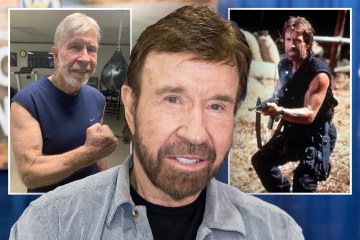
BACK to the Future and Top Gun actor James Tolkan has sadly died aged 94.
The Hollywood star passed away peacefully at his New York state home on Thursday after a celebrated TV and stage career spanning 55 years.
Sign up for the Showbiz newsletter
Thank you!
Hollywood actor James Tolkan has passed away aged 94Credit: GettyTolkan as tough teacher Mr. Strickland in Back to the FutureCredit: AlamyThe actor was also known for his role as Commander “Stinger” Jardian in Top GunCredit: Getty
His death was announced on the Back to the Future website as well as by writer-producer Bob Gale, but a cause was not provided.
Tolkan played the slacker-hating teacher Mr. Strickland in the first two films of the iconic 80s franchise, returning as the grandfather of his character in the third.
He was also known for his performance as air group commanding officer “Stinger” Jardian in the 1986 blockbuster Top Gun, alongside stars Tom Cruise, Val Kilmer and Meg Ryan.
Tolkan’s five-decade-long career started in the 1960s series Naked City and called it a day after the 2015 film Bone Tomahawk.
He was born on June 20, 1931 in Calumet, Michigan and served in the brutal Korean War as part of the United States Navy.
The young sailor was discharged due to a heart condition and set his sights on becoming an actor, earning a BA in drama from the University of Iowa.
An obituary on the Back to the Future website says that he then “got on a bus for New York City with $75 in his pocket, went to work on the docks and enrolled with both Stella Adler and Lee Strasburg to learn the art of acting.
“He spent 25 years in New York theater, from off off Broadway to the great White Way.
Most read in Entertainment
“Notably, he was a member of the original ensemble cast of the ‘Glengarry Glen Ross’.”
Tolkan moved his career from New York to California and Canada in 1983 when he was cast in War Games.
After his roles in Back to the Future and Top Gun, Tolkan had a dual role in Woody Allen’s Love and Death.
Tolkan is survived by his wife of 54 years, Parmelee – whom he met in the off-Broadway play Pinkville in 1971 – and his three nieces in Des Moines, Iowa.
The late actor adored animals and the obituary asked for donations in his memory to your local animal shelter, animal rescue organisation or Humane Society chapter.
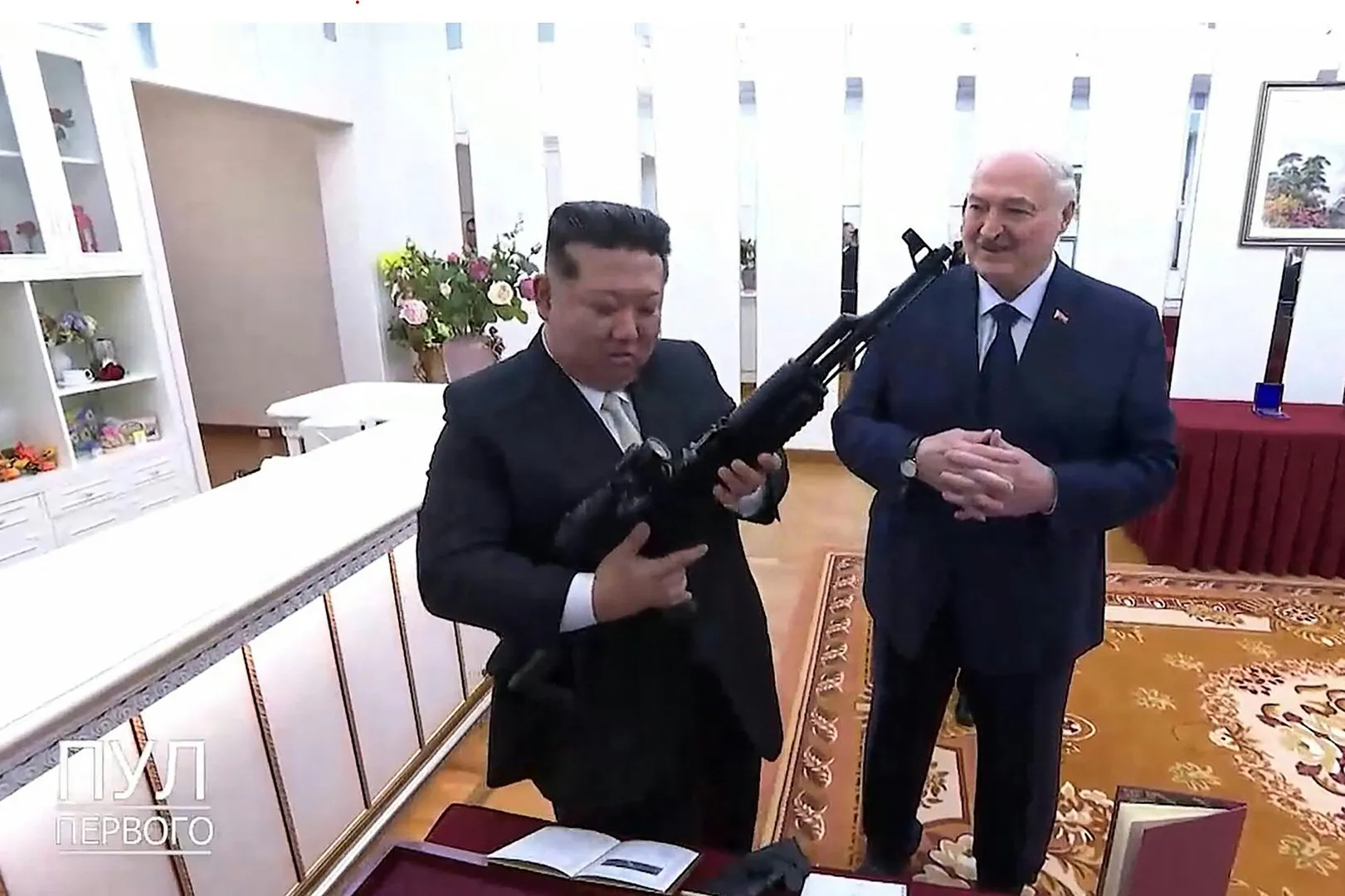
Belarusian President Alexander Lukashenko gifted North Korean leader Kim Jong Un a gun after the two countries signed a friendship treaty during the Belarusian’s first official state visit.
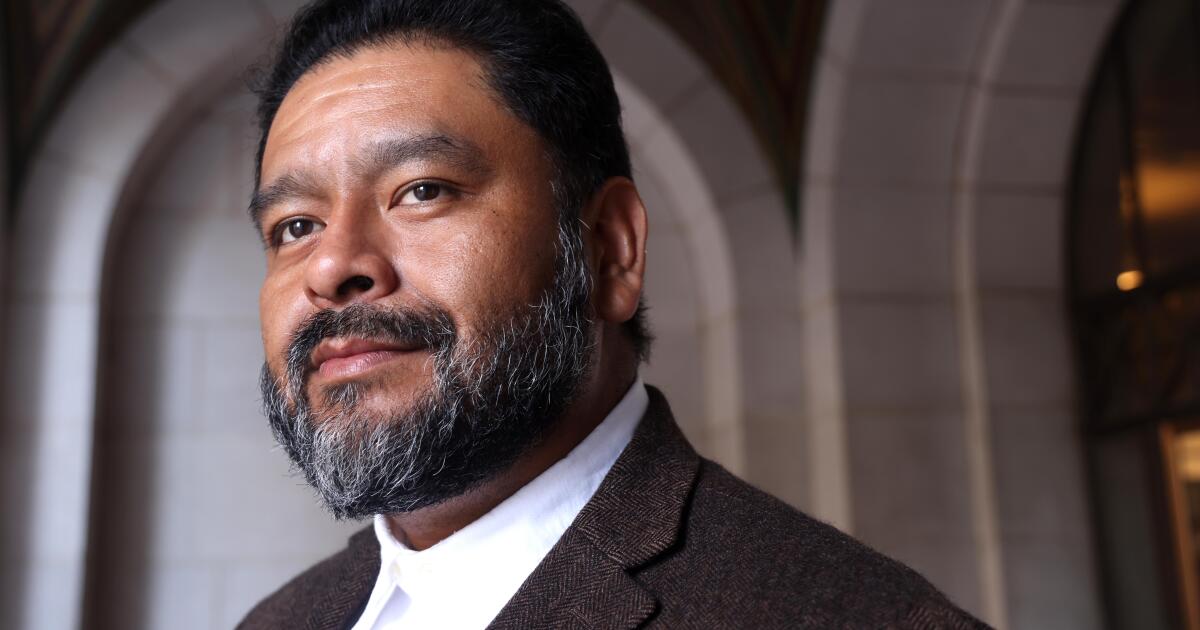
When Estuardo Mazariegos was 22, he was pulled over by Los Angeles police officers who found a gun and ammunition in the back seat of his Nissan Sentra.
The gun, he said, was not his. He was holding onto it for a friend, he said, but he got hit with a felony gun possession charge, later pleading it down to a misdemeanor.
Seventeen years later, Mazariegos is running for Los Angeles City Council — and he believes his gun conviction makes him a better candidate.
“I think it’s a strength. It’s not a liability,” said Mazariegos, who was born in Guatemala and grew up in Hollywood and South L.A. “I feel like it creates more of a connection with me and the community, because there’s so many people that are justice-impacted.”
But the gun charge could also be an issue for Mazariegos in his race against five other candidates to represent Council District 9, which covers part of South L.A. He was also convicted of shoplifting when he was 19.
The district is the poorest the city, and the council race is expected to be one of the most competitive city contests this June, with the current council member, Curren Price, terming out.
Mazariegos is head of the Alliance of Californians for Community Empowerment Los Angeles, a grassroots advocacy organization. The 40-year-old is backed by the L.A. chapter of the Democratic Socialists of America and supports leftist policies like reducing funding to the LAPD to spend more on other programs.
Jose Ugarte, a District 9 candidate who was a longtime Price staffer, believes his opponent’s criminal history is a red flag.
“Getting arrested and convicted for multiple crimes, including carrying a concealed loaded gun, should disqualify Estuardo in this race,” Ugarte said in a statement. “Instead, the Democratic Socialists of L.A. are propping up his candidacy and hiding his criminal past from voters who deserve to know the truth.”
DSA-LA co-chair Leslie Chang said her group is “proud” to stand with Mazariegos.
Mazariegos’ supporters say he hasn’t hidden his past.
Georgia Flowers-Lee, a vice president with United Teachers Los Angeles, said Mazariegos discussed his gun conviction and the circumstances surrounding it during his interviews with the union, which ended up endorsing him.
“He was up front, honest about the challenges and honest about the gun charge,” she said. “Walked us through what had happened and where it led and how and why he ended up pleading it out,” she said.
Flowers-Lee, who lives in the district, said that young men of color like Mazariegos are overpoliced.
“I do not see this as a disqualifier. And let’s talk about redemption,” she said.
Wednesday night, Mazariegos released a campaign video featuring him discussing gun violence and his conviction with childhood friends. He said it was a turning point in his life.
“That was the moment where I was like, it’s either now or never,” he said. “Either I leave this s— behind, or it’s going to eat me up. I’m never going back to that lifestyle. I’m going to dedicate myself to the people.”
Mazariegos said he never carried a gun, except for that one day, but many of his friends did.
“Guns were a very common thing. It was almost like having a bike,” he said.
Mazariegos said that in 2009, he was driving home from the San Fernando Valley in the early morning, after dropping friends off, when he was pulled over by the LAPD. He said the officers gave no reason for stopping him, but they made him get out of his car and searched it without a warrant, finding the gun.
He was a permanent resident at the time, after moving from Guatemala at a young age, and was advised by his attorney to plead guilty to a misdemeanor charge of carrying a concealed weapon in a vehicle, to avoid possible deportation, he said.
He was sentenced to 24 months of probation and one day in jail, court records show.
Growing up in Hollywood and Hyde Park, among other parts of the city, Mazariegos was intimately familiar with gun and gang violence.
His friend, Oscar Michael Morales, was shot to death in 2001 at age 14. He remembers Morales’ mother cleaning the blood off the sidewalk the next day.
His gun conviction helps him connect with residents of Council District 9, Mazariegos said, and he frequently discusses it while door-knocking.
Price himself has been criminally charged with four counts of voting on matters in which he had a conflict of interest, five counts of embezzlement and three counts of perjury. Prosecutors allege he voted to approve deals with developers or agencies that had done business with his wife.
Shaun Ryder on the beach in 2000Credit: Denis JonesShaun with wife Joanne and kids, Pearl and Lulu in 2017Credit: Matthew Pover – The SunShaun at a Happy Mondays gig in 2000Credit: Julian Makey
But, then again, putting the potty-mouthed and straight-talking singer on live telly is always a risk.
In an exclusive interview with The Sun, the Mancunian reveals that ITV did not appreciate his story of a drugs raid that happened when he was up for a Brit award in 1996.
Back then, Shaun’s other band, Black Grape, had been nominated for British Breakthrough Act.
Shaun says: “I told him I went to score and the gaff where I went to score got raided by the police as I’m scoring and the cops cottoned on who I was.
“And I’m saying, ‘Oh, I’m getting a Brit Award here’ and they let me go.
“They busted a heroin house and they let me go because I was up for a Brit Award.”
You might think that Shaun, who has already published two autobiographies, has no fresh stories.
But the singer, who has a new memoir out now and who is writing material for Happy Mondays’ first album in 20 years, always has plenty of tales to tell.
In his latest book, 24 Hour Party Person, he recalls facing down what he believes was a killer orangutan, escaping a gun battle and being held hostage by an armed robber.
There are also numerous car crashes from which he somehow escaped alive.
Shaun, who quit drugs aged 40 after 20 years of substance abuse, admits: “I have used up more than nine lives.”
It could all have ended shortly after Happy Mondays’ first album, Squirrel And G-Man Twenty Four Hour Party People Plastic Face Carnt Smile (White Out), came out in 1987.
Shaun, who was not famous at that point, went to Amsterdam to live for a short while.
He remembers: “Some nutcase we knew from Manchester, who was doing armed robberies and was then in Amsterdam, hijacked a load of people, put them in the canal and shot them and then turned up at the gaff where we were staying and held us hostage for a day or two.”
Luckily, Shaun managed to talk the robber into letting them go.
But there was no way of having a nice discussion with a great ape that appeared in front of Shaun on a Barbados beach when he was recording Happy Mondays’ fourth album in 1992.
At the time there were stories in the local Press about a dangerous orangutan, nicknamed Jack the Ripper, on the loose.
Shaun claims: “This thing just dropped out of the trees right in front of me. It was a f***ing big orangutan.”
Telling himself “don’t show any fear”, the musician stood tall and shouted, “Grrr, arrrgh, f*** off, just f*** right off”, at the animal.
Remarkably, the orangutan did as it was told.
Orangutans are not native to the Caribbean, so there is a good chance it was indeed Jack the Ripper.
And Shaun, who was “smoking up to 50 rocks of crack cocaine a day” in Barbados, insists it was not a hallucination.
Bez at a Happy Mondays gig in 2000Credit: Julian MakeyDuring one trip to Jamaica, Shaun and Kermit found themselves in the middle of a gun battle while trying to buy drugs
The album, Yes, Please!, failed to generate enough sales to justify the £150,000 spent making it and the following year the Happy Mondays broke up.
Shaun formed Black Grape in 1993 with his dancer mate Bez and rapper pal Paul “Kermit” Leveridge.
But it did not help keep him out of trouble.
During one trip to Jamaica, he and Kermit found themselves in the middle of a gun battle while trying to buy drugs.
He recalls: “I was going scoring and someone got shot, shot in the head. We just ran for it. If you’re a junkie going scoring, that’s the sort of s**t you come across.”
It was getting together with third wife Joanne which finally helped Shaun give up drugs and stop boozing.
They had dated briefly before Happy Mondays had hits, but he says: “She blew me out.”
Joanne, who now manages the TV part of his career — which has included two appearances on I’m A Celebrity . . . Get Me Out Of Here! — remained in the same circle as him.
The couple got together more than 20 years ago and married in 2010.
They have two daughters, Pearl, 17, and Lulu, 18.
Shaun, who also has four other children with previous partners, says: “She reeled me in and it’s a good job. “She didn’t let me get away with half of the stuff.
“If she hadn’t I’d have just carried on with crashing, but once I hit 40, I was determined to give up drugs anyway.”
His older children had to deal with his absences and spells in rehab.
But the youngest two have grown up in a more stable environment.
Shaun, who is also stepdad to Joanne’s son Oliver, explains: “I’ve still got two kids at home, so for the last 18 years, I’m just Dad.
“They’ve grown up coming and watching us at music festivals, and they’ve seen me in the jungle, but they’ve never seen that Shaun Ryder who’s off his nut.
“I pick them up from college and all that sort of thing, and drop them off. I’m the f***ing taxi service.
“In this house, you know, we don’t even have booze or anything, so, we’ve just been like a normal f***ing mad family for the past 18 years or whatever.”
Shaun says he did not see much of his older children and admits he was not a good dad to them.
But he says: “I’ve had really no trouble off my kids, I’ve been very lucky with the kids.”
This year is going to be an important one for Shaun.
Apart from the book and new album out next year, he is doing a Q&A tour and is on the road with Happy Mondays.
The return to the studio is due to former Creation Records label boss Alan McGee.
Shaun reveals: “I’m writing it now. Alan McGee wanted a new Mondays album, so Alan usually gets what he wants.”
An orangutan like the one Shaun says attacked himCredit: Getty
When it comes out, it will be 40 years since the Manchester group’s first release in 1987.
These days various health problems, including a recent bout of pneumonia, means performing is harder than ever for Shaun.
One legal substance that has helped keep him on the road is the fat jab Ozempic.
Shaun says: “You just raid the medicine cabinet, don’t you, and get on with it, so the show must go on.
“I have an overactive thyroid, so even if I ate f***ing lettuce and tomatoes, I would be big.
“Since I started on the injections my thyroid started to get better.”
If Shaun has his way he will keep performing until the Grim Reaper finally catches up with him.
And the singer would settle for dying on stage, like the comedian Tommy Cooper.
He says: “In this game, you’re doing some Tommy Cooper style, you know what I mean?
“As long as you enjoy it, do what you do, f***ing do it and I still do.
“I’ll still make music and go play music out there until I f***ing drop dead on stage.
“It’s a good place to go, innit? To drop dead on stage, singing Kinky Afro.”
Shaun’s new book 24 Hour Party Person is available from awaywithmedia.com.
Shaun’s new book 24 Hour Party Person is available from awaywithmedia.comCredit: Supplied