Brazil gives X five days to stop Grok from producing sexual content

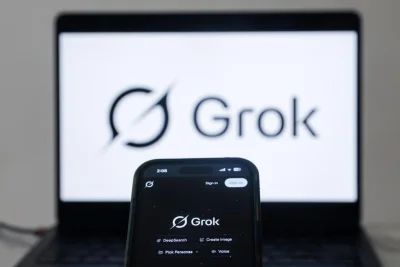
Brazilian authorities have ordered that Elon Musk’s platform, X, must implement measures to prevent its artificial intelligence tool, Grok, from generating sexualized content involving minors and involving adults without consent. File Photo by Fazry Ismail/EPA
Feb. 13 (UPI) — Brazilian authorities have ordered that Elon Musk’s platform, X, must implement measures to prevent its artificial intelligence tool, Grok, from generating sexualized content involving minors and involving adults without consent.
The case is being reviewed by Brazil’s National Data Protection Authority, the Federal Public Prosecutor’s Office and the National Consumer Secretariat. The agencies contend that, despite prior warnings, the social network failed to show effective action to curb these practices.
“X must immediately implement appropriate measures to prevent the production, through Grok, of sexualized or eroticized content involving children and adolescents, as well as adults who have not expressed their consent,” Brazilian authorities said in a joint statement.
The agencies gave the platform five days to comply with the determination, under penalty of fines and legal action.
On Jan. 20, the agencies recommended that X establish, within up to 30 days, technical and operational procedures to identify, review and remove sexualized content generated by Grok that remained available on the social network. That deadline co-existed with the requirement to adopt immediate actions to prevent new posts.
The company said at the time that it had removed thousands of posts and suspended hundreds of accounts for violating its policies.
However, Brazilian authorities said the information provided “was not accompanied by concrete evidence, technical reports or monitoring mechanisms that would allow its effectiveness to be assessed.”
Tests conducted by technical teams indicated that the platform still allows the generation and sharing of sexualized or eroticized images of minors and adults without authorization.
Since late last year, thousands of complaints in several countries have alleged that Grok responds to requests to alter photographs posted by women on social media, making them appear nude or in bikinis. At least two Brazilian women have reported being victims of these deepfakes.
The Federal Public Prosecutor’s Office ordered X to submit monthly reports on the actions taken to prevent the production of these images and pointed to a lack of transparency in the company’s response.
The National Data Protection Authority also required the platform to detail the measures implemented and provide evidence that can be verified by authorities.
The new five-business-day deadline requires the company to explain what specific actions it will take to prevent Grok from creating this type of content. The official document does not specify when clock began.
If the order is not met, the company could face fines and other administrative sanctions. Those responsible could also be prosecuted for disobedience.
The Federal Public Prosecutor’s Office said it could open broader investigations that may lead to legal action to seek damages for harm caused by the creation and dissemination of these images.
The case adds to investigations in Europe. On Feb. 3, the Paris Prosecutor’s Office searched Grok’s offices as part of a preliminary investigation into the alleged dissemination of child pornography and deepfakes. Authorities in the United Kingdom and the European Union are also examining Grok’s use to manipulate images.
Grok is developed by xAI, Musk’s artificial intelligence company, which also controls X. Earlier this month, the entrepreneur announced the merger of xAI with SpaceX, his aerospace company. SpaceX is expected to debut on the New York Stock Exchange later this year.